Doc Susie: The truth of Colorado Women Physicians & Giveaway

close up hhj spcPlease welcome guest blogger:

Doris McCraw/Angela Raines

Doris is giving away four eBooks,

so be sure to leave a comment!

In January 1991, “Doc Susie, The true story of a country physician in the Colorado Rockies” was given to the world. This biography of Dr. Susan Anderson began the legend of the lone woman doctor who gave up so much to follow her dreams. This legend became a myth when “Dr. Quinn, Medicine Woman” hit the airwaves in 1993, two years after the release of the book. Both were full of drama and pathos.

But was Dr. Anderson the norm for women doctors, or is there more to the story? Susan Anderson , born January 31, 1870, received her license to practice medicine in Colorado in 1897 and the bulk of her story takes place in Frasier, Colorado after 1907, where she was the lone doctor, and never married. To put this in perspective, Colorado had women physicians as early as 1873. Dr. Alida Avery came to Denver, Colorado in 1874 from Vassar, where she taught and was their physician for nine years. Like Doc Susie she also remained single.

9-6-2015 209In 1876, according to relatives, Dr. Harriet Leonard arrived in Manitou Springs, Colorado, with husband and children. By 1878 she was joined by Dr. Julia E. Loomis, Dr. Esther B. Holmes and shortly after Dr. Clarabel Rowe in Colorado Springs. All four of these women were married and practiced their chosen career, along with the sixteen other doctors in the area in the late 1870’s. Dr. Loomis went to medical school in her 50’s. None of these women, who appear to have been married prior to going for their medical degree, could have achieved their goal without a least some support from their husbands.

In 1881 when Colorado started licensing physicians, women were licensed the same as men. Dr. Edith Root of Denver, Colorado may have been the first to receive her license. Her license number was 82.2-19-2013 020

Between 1870 and 1880 Colorado saw the arrival of many physicians, which included a number of women. This may have in part been due to Colorado being touted for a climate known for helping those who suffered from consumption. Note, consumption was not just TB, but any wasting disease. There was another spurt from 1890-1900. Yes, many of these women congregated in the larger towns, to include the boom towns of Leadville, Cripple Creek and Victor. Once the floodgates were opened, women physicians made their way to Colorado. Many became involved in the suffrage movement, while others worked to better the conditions of others. Dr. Caroline Spencer of Colorado Springs and Dr. Alida Avery worked for the rights of women. Dr. Mary Helen Barker Bates helped start a hospital in Leadville. Dr. Kate Yont worked in the Italian community with the naturalization process in Denver. Some carried guns, others didn’t have to, but all have stories waiting to be told.

So you see, while the story of Dr. Susan ‘Doc Susie’ Anderson is a wonderful story, it is by far not the norm for women doctors in the state of Colorado. There were many before her who also followed the dream of helping people in need.

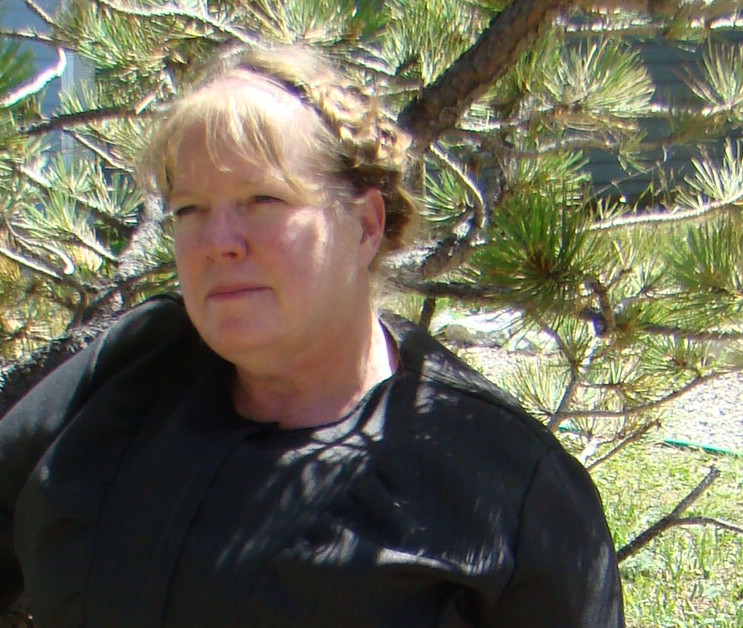
Doris McCraw has been researching the women doctors in Colorado prior to 1900 for some time. Finding the stories of these pioneering and determined women is a passion. Doris also writes fiction under the pen name Angela Raines where she tells the stories of strong women and men who find the strength to love, much like the women doctors who followed their dreams.

 Author Page: http://amzn.to/1I0YoeL

What do you think was the biggest challenge for those early female doctors?


Angel of Salvation ValleyA Cowboy CelebrationOne Christmas Knight     Home For His Heart


Four lucky readers will win one of these delightful e-books. The rest of us can order by clicking on the covers.

Sweepstakes Rules Apply


Taming the West One Meal at a Time

MargaretBrownley-header

Nothing changed America as much as the iron horse. People were finally able to travel across country in relative comfort and not have to worry about the weather, Indians, or some of the other mishaps that plagued early travelers. A train passenger’s greatest fear was food poisoning. That’s how bad meals were along the rails.

It took one efrednterprising Englishman to change the way travelers ate. His name was Fred Harvey and his Harvey House restaurants eventually stretched along the Santa Fe railroad tracks from Chicago all the way to Los Angeles and San Francisco—one every hundred miles.

Hear That Whistle Blow

Fred Harvey invented the “fast-food” concept long before Ray Kroc. Passengers were allowed only thirty minutes to get off the train, eat and board again, so time was of the essence. He devised a system in which train conductors would telegraph passenger food orders to the restaurant in advance. This allowed the restaurant staff to prepare the food before the train pulled into the station.

From Dishwasher to Household Name

Harvey learned the business the hard way. After traveling to America at the age of seventeen, he landed a job as a dishwasher at a famed New York restaurant, working his way through the ranks from dishwasher to line-cook. He eventually landed in St. Louis where he took over the Merchants Dining Room Saloon. His success lasted only a short time. The winds of war could not be ignored and after his partner joined the secessionist army, taking all the money the two men had saved, Harvey’s restaurant was doomed.

After a series of jobs and personal losses, he eventually took over an eating house at the Santa Fe depot in Topeka. He arranged for fresh fruit and meat to be railed in from Chicago and other states. His food was so good that railroad officials worried that no one would want to travel past Topeka.

First Female Workforce

As the number of his depot restaurants increased, so did his troubles. Black men were hired as waiters, but this often created conflict with cowboys. After one unpleasant midnight brawl at the Raton Harvey eating house, Harvey’s friend Tom Gables suggested a radical idea; why not replace black male waiters with women? Harvey decided to give Tom’s idea a try.

Harvey ran ads in newspapers for “young women of good character, attractive and intelligent, 18 to 30, to work in the Harvey Eating Houses.” He offered a salary of $17.50 a month, a tidy sum for a young woman. Soon he had all the help he needed.

300px-Harveyhouse3
This Harvey House is in Barstow, CA. It’s now a museum. I used it as a model for my story.

The women lived in dormitories above the restaurants under the watchful eye of a house mother. Their uniforms consisted of a black dress, black shoes and stockings, and a crisp white apron. The women had to adhere to strict rules and were not allowed to marry for six months.

His new female staff was a great success and helped ease racial tensions. Even the roughest of cowboys and railroad workers were willing to don the required (and dreaded) dinner jacket just for the pleasure of being served a good steak by a pretty girl.

He Kept the West in Food—and Wives

That quote from Will Rogers says it all; Among his other talents, Fred Harvey not only “civilized the west” he was indirectly responsible for more than 5000 marriages. That’s enough to make you want to forgive him for inventing fast-food. Almost….  

What’s the best or worse meal you had while traveling?


Calico SpySomeone is killing off the Harvey Girls. Undercover Pinkerton detective Katie Madison hopes to find the killer before the killer finds her—or before she burns down the restaurant trying.


Amazon

iTunes


Elisabet Ney – Sculptor of Texas

newsletter_headerjpg - 2

Michelangelo's Pieta in St. Peter's Basilica in Vatican City.
Michelangelo’s Pieta in St. Peter’s Basilica in Vatican City.

During Spring Break this year, my daughter and I had a once in a lifetime opportunity to travel with a group from her high school to Italy and Greece. What an amazing experience! Ancient ruins like the Colosseum and the Parthenon, gorgeous cathedrals like St. Paul’s and St. Peter’s basilicas, and artwork from paintings to sculptures to tapestries to mosaics that simply took my breath away. One of my very favorite statues was created by the incomparable Michelangelo. His depiction of Mary holding her son after he was taken down from the cross. It is called “Pieta” which means pity in Italian. Truly stunning.

Greece, of course, is also known for their statuary, and after seeing so many examples of classical art, I started wondering about some of the artists behind the statuary closer to home. As it turns out, one of the most talented sculptors of Texas heroes is a woman.

Elisabeth NeyElisabet Ney was a German-born sculptor who worked in Europe the first half of her life, perfecting her craft and becoming so accomplished, she was commissioned to create busts of such influential world leaders as Otto von Bismarck and King George V of Hanover (pictured with her in the portrait to the left). She was the first female sculptor admitted to the all-male Munich Academy of Art.

A stringent feminist, Elisabet wore trousers and rode astride like her male counterparts. She also despised the marital state, believing it to be a form of bondage for women. However, a young (and exceedingly patient) Scottish medical student named Edward Montgomery eventually wore her down. After 10 years, he finally convinced her to marry him in 1863. That same year, he contracted tuberculosis. After struggling with the disease for many years, Montgomery took a friend’s advice and moved to the United States in 1871, to a resort for consumptives in Georgia. In 1873, after the birth of two sons, the couple moved to Waller County, Texas.

In the 1880’s, Elisabet was invited to Austin by the governor of Texas, and her artistic career gained new life. In 1892 she built a studio in north Austin and began to seek commissions. Right away, she was commissioned by the Board of Lady Managers of the Chicago World’s Fair Association to create marble figures of Stephen F. Austin and Sam Houston to be on display at the World’s Fair. They can now be seen in the Texas State Capitol building.

Stephen F Austin by Elisabet_Ney
Stephen F Austin
Sam Houston by Elisabet Ney
Sam Houston

Upon her death in 1907, her husband sold her studio to  Ella Dibrell, and per his wife’s wishes, bequeathed the contents to the University of Texas at Austin.  Four years later, Dibrell and other investors established the Texas Fine Arts Association in Elisabet’s honor. Today, the studio is the site of the Elisabet Ney Museum.

This passionate, strong-willed woman left her mark on Texas that still exists more than 100 years after her death. What a lasting legacy!

I can barely draw a stick figure, so art like this always leaves me amazed.

What about you?

  • Have you encountered a particular sculpture or painting that touched you in some way?
  • Have you ever wondered about the life of the artist who created it?


Women Make History Daily, Not Just Once a Year

Men of sense in all ages abhor those customs which treat us only as the vassals of [their] sex. —Abigail Adams (1744-1818), second First Lady of the U.S.
“Men of sense in all ages abhor those customs which treat us only as the vassals of [their] sex.”
—Abigail Adams (1744-1818), second First Lady of the U.S.
I hope everyone will forgive me for not writing about western history this month — at least not specifically. Every so often, though, even those of us devoted to the history of the Old West must take a look even farther into the past, and sometimes much closer to the present, in order to develop a broader perspective about the era in which our imagination spends so much time. This is one of those occasions.

I do not wish women to have power over men, but over themselves. —Mary Wollstonecraft (1759-1797), writer and advocate for women’s rights
I do not wish women to have power over men, but over themselves.
—Mary Wollstonecraft (1759-1797), author and advocate for women’s rights

March is Women’s History Month. While I appreciate the increased emphasis on remembering women’s contributions to science, art, philosophy, and society in general, I’ve always considered it a bit odd that we need reminding women have contributed. Designating a specific month during which to focus on women’s history implies that for the rest of the year, everyone thinks of women as secondary characters in their own life stories.

Old-fashioned ways which no longer apply to changed conditions are a snare in which the feet of women have always become readily entangled. —Jane Addams (1860-1935) social reformer, women’s rights activist, first American woman to win the Nobel Peace Prize
“Old-fashioned ways which no longer apply to changed conditions are a snare in which the feet of women have always become readily entangled.”
—Jane Addams (1860-1935), social reformer, women’s rights activist, first American woman to win the Nobel Peace Prize

Women don’t sit around waiting for men to make all the great discoveries, think all the great thoughts, and fight all the dragons. They never have. Throughout history, as many women as men have explored the unexplored, cured the previously incurable, and given voices to those unable to speak for themselves. And, as has been famously stated, they did it all dancing backward in high heels.

If women could go into your Congress, I think justice would soon be done to the Indians. —Thoc-me-tony (aka Sara Winnemucca, 1844-1891), Pauite educator, interpreter, writer, activist
“If women could go into your Congress, I think justice would soon be done to the Indians.”
—Thoc-me-tony (aka Sara Winnemucca, 1844-1891), Pauite educator, interpreter, writer, activist

“It would be ridiculous to talk of male and female atmospheres, male and female springs or rains, male and female sunshine…,” women’s rights pioneers Susan B. Anthony and Elizabeth Cady Stanton wrote in one of their suffrage pamphlets. “[H]ow much more ridiculous is it in relation to mind, to soul, to thought…?”

Anthony and Stanton often railed against inequality between the genders and the resulting injustices visited upon the distaff side of humanity — lack of access to education and discriminatory civil laws, for example. Today, the philosophy they espoused is, or should be, de rigueur, but until the mid-20th Century, speaking such thoughts in public in many societies carried significant risk to life and liberty. In some societies, it still does.

The best protection any woman can have … is courage. —Elizabeth Cady Stanton (1815-1902), social activist, abolitionist, women’s rights crusader
The best protection any woman can have … is courage.
—Elizabeth Cady Stanton (1815-1902), social activist, abolitionist, women’s rights crusader

For precisely that reason, historical romance novels can be important beyond the obvious entertainment. Unlike much literature written in previous ages, primarily by men, romance novels written during the past twenty to thirty years, primarily by women, portray heroines and female villains with courage, determination, and strength equal to the hero’s. Call me a man-bashing feminist if you must, but I believe it is crucial for readers, particularly younger ones, to be presented with female characters who are much more than decorative pedestal dwellers.

The day will come when men will recognize woman as his peer, not only at the fireside, but in councils of the nation. Then, and not until then, will there be the perfect comradeship, the ideal union between the sexes that shall result in the highest development of the race. —Susan B. Anthony (1820-1906), social reformer, women’s suffrage leader
“The day will come when men will recognize woman as his peer, not only at the fireside, but in councils of the nation. Then, and not until then, will there be the perfect comradeship, the ideal union between the sexes that shall result in the highest development of the race.”
—Susan B. Anthony (1820-1906), social reformer, women’s suffrage leader

In fact, when one studies history, it becomes impossible to consider the romantic notion of heroes on white chargers rescuing damsels in distress anything more than exactly that: a romantic notion. On any frontier in any age, toughness and capability are essential for survival, regardless of gender. Today’s well-researched historical fiction makes that abundantly clear — and like it or not, fiction resonates in contemporary culture, subtly but undeniably influencing attitudes on both sides of the gender divide. Art always has been both reactive and proactive in that way.

So, readers and writers of romance, don’t let anyone tell you you’re wasting your time with ludicrous, lowbrow “trash.” You’re not. You’re buttressing ramparts our foremothers built long ago. Could there be a more pleasant, if stealthy, way to celebrate Women’s History Month?
 

Nuns on the Frontier

threesisters
An early re-enactment of the 1869 journey from Galveston to San Antonio undertaken by three Sisters of Charity of the Incarnate Word. The journey resulted in the formation of what is today the largest congregation of women religious in Texas.

When the sun rose on Sept. 9, 1900, the island city of Galveston, Texas, lay in ruins. What would come to be called The Great Storm, a hurricane of massive proportions, had roared ashore from the Gulf of Mexico overnight, sweeping “the Wall Street of the Southwest” from the face of the Earth.

Over the following weeks, rescuers pulled more than 6,000 bodies from the rubble, piled the remains on the beach, and burned them to prevent an outbreak of disease. Among the departed, discovered amid the wreckage of St. Mary’s Orphan Asylum, were the bodies of ninety children ages 2 to 13 and all ten Sisters of Charity of the Incarnate Word. In a valiant, yet ultimately futile, attempt to save the children from floodwaters that rose to twenty feet above sea level, each sister bound six to eight orphans to her waist with a length of clothesline. The lines tangled in debris as the water destroyed the only home some of the children had ever known.

Sister Vincent Cottier and two of her young charges at the orphanage in Galveston. All three perished during The Great Storm of 1900.

All that survived of the orphanage were the three oldest boys and an old French seafaring hymn, “Queen of the Waves.” To this day, every Sept. 8 the Sisters of Charity of the Incarnate Word worldwide sing the hymn in honor of the sisters and orphans who died in what remains the deadliest natural disaster ever to strike U.S. soil.

Established in Galveston in 1866 by three Catholic sisters from France, the Sisters of Charity of the Incarnate Word is a congregation of women religious. Not technically nuns because they take perpetual simple vows instead of perpetual solemn vows and work among secular society instead of living in seclusion behind cloistered walls, they nevertheless wear habits and bear the title Sister. Today the original congregation is based in Houston, but back then Galveston seemed an ideal spot for the women to build a convent, an orphanage, and a hospital. On January 7, 1867, they opened Nazareth Academy in Victoria, Texas. In 1883, the federal Bureau of Education praised the academy as one of six Texas schools providing “superior instruction of women.” By 1869, the sisters had founded a second congregation in San Antonio. From there, they expanded to other cities in Texas, including Amarillo, and even farther west, all the way to California. In 2014, the sisters operated missions in Ireland, Guatemala, El Salvador, and Kenya in addition to the United States. They continue to operate Nazareth Academy, but as a coeducational school serving children in pre-kindergarten through eighth grade.

Two postulants from the Congregation of the Incarnate Word in San Antonio, Texas, ca. 1890.

Armed with faith instead of guns, the sisters did their part to civilize Texas’s notoriously wild frontier. They did not do so without significant hardship. Catholics often were not well-tolerated in 19th Century America, although in Galveston the sisters were admired and even loved for their industry and benevolence. That benevolence led to the deaths of two of the original three Sisters of Charity of the Incarnate Word, who perished during Galveston’s yellow fever epidemic of 1867.

As a Galvestonian, the history of the island city and its diverse people fascinates me. I continue to hope for inspiration that will grow into a story set here, where the past overflows with tales of adventure dating back well before the pirate Jean Lafitte built the fortified mansion Maison Rouge on Galveston in 1815. In the meantime, the Sisters of Charity of the Incarnate Word provided the inspiration for the heroine in a quick read, The Second-Best Ranger in Texas, which is available at Amazon, Barnes & Noble, and .

TheSecond-BestRangerInTexas_200x300


A washed-up Texas Ranger. A failed nun with a violent past. A love that will redeem them both.

Thanks so much for stopping by. As a token of my appreciation, I’ll give a copy of The Second-Best Ranger in Texas, in the winner’s choice of e-fomats, to one of today’s commenters.

Lucille Mulhall, Oklahoma Cowgirl & Wolf Roper

P&P Vickie McDonough 3 smallHello, Vickie McDonough here.  Before I get to the actual post, I just wanted to drop a quick note to let you know I’ll be giving  away a print copy of Gabriel’s Atonement to one of the visitors who leaves a comment on this post.  Now, let’s talk about Lucille.

You’ve heard of Annie Oakley, but have you ever heard of Lucille Mulhall, who at one time was just as famous?

The first rodeo in Oklahoma Territory was held in the mid-1880s, and ironically, Lucille Mulhall L.Mulhall 04was born on her family’s ranch near what would soon be Guthrie, Oklahoma on October 21, 1885. It is said that she could ride before she could walk. The cowboys who rode the plains of the Indian Territories tutored her in the art of lassoing. Her skill at riding, roping, and training horses was evident, and at a young age, she started competing in roping contests.

When Lucille was just ten years old, the mayor of Guthrie invited her to ply her skills and entertain at a cowboy gathering and contest. At age thirteen, she had her first major debut at the St. Louis Fair in 1897, and in a few years, she was performing on the vaudeville stage, entertaining crowds of up to 5,000.

Zach Mulhall, Lucille’s father, organized the Mulhall’s Congress of Rough Riders and Ropers. Lucille was the star of the show, where she met and became friends with Will Rogers and also Teddy Roosevelt, who was then a candidate for the vice-presidency.

L.Mulhall 03Zach was a proud father and one of Lucille’s greatest fans. He claimed that when his daughter was thirteen, he told her she could keep as many of his steers as she could rope in one day. “Lucille,” he bragged, “didn’t quit until she’d lassoed more than 300 cattle!”

In 1900, when her father was roping in El Paso, he bet local cowboys that his daughter could out rope them—and she did. Zach won over $10,000, but Lucille faced a horrible ordeal. The cowboys didn’t believe she was a girl and attacked her, tearing at her clothing to prove she was not a woman. Her brother Charley rescued her just in time.

Later in 1900, Lucille performed at a Cowboy Tournament at a Rough Riders reunion. Teddy Roosevelt was again amazed at her skill. He joined the family for supper, where the topic of conversation centered on the wolves plaguing the area. Lucille offered to get one for Teddy. He agreed, but only if Lucille would rope one. Undaunted by the challenge, she spent the next ten days tracking a wolf pack. One morning, she caught up with themL.Mulhall 01, and as she rode toward them, the pack scattered—all except for a steer-sized wolf she called “loafer”, which ran straight toward her. She roped him, but he gnawed through the rope. She tossed another rope on loafer and tied him to a tree, then cut his throat. She took the wolf to a taxidermist and had it stuffed, then she sent it to Teddy Roosevelt. As a thank you, the Mulhalls and the 101 Wild West Show performed at the McKinley-Roosevelt inaugural parade.

Lucille and her wolf kill made the news across the country, and she was dubbed the Cowpuncher Queen of Oklahoma Territory. Newspaper reported that Lucille was the greatest attraction at the Rough Riders reunion. An article in the Wichita Daily Eagle described her as a little girl who “weighs only ninety pounds can break a bronco, lasso and brand a steer, and shoot a coyote at 500 yards. She can also play Chopin, quote Browning, construe “Virgil” and make mayonnaise dressing.”

L.Mulhall 021901, Lucille roped five horses simultaneously at a horse show in Iowa. Later, she roped eight at once. The next year, she won a “thousand dollar day championship medal” at the Texas State Fair and Champion Steer Cattlemen’s Convention in Fort Worth. In 1903, Lucille was dubbed “the only lady roper in the world” and won $10,000 when she set a new world record for steer roping.

Lucille married and had a son, but because she left home and returned to performing, her husband, Martin Van Bergen, raised the boy. Van Bergen later divorced Lucille after deciding she would never settle down to domestic life as most women. A second marriage also failed.

Some sources say that Lucille made millions of dollars by performing in silent movies. At one time, she was the most famous horse woman in the world, but she ended up where she began, back on her family’s ranch. She died tragically in a car crash on December 22, 1940.

Lucille performed before European royalty, U.S. presidents, and won the respect of cowboys worldwide for her skill. She became the only female rodeo producer of her time with her show Lucille Mulhall’s Roundup and is well known for opening up the world of rodeo for women. Lucille’s popularity was due to her skill, the result of perfect timing with her rope, unusual balance on her horse, and her diminutive size and ladylike demeanor. Most important, she was authentic, coming from a genuine ranch background. She was inducted into the Rodeo Hall of Fame in 1975 and National Cowgirl Hall of Fame in 1977.

So, tell me. Have you heard of Lucille Mulhall before?

Credits:

divider01

In 2008, I started writing a book called Gabriel’s Atonement, which has stayed on my heart ever since. It was one-third finished when I had to set it aside because I got a contract for another book. I was thrilled, when after several rejections, Gabriel’s Atonement was finally picked up by Barbour Publishing. The book released on January 1, and I’m thrilled to tell you that Gabriel’s Atonement, book 1 in the Land Rush Dreams series received 4 ½ stars from Romantic Times magazine.

Popular historical author Laurie Kingery writes: “This is possibly the best western I’ve read all year. (2014)”

Gabriel's_AtonementWhat it’s about:

Gambler Gabe Coulter is content with his comfortable life—but when a man with a gun confronts him in a dark alley, everything changes. Guilt riddles him for killing Tom Talbot, even though it was self-defense. The dying man said the money he lost to Gabe was meant for his wife and son. The only way Gabe knows to rid himself of the guilt over killing Talbot is to return the money he won to the man’s wife.

Lara Talbot doesn’t believe Tom had money. She sees Gabe as a charming con artist like her irresponsible husband and wants nothing to do with him. She struggles to feed her family, keep her rebellious sister in line, and care for her young son and sick grandpa. The land rush in the Oklahoma Territory seems the only way for them to get a home, so Lara rides, but her dreams don’t turn out as planned. Could God have a bigger dream for her than she could imagine?
(Click on cover to purchase book)

To learn more about Vickie and her books, visit her website here.

Abraham Lincoln’s Favorite Cake (with recipe)

ChristmasCoffeeOne of the blessings of this festive time of year is sharing good food with family and friends. During the holidays, mothers and grandmothers everywhere retreat to the kitchen and don’t emerge until they’ve baked a pile of goodies imbued with generation upon generation of family tradition.

In that way, holiday life in contemporary America hasn’t changed much from holiday life in the 1800s…including life in the White House during the turbulent years of the American Civil War. Surrounded by carnage, then-President Abraham Lincoln, his wife Mary Todd Lincoln, and their sons probably took comfort in family traditions.

Abraham Lincoln with Mary Todd Lincoln and sons Robert and Tad (Curier & Ives lithograph, 1866)

One of the traditions Mrs. Lincoln took to the White House with her was a cake she called simply “white cake.” According to Lincoln’s Table by Donna D. McCreary, the confection was created in 1825 by a Monsieur Giron to celebrate the Marquis de Lafayette’s visit to Lexington, Kentucky—the First Lady’s hometown. The dessert proved such a hit that the prominent Todd family somehow convinced Giron to share the recipe, and the cake promptly became a Todd tradition. Mary Todd made the cake for Abraham while they were courting and continued the tradition after their marriage. Reportedly, Mary Todd Lincoln’s White Cake was her husband’s favorite sweet treat.

The recipe survives to this day. Here it is. (Instructions in parentheses are modernizations.)

ChristmasBundtCake
image by Betsy Weber; used with permission (click cake to visit her online)

Mary Todd Lincoln’s White Cake

  • Six egg whites
  • 3 cups flour
  • 3 tsp. baking powder
  • 1 cup butter at room temperature
  • 2 cups granulated sugar
  • 1 cup milk
  • 1 cup blanched almonds, chopped (in a food processor or blender) to resemble coarse flour
  • 1 teaspoon vanilla extract
  • 1/2 cup confectioners’ sugar

(Preheat oven to 350 degrees.)

Grease and flour a (10- to 12-cup Bundt) pan.

In a medium bowl, beat egg whites (with a mixer on medium-high speed) until stiff (about 4 minutes). Set aside.

In a separate medium bowl, sift together flour and baking powder three times. Set aside.

In a large bowl, beat butter and sugar (with mixer on medium speed) until light and fluffy (about 2 minutes). Add flour mixture alternately with the milk, beating well after each addition. Stir in the almonds.

Stir in the vanilla, then fold beaten egg whites into the batter until just combined.

Pour batter into the prepared pan and bake about 1 hour (until a toothpick inserted in the middle comes out clean).

Let cake cool in pan about 15 minutes, then remove (to wire rack) and let cool another hour before dusting with confectioners’ sugar.


Allow me to be frank: This cake is a lot of trouble to make, but the result is worth every bit of effort. It’s now part of my family’s tradition, as well.

May your family’s traditions bring you peace and joy that follows you through the coming year.


The Woman Who Saved Thanksgiving

MargaretBrownley-header

You might think that we owe the celebration of Thanksgiving solely to the pilgrims, but in reality we have Sarah Josepha Hale to thank for it.
Sarah was a prolific author, editor, poet and mother of five.  Her second book of poetry Poems for Our ChilHaledren, published in 1830, included Mary Had a Little Lamb. Controversy still exists as to whether she actually wrote the well-known ditty, but she claimed that she did and it was based on her experiences as a teacher.
In 1837 she became the editor of Godey’s Lady’s Book and remained so for forty years until she was ninety. Through her magazine, she set the tone for fashion, reading and cooking. She supported many women’s endeavors including Elizabeth Blackwell’s bid to become a doctor. She also helped raise funds to preserve Mount Vernon.
After reading about the pilgrim’s feast she became captivated by the idea of creating a national Thanksgiving holiday. Two hundred years after the pilgrim’s arrival Thanksgiving had been mostly forgotten. Sarah decided to change that.
So began what would turn out to be a thirty-eight year letter writing campaign. Four U.S. Presidents from Zachary Taylor to James Buchanan turned her idea down.
But Sarah never gave up, not even when the country was at war. At the age of seventy-four she wrote to President Lincoln urging him to make Thanksgiving an annual national holiday. She told him in her letter that a holiday wouldn’t stop the war but it would bring the country together. Abraham Lincoln agreed and in 1863 declared Thanksgiving a national holiday.
So as we enjoy our turkey and pumpkin pie, let’s make a toast to Sarah Josepha Hale, the woman who saved Thanksgiving.


 Coming December 1st

Many things are worth dying for but modesty isn’t one of them-Petticoat Detective

Petticoat Detective coversmall

Available in print or eBook

To order click cover

And don’t forget to sign up for our newsletter.  We’re giving away prizes galore.

A Filly Friend

On a Wheel and a Prayer

MargaretBrownley-header

“What was it about yesterday that made you think

I was a gentleman, Miss Blackwell?” 

                                                                                                                           -A Bicycle Built for Two

When you think of the old west, bicycles probably don’t come to mind. I mean can you honestly picture John Wayne chasing down bad guys on a tricycle  or boneshaker? Yet, the bicycle craze that hit the country in the 1890s was just as prevalent in the west as it was in the east.


bicyle

The new craze not only changed the way people got around, but also the economy. An editorial in the Fort Macleod Gazette in the early 1890s stated, “If this craze for bicycle riding continues much longer our livery stable men will have to close down.” The same lament could be heard from hatters, dressmakers and carriage workers.

Not only did cowboys, sheriffs and outlaws join the wheeling club, but so did women

One Texas newspaper in 1895 issued this warning regarding female bicycle riders: “We have been watching the course of events with breathless anxiety and Nebuchadnezzar himself never saw the handwriting on the wall more distinctly than we see it now. The bloomer is coming sure enough.”


One Kansas newspaper lamented that “Women wear their trowserettes even when their machines are left at home.”  While bikes1jpgsome were criticizing women’s attire others like Susan B. Anthony declared bicycles “Have done more than anything else in the world to emancipate women.”

Head over Handlebars

Bloomers aside, muddy dirt roads and wooden sidewalks made for a wild ride. Newspapers regularly reported people taking a “scorcher” and “being knocked senseless” or “carrying an arm in a sling.”


One Texas town responded by adopting the following regulations:

          1.Anyone riding a tricycle or relocopede must be supplied with a bell or horn that must be rung at all crossings.
          2.Any persons riding a tricycle at night must have a suitable lantern.
          3. It is especially prohibited for three or more riders to ride abreast
          4. No person or persons shall rest their bicycle, velocipede, or tricycle against a building (including saloons) where the vehicle will be on sidewalks


Some cities imposed a speed limit in town, usually four miles an hour. Fines could be as high as twenty-five dollars. The ordinances created as many problems as they prevented. Not only was there suddenly a shortage of cowbells but the noise created by them posed another problem.


It wasn’t just riders that gave sheriffs and marshals a headache, but a new kind of outlaw—a bicycle thief. Bicycles were also used as getaways and one thief led his pursuers on a merry chase through Sacramento.


Hold on to Your Stetsons

An Arizona Territory newspaper reported that cowboys in Three Rivers, Michigan “have discarded their horses for bicycles in herding cattle. Cowboys in Arizona would have a happy time herding cattle on bicycles.”


Cattle didn’t always take kindly to bicycles as one doctor found out when he unexpectedly ran into a herd of cattle. He ended up with a broken shoulder blade and his $100 bike in ruins. Things got so bad that some insurance companies announced they would charge double for bikers.


Some lawmen like Arizona Sheriff Donahue decided to fight fire with fire and announced that he was the proud owner of a “handsome nickel-plated bicycle” and was in negotiations to purchase a Ferris wheel bike for his under-sheriff.  John Wayne will never know what he missed.


I don’t know how it is where you live but the bicycle craze has hit my town big time and I recently caught my husband drooling over a $1000 bike. How are wheeling conditions in your town and have you joined the pack?

 New on Amazon today!

BicycleBuiltForTwo
To order click cover

A Bicycle Built for Two

Everything goes to hades in a handbasket when Damian Newcastle rides into Amanda’s life.

No one can pedal a bicycle around turn-of-the-century New York without a license, so Amanda Blackwell’s cycling school has become all the rage. The innovative establishment provides an income for the independent miss and her brother Donny, a special child. But in one afternoon, everything goes to hade in a handbasket. Amanda’s uncle is suing to put Donny into an institution and Damian Newcastle, the man she has every reason to hate, rides into her life to ruin everything.


The Harvey Girls

Cynthia

CH-LOGO21

Cynthia is giving away a copy of An unconventional Lady

to one lucky responder.

(Sorry, due to postage and customs, giveaway is for US only.)

*Due to technical difficulties on Saturday, we invited Cynthia to extend her stay at the Junction through Monday. So you still have time to get in the drawing for her fabulous new book. YeeHaw!

Scottish immigrant, Fred Harvey, was disgusted by the service and food preparation by restaurants along the Santa Fe railroad and decided to make a difference. He opened his first location in Kansas and restaurant service along the railroad would never be the same. Harvey was known for hiring local contractors to make the hotels fit their surroundings.


Harvey advertised in Eastern and Mid-western newspapers and magazines for single moral women between the ages of seventeen and thirty to be waitresses in his Harvey Houses. Over one hundred thousand women worked in his employ until the mid-1950s. While the women were told what to wear, what to do, how to wear their hair, and not to marry during their six-month contract, these brave women loved their independence. Over half of them chose to stay out west and help settle the country after their contracts were up, earning them the name “Women Who Tamed the West”.untitled


The women had to be of good moral character, have at least an eighth grade education, display good manner and be neat and articulate to work in his restaurants. In return for employment, the Harvey Girls would agree to a six-month contract, agree not to marry, and abide by all company rules during the term of employment. If hired, they were given a rail pass to get to their chosen destination. Harvey Girls were the women who brought further respectability to the work of waitressing. They left the protection and poverty of home for the opportunity to travel and earn their own way in life, while experiencing a bit of adventure.


untitled 2I chose to write a series of four books, spread out over the time span of the Fred Harvey Company to enlighten readers as to these brave, hard-working women. In An Unconventional Lady, the story takes place at the El Tovar Hotel on the rim of the Grand Canyon. This hotel is still running today with its waitresses still dressed in the familiar uniform of Harvey girls.


www.cynthiahickey.com

Multi-published and Best-Selling author Cynthia Hickey had three cozy mysteries and two novellas published through Barbour Publishing. Her first mystery, Fudge-Laced Felonies, won first place in the inspirational category of the Great Expectations contest in 2007. Her third cozy, Chocolate-Covered Crime, received a four-star review from Romantic Times. All three cozies have been re-released as ebooks through the MacGregor Literary Agency, along with a new cozy series, all of which stay in the top 50 of Amazon’s ebooks for their genre. She has several historical romances releasing in 2013 and 2014 through Harlequin’s Heartsong Presents. She is active on FB, twitter, and Goodreads. She lives in Arizona with her husband, one of their seven children, two dogs and two cats. She has five grandchildren who keep her busy and tell everyone they know that “Nana is a writer”.

An Unconventional Lady cover