 When Petticoats & Pistols invited me to guest post, I laughed a little. My novel doesn’t take place beneath the big skies of Texas or Wyoming—it unfolds among the ridges and hollers of Appalachian Tennessee. But the more I thought about it, the more I realized Appalachian and Western communities have more in common than we often think.
What is it we love about Western novels? The rural setting. Frontier life. Strong family and community ties. Traditional values. Characters overcoming hardships. And yeah, the cowboys are pretty cool.
The Appalachians may not be the American West, but both places share a common spirit—a spirit of independence, resilience, and community. Maybe that’s what we love about Western stories in the first place. It’s not necessarily the landscape. It’s the people.
That’s what my books are about. My other series is Western. This series is Appalachian. The locations are different, but the spirit is the same.
In my upcoming novel, The Teacher’s Mending Heart, both main characters face struggles that require grit and determination to see them through. Bethany Astor, a nurse who served overseas during World War I, moves to the Tennessee town of Laurel Ridge at the request of the Red Cross to serve a community torn apart by the war and other tragedies. While she wants to heal others, her own heart is in need of healing. Her fiancé was killed in the war and she closed herself to love. She just didn’t count on Dylan Harper, the town schoolteacher haunted by a terrible accident that took a student’s life and left him with a limp. He’s a bit of a golden retriever in contrast to Bethany’s level-headed calm. Her skill as a masseuse pulls them closer together and allow them to form a friendship.

Resilience is the characteristic that both characters demonstrate most. Both have something to lose if they give in to their feelings. For Bethany, it’s saying goodbye to her fiancé and the life she dreamt they’d have. Dylan has to let go of his feelings of unworthiness and open his heart.
They can’t do it alone, and that’s where the community comes in. The town is fighting for its survival, just as Bethany and Dylan are fighting their own battles. Friends offer support and love, sometimes tough love. The town council, of which Dylan is a part, works tirelessly to save Laurel Ridge. While shops are closing and people are moving away, the council knows Laurel Ridge can be saved. They do all they can to make sure their beloved town survives, all while loving their neighbors and relying on God’s help to get them through.
Maybe that’s why I don’t think you need a cowboy—or even a pistol—to write a story with the spirit of the West. When I first laughed at the invitation from Petticoats & Pistols, I was thinking about geography. Tennessee isn’t Montana. Appalachia isn’t the frontier West. But the more I thought about it, the more I realized the heart of these stories isn’t about where they happen. It’s about the people who refuse to give up, the communities that rally around them, and the hope they find in one another. And that’s something we can all relate to—Western or otherwise.
**************************************************
Giveaway

https://www.amazon.com/dp/1963212819?tag=pettpist-20
I’ll be giving away an e-book copy of The Teacher’s Mending Heart to someone who comments on this post. Sound off below, and let me know your thoughts—what is it you love about the spirit of the West? Do you think that spirit applies to other stories?
**********************************************
Thanks for reading! God bless.
Lauralyn


 The Avenue of States contains life-size replicas of the six original New England statehouses, as well as the New England Grange House. In actuality, the state houses are not replicas but rather modeled after original state houses in most instances. The buildings for New Hampshire and Vermont bear no resemblance to their original state houses.


 Since 2000, The Big E has endeavored to introduce its own signature foods. This began in 2002 when The Big E introduced Big E Cream Puffs, which it intended to be the signature dessert of the Fair. Sadly, I haven’t been back to the fair to sample this delicacy.


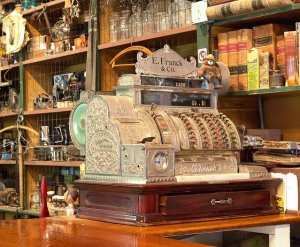


 Step back in time—how do you celebrate a barn raising in the Old West? A wagon train coming to town? A wedding? The end of a cattle drive? Or something as regular as a Saturday night?


 Before I was able to purchase a small place in Wyoming where I live part-year, I always thought of Wyoming as ‘the cowboy state.’ The symbol of a cowboy on a bucking horse is pervasive in the state, and shops and bars are plentiful in throwing around the word ‘cowboy.’ But the other nickname for the great state of Wyoming is ‘the equality state’ because, as any feminist historian may know, Wyoming was the very first place in the entire world to give women the vote. Although it’s often said that the decision to give women the vote had to do with the comparatively small population residing in Wyoming at the time, the pro-suffrage vote was generally along political party lines with the Democrats bringing in the law on December 10, 1869. At the time, there was something akin to five men for every woman in Wyoming.


 except that it was still a fairly quiet place reveling in its small-town life. I suppose in the 1970s when my book Always on My Mind is set, it was just beginning to evolve into what it is today—a vibrant place that welcomes men and women (!) from around the globe, pandemics permitting. And women, of course, continue to play a vital role in both the state government and the town of Jackson.
