
I loved the song Rudolph the Red-Nosed Reindeer as a kid (who didn’t?) and I loved watching the Rankin/Bass TV special. In fact, it’s still a Christmas tradition for me. I know all the lyrics and sing along. When they were young it drove my kids crazy, hey half of the fun, but now if I’m not singing they ask if I’m okay. ? Rudolph’s message of belonging, compassion, understanding, and everyone having something to contribute always hit home with me. I was a smart, liberal, knew-my-mind girl growing up in Dubuque, Iowa. I didn’t always fit in. I never went to homecoming or prom. In fact, I wasn’t even asked on a date in high school. I look back now and think I intimidated guys. Anyway, guess you can see why I identified with our little red nosed guy.

I was stunned to discover this classic Christmas tale that led to the Gene Autry song, was written by a Jewish man, Robert L. May. As a child, May skipped a couple grades in school, making him smaller and younger than his classmates. As a teacher, I can’t imagine how rough that was for him. Being physically smaller is difficult enough but add in developmental differences with his classmates, and no wonder he didn’t fit in and viewed himself as a “nerdy loser.” Anyone else see foreshadowing here and a writer who would write what he knew? (Being an outsider and insecure?) Yup, me too.

As an adult May dreamed of writing the great American novel but worked as a catalog copywriter in the advertising department for Montgomery Ward. (As an author, that sure hits home as I dreamed of writing novels while working countless other jobs to pay the bills.) In 1939, Montgomery Ward wanted to create a children’s book for its annual holiday promotion rather than give away purchased coloring book. May was given the job because of his talent for limericks and parodies. The only direction his boss gave him was to have an animal in it.

May chose a reindeer for his main character because his daughter, Barbara loved the ones at Lincoln Park Zoo. When turned in the story of a red-nosed reindeer teased by his peers, who had exactly what Santa needed one foggy Christmas Eve, May’s boss asked him to come up with “something better.” (Okay, let’s admit May’s boss couldn’t tell an incredible children’s story from a hole in the ground.) May didn’t give up, and with the help someone in the art department and his sketches, they changed the boss’s mind. Click here to read May’s original manuscript. (It’s definitely worth checking out. 🙂 )
On its release in 1939, Montgomery Ward gave away 2.4 million copies of Rudolph the Red-Nosed Reindeer. Yup, million. In 1939. Think about that. Despite the book’s success, May who was heavily in debt because of his wife’s medical bills, received no additional compensation. However, that changed in 1947, when the head of Montgomery Ward returned the rights to May. Another event that year that changed May’s life and impacted the classic Christmas song coming to life was May’s sister married Johnny Marks, a songwriter. Long before Marks married May’s sister he’d read Rudolph’s story, and jotted down notes in his song ideas notebook.

Marks added music to the story, and knew he had something special. However, Gene Autry apparently channeling May’s boss who “wanted something better” than Rudolph’s story, wasn’t keen on the song. Thankfully, his wife persuaded him to record the second biggest selling Christmas song of all time (White Christmas is number one) for the “B” side. (From my research, it appears If It Doesn’t Snow on Christmas was the “A” side and who’s even heard of that Christmas song? I hope he thanked his wife for her foresight.) Click here to listen to the Gene Autry song


Some articles I read claimed May and the Rudolph story is sad. I disagree. Yes, May had a difficult life, but he channeled that into something truly special. No, he never wrote the great American novel, but he wrote a great American Christmas carol that still inspires children and adults today. A pretty great legacy, I’d say. Plus, as an added bonus, Rudolph took care of May and his family for his life and beyond.
Now that I’ve learned the history behind the song, I love Rudolph’s story even more and it’s message seems even brighter.

 “I’ve got to do something about Mom. I don’t care how worried she is, when she hurts other people she’s gone too far.” Cheyenne collapsed on the couch beside Aubrey.

 I thought the same thing the first time I went to Corsicana to transport a dog. But when I saw the Collin Street Bakery on my way to the city shelter, I had to stop. After that, every time I drove to Corsicana, I stopped at the bakery first. I would get a cherry turnover to devour on the way home, peanut brittle for my hubby, cupcakes, and a sample of their fruitcake, which is by the way, pretty good.


 To me that says, be kind where I can, even if it’s something simple like holding the door for someone, flashing a smile, or saying hello. Even in places where they don’t do that like my Aunt Margaret, Wayne’s wife, did. (She told me a story about doing so in a not so great NYC neighborhood.) I hope I can have her courage in those moments.

 Giveaway:

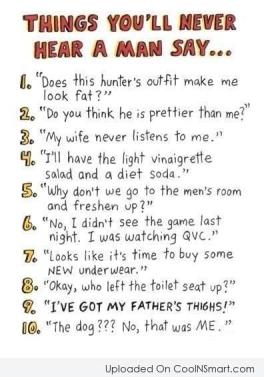

 This leads into my next point. Women use around 20,000 words as day versus the paltry 7,000 men use. Guys are like Sergeant Joe Friday in Dragnet. They keep it to just the facts. They don’t embellish or add emotion to the story. (When I taught fourth grade writing, that was the hardest thing for boys to learn—to add their feelings to their writing.) Nor do men notice the same details women do. Women notice what people wear, jewelry, outfits, shoes, and hair. My heroine might think a friend’s dress is aqua, but then qualify if as turquoise, but not the blue kind, the type that has a green hue. Guys? They’ll say it’s blue if they notice the color. But a car? Men will often know the make, model, color, how much horsepower it has, and Lord only knows what else. Me? I’m lucky if I know how many doors the car had. This can be fun, though, giving a character an unusual trait such as the heroine being a car expert or a sharpshooter as in The Andy Griffith Show when his date, Karen beats him in shooting competition. Or I might have a hero who has two or more sisters notice details other heroes wo


 Thank you to everyone who spend part of your day with me yesterday.


 The winery’s name comes from the Kiepersol farm where Pierre grew up. Legend has it soldiers running from a lion toward a lone tree, shouted, “Kiepersol! Kiepersol” as they sought safety in the tree. (Later it was learned the soldiers yelled, “We hope this tree will keep us all!” Pierre named his winery after that Kiepersol tree, hoping everyone who visited the winery would find that same comfort.


 Today I’m giving away this horseshoe decoration and a signed copy of To Tame a Texas Cowboy. To be entered in my random drawing, leave a comment to this question. What is the best story you’ve heard or best/most interesting fact you’ve learned on a trip? Or, if you don’t have a story to share, just stop by to say hello or tell me about a real life hero in your life.


