Grass Valley Brides

Years ago, a dear friend invited me to spend the weekend with her at her parents’ home in Sherman County, Oregon. I’d never been in that part of the state, but quickly fell in “awe” with the rolling hills of wheat and sky that stretched forever. A few years after that, I found myself driving through the area and when I entered the tiny town of Grass Valley, the idea for a book began hopping around in my head. By the time I got home, I could hardly wait to get started writing it.


And one book led to another, until there were six in the sweet, contemporary Grass Valley Cowboys series. The stories are all set in and around Grass Valley, focusing on the Thompson and Morgan families.

The cowboys in the stories are the kind of heroes that give you happy daydreams (and may even make you swoon). They can be tender, teasing, flirty, furious, mischievous, rascally, protective, and proud, and that’s all before breakfast!

I’ve often thought about how fun it would be to write about the first families who came to Grass Valley, at least the families connected to those in my stories. 


The settlement of Grass Valley began with the establishment of a few stock ranches. Settlers began to arrive in the area and were soon plowing the cattle-sustaining grass to plant wheat fields.  Dr. Charles R. Rollins, a physician from New Hampshire, is credited with establishing Grass Valley when he arrived in the area with a small party of pioneers.  Dr. Rollins had an easy time choosing a name for the location since the rye grass grew thick and tall in the alkaline soil. Rollins built a large two-story hotel, which included a clinic from which he prescribed and sold medicine.  The town of Grass Valley was officially established in 1878.

I knew train service didn’t arrive in the area until around 1900, so I started digging into more history.

If you look at the map above, you see the John Day River, the Columbia River, and the Deschutes River make up the boundaries of quite a large area. Reportedly, Dr. Rollins was the only physician “between the rivers” for a while as communities popped up around the county. 

Originally, I’d wanted to set the story in 1878, when Grass Valley was established, but getting my characters there was proving to be a challenge. So, I kicked the timeline up to 1884 when train service ran all the way across the country and made a stop in The Dalles. From there, it was simple enough to board the stagecoach that ran daily from The Dalles to Canyon City to the southeast. Just to reach Grass Valley took most of the day with stops at stations to switch out the teams for fresh horses. I could just picture a cast of characters bouncing along on that long ride, eager to reach Grass Valley.

When I was asked to participate in a new project with three other authors, I knew it was time to write the story of the first Thompson to arrive in Grass Valley. 

I’m so pleased and happy to be part of the Regional Romance Series with our own Kit Morgan, as well as Kari Trumbo and Peggy L. Henderson. What makes this series so fun and unique is that each of us is writing three connected stories that are bundled into one book. If you purchase all four books in the series, you actually get twelve (12!) brand new romances! 

My contribution to the series is Grass Valley Brides.

I can hardly wait for you to read these stories, because they were ridiculously delightful to write! Oh, boy, did I have a good time! Mostly because of Taggart Thompson.

He is a rascally, good-looking rancher who fancies himself to be quite the matchmaker. And the real matchmaker is ready to throttle him! 

What’s a matchmaker to do when the husband-to-be rejects the bride?

     Again . . .

Widowed as a young wife, Cara Cargill turned her head for business and love of romance into a successful mail-order bride enterprise. She’s never had a problem matching couples until one mule-headed man continues to refuse to wed the women she sends to meet him in Grass Valley, Oregon. In an effort to make a match he’ll keep and uphold her sterling reputation, Cara is desperate to find the perfect bride.

Daisy – When her fiancé leaves her at the altar, Daisy Bancroft knows it is far past time for a change. Her dearest friend, Cara, offers to send her to a newly established town in Oregon, where possibilities abound and the grass is rumored to be as tall as a man’s head. Daisy arrives with plans to wed Tagg Thompson, only to find the obstinate rancher has foisted her off on his best friend.

Birdie – Tired of waiting for her Mister Right to magically appear and whisk her away to a happily-ever-after, Bridget “Birdie” Byrne convinces her sister, a renowned matchmaker, to send her as the bride to Tagg Thompson. The man who greets her upon her arrival isn’t Tagg, but Birdie is certain she’s finally discovered the man she is meant to marry.  

Cara – Fed up with Tagg Thompson and his refusals of every bride she’s sent to Grass Valley for him to wed, Cara decides to meet the exasperating man in person. Her feet are barely on the ground in the rustic town before she’s nearly bowled over by a herd of stampeding cattle and swept into the brawny arms of a cowboy with the bluest eyes she’s ever seen.

Will true love find its home in the hearts of these Grass Valley Brides.


Dear Mrs. Cargill,

At the rate you’re finding me a wife, I may be too old to have any kids by the time I get married. Speaking of children, Sally Oliver, she was the first bride you sent, wanted me to pass on the news to you that she and her husband, Mr. Buster Martin, will be parents in March. Good thing you’ve got me to help find these women a happy home.

Are you sure you know what you’re doing? You came highly recommended as one of the top matchmakers in the country, but if you have this much trouble with everyone who engages your services, I don’t see how you stay in business.

Please let me know when you have another bride ready to send my way. I look forward to making her acquaintance, and can only pray she’ll be better suited as a ranch wife than the last four you sent.

Respectfully,

Mr. T. Thompson

Grass Valley, Oregon


What do you think? Will Cara find a bride to please Tagg?


Once Upon a Mail Order Bride Cover Reveal


I just love when I get a new cover. It’s like opening a present on Christmas morning. I never tire of seeing the new designs by the people at Sourcebooks. They’re truly amazing.

I especially love this one. The colors are so beautiful and the models are truly romantic

This is Outlaw Mail Order Brides #4 and the ex-preacher Ridge Steele gets a bride at last.

Except Adeline Jancy cannot speak.

She communicates through writing so she carries paper and pencil everywhere. But just because she can’t speak, doesn’t mean she’s passive. Ridge finds that out pretty quick and doesn’t make the mistake again.

This story is about finding hope and having the courage to right wrongs. Ridge and Addie are reaching for the impossible. Oftentimes it’s easier to let things stay the way they are, especially when living in a safe, outlaw town. It’s a lot harder to force change and they had to reach a point where they could accept that it would be possible by the slimmest of margins to make their lives better and grab hold of their future.

I’m going to be very sad to leave Hope’s Crossing. I love all these people. But a new series awaits and will start soon.

So tell me what you like or don’t like about this cover and/or the title. The book comes out on November 24, 2020.

Amazon  |  B&N  |  APPLE


GOTCHA DAY FOR SWEET SEMINOLE SAM! by Cheryl Pierson

Tomorrow, August 18th, is a very special day in the Pierson household. It’s “Gotcha Day” for our sweet boy, Sammy!

“Gotcha Day” is what many call the day a new pet comes to live with their family—a perfect, heartfelt matchup—and not only did we “get” Sammy, he got us, too!

The beginning of this story starts now nearly 12 years ago, before Sammy was ever born. My daughter, Jessica, adopted a fluffy white Great Pyrenees puppy from a shelter named “Embry”—at that time, the Twilight series was very popular, and when the puppies were born in the shelter, the staff named them all after characters from Twilight. “Embry” was a minor character in the series and my daughter kept the name because she thought it fit him.

About a year-and-a-half later, Jessica had to move from where she lived to a place that had a small backyard, no fence, and was close to a highway. We became “grandparents with custody” at that point—a big relief for all of us—except my husband, Gary,  had sworn off pets after the kids had left home after high school.

Embry as a puppy

It took about a DAY for him to realize that Embry was his soul-mate dog. Embry lived with us until his death in July, 2018.

I’ve spent my life taking care of animals and people, and I knew Embry would want us to rescue another dog and bring him or her into our lives. I bugged my husband relentlessly. He dug in his heels. He did not want another dog. But I DID. So how to solve it? I begged him to just “go look” and see

We went to the city shelter in the small town where I was raised, Seminole, Oklahoma. There was a dog that I’d shown him on their website that he’d shown mild interest in. I asked them to bring Sammy out for us to see. Sammy came right over to us, sat down on Gary’s foot, and would not budge. When he looked up at Gary, his entire expression said, “You are mine. I’m so glad you’re here for me!” I asked Gary if he wanted to look around, and he said, “No. There’s no need.”

Sammy’s shelter intake picture

He dubbed Sammy “Sweet Seminole Sam” and August 18th became Sammy’s “Gotcha Day”—one of the best days in our lives.

The first real bed Sammy has ever had. His first day with us.

But the story doesn’t end there! At the shelter, Sammy had been a social butterfly. The employees and other dogs all loved Sammy. Believe it or not, Sammy had been adopted once and returned—for digging holes in the backyard. He was about three months old, and put into the backyard alone, left to his own devices. I think he was trying to dig his way out and back to his friends!

After we’d had Sammy for a couple of months, I noticed a kind of pensive expression on his sweet face sometimes. I could only imagine what was going through his mind. I told Gary I thought Sammy needed another dog.

Sammy looking thoughtful. He’s about 11 months old here.

I love them all, but knew that we should probably look for a dog that was about the same age or younger than Sammy, who, at that time, was around 13 months old. This was in February 2019. 

There was a little waif that had been dumped with his siblings on the shelter steps when they were not even a month old. That would have been late January. He was white with light brown shading on his back. They thought he was part Great Pyrenees, probably from his coloring, but there were darker colored siblings, so said he might be also part German Shepherd. I didn’t care what he was—he was ALL love! He looked so lost and forlorn in his picture that was posted. I knew he was the one.

He had been named “Axel”–but that didn’t fit. We changed it to “Max” in case he’d gotten used to hearing that sound, and already might have started learning his name.

Jessica and I drove the hour drive to Seminole to pick him up. On the way home, he threw up in the back seat, and when I was holding him, he peed on me—twice! Then he went to sleep. I was in love. His “Gotcha Day” is March 11, 2019.

When we got him home, I went to pick Sammy up from doggie daycare, and Jessica gave Max a bath. Sammy walked right in and loved him immediately. It was “Gotcha Day” for Sammy, too—he got a new little brother!

Sammy and Max meet each other for the first time. Sammy is being so careful. Max adores him!

If I had a bigger place, I would have as many dogs as I could. It would be “Gotcha Day” several times over!

This was taken about a year ago–one of my favorite pictures of them. Max has gathered all the toys in a pile in front of him. Sammy came up to tell on him, and their expressions say it all–Max is so proud of himself. Sammy is saying, “Oh, brother! Look what I have to put up with!”

Do you have a pet that you celebrate “Gotcha Day” for? Since we don’t know their birthdays, this is the day we celebrate with ice cream cones, special treats, and car rides! What do you do for your pet’s “Gotcha Day” to celebrate?

Janice Cole Hopkins Has a Winner!


Thank you for visiting, Miss Janice! We loved every single minute!

The drawing is a little late and I apologize. 

The person who gets the ebook copy of Mountain Storms is……..

SHARON SPARKS

Yippee! Congratulations, Sharon! Watch for Miss Janice’s email.

Everyone have a great week! Find a cool place and read a book.

In From the Storm with Janice Cole Hopkins

The Scots who came to settle the mountain regions of the United States were a hardy lot, especially those who hailed from the Scottish Highlands. They felt at home settling in these areas few other immigrants wanted – areas like the Appalachians or the Rocky Mountains. A large amount of my heritage can be found among this group. Eighty-three percent of my ancestry come from the British Isles with a mixture of Scot, English, and Irish.

This is what happens in Mountain Storms, the first book in my In from the Storms Trilogy. Ian MacGregor was wounded in the Civil War and left Maryland to hide away in a mountain cabin in Wyoming Territory. He had been rejected because of his war wounds and wanted to move from society. Aileas Campbell stumbles on the cabin in a snowstorm after she runs away from unwanted attention. Neither suspect the adventure they’re about to begin or the changes God has in store for them.

The family saga continues in Past Storms. Jeannie MacGregor, at seventeen, feels imprisoned in the secluded mountain cabin with her taciturn brother, so she runs away and goes back to her aunt in Maryland, hoping to have a social life and find a suitor. But nothing turns out as she expected, and within a few years, she finds herself on a train back to Wyoming with her young daughter in tow. The unexpected interest of three men there surprises her, but only one man makes her heart beat faster. However, he’s the new pastor, and what would a man of God want with someone like her. He could hardly find a more unsuitable wife.

In Dust Storms, Brady Sharpe, Aileas’s stepbrother, wanders his way to Texas after Aileas refuses to leave with him. He tries ranching and becomes a foreman but never feels he truly belongs. After catching some cattle rustlers, he decides to leave but discovers a young woman in desperate need of help. He does his best but ends up deciding to take her back to Wyoming and get Aileas to help her. In their journey, they battle many storms, including a major dust storm and storms of the heart.

I loved writing this trilogy. Originally, I hadn’t planned to write Dust Storms, but when I finished Past Storms, Brady said I needed to tell his story, so I did. This has happened before in my character-driven novels. Readers seem to like this series, too, because these books have been my best-sellers for months.

I would like to offer one of you the chance to win a free copy of Mountain Storms. In addition, as long as they last, I would also like to give free codes for audible editions of one of the 3 books to any who have an Audible account (which is free but required to redeem the code). You can email me at janicecolehopkins@gmail.com, and I will send you the code for the book you request. Have a blessed day, ask me any questions you’d like, and I hope to hear from you soon.


Winners! For Karen Kay’s Free E-book

Howdy!

Many thanks to all who came to the blog yesterday and who left their thoughts and also those who didn’t leave their thoughts.  You are all welcome!

We do have two winners for the free e-book of THE ANGEL AND THE WARRIOR, the first in the Lost Clan Series.  And, those winners are:

sejoc1968

and

Teresa Warner

Congratulations!  What I’ll need you each to do is to contact me personally at karenkay(dot)author(at)startmail(dot)com (insert a . for dot and @ for at).  And, we’ll arrange to get the book to you.

Again, congratulations!

Janice Cole Hopkins Will Visit Friday!

Historical western author Janice Cole Hopkins will visit with us on Friday, August 14, 2020!

When the Scottish immigrated to America, they settled in mountainous regions. Know why? We’ll find out.

Miss Janice will also have some great giveaways!

And that’s a promise!

All you have to do is show up and leave a comment. Look at the bottom of the post.

So circle the date and head over.

If you don’t come, we’ll miss you.


Who Would You Be in the Old West?

Last week, I played a game in my Posse Facebook group, that ended up being so much fun, I thought we could play it here as well.

If you lived in the old west, who would you be, and what would you be doing?

I decided that I would be one of those town wives who invited everyone over once a month for a quilting bee where we would get very little quilting done but would have lots of tea and conversations about books.

When everyone else chirped in, we had a wonderful variety of answers including:

  • school teachers
  • librarians
  • innkeepers
  • cafe owners
  • bakers
  • druggists
  • nurses and doctors
  • preachers’ wives
  • farmers’ wives
  • ranchers’ wives
  • sharpshooters
  • tomboy trouble-makers
  • even dance hall entertainers
  • and saloon barkeeps

Who would you be?

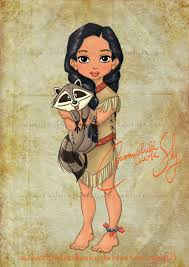
The Abduction and Murder of Pocahontas

Howdy!

So, today, I thought I’d tackle a subject of some interest, since this woman is actually a great American heroine.  I’m talking about Pocahontas.  And, I’ll be giving away a free copy of THE ANGEL AND THE WARRIOR today.  Just look off to the right here, please, for the rules regarding out give-aways.

Before I start, let me ask you a question:  Do you believe the Disney story of Pocahontas?  Or some version of it?

I did, well at least I did until I did some research into the actual story of Pocahontas.  So, if you don’t mind dropping down a rabbit hole, come along with me in this fascinating subject that has been given a spin so as to cover up an actual murder of this true, American heroine.

Pocahontas’ real name, by the way, was Matoaka — which means “flower between two streams.  Now, before I go on, let me do a disclaimer: this post in no way pretends to “know it all,” about this very definite heroine, but I think we might be able to set the story straight, at least a little.

To the left here is probably the most true picture (painting) that we have of Pocahontas.  Now, this will probably be the subject of two or three blogs, simply because there’s just too much info to get into one blog.  The information that I’m going to be telling you about comes from the book THE TRUE STORY OF POCAHONTES, by Dr. Linwood “Little Bear” Custalow and Angela L;. Daniel “Silver Star.”  This story that I’m about to present to you is one that is the story that has been passed down orally for hundreds of years by the priests of the Powhatan tribe (Pocahontas’ tribe).  It is the story of Pocahontas as told by her own people.  It is the story passed down by the tribe’s quiakros — or the chosen few of the tribe, who have spent their lives in learning.  One fact that I’m going to say here at the start of this post, mostly because it fascinated me, is that Pocahontas did not die of something.  She died for something.  And, she did not die of smallpox as is generally reported.  She was murdered.

But, as is said in Blackfeet Country, I get ahead of myself.  Let’s continue.  Pocahontas was indeed a princess.  She was born to the paramount chief, Chief Powhatan Wahunsenaca.  She was born to Wahunsenaca’s first wife, the wife of  his heart late in life.  Her mother died giving birth to her — and interestingly enough, her mother’s name was Pocahontas.  Wahunsenaca had truly loved his wife and when she died, he showered the love that he’d had for her upon his newborn child.  Pocahontas means, by the way “Laughing and joyous one.”  As mentioned in the book, the story of Pocahontas is a story of love — not the love between her and John Smith — but rather the story of a father and daughter’s love for one another and for their people.  Pocahontas had many older brothers and sisters — many were already married so that caring for the young child was not a problem.  She grew up being nursed by several different women of the tribe, which according to the book, might be one reason why her ties to her people were so strong.

To the left here is the more European version of the above painting of Pocahontas and her child.  Notice the smiles painted on the faces and the lack of dark circles under her eyes.

Pocahontas was only 10 years old when the colonists stared to arrive in 1607.  Because she was the daughter of the paramount chief, she was watched over very, very closely.  No running around wild for her.  Captain John Smith was 27 years old when he arrived in the New World.  The Powhatan tribe was made up of 6 different tribes, with other tribes in its alliance, as well.  There were other chiefs, but Powhatan Wahunsenaca was the paramount chief.  They all spoke the Algonquain language.  Part of the politics of the day was to bring into the tribe an alliance with other peoples and other tribes.  Thus, although the Powhatan could have destroyed the colonists at any time, they did not.  Instead, they sought to ally the newcomers to them.  Perhaps, looking back on history, this was their true mistake.

John Smith — about 6 months after their arrival in the New World — went to explore the countryside.  Warriors out hunting for food, discovered him and his party and after a skirmish ensued, Smith was taken captive.  Because the English used “thunder sticks” to kill the Indians, the people were afeared of them and were beginning to think of the English as though they were a deity.  This next is from the book quoted above — I found it highly interesting:  “Smith would pretend to come into a village in a friendly manner.  When he was in close proximity to the chief of the village, he would put his pistol to the chief’s head, demanding a ransom of food in exchange for the chief’s release.  Smith and his men would proceed to take all the corn and food in the village.  As they left, Smith would throw down a few blue beads, claiming to have “traded” with the Powhatan people.”

Does that sound like a man that a young girl would fall in love with?  When Smith was taken to Wahunsenaca, it is uncertain whether Pocahontas met Smith at this time or not.  Wahunsenaca asked John Smith why the English had come here, to which John Smith replied that they had come to this land to escape the Spanish.  Now, the Indians of this country had some trouble with the Spanish, already.  In fact they called the Spanish, “sons of the devil..”  Remember that Spanish ships would patrol the coasts of the Atlantic coast, sometimes capturing Native people.  Relations between the Spanish and the Powhatan were hostile.  A little known fact:  the word “Indian” does not come from Columbus’ error.  Rather it comes from the Spanish word, “indio” meaning to walk with God.  I like that meaning.

It is said that Wahunsenaca truly liked John Smith.  It was his plan to bring John Smith into the tribe and make him part of the tribe in an effort to consolidate their friendship against the Spanish.  Then if the Spanish did come in, they would be faced with the English-Powhatan people.  According to Pocahontas’ people, “Although Smith alleged years later that Pocahontas saved his life during the four-day ceremony in the process of his being made a Powhatan werowance, his life was never in danger.  His life did not need saving.”  A werowance was a commander — male.  Also, at this time, Pocahontas was a child.  Children were not allowed to attend these kinds of ceremony.  The priests would not have allowed Pocahontas to be at the ceremony.  After the ceremony, not only was John Smith considered to be a member of the Powhatan tribe, but the entire English colony was considered to be members, too.

In fact, when Smith returned to the English fort, it was the English who tried to kill him.  He was put on trial and was sentenced to death.  It was Christopher Newport’s arrival in the colony that saved John Smith.

Because the English were now considered part of the tribe, Wahunsenaca sent envoys with food to the Jamestown colony.  Because he now trusted John Smith, he allowed his favorite daughter, Pocahontas, to accompany the envoy.  Although she was closely watched and chaperoned during these excursions, the colonists became familiar with her, and they associated Pocahontas with the food — not the powerful chief who was in fact sending it.  Thus, the rumor that Pocahontas brought food to the colonists against her father’s will, is dispelled as untrue.

What Pocahontas was at this time was a symbol of peace.  She was not a spy as some historians have liked to believe.  It was during the summer of 1609 that relations between the Powhatan tribe and the English began to deteriorate.  Smith entered into villages rudely and with full arms, demanding and taking food.  In some instances, he left the Powhatans with no food for the winter.   As a matter of fact, this is the speech preserved that Wahunsenaca said to Smith. 

“Why do you take by force (that which) you may quickly have by love?  Or to destroy them that provide you food?  What can you get by war when we can hide our provision and fly to the woods?”  Yet John Smith continued to force arms upon the villages in order to take all their food stores, again leaving behind a few beads as though he had traded for the supplies.  Maybe he was simply a bully and it’s all he knew.  Smith continued to allege that Wahunsenaca wanted to kill him.  However, if this were true, it would have been done without apology or explanation.  Yet, it wasn’t.  Why?  Because Smith was considered to be part of the tribe.
Danger came to the Powhatan tribes in the form of rape.  In Powhatan society, the children went naked in the summer and women were bare-breasted.  It was part of their dress, and did not excite the men in particular because it was such a common sight.  Rape was not permitted in Powhatan society.  Often the women of the tribe would offer themselves to the English to prevent them from raping their children.  Because the English had guns, this was all they could do.  Whenever the English would come to the village, the elders would often take the children and hide them in the woods.  As more and more English colonists arrived, the atrocities began to grow.  Children were often taken to be slaves to the English.  The women were simply raped.  The Powhatan became shocked at the behavior of the English and set up guards to determine when they were coming to their villages.  For their own part, the English kept expecting some sort of retribution by the Powhatan.  Neither Wahunsenaca nor Pocahontas had seen John Smith since 1609 and they were told that he was dead.  Wahunsenaca discontinued allowing Pocahontas to go to Jamestown.  It was no longer safe.

smlkocoum1Well, that’s all we have time and space for today.  I hope you’ll bear with me and come seek out my post next month as I’ll be discussing Pocahontas’s coming of age.  Her marriage to Kocoum, her abduction and her subsequent marriage to John Rolfe.  And last but not least, her murder.  Why she was murdered and who did the deed, or at least who was responsible for it.  Facts, all.  Facts that have been hidden all these years which have only recently been brought to light by the people of Pocahontas’s own tribe.  I hope you have enjoyed this excursion into history and a look at this very brave heroine.  The enormity of her bravery and what she gave up and its cost to her, we’ll go over in my next post (Lord willing).

So, what do you think?  Did you already know this, or does this shed a different light on history.  It is said, that what is written of history is written by the victors.  This has, indeed, been true in the case of Pocahontas.  Thank heaven for oral tradition and keeping the truth alive against all odds.  So come on in and tell me what you think.   I’d love to hear your thoughts on this.

The Smithsonian

Hello everyone, Winnie Griggs here. According to my This Day In History calendar, today, August 10 is the 174th anniversary of the day President James Polk signed the Smithsonian Institution Act into law. In honor of that, I thought I provide a little bit of history and fun facts about this great national treasure.

Although Englishman and scientist James Smithson, the man the Smithsonian is named for, was something of a globe-trotter, he never actually set foot in the United States. His estate at the time of his death in 1829 was worth approximately $500,000. In his will he named his nephew Henry as his sole heir.

However, he made one unusual stipulation – if Henry were to die without an heir, then his estate would pass on to the United States of America in order for the country to create in Washington D.C. “an Establishment for the increase and diffusion of knowledge” to be named the Smithsonian Institution. As it turns out Henry died six years later at the age of 24 without any heirs.

Smithson gave no indication as to why he would chose to leave his legacy to a country he’d never visited, a country that was to him a foreign nation. And his indication of how the funds were to be utilized was also quite vague. Because of this there was a lot of disagreement over exactly what the money was to be used for. Early discussions suggested a university would best meet the requirement. Other ideas put forth were a research center, an observatory, a museum and a library. Politicians, educators scientists and civilians all had an opinion on the subject. It took nearly 10 years for a decision to be reached. What was ultimately established by congress was a hybrid of all these ideas.

The Smithsonian Institute today has 19 museums and galleries, nine research facilities, and the National Zoological Park, making it the largest museum and research center in the world.

Here are some interesting facts and trivia

  • When Smithson’s nephew Henry died, the American government was not even aware of the bequest existed. When President Andrew Jackson was informed he had to pass the info on to Congress. Some in Congress held that our government had no power to accept such a gift, and some were even adamantly opposed to our accepting it.  One senator argued that it would set a bad precedent, that “every whippersnapper vagabond would send a gift to the United States in order to immortalize his name.” But  in 1838, three years after Henry died, the money was finally officially handed over to and accepted by the U.S. Government
  • The original building that housed the Smithsonian was built based on the winning entry in a design competition. It is called the Castle because of its distinctive castle-like appearance.

  • The official estimate of the number of objects, works of art and specimens belonging to the Smithsonian is somewhere in the neighborhood of 154 million. 146 million of these are scientific specimens found at the Museum of Natural History. Just one percent of all items are available for public viewing at any one time.
  • One category of items has been placed off limits to the viewing public – that of human remains. This includes a collection of shrunken heads and other such gruesome specimens
  • The Smithsonian museums are open every day of the year except Christmas.
  • The Smithsonian employs about 6300 individuals all told. It has an annual operating budget of more than $800 million.
  • Most of the Smithsonian exhibits are free to the public.
  • One of the institutions under the umbrella of the Smithsonian is the National Zoo. It houses 400 different species and approximately 2000 animals. About one fourth of these are considered endangered.
  • As the Smithsonian expanded it outgrew the Castle and eventually moved into the current complex of buildings. There are 19 museums spread along the East Coast. The Castle now houses the visitor center.
  • In 2018 there were approximately 29 million visitors to the various Smithsonian museums.
  • Smithson was in Italy when he died so he was buried there. In 1904 the expansion of a stone quarry threatened to displace his remains.  When Smithsonian officials got word of this they petitioned to have his casket transported to America so he could be interred at the site of his legacy. Agreement was reached and the casket made the 14 day sea trip, escorted by Alexander Graham Bell. Today Smithson’s body is entombed in the Castle.

I’ve visited the Smithsonian twice and it really is an amazing place. I spent about a half day each time and feel I only scratched the surface of all there was to see.

What do you think – did any of these facts surprise you?

Have you ever visited the Smithsonian? If so, what was your favorite exhibit?