We’re excited to welcome our guest Misty M. Beller and what a great topic–Appaloosa horses. Today Misty will give away a signed print copy of her latest book Freedom in the Mountain Wind! Thank so much for stopping by, Misty!
Howdy, Friend! It’s always an honor to stop by for a visit with you.
All my life I’ve been a horse lover, and was blessed to grow up on a farm. My older brother and I each had ponies of our own and rode hours each day. When we were old enough to graduate to full-size horses, we met neighbors who also had horses and loved to ride together. The two mares they rode had a mottled black and white spotted look, which I knew to be part of the Appaloosa breed. Through years of riding together, I developed a deep appreciation for those two Appaloosa horses, as well as respect for the entire breed! Those two mares proved they could outrun and outlast any of the other horses in our riding group.
As I met other Appaloosas, I learned the breed has a wide variety of coat patterns, from dramatically spotted horses (called leopard Appaloosas) to solid horses whose rumps sport white “blankets” (with or without spots). You don’t always know what pattern a horse will have at its birth.
I’ve long wanted to include Appaloosas in one of my stories, especially since the breed was said to have begun in the Nez Perce tribe who lived just west of the Rocky Mountains. Most of my books are set in the majestic Rockies, so anything from that area snags my attention!
When I was brainstorming ideas for a new series, I realized this was the perfect time to include Appaloosas! A band of five good friends—as close as brothers. One sets off on a mission to find the famed Paloose horse bred by the Nez Perce tribe. When he doesn’t return as promised, the other four set off to find him. Thus begins the journey of a lifetime…
The story kicks off in book 1, Freedom in the Mountain Wind. I pray you love this story as much as I loved writing it, and enjoy a glimpse of the famous Appaloosa horse!
Is there a breed of horse you’ve always admired? A random person from the comments below will be picked to receive a signed print copy of Freedom in the Mountain Wind!
The last epic journey before her life changes forever.
Susanna Wilkins will do anything to make her father’s final dream come true, including trek along the path Lewis and Clark explored into the untamed wilds of the Rocky Mountains. Every mile is more crucial now that lung cancer is stealing Pa’s last days faster than she can come to terms with losing him. The journey becomes harder than she ever expected, but paddling upriver through fierce rapids and fighting hungry grizzlies isn’t what terrifies her the most.
Beaver Tail endured more than he can stand from the women in his Blackfoot camp, but the last disaster gave him the final shove he needed to join this band of brothers searching for one of their group who’s gone missing. The last thing he expected was to find a white woman and her sick father stranded at the base of a massive waterfall. His plan is to help them carry their oversize canoe and supplies, then leave them to their strange mission. Yet, the more he learns about the pair, the more he realizes his life is about to be derailed—again.
From a USA Today bestselling author comes another epic journey through breathless landscapes and adventure so intense, lives will never be the same.
Author Bio:
Misty M. Beller is a USA Today bestselling author, writing romantic mountain stories set on the 1800s frontier and woven with the truth of God’s love.
She was raised on a farm in South Carolina, so her Southern roots run deep. Growing up, her family was close, and they continue to keep that priority today. Her husband and daughters now add another dimension to her life, keeping her both grounded and crazy.
God has placed a desire in Misty’s heart to combine her love for Christian fiction and the simpler ranch life, writing historical novels that display God’s abundant love through the twists and turns in the lives of her characters.
I have a new book out, just in time for Valentine’s. The anthology is titled Mail Order Standoff. If you like mail-order bride stories, then this one is for you. The stories all have a fun twist when the brides get cold feet. Here’s a short preview of my story:
Pistol-Packin’ Bride
Attorney Wade Bronson didn’t expect to get shot on his wedding day–
and certainly not by his mail order bride…
Elizabeth Colton stares anxiously out the window of the stagecoach. Fresh from Boston, never could she imagine a more desolate place. Every scary story ever heard about attacking Indians and highwaymen comes back to haunt her.
Before they reach town, her worst fear is realized. A horseman flags them down and yanks open the door to the coach. Certain he is about to rob her—or worse—she pulls out her derringer. Much to her shock, the gun goes off and the man falls to the ground.
Attorney Wade Bronson is lucky to be alive. Fortunately, the bullet missed his heart—barely. All he did was stop the stage to tell his mail-order bride he’d been called out of town on urgent business and had to postpone their wedding. God forgive him for not feeling especially charitable toward the blue-eyed beauty who shot him, but now he’s bed-ridden with a shoulder-wound and his gun-toting bride-to-be is in jail.
It seems everyone in the small town has an opinion on the brash young woman who traveled west to become his wife—and none of it good. Orphaned at a young age, Wade was raised by the town and is Prickly Pine’s favorite son—literally—and the local girls know better than to get involved with him. Things looked bad until his three worried “mothers” took it upon themselves to place an ad in Matrimonial News for a “nice Christian girl from the east.” Now they refuse to believe the pistol packin’ bride is the right woman for him. At first, even Wade has trouble visualizing the two of them wed.
But in matters of the heart sometimes a wrong really does make a right. Now he doesn’t know which task will be hardest; convincing his reluctant fiancée that marriage to a man with three sets of well-meaning “parents” won’t be so bad (maybe). Or proving to the town that Elizabeth really is the girl of his dreams.
Admittedly, the history of mining isn’t something I’ve spent a lot of time thinking about or researching. And then I happened to include a setting of mines in not one but two stories and dove into researching hard rock mining in the Baker City, Oregon, area at the end of the 1800s.
I knew before I started that there were many, many mines in the area from the 1880s through the 1890s and on into the new century. Dozens of little mining towns popped up on the horizon and just as quickly faded one the mines closed.
From 1880 through 1899, Oregon produced more than $26 million dollars in gold and silver with more than $18 million of it coming from Baker, Grant and Union county (which are all in the Baker City region).
To say mining was a big deal at the time is something of an understatement. It was a huge business.
Thankfully, the Baker County Library has an incredible digital library of thousands of old images. I found many that illustrated the mining business and aided my research more than I can even say.
As a visual person, it was fantastic to look at these images, read the descriptions and picture how things would look at my fictional mines.
Baker County Library, Baker City, Oregon
This advertisement was such a help to me because the illustration lets you look inside the various levels of the mill and see how they were built into the hills.
Baker County Library, Baker City, Oregon
This is an image of the Eureka & Excelsior Mine mill building in the Cracker Creek District, Oregon. You can see how it’s built into the hill, quite similar to the illustration in the advertisement.
Baker County Library, Baker City, Oregon
This image shows the vanner room at the Bonanaza Mine, which was one of the top producing mines during the mining heyday in the Baker City region. It was located four miles from Greenhorn City which straddled both the Baker and Grant county lines.
Vanning is a process of separating the material of value from that which is worthless. Typically, a powdered sample of orestuff is swirled with water on the blade of a shovel and then given a series of upward flicking motions. The heavier ore is tossed up through the water and appears as a crescent shaped patch at the top of the charge with the lighter material that is unusable below. In the 19th century, the process was automated and used to separate ore on an industrial scale. The Frue Vanner was a widely-adopted machine, invented in 1874 by W.B. Frue in Canada.
With a Frue vanner, a continuous rubber belt (usually 4 feet wide and about 27.5 feet long, shown in the center of this photo) passed over rollers to from the surface of an inclined plane. The orestuff was concentrate on in the belt and the belt traveled uphill from three to twelve feet per minute while being shaken anywhere from 180-200 times. Crushed orestuff from the stamps fed onto the belt. As it traveled uphill, it met small jets of water which gradually washed the gangue (the commercially valueless material in which ore is found) off the bottom of the belt. The heavier ore adhered to the belt as it went over the top roller and passed into a box containing water where the ore was deposited. To make this work, anywhere from three to six gallons of water per minute was required. One machine could treat approximately six tons per twenty-four hours of orestuff.
Baker County Library, Baker City, Oregon
This is a photo of the stamping room at the Golden Gate mine, also located near Greenhorn City. There are ten stamps shown here. The stamp is a large mechanical device used to crush ore and extract minerals. Repeatedly, the stamps and raised and dropped onto ore that is fed into the mill, until the coarse ore is reduced to a finer material that can be further processed. The number of stamps used depended on the size of the mill and the amount of ore being taken out of the mine.
Baker County Library, Baker City, Oregon
The Red Boy Mine (also located near Greenhorn City) boasted it’s own laboratory, at least in this 1902 photo. On-site labs were considered to be a strategic value to a mine. Among the work done there was testing and sampling to derive critical operational, metallurgical, and environmental data needed to make the most of mining and mineral processing production.
Baker County Library, Baker City, Oregon
This amazing photo (undated) was taken at the Bonanza Mine. Five men are working in a tunnel wielding four-pound hammers that were called “single jacks” and steel drills. Note the candles on a wire stuck in cracks in the walls to provide light. Total production at this mine from 1899-1904 was just shy of a million dollars. It was mostly a gold mine, although they did find some silver. Reports show total production from the mine totaled $1.75 million dollars.
Baker County Library, Baker City, Oregon
And this awesome image is taken inside the superintendent’s cabin at the St. Anthony Mine in 1901. One might assume the woman in the photo is the superintendent’s wife. Many of the mines refused to allow women in the camp and were called a “boar’s nest.”
If you’d like to read more about mining in this region of Oregon, there’s a lot of detail in this digital report.
And if you’d like to read about the adventures of my characters at the fictional mines that exist only in my head, you’ll find Graydon (Grady) Gaffney at the Lucky Larkspur Mine in Gift of Hope.
When his affections are spurned by the girl he plans to wed, Graydon Gaffney rides off in the swirling snow, determined to stay far away from fickle females. Then a voice in the storm draws him to a woman and her two sweet children. Despite his intentions to guard his emotions, all three members of the DeVille family threaten to capture his heart.
Giavanna DeVille holds the last frayed edges of her composure in a tenuous grasp. In a moment of desperation, she leaves her sleeping children in her cabin and ventures out into a storm to release her pent-up frustrations where no one can hear her cries. Much to her surprise, a man appears through the blinding snow. He gives her a shoulder to cry on and something even more precious. . . hope.
Can the two of them move beyond past heartaches to accept the gift of hope for their future?
You’ll also find the characters of my latest book Dumplings and Dynamite (releasing tomorrow!) at the Crescent Creek Mine, up in the hills out of Baker City.
Widow Hollin Hughes doesn’t care how long it takes or the depths of deception required to discover how her husband really died. She’s determined to unearth the truth and unravel the mystery surrounding his death. Then a new dynamite man arrives at the mine and throws all her plans off kilter.
With a smile that makes females of any age swoon, Deputy Seth Harter can charm his way into or out of almost anything. When he’s sent undercover to Crescent Creek Mine, even the cranky cook seems entirely immune to his rugged appeal, making him wonder if he’s losing his touch. Eager to get to the bottom of a series of unexplained deaths, Seth counts on catching the criminals. He just didn’t anticipate a tempestuous woman claiming his heart in the process.
Brimming with humor, tidbits from history, and a sweet, unexpected love, don’t miss out on a heartwarming romance packed with adventure.
And here’s a little excerpt from the story:
A flash of pity swept through him for the baby’s mother who lost her husband and was now working for the contemptible Eustace Gilford. He had no doubt the woman had to rise in the wee hours of the morning to be able to cook a big breakfast for a camp full of miners. It had to be challenging to cook and care for such a newly-born child.
Mrs. Parrish hurried back into the kitchen, saw him holding the baby, and her pale skin blanched white.
“What are you doing?” she asked in a harsh, quiet tone. She moved across the room and took the baby from him with such haste, he had no idea how she’d managed to reach him in so few steps. He couldn’t be certain, but he thought maybe she’d forgotten about her limp.
“I hoped if I held her, she’d stop crying. It worked,” he said, shoving his hands in his pockets, although he moved a step closer to the widow. “What’s her name?”
“Keeva.”
“I’ve never met anyone named Keeva. Is it a family name?” he asked.
The woman merely nodded. “It was her great-grandmother’s name.”
“Then I’m sure she’d be proud to have a beautiful little granddaughter to share it with.”
The woman looked at him over her shoulder with an uncertain glare, as though she couldn’t quite figure him out, before she turned back to the baby. “Breakfast is on the table. The men will be in soon. If you want something to eat, you best get out there. If Mr. Gilford didn’t mention it, the men pack their own lunches from the food on the tables near the door.”
“He did say something about that. Thank you, Mrs. Parrish.” Seth tipped his head to her then made his way to the dining room where men began trickling inside.
Eustace directed Seth to a chair at the far end of the long table. When everyone was seated, he pointed to Seth. “Meet our newest employee, Seth Harter. He’ll be drilling and blasting.”
Mrs. Parrish nearly dropped the pot of coffee she carried at this announcement but quickly recovered. Seth wondered how hard he’d have to work to charm the truth out of her. In spite of her appearance, something about her made him look forward to trying.
If you were a miner back in the 1800s, what kind of mineral would you have been searching for? Gold? Silver? Quartz? Copper? Lead? Something with a little more sparkle?
Color is all around us and writers use a lot of color in telling a story. Readers visualize the characters knowing the color of their eyes, hair, and clothes. Animals, landscape, foods–it’s impossible to write a story without using the various shades and hues.
There’s a reason why hospitals use a lot of blue, churches employ white, firetrucks are red, and nobility wear purple.
Here’s a little of what I discovered:
WHITE – purity, innocence, and wisdom. i.e. angels
BLACK – negativity and judgment
RED – energy, vigor, power, strength
PINK – love and compassion
PURPLE – royalty, blending of mind and spirit, uplifts
BLUE – prime healing color, relaxation, sleep, peace
BROWN – the earth, commitment
GREEN – balance and harmony, sensitivity, abundance
YELLOW – the emotional self, cleansing, creativity
ORANGE – cheerful and uplifting, warmth
TURQUOISE – brotherhood, friendly, the color of the freed soul
* * * * *
My new book – THE MAIL ORDER BRIDE’S SECRET – will release on Jan. 28th. This is Book 3 of my Outlaw Mail Order Bride series and tells Tait Trinity’s and Melanie Dunbar’s story.
Melanie has turquoise (green/blue) eyes and Tait describes them as the color of ancient stones. His eyes are an icy gray, the color of quicksilver. Her hair is red and his sun-streaked brown. Color says a lot about these two.
Tait is an outlaw and has a large bounty on his head for a string of train robberies so when his sister’s twin boys and four-year-old daughter appear on his doorstep, he’s totally unprepared for the responsibility. The last thing he needs are children to raise, yet he can’t let them go to an orphanage. His friends advise him to send for the mail order bride he’s been writing, but when she arrives, she’s nothing like what he expects.
Melanie is thrown as well to see there are kids involved. She lets him know right off that she’s not going to be his nanny, housekeeper, laundress, or cook while he rides out and stays gone for weeks or months at a time. Wife is the role she’s agreed to, but she comes with secrets—big juicy ones.
How long will it be before Tait figures out her true reason for marrying him? And he does.
I hope you give this book a try. The children provide ample humor and the ending is the most powerful I’ve ever written. The old western series Paradise provided a lot of inspiration. Book 4 will release the end of the year and complete the series with Ridge Steele and Addie Jancy.
Question: How does color affect your life? Do you have a favorite and why?
Giveaway: Two people who comment will win a copy (their choice of format.)
I learned a new word the other day, thanks to a dear friend of mine, Sharon Cunningham. She posted on Facebook about the word, “saeculum”—which was one that I’d never heard of. I didn’t even know there was an actual word for this “event” or “circumstance.”
Saeculum means the period of time from when an event occurred until all people who had an actual memory of the event have died. The example she used was World War I. The saeculum for that war is over.
It can also be applied to people. (Something else I never thought about.) A person’s saeculum doesn’t end until all people who have a clear memory of knowing that person are gone. So even though a person has died, their saeculum will live for another two or three generations!
Isn’t this amazing? And comforting, somehow. Yes, eventually our saeculum will be over, but what amazes me, and comforts me at the same time, is knowing there is a word—an actual TERM—for the idea of this memory of an event or person.
When you think about it, knowing that someone has created a word to define this period of time is important, because it defines it and gives it meaning—not just some nebulous “I remember Mama” type idea that is passed down. It means, I DO REMEMBER MAMA. I remember how Mama used to sing, I remember how Mama used to cook, how her palm felt on my forehead in the night when she came to check on me. I remember “that” look when she was upset with me, and I remember how she cried when she learned her dad, my grandfather, had died.
Valentine’s Day 1965, Mom, my sister Karen, me, and my oldest sister, Annette Nov. 1960–my sisters, Karen and Annette cutting up in the living room Sept. 1966–my mom and dad together Dec. 1965–my mom wearing the hula skirt my sister Annette brought me from Hawaii for Christmas April 1960–my grandmother (mom’s mother), a not-quite-3-year-old me, and my sister Annette January 1960–Mom’s 38th birthday
I remember Mama the way I knew her. And when we talk to other members of the family who knew and remembered her, we learn many other facets about her personality and things about her as a person we would never have known otherwise. It’s this way with every person we know!
But let’s take it one step further: I remember family. My own, of course—two sisters, Mama and Daddy. But what about extended family? Sometimes we tend to just “move on” in our lives and not dwell on memories of long ago because somehow, they don’t seem important to us. But now that there is a word that defines us in relationship to those memories, doesn’t it seem a little more important that we remember those long-ago times? Soon, there will be no one to remember, and the saeculum for our entire family will be gone.
A group of my cousins at a family reunion
Oddly enough, I remember what I thought AS A CHILD at family get-togethers—the excitement of seeing my cousins, of taking a trip to visit everyone, of staying up late and having a bit more freedom since I had grandparents at both ends of the small town where both sides of my family had many members living—and I felt special because of that. I was the ONLY ONE of my cousins who had THAT! So we always had somewhere to walk to when they were with me—to one grandparents’ house or the other.
As an adult, I think back on those simpler times and wonder what else was going on in the “adult world”—sisters, brothers, in-laws all gathering with their children and meal preparation for so many people—my mother was the oldest of eleven children!
My mother, El Wanda Stallings Moss, and my aunt (my dad’s sister) JoAnne Moss Jackson
Two unforgettable women!
Everyone tried to come home to Bryan County during Christmas and/or Thanksgiving. Such an exciting time, but for the adults…tiring and maybe stressful? If so, I don’t remember ever seeing that side of anyone.
My mom and dad as newlyweds in 1944–El Wanda Stallings Moss and Frederic Marion Moss–around 22 years old
So, maybe that’s why I think writing is so important. My mom always said she wanted to write down her life story, but “life” kept getting in the way and it never happened. When she ended up with Alzheimer’s, the time for writing down anything was over. Though the written word doesn’t add to a person’s saeculum, it does at least two things for those left behind: It helps preserve the stories and memories the deceased person has talked about before they passed, and it gives future generations a glimpse into their ancestors’ lives, thoughts, beliefs, and dreams.
This is my great-grandmother, “Mammy” (Emma Christi Anna Ligon Stallings)–my mother’s dad’s mother. I never knew her, but I felt like I did from the stories Mom told me about her. She was born not long after the Civil War ended, and regaled my mother with stories of her growing up years. I wish I had listened better when Mom tried to tell me about her!
We die, and eventually are forgotten by the world. Events happen that were, at the time, life-changing, world- altering, such as wars, rampant disease, and tragedies of other kinds. These, though horrific at the time, will eventually be relegated to the tomes of the historical past…and forgotten…by many. There is nothing to stop it. All saeculums will be over for individual people and for events. And they will all become history.
What we can leave behind for others is our pictures, the written word of who we are and what we believe, and if we have a particular talent or craft, pieces of that—carvings, quilts, beautiful artwork or writings, creations of so many kinds.
A painting my mom did many years ago of an old barn in a snowstorm. Sorry it’s so small! Couldn’t make it bigger without making it blurry.
Our saeculum is fragile, and fleeting. So for 2020, my one and only resolution is to try to keep some kind of journal for my children, or for anyone who might be interested in the future. I want to write about my childhood, just the regular every-day things we did, the heat of the Oklahoma summer nights, the fireflies that lit up those nights until we knew we had to go home or get in trouble! The way the house creaked, and how the attic fan sounded like a freight train as it brought in that blessed cooler air during those same hot summer nights. So many memories of “nothing special”—just the business of living. I want to write about the way life was then—because it will never be that way again, for better or worse.
My best friend, Jane Carroll, and me, on a fall day in the sandbox. I was about 8, and Jane was a year older. We moved in just down the street from one another during the same week of 1963! Jane is gone now, but I still love her and miss her.
Will anyone give a hoot? Maybe not. But I will know I’ve done what I could do if anyone DOES care. I’m not sure Laura Ingalls Wilder thought anyone would care about her stories—but look at what a glimpse into the past they have provided for so many generations! I’m no Laura Ingalls Wilder. My journals won’t begin to make the impression on the world that hers did. But you never know who might read them and think, “I wish I had known her!” (Even after my saeculum is over!)
Me, at age three.
Do you have anything you would like to leave to future generations to remember you by? This fascinates me!
For some reason this post “missed” its schedule on Wednesday evening. Huh! First time that’s ever happened, and so I wanted to take a moment and repost this and hope, hope, hope that it posts. First, before I announce the winner, I want to take this time to thank each and everyone of you for coming to the blog and for leaving a message. I really enjoyed talking to you all yesterday.
A drawing was done and the winner of the book, LAKOTA SURRENDER, either in paperback or e-book (your choice) is:
TERESA F.
Congratulations, Teresa. Please do contact me at karenkay(dot)author(at)startmail(dot)com and let me know if you’d like a print book or the e-book. Hope to talk to you all again soon!
Today we’re happy to welcome Heather Banton! Today Heather will tell you about her book, A Good Man Comes Around, and she will give away three copies of her book to three winners. If you prefer, you can choose a book from her back list. Welcome, Heather!
In the Tragedy, Find the Blessings…
Greed is good.
Greed is good?
Hardly. But the 19th-century discoveries of gold and silver inarguably drew men by the thousands to the American West. Some prospectors were good. Some were bad. All played their part in settling America’s frontier.
As I researched gold rushes for a few previous books, I was struck by one man’s random, utterly stunning gold strike, and the way it impacted his life. His tale is the basis for my book, , the expanded version releasing today!
Oliver Martin was one of the few men in the goldfields who was there more out of directionless boredom than Gold Fever. Ostensibly, he was in the gold camps to strike it rich. The fact was, though, Oliver was a good-for-nothing slacker who didn’t even own a pan. Hard work didn’t pull his trigger. He meandered around boom towns like El Dorado and Yuba, panning, drinking, doing odd jobs, but mostly, drinking. Drifting, lost, he had no real plans for his life.
Then tragedy struck. And in nearly the same instant, Oliver was handed an incredible, amazing blessing. I mean, a jaw-dropping fork in his road.
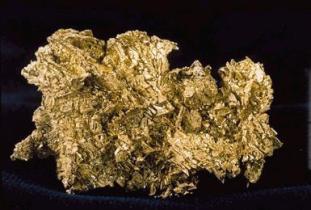
After an accident, the young man had to bury his lifeless best friend in the wilds of the Sierra Mountains. Grief-stricken and with no conscious thought to location, he merely chose the first spot he saw. Along a bustling creek, he dropped to his knees and started clawing at the sand. He had not dug down two feet when he found a nugget of gold that weighed in at over eighty-five pounds.
Eighty. Five. Pounds.
In modern money, the rock had an approximate value of $650,000. Digging less than a foot in any direction and Oliver would have missed the nugget entirely.
I was fascinated by this turn of events in the man’s life. Wham! Suddenly he had a pot of gold sitting in his lap. He had gained something of great value yet lost something priceless, irreplaceable, in one fell swoop. I thought of Job—God blessing him, then Satan cursing him.
Receiving an overwhelming financial windfall is definitely a blessing or a curse. Depends on how you use it. We know most of these stories don’t end well. The goldfields were killing fields, rife with thievery, murder, and mayhem. And even when the prospectors managed to hang on to their money, they often spent it on riotous living before they could get out of the mountains.
Oliver found himself facing an unfamiliar choice: squander the unimaginable wealth or use it wisely, to become a better person, maybe make the world a better place.
What would he do? He had spent much of his life breaking promises, abusing friends, and running from God. Now it was time for him to examine his heart. He was still reeling from the painful loss of his friend. How could his future be so bright and yet so grim? Was it even in him to be a better man?
Meanwhile, God was working on someone else’s heart. Moved by Oliver’s tragedy, Abigail Holt, the mail-order bride Oliver had rejected, offered him friendship and forgiveness.
So, the question is, did Oliver go the way of so many lottery winners? Did he drink and gamble the money into oblivion? Loan it to moneygrubbing friends more lost than he? Or did he grow up and find the path God had for him? Did Abigail play any part in his choices?
I hope you’ll read releasing today and find out what drew me to this true Gold Rush story.
What about you? Have you or anyone you know been able to look past an enormous tragedy and find a blessing in it? Comment to win your paperback copy OR any paperback by me of your choosing! I’ll do THREE (3) winners!
One of the things I enjoy in writing is the research. I love learning new things. For my current series, Bachelors & Babies, I needed to learn about childbirth and childcare in the 19th Century.
During the 1800s, infant mortality was shockingly high. Many died before the age of one, and a relative few lived to adulthood. Drownings, falls, snake bites, accidents, diseases, bad water, spoiled food due to the lack of refrigeration, poor hygiene, poor diet—the causes were numerous.
My hero in my second Bachelor & Babies book, JARED, was a rancher who happened to enjoy inventing things, such as a recording device like the phonograph invented in 1877 by Thomas Edison. After the arrival of triplets in the household, Jared’s interests veered toward ways to aid mothers. First, he created a window box made with a wooden frame and using chicken wire for the top and sides. The box fit into an open window, with the bulk of it sticking outside. The infant could enjoy sunshine and fresh air without insects and be relatively safe (have to wonder about that).
He also created a walker much like those sold today. This wasn’t too unusual. Walkers were used back beyond the 17th century. His other inventions included a swing that resembled a porch swing except with a baby bed and a mechanism to make it rock. He also designed folding highchairs. The key was to make these items safe enough for the child and then pray they would be used safely.
At the time, when my story takes place (1879), baby formula had yet to be invented. There were baby bottles (some called murder bottles—see bottle like baby’s face & picture of several bottles—because of harmful bacteria housewives couldn’t easily wash away.) Rubber nipples tended to develop cracks that harbored bacteria. They could also release carcinogens and cause allergic reactions. Although the first rubber nipple was patented in 1845, it wasn’t until the early 1900s that a practical rubber nipple for nursing bottles was developed.
Nineteenth Century medicines, even those made for children, tended to contain shocking levels of alcohol and opium. Bayer Pharmaceutical Products invented heroin (diacetylmorphine) and started selling it from 1898. Sigmund Freud extolled the virtues of cocaine for its supposed ability to treat depression and impotence. Kimball White Pine and Tar Cough Syrup, which contained four minims of chloroform, was marketed for colds and bronchitis. In 1849, Mrs. Charlotte N. Winslow launched her Soothing Syrup containing sodium carbonate and aqua ammonia, as well as 65mg of morphine per ounce. It was advertised as effective for children who were teething. Babies were also spoon-fed laudanum for teething pain, bowel problems, flatulence and convulsions.
If that wasn’t enough to explain the high infant mortality rate in the 20th century, there was also premature birth, birth asphyxia, pneumonia, congenital malformations, term birth complications such as abnormal presentation of the fetus, umbilical cord prolapse, or prolonged labor, neonatal infection, diarrhea, malaria, measles and malnutrition.
When you think about it, you have to wonder that children survived at all.
To win an ebook copy of JARED, Book 7 in the BACHELORS & BABIES sweet romance series,
tell me . . .
What crazy things did you do as a child that you were lucky to survive?
I had a swing in my backyard and a driveway that went downhill. I’d swing as high as I could, wearing roller skates, jump off and skate down the drive. The trick was to turn onto the sidewalk at the foot of the hill and avoid flying into the busy street.
Charlene Raddon likes to claim that her fiction career began in the third grade when she told her class she’d had a nonexistent baby sister killed by a black widow spider. Her first serious attempt at writing came in 1980 when a vivid dream drove her to drag out a typewriter and begin writing. She’s been writing ever since. She grew up certain she’d been born in the wrong era and truly belonged in the Old West. Her genre is, of course, historical romance set in the American West. At present, she has five books, originally published in paperback by Kensington Books, two anthologies and a novella available on Amazon. Now an indie author, Charlene is busy on her next novel. She also designs book covers and other graphic materials for authors, specializing in western, at http://silversagebookcovers.com.

 our riding group.
 When I was brainstorming ideas for a new series, I realized this was the perfect time to include Appaloosas! A band of five good friends—as close as brothers. One sets off on a mission to find the famed Paloose horse bred by the Nez Perce tribe. When he doesn’t return as promised, the other four set off to find him. Thus begins the journey of a lifetime…
 the path Lewis and Clark explored into the untamed wilds of the Rocky Mountains. Every mile is more crucial now that lung cancer is stealing Pa’s last days faster than she can come to terms with losing him. The journey becomes harder than she ever expected, but paddling upriver through fierce rapids and fighting hungry grizzlies isn’t what terrifies her the most.


 Howdy!
 In the Tragedy, Find the Blessings…
 though, Oliver was a good-for-nothing slacker who didn’t even own a pan. Hard work didn’t pull his trigger. He meandered around boom towns like El Dorado and Yuba, panning, drinking, doing odd jobs, but mostly, drinking. Drifting, lost, he had no real plans for his life.
 first spot he saw. Along a bustling creek, he dropped to his knees and started clawing at the sand. He had not dug down two feet when he found a nugget of gold that weighed in at over eighty-five pounds.
 I was fascinated by this turn of events in the man’s life. Wham! Suddenly he had a pot of gold sitting in his lap. He had gained something of great value yet lost something priceless, irreplaceable, in one fell swoop. I thought of Job—God blessing him, then Satan cursing him.
 to become a better person, maybe make the world a better place.
 One of the things I enjoy in writing is the research. I love learning new things. For my current series, Bachelors & Babies, I needed to learn about childbirth and childcare in the 19th Century.
 inventing things, such as a recording device like the phonograph invented in 1877 by Thomas Edison. After the arrival of triplets in the household, Jared’s interests veered toward ways to aid mothers. First, he created a window box made with a wooden frame and using chicken wire for the top and sides. The box fit into an open window, with the bulk of it sticking outside. The infant could enjoy sunshine and fresh air without insects and be relatively safe (have to wonder about that).


 baby bottles (some called murder bottles—see bottle like baby’s face & picture of several bottles—because of harmful bacteria housewives couldn’t easily wash away.) Rubber nipples tended to develop cracks that harbored bacteria. They could also release carcinogens and cause allergic reactions. Although the first rubber nipple was patented in 1845, it wasn’t until the early 1900s that a practical rubber nipple for nursing bottles was developed.


