Author Tina Radcliffe Returns on Friday!

Yee-Haw! Miss Tina Radcliffe will visit the Junction on Friday, March 1, 2019!

Miss Tina is going to pick your brain about series book and what you think of them. She has a bunch of questions so be thinking about that.

And oh my goodness! She’s toting tons of giveaways!

Remember, to get your name in the pot, head over and join the conversation.

It’ll be great fun and you might win something in the bargain.

We hope to see you here!


Never Jump a Barbed Wire Fence Naked

Every generation says growing up is harder for the current one, but the issues I see today’s children dealing with makes my heart ache for them. As I pondered how we as a society start dealing with the problems facing our young people something in my Pinterest feed caught my eye: 

The Cowboy Code

If it’s not yours,

Don’t take it.

If it’s not true,

Don’t say it.

If it’s not right,

Don’t do it.

Something so simple, and yet, so profound. The first part—if it’s not yours, don’t take it—is easy for most of us. We know what stealing is and that it’s wrong. But the other two are tougher. If it’s not true, don’t say it—I don’t lie about someone, but I’ve been known to gossip. Because I’ve come to believe gossip can be as dangerous and damaging as lying, I try to avoid listening to or repeating it. As to the last part of The Cowboy Code—if it’s not right, don’t do it—I think it’s the most complicated. How do we tell what’s right with so many gray areas? For me, if I listen to my gut, it becomes clearer. When I feel that little twinge, I know something isn’t a good decision, and I’m learning to trust that. So far, my gut’s served me well.

Inspired by The Cowboy Code, I searched Pinterest and found other western advice. Maybe because cowboys work with cows and steers—animals known for requiring patience—but what I found has encouraged that very trait in me. I’ve always been a “Lord, give me patience right now” gal. I’ve been quick to honk at drivers who don’t move the minute the light turned green. I’ve fumed at someone taking too long leaving a parking space. But now, I try to be the driver I want on the road with me. When someone allows me to pull out in heavy traffic, I give them the “thanks pardner” wave to acknowledge their kindness, and more importantly, I try to be the person who makes room for others.  

Yup, I’m taking The Cowboy Code and philosophy to heart. I did this hoping to brighten someone else’s day and made a profound difference in my own life. Doing so has helped me slow down, be more patient, and live happier. Maybe that’s The Cowboy Code is a possible answer to some of our problems.

I’ll leave you with another cowboy tip that hopefully makes you smile as it did me. You got it. “Never climb a barbed wire fence naked.” Okay, so maybe they aren’t all diamonds, but you got to admit, it’s solid advice!  

Click here to head to the Petticoats and Pistols Pinterest site and check out more cowboy philosophy inspiration I found.

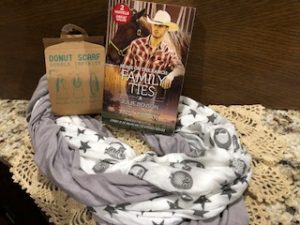
Now it’s your turn. Leave a comment about your favorite cowboy or downhome wisdom to be entered to win the gray and white owl scarf and a copy of Family Ties containing my novel Cowboy in the Making pictured here. 

Tuesday’s Winner from Phyliss


Congratulation to my Tuesday Winner …

Lori

Lori, I will contact you later today at the email

address you left concerning getting your copy of 

Out of a Texas Night.

Again, congratulations, Lori!

From Murderer to Lawman — Texas Ranger Captain Arrington

In April, I’m attending an arts workshop, including authors, in Canadian, in the Texas Panhandle. You can’t think about this part of Texas without giving a great deal of thought to one of our pioneers, Captain George Washington Arrington, who was also one of the first Texas Rangers. His ranch is now an historical site with a Bed and Breakfast. I’m hoping to take a tour while we’re there.

“Cap”, as he was known, was not just a lawman, rancher, spy for the Confederacy, and Texas Ranger, but also a murderer.

Arrington was born in Alabama under the name of John C. Orrick, Jr., and at the age of sixteen enlisted in the Confederate Army. But, in 1867 he murdered a businessman in his hometown; and after a while, he moved to Texas and changed his name to Arrington to escape his troubled past. He did many things during his lifetime; worked on the railroad, at a commission house, and farmed in Collin County, Texas, which led him to get hired on to be a drover in cattle drives. That seemingly changed his life.

In 1875 he enlisted in Company E of the newly organized Frontier Battalion of the Texas Rangers, where he excelled and after only two years was promoted to Captain of Company C because of his accomplishments of tracking down fugitives and outlaws. In 1879, his Company was moved to the Texas Panhandle to investigate depredations at area ranches. He eventually established the first Ranger Camp in the Panhandle.
 
After breaking up a major rustling ring, he left the Rangers and became the sheriff of “the mother city of the Panhandle”, Mobeetie, a wild and woolly town with a reputation for fast gunplay, sporting women and quick-dealing gamblers.

Although, Capt. Arrington had dealt with hostiles and outlaws, and had even murdered a man, he couldn’t deal with card sharks, cattle rustlers and ladies of the evening. But, the best thing about him living in Mobeetie was meeting and marrying Sara Burnette. Out of that union came ten children. The first two were born in the Old Mobeetie Jail, where part of the two-story structure was used as a resident.

After Arrington left his office as Sheriff, he managed the Rocking Chair Ranch, until it was sold to a large conglomerate. Involved in the civic affairs of Canadian and helping to establish their first rural school, Cap purchased his own ranch.
 
The Arrington Ranch Headquarters, which still stands today, is located south of Canadian adjacent to the Washita River. The house was ordered from the Van Tein catalog, delivered by railroad, moved pieces at a time by wagon for the first ten miles, and set up on the prairie in 1919. The building site was well chosen; sweeping vistas offer unobstructed sunsets and sunrises across the grassland.

Captain Arrington was definitely a self-made man of his era, harsh but fair. He was rarely seen without his sidearm, fully aware of the long list of enemies made during his tenure as a lawman. If the Captain wasn’t wearing a six-shooter, he had one within easy reach.
 
In his later years, he suffered from arthritis and made frequent train trips to Mineral Wells for their hot baths. In 1923, on one of these trips, he had a heart attack. He returned to his beloved Canadian where he died on March 31, 1923. He and his wife are both buried in the Old Mobeetie cemetery.


The Arrington Ranch House Lodge is alive and well owned by 5th generation Arrington, who have worked hard to keep Captain George Washington Arrington’s name alive and well in the Texas Panhandle.

Have you ever spent time in an historical home or building? How did it make you feel?
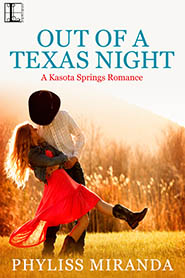
To one reader who leaves me a comment, I will give them an autographed copy of my latest Kasota Spring Romance Out of a Texas Night.
 

MK McClintock Has a Winner!

Thank you for visiting, M.K! We loved your post written in your character’s name. So fun.

Now for the drawing……………

Some lucky person will get a copy of Wild Montana Winds!

The random winner is……………………

LORI SMANSKI

Woo-Hoo! Congratulations, Lori! 

Keep an eye out for MK’s email and be ready to read a mighty good story.


How to Date a Cowboy By Brenna Gallagher

Born and raised in Scotland, I heard tales of the wild Highlanders who fought battles in little more than their plaids (if that). They slept beneath the stars and brandished swords and clubs, but I’d never heard of a cowboy until I ventured to Montana Territory in search of answers about my family. These men: cowboys, ranchers, horsemen, certainly are interesting specimens and I’ll admit I’ve become rather fascinated by them.

The first one I ever met stood tall and proud and behaved as a true gentleman. Of course, he was wearing strange and dusty clothes and an odd hat, but those deep, blue eyes of his bore through to my soul. His strong hands were warm to the touch, and his gruff demeanor couldn’t mask the heat in those eyes on that cold autumn day. Lucky for me, I married him. I’ve learned a few things since my first encounter and I’m here to share my meager expertise, so listen carefully.

  • A lady must know that a true cowboy is both charming and dangerous. He’s a little like the wild land on which he lives. It doesn’t take much more than a swish of skirts and a pretty face to get his attention, but he won’t be easy. If a lady wants to hold onto a cowboy, she must be strong and even a little stubborn. She has to show him that she has what it takes to survive in his world, but don’t worry ladies, he’ll make it worth your while.
  • A hard-working cowboy is independent, stubborn, and even a little fierce. He’ll charm you just as easily as he charms a bull so you’ll want to keep him on his toes. Show him you’re not a lady to be trifled with. He won’t be able to control you, but he’ll certainly want to keep you.
  • He’ll rarely tell you what’s on his mind and doesn’t like sharing his emotional feelings. If you want to understand your man, let him come to you. Don’t push or prod because he’ll make for the range. If you want to rope him in, you’d better learn how to handle the lasso.
  • Most importantly, a true cowboy is loyal to in life, and to the death. Be warned ladies—he expects that same in return. Treat your cowboy well and he’ll move heaven and earth for you.

WILD MONTANA WINDS

By MK McClintock


What happens when a mountain man tries to tame the heart of a Highland lass?

Ainslee McConnell turned down every eligible bachelor who asked for her hand, for she knew none could quiet her adventurous spirit. When she travels from Scotland to visit family and seek new experiences, she discovers a life more rewarding than she could have imagined.

Raised in the wilds of the Montana mountains, Colton Dawson lived as rancher, mountain man, and tracker. He was content . . . until one day a spirited Scottish lass crosses his path on her way to Hawk’s Peak. When a moment in Colton’s past revisits him, he fights to keep safe those he loves most.

COMING FEBRUARY 28, 2019!

Available for Preorder on Amazon

Return to Briarwood and Hawk’s Peak to experience a timeless western romantic adventure that will sweep you away on the wild Montana winds.

Don’t miss the other books in the Gallagher series . . . 

Gallagher’s Pride

Gallagher’s Hope

Gallagher’s Choice

An Angel Called Gallagher

Journey to Hawk’s Peak


It’s In the DNA

I don’t know if this happens to other writers, but I’ve had some strange things happen during the writing of a book.  I once turned a manuscript into my editor at the same time another writer turned in hers.  Oddly, enough, our protagonists shared the same first names and professions.  There were also many other similarities throughout our manuscripts, and all had to be changed.

Another time I was hiking a trail in Mammoth when I met a geologist who was the spitting image of the geologist hero in the book I was working on.  Even weirder, his first name was Damian and I’d named my hero Damon. Close enough, right?

But the strangest thing that happened occurred recently. I’d been toying with the idea of taking a DNA Ancestry test for quite some time, so my daughter decided to gift me with one for Christmas.  The results were pretty much what I expected, with one surprise.   It turns out that the outlaw Jesse James and I share a common ancestor.  

The timing was especially weird since Jesse James plays a part in the book I’m currently working on. Come to think of it, it’s not the first time Jesse James has popped up in one of my books, and I can’t count how many blogs I’ve written about the outlaw.

That’s because Jesse is a fun person to write about.  Not only was he controversial, he had both a light and dark side. The son of a Baptist minister, he was known to pass out press releases to witnesses at his holdups and had no qualms about exaggerating his height.  He might also be the only person on record who took a gang on his honeymoon. I don’t know what his bride did while he and his gang robbed a stage.  Maybe she went shopping.

Jesse James lived for only thirty-four years, but there was never a dull moment.  He was a Confederate guerrilla, was shot in the chest on two separate occasions and once overdosed on morphine. He also claimed to have murdered seventeen people.

Jesse went by many aliases, but his nickname was Dingus because he shot off the tip of his finger while cleaning his pistol.  He wrote glowing articles about his gang, saying that they robbed the rich and gave to the poor, though all indications are that they kept the spoils to themselves.

Far as I know, he was also the first person to prove that housework can kill.  While tidying up his house, he was fatally shot by his new hire Bob Ford in the back of the head. 

I can’t tell you what it was about Jesse James that first caught my interest.  I can’t even tell you why this writer, who’s allergic to horses, writes Westerns.  All I can say, is that it must be in my DNA.

Have any of you had your DNA tested?  If so, were there any surprises that you’re willing to share


“This book charms.”  Publishers Weekly

Amazon

B & N

iTunes

M.K. McClintock Will Visit on Friday!

Yee-Haw! Ms M.K. McClintock will arrive on Friday, February 22, 2019!

We can’t wait to welcome her back. This dear lady loves writing about cowboys and the way life used to be. And anyone who likes cowboys sure finds a friend here.

She has a brand new book and is toting one to give away.

Come Friday, don’t be shy. Follow the trail to the Juction!

Sit a spell around the campfire and visit.

We love these Fridays when we can chat and drink coffee.

You might even win her book!


A Quick History of the Pony Express

I lived in rural Nevada for thirty years and because my husband and I were originally geologists, we spent a lot of time beating around the state before settling down. The northern and middle part of Nevada can be either blazing hot or bone numbing cold, depending on the season—as near as I could tell, there were two: summer and winter, with three or four days of spring and fall between them. But don’t get me wrong, I love Nevada and its outback, and have so much respect for the early citizens—those that stayed and those that were there to do a job. The riders of the Pony Express were there to do a job. I’ve experienced the country that they crossed, and these guys were amazing.

So how did the Pony Express come about?

Ruby Valley Nevada station. Courtesy of Wikipedia.

In brief, Senator William Gwin of California wanted a faster mail service between the eastern part of the country and California. He conferred with the operators of Overland Stage Line of Leavenworth, Kansas, which ran a stage between the Missouri River and Salt Lake City, asking them to develop a mail system. Reluctantly, due to the costs, the owners of the stage line agreed and began developing the Pony Express. On April 3, 1860, less than two months after promising the senator to develop a faster mail system, the first express was ready to run between St. Joseph, Missouri and Sacramento.

In those two months, the organizers found 80 riders and 500 horses, and stations were built along the route through Wyoming, Utah and Nevada. The riders received $25 per week, two revolvers, a rifle, a bowie knife and a bible. The ponies were sturdy stock, many of them carrying California mustang blood.

The mail was carried in a leather mochila with four locked boxes sewn to it to carry the mail. The mochila fit over the saddle horn, and when the rider arrived at the station, he threw the mochila to the next rider, who would then be on his way. The Pony Express carried mail 2,000 miles in 10 days.

The Pony Express lasted only 18 months, but even in that short amount of time, it left an indelible mark on the history of the county and the region. Finances were part of the reason for the demise of the express. Mail carried by the express cost the sender between $1 to $5 dollars per ounce, but despite the high prices, the Pony Express failed financially, as its organizers had feared. Congress offered no financial subsidies to help the express, despite the fact that it helped keep California in the Union.

Ultimately, however, it was technology that ended the Pony Express. When the transcontinental telegraph system was completed on October 24, 1861, there was no more need for the Pony Express. Four days later, the Pony Express officially ended.