Regina Walker Will Visit Friday!

Miss Regina Walker is heading this way and will arrive Friday, June 24, 2022!

This dear lady has developed an appreciation for genealogy and uncovering family history and she’ll touch on some of that.

She’s also bringing some ebook copies of A Maid For Mason to give away!

We’re so happy to welcome her and I know you’ll love chatting with her.

So get yourself in gear on Friday and follow the trail over here. Can’t miss it!

It’ll be lots of fun.

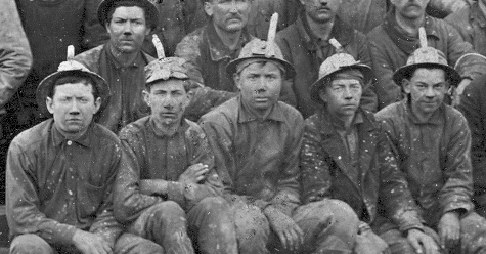
Mining Superstitions

I grew up in a hard rock mining world, knew a lot of miners, and eventually worked underground myself. One memory I have is of a time in Alaska when one of my dad’s miners said that he wouldn’t work on Friday the 13th. The guy flat out refused. What happened? My dad didn’t make him go to work that day and didn’t dock him.

When working in a dangerous environment–one in which you only have the illusion of control, because there are so many things that can go wrong–superstitions give a person that much needed sense of control. Mining and danger go hand in hand, so miners had a lot of superstitions. As a woman working underground, I undermined one of the superstitions (undermined…get it?), with no ill results, but I understand why miners had/have their beliefs. They helped the guys get through the day.

Here are a handful of superstitions:

1)Having a woman underground, or even near a mine, was bad luck. This belief is thought to have arisen from the fact that the only time women came near a mine was when a disaster had struck and their loved ones were involved. Therefore women near a mine = potential disaster. A redheaded woman was particularly unlucky.

2) If the miner’s candle went out, he needed to think about leaving the mine.  Candles went out in bad air, which is not detectable, but will kill you (thus the canary in the coal mine). If a candle went out three times, it meant there was trouble at home and, again, a miner needed to get out of the mine. Side note–I once had my headlamp fail me, and I can promise you that there is nothing darker than being underground. The darkness feels thick.

3) Do not whistle underground. Tommyknockers came to this country with the Cornish miners. These goblin-like creatures could help miners, warning them of danger by knocking, or hurt them, depending on how they were treated. Miners would leave a bit of their lunch for the tommyknockers, which in turn, caused the tommyknockers to watch out for them. However whistling at a tommyknocker was considered disrespectful and disaster would follow.

4) Whistling underground was also thought to trigger earth movements, which could cause the drift (tunnel with only one opening) to cave in. Side note–I was underground when the planets aligned in 1980. The miners were afraid that increased gravitational pull would cause earth movement. We got lucky. It didn’t.

4) Of course there were to be no black cats underground. A black cat underground meant someone would die.

5) There are a lot of personal superstitions involving clothing and not turning around backward shirts or inside out socks. Things that, again, helped a miner feel like he was in control.

Those are a few of the mining superstitions, but superstitions abound in all environments. Do you know of any interesting superstitions ? Curious minds want to know.


What on Earth is a Foundling Wheel?

I love watching Finding Your Roots on the PBS channel. Here in my town it’s broadcast on Tuesdays. I just love to watch a family ancestral history unfold and see where genealogy can take these celebrities. On the last show, Henry Louis Gates told one woman that her great grandmother came by way of a foundling wheel.

That intrigued me so I had to go look it up. The term originated in 1198 by the current Pope of the Catholic Church. He was appalled at the number of babies found drowned by their impoverished parents in creeks and rivers so he decreed that these devices offering an alternative to drowning were to be installed in every church in the region.

These foundling wheels consisted of what looked like a barrel cut in half and placed where they could rotate in an outside church wall. A parent unable to feed or care for their child would place the baby inside the container and rotate it inside. This was usually done under cover of darkness to preserve anonymity. Then, they’d pull a string that rang a bell and a nun would go get it. A lot of the babies had some type of disease or infirmity and died, but it was far more humane than drowning.

How ingenious. I found this so interesting. Here’s a picture of one from a church in France.

Courtesy of Lebizarreum Atlas Obscura, Mâcon, France

Foundling wheels were taken out of use in the 19th century and replaced in 1952 with what was called “baby hatches.” It’s basically the same idea but the babies can be left anonymously in hospitals, churches, fire stations and other designated safe places.

In Germany, a baby will receive care for eight weeks and during that time the mother can return and get it if she so chooses. After the eight weeks, the baby is adopted out. Sometimes, a harried mother loves her child but just needs a little break. They give her the chance.

Baby Hatches are found in almost every country and serve a real purpose. In the U.S. we have a “safe haven law” that protects parents from being charged. And curiously, mothers and fathers can leave not just babies but any child up to age 18.

Probably half of all my books have an orphaned or abandoned child in them. I simply love writing about them because they’re so vulnerable and desperately need someone to care. Back in the early days orphaned children flooded the country. On the American Frontier, adults died of rampant disease, epidemics, and childbirth. The lack of medical care contributed greatly.

I have a free short story – The Miracle – up on my website if you’d like to go read it. Click HERE

Also, the Love Train series is chugging right along. Only three more to go until mine. FANCY will be up for preorder on July 1st so watch for it. I can’t wait to share the story with all of you. Fancy Dalton was told her baby was stillborn at birth only it wasn’t and she’s determined to find and get her son back or die trying. It’s a touching story of a young mother’s heartache and discovering love along the way. Here’s a link to the first six – CLICK HERE

Do you think foundling wheels and baby hatches are helpful? There are some who argue against them. Leave a comment to be entered in the drawing for a $10 Amazon gift card.

That’s all until next time. Stay cool and happy. And if you haven’t signed up for my newsletter, you can HERE.

THE TOP MOST PATRIOTIC COUNTRY SONGS–WHAT’S YOUR FAVORITE? by CHERYL PIERSON

Summer seems like the most patriotic time of the year in general, doesn’t it? We kick off the summer months with Memorial Day in May. Poppies are worn in remembrance of veterans on Memorial Day and on Veterans Day in November.

On June 6, we are reminded of the sacrifices made on a faraway beach in Normandy that resulted in many deaths in WWII, but turned the tide for the Allies and helped us gain victory. June 14th is Flag Day, a fine “tune up” for our huge 4th of July celebration that’s right around the corner.

Is anyone more patriotic than a cowboy? I don’t think so!  So many country and western songs have been written through the years that are a tribute to not only our troops, but to first responders, and to all the “regular” American people who love our country.

Here is my list of top country and western patriotic songs, compiled from several on the internet—all different, but all wonderful—and all with one thing in common: our love for our country. These are in no particular order. I don’t know how anyone could choose one over the other since they all are products of excellent songwriting and musicianship—and heartfelt sentiments about America! And goodness knows, I didn’t list them all here—no room! Like I said, there are a lot of patriots in the country music field, and a huge number of songs to listen to in order to get in the patriotic spirit of things! I’ve included the youtube links in case you want to pop over and give these a listen!

This first one is an odd one, but I just love it. It was recorded by David Ball, who didn’t have that many hits, but this one will stay in your memory when you hear it for the very first time. I get chills every single time I hear it.  A young man buys a ’66 Corvette and discovers a letter in the glove box “My name is Private Andrew Malone, and if you’re reading this I didn’t make it home…” Which always makes me think about so many young men who could have written this following line…“For every dream that’s shattered, another one comes true…”  It’s called RIDING WITH PRIVATE MALONE and it has a very twisty ending you’re sure to love!


https://youtu.be/v5dyHPX8Cos


Probably the most recognized country song that many call our “unofficial” American anthem was written and performed by Lee Greenwood—GOD BLESS THE U.S.A. Written in 1983, it’s become synonymous with patriotism, and is loved by countless Americans, whether they are typical country and western fans or not. Its simple message is one that grabs you and holds on, and I have to admit, that even after nearly 40 years of hearing it, I still get teary! “I’m proud to be an American, where at least I know I’m free, and I won’t forget the men who died, who gave that right to me—so I’ll gladly stand up next to you and defend her still today, for there ain’t no doubt I love this land—God Bless the U.S.A.!”


https://youtu.be/yH61hFsma24


Another “oldie but goodie” is Merle Haggard’s THE FIGHTIN’ SIDE OF ME, written in 1970. Oh, goodness. If I had a nickel for every time I’ve heard my husband play and sing that back when we used to have our band…fond memories, and it was a song that was a frequent request, whether we lived in West Virginia or here in Oklahoma. “If you don’t love it, leave it, let this song that I’m singin’ be a warnin’—when you’re runnin’ down my country, hoss, you’re walkin’ on the fightin’ side of me…” I love the sentiment of this song. In true “Merle” fashion, he’s saying that we can disagree on things without trashing our country. I think everyone in the audiences we played to knew the words to this song!

https://www.youtube.com/watch?v=uIxBmyRQlwQ


WHERE WERE YOU WHEN THE WORLD STOPPED TURNING? is not a “patriotic” song in the way we’d normally think of one, but it was not written during normal times. Penned by Alan Jackson in 2002 after the horrific events of  9/11/01, this song is packed with emotion and validates the many thoughts and feelings that Americans went through during the aftermath of that day. Each chorus of this song ends with the reminder that God’s greatest gift to us is love—even though we were going through some horrendous times. This song was nothing short of a masterpiece that drew Americans together, gave us hope, and let us know we were not alone in our feelings.


https://www.youtube.com/watch?v=KNsfx_4k-JA


In 1974, Johnny Cash wrote RAGGED OLD FLAG, a recitation about all the incidents that happened to “the ragged old flag” that hangs in a little town’s courthouse square as told to a town newcomer by one of the old men who lives there. “She’s been through the fire before, and she can take a whole lot more…on second thought, I guess I do like to brag, cause I’m mighty proud of that ragged old flag!”

https://www.youtube.com/watch?v=-KqrjeScLSI

8TH OF NOVEMBER, another patriotic song written about the Vietnam war, is performed by Big and Rich. It is the true story of a terrible battle in which the 173rd Airborne was engaged. That day, 48 Americans died with very few survivors when they were ambushed by 1200 Viet Cong. “With the fire rainin’ down and the hell all around there were few men left standin’ that day…”

https://www.youtube.com/watch?v=ozpdBvB0hek


There are countless others, in case you want to put together a country and western playlist for your big Independence Day shindig! Take a look!

SOME GAVE ALL by Billy Ray Cyrus

LETTERS FROM HOME by John Michael Montgomery

HAVE YOU FORGOTTEN? by Darryl Worley

IF YOU’RE READING THIS by Tim McGraw

HOME by Dierks Bentley

I DRIVE YOUR TRUCK by Lee Brice

FOR YOU by Keith Urban

IT’S AMERICA by Rodney Atkins

FLYOVER STATES by Jason Aldean

COURTESY OF THE RED, WHITE, AND BLUE (THE ANGRY AMERICAN) by Toby Keith

WHERE THE STARS AND STRIPES AND THE EAGLE FLY by Aaron Tippin

AMERICAN SOLDIER by Toby Keith

THE BALLAD OF IRA HAYES by Johnny Cash

This isn’t all of them, either! Hope you all have a very happy 4th of July (though it’s still a couple of weeks away!) with family, friends, and loved ones. What’s your favorite country and western patriotic song, and why? It’s hard to pick just one!

Heather Blanton Has Winners!

Wow, thank you for visiting, Miss Heather! We had a great discussion on helping our community.

Now for the drawing……….

Five people will get a copy of Miss Heather’s PENELOPE!!

And the winners are………

TIA

BN100

JULIE BUTLER

DEBBIE PRUSS

KATHLEEN MATTINGLY

Congratulations, ladies! You’re in for some good reading. Watch for Miss Heather’s email and check SPAM if you don’t see it.

Heather Blanton Finds An Angel on the Loose

In my new book releasing today, Penelope, Book 6 in the Love Train series, my heroine has to pretend to be a nun. This is, of course, a substantial obstacle to the hero who fights falling in love with her. He has to wonder, though, what kind of a nun can’t keep her veil on and doesn’t know her Bible? But when called upon to help an abused Indian girl, Penelope rises to the task with plenty of heart.

The way this story went put me in mind of a young Catholic girl who, while she didn’t don a habit, impacted the West forever with her faith.

In 1850, at about the age of five, Nellie Cashman immigrated to Boston from Ireland with her sister and widowed mother. The three spent almost fifteen years together there, but then relocated west to San Francisco around 1872. Nellie and her mother, both of whom apparently had an adventurous streak, decided to move on to the bustling, untamed mining town of Pioche, NV. They only stayed a few years, but Nellie was deeply involved with

the Catholic church there, helping with fundraisers and bazaars.

When her aging mother decided Pioche was a little too wild for a senior citizen, she and Nellie returned to San Francisco. Nellie, however, didn’t stay. She left her mother with her married sister and headed north alone to British Columbia to another rough-and-rowdy mining town. She opened a boarding house in the Cassiar District and tried her hand at mining.Now, most girls in this situation, hanging around with such an unsavory crowd, might get into mischief, forget their morals. Herein lies the quirky thing about Nellie: she loved to help people, sometimes through hell and high water…and avalanches.

In the winter of 1874-75, Nellie took a trip to Victoria where she helped establish the Sisters of St. Ann Hospital. Over the coming decades, she would continue to be a stalwart supporter of this hospital and several others. She is most famous, though, for what she did upon leaving Victoria.

Traveling back to Cassiar, she heard a blizzard had stranded dozens of the folks from the district. They were trapped, hungry, and experiencing a scurvy epidemic, to boot. Nellie immediately hired men and sleds, acquired medicine and supplies and started out for Cassiar. It took the group 77 days in unimaginable conditions to reach the miners. Nellie then worked tirelessly to nurse the folks back to health.

Her feat was so astounding, so fearless, the story was picked up by the newspapers. With good cause, she came to be known to the miners as their “Angel of the Cassiar.”

Nellie was a legitimate legend.

She was also a restless girl, constantly on the move from one raunchy mining town to the next. After the death of her sister, she continued to feed her wanderlust, but with five nephews and nieces in tow. To keep food on the table, she bought and sold restaurants, and even owned and worked her own claims.

She spent several years in Tombstone, AZ where she rubbed shoulders with larger-than-life figures like Wyatt Earp and Doc Holliday. Nellie’s faith, however, was as ingrained on her heart as cactus on the dessert. Even in wild-and-wooly Tombstone, she worked to build the city’s first hospital and Roman Catholic church.

Nellie worked tirelessly to make the world a better place and still managed to raise five upstanding citizens while keep her mines working. When she passed away in 1925, she did so in the Sisters of St. Anne hospital that she had funded for nearly fifty years.

Today Heather is giving away 5 copies of Penelope! For a chance to win one, tell Heather what ways you think we can make an impact in our local communities or neighborhoods.

Buy PENELOPE on Amazon!

Lewis and Clark Festival

I went to a Lewis and Clark Festival last Saturday.

Like the history nerd I am, I LOVED IT.

First say hello to Seaman.

This first picture is a Newfoundland, the same breed as Seaman, the dog that went along on with the Corp of Discovery.

Lewis and Clark dog
Meriwether Lewis brought his Newfoundland dog, Seaman

There was a crew of men dressed up like the men on the Lewis and Clark Expedition, the first one I came across said, “Do you have any questions?”

The man did NOT know who he was dealing with.

Mary replies, “I have one hundred questions.”

They just all looked thrilled. So genuinely happy to find someone who would get excited along with them.

I probably talked to these guys for an hour. I wish I’d had more time. 

The guy on the far right went on the Re-Enactment to celebrate the Lewis and Clark bi-Centennial almost two decades ago.

I remember that re-enactment. We took our school to the river to watch the Corp come up the Missouri River.

Every one of these men was playing a part of one of the crew. They all had stuff to say. Very fun to talk to them.

This gentleman was Meriwether Lewis. Where was Clark? I didn’t even ask!!!

Did you know Meriwether Lewis LIVED in the White House with Thomas Jefferson and acted as his personal secretary for two years? (It wasn’t called the White House back then) And he was a soldier on the far western frontier before that. You know…the far western frontier…OHIO.

Anyway, he was a skilled woodsman, a trained solider, a knowledgeable boatman and a skilled writer. Very educated in all the ways he’d need to be about botany and survival skills. The Corps did not go off without a solid, serious, years-in-the-making plan.

The men were all wearing their everyday uniforms, made out of worn out ship sails. But they all had dress uniforms, too. To present a dignified image to the native folks they met. As if those white sail cloth outfits wouldn’t have impress them. Here is Lewis holding his dress hat.

Captain Lewis presented samples of the company muskets. He said they brought along 17 Tennessee riflemen strictly to hunt food. The Corps ate the equivalent of one entire buffalo a day. Thirty men.

I loved this guy. He was wearing the actual dress uniform. He showed me how to load his musket (no gunpowder involved but it was great). He’s standing in front of a replica of the Keelboat they took upriver.

This couple was so fascinating. Not part of the costumed characters but they are holding up medical equipment that went along on the journey. She’s holding the tourniquet. He’s holding the bone saw. Except for lancets for bleeding people, this was pretty much all medicine was back then. I was horrified, in an entirely polite and genteel way. Oh they had other medicine (not these folks but the world) but a lot of them were strange concoctions like Dr. Rush’s pills that were more snake oil than anything else.

This man said, “Once a wound was infected, it was amputate or die. These tools saved lives.

There is a Lewis and Clark Lake by Onawa, Iowa and there is an interpretive center alongside the lake. There are TWO replicas of the keel boat that they road up the river–the man in the dress uniform two pictures above is standing in front of one of the replica keelboats. Lewis and Clark took this boat and too pirogues when was a really big canoe-like boat. All three boats carried tons of supplies…so REALLY big canoes.

Most of the time the boats were pulled upstream with ropes. All the way from St. Louis to the Rocky Mountains!!!

They honestly couldn’t eat enough food hardly to stay strong enough to do this work. The Corps re-enactor characters slept in these tents at the festival. 

At the festival, a big chunk of the west side of Lewis and Clark Lake was surrounded by tents like these above.

Here is a map of the trail they followed. An unbelievable journey. And I am right now reading Undaunted Courage, the story of the Lewis and Clark Expedition by Stephen Ambrose. What this Corps of Discovery set out to do was a gargantuan undertaking. Something no one in the world had ever accomplished.

Explore the uncharted west of America before it was firmly in America’s hands. They didn’t even know the Rocky Mountains were bigger than the Appalachians. They thought, with perhaps a short portage, the Missouri River joined with the Columbia River. They were searching for a water route that crossed the entire continent.

Fun Fact: Lewis did all the planning and worked on it for YEARS with President Jefferson, while Jefferson was working on buying New Orleans from Napolean. His diplomats came back, not with New Orleans but with Louisiana which had very vague borders…Thomas Jefferson claimed America all the way to the Continental Divide in Montana. Of course there was no Montana then.

Lewis knew Clark and had served with him for six months and was friends with him though almost exclusively through letters. But Lewis did all the planning. All the buying. Clark joined the expedition after Lewis set out from Pittsburgh. At the time Clark lived in Clarksville (named a town after himself???) Which was in Indian Territory, across the Ohio River from Louisville, Kentucky. And they were command equals. Which was very unusual. But it was all Lewis in the planning stages.

Besides the costumed Corps members, there were tents and crafts. One tent was all animal furs. There was jewelry and leather goods, all hand crafted. (well, I didn’t personally spot any ‘Made in China’ labels, so I’m hopeful)

There were buffalo burgers and, well, the Methodist church served pie. Might not have been authentic but it was delicious!

It’s a wonder I’m not there still. It helped move me along that it was around 100 degrees, but even that, those men had to endure that back then as they made their journey. At no point could they get in their car and turn the air conditioner way, way up.

I loved it.

And I’ve got a book releasing in July and I should be talking about that.

I made a trailer. 

Inventions of the Heart (canva.com)

 Inventions of the Heart

Book #2

The Lumber Baron’s Daughters Series

Releasing July 5

Her heart seeks safety. But will trouble find her even here?

After her sister’s marriage, Michelle Stiles is left hiding at Two Harts Ranch with the handsome but stubborn Zane Hart. She’s managed to stay one step ahead of her stepfather and his devious plans, but if he finds her, she will no longer be safe.

Zane has problems of his own. Having discovered a gold mine on his property, he must figure out how to harvest it without kicking off a gold rush. Michelle, educated and trained to run her father’s business, wants to manage all aspects of the mine, but Zane thinks for a person so smart she can have some misguided ideas. Running the mining operation will be a dangerous job, and he can’t risk putting her in harm’s way.

But danger finds Michelle anyway when she’s suddenly attacked. If they go to the sheriff, they’ll reveal her location, but if they do nothing . . . their troubles have only just begun.


Heather Blanton Will Call on Friday!

Miss Heather Blanton is coming to visit on Friday, June 17, 2022!

She has an interesting real-life woman to tell us about. This inspiring lady accomplished a multitude of historical feats with her kind, compassionate heart. You’ll want to read about her.

Miss Heather is offering 5 copies of her e-book PENELOPE. Yee-Haw!

So don’t dilly-dally and get yourself over here Friday.

You can’t win (or learn anything) if you don’t show up.

Lake Bride

It’s funny how one thing leads to another and the next thing you know, you’re writing a book you hadn’t planned on writing.

My dad’s cousin, JJ, often sends him funny quotes or memes, or things to make him smile. He also shares interesting tidbits of information. Dad chooses the things he likes best and sends them on to me.

One of his “chosen favorites” from JJ was a lovely post written about the soldiers who guard the Tomb of the Unknown Soldier at  Arlington National Cemetery.  I’d heard of the cemetery, had never visited it, and knew there were guards, but that was about the extent of my knowledge when I opened that email from dad.

After reading what was shared, I had to know more. I needed to know more about the soldiers who guard the Tomb and the cemetery. And that knowledge led to me writing a sweet contemporary romance about a Tomb Guard, a nurse, and an array of wacky wildlife.
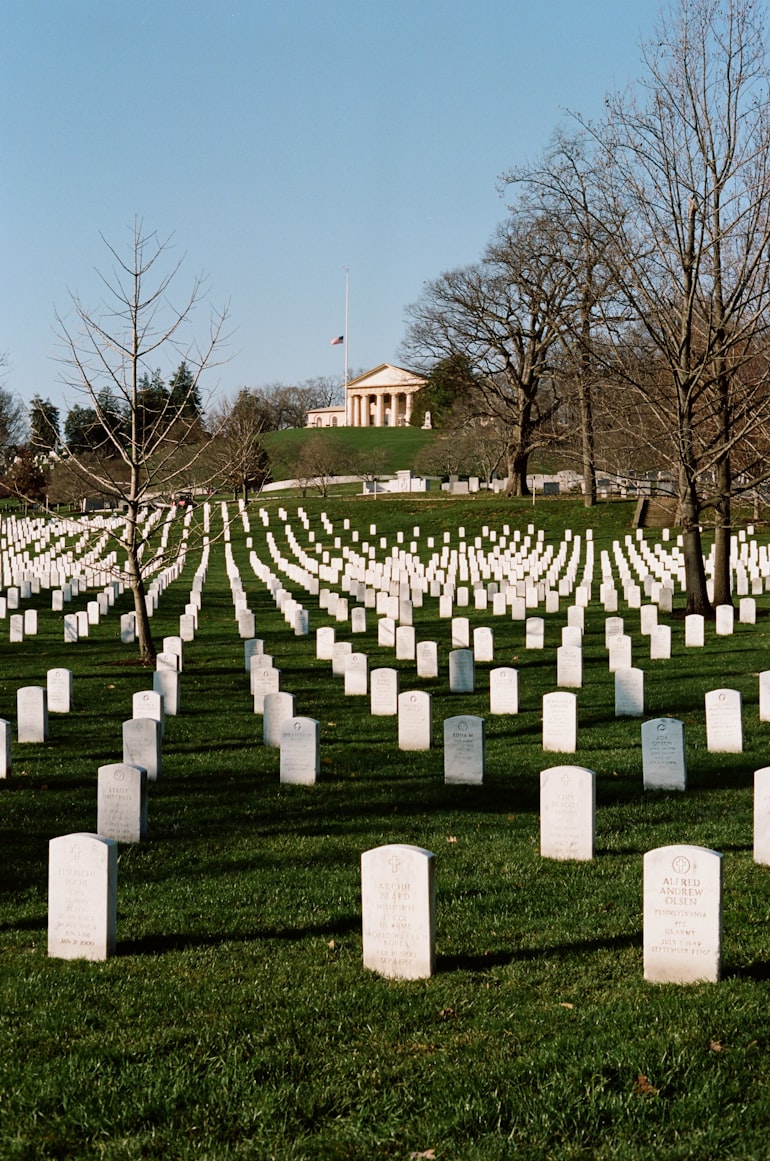
 

In 1857, George Washington Parke Custis, grandson of Martha Washington and step-grandson of George Washington, willed an 1,100 acre property to his daughter Mary Anna Randolph Custis, who was married to Robert E. Lee. The Lee family vacated the estate in 1861 at the onset of the Civil War, and federal troops soon occupied the property as a camp and headquarters.

In 1863, the government established Freedman’s Village, on the estate as a way to assist slaves transitioning to freedom. The village provided housing, education, training, and medical care. As the number of Civil War casualties grew faster than other local cemeteries could handle them, the property became a burial location. The first military burial took place on May 13, 1864, when Private William Christman was laid to rest there.

That June, the War Department officially set aside 200 acres of the property to use as a cemetery. By the end of the war, thousands of service members and former slaves were buried there.  Eventually, the Lee family received compensation for the property although the land remained with the War Department. Today, the cemetery has since grown to exceed 600 acres and is one of the oldest national cemeteries in America.

Evolving from a place of necessity to a national shrine to those who have served honorably in our Nation, the rolling hills have become the final resting place to more than 400,00 active duty service members, veterans, and their families. An average of 27-30 services are held each week day and more than 3,000 ceremonies and memorial services take place each year. Among the notable graves include presidents (President Kennedy and President Taft), astronauts (including John Glenn and Christa McAuliffe), and celebrities (such as Maureen O’Hara, Lee Marvin, and Audie Murphy).

At first, being buried at Arlington was not considered an honor, but it did ensure service members whose families couldn’t afford to bring them home for a funeral were given a proper burial. The first official Decoration Day (later renamed Memorial Day) was held at Arlington National Cemetery on May 30, 1868. The event was so popular, an amphitheater was constructed in 1873 to hold the official ceremonies. By the late 1870s, high-ranking veterans began requesting burial in the Officers’ Sections.

In 1899, the U.S. Government began, at its own expense, repatriating service members who died overseas during the Spanish-American War. The cemetery expanded to include Sections 21, 22, and 24. Congress authorized, in 1900, a designated section for Confederate soldiers. After World War I, more than 2,000 service members were repatriated and interred in Sections 18 and 19.


In October 1921, four bodies of unidentified U.S. military personnel were exhumed from various American military cemeteries in France. The four caskets were taken to the city hall of Châlons-sur-Marne (now called Châlons-en-Champagne), France. Town officials and members of the U.S. Army’s Quartermaster Corps had prepared the city hall for the selection ceremony. Early on the morning of October 24, 1921, Maj. Robert P. Harbold of the  Quartermaster Corps oversaw the arrangement of the caskets so that each rested on a shipping case other than the one in which it had arrived. Major Harbold then chose Sgt. Edward F. Younger of Headquarters Company, 2nd Battalion, 50th Infantry, American Forces in Germany, to select the Unknown Soldier. Sgt. Younger selected the Unknown by placing a spray of white roses on one of the caskets.  From Châlons-sur-Marne, the Unknown journeyed by caisson and rail to the port town of Le Havre, France. From Le Havre, the Unknown Soldier’s casket was transported to Washington, D.C.  on the USS Olympia. The Unknown Soldier arrived at the Washington Navy Yard on November 9, 1921, and was taken to the Capitol Rotund. The Unknown lay in state in there on November 10 with around 90,000 visitors paying their respects that day.

On November 11, 1921, the Unknown was placed on a horse-drawn caisson and carried in a procession through Washington, D.C. and across the Potomac River. A state funeral ceremony was held at Arlington National Cemetery’s amphitheater, and the Unknown was interred in the Tomb of the Unknown Soldier. Nationwide, Americans observed two minutes of silence at the beginning of the ceremony. President Warren G. Harding officiated the ceremony and placed the Medal of Honor, the nation’s highest military decoration, on the casket. Additionally, numerous foreign dignitaries presented their nations’ highest awards.

Originally, the Tomb of the Unknown Soldier consisted of a simple marble slab. Thousands of visitors came to Arlington National Cemetery to mourn at the Tomb and to pay their respects to the Unknown Soldier and the military personnel he represented. The tomb was unguarded, since most people were respectfully. But it became more popular with people to treat the tomb as a tourist attraction. It’s said some even picnicked on the tomb because of the grand view it provided.

In 1926, the Army assigned soldiers as guards. A sarcophagus was installed in 1932.  The Tomb sarcophagus is decorated with three wreaths on each side panel (north and south). On the front (east), three figures represent Peace, Victory and Valor. The back (west) features the inscription: “Here rests in honored glory an American soldier known but to God.” (This inscription gets to me every time I read it.)

President Dwight D. Eisenhower signed a bill to select and pay tribute to the Unknowns of World War II and the Korean War in 1956. The selection ceremonies and the interment of these Unknowns took place in 1958. The caskets of the World War II and Korean Unknowns arrived in Washington on May 28, 1958, where they lay in the Capitol Rotunda until the morning of May 30. They were then carried on caissons to Arlington National Cemetery. President Eisenhower awarded each the Medal of Honor, and the Unknowns of World War II and the Korean War were interred in the plaza beside their World War I comrade. A Vietnam Unknown was added in 1984. An Army caisson carried the Vietnam Unknown from the Capitol to the Memorial Amphitheater at Arlington National Cemetery on Memorial Day, May 28, 1984. President Reagan presided over the funeral, and presented the Medal of Honor to the Vietnam Unknown, and also acted as next of kin by accepting the interment flag at the end of the ceremony. With modern technology, the Vietnam Unknown was exhumed in 1998 and identified. His remains were transported to his family in St. Louis, where he was reinterred at Jefferson Barracks National Cemetery. The slab over the empty crypt was since been replaced. The inscription of “Vietnam” has been changed to “Honoring and Keeping Faith with America’s Missing Servicemen 1958 – 1975” as a reminder of the commitment of the Armed Forces to the fullest possible accounting of missing service members.

Beginning in 1937, guards were stationed 24-hours a day to keep watch over the Tomb of the Unknown Soldier. In 1948, the 3d U.S. Infantry Regiment (The Old Guard), took over the prestigious duty and continue to guard the Tomb today. Known as sentinels, the soldiers provide security for the Tomb, lead ceremonies, and maintain the sanctity of the space. To them, they honor the Unknowns through the precision of their rituals.

The sentinels are amazing.

After digging into the research of this unique soldier, they have my highest respect and admiration for their service and dedication.

Soldiers who volunteer to become Tomb guards must go through a strict selection process and intensive training. Each element of their routine has meaning. The guard marches 21 steps down the black mat behind the Tomb, turns and faces east for 21 seconds, turns and faces north for 21 seconds, and then takes 21 steps down the mat. Next, the Guard executes a sharp “shoulder-arms” movement to place his/her weapon on the shoulder closest to the visitors, signifying that he or she stands between the Tomb and any possible threat. The number 21 symbolizes the highest symbolic military honor that can be bestowed: the 21-gun salute.

Now imagine doing that in searing summer heat (in a wool uniform), in pouring rain, or freezing snow. It’s what they do. Every single day.

The Sentinels have a creed they live by. One of my favorite lines is this one: And with dignity and perseverance my standard will remain perfection.

In my sweet romance Lake Bride (releasing June 23), the hero has spent the past two years of his life as a Sentinel. He’s at a crossroads in his life, trying to find himself and direction for his future. When his favorite relative, Uncle Wally, passes away and leaves him a cabin on a lake in Eastern Oregon, Bridger sees the perfect opportunity to get away and figure out what to do with the rest of his life.

If you read my book Henley that was part of the Love Train series, Bridger is a great-great-great-grandson to Evan and Henley Holt!

A solemn soldier.

A woman full of sunshine.

And the lake where they fall in love.

Twenty-one steps. The past two years of Bridger Holt’s life have centered on the twenty-one steps he repeatedly walks back and forth as one of the sentinels guarding the Tomb of the Unknown Soldier. Now that his duty is coming to an end, Bridger has no idea what to do with the rest of his life. Guilt from his past and trepidation about his unknown future drive him to the mountain cabin he inherited from his beloved uncle to gain clarity and direction. The quirky residents in the nearby town of Holiday, the assortment of wildlife that adopts him, and the woman who shines a light into his tattered soul might be what Bridger needs to find the redemption he seeks.

Outgoing, upbeat Shayla Reeves spreads sunshine wherever she goes. Holiday has become her home, and she enjoys spending time in the mountains around town. She adores the patients in the dementia facility where she works as a nurse. But something is missing from her mostly joyful world. When she mistakenly camps on private land owned by the mysterious and brooding Bridger Holt, she realizes what her life is lacking isn’t adventure but love.

Will two opposite personalities overcome their challenges and figure out a way to build a future together?

Find out in this sweet love story full of hope, small-town humor, and the wonder of falling in love.

Pre-order your copy of Lake Bride today!


You can get a free Tomb of the Unknown Soldier Commemorative Guide to download at this link: https://www.defense.gov/Portals/1/Interactive/2021/10-tomb-of-the-unkown-soldier/TUS-Commemorative-Guide.pdf

To enter for a chance to win a Lake Bride postcard, bookmark, and some other fun goodies,

just share if you’ve ever been to Arlington National Cemetery.

If yes, what did you most enjoy there?

If no, share about a place you’ve visited that was special to you.