
In this pandemic, most travel is prohibited, especially international. But I can’t imagine how frightening it would be to be stuck somewhere and have no resources. And double that fear if I found myself in a strange country and be unable to speak the language.
So organizations founded just to help travelers are a godsend, no matter when or where.
While international travel might be limited, there’s a world of inspiration waiting for us through travel blogging sites. These virtual portals act as our virtual tour guides, offering a treasure trove of wanderlust-inducing destinations that align perfectly with our tastes and preferences.
So, whenever you yearn to set foot on unfamiliar lands or revisit your favorite spots, go here to find a wealth of travel recommendations that spark your wanderlust and keep your adventurous spirit alive. From stunning landscapes to hidden gems, travel bloggers curate captivating stories that take us on a journey, transporting us to places we’ve only dreamed of.
The Travelers Aid movement began in 1851 with Bryan Mullanphy, a former mayor of St. Louis, Missouri, who bequeathed half a million dollars to assist “bona fide travelers heading West.”
This organization furnished provisions and the means with which to make the trip for men and women in good health who showed the stamina required for the journey. I can only imagine how many adventurous settlers they helped.

Until recently, I had never heard of this organization and never knew anything like this existed!
Once the West was settled, the Travelers Aid Society moved into providing protection for women and girls traveling alone. Such a beneficial program that kept them from falling victim to the white slave trade and other criminal enterprises.
By the early twentieth century, they served all people regardless of gender, age, race, class, or religion. It truly became an organization for everyone.

It morphed into the National Travelers Aid Association in 1917 under Grace Dodge. They welcomed immigrants to the U.S. and provided assistance and a safe place to stay for anyone needing one. The organization set up offices near all the ports of entry and stood ready to dive in and assist anyone with a problem.
During the 1920s and throughout WWII, they were a prominent fixture at railroad stations, helping soldiers, unaccompanied minors, and assisting stranded travelers.
There are still around 40 Travelers Aid programs in the U.S. with offices at major airports to assist where there’s a need. In 2010, they assisted 7 million people in getting to their destination.
 Now there’s an international branch for world travelers. There will always be a need for someone to help the lost, the desperate, the confused.
For an organization that’s 169 years old, that’s pretty darn good.
Have you ever traveled to a strange place and needed help? Would you ever reach out to The National Travelers Aid association if you were in a bind? I’m giving away a signed copy of The Mail Order Bride’s Secret so leave a comment to enter.


 Last year, I had the opportunity to go to the location my first series was set in, Castle Town, Montana. It’s a ghost town now, although it is inhabited by cattle rather than ghosts. Even so, it was fun to see it. And now I feel like I need to rewrite my series. But I won’t.



 I just returned from my first trip to the West in four years – two weeks of mountains, lakes, seeing friends and family, and experiencing a bit of local history. Today I’d like to share with you a bit of that history.
 The establishment of the mission came about in a different way than many such structures. It was actually the Nez Perce and Flathead people, who had heard about the white man’s “Book of Heaven,” who sent representatives to St. Louis to find out more. Eleven years later, Father Pierre Jean De Smet responded by traveling to the area. Other brothers and friars picked an original location for the mission, but it was later moved due to the first’s tendency to flood. In 1850, the mission was taken over by Italian Jesuit missionary Antonio Ravalli, who oversaw the building of the current building. He had the local tribes build the structure so they would feel a part of the church. Not a single nail was used in the construction. Visitors today can see some of the exposed wattle and daub that was used instead.
 Because of the mission’s remote location, decoration of the structure required some creativity. Newspapers were painted and put on the walls. Tin cans were fashioned into chandeliers. And local huckleberries were used to create the blue used to stain the interior wood.

 Back in April, I attended a writing retreat in Branson, MO. It was a wonderful time of rest and fun and great writerly conversations. But thanks to a reader’s recommendation, one of my favorite parts of the trip was a little side journey to Mansfield, MO. When I discovered that the home where Laura Ingalls Wilder lived and wrote the Little House books was only an hour away, I knew I couldn’t miss the chance to visit.


 Rose Wilder Lane was a successful writer well before her mother decided to pen the stories of her life. Rose published several novels and wrote for many popular magazines. She traveled extensively in Europe and made quite a nice living for herself. So in 1928 before the stock market crash that would send the country into an economic crisis, Rose decided to build her parents a new house. She purchased it from the Sears & Roebuck catalog and hired an architect to make a few structural changes. They called it The Rock House because Rose had it fashioned like an English stone cottage. It was less than a mile from their farm at Rocky Ridge. Laura and Almanzo moved to the Rock House and stayed there for eight years. But in 1936 when Rose decided to move back to New York, the Wilders moved back to their beloved farm house. As much as they appreciate their daughter’s gift, the Rock House just wasn’t home.






 It really is amazing how incredibly different even sections of the West can be from each other. Texas is different from New Mexico is different from Montana. They are all beautiful in their own ways and have their own distinctive styles and cultures. But the Southwest is perhaps the most distinctive because of its Native American and Spanish/Mexican influences. It takes on the brown and red earthy hues of the rugged Southwestern landscape and adds in incredibly eye-popping colors — blues, reds, oranges and purples. Adobes pots and trellises overflow with tons of vibrant pink bougainvillea.


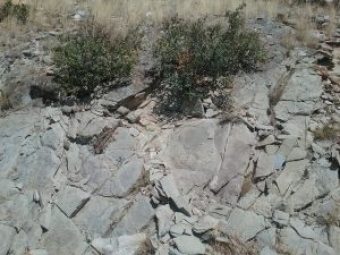
 Perhaps one of the most amazing things you can still see today along the Oregon Trail are actual ruts made by the thousands of heavily loaded wagons heading west. This physical evidence made me feel closer to those long-ago travelers than anything else. One of the places you can see these ruts is Oregon Trail Ruts, a National Historic Landmark near Guernsey, Wyoming.


