I’ve been researching for my next book, Tina Tracks a Trail Boss, book eight in my Brides with Grit series, and needed more information about the cattle breed which traveled from Texas to Kansas
along the Chisholm Trail.
A friend loaned me his 1941 copy of The Longhorns by J. Frank Dobie, and I found it to be a fascina
ting read.
Besides details of the actual animal and the trails they took back in the 1800s, there are stories, which made the book really enjoyable to me. One of my favorite chapters is about a lead steer named “Old Blue”. Born in Texas in 1870, he walked his first trail at three years of age to New Mexico.
The next year Charlie Goodnight bought Old Blue, who was in a group of five thousand head driven to Pueblo, Colorado. Goodnight realized the steer’s potential and the longhorn wasn’t sold, but stayed with the home herd on the Goodnight Ranch.
In 1876, Goodnight decided to move back to Texas and Old Blue lead the herd. Over the next eight years, Old Blue kept leading herds, sometimes twice a year, to Dodge City. When the drive was over, he’d travel back to Texas with the horse remuda and drivers.
Old Blue was always be the pointer animal, and the herd learned to follow the sound of his bell. Attached to the bell was a little strap to tie up the clapper so it would stay quiet at night. Old Blue would let a cowboy tie up the clapper at night, and release it in the morning when the herd was ready to move.
The longhorn became a pet, walking right up to the camp to eat bread, apples, or whatever the cook would give him. He preferred to bed down with the horses instead of the herd. The steer faced storms, Indian raids and buffalo stampedes, and lived to be twenty years old.
This is the kind of research which makes interesting background for the writer’s imagination, and for the reader. So, be sure to look for the lead longhorn steer in my next book, because he’ll be leading the herd to Ellsworth, Kansas in 1873.
Here’s the Brides with Grit series so far.
Please note:Rania Ropes a Rancher is free right now on Amazon, B&N, Kobo and iTunes, so be sure to add it to your e-reader.
Today I’ll give a Kindle ebook copy of the seventh book, Darcie Desires a Drover to a lucky winner.
Here’s the story line for Darcie Desires a Drover, book seven.
A historical romance set in 1873. Darcie Robbins fled St. Louis to protect her two children from their bad father. Now divorced, she’s temporarily working on the Bar E Ranch in central Kansas. She needs a permanent job—or a trustworthy husband—to help provide for her family.
Reuben Shepard went home to his family in New York after the Civil War, to find his wife had declared him dead—so she could wed another. In shock, Reuben didn’t contest her claim and wandered south, spending years as a cattle drover on western trails until settling down to work on the Bar E Ranch.
Spending time with Darcie’s toddler, Tate, makes Reuben miss his own son, Gabe. Reuben travels to New York, hoping to visit his son, and ends up bringing Gabe back to the Kansas because the boy’s step-father had just died.
When Reuben proposes marriage to Darcie for their children’s sake, the couple falls in love as they learn to trust and support each other while planning for their future. But their wedding is stalled when Reuben’s former wife arrives, stating she and Reuben are still married.
What’s the truth and what’s best for the children is their concern now instead of a wedding date. How can they clear the past so they can have a future together?
To get the chance to win Darcie Desires a Drover, please comment on…If you could travel with a cattle drive back in 1873, what would be your favorite, and least favorite thing about the trip?
About the Author
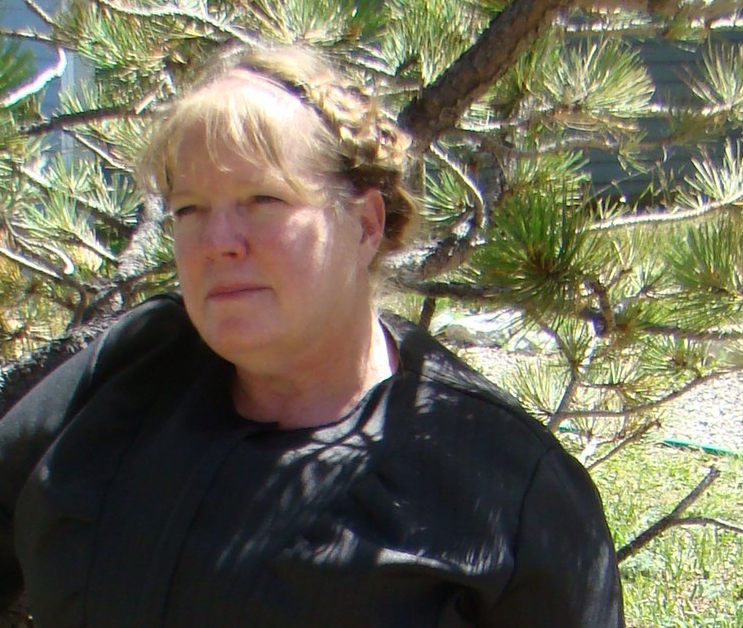
Linda writes historical fiction and sweet western romance books about pioneer women who homesteaded in Kansas between 1854 to the early 1900s, often using her Swedish immigrant ancestors in the storyline.
Sign up for her newsletter at www.LindaHubalek.com.to hear about the release of future books, contests and more. In return, you’ll get her free Brides with Grit short story, The Bridal Crown. Linda loves to connect with her readers, so please contact her through one of these social media sites.
I find it hard to believe it’s been almost three years since dh and I decided to join the fun of Cowboy Action Shooting as part of the Single Action Shooting Society (SASS). It is an organization full of folks who love the Old West and want to relive just a little of it while making and enjoying new friends…
And shooting at steel targets and “making smoke” (that would be the cowboys and cowgirls who shoot black powder, like my dh to the right there). We call that goin’ to the dark side. lol
We spent a few hours this weekend enjoying the sport in gorgeous February weather. I had so much fun, I had to share some pictures.
When we shoot, we divide into “posses” of 15-25 shooters. That way we have someone shooting, folks getting ready to shoot (at the loading table, like the pic at left; I’m the one of the left), folks unloading and clearing guns, folks spotting—counting misses and procedural errors and helping keep the sport safe, another picking up spent casing and someone else keeping score. Then we trade off until everyone has their turn at the firing line.
The stages each have a scenario, or shooting sequence, and they’re never the same. Boothill Slim wrote the stages for Saturday and, boy, did he keep us all concentrating!
And Remi here (to the right) is going to show up in an upcoming story. [He just laughed when I told him he’d be a hero, but that it was going to take some doing to bring him in line!]
Most of all, Cowboy Action Shooting is about the friends and sharing time doing something we all enjoy. These cowboys and cowgirls are some of my besties.
If there’s a SASS club in your area, (www.sassnet.com) go check them out. You don’t have to shoot, just put on some eye protection and ear protection and stand clear of the mayhem. You just might get hooked like I did.
Horses are a staple of western fiction. When writing or reading about them, it’s helpful to understand what they look like in motion and how each gait sounds. Whether or not an experienced horseman can see the animal, he or she can determine how fast a horse is moving by the distinctive rhythm of hooves striking the earth..
Belgian horse walking (moving image: Eadweard Muybridge, 1887)
Walk
A walk is a four-beat gait, meaning each hoof moves independently. The walk is a very comfortable gait for riders because it’s smooth, producing only a slight swaying motion. At a walk, even inexperienced riders have no trouble keeping their butts in the saddle.
Horses can walk all day, even carrying a load, but they don’t move very far very fast. The average horse will cover three to four miles an hour at a walk; some move as slowly as two miles per hour.
Trot and jog
Technically, a jog is slower than a trot, but in the Old West the terms were used interchangeably. Nowadays, at least among the general public, it’s more common to hear both referred to as trotting. Jogging and trotting are two-beat gaits in which diagonal pairs of legs move together: left rear with right front; right rear with left front.
Technically, a jog. A trot would look much the same, but the horse would be moving faster.
The technical difference between “trot” and “jog” may be observed as equestrians put their mounts through a variety of competitive maneuvers at horse shows. Probably more familiar is the trotting seen in harness racing. Racing trotters often cover as much ground as quickly as other horses do at a gallop. Some harness races require horses to pace, a two-beat gait in which the legs on one side move forward together. Faster than a trot, pacing is not a particularly comfortable gait for riders. In fact, some report “seasickness” as a result of the horse’s pronounced swaying motion.
Jogging and trotting are a horse’s natural working gaits. If left to his own devices (and not escaping a threat), a horse will jog or trot when he wants to cover distance quickly. At a trot, horses cover an average of about eight miles in an hour.
pace (Muybridge, 1887)
Even under saddle, horses can jog or trot for a long time without tiring, but many riders can’t take the pace. Jogging and trotting can be extremely jarring and put enormous strain on the muscles in a rider’s legs, back, and abdomen. Working cowboys who spend a good deal of time in the saddle may move their horses at a jog or trot, but pleasure riders generally try to avoid the gaits if they value their backsides, which slap the saddle with each step until the rider learns to “move with the horse.”
So-called “gaited horses” like the Tennessee Walking Horse and the American Saddlebred don’t jog or trot. Instead, they “amble” in a natural four-beat middle gait called a “running walk” (Tennessee Walker) or “rack” (American Saddlebred). A horse moving at either gait can cover as many as fifteen miles in an hour. Because all four hooves move independently, the “ambling gaits” are comfortable for riders. Though both Tennessee Walkers and American Saddlebreds were known in the Old West, most were pleasure horses for the gentry.
lope or canter
Lope or canter
Lope and canter are essentially the same gait, a three-beat movement in which three hooves are off the ground while one rear hoof supports the horse’s weight. Here’s the difference between the two terms: Horses under western (or “stock”) saddles lope; horses under English saddles (or “pancakes”) canter. No self-respecting cowboy would sit a horse that insisted on cantering.
At a lope, horses can cover about ten to fifteen miles in an hour; some can reach speeds of up to twenty-seven miles per hour.
Gallop
The gallop, a four-beat gait, is the horsey equivalent of run and averages about thirty miles per hour. Horses bred for speed, like Thoroughbreds and racing Quarter Horses, can gallop as fast as fifty miles per hour.
gallop (Muybridge, 1878)
In the wild, horses gallop in order to escape a threat. Most horses can gallop for only a mile or two without risking serious injury or death. (Yes, some horses will run themselves to death at the urging of a rider, but the phenomenon is extremely rare.)
As an aside, Eadweard Muybridge created Sallie Gardner at a Gallop (right) in June 1878 by stringing together images captured in sequence by a line of twelve automatically triggered cameras placed beside a racetrack. The moving image and the zoopraxiscope Muybridge invented to play it are considered the “bridge” between still photography and cinematography. The experiment was designed to settle an ages-old debate about whether all four of a galloping horse’s hooves are off the ground simultaneously at any point. The moving image confirmed they are, at the moment the horse collects its legs under its belly.
How far can a horse travel?
How far a horse can travel in a day depends on the horse’s condition, the availability of food and water, and the terrain the animal is asked to cover. At a combination of lope and walk, a young horse in optimal condition can travel fifty to sixty miles a day in good weather over level terrain, as long as he is allowed to drink and graze every couple of hours. The faster a horse moves, the more often he will need to rest, eat, and drink.
Though it may seem counter-intuitive, the longer a horse moves fast, the shorter the distance it can cover in a day. Pony Express riders galloped about 10 miles (or about half an hour) before changing horses and usually covered 60-70 miles a day, but that was an exceptionally grueling pace for the rider. An average mounted pace is about 40 miles per day, which is the progress the U.S. Cavalry aimed for during the nineteenth century. Over uneven terrain or in bad weather, a horse and rider would do well to cover twenty miles per day. In the mountains, ten miles per day would be a good pace.
Many cowboys carried grain—usually corn or oats—in order to get more out of their horses. Grain provides increased carbohydrate-based energy. Sweet feed, which contains molasses, was not common unless a horse was stabled. Horses love sweet feed, but it’s not good for them except as a treat.
Remember, too, that most working cowboys preferred—and still prefer—to ride geldings over mares or stallions. Although there are exceptions to every rule, geldings usually are much more tractable than intact horses. Stallions can be a handful at best and a nightmare if a mare anywhere in the vicinity is in season. Mares establish a pecking order within a herd and can be cranky. In the wild, a mare runs the herd; stallions are tolerated only for breeding and protection.
What do you find most fascinating about horses? Tell us in the comments, and you could win a KINDLE copy of the four-novel boxed setA Cowboy’s Touch, which includesThe Half-Breed’s Woman by Cheryl Pierson, Spirit Catcher by Livia J. Washburn, Wild Texas Winds by Kit Prate, and Prodigal Gun by Kathleen Rice Adams.(All Petticoats and Pistols sweepstakes rules apply to this giveaway.)
In January 1991, “Doc Susie, The true story of a country physician in the Colorado Rockies” was given to the world. This biography of Dr. Susan Anderson began the legend of the lone woman doctor who gave up so much to follow her dreams. This legend became a myth when “Dr. Quinn, Medicine Woman” hit the airwaves in 1993, two years after the release of the book. Both were full of drama and pathos.
But was Dr. Anderson the norm for women doctors, or is there more to the story? Susan Anderson , born January 31, 1870, received her license to practice medicine in Colorado in 1897 and the bulk of her story takes place in Frasier, Colorado after 1907, where she was the lone doctor, and never married. To put this in perspective, Colorado had women physicians as early as 1873. Dr. Alida Avery came to Denver, Colorado in 1874 from Vassar, where she taught and was their physician for nine years. Like Doc Susie she also remained single.
In 1876, according to relatives, Dr. Harriet Leonard arrived in Manitou Springs, Colorado, with husband and children. By 1878 she was joined by Dr. Julia E. Loomis, Dr. Esther B. Holmes and shortly after Dr. Clarabel Rowe in Colorado Springs. All four of these women were married and practiced their chosen career, along with the sixteen other doctors in the area in the late 1870’s. Dr. Loomis went to medical school in her 50’s. None of these women, who appear to have been married prior to going for their medical degree, could have achieved their goal without a least some support from their husbands.
In 1881 when Colorado started licensing physicians, women were licensed the same as men. Dr. Edith Root of Denver, Colorado may have been the first to receive her license. Her license number was 82.
Between 1870 and 1880 Colorado saw the arrival of many physicians, which included a number of women. This may have in part been due to Colorado being touted for a climate known for helping those who suffered from consumption. Note, consumption was not just TB, but any wasting disease. There was another spurt from 1890-1900. Yes, many of these women congregated in the larger towns, to include the boom towns of Leadville, Cripple Creek and Victor. Once the floodgates were opened, women physicians made their way to Colorado. Many became involved in the suffrage movement, while others worked to better the conditions of others. Dr. Caroline Spencer of Colorado Springs and Dr. Alida Avery worked for the rights of women. Dr. Mary Helen Barker Bates helped start a hospital in Leadville. Dr. Kate Yont worked in the Italian community with the naturalization process in Denver. Some carried guns, others didn’t have to, but all have stories waiting to be told.
So you see, while the story of Dr. Susan ‘Doc Susie’ Anderson is a wonderful story, it is by far not the norm for women doctors in the state of Colorado. There were many before her who also followed the dream of helping people in need.
Doris McCraw has been researching the women doctors in Colorado prior to 1900 for some time. Finding the stories of these pioneering and determined women is a passion. Doris also writes fiction under the pen name Angela Raines where she tells the stories of strong women and men who find the strength to love, much like the women doctors who followed their dreams.
Author Page: http://amzn.to/1I0YoeL
What do you think was the biggest challenge for those early female doctors?
Four lucky readers will win one of these delightful e-books. The rest of us can order by clicking on the covers.
We’re heading towards Valentine’s Day and I’m in the thick of writing my next, and final, Taming of the Sheenans story, set in Marietta, Montana and I love this series because it celebrates tough rugged men and equally strong women.
The series started with five brothers that grew up together on the Sheenan ranch in Paradise Valley and each of the brothers (including the lost brother, Shane, that shows up this April) is a true alpha hero.
American actors Robert Redford (left) and Paul Newman in a still from the film, ‘Butch Cassidy and the Sundance Kid,’ directed by George Roy Hill, 1969. (Photo by 20th Century Fox/Archive Photos/Getty Images)
An alpha hero is my favorite hero to write, and read. He isn’t defined by money or success. He might be powerful and successful, but that’s not what sets him apart.
What makes him riveting reading is that he is almost always a masculine, primal male. He doesn’t need to be rich, but he must have the means to provide for his woman. And he can and will, because he is strong, mentally and physically.
But alpha males are not perfect. They make mistakes…maybe even more than other men…and that’s because they take risks and they aren’t quitters and they refuse to walk away from a fight where something important is at stake.
These heroes may have painful pasts, too, and because they’ve had to overcome challenges and tragedies, they can be overly confident. Possibly arrogant.
But when they love, oh how they love. Once an alpha hero finds his match…his mate…he will never be content with another woman.
I adore reading and writing alpha heroes because they sizzle and are sensual in bed (whether they seduce the heroine before marriage or wait til after), but he’s complex, and he demands more from his woman. He doesn’t want a doormat. He wants an equal, and he’s going to demand a lot from his woman. Maybe even in bed.
A great alpha hero must know how to satisfy a woman. He must focus on her, and focus on her pleasure, ensuring she is going to have the most sensual, satisfying experience of her life. He’s a man that’s gifted in foreplay, and can, and will, put her needs before his.
Readers that enjoy love scenes, want to read love scenes where the hero does satisfy the heroine…but not just sexually, emotionally, too. A great love scene requires connection and time. In real life people are rushed and tired and there might just not be enough foreplay, but in a romance novel, the hero better make sure he has endless time and energy to please his woman.
And thank goodness this same hero doesn’t ignore his ranch responsibilities. We don’t read about him leaving his socks or boots all over the bedroom. His dirty Wranglers aren’t crumpled on the bathroom floor. His truck isn’t filled with junkfood wrappers. Even better, he always takes care of the livestock and the chores so that she doesn’t have to pick up his slack. No, the great alpha hero in our western romances is concerned about making life better for her. He isn’t there to make life harder, but easier.
I love that.
I love that in a romance, we get a man who wants and needs his woman, but doesn’t want her trapped in the laundry room, or the kitchen.
Heaven.
Do you have a favorite type of hero? What makes him special? I’d love to hear what kind of man makes you swoon! (He can be real or fictional!) Leave a comment for a chance to win a $15 gift card from Amazon!
Winner announced on the 10th!
PS: In case you’re interested in catching up with my Sheenan Brothers, Book 2, The Tycoon’s Kiss is on sale for .99 until Feb 8th so be sure to get your download soon!
Nothing changed America as much as the iron horse. People were finally able to travel across country in relative comfort and not have to worry about the weather, Indians, or some of the other mishaps that plagued early travelers. A train passenger’s greatest fear was food poisoning. That’s how bad meals were along the rails.
It took one enterprising Englishman to change the way travelers ate. His name was Fred Harvey and his Harvey House restaurants eventually stretched along the Santa Fe railroad tracks from Chicago all the way to Los Angeles and San Francisco—one every hundred miles.
Hear That Whistle Blow
Fred Harvey invented the “fast-food” concept long before Ray Kroc. Passengers were allowed only thirty minutes to get off the train, eat and board again, so time was of the essence. He devised a system in which train conductors would telegraph passenger food orders to the restaurant in advance. This allowed the restaurant staff to prepare the food before the train pulled into the station.
From Dishwasher to Household Name
Harvey learned the business the hard way. After traveling to America at the age of seventeen, he landed a job as a dishwasher at a famed New York restaurant, working his way through the ranks from dishwasher to line-cook. He eventually landed in St. Louis where he took over the Merchants Dining Room Saloon. His success lasted only a short time. The winds of war could not be ignored and after his partner joined the secessionist army, taking all the money the two men had saved, Harvey’s restaurant was doomed.
After a series of jobs and personal losses, he eventually took over an eating house at the Santa Fe depot in Topeka. He arranged for fresh fruit and meat to be railed in from Chicago and other states. His food was so good that railroad officials worried that no one would want to travel past Topeka.
First Female Workforce
As the number of his depot restaurants increased, so did his troubles. Black men were hired as waiters, but this often created conflict with cowboys. After one unpleasant midnight brawl at the Raton Harvey eating house, Harvey’s friend Tom Gables suggested a radical idea; why not replace black male waiters with women? Harvey decided to give Tom’s idea a try.
Harvey ran ads in newspapers for “young women of good character, attractive and intelligent, 18 to 30, to work in the Harvey Eating Houses.” He offered a salary of $17.50 a month, a tidy sum for a young woman. Soon he had all the help he needed.
This Harvey House is in Barstow, CA. It’s now a museum. I used it as a model for my story.
The women lived in dormitories above the restaurants under the watchful eye of a house mother. Their uniforms consisted of a black dress, black shoes and stockings, and a crisp white apron. The women had to adhere to strict rules and were not allowed to marry for six months.
His new female staff was a great success and helped ease racial tensions. Even the roughest of cowboys and railroad workers were willing to don the required (and dreaded) dinner jacket just for the pleasure of being served a good steak by a pretty girl.
He Kept the West in Food—and Wives
That quote from Will Rogers says it all; Among his other talents, Fred Harvey not only “civilized the west” he was indirectly responsible for more than 5000 marriages. That’s enough to make you want to forgive him for inventing fast-food. Almost….
What’s the best or worse meal you had while traveling?
Someone is killing off the Harvey Girls. Undercover Pinkerton detective Katie Madison hopes to find the killer before the killer finds her—or before she burns down the restaurant trying.
Women weren’t supposed to prospect for precious metals in the 1800s. They were considered too delicate to travel across wilderness and deserts, collecting ore samples and chasing veins while carrying everything they needed to survive in a backpack. Ferminia Sarras did it anyway.
A small, compact woman, she identified herself as Spanish—not Mexican—and appeared on the Esmeralda, Nevada tax records as Ferminia Sarras, Spanish lady, in 1881. Eventually she would become known as Ferminia Sarras, the Copper Queen.
There’s no clear record as to why Ferminia, who was born in Nicaragua in 1840, came to the United States with her three young daughters in 1876. One theory is that she came
Esmeralda, Nevada
to join up with her husband in the Nevada mining camps. She placed two of her daughters in a Virginia City orphanage, quite possibly for their safety, before embarking on her journey to the camps with her oldest daughter, who married a miner a few years later.
Ferminia started prospecting in 1883, wearing pants and tramping the hills alone. She prospected in several Nevada mining districts, including the Candelaria, Silver Peak and Santa Fe Districts and recorded numerous copper claims.
Candaleria, Nevada
After the Comstock Lode petered out, Nevada went into a depression, however the discovery of gold in the central part of the state revitalized the mining economy and Ferminia’s copper claims increased in value. Her first sale came in 1901, with several more to follow, and eventually she made a fortune on her copper claims, thus earning the name the Copper Queen. She kept the gold coins from the sales in her chicken coop, which she considered safer than a bank.
Goldfields, Nevada
Ferminia married at least five times to men younger than herself. One husband died in a gunfight protecting her claims and according to a newspaper account, all of her husbands died violent deaths. Historians theorize that she may have married younger men to help protect her claims, however one of the last men she was involved with robbed her and used the money to flee to South America.
Ferminia died in 1915. The town of Mina, Nevada, which currently boasts a population of 155, was named in her honor.
For further information on Ferminia Sarras and other women who dared to prospect in the American West, check out A Mine of Her Own by Sally Zanjani. Much of the information I have on Ferminia came from that resource.
In the Old West, a horse was a horse, right? As long as it had four hooves and a modicum of “horse sense,” nobody really cared about its pedigree, did they?
Yes and no. Just as in the modern world, folks used different horse breeds for different purposes—and a broader spectrum of horse breeds and purposes existed than most people realize.
Without considering draft horses, ponies, and mules (which are fodder for other posts), here are some of the more common horse breeds found west of the Mississippi River. This is not an exhaustive list by any stretch of the imagination—just an accounting of the breeds most folks would have recognized.
A truly American breed, the Quarter Horse was essential to life on the frontier for very good reasons: They could do almost everything. Heavily muscled, hardy, and acutely intelligent, Quarter Horses were the horses that won the West.
Steel Dust, the first recognized Quarter Horse, was foaled in Kentucky from stock developed in the Colonies by crossing English stock with animals left behind by the Spanish conquistadors. After his arrival in Texas in 1844, the breed came into its own. Originally called “Steeldusts,” the horses quickly became a favorite of Texas ranchers, who admired their “cow sense,” calm disposition, and the short-coupled bodies that made them maneuverable in a variety of terrain. Found in every remuda and pasture from the southern tip of Texas to Canada and from the East Coast to California, the horses worked cattle, broke sod, pulled wagons and buggies…and raced. Racing was as common in the old west as cattle drives and quilting bees. Quarter Horses came by their enduring breed name because on a straight, level quarter-mile track, they can outrun any other horse on the planet—including Thoroughbreds.
A cross between the now-extinct Narragansett Pacer and Thoroughbreds, American Saddlebreds were common by the time of the American Revolution, when they were called simply American horses. Tall and graceful like Thoroughbreds, they also exhibited the Pacer’s easy-to-ride gait. Known as Kentucky Saddlers by the early 1800s, owners and breeders prized the animals for their beauty, pleasant temperament, eagerness, strength, and stamina. Although used in the West primarily to pull carriages and provide snazzy mounts for the wealthy, they also did their share of hard work on ranches and farms.
Nez-Perce men with an Appaloosa, 1895
Appaloosa
The Appaloosa arose among the Nez-Perce Indians of the Pacific Northwest. The Nez-Perce were skilled horse breeders, and by selecting the best animals from among the wild herds, they produced equines especially suited to war and hunting. The horses were practical, hardy, and versatile with the additional advantages of tractability, good sense, and almost endless stamina.
Unfortunately, the color pattern that made the horses distinctive also led to the downfall of their creators. To escape continuously broken treaties and the U.S. government’s Indian extermination policies, the Nez-Perce headed for Canada under relentless pursuit, only to surrender several miles from the border when starvation and ceaseless battle prevented their continued flight. The government confiscated their horses—a symbol of the people—and sold them to local settlers, hunting and killing the animals that got away. Today, the annual Chief Joseph ride, open only to Appaloosas, travels the last 100 miles of the Nez-Perce trail marking the battles of Chief Joseph’s band with the U.S. Cavalry nearly 140 years ago.
Mirage, an Arabian stallion (photo by Trescastillos)
Arabian
Prior to the first Arabian’s arrival in the U.S. as a gift to President George Washington, the world’s oldest true breed enjoyed a long and storied history as prized mounts of royalty and European war horses. In 1877, the Sultan of Turkey presented a pair of stallions to General Ulysses S. Grant, who bred them to Arabian mares imported from England. Celebrated for their beauty, intelligence, loyalty, and stamina, a few were used as cavalry mounts in the Civil War but the majority saw lives of leisure among the wealthy in the Old West.
Quick Trigger, a Missouri Fox Trotter (photo by Kayla Oakes)
Missouri Fox Trotter
Developed around 1821 in the Ozark Mountains of Arkansas and Missouri, the Fox Trotting Horse comprised a mixture of Morgan, Thoroughbred, and Arabian bloodlines. The horses excelled at plowing, hauling logs, and working cattle in the rugged, rocky terrain. After adding Tennessee Walker and Standardbred blood, the horses became known as Missouri Fox Trotters and went West as stylish buggy and riding horses. Because of the breed’s ability to travel long distances at a speed of five to eight miles an hour, Missouri Fox Trotters quickly became a favorite of sheriffs and marshals, country doctors, and others who needed a quick, comfortable ride.
Known for their surefootedness, sweet nature, and comfortable seat, today Missouri Fox Trotters are the horse of choice for the National Park Service.
Morgan colt (photo by Laura Behning)
Morgan
America’s first recognized horse breed descended from a two-year-old stallion of unknown ancestry acquired by a teacher in 1791 as settlement of a debt. The horse famously passed along his extraordinary traits, including sweet disposition, cobby and well-muscled body, and hardiness. Morgans were official cavalry mounts on both sides during the American Civil War. Confederate General Stonewall Jackson and Union General Philip Sheridan both rode Morgans they personally owned.
Both before and after the war, Morgans served as draft horses, stock horses, and speedy, durable mounts, playing roles on farms and ranches, among the miners during the California Gold Rush, as favored mounts of the Pony Express, and racing horses. Morgan blood heavily influenced the development of Quarter Horses in Texas. Although the breed almost died out in the 1870s, a few diligent breeders revived the bloodlines that continue today.
Mustangs in Nevada (Bureau of Land Management photo)
Mustang
America’s feral horses are living history and an enduring reminder of the country’s Wild West past. Descended from escaped and abandoned horses brought to the New World by the Spanish in the 1500s, Mustangs claim Barb, Sorraia, and Andalusian blood, along with traits inherited from all other American breeds. “Hot” horses (meaning they love to run), their intelligence and intuition made them notoriously difficult to catch, contain, and tame, but once domesticated, Mustangs became strong, loyal, reliable, and sturdy mounts and draft animals, performing all sorts of tasks in the American West.
In 1900, approximately 2 million Mustangs roamed 17 western states; by 1970, thanks to an extermination program undertaken by stockmen who considered the wild horses a threat to their range and purebred herds, fewer than 17,000 remained. The Wild Free-Roaming Horse and Burro Act of 1971 protects the animals now. Under the auspices of the Bureau of Land Management, herds thrive on open rangeland in Nevada, Arizona, New Mexico, Montana, Wyoming, and several other western states. Without natural predators, herds can double in four years, so the BLM periodically conducts roundups and places the detainees up for adoption. Those not adopted are re-released. (The BLM program is controversial and way beyond the scope of this post.)
Paints, also called pintos during the period, were favored by the Comanche Indians not only for their speed and endurance, but also because their “loud” color patterns gave the horses and their riders “magic” in battle. Reportedly brought to the New World by Hernando Cortés, the first “horses with white splotches” appeared on the American continent in 1519. Some escaped, others were left behind when the explorers returned to Spain, but eventually the animals interbred with other wild horses and produced entire herds with paint markings.
Similar to American Quarter Horses in body type, appearance, and versatility, modern Paints also are considered quintessential stock and rodeo horses.
Somewhat of a latecomer, the Rocky Mountain horse originated in the foothills of the Appalachian Mountains of Kentucky. Largely a secret outside that area until about 1880, the horses were surefooted, easy-gaited, and versatile. In the Old West, postmen, doctors, and traveling preachers favored the horses. Because the breed also is strong and tough, Rocky Mountain Horses were used to plow fields, herd cattle, and pull buggies and wagons.
Known today primarily for its “running walk” gait and flashy, high-stepping movement, the original Tennessee Walking Horses were developed in the American South for use on plantations in all sorts of capacities. The breed’s ancestors include Narrgansett Pacers, Canadian Pacers, and Spanish Mustangs from Texas. Today’s breed arose in the late 1800s after interbreeding with Morgan stock.
Primarily a pleasure-riding horse for well-to-do city dwellers, a few Tennessee Walkers were employed by Old West doctors and others who required a mount that wouldn’t jar all their bones loose during lengthy trips.
One last breed deserves mention, not because people would have encountered it in the Old West, but because it contributed a great deal to other breeds. Descended from draft and riding horses imported to Canada in the late 1600s, the Canadian Horse became popular in the American Northeast during the late 1700s. Due to massive exportation to the U.S. and Caribbean, along with extensive and often fatal service during the American Civil War, the breed nearly became extinct in the mid-19th Century. In the mid-20th Century, a group of dedicated breeders began a repopulation program, but the horse remains a rare breed.
Are you especially fond of a particular horse breed? Which one? Why? Share with us in the comments, and you just might win a KINDLE copy of the four-novel boxed set A Cowboy’s Touch. The set includes Cheryl Pierson’s The Half-Breed’s Woman, Livia J. Washburn’s Spirit Catcher, Kit Prate’s Wild Texas Winds, and Kathleen Rice Adams’sProdigal Gun. (All Petticoats and Pistols sweepstakes rules apply to this giveaway.)
Readers of traditional westerns and western romance tend to expect certain kinds of characters in stories. After strong men and feisty women, far and away the next most expected character is a horse. That’s how western movies came by the somewhat pejorative monikers “oater” and “horse opera.”
From left: a gray, a chestnut, and a bay roan
I can’t speak for other western romance authors, but when I put a horse in a story, it can’t be just any old horse. The horse must fit the story and the human character with whom it pals around. All sorts of traits (including breed, size, and temperament) play into the decision, but one of the most obvious is coat color.
The color of a fictional horse says quite a bit about its rider. If a human character doesn’t want to stand out in a crowd, he or she most likely will ride a chestnut or sorrel, the two most common colors. Bays are another good choice for “don’t look at me” characters. Conversely, “flashy” horses—those with lots of white, like Appaloosas, palominos, and paints—send the subconscious message the character wants to be seen.
Duns and buckskins lend an aura of toughness to their riders, male or female. Don’t ask me why, but I’m sure there’s some complicated psychological explanation somewhere. And then there are the uncommon colors that make human characters seem rebellious: grullas and roans.
Because it sometimes can be difficult to visualize horse colors—and because everyone who reads western romance likes to look at pictures of pretty horses, right?—I thought I’d provide some helpful visuals.
Without further ado…
Chestnuts are red horses. Period. The shade can vary along a continuum from light to dark. Although manes and tails may be a lighter shade, they usually are the same color as the horse’s body. Liver chestnuts are so dark they seem almost brown. White blazes and stockings are optional. In Prodigal Gun, hero Mason Caine rides only “plain” chestnuts—ones with small or no white markings—because he wants to fade into the scenery.
Sorrels are red, too, but the line between sorrel and chestnut can be vague. Sorrel is a light, bright red—sometimes described as “copper penny red.” Some folks call sorrels a subset of chestnut; others say sorrel is distinct from chestnut because true sorrels have flaxen manes and tails. I’m staying out of that argument. Brit Moonchaser, the main characters in my forthcoming novel Ghosts in the Shadows, rides a sorrel gelding with a flaxen mane and tail—mostly because I like the color.
mahogany bay
blood bays
Bay horses range from a light reddish-brown to a dark, almost black, red. All bay horses have black manes, tails, and lower legs (called “points”). The darkest are called mahogany bay. One of the most striking bays, I think, is blood bay—a deep, bright red. “Flashy” blood bays are particularly attractive. A dangerous, flashy blood bay stallion plays a significant role in Ghosts in the Shadows.
buckskin mare and foal
buckskin quarter horse
Buckskins are tan or golden horses with dark
manes, legs, and tails. The tips of their ears also sport dark hair. White stockings and blazes are not uncommon. Cole McCord, the Texas Ranger in Prodigal Gun, rides a buckskin gelding. Cole is a by-the-book, no-nonsense lawman.
three-week-old red dun
dark dun
Duns often are confused with buckskins. Their coats run the same color spectrum, and both have dark points. The difference is this: Duns bear “primitive markings”; buckskins don’t. Primitive markings include a dark line down the center of the back from withers to tail, a dark splash across the shoulders, zebra stripes on the legs, and rings on the forehead (called “cobwebbing”). Many of the markings may be virtually invisible, but the line down the back is a dead giveaway and it’s always present. Often, duns’ tails will bear a dark stripe, as well. Whit McCandless, the rancher with an inflexibility problem in the short novella Peaches, rides a lineback dun.
light grullo mare
See the stripe down his back?
Grullas or grullos (grew-ya; grew-yo) are essentially blue duns, a color combination that occurs when the dun coat color gene crosses the black coat color gene. Grullas/grullos (either is correct), sometimes called “mouse duns,” also bear primitive markings. The color is striking, if uncommon. Quinn Barclay, the hero in the award-winning short novella The Second-Best Ranger in Texas, rides a grulla gelding with a drinking problem.
bay roan
strawberry roan
Roans come in red, bay, and blue. They look “mottled” because white hair mixes with the horse’s base color evenly across most of the body. Roans’ heads and lower legs are the solid base color. Blue roans have black heads, manes, and tails. Bay roans have black manes, tails, and legs. Red roans—sometimes called strawberry roans—have chestnut heads, manes, tails, and legs. Latimer, a gunman who wants everyone to know who he is, rides a strawberry roan gelding in Prodigal Gun.
Paint and pinto horses are marked with large splotches of white and any other color. (In the Old West, the terms paint and pinto were interchangeable. Nowadays there are technical differences between the two having to do with bloodlines.) Paints come in three varieties—Tobiano, Overo, and Tovero—but unless an author is writing a contemporary story set among the horsey set, nobody cares. Jessie, the heroine in Prodigal Gun, is rebellious from the word go. Her horse, Caliente, is a black-and-white paint mare.
palomino Tennessee Walking Horse
palomino mare with her chestnut foal
Palominos can range in color from almost white to deep chocolate, but the vast majority have coats “within three shades of a newly minted gold coin.” All have white or flaxen manes and tails. Everyone remembers Roy Rogers’s Trigger, right?
varnish roan Appaloosa
Appaloosa hoof
Appaloosas are easy to spot. (Sorry. I couldn’t resist.) The breed is said to have originated among the Nez Perce Indians, who bred them for their spotted coats. Appies can be almost any base color and come in several patterns, but perhaps the best known are leopards (spots evenly distributed over a light-colored horse) and blankets (commonly a splash of white with spots across the rump of a darker base coat, although there are other blanket patterns). Many have striped hooves. Varnish roan is an exceptionally striking and uncommon version of the leopard pattern and is distinguished from other roans by the appearance of dark spots over prominent bones (hips, knees, facial bones, etc.). I haven’t found a character in need of an Appaloosa yet, but I’m sure I will.
What’s your favorite horse color? One of these? Something else? Let us know in the comments. I’ll draw the name of one commenter, and that person will receive a KINDLE version of his or her choice from my backlist. (All Petticoats and Pistols sweepstakes rules apply to this giveaway.)
When I first submitted my cowboy romances to Harlequin—back in the early 1990’s—I was told that my setting of a California ranch wouldn’t work, that California was not known for its cowboys and ranchers.
This was news to me. I’d grown up in Central California and my high school was a school with a strong Ag program. One of my best friends lived on her family’s ranch twenty minutes outside town. Everyone I knew drove a truck of some sort and half the football team had little cans of SKOAL in the back pocket of their Wranglers.
And then there was the family ranch. My grandfather’s ranch.
This last Fall I shared that my Texas grandfather, William M Lyles, once had three cattle ranches in California, his favorite being the Lazy L Ranch in Parkfield, California.
Just where is Parkfield?
It’s in the middle of the Central California, 40 miles east of Paso Robles. The land is beautiful—rolling hills, gold fields and green pastures, ancient oak trees, cattle, wildlife.
My grandfather died in 1965 in a ranching accident on the Parkfield property when I was just a year old.
In fact, the picture of me in a red romper as an 11 month old with my brother Thom on Dixie, was one of the last times I was with him. We were all at the ranch and Grandpa had put his four grandkids on Dixie for the picture, but the saddle slipped and we all went down. There was much crying following the fall, but Grandpa wouldn’t have any of it. He told my mom to put us back on the horse and that’s what she did (to be fair, she doesn’t look very happy in the pic, either) but Grandpa was tough, and we were raised to be tough, too.
Baby Jane on Dixie
After he died, my grandmother sold the other two ranches but kept the Lazy L and continued to run grandpa’s Black Angus cattle until later she leased the grazing rights to a neighbor. We always spent a lot of time on the ranch. Some families would visit Pismo Beach or even exotic Hawaii, but we went to the ranch, visiting every year for the entire Easter week.
Jane with sister Kat and brother Rob on Sunny
Growing up the population of Parkfield was small. Really small. 21 People. Imagine my shock when as an adult I discovered it had shrunk to 18. Not a bustling place, unless you happen to be in Parkfield for its annual Bluegrass Festival or the Memorial Day weekend rodeo.
Cooling off in Horse TroughJane with brother Rob and Mom
Today Parkfield’s population might be smaller than when I was growing up in the 70’s, but our neighbors in Cholame Valley, the owners of the big V-6 ranch, have turned Parkfield into a very appealing western destination with activities for the whole family year round. Interested in a stay on a dude ranch? Feel like participating in a cattle drive or attending a rodeo? Check out some of the activites in charming little Parkfield http://www.parkfield.com.
Son Jake at the San Andrea fault
I only knew a couple things about our ranch when I was growing up. The turnoff for our ranch is where James Dean crashed his car and died. At twilight you’d go driving and see deer everywhere. And then there was the little fact that Parkfield is the self-proclaimed “earthquake capital of the world.”
It wasn’t until I read WHERE THE OLD WEST STILL HANGS AROUND last year that I discovered there is a lot more to Parkfield’s history than earthquakes and cattle. Robert Flood grew up in Parkfield and writes of a California few people know. My favorite stories were those set in and around Parkfield, including the influence of the Jack Ranch and the William Hearst families, as well as the outlaws who spent time in Cholame Valley: Jesse James and the Dalton gang.
The only outlaws causing trouble in the rolling hills around Parkfield now are probably my boys when I take them for a long weekend to spend time in our little ranch house. There isn’t a lot to do at the Lazy L but relax, build puzzles, ride horses, go out looking for deer at dusk, and then drive another ten miles to the Parkfield Café for some great beef brisket and BBQ.
Son Mac and his first ride at the ranch
Have you spent time on a ranch? Leave a comment for a chance to win a $15 giftcard from Amazon! Contest ends Friday with winner announced on Saturday!
PS There is a funny story about one of the pictures above. Did you see the picture of me sitting on a dark brown horse with my little brother Rob? In the photo, my mom is holding the lead. You see, my mom is a very determined woman. There is nothing she can’t do once she puts her mind to it, and whenever we visited the ranch, she’d chase down the horses, saddle them, help us ride…in general, she was pretty confident that she could handle her kids, and the horses. My mom had so much confidence that one Easter when we reached the ranch, the horses weren’t in the corral by the ranch house, but below the cattle crossing guard in a lower pasture. Mom marched down to the lower pasture and spent considerable time cornering a most unwilling dark brown horse, but she did it. She got a lead on him, then bridled him, and saddled him, too. And then finally, she put my toddler brother and me on “Sunny’s” back. The horse was not happy. He was really unhappy. But my mom wasn’t having it, determined to show us kids how it was done. We had just finished taking the picture you see above when the neighbor came careening up the road in his truck, all upset because that wasn’t Sunny. That wasn’t our horse at all, but a wild horse that wasn’t yet broken. He couldn’t believe Mom had got a bridle and saddle on him. Personally, I wasn’t that surprised. My mom is a woman who knows how to get things done. Thanks, Mom, for teaching me that anything is possible!


 pioneer women who homesteaded in Kansas between 1854 to the early 1900s, often using her Swedish immigrant ancestors in the storyline.
 I find it hard to believe it’s been almost three years since dh and I decided to join the fun of Cowboy Action Shooting as part of the Single Action Shooting Society (SASS). It is an organization full of folks who love the Old West and want to relive just a little of it while making and enjoying new friends…
 there). We call that goin’ to the dark side. lol
 ters. That way we have someone shooting, folks getting ready to shoot (at the loading table, like the pic at left; I’m the one of the left), folks unloading and clearing guns, folks spotting—counting misses and procedural errors and helping keep the sport safe, another picking up spent casing and someone else keeping score. Then we trade off until everyone has their turn at the firing line.
 the same. Boothill Slim wrote the stages for Saturday and, boy, did he keep us all concentrating!
 If there’s a SASS club in your area, (




 These heroes may have painful pasts, too, and because they’ve had to overcome challenges and tragedies, they can be overly confident. Possibly arrogant.
 A great alpha hero must know how to satisfy a woman. He must focus on her, and focus on her pleasure, ensuring she is going to have the most sensual, satisfying experience of her life. He’s a man that’s gifted in foreplay, and can, and will, put her needs before his.
 And thank goodness this same hero doesn’t ignore his ranch responsibilities. We don’t read about him leaving his socks or boots all over the bedroom. His dirty Wranglers aren’t crumpled on the bathroom floor. His truck isn’t filled with junkfood wrappers. Even better, he always takes care of the livestock and the chores so that she doesn’t have to pick up his slack. No, the great alpha hero in our western romances is concerned about making life better for her. He isn’t there to make life harder, but easier.
 I love that.
 Winner announced on the 10th!


 weren’t supposed to prospect for precious metals in the 1800s. They were considered too delicate to travel across wilderness and deserts, collecting ore samples and chasing veins while carrying everything they needed to survive in a backpack. Ferminia Sarras did it anyway.


 When I first submitted my cowboy romances to Harlequin—back in the early 1990’s—I was told that my setting of a California ranch wouldn’t work, that California was not known for its cowboys and ranchers.
 It’s in the middle of the Central California, 40 miles east of Paso Robles. The land is beautiful—rolling hills, gold fields and green pastures, ancient oak trees, cattle, wildlife.


