Knitting in the West

kari trumbo header

I’d bet a lot of you, like me, assumed that knitting was probably done by every able-bodied woman in the West. Likewise with sewing. I’ve even had a few of my characters knitting because I readily assumed that was just the way things “must” have been.

But I was wrong.

Let’s start with a little knitting lesson, because I love knitting. The first stitch was the garter stitch.

This is what it looks like. Children would’ve started learning the garter stitch (all knit stitches, front and back) as their very first project.
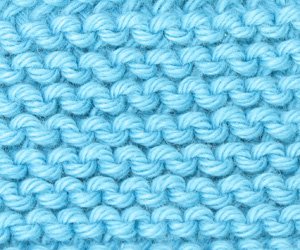
garter stitch image
Image courtesy knitpicks.com

That very first project would’ve been garters to hold up their socks/stockings. Seems appropriate, don’t you think?

It was said that before the Industrial Revolution, every child had to know how to knit and sew because there was no way one mother could keep all her children in socks and garters, plus keep up with all the other tasks involved in keeping a house. And if they lived in a colder climate, mittens and sweaters, too.

The same actually goes for sewing, before the Industrial Revolution, all clothing was hand sewn by either someone in the family or a tailor, but the fact is, after the Industrial Revolution, even middle class families would’ve just purchased these items and the poor wouldn’t have been able to afford yarn and needles by then. By the Victorian Era, knitting was a hobby for wealthy women with a lot of time on their hands.

The second stitch a child would’ve learned is stockinette, which again makes sense because it would’ve been used to make stockings. The stockinette stitch is knit stitches on the front side and purl stitches on the back

Stockinette stitch image
Image courtesy of Pinterest

This stitch is the one that is most commonly seen on sweaters and socks because it makes such a nice, flat fabric. The interesting thing is that knitting needles were costly. Unlike today where I have an entire drawer of needles to create the gauge and look I want, they probably had a more limited supply since needles were costly and artistic. This might explain some of the reason why Elizabeth Zimmerman was more concerned with measurements than telling knitters which needles to use. One blog I read suggested that fine gauge needles were used most often since they create a more delicate and expensive appearing garment.

Want to see some of those needles?

old knitting needles
Image courtesy of ebay

They came in bone, wood, or metal, though metal was least desirable. I’m not sure I would love to have that poking into my hand as I knit. Interestingly, the gauge seems to be burned into the ends, which is really cool. I am, frankly, a big fan of circular needles. The first patent for those was made in 1918.

Whether or not the Victorian women (for those of us who write historical novels) knitted or not, it’s really fun to look back on the history of this fun pastime. The fact is, just like we can’t say that “no one sewed their own garments anymore” we can’t say “no one knitted anymore”. There will always be people who make time for a craft, even with a busy household or too much work to do. I hope you have a hobby that you really enjoy too, and I hope you have a chance to pass on that love to someone else.

What’s something you enjoy doing that someone else might too?

Yee-Haw! Marisa Masterson Has A Winner!

We’ve sure been mighty thrilled to have Ms. Marisa Masterson join us this week with her intriguin’ post.  I’m just bustin’ at the seams to announce the winner of Ms. Masterson’s ebook Mail-Order Marietta.

The Winner is:

Jeanette

Congratulations Jeanette!

Ms. Masterson will be emailin’ ya soon, so keep yer eyes peeled on that ther’ inbox.

Settle in now, pour yourself a cup of tea and get some good readin’ time, cause yer gonna love this story from Ms. Masterson.

Again, Congratulations!


FERRY—THE ONLY WAY TO GO (literally!)

Please welcome Marisa Masterson to Petticoats and Pistols today!

Perhaps, like me, you think of the Oregon Trail or one of the other famous trails when travel westward in the 1800s is mentioned. For the most part, most people going overland followed one route in the area of what is now North Dakota to the South Pass in Wyoming. This trail meant crossing the North Platte River.

That crossing is just one example of places where water made western settlement challenging. Even smaller rivers could separate communities in areas where people settled rather than pushing further westward. Before bridges, one of the obvious answers for an enterprising man was to build a ferry and charge to take folks across the river.

David Hickman was one such entrepreneur. He arrived at the Upper Platte River with the plan to make money. Using stout posts, he strung ropes from one bank of the river to the other. To these, he attached pullies. With the help of employees, he ferried wagons across all day long most days. For this, he charged $5.

This was a river that regularly claimed lives. Wagon trains would often stop on the western bank for a day or two to search for bodies. With Hickman’s ferry came a sense of peace that belongings and family members would survive the crossing.

Literally, the ferry was the only insurance against casualties. No wonder people willingly paid the high price to cross on it.

Ferries were on my mind as I created the setting for my latest release. I set the town on the banks of a river and named it after the ferry owner. In fact, that man is so determined to have a town named after him that he sends away for mail-order brides to marry the single men living in the area. Enter my heroine, Marietta. She thinks she is marrying the ferry owner but instead finds herself marrying the local sheriff.

She would be content. He is a compassionate man. Only, a problem soon follows Marietta west and question about missing gold dog her days. Gold she knows nothing about.

Marietta is panicked after her husband’s execution. Her best choice is to marry a stranger.

Her future with her sheriff husband hints at love until a desperate man tracks her down, intent on forcing her to give up the stolen Confederate gold. One problem – she doesn’t have it!

Will this treasure hunter ruin Marietta’s chance at a home and family?

To buy a copy of Mail-Order-Marietta click here.

Giveaway:  To be entered in today’s random drawing for an eBook copy of Mail-Order Marietta, leave a comment about ferries or old bridges you know of from the history of the area where you live. 

My Favorite Things

I love making costumes. Sometimes I use commercial sewing patterns and sometimes I make my own.

My deep dive into Victorian costuming started after I read Gone with the Wind at the age of fifteen. I decided then that I needed a corset in the worst way, so I checked some books out of the library, studied them, and made a corset out of upholstery material and baling wire. It wasn’t bad for the mid-1970s and the resources available, to be quite honest.

Then, many years later, a friend who enjoys participating in theatre productions suggested that my husband and I might get a kick out going to the Great Dickens Fair in the Bay Area. You don’t need to have a costume to attend, but I’m a costume gal, so we had costumes–all of us. My husband, my daughter, my son, his girlfriend (now wife) and myself of course. I would come home from school and spend the evening sewing costumes–three Victorian dresses, two tailored coats, two dress shirts, two pairs of slacks, two brocade vests in a matter of two months.

I truly enjoy tailoring men’s wear so the Victorian jackets are the real deal–horsehair canvas, pad stitching on the lapels, inner pockets to hide anachronistic cell phones–as are the trousers and vests. The dresses are also fairly accurate.

In addition to Victorian costuming, I also make family Halloween costumes. It started when my daughter-in-law, needed a costume to fit a Disney princess theme at her work. She became Merida from Brave. The next year my son asked if I could make him Pennywise from the movie It. I did, making the costume from bits and pieces of other patterns. I even made the shoes using cheap running shoes as a base.


The next year he asked if I could make Captain Hook. Could I make Captain Hook? You bet. It’s actually one of my favorite makes, and it, too, is the real deal with all the tailoring details and an inner pocket for a cell phone.

I haven’t had much call to costume over the past couple of years, but now that I have grandkids, I can see a whole new era about to begin. My sewing machine and I are very excited!

Julie Benson’s Winner!

Thanks to everyone who stopped by yesterday to chat with me.

The winner of the signed copy of To Cure a Vet is:

                                Lynn M

Lynn, look for an email from me on how to claim your giveaway.

Thanks again everyone for spending part of your day with me. Have a great rest of the week everyone, and remember, Adopt Don’t Shop and everyone can help dogs find a home by sharing posts.


Julie

Yee-Haw! Marisa Masterson is Comin’ Round the Mountain this Friday, March 31, 2023!

How’d y’all suppose all those long-ago pioneers ever crossed the North Platte River, that troublin’ river that took more lives than a single-edged huntin’ knife?

Well, come a visitin’ here at the Junction on Friday and Ms. Masterson’s gonna tell us all about it.

Marisa’s totin’ a giveaway too!

So, this here’s an invitation ta come on over to the Junction this Friday.  Let’s give Ms. Masterson a mighty big western howdy!  But be prepared to sit a spell and have hootin’ good time!


Yup, I’m a Crazy Dog Lady!

Today I get to share one of my favorite things with you…fostering dogs.

Before my oldest left for college I responded to a post to foster a little black puppy. (I love black dogs and have since learned they are less likely to be adopted.) That pup had a foster, but the guy pictured here, Rowdy, didn’t. Thus began my journey fostering dogs with Cody’s Friends Rescue.

Our first foster Rowdy

We foster puppies, often as young as two months. At that age, they love being held. They’ve been snuggling with mom and their siblings and desperately miss that connection. I get the joy of puppy cuddles and kisses. It doesn’t get better than that. We usually take two or occasionally three puppies, because it’s easier when then they have a playmate their size.

Brothers Axel and Brody

The question I’m asked most is how do I let them go? We have adopted some. And while we love every foster, some are different. Like Kingston, a puppy with mange we fostered. My husband was a cat person, but Kingston latched onto him. While he was sweet, we joked how he wasn’t bright because after weeks, he didn’t recognize his name. Then one night someone came to the door. The other dogs barked. Kingston remained blissfully asleep. Thus, we discovered Kingston was deaf. Combine his special need with his and Kevin’s best bud status, and he was our first “foster fail.” But I digress. Big surprise there!

Kingston when we he first arrived.
Kingston and our foster Bear

It’s never easy letting go, but I cope with my husband’s help. I pick pups up and see to their vet care. He talks with potential adopters and takes fosters to their new homes. He loves seeing how far they’ve come and their joy with their new family. I’m usually crying at home, remembering that every dog we let go makes room for another who needs help. And the need is huge, especially Texas who euthanizes more dogs than anywhere in the country. At times, I think I’m on the Titanic bailing with a teaspoon. Then I remember, while I can’t save every dog, I save the ones I can.

Foster Bella helping me write.

The rescue I foster with, Cody’s Friends Rescue, takes any breed. They also take dogs needing medical care. The most recent, Memphis, was found in a ditch by a friend of a Cody’s foster. Both his rear legs were broken, with the right in three places, which required surgery. I was blessed to be his medical foster, getting him from his “regular” foster the night before, taking him to his surgery appointments, and then getting him back home.(To learn more about Memphis’ heartwarming journey, click here.)

Some fosters have come and gone so fast my head spun, some of whom I thought we’d have forever. Others, despite being fabulous dogs, have waited longer for their humans. Like our current boy, Dalton. Despite being loving and playful, with a huge heart, no one has shown interest. So until then we love him.

Our current foster Dalton

If you’ve ever considered fostering, contact a local rescue. You may discover as I have that you get more than you give. I realize not everyone can rescue, but everyone can help. Rescues need people to transport dogs from shelters to fosters, or from fosters to vet appointments. They also need help at adoption events. If you don’t have time for that, share posts you see on social media. I remember a story about a dog in the Weatherford, Texas shelter. A woman saw a Facebook post, fell in love, and drove from Colorado to adopt this dog. Please, please share those posts. You never know when your share will save a dog’s life.

Giveaway:  To be entered in today’s random giveaway for a signed copy of A Cure for the Vet containing my book The Rancher and the Vet which has a spirited foster dog, leave a comment about a favorite animal or just one of your favorite things!


Bullet Proof Bride — Pink Pistol Sisterhood, Book #4 by Kit Morgan


Can you believe it? Petticoats & Pistol authors coming together to make one of the most fantastic series I’ve seen in a long time. And I must say, I’m not only honored to be a part of this incredible endeavor, I’m floored by the talent of my sister fillies! And, at long last, my book is now on pre-order!

In the writing world, there have been many of what we call, multi-author projects. I’ve done quite a few of them myself. Some small, some large, but this group is chock full of so much talent it blows my socks off. So yeah, you’re in for a real treat! 

My book, Bullet Proof Bride is the fourth book in our series and I’m having fun writing it. Now, as many of you know, I was raised by a homicide detective, so on occasion I like to put a little mystery or suspense in my books. What can I say? I can’t help myself. Dad would be so proud! So by the time the mysterious pink pistol falls into the hands of my bride along with the pickle she finds herself in, she’d like to use it the way a pistol ought to be used. But love? How can a pistol bring love into her life when all she’s trying to do is keep it? The train robbers she’s managed to upset certainly won’t care if she finds love!

Lucky for her she’s stuck in Nowhere, Washington, where folks try to help each other out. She just hopes they help when the shooting starts. If, indeed, it does. At least she’s got a handy dandy pistol to protect herself with. Better yet, she can shoot! Maybe she should mention it to a few folks, as the local banker has it in his head he has to protect her. When trouble does come to call, who will be protecting whom, and how is she to protect her heart? Rhys Miller is handsomer than he ought to be and he’s making it harder and harder for her to concentrate on staying alive. Good grief, what if she winds up protecting him? Can he shoot? Maybe she better find out! Because the last thing she wants is to have to worry about another tragedy. After all, tragedy is what landed her in Nowhere to begin with.

 Karen Witemeyer began our series with In Her Sights, the rest of the books available for pre-order are by Shanna Hatfield-Book 2, Cheryl Pierson-Book 3, and myself. And there’s more to come!


Here’s an excerpt from Bullet Proof Bride:

The Weaver Farm Train Stop in Washington, August 1900

 Goldie Colson stared at the apple orchards as the train took on water. They’d been here a while. Her destination was Nowhere, a nothing of a town in Washington that was as far from her old life as she could get. On the one hand, that was a good thing. Her life in Kansas City was horrible. She lost her parents in a bank robbery less than a year ago and now her betrothed to a bunch of train robbers.

“Miss Colson?”

She looked at the elderly conductor with eyes red from crying. “Yes?”

“Are you sure you don’t need anything? Something to eat?” The folks that live here are bringing food for everyone.”

Before she could speak, she noticed a giant of a man coming down the aisle. He was middle-aged with chestnut brown hair mixed with gray and had blue eyes. He stopped when he reached them. “Howdy ma’am. Name’s Arlan Weaver. We heard what happened. Are ya all right?”

A tiny laugh escaped, then another. “I just lost my intended and his father. No, I am not all right.” She looked out the window again. True, the men she lost she’d just met at a train station in Boise. She was a mail-order bride, and her betrothed, one Theodore Ferguson and his father, Ben Ferguson, were off to visit Ben’s sister in Nowhere. The ride out of Boise was uneventful for a long time and she’d spent it trying to get to know her future husband. It was the same after they left Baker City in Oregon. She was beginning to like the man she was about to marry when they entered the state of Washington. Then the train was robbed but hours ago, and not all the outlaws escaped. “What is this place?”

“The Weaver farm, ma’am,” Mr. Weaver said. “Maybe I ought to have my wife take a look at ya.” He excused himself and hurried from the car.

Goldie watched him go then went back to staring out the window. She didn’t know how many passengers were in the other car. They were spread between two, her car carrying her little party of three and a few others. Theodore and his father had been shot while the rest of the passengers fled into the second car seeking refuge. She had no idea if anyone in the second car had been wounded or killed. She only knew what happened in this one. Four lay dead. Two of them outlaws.

Two more men entered the car, took one look at what lay in the rear seats, then headed that way. A woman followed. She was middle aged, pretty, and had brown hair and kind brown eyes.

“Hello,” she greeted. “I’m Samijo Weaver. Why don’t you come with me?”

Goldie nodded, too numb to do anything else. How did she survive? She should have been shot too. But fate intervened when her future father in-law slumped in the seat in front of her, and she grabbed the gun out of his hand. The rest was a blur. She didn’t remember firing the weapon, but obviously did.

“Come along, now,” Mrs. Weaver said gently. “Let’s get you taken care of.”

Goldie’s lower lip trembled, and she bit it. She let the woman guide her from the seat and steer her off the train. With no home and no place to go anymore, Goldie had no idea what to do. But she was alive, and for now, that was enough.


We know you’re going to love these stores as much as we’ve loved writing them for you! The uniqueness of the span of time from the first book to the last covers stories set in the past and present and what’s in between. And of course, we have our own magazine! If you haven’t checked out our Pink Pistol Sisterhood Facebook group yet, then head on over and join the fun! 

If you haven’t yet seen our magazine, you can find them here:

Issue #1

Issue #2

To Pre-Order Bullet Proof Bride, go Here

What do you think of our series so far? I’ll be giving away one e-copy of Bullet Proof Bride when it’s released to one lucky commenter!

Cowgirls in the Kitchen – Karen Witemeyer

My husband celebrated a birthday a couple weeks ago, and he dropped a not-so-subtle hint about what dessert he would like to celebrate with – a blueberry banana cream pie. It’s his favorite, and I’m ashamed to admit that it’s been several years since I last made it for him.

I think this recipe must be a southern thing because, before I came to Texas, I had never heard of a blueberry banana cream pie. It’s a variation on a no-bake cheesecake, super easy to make, and always delicious.

Blueberry Banana Cream Pie

Ingredients:

  • Pie shell, baked and cooled
  • 1 banana, sliced
  • 1 can blueberry pie filling
  • 1 8 oz pkg cream cheese, softened
  • 1 cup powdered sugar
  • 1 cup whipped, whipping cream

Instructions:

  1. Bake and cool pie shell.
  2. Make filling.
    • Whip cream cheese and powdered sugar until all is combined and no lumps remain.
    • Whip whipping cream until stiff peaks form, measure out 1 cup, and gently stir into the cream cheese mixture. (Hint: whipping cream will come together faster and easier if you chill the mixing bowl first.)
  3. Slice banana and arrange the slices to cover the bottom of the pie crust.
  4. Add cream cheese filling and smooth to fill pie shell
  5. Pour half a can of blueberry pie filling on top and spread to cover evenly.
  6. Chill until ready to serve.