Popcorn, Anyone?


I don’t know why in all the stories I’ve published that I’ve never written about popcorn until this Christmas book I’m writing. A great oversight on my part!

Anyway, I’ve done some research and what I found is interesting.

Even though popcorn is grown on ears, it’s very different altogether from sweet or field corn. The hull of popcorn is just the right thickness to allow it to burst open. Inside each kernel of popcorn is a small droplet. It needs between 13.5-14% moisture to pop. Don’t ask me how it gets the water inside there.

All I know is that the water turns to steam when heated and pressure builds.


The oldest ears of popcorn were found in a cave in New Mexico in 1948. The oldest found there were 4,000 years old, so it’s been around an awfully long time.

The Aztecs used popcorn in their ceremonies, decorations, and dances. It was an important food for them as well. When Spanish explorers invaded Mexico, they were astounded by these little exploding kernels of corn.

In South America, popcorn was found in 1,000 year old burial grounds and was so well-preserved it still popped.

Long before corn flakes made an appearance, Ella Kellogg ate ground popped popcorn with milk every morning for breakfast. Her husband, John Kellogg, praised popcorn as being easily digested and highly wholesome. I don’t know if I’d want it in a bowl with milk.


In Victorian times, popcorn decorated fireplace mantels, doorways, and Christmas trees. Kids used to string popcorn and cranberries and was often the only thing on trees unless paper ornaments.


Here are some Corny facts:

Today, Americans consume 15 billion quarts of popped popcorn yearly.

Most of the popcorn consumed throughout the world comes from the U.S.

Major states producing it are Illinois, Indiana, Iowa, Kansas, Kentucky, Michigan, Missouri, Nebraska, and Ohio.

National Popcorn Day is January 19th or whatever day the Superbowl falls on.

* * *

Darn, I’m itching to go to the movies! I can smell the popcorn now.

So, I’ve just added a scene in my Christmas book where my heroine pops popcorn for two little kids and they also string some to decorate with. In case you’re curious, the title of the book is A Cowboy Christmas Legend. Look for it September 2021.

Okay, your turn. How much popcorn do you eat? And what is the most surprising fact you learned?

Linda Broday Has Winners!


Wow! Thank you all for reading my Dancing Outlaws Blog on Monday! I’m astounded at the response. You all have made this week very special indeed.

So……I’m giving away an extra one!!

And the Winners are……………….

TONYA CHERRY

DEBORAH KEITH

ESTELLA

KRISTI

There you go! Congratulations, Ladies! Watch for my email.

Monday is GAME DAY! Everyone come and play.

Dancing Outlaws

Dancing! Oh yes! I love it! I put dancing throughout my Outlaw Mail Order Brides series and it’s all the real-life outlaw gunslinger Clay Allison’s fault! They say he suffered a head wound during the Civil War and it left him with a terrible temper. Maybe so. His epitaph reads that he didn’t kill anyone that didn’t need it and it is a well-known fact that he put a lot of men six feet under.

But strangely, Clay loved to dance—a lot. He owned a ranch outside of Cimarron, New Mexico and always kept a violin player on his payroll.

I first put Clay Allison in The Heart of a Texas Cowboy as Houston Legend’s drover and my editor liked him so much she wanted me to give him his own book. I thought it best to make him fictional so I changed his last name to Colby. Book #1 of Outlaw Mail Order Brides—The Outlaw’s Mail Order Bride—is about Clay Colby.

Clay and some of his friends are tired of running and want to settle down so they decide to carve a town from their hideout. Next came populating it so they send for mail order brides.

Since Clay has been writing a wanted woman in hiding, Tally Shannon, he asks her to marry him so she travels to Hope’s Crossing. She agrees.

Oddly, Clay makes sure one his fellow outlaws is a fiddle player and they have a dance each night after supper, waltzing over the uneven ground under the stars. And that’s how he and Tally get acquainted. It worked.

My town has the dancing-est outlaws you ever met. It keeps ’em out of trouble. (Psst, not really)

I’ve always loved to watch dancers, but I didn’t know how until around the age of 30. I was married and three kids underfoot when I took classes at the local college for ballroom dancing. I learned the foxtrot, tango, the waltz, and then the teacher threw in the two-step.

It opened up a whole new world and I loved it. The only problem was my husband didn’t dance and had no desire at all to learn so I was forced again to sit on the sidelines.

Occasionally one of male customers would ask me, but then we stopped going to those places altogether, and sadly, I lost what I’d learned.

I still love to watch dancing couples though. And I love the show Dancing With the Stars, living vicariously through them. Sometimes, I even get out of my chair and do the steps. You’d die laughing.

Dancing has been in our culture probably since the beginning of time. The earliest proof was found in 9,000 year old cave drawings. I’m astounded.

Some of the dances had such names as the Quadrille, the Minuet, the Polka, the Waltz, and many others. Rock and Roll brought many, many more dances like the Lindy Hop, the Twist, the Jitterbug, etc. This didn’t involve a partner so I jumped right in and loved twisting and gyrating and making a fool of myself.

Tell me the first person you ever danced with and the type of dance it was. I’m giving away The Outlaw’s Mail Order Bride to three people who leave a comment.

Linda Broday Has Winners!

Thanks bunches for all the wonderful comments on my Epitaph blog!

I loved reading what all of you want to be remembered for.

Here are the three random winners for a copy of The Cowboy Who Came Calling!

ALICIA HANEY

DIANA HARDT

SALLY SCHMIDT

If you ladies can shoot me your snail mail address to linda (@) lindabroday (dot) com, I’ll get your book to you.

Everybody stay safe and cool!

Epitaphs Tell a Story

I guess it’s the writer in me but I always love strolling through a cemetery. The buried stories are too many to number and I always wish I knew them all.

I can get a pretty good idea from the epitaphs carved on tombstones. Some are sad and some are hilarious, revealing a sense of humor. I wrote about a Texas Ranger once who was thinking about his epitaph and what he might be remembered for. It was in The Cowboy Who Came Calling with Luke McClain.

Here’s what he came up with: Here lies Luke McClain, he was one hell of a lawman. He fought injustice and crime wherever he found it. He gave generously of himself to make the world a safer place. He lived well and loved hard. He will be missed.

Of course, Glory Day told him he didn’t need to write a whole book. Her’s was: She lived. She died. End of story. 

The epitaphs told so much about each of them. Glory was going blind so she was at a low point in her life.


Here are some favorite ones that I found:

Old Ma Walker, Non stop talker, Ran out of breath, Talked herself to death

Here lies Shawn O’Toole, kicked in the head by an ornery mule

Here lies Lester Moore. Four slugs from a .44. No Les. No more.

Here lies George Johnson hanged by mistake 1882. He was right, We was wrong. But we strung him up and now he’s gone.

Here lies a man names Zeke. Second fastest draw of Cripple Creek

They abounded in riches. But she wore the britches.

Here lies Rosalie Tanner. A woman that spent most of her life on her back


I’ve often thought about what I would say on my tombstone. Maybe something like “I laughed. I cried. I lived.” Or maybe the opening lines of my book Forever His Texas Bride: “A plan? Definitely not dying.” 

What would you say on yours? Leave a comment to enter the drawing for one of 3 autographed copies of THE COWBOY WHO CAME CALLING.


Have Telegram Will Travel


There are a few things I put into almost every book of mine and the telegraph is one. It was the “email” of the 19th and early 20th centuries. People needed a fast way to send a message, and in the early 1800s, Samuel Morse gave them the telegraph—a machine that sent a series of dots and dashes over a wire.

In April 1856, Western Union began operating and reached peak popularity in the 1920s and 1930s when it was cheaper to send a telegram than call long distance.

They charged by the word and the cost of a 10-word telegram in 1870 was around $1.00, depending on the distance.

It was customary to use the word STOP in place of a period. I found one reason for this being that it was cheaper than a period but I’m not so sure. I couldn’t find the cost of a period listed anywhere. Another source mentioned that it was to clarify the message and since they were sent in a series of dots and dashes, distinguishing periods would’ve been difficult. I believe this.

In any event, messages weren’t that cheap, so people used the fewest words possible.

In my Men of Legend series, Stoker Legend installed his own telegraph on the huge ranch so he could get messages quickly since headquarters was a good thirty miles from the nearest town.

And in my latest book, The Mail Order Bride’s Secret, Tait Trinity used the telegraph to send for Melanie Dunbar, the mail order bride he’d been writing.

* * * *

Now I have an offer for you. From today 5-19-20 to 6-02-20 my Texas Heroes series (digital only) goes on sale everywhere online!

Knight on the Texas Plains is FREE

AMAZON  |  B&N  |  APPLE  |  KOBO

The Cowboy Who Came Calling — $1.99

AMAZON  |  B&N  |  APPLE  |  KOBO

To Catch a Texas Star — $2.99

AMAZON  |  B&N  |  APPLE  |  KOBO

So if you missed one or all of the series now is your chance.


Would you have made use of the telegraph system back then? Or would you have just written a letter? The cost of a letter was about 4 cents. Do you know of anyone who received a telegram?

Linda Broday Has Winners!

Oh man! I really enjoyed chatting about the Travelers Aid Society Group on Tuesday.

Thank you all for coming over!

I’ve changed my giveaway to two copies of The Mail Order Bride’s Secret.

The winners are……………

SALLY SCHMIDT

ABIGAIL HARRIS

Congratulations, ladies! Watch for my email. 


Ever Hear of The Travelers Aid Society?


In this pandemic, most travel is prohibited, especially international. But I can’t imagine how frightening it would be to be stuck somewhere and have no resources. And double that fear if I found myself in a strange country and be unable to speak the language.

So organizations founded just to help travelers are a godsend, no matter when or where.

While international travel might be limited, there’s a world of inspiration waiting for us through travel blogging sites. These virtual portals act as our virtual tour guides, offering a treasure trove of wanderlust-inducing destinations that align perfectly with our tastes and preferences.

So, whenever you yearn to set foot on unfamiliar lands or revisit your favorite spots, go here to find a wealth of travel recommendations that spark your wanderlust and keep your adventurous spirit alive. From stunning landscapes to hidden gems, travel bloggers curate captivating stories that take us on a journey, transporting us to places we’ve only dreamed of.

The Travelers Aid movement began in 1851 with Bryan Mullanphy, a former mayor of St. Louis, Missouri, who bequeathed half a million dollars to assist “bona fide travelers heading West.”

This organization furnished provisions and the means with which to make the trip for men and women in good health who showed the stamina required for the journey. I can only imagine how many adventurous settlers they helped.

Until recently, I had never heard of this organization and never knew anything like this existed!

Once the West was settled, the Travelers Aid Society moved into providing protection for women and girls traveling alone. Such a beneficial program that kept them from falling victim to the white slave trade and other criminal enterprises.

By the early twentieth century, they served all people regardless of gender, age, race, class, or religion. It truly became an organization for everyone.

Image by 272447 from Pixabay


It morphed into the National Travelers Aid Association in 1917 under Grace Dodge. They welcomed immigrants to the U.S. and provided assistance and a safe place to stay for anyone needing one. The organization set up offices near all the ports of entry and stood ready to dive in and assist anyone with a problem.

During the 1920s and throughout WWII, they were a prominent fixture at railroad stations, helping soldiers, unaccompanied minors, and assisting stranded travelers.

There are still around 40 Travelers Aid programs in the U.S. with offices at major airports to assist where there’s a need. In 2010, they assisted 7 million people in getting to their destination.

Now there’s an international branch for world travelers. There will always be a need for someone to help the lost, the desperate, the confused.

For an organization that’s 169 years old, that’s pretty darn good.

Have you ever traveled to a strange place and needed help? Would you ever reach out to The National Travelers Aid association if you were in a bind? I’m giving away a signed copy of The Mail Order Bride’s Secret so leave a comment to enter.


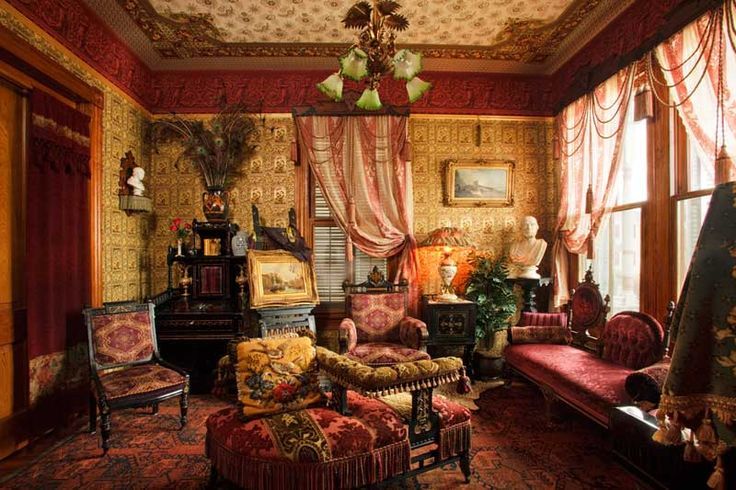
Parlor or Living Room? Supper or Dinner? What the Heck?


Blame my curious mind for this post. When did people start calling a parlor or drawing room a living room?

First, let’s start with the meaning.

PARLOR – A sitting room in a private house where the family received visitors. This is a dated word that we no longer use in this context but was the common term until the 1900s. It was known as the “death room” and was where families laid out dead relatives as was common practice in times past. I can’t imagine this! CREEPY! And they took pictures of the dead people in their casket!! Double CREEPY!


DRAWING ROOM – An archaic word for a very formal sitting room and could be upstairs or the main floor where a person entertained visitors.

RECEPTION ROOM – Usually refers to a hotel, churches or anyplace besides a private home.

LIVING ROOM – An informal setting in a private home where the family welcomes visitors.


So, when did a parlor become a living room?

Inquiring minds want to know. It all changed by the end of World War I when funeral homes started taking care of the dead and they started calling the place where they set the caskets funeral parlors.

In 1910, the Ladies Home Journal came out with an article changing home parlors to living rooms. It’s an informal space where families gather and hang out. It became a “Lively” room and no more dedicated to death.

Large houses sometimes have more than one—both a formal and an informal.


Now…When did supper change to dinner?

The Merriam and Webster Dictionary says the last meal of the day changed names with the rise of industrialization and workers were not home for the midday meal they called dinner. (Psst, I still do by the way.) Thus, dinner slid to the last meal of the day and lunch became the noontime meal.

But…Is it an uppity thing? I never hear rich folks say supper. So, was it was a division between those who had and those who had less? 

Whatever the reason was, I just want to point out that the Bible says the Lord’s supper – not the Lord’s dinner.

Now, what’s for dessert? I’m hungry and I might eat in the living room.

So what are your thoughts on all this? Do you have a parlor or living room? Eat supper or dinner?

Happy Saint Patrick’s Day!!! Hope you’re wearing green!

Game Day Winners!

Thank you all for playing my game! Everyone got the titles right.

The two gift card winners are………..

PAULA JONES

ELIZABETH LITTON

Huge congrats, ladies! 

I’ll email you so be watching for it.

Or you can contact me – linda (at) lindabroday (dot) com

* * * *