Welcome Jodi Thomas!

Hang on everyone, it’s almost fall.

That’s when the year begins if you’re a student or a teacher.  For me it’s been 12 years of public school, 6 years of college, 19 years of teaching and 14 years of being Writer-in-Residence at West Texas at A&M.

I’ve eaten more cafeteria meals than I’ve cooked!

So, my year starts in the fall. That’s when I set my goals, even my writing goals. Some years when I wrote my goals, I could have just written “Ditto.”

But some years there are surprises. Maybe a seed I planted years ago begins to grow. Or sometimes a goal falls apart leaving room for new surprises in my life.

I always laugh and say, ” Sometimes God winks.”

I have found 2022 has been one of those years.

In April my SUNDAY AT THE SUNFLOWER INN came out fast and with great reviews. Then out of nowhere I was named to the Texas Literary Hall of Fame.

ME!  What an honor. I was so excited I wanted to go back to all my teachers and show them the letter announcing my award.

What a total surprise–God winked!

Another surprise this year is the book coming out the end of August.  THE WISHING QUILT.  Three years ago I was talking to Patience Griffin at the Houston International Quilt Show and I was reading Lori Wilde’s new book.

I thought it might be fun to do a book together, Lori, Patience and me.  And, three years later it happened.

As you know I love quilts, especially this one from my mother Sally Faye Kirkland Price. I have it hanging in my quilt room at home.

I would love to give away a copy of THE WISHING QUILT to three readers. Leave a comment for a chance to win. Do you quilt or have a family member who does? What are your favorite quilt patterns? Or if you don’t quilt, share one of your own “God winks” moments in the comments.

It’s almost September so I better get to work on my goals.

Happy New Year,

Jodi

The School Mistress – by Tess Thompson

Hi to all you Petticoats and Pistols readers! I’m thrilled to be guest blogging today. I thought I’d share a little about me and my books and do a giveaway of a paperback of The School Mistress.

I write mostly small-town romances/family sagas, some contemporary and some historical. Almost always, they’re set in the Pacific Northwest. (I’m from Oregon originally and have lived in Seattle for thirty years.) As a writer and readers, my true love are historical novels but I wasn’t sure my contemporary audience would agree. I’d had a lot of success with two small town series set in Oregon and northern California. However, that all changed two years ago with the release of my first Emerson Pass Historical, THE SCHOOL MISTRESS. It and the others in the series have been in the top twenty American historical romances on Amazon for almost two years. I’m delighted, of course! Mostly because that means I get to write more of them.


Often readers ask me what inspired a certain book or series. I’m never totally sure how to answer because once the creative process starts, it is easy to forget how you came up with the idea in the first place. However, the origin of Emerson Pass I remember well. One morning about three years ago, I woke up from a dream in which the Barnes family were the main characters. I grabbed my notebook, kept at the side of my bed for this very reason, and wrote down the names, ages, and descriptions of the children as well as Quinn and Alexander. The scene I’d dreamt was of a young woman arriving in a frontier town on the train with snow falling all around her. This is the first scene in the book.

I was in the middle of writing my Cliffside Bay Series, thus I had to set aside the Barnes family for about a year. Finally, in December of 2019, I gave myself a present. I would write THE SCHOOL MISTRESS as a Christmas gift to myself. I didn’t think it would sell well or be a hit at all, but it was something to fill my creative well. It was a book I would like to read!

I was wrong about the hit factor. Readers loved the tale of my courageous schoolteacher and the widower with five children. It was so popular that I committed to writing a story for each of the children. Then, Quinn had two babies, so that made their stories necessary too. At the same time, I decided the descendants of the first characters should have some stories too, thus the contemporary Emerson Pass were born!

I’m about to begin writing the eighth and final book of the series. The seventh comes out September 20th. I feel a little blue saying goodbye to this family I’ve known so well. However, another historical series will release next year with a new family and new love stories.

If you subscribe to Kindle Unlimited, the whole series is in there, so you can read them for free!

GIVEAWAY

I’m also giving a paperback copy of THE SCHOOL MISTRESS to one lucky winner. 

Just tell me what your earliest memory of school is.

To enter to win, head to my website and subscribe to my newsletter and then comment to let me know you did it.

You get a free novella just for signing up!

PURCHASE THE SCHOOL MISTRESS HERE


Texas Ranching History – by Debra Holt

“Other states are carved or born;

Texas grew from hide and horn.”

                                            — Bertha Hart Nance, 1932


Texas ranching has a long and storied history. Its roots go back to 1493 when Christopher Columbus made his second visit to Hispaniola. He brought with him several head of cattle, who were the ancestors of the Texas Longhorns bred throughout the state today.

The 16th and 17th centuries saw cattle ranching advance through Mexico and into modern-day Texas. The first cattle ranch was found in the El Paso region, where several thousand cattle were raised. These early ranches were formed by Spanish missionaries; private ranches would arise in the mid-18th century.

The Mexican War of Independence destroyed the Spanish missionary ranches. The Austin colony was formed at the end of the war, attracting Anglos to come stake a claim on the land and the cattle on it. They brought their eastern cattle to breed with the Spanish cattle, and the result was the Texas Longhorn.

The U.S. annexed Texas in 1845, and it spread out land for railways and new settlements. There was plenty of land to go around, and the demand grew high for beef. The cowboy system we’ve come to hold so dear began around this time.

It wasn’t just men who worked on the ranches; women were important to ranch operations, too. One woman, a former slave named Julia Blanks, helped with roundups, planted crops, raised up animals, and helped with the cooking during roundups on the Adams Ranch.

Her daughters followed in her footsteps — “My oldest girl used to take the place of a cowboy, and put her hair up in her hat. And ride! My goodness, she loved to ride.”

The first woman who led a cattle drive was Margaret Borland. After her husband passed, she became the sole owner of the Victoria ranch and 8,000 longhorns. Six years later, she had 10,000 cattle in her care. In 1873, she became the first female trail boss, leading 2,500 longhorns, her three children, and several cowboys up the Chisholm Trail into Kansas.

In recent years, ranches have had to adopt newer ways of bringing income, as the cost of cattle and maintaining the land has risen. The historic YO Ranch let its land for hunting and outdoor recreation. The Matador Ranch soon followed suit.

This past spring, the last ‘grande dame’ of the Texas ranching world was laid to rest. And last month, one of the few remaining ranching ‘empires’ went on the chopping block.

I call it a chopping block because here in Texas, far too many of our great and historic ranches have been sold to the highest bidder (usually someone residing outside the country, let alone the state) and chopped up into smaller pieces, the land and its resources plumbed until nothing worth anything remains, and a vital chapter of our Texas heritage and history has been wiped clean.

This sad fate of a place I consider to be a bit of Texas heaven inspired this story and this series — the Texas Heritage series.

In the first book, The Texas Cowboy’s Proposal, we meet the two granddaughters of Sarah McNamara Burkitt…Laurel Annabella and Samantha Josefina. The heroine of this first book will be Samantha, aka Sammi Jo. She has just been handed a hard blow when her older sister shares the finer points of their grandmother’s will.

GIVEAWAY

Stop a minute and comment about a piece of your heritage that still impacts your life today.

One lucky commenter will receive a free copy of The Texas Cowboy’s Proposal!

Purchase The Texas Cowboy’s Proposal here

Find Debra online at her website here

The Origins of the Secret Service – by Kristy McCaffrey

Counterfeiting was a serious issue at the end of the Civil War. Nearly one-third of all currency in circulation was fake. In 1865 the Secret Service was established to deal with this issue, acting as a bureau in the Treasury Department to stabilize America’s financial system. They were the first domestic intelligence and counterintelligence agency in the United States.


During this time, America’s monetary system was very disorganized. Individual banks could legally generate their own currency, but with so much variation in circulation it was easy to counterfeit money.

The first agency chief was William Wood, who was widely known for his heroism in the Civil War. During his first year in charge, he was successful in closing more than 200 counterfeiting plants.

In addition to investigating paper money forgeries, the agency also monitored groups committing fraud, which included the Ku Klux Klan, mail robbers, smugglers, and bootleggers. The United States Marshals Service didn’t have the manpower to investigate all crimes under federal jurisdiction, so the Secret Service also handled bank robberies, illegal gambling, and murders.

President Abraham Lincoln established the Secret Service on April 14, 1865, the same day he was assassinated, after which Congress considered adding presidential protection to the duties of the Secret Service. But it would be another 36 years before the Secret Service was officially put in charge of protecting the president. In 1894, they began informally protecting President Grover Cleveland. In 1901, the agency took over full-time protection of the president after the assassination of President William McKinley. In 1908, the Federal Bureau of Investigation (FBI) was created and took over intelligence responsibilities from the Secret Service.

In my new release, THE STARLING, Pinkerton Detective Henry Maguire is investigating a possible counterfeiting scheme in the household of wealthy entrepreneur Arthur Wingate. Partnering with new agent Kate Ryan and posing as a married couple, they uncover more than Henry planned when information regarding his deceased father, Hugh Maguire, a Secret Service agent, comes to light.

Colorado 1899

Kate Ryan has always had a streak of justice in her. When she decides to apply to the Pinkerton Detective Agency, nothing will stand in her way. Initially hired in a clerical position, she quickly works her way up to field agent with the help of her mentor, Louise Foster. When Louise is injured, Kate gets her first assignment and the opportunity of a lifetime.

Henry Maguire has been undercover in the household of wealthy entrepreneur Arthur Wingate. Employed as a ghostwriter to pen the man’s memoir, Henry is also searching for clues to a lucrative counterfeiting scheme. When Henry’s “wife” shows up, he’s taken aback by the attractive woman who isn’t Louise. Now he must work with a female agent he doesn’t know and doesn’t necessarily trust. And because he has another reason for coming into Wingate’s world, Kate Ryan is unavoidably in his way.

Kate Ryan is the daughter of Matt and Molly from THE WREN, and THE STARLING is the first of five novels featuring the second generation of Ryans in the Wings of the West series.

The Starling is now available in eBook and paperback. Find buy links and read Chapter One here: https://kmccaffrey.com/the-starling/


GIVEAWAY

I’m giving away an eBook from my backlist—winner’s choice. To be entered, leave a comment and let me know what great show(s) you’ve been watching lately (any good western series?). I’m always looking for new stuff to view.

See all my books here: https://kmccaffrey.com/books/

Kristy McCaffrey writes contemporary adventure stories packed with smoldering romance and spine-tingling suspense, as well as award-winning historical western romances brimming with grit and emotion. Her work is filled with compelling heroes, determined heroines, and her trademark mysticism. She likes sleeping-in, eating Mexican food, and doing yoga at home in her pajamas. An Arizona native, she resides in the desert north of Phoenix with her husband and their rescue Bulldog, Jeb. Sign up for Kristy’s newsletter at http://kmccaffrey.com/subscribe/
to receive her latest book news as well as subscriber-only content.

Connect with Kristy
Website: https://kmccaffrey.com/
Facebook: https://www.facebook.com/AuthorKristyMcCaffrey
Twitter: https://www.twitter.com/McCaffreyKristy
Instagram: https://www.instagram.com/kristymccaffrey/
TikTok: http://www.tiktok.com/@kristymccaffrey

THE WILD WEST REVISITED–by NANCY FRASER

I have to admit, it had been a few years since I’d written a western historical romance. When a friend invited me to take part in a multi-author series she was putting together, I had to stop and think about it… for all of five minutes.

Of course I was in. The thrill of having to research specific to the topic of the series drew my interest immediately. Not to mention the notion of refreshing my use of language and syntax. It was a writer’s dream to step into a brand new world in order to create vibrant characters and historically accurate storylines. The additional lure of the sweet and inspirational romance had me jumping feet-first into long-forgotten territory.

One of the first places I turned was to my attic, where boxes and boxes of family archives awaited me. My grandfather was a Methodist minister in the late 1800s through the early 1950s, just after I was born. While he spent most of his career serving three different churches in the small towns of middle Tennessee, he also ventured west on two occasions. The first time, in 1904, was on a steam locomotive and then via stagecoach to the smaller, more distant locations. Then, in 1927 he bought his first car and returned to Colorado via the very rough beginnings of the roadway system we know now.

His journals from both trips provided me with hours of insight I may never have found perusing the internet. I used his accounts of his stagecoach rides in that first sweet historical, Seth’s Secretive Bride, and made sure my heroine got a firsthand experience when traveling to meet her mail-order groom, and in the most uncomfortable way.

I continue to refer to grandpa’s journals, along with historical archives of certain events and locations, with every new historical romance that I write. I also rely on his daily notes of faith when I’m adding a touch of inspirational affirmation to my stories.

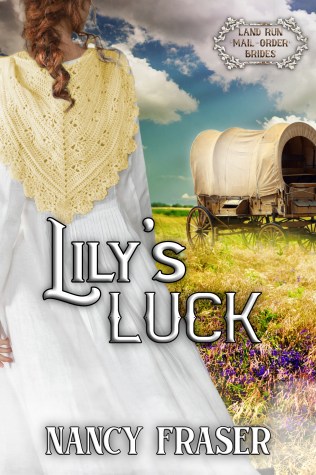
Earlier this year, I wrote my first Oregon Trail/wagon train romance. That truly took some research, as well as a smidge of imagination. However, it wasn’t until I began writing my most recent release, Lily’s Luck, that I found myself in totally unfamiliar territory.

Based on the Oklahoma Land Runs of the early 1890s, I found the subject of reassigning land on a first-come, first-served basis fascinating. I devoured everything I could find, and even downloaded a map where I plotted out my hero and heroine’s journey to claim their homestead in the land run of spring, 1892.

My next historical western project, Millicent’s Miracle, is a Thanksgiving Bride book and it brings me back to the Midwest. The characters I’m writing about have already made an appearance in my earlier Oregon Trail book, Ella (Prairie Roses Collection). Now it’s time for them to get their story.

I hope you’ll consider coming along on my western romance journey with me. So far, it’s been a fun ride and I can only imagine it getting better by the book.

PURCHASE LILY’S LUCK HERE.

Giveaway!

I’m offering a signed copy of LILY’S LUCK to one “lucky” commenter today. (USA ONLY)

Just tell me… Do you have any old journals or letters from an ancestor?

Or have you gotten into genealogy to research your past?

Thanks again for stopping by!

CHRISTMAS WISHES AND COWBOY KISSES–AND A GIVEAWAY!–by Lacy Williams

It is fantastically hot here in Oklahoma. We’ve had several days in with temps over 100 lately with more to come.

So what better time than to chat about a Christmas book, right?

Have you ever experienced a moment of mistaken identity? Maybe you have a doppelgänger out there somewhere or maybe you look a little bit like a famous movie star. I have never been mistaken for anyone else, but I do you have a bit of an identity crisis that happens every once in a while. (Crisis might be a strong descriptor…)

It started when I was a junior or senior in high school. I would meet people and tell them my name and they would immediately say, “Oh. You’re Sean’s sister.”

My brother was/is a social butterfly and it became a running family joke that even though I was older, I would frequently get recognized as being his sister.

Fast forward twenty years, and it still happens. About three years ago, we moved into a neighborhood about half a mile from my brother. Our kids go to the same elementary school and they love being able to see their cousins in the hallway during the day (none of them are in the same grade). It wasn’t long before I started hearing from other parents, “Oh. You’re Sean’s sister.”

It used to bug me. But now I’m able to laugh about it. I am even thinking about having a T-shirt made for myself with “Sean’s sister” on it for next time we take a trip together.

The hero of my October release in the Christmas Wishes and Cowboy Kisses anthology happens to be a twin. And he gets mistaken for his brother by the one woman he never got over.

Giveaway!

I would love to give away a $10 Amazon gift card and an early copy of my novella from this anthology (ready in about two weeks via ebook). Leave me a comment and let me know whether you’ve ever been mistaken for someone else or maybe you’ve been the one who was mixed up.

Thanks for chatting today!

-Lacy

ABOUT MY BOOK

Cora didn’t know the inheritance that changed her life came with conditions. She needs money, fast, and the only way to get it is by partnering up with her high school boyfriend to run a Christmas tree farm. Working together brings back memories she’s powerless against…

ABOUT THE ANTHOLOGY, releasing October 25.

Ring in the holiday season with 23 heartwarming sweet contemporary romances from USA Today and Top 100 Kindle Unlimited All-Star bestselling authors!

Discover second chance romance, love at first sight, small-town Christmas cheer, swoony single dads, enemies to lovers, snowed-in with the cowboy, and many more stories featuring the cowboy next door. Fall in love with the hunky heroes of this limited-edition Christmas cowboy romance collection.

Pre-order now from your favorite retailer.

***

Lacy Williams wishes her writing career was more like what you see on Hallmark movies: dreamy brainstorming from a French chateau or a few minutes at the computer in a million-dollar New York City penthouse. In reality, she’s up before the sun, putting words on the page before her kids wake up for the day. Those early-morning and late-night writing sessions add up, and Lacy has published fifty books in almost a decade, first with a big five publisher and then as an indie author. When she needs to refill the well, you can find Lacy birdwatching, gardening, biking with the kiddos, or walking the dog. Find tons of bonus scenes and reader extras by becoming a VIP reader at http://www.lacywilliams.net/vip .

Author links:

The Wiggins Ferry – A Connecting Point Between Eastern and Western Railroads by Jo-Ann Roberts

When I was plotting out the details of Ainsley, Book 8 in the Love Train series, I knew Ainsley MacKenzie was from Boston, and would travel as far as the Mississippi River on regional train lines until she got to East St. Louis, Illinois. In 1872, there were no railroad bridges that spanned the river in that area, so how would she get across to the Union Pacific 1216?

My research discovered the Wiggins Ferry Company. In 1797, Captain James S. Piggott was granted the right to operate a ferry between St. Louis and the opposite shore of the Mississippi River. Passengers loaded into small hollowed-out tree trunks at Piggott’s ferry house just below Market Street and were shuffled across the river by poles or paddles with long sweeps. After a couple changes of hands in the coming years, Piggott’s ferry ended up in the ownership of Samuel Wiggins, whose name would be tied to it for more than a century to come.

The Wiggins ferries, like the one in this painting, had one platform on each side of the pilothouse. Typically, new passengers and cargo loaded onto one side, and outgoing passengers and cargo disembarked on the other. Missouri Historical Society Collections.

In the earliest years of the Wiggins Ferry, crossing the river was a gargantuan task. John Darby, who became mayor of St. Louis in 1835, moved his family and their belongings across to St. Louis in 1818 over a three-day period and for the fee of $50—no small sum of money at the time.

“The ferry consisted of a small keel-boat, which was managed entirely by Frenchmen. Every portion of the body—every muscle, in fact—was brought into play…the vessel rocked so that the trace-chains at the end of the tongue often dipped into the river…meanwhile, the Frenchmen swore in French, ‘prenegard.’ ‘sacre!’—so that the enterprise seemed a dangerous and hazardous undertaking.”

Mr. Wiggins subsequently acquired some 900 acres of land along the Illinois banks of the Mississippi directly across from present day St. Louis, Missouri. The Wiggins Ferry Company not only operated a ferry business for individuals wanting to cross the Mississippi, but it also developed extensive yards, depots, warehouses, railroad tracks and elevators. Eventually, the Wiggins Ferry Company became a major connecting point for the many railroads terminating at East St. Louis, Illinois, and St. Louis, Missouri.

Through the haze of early 1900s St. Louis, the Eads Bridge looms large over the icy Mississippi River. Murphy Library Special Collections, University of Wisconsin–La Crosse.

From those small beginnings and makeshift rafts, the Wiggins Ferry Company built an empire transporting people to and from St. Louis. By the 1820s, Wiggins had a fleet of ferryboats with names fit for battleships, such as Sea Serpent, Rhinoceros, and Antelope. He even experimented with ferries powered by horses on treadmills. In 1830 Wiggins upgraded to steam power, with the St. Clair and Ibez ferries making two regular daily river crossings. By the early 1870s the company was averaging river crossings of 1,500 people, 10,000 bushels of coal, and 750 wagons each day.

Winter river crossings were hazardous to say the least. But in 1839, these crossings became easier thanks to the Icelander and its pointed, ice-smashing iron hull. There were some setbacks, however. In 1851 there was a ferry explosion, and in 1864, four boats were lost to an ice floe (a floating piece of ice causing jams on freshwater rivers) that damaged the hulls.

By 1870, The company’s stock reached $1 million just as the Eads Bridge, St. Louis’s first bridge across the Mississippi, was rising in the middle of the river. As the bridge would not be completed until 1874, I had my answer!

If you’d like to read an excerpt CLICK HERE

I’ll be giving away TWO ebook editions of Ainsley – Love Train Series Book 8 – to two winners!

For a chance to win, answer the question below:

Buy on AMAZON

As an unmarried woman, would you have dismissed the conventions of the 1870s and traveled alone out West by rail or stagecoach? Why or why not?


Jo-Ann Roberts was born and raised in western Massachusetts. Fascinated by America’s Old West, she always felt she was destined to travel on a wagon train following the Oregon Trail. She enjoys writing sweet historical romances which take readers back to a simpler time when families and friends help one another find love and happiness.

Website: https://www.jo-annrobertsauthor.com/

WOMEN TRAVELING THE 1800s–by Susan Page Davis

Poor Molly Weaver and her mom! In The Sister’s Search, the pair travel hundreds of bone-shaking miles from Ohio to central Texas, first by comparatively comfortable railroad, then by local stagecoach lines, then wagon, and finally on horseback.

The story is set in 1865, just after the end of the Civil War. Everywhere, travel was chaotic and downright dangerous. Travelers couldn’t depend on finding transportation on a long trip, or hope for consistent timetables and guarantees for their own safe delivery—let alone that of their luggage.

We have it so good! Even if your flight is canceled or you have a flat tire, you’re in a far better situation than that of women traveling long distances 150 years ago. We have cell phones for instant communication. We have insurance and credit cards and so many more resources than Molly and Emma had.

I have great admiration for Carrie Adell Strahorn, author of Fifteen Thousand Miles by Stage. She was a woman who covered those miles with her husband. True, she wasn’t traveling alone, which would have been much more difficult, but still. Fifteen thousand miles?

Her husband, Robert E. Strahan, had written a book, published in 1877, about the scenic attractions, resources, and climate of Wyoming territory. Jay Gould of the Union Pacific Company read it and loved it. He offered Mr. Strahorn a job traveling throughout the western states and territories and writing a book about each. Strahorn would also set up a literary bureau and advertising department for the Union Pacific. What a way to advertise the West!

Carrie and Robert had been married only a week when this once-in-a-lifetime offer came. They discussed it, and Robert agreed to do it—if his bride could accompany him.

According to Mrs. Strahorn’s preface in her book (published after more than three decades of travel with her husband), “That stipulation the railroad officials emphatically refused. They said no woman could endure the hardships and conditions of travel then required on routes far away from the railroad, and added that he would be constantly hampered and delayed in his work.”

Robert Strahorn dug in his heels. Without Carrie by his side, he wouldn’t do it. Apparently the Union Pacific officials were just as stubborn. Mrs. Strahorn says, “They argued and reasoned, then demurred, relented, and finally consented.”

The Strahorns traveled almost constantly for thirty-four years, across every stagecoach road in the West. They visited every state and territory between the Mississippi and the Pacific, and from Canada to Mexico. Mrs. Strahan’s book, first published in 1911, gives much insight into the wonders they saw and experiences most women of the day would never meet.

In one chapter she describes a night at a halfway station in Idaho that had no accommodations for passengers. When Mr. Strahorn, whom his wife called “Pard,” asked where they were to sleep, he was told there wasn’t a bed within twenty miles. The passengers would be camping out in the one-room building that served as a station, post office, and the agent’s home. Since the temperature sank to below freezing in the night, that seemed a better option than sleeping in the stagecoach.

There were twenty-six men present, and Carrie was the only woman. She suffered through a night of snoring and a frigid draft coming through the gap beneath the door.

She says, “Day had not yet come when someone began quietly to renew the fire. Groping about the floor for some kindling, the fire builder got hold of my foot, and it scared him nearly out of his senses, for those were days when men died for less cause than that.”

His apologies were profuse. The Strahorns later traveled that way several times, and the man always referred to this incident at his “narrow escape.”

Yes, there were hardships, boredom, and frustration, but she saw so much, and she was able to help other women along the way.

These were Victorian Times. While social customs were more relaxed in the American West than in Victoria’s England, rules of etiquette still prevailed. If at all possible, women were to travel with a male escort. They were expected to dress plainly to avoid unwanted attention. Women were warned to let their male escort carry their money or valuables during travel. If traveling alone out of necessity, they should have a strong pocket stitched into a petticoat and carry only a small amount in their dress or coat pockets.

Women were warned against conversing too much with fellow travelers. If a woman had to travel alone, she was advised to sit next to another woman whenever she could and to keep her conversation pleasant, polite, and to a minimum. Oh, yes, times have changed!

QUESTION for readers:

What advice would you give to a woman setting out alone on a long journey today? Be sure to comment! I will be giving away a copy of Book 1 in this series, The Rancher’s Legacy, now a finalist in the 2022 Will Rogers Medallion competition.

In The Rancher’s Legacy (Book 1, the giveaway prize), Rachel Maxwell returns to Colorado from the East to find her father dead and his ranch under attack. She rejects the suitor her father chose for her, neighbor Matt Anderson. Meanwhile, Ryland Atkins is searching for Matt to tell him his grandmother in Maine wants to see him before she dies.

Book 3 in the Homeward Trails series, The Sister’s Search, releases July 19. It’s now on pre-order here: https://scrivenings.link/thesisterssearch

Blurb for The Sister’s Search:

Molly Weaver and her widowed mother embark on an arduous journey at the end of the Civil War. They hope to join Molly’s brother Andrew on his ranch in Texas. When they arrive, Andrew is missing and squatters threaten the ranch. Can they trust Joe, the stranger who claims to be Andrew’s friend?

Joe’s offer to help may be a godsend—or a snare. And who is the man claiming to be Molly’s father? If he’s telling the truth, Molly’s past is a sham, and she must learn where she really belongs.


About the author:

Susan Page Davis is the author of more than one hundred published novels and novellas in the historical romance, mystery, and romantic suspense genres. She’s a winner of the Carol Award and a two-time winner of the Will Rogers Medallion and the Faith, Hope & Love Reader’s Choice Award. A Maine native, she now lives in Kentucky.

Find Susan at:

Website: https://susanpagedavis.com

Twitter: @SusanPageDavis

Facebook: https://www.facebook.com/susanpagedavisauthor

Sign up for Susan’s occasional newsletter at https://madmimi.com/signups/118177/join

Guest E.E. Burke, Outlaw Hideouts, and a Giveaway!

A Den for Thieves
by E.E. Burke

Robber’s Cave State Park near Wilburton Oklahoma has the dubious honor of being a favorite hideout for outlaws like Jesse James. This remote place and its rich history made it the perfect setting for my last Steam! Series novel, which features an outlaw, a Pinkerton agent, a deadly mystery, and some fascinating history.

After the Civil War, the U.S. entered a period of severe economic downturn. The sparsely populated, mountainous terrain along the border between Arkansas and Indian Territory became a sanctuary for criminals fleeing justice, who took advantage of confusing legal systems and lax federal oversight. Add to that, a corrupt judicial system operating out of Fort Smith, Arkansas, and you have a recipe for trouble…and an exciting historical romance.

As legend has it, some of the more famous bad guys who hid out in this remote area included Jesse and Frank James, the Youngers, and the Daltons.

Today, the area is a lovely state park with great views, beautiful waterfalls, streams and lakes, and lots of caves to explore. These aren’t your typical underground caves. Many of them are inside of massive stone structures that look as if Nature created shelters for the purpose they ultimately served—to shield fugitives and thwart those who might come to search for them.

.

A short drive west will take you across what used to be the old Katy Railroad line. Go south and you’ll soon be in Texas. The town of Denison became a cattle hub in the mid-1870s and the railroad was transporting beef in newly invented refrigerated railcars.

What do cold rail cars have to do with outlaws hiding in caves and a missing Pinkerton agent? You’ll have to read my book to find out.

The deal she offers him could be a path to freedom or a detour straight to hell.

Jasper Byrne, an accused train robber, is about to face frontier justice when he is stolen away from a lynch mob. His female savior, who claims to be a reporter, offers him a chance at redemption if he will help her solve a mystery.

He will do one better. Make certain she returns from her quest alive.

Undercover detective Brigit Stevens isn’t certain she can trust Jasper to keep his word, but she needs an outlaw to guide her through a wilderness known only to thieves and murderers. She doesn’t expect the rogue to become her protector. No more than she anticipates losing her heart to him.

Can an outlaw and a Pinkerton agent form more than a temporary partnership? Does love have the power to rewrite the future and create second chances?

Purchase Lawless Hearts today.

Giveaway!

What are some of the places you’ve been that have outlaw legends attached to them?
Do you have a favorite? Where and why?

Leave a comment for your chance to win a copy of Lawless Hearts.

E.E. Burke is a bestselling author of historical fiction and romances that combine her unique blend of wit and warmth. Her books have been finalists for numerous national and regional awards, including the Chanticleer International Book Awards, Readers’ Choice and Kindle Best Book. She was also a finalist in the RWA’s prestigious Golden Heart® contest. Over the years, she’s been a disc jockey, a journalist and an advertising executive, before finally getting around to living the dream–writing stories readers can get lost in.

Find out more about her books at her website: http://www.eeburke.com.

Kathleen Lawless Says Build it and They Will Come

The more research I do, the more I am filled with admiration for early settlers who packed up and left everything familiar in hopes of a better life. Especially the women. I like to think many of them had more freedom in their new homes—at least I write uplifting stories that express that sentiment. My heroines are independent and forward-thinking, focused on making a better life not only for themselves but for others. Historian Elizabeth Jameson noted western women “understood that they performed valuable work for their families and their communities”.

Several of my heroines became business owners and community activists, responsible for the building of churches, school, libraries and hospitals. I even have a heroine who is a physician. All these women were focused on improved quality of life for men, men, and children.  Their contributions, large or small, helped settle all areas of the American West.


Romanticized as my view may be, I see the settling of the West as a time of possibilities like never before. Women in the West gained political power ahead of their sisters in the East, and by and large put that power to good use. Women in the West also paid less heed to boundaries than their sisters in the East. I have one rebellious heroine who eschewed fashion dictates and designed her own version of breeches which were better for her work than a skirt.

There were definitely more men than women in the West, hence this photo. If you were a lady looking to get married, which one of these gents would spark your interest?  Comment below and one lucky winner will receive a copy of my recent release, Chelsea’s Choice, where my heroine has no idea what she is getting into when she follows a much-admired older cousin to Arizona.

Chelsea means well, but is basically clueless. Totally belittled by her patriarchal family back home, all she knows is she wants to do something meaningful and help others. Things in her new home get off to a rocky start when she bumbles into the life of a reclusive man who simply wants to be left alone. The more she tries to help, the more of a mess she makes in poor, reclusive Reece’s life.


Here’s a teaser from Chelsea’s choice, copyright 2022 Kathleen Lawless

Reece’s house must be set far back from the road, because the driveway went on forever until finally she rounded a curve where the narrow drive opened up to a long, narrow strip of land, home to a small cottage and several outbuildings. On the cabin’s opposite side stood a large hothouse, the roof crisscrossed with an interesting pattern of ridges.  A stone’s throw from the first hothouse, she saw the skeletal outline of what looked like a second structure.

She was so busy taking it in, the peaceful scene backdropped by a blue sky stretching as far as the eye could see before it dipped out of sight, that she didn’t see the large, furry animal running frantically toward her until almost too late.  As she swerved to miss it, her feet flew off the pedals and she lost control of her bicycle. It careened wildly toward the hothouse, the mangy mutt nipping at the vehicle’s back tire and growling.

Oh no!  As she neared the structure, the ground started to slope and she picked up speed at an alarming rate, the pedals spinning far too fast for her to get her feet back into position.

Straight ahead loomed the hothouse and she started to close her eyes, anticipating she and the bicycle would crash right through the glass structure.  Suddenly a man stepped directly into her path, grabbed hold of the handlebars and brought the bicycle to an abrupt stop that sent her tumbling from the seat to land at his feet.

Reece Rawlings glared at her from an intimidating height.  She hadn’t realized the other day quite how large he was.  Large enough to dwarf most men.  Without a word he patted his leg and the dog ran to his side, sat at Reece’s feet and eyed Chelsea with curiosity.

“You’re dangerous,” Reece said finally before he turned and started to walk away, the dog following.

“It was all your dog’s fault,” Chelsea said, stung, as she picked up the discarded bicycle, relieved it was none the worse for the encounter, and rushed to catch up to him.  “He came out of nowhere with no warning bark or anything.”

“He can’t bark.”

“What’s with a dog that can’t bark?”

Reece turned then, and eyed her.  “What’s with all the questions?”


Available here on Kindle or in KU   https://www.amazon.com/dp/B09Q9BG2FV?tag=pettpist-20

You can check out the entire Reclusive Man Series Here  https://www.amazon.com/gp/product/B09K7FP3SJ?tag=pettpist-20


USA Today Bestselling Author Kathleen Lawless blames a misspent youth watching Rawhide, Maverick and Bonanza for her fascination with cowboys, which doesn’t stop her from creating a wide variety of interests and occupations for her many alpha male heroes.

With nearly 50 published novels to her credit, she enjoys pushing the boundaries of traditional romance into historical romance, contemporary romance, romantic suspense and women’s fiction.

She makes her home in the Pacific Northwest and loves to hear from her readers.  http://www.kathleenlawless.com

Better yet, sign up for Kathleen’s VIP Reader Newsletter to receive a free book, updates, special giveaways and fan-priced offers.    http://eepurl.com/bV0sb1

AMAZON | WEBSITE | FACEBOOK | TWITTER | BOOKBUB