
The Winner of a signed copy of
Now and Forever
is Vickie Couturier
Vickie, I will email you to arrange mailing your book
and thank you all for hanging around
Petticoats and Pistols!
The Winner of a signed copy of
Now and Forever
is Vickie Couturier
Vickie, I will email you to arrange mailing your book
and thank you all for hanging around
Petticoats and Pistols!


Long before the California Gold Rush, before Louisiana was purchased and Lewis & Clark made their epic journey there and back again, there was an American frontier. We now call it the East.
In the last decades of the 18th century, colonists living in what would become the United States thought of the West as what lay just beyond the Appalachian Mountain range. These mountains were meant to serve as a barrier to colonial expansion. The land to the west was reserved by the British Crown for the Native nations who called it home. How quickly that frontier shifted as colonists ignored the barrier—and shifted back again as indigenous nations resisted being overrun. One place this process unfolded dramatically and with complex consequences for the people who lived there was western New York in the 1770s.
 While researching New York history for my novel, Burning Sky, set in 1784, I learned of the division that occurred among the Six Nations of the Iroquois Confederacy during the Revolutionary War (1775-1783). Those six nations are, east to west as they dwelled across what is now New York State, the Mohawks, Oneidas, Tuscaroras, Onondagas, Cayugas, and Senecas. My focus during the Burning Sky research was on the Mohawks, but time and again the Oneidas snagged my attention. For one conspicuous reason—they went against the majority of the pro-British Six Nations and sided with the Americans during the war, serving as scouts, spies, and in some cases officers in the Continental Army. This decision on the Oneidas’ part broke a confederacy that had existed for centuries.
Why did the Oneidas make this choice? Decades before war’s outbreak, the seeds of division that would force the Oneidas to this momentous decision were being planted among the confederacy nations, seeds carried in the minds and hearts of individuals who chose to cross that first western frontier: traders, interpreters, explorers, and missionaries.
 From as early as the 17th century, the Iroquois had welcomed French Jesuits among them. This resulted in groups of Native converts leaving their native Mohawk Valley and moving north to live on reserves along the St. Lawrence River, in Quebec. In 1710, sachems (peace chiefs) on a visit to England requested Queen Anne send Anglican missionaries to help guard against more of the people converting to Catholicism and decamping for Canada. Queen Anne complied. Soon the Anglican Church made its converts, especially among the Mohawks. Later in the 18th century, Presbyterian missionaries from New England ventured among the Iroquois. Among these was the staunchly patriotic Samuel Kirkland, who settled in the Oneida town of Kanowalohale and ministered among them for a decade before the Revolutionary War. By that time he’d gained the devotion of many Oneidas, including many chief warriors.
As conflict with the colonies escalated into war, the British pressured the Six Nations to honor what was known as the Covenant Chain of Friendship, but the Oneidas were increasingly drawing support, both material and spiritual, from Kirkland’s patriotic American friends. As time passed and loyalties became entrenched, there was very little middle ground upon which these polarizing nations could meet. Once war reached the Six Nations’ homeland, there could be no standing to the side while the King and his rebellious children (the colonials) fought it out, not when it came to protecting their own towns and hunting grounds. The Oneidas made their choice with heavy hearts, and for the next several years the frontier became a place of harrowing violence for natives and whites alike.
As I came to grasp the tremendous pressure the Oneidas found themselves under during this tumultuous time, the contributions they made to the founding of an American nation, and the devastating price they paid for following their convictions, I couldn’t resist attempting to tell their story. In The Wood’s Edge and its sequel, A Flight of Arrows (spring 2016), readers will meet two families, one white and the other Oneida, who become linked forever by tragedy and grace, as one young woman and one young man find the courage to cross the daunting frontier between them and meet in a middle ground of their own hearts’ making.
* * * *
Did it surprise you to learn the Oneidas were allies of the Americans during the Revolutionary War? Leave a comment with your thoughts on this post and you’ll be entered to win a signed copy of The Wood’s Edge.
* * * *

The Wood’s Edge
At the wood’s edge cultures collide. Can two families survive the impact?
The 1757 New York frontier is home to the Oneida tribe and to British colonists, yet their feet rarely walk the same paths.
On the day Fort William Henry falls, Major Reginald Aubrey is beside himself with grief. His son, born that day, has died in the arms of his sleeping wife. When Reginald comes across an Oneida mother with newborn twins, one white, one brown, he makes a choice that will haunt the lives of all involved. He steals the white baby and leaves his own child behind. Reginald’s wife and foundling daughter, Anna, never suspect the truth about the boy they call William, but Reginald is wracked by regret that only intensifies with time, as his secret spreads its devastating ripples.
When the long buried truth comes to light, can an unlikely friendship forged at the wood’s edge provide a way forward? For a father tormented by fear of judgment, another by lust for vengeance. For a mother still grieving her lost child. For a brother who feels his twin’s absence, another unaware of his twin’s existence. And for Anna, who loves them both—Two Hawks, the mysterious Oneida boy she meets in secret, and William, her brother. As paths long divided collide, how will God direct the feet of those who follow Him?
2 Chapter Sneak Peek: http://waterbrookmultnomah.com/wp-content/uploads/2015/01/Woods-Edge2.pdf

Buy Link for The Wood’s Edge: Click HERE
Contact:
Lori’s website: http://loribenton.blogspot.com/
Lori’s Facebook Author Page: http://www.facebook.com/AuthorLoriBenton#

To celebrate it’s release I’m posting an excerpt and giving away a signed copy to one lucky commentor. (please try and think of yourself as lucky!)
Matt Tucker could take people for only so long and then he had to get up in the mountains, all the way up where he was more likely to run into a golden eagle than a man. He’d wander in the thin pure air for a week or two, to clear his thoughts. Forget the smell and behavior of men.
This time it wasn’t men driving him to the high-up peaks. This time it was a certain head full of dark curls and a pair of shining blue eyes. Not a man—though no one would admit it—which was so odd he almost turned around.
In fact he wanted to turn around so bad he walked faster.
He scooted past a boulder—and stomped on the toe of a bear cub.
A squall drew his eyes down. A roar dragged them up. He looked into the gaping maw of an angry mama grizzly. He hadn’t heard her or smelled her. Honestly, that was so careless and stupid he almost deserved to die.
She swung a massive paw and he had no time to dodge. She knocked him over the side of that mountain. Not a cliff, but the next thing to it. He slammed into an aspen.
He bounced off and plummeted.
The next Aspen hit so hard his ribs howled in pain. He snagged. His arms, legs and back whipped forward but his haversack held. It saved him.
That’s when he heard a roar. It brought his head around.
The mama wasn’t satisfied with knocking him off a mountain. She was coming, and coming fast, finding a way down somehow.
Finally he slammed into level ground and stopped, sprawled flat on his back. He flickered his eyes open, knowing he had to get up and run. The bear was coming.
His blurred vision filled with a cap of dark curls and the prettiest blue eyes he’d ever seen.
Well, no. Not ever.
Because he’d seen them before on the roof of Aaron and Kylie Masterson’s cabin. He wanted to just lay there and look forever.
And then that dratted bear roared and those blue eyes, looking at him all worried, turned uphill and changed from concern to horror.
The pretty little gal reached down, grabbed Tucker by the front of his shirt, and hauled him upright. What was she going to do, throw him over her shoulder and run? He didn’t think that was going to work. He was about six inches taller and outweighed her by a hundred pounds.
But Mama Grizz was coming, so someone was going to have to do something. They couldn’t stay here, and Tucker wasn’t sure he was up to moving. Of course he’d only had about two second to think about it. He hadn’t really tried.
“Hang on!” She shoved him backward, clinging so tight it was like he’d gotten a second pack hooked on.
She screamed.
They flew. There was no more rolling. No more aspens. No more rocks. They soared.
Tucker saw the walls of the cliff rushing past and knew where they were. Worse yet, he knew where they were going to land. “Are you crazy?”
They were falling to almost certain death. He’d just been killed by a woman as crazy as he was. Well, he wasn’t killed yet. But it was only a few minutes ahead of them.
The bear roared overhead.
The dark curled madwoman shouted, “I hope Bailey’s not too stubborn to tend my sheep.”
“I hate sheep.”
They hit the water so hard it was like slamming into granite.

Except over….Mary again.
Well, things only get worse for poor Tucker and Shannon right along with him. They’re a long while saving themselves and as a reward for doing it??? It turns out they spent five days alone together, day and night. Only a wedding will do.
It’s a lot of fun this adventure with Shannon and Tucker. Give it a chance.
NOW AND FOREVER
Saddle up for romance and adventure with the Wilde sisters!
Shannon Wilde is the middle sister–and the one who loves animals. She’s established her own homestead and is raising sheep for their wool. Things are going fine…until Shannon gets swept over a cliff by Matthew Tucker!
Tucker seizes every opportunity to get away from civilization, but one particular walk in the woods ends with him sprinting away from an angry grizzly and plunging into a raging river, accidentally taking Shannon Wilde with him. Their adventure in the wilderness results in the solitary mountain man finding himself hitched to a young woman with a passel of relatives, a homestead, and a flock of sheep to care for.
As Tucker and Shannon learn to live with each other, strange things begin to happen on Shannon’s land. Someone clearly wants to drive her off, but whoever it is apparently didn’t count on Tucker. Trying to scare Matthew Tucker just makes him mad–and trying to hurt the woman he’s falling in love with sets off something even he never expected.
Ms Lori Benton has saddled up and will ride into the Junction on Friday, May 22nd.
We’re delighted to have her visit. She’s an award-winning author of inspirational historical romance.
Ms Lori has in mind to tell us about when the West was anything beyond the Appalachian Mountains when our country was very young.
So rise and shine and join us on Friday and Saturday.
You’ll have a chance to win a copy of her newest book!


Life is full of little ironies. Every so often, a big irony jumps up and literally grabs a person by the privates. Just ask late Texas lawman Cap Light.

Many of the details about William Sidney “Cap” Light’s life have been obscured by the sands of time. His exact birth date is unknown, though it’s said he was born in late 1863 or early 1864 in Belton, Texas. No photographs of him are known to exist, although there seem to be plenty of his infamous brother-in-law, the confidence man and Gold Rush crime boss Soapy Smith. Several of Light’s confirmed line-of-duty kills are mired in controversy, and rumors persist about his involvement in at least one out-and-out murder. Even the branches of his family tree are a mite tangled, considering the 1900 census credited Light with fathering a daughter born six years after his death.
What seems pretty clear, however, is that Light survived what should have been a fatal gunshot wound to the head only to kill himself accidentally about a year later.
Light probably lived an ordinary townie childhood. The son of a merchant couple who migrated to Texas from Tennessee, he followed an elder brother into the barbering profession before receiving a deputy city marshal’s commission in Belton at the age of 20. Almost immediately — on March 24, 1884 — he rode with the posse that tracked down and killed a local desperado. Belton hailed the young lawman as a hero.
For five years, Light reportedly served the law in an exemplary, and uneventful, fashion. Then, in 1889, things began to change.
In August, while assisting the marshal of nearby Temple, Texas, Light shot a prisoner he was escorting to jail. Ed Cooley tried to escape, Light said. Later that fall, after resigning the Belton job to become deputy marshal in Temple, Light shot and killed Sam Hasley, a deputy sheriff with a reputation for troublemaking. Hasley, drunk and raising a ruckus, ignored Light’s order to go home. Instead, he rode his horse onto the boardwalk and reached for his gun. Light responded with quick, accurate, and deadly force.
The following March, Light cemented his reputation as a fast and deadly gunman when he killed another drunk inside Temple’s Cotton Exchange Saloon. According to the local newspaper’s account, Felix Morales died “with his pistol in one hand and a beer glass in the other.”
Light’s growing reputation as a no-nonsense straight-shooter served Temple so well that in 1891, the city cut its budget by discontinuing the deputy marshal’s position. Unemployed and with a wife and two toddlers to support, Light accepted his brother-in-law’s offer of a job in Denver, Colorado. By then, Jeff “Soapy” Smith was firmly in control of Denver’s underworld. After the Glasson Detective Agency allegedly leaned on one of Smith’s young female friends, Light took part in a pistol-wielding raid meant to convince the detectives that investigating Smith might not be healthy.

In early 1892, Smith moved his criminal enterprise to the nearby boomtown of Creede, Colorado, where he reportedly exerted his considerable influence to have Light appointed deputy marshal. At a little after 4 o’clock in the morning on March 31, Light confronted yet another drunk in a saloon. Both men drew their weapons. When the hail of gunfire ceased, Light remained standing, unscathed. Gambler and gunfighter William “Reddy” McCann, on the other hand, sprawled on the floor, his body riddled with five of Light’s bullets.
Despite witness testimony stating McCann had emptied his revolver shooting at streetlights immediately before bracing the deputy marshal, a coroner’s inquest ruled the shooting self-defense. The close call rattled Light, though. He took his family and returned to Temple, where in June 1892 he applied for a detective’s job with the Gulf, Colorado & Santa Fe Railroad. His application was rejected — possibly because his association with Smith and lingering rumors about the McCann incident overshadowed the stellar reputation he had earned early in his career. According to a period report in the Rocky Mountain News, “Light’s name had become a household word, and for years he was alluded to as a good sort of a fellow ? to get away from. He was mixed up in many fights, and after a time the ‘respect’ he had commanded with the aid of a six-shooter began to fade away. It was recalled that all his killings and shooting scrapes occurred when the other man’s gun was elsewhere, or in other words, when the victim was powerless to return blow for blow and shot for shot.”
With his life apparently on the skids, Light developed a reputation of his own for drunken belligerence. With no other options, he returned to barbering in Temple until, during one drinking binge in late 1892, he pistol-whipped the railroad’s chief detective — the man Light blamed for the end of his law-enforcement career. During Light’s trial for assault, the detective, T.J. Coggins, rose from his seat in the courtroom, pulled his pistol, and fired three .44-caliber rounds into Light’s face and neck. Although doctors expected the former lawman to die of what they called mortal injuries, Light fully recovered. Adding insult to injury, Coggins never faced trial.
 It’s unclear how well Light adapted to circumstances after the Coggins episode or why he was traveling by train a year later. What is clear is that his life came to a sudden, ironic end on Christmas Eve 1893. As the Missouri, Kansas & Texas neared the Temple station, Light accidentally discharged a revolver he carried in his pocket. The bullet severed the femoral artery in his groin, and he bled to death within minutes. He was 30 years old.
In a span of fewer than ten years, Light’s brief candle flickered, blazed, and then burned out. Though once hailed as a heroic defender of law and order on the reckless frontier, not everyone was sorry to see him go. An unflattering obituary published in the Dec. 27, 1893, edition of the Rocky Mountain News called him “a bad man from Texas.” Beneath the headline “Light’s Ready Gun. It Took Five Lives and then Killed Him,” the report noted “‘Cap’ Light of Belton, Texas, shot himself by accident the other day … thus [removing] one who has done more than his share in earning for the West the appellation of ‘wild and woolly.’”
 Congratulations to Tuesday’s winner of my eBook
The Troubled Texan
Cindy Woolard
Cindy, I’ll send you an email, so we can coordinate where you want your
eBook sent!
Congratulations! Phyliss

Sometimes I like to veer from my regular format for a blog. Today is one of those days. Since many of the P&P followers are writers, thus business folks just like our regular readers, I thought I’d share with you the legend of the Geese flying in the “V” formation. Whether you are writing, in a office setting, a Scout leader or the monarch of the family you have to work together. I believe this is just a great example of what we can learn from nature.
I certainly want to thank Grace Ford for sharing this wisdom from our feathered friends about the importance of good team work.
I. As each bird flaps its wings, it creates an uplift for others behind him. This is 71 percent more flying range in V- formation than flying alone. People who share a common direction and sense of common purpose can get there quicker.
II. Whenever a goose flies out of formation, it quickly feels the drag and tries to get back in position. It’s harder to do something alone than together.
III. When the lead goose gets tired, it rotates back into the formation and another goose flies at the head. Shared leadership and interdependence give us each a chance to lead as well as opportunities to rest.
IV. The geese in formation honk from behind to encourage those up front to keep up their speed. We need to make sure our honking is encouraging and not discouraging.
V. When a goose gets sick or wounded and falls, two geese fall out and stay with it until it revives or dies. Stand by your colleagues in difficult times as well as in good.
 Now, wouldn’t it be wonderful if every group who worked together lived by the lesson of the geese?
My question to you all is simply have you ever used a lesson of nature to help you through your life’s path or an others?
 Here’s a sneak preview of the cover of my newest book in the Kasota Springs Series Out of a Texas Night which will be out late this summer or early fall.
To one lucky winner today who leaves a comment, I will give you an eBook of the first Kasota Springs Romance series, The Troubled Texan.

 And…my two winners are….
JANINE AND CONNIE J.!!!
Y’all please e-mail me at prairierosepublications@yahoo.com and I will see that you get the code for your free prize– a digital copy of THE WISHING TREE!
Thanks so much to everyone who stopped by today!

How do you feel about a hero or heroine who isn’t physically perfect? As a reader, are you interested in those kinds of characters? What about as a writer—are these the kinds of characters you want to introduce and develop in your storylines?
The first book I ever read with an “imperfect” hero was THE TIGER’S WOMAN, by Celeste De Blasis. The story takes place in San Francisco, 1869, and seems to be one of those that people either love or hate. For me, it was an eye-opener—I’d never read a strong, masculine, virile hero who had any kind of infirmity. Jason Drake’s is a limp. http://www.amazon.com/Tigers-Woman-Celeste-Blasis/dp/038529042X/ref=sr_1_sc_1?s=books&ie=UTF8&qid=1431908341&sr=1-1-spell&keywords=The+Tiger%27s+Woman+by+Celeste+DeBlassis

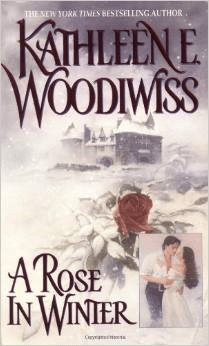
Another one that comes to mind is A ROSE IN WINTER by Kathleen Woodiwiss. The heroine is “sold” by her father to pay his gaming debts to a mysterious man, Lord Saxton, who keeps himself covered to hide disfiguring scars from a terrible fire. I can’t say too much about these books without giving away spoilers, but both of them have many reviews that speak for them and their quality.
http://www.amazon.com/Rose-Winter-Kathleen-E-Woodiwiss/dp/0380844001/ref=pd_bxgy_14_text_y
Mary Balogh’s book SIMPLY LOVE (one of the “Simply” quartet) is the story of an English aristocrat who has lost his arm and eye, and his face has been disfigured on one side. These are war injuries from “the Peninsula Wars”—and of course, he believes no woman will ever want him. He’s become reclusive. Enter Anne Jewell, mother of a nine-year-old son. UNWED mother, to be exact. http://www.amazon.com/Simply-Love-Quartet-Mary-Balogh/dp/0440241979/ref=sr_1_23?s=books&ie=UTF8&qid=1431908938&sr=1-23&keywords=mary+balogh

Our own Kathleen Rice Adams has a short story, THE LAST THREE MILES, in the Prairie Rose Publications anthology, WILD TEXAS CHRISTMAS (yep, another Christmas story!) “Can a lumber baron and a railroad heiress save a small Texas town?” With Kathleen writing it, you can bet they’re going to give it their best shot, even though Kathleen’s hero in this one is confined to a wheelchair!

My own foray into writing a hero with a physical impairment is more modern. It’s a Christmas short story called THE WISHING TREE. Our hero, Pete Cochran, has been to the Middle East and suffered a devastating wound—the loss of an eye—shortly before he was to come home. Now, he works at his dad’s Christmas tree lot, just trying to heal his own mind and spirit…and then, a miracle happens. Maria Sanchez and her son, Miguel, stop by the lot one day and everything changes. You all know I believe in happy endings, but I don’t want to give any spoilers!
What about heroines? I’ve read books about heroines who have been lame—I can’t remember the titles right now. How do you feel about “imperfect” heroines? Are those more interesting than the heroes who suffer a permanent wound?
I would love to hear from everyone about this. I’m very curious as to what y’all think. So let’s hear it—and if you have read any books to add to this list please DO!
I know it’s not Christmas, but I will be giving away 2 digital copies of THE WISHING TREE to two lucky commenters today! Thanks so much for coming by!


