Wild West Words: That’s Downright Insultin’

Insults and pejoratives have been around since man’s first spoken word. Below are some that were popular in the 19th-century American west. (Terms for food are here, women here, outlaws here, and gambling here.)

Bigmouth: a person who talks too much, usually about something another doesn’t want discussed. American English, c. 1889.

Battle of Franklin, Nov. 30, 1864
Battle of Franklin (Tenn.) Nov. 30, 1864 (Library of Congress collection)

Bluebelly: from the early 1800s in the U.S. South, a derogatory term for a northerner; a Yankee. From about 1850, a pretentious, opinionated person. During the American Civil War (1861-1865), any Union sympathizer, especially a Union soldier. Union soldiers also were called blueskins, after the color of their uniforms.

Bottom-feeder: a reviled person, especially someone who uses a position of authority to abuse others; a lowlife. Originally used to describe fishes, the word became American slang c. 1866.

Dude: a fastidious man; fop or clotheshorse. The term originated in New York City c. 1880-1885; antecedents uncertain. Westerners picked up the word as derisive slang for any city dweller out of his element on the rough frontier. Cowboys used the phrase “duded up” to mean “dressed up.” Contemporary usage of “dude” as a minor term of endearment or indication of spiritual kinship arose in California’s surfer culture during the latter half of the 20th century.

Fiddleheaded: inane; lacking good sense; “possessing a head as hollow as a fiddle.” Arose c. 1854; American slang.

Grass-bellied: disparaging term for the prosperous (especially those whose prosperity had gone to their waist); originally applied to cattle whose stomachs were dangerously distended due to eating too much green grass. The word arose prior to 1897, when it appeared in Owen Wister’s A Journey in Search of Christmas.

Confederate soldier re-enactors charge into battle during 150th anniversary of Battle of Gettysburg July 6, 2013 (courtesy E.J. Hersom, U.S. Department of Defense)
Confederate soldier re-enactors charge into battle during 150th anniversary of Battle of Gettysburg July 6, 2013 (photo by E.J. Hersom, U.S. Department of Defense)

Grayback: Confederate soldier, based on the color of their coats. Arose during the American Civil War.

Greaser: derogatory term for a Hispanic of the lower classes. Arose in Texas before 1836.

Greenhorn: novice, neophyte, or newcomer; pejorative in the American west from at least 1885. In the mid-15th century the word meant any young horned animal; by the 17th century, it had been applied to new military recruits.

Heeler: unscrupulous political lackey. The U.S. slang meaning dates to about 1877, no doubt from the image of a dog following its master’s heels. The word “heel” took on that very meaning in 1810. Previously (dating to the 1660s), “heeler” described a person who attached heels to shoes.

Hellion: disorderly, troublesome, rowdy, or mischievous. Arose mid-1800s in the U.S. from Scottish and Northern English hallion, meaning “worthless fellow.” Americans may have changed the A to an E because “hell seemed appropriate, although the shift could as easily represent a simple mispronunciation that stuck.

"An East-Side Politician" (Frederic Remington, 1894)
“An East-Side Politician” (Frederic Remington, 1894)

High-binder: swindler, confidence man, cheat (especially of the political variety). Americanism; arose 1800-10.

High yellow: offensive term for light-skinned person of mixed white and black ancestry. Arose about 1808 in the southern U.S. The term and the notion are reflected in popular songs of the mid-1800s, including the original lyrics for “The Yellow Rose of Texas.”

Hustler: in 1825, a thief, especially one who roughed up his victims. By 1884, meaning had shifted to “energetic worker.” The sense “prostitute” arose c. 1924.

Lead-footed: slow and/or awkward. Arose as American slang c. 1896. By the late 1940s, thanks to the burgeoning interstate highway system in the U.S., the term had taken on the opposite meaning — “fast” — as a reference to a heavy foot on a vehicle’s accelerator.

Loco: Borrowed from Spanish about 1844, the word has the same meaning in both languages: “insane.” “Loco-weed,” meaning a species of plants that make cattle behave strangely, arose about 1877.

Loony: short for lunatic; possibly also influenced by the loon bird, known for its wild cry. American English. The adjective appeared in 1853; the noun followed in 1884. “Loony bin,” slang for insane asylum, arose 1919.

Lunk: slow-witted person. Americanism; first documented appearance was in Harper’s Weekly, May 1867. Probably a shortened form of lunkhead, which arose in the U.S. about 1852.

Alexander W. Monroe, prominent Virginia lawyer and politician,1875. (courtesy West Virginia Division of Culture and History)

Mouthpiece: from 1805, one who speaks on behalf of others. The word first became tied to lawyers — especially of the slimy variety — in 1857.

Mudsill: unflattering Confederate term for a Yankee. In the 1680s, the word meant “lowest sill of a house.” In March 1858, it entered American politics when James M. Hammond of South Carolina used the term derogatorily during a speech on the floor of the U.S. Senate. Yankees embraced the term as a way of flipping Rebs the proverbial bird.

Nuts: mentally unbalanced; crazy in a negative way. From 1846, based on an earlier (1785) expression “be nuts upon” (to be very fond of), which itself arose from the use of “nuts” for “any source of pleasure” (c. 1610). Oddly, “nut” also became a metaphorical term for “head” about 1846, probably arising from the use of “nuts” to describe a mental state. “Off one’s nut” as a slang synonym for insane arose c. 1860. The adjective nutty, i.e. crazy, appeared about 1898; nut as a substitute for “crazy person” didn’t arrive until 1903. (The related British term “nutter,” meaning insane person, first appeared in print 1958.)

Panhandle: to beg. Americanism c. 1849 as a derogatory comparison of a beggar’s outstretched hand to a pan’s handle. The noun panhandler followed in 1893.

Rawheel: newcomer; an inexperienced person. Exactly when the term arose is uncertain, but diaries indicate it was in use in California’s mining districts by 1849.

Redneck: uncouth hick. First documented use 1830. Originally applied to Scottish immigrants who wore red neck scarves during the American Colonial period, the word shifted meaning as it traveled west, possibly in reference to the notion farmers’ necks became sunburned because they looked down as they worked in their fields, leaving the backs of their necks exposed.

Secesh: short for secessionist. First recorded 1860 as a pejorative for Confederates during the American Civil War.

Sidewinder: dangerously cunning or devious person. Arose American west c. 1875 as a reference to some species of rattlesnakes’ “peculiar lateral movement.”

Son of a gun: politer version of the epithet “son of a bitch,” indicating extreme contempt. It’s unknown when the American figurative connotation arose, but the literal meaning appeared 1705-15 among the British navy, during a period when officers’ wives accompanied them to sea. Babies sometimes literally were born in the shadow of a gun carriage.

"The Squatters" by George Caleb Bingham, 1850 (courtesy The Museum of Fine Arts, Boston )
“The Squatters” by George Caleb Bingham, 1850 (The Museum of Fine Arts, Boston, collection )

Squatter: settler who attempts to settle land belonging to someone else. Arose in Britain in 1788 as a reference to paupers occupying vacant buildings; first recorded use in the American west 1880.

Tenderfoot: newcomer; inexperienced person. Arose c. 1866 among miners, apparently in reference to an outsider’s need to “toughen his feet” in order to walk among rocks and stones where mining typically took place. Tender-footed, originally said of horses, leapt to humans in 1854 as a description of awkwardness or timidity.

Whippersnapper:
young, presumptuous and/or impertinent person. The term arose in England c. 1665-1675, possibly as a variant of the much older (and obscure) “snippersnapper.” Modern Americans have Hollywood westerns to thank for inexorably associating the term with cranky elders in the Old West: The word was virtually unused in America prior to the popularity of western “talkies.”

Windbag: person who talks too much, especially in a self-aggrandizing way. First appearance in print 1827. Originally (late-15th C.) “bellows for an organ.”

Yellow-belly: from 1842, a Texian term for Mexican soldiers. Origin obscure, but possibly from traditional association of yellow with treachery or the yellow sashes that were part of a soldado’s uniform. Yellow became slang for “cowardly” c. 1856, but yellow-belly didn’t become synonymous with coward until 1924.

Yellow dog: contemptible person. First recorded use 1881, based on the earlier meaning “mongrel” (c. 1770).


Linda Broday: Cattle Drive and Trouble

Are you ready? THE HEART OF A TEXAS COWBOY (#2 Men of Legend) is galloping into bookstores and online on May 2nd! I’m so excited. Houston Legend has tons of adventure, romance, and suspense waiting. This book has more twists and turns than a roller coaster.

After his father, Stoker Legend, gambles away half of the Lone Star Ranch, he tells Houston they can get it back—if he marries the new owner’s daughter. Houston reluctantly agrees but makes one thing perfectly clear—love is out of the question.

Yet, all Lara wants is a name for her baby. And kindness.

He’s never met or seen Lara so he has no idea what to expect, but marry her he does. Two weeks later, he leaves on a cattle drive, taking two thousand head of longhorns up to Dodge City. At the last minute, his cook quits so Lara steps in and goes along. Of course, the baby who’s just started crawling has to come too.

Trouble starts two days out when Houston sees riders trailing them. Soon, he discovers that Lara is unsafe and it turns into an all-out fight. Houston will do whatever it takes to protect his wife.

As they struggle to stay ahead of Yuma Blackstone, love blossoms between them and passion flares under the looming threat.

But, the baby, Gracie, crawls into a dangerous situation and they have to find a doctor…somewhere in Indian Territory.

That took some research and I had to contact Dr. David Ciambrone for help. A very nice man by the way and also a mystery/suspense writer.

I also had to see if anything was available to relieve Lara’s severe discomfort while Gracie is unable to nurse.

Lo and behold! There were breast pumps in 1878. In fact, I discovered that these mechanical devices dated back to Ancient Greece. I couldn’t believe it. In the U.S. they operated like a hand pump. Problem solved.

Here’s a short excerpt following their short marriage ceremony:

Her vivid green eyes held misery. “It’s just that I don’t know what you expect of me.”

Her statement caught him by surprise. What did he expect? Certainly not a wife, given they were utter strangers. But not a cook and housekeeper either. That wasn’t right. No wife of his would ever fill the role of a maid to be at his beck and call.

Hell! He yearned for a stiff drink.

 “A friend.” His answer surprised him probably more than it did her. “I expect you to be a partner. We both have gaping wounds that have to heal and things in our past to forget. I need someone who’ll stand with me in good times and bad.”

 A smile transformed Lara’s face. She was a beautiful woman. He felt the urge to let his fingertips brush her delicate cheekbones and drift along the curve of her jaw.

 “I can use a friend,” she said. “I’ll try not to ever make you sorry for your decision.”

“You won’t.” The words came out gruff and he didn’t know how he could say them with such confidence. Yet, somehow deep in his being a calm surety settled like disturbed silt back to the bottom of a riverbed.

He felt a tug to his trouser leg and glanced down. Gracie had crawled to him and gripped the fabric in her tiny fist. He picked her up. They would face lots of ups and downs but they’d survive. For no other reason than the little girl giving him a toothless, slobbery grin.

The babe needed a father. Lara a husband.

And Houston desperately needed some reason to keep living.

* * * *

I’m giving away three copies of the book before release day. Just tell me if you have a favorite marriage of convenience story, either book or movie. Mine is Sarah, Plain and Tall. Maybe it’s yours too.

* * * *

Oh, and I almost forgot…TO LOVE A TEXAS RANGER (#1 Men of Legend) is on sale for .99 until next Saturday, April 22, 2017!  Just click on the cover.

REVISITING THE MAN WHO SHOT LIBERTY VALANCE by Cheryl Pierson

    LV movie poster

Favorite western movies? I’ve got a few. But if I had to choose, I think it would have to be The Man Who Shot Liberty Valance.

This Hollywood classic, starring John Wayne as Tom Doniphon, Lee Marvin as Liberty Valance, Vera Miles as Hallie Ericson, and Jimmy Stewart as Ransom “Ranse” Stoddard has just about everything a western cinema fan could hope for: action, romance, right-over-might…and an unforgettable theme song.

Dorothy M. Johnson’s short story was made into a movie in 1962. It’s one of my oldest “movie” memories, as I was five years old when it made the rounds to the movie theaters and drive-ins.

Here’s the description of the movie according to Wickipedia:

Elderly U.S. Senator Ransom “Ranse” Stoddard and his wife Hallie arrive by train in the small western town of Shinbone, to attend the funeral of an apparent nobody, a local rancher named Tom Doniphon. Prior to the funeral, Hallie goes off with a friend to visit a burned-down house with obvious significance to her. As they pay their respects to the dead man at the undertaker’s establishment, the senator is interrupted with a request for a newspaper interview. Stoddard grants the request.

As the interview with the local reporter begins, the film flashes back several decades as Stoddard reflects on his first arrival at Shinbone by stagecoach to establish a law practice.Liberty Valance Lee Marvin

A gang of outlaws, led by gunfighter Liberty Valance, hold up the stagecoach. Stoddard is brutally beaten, left for dead and later rescued by Doniphon. Stoddard is nursed back to health by restaurant owner Peter Ericson (John Qualen), his wife Nora (Jeanette Nolan) and daughter Hallie. It later emerges that Hallie is Doniphon’s love interest.

Shinbone’s townsfolk are regularly menaced by Valance and his gang. Cowardly local marshal Link Appleyard (Andy Devine) is ill prepared and unwilling to enforce the law. Doniphon is the only local courageous enough to challenge Valance’s lawless behavior. On one occasion, Doniphon even intervenes on Stoddard’s behalf, when Valance publicly humiliates the inept Easterner. Valance trips Stoddard who is waiting tables at Peter’s restaurant. Stoddard spills Doniphon’s order causing Doniphon to intervene. Valance stands down and leaves. Doniphon tells Stoddard he needs to either leave the territory or buy a gun. Stoddard says he will do neither.

"No...I said you, Liberty...You pick it up!"
“No…I said you, Liberty…You pick it up!”

Stoddard is an advocate for justice under the law, not man. He earns the respect and affection of Hallie when he offers to teach her to read after he discovers, to her embarrassment, she’s had no formal education. Stoddard’s influence on Hallie and the town is further evidenced when he begins a school for the townspeople with Hallie’s help. But, secretly, Stoddard borrows a gun and practices shooting.

Doniphon shows Stoddard his plans for expanding his house in anticipation of marrying Hallie, and reminds him that Hallie is his girl. Doniphon gives Stoddard a shooting lesson but humiliates him by shooting a can of paint which spills on Stoddard’s suit. Doniphon warns that Valance will be just as devious, but Stoddard hits him in the jaw and leaves.

In Shinbone, the local newspaper editor-publisher Dutton Peabody (Edmond O’Brien) writes a story about local ranch owners’ opposition to the territory’s potential statehood. Valance convinces the ranchers that if they will hire him, he can get elected as a delegate to represent the cattlemen’s interest. Shinbone’s residents meet to elect two delegates to send to the statehood convention at the territorial capital. Valance attempts to bully the townspeople into electing him as a delegate. Eventually, Stoddard and Peabody are chosen. Valance assaults and badly beats Peabody after Peabody publishes two unflattering articles about Valance and his gang. The villains destroy Peabody’s office. Valance also calls Stoddard out for a duel later in the evening after Valance loses his bid for delegate. Valance leaves saying “Don’t make us come and get you!” Doniphon tells Stoddard he should leave town and even offers to have his farmhand, Pompey, escort him. But when Stoddard sees that Peabody has been nearly beaten to death, he calls out Valance. Stoddard then retrieves a carefully wrapped gun from under his bed and heads toward the saloon where Valance is. Valance hears he has been called out and justifies going out in self-defense. His wins his last poker hand before the duel with Aces and Eights.

"Pompey..."
“Pompey…”

In the showdown, Valance toys with Stoddard by firing a bullet near his head and then wounding him in the arm, which causes Stoddard to drop his gun. Valance allows Stoddard to bend down and retrieve the gun. Valance then aims to kill Stoddard promising to put the next bullet “right between the eyes,” when Stoddard fires and miraculously kills Valance with one shot to the surprise of everyone, including himself. Hallie responds with tearful affection. Doniphon congratulates Stoddard on his success, and notices how Hallie lovingly cares for Stoddard’s wounds.

Sensing that he has lost Hallie’s affections, Doniphon gets drunk in the saloon and drives out Valance’s gang, who have been calling for Stoddard to be lynched for Valance’s “murder.” The barman tries to tell Doniphon’s farmhand Pompey (Woody Strode) that he cannot be served (due to his race), to which Doniphon angrily shouts: “Who says he can’t? Pour yourself a drink, Pompey.” Pompey instead drags Doniphon home, where the latter sets fire to an uncompleted bedroom he was adding to his house in anticipation of marrying Hallie. The resulting fire destroys the entire house.

Stoddard is hailed as “The Man Who Shot Liberty Valance” and based on this achievement, is nominated as the local representative to the statehood convention. Stoddard is reluctant to serve based upon his notoriety for killing a man in a gunfight.

At this point, in a flashback within the original flashback, Doniphon tells Stoddard that it was he (Doniphon), hidden across the street, who shot and killed Valance in cold blood, and not Stoddard in self-defense. Stoddard finds Doniphon and asks him why he shot Valance. He did it for Hallie, he says, because he understood that “she’s your girl now”. Doniphon encourages Stoddard to accept the nomination: “You taught her to read and write, now give her something to read and write about!”

Stoddard returns to the convention and is chosen as representative. He marries Hallie and eventually becomes the governor of the new state. He then becomes a two term U.S. senator, then the American ambassador to Great Britain, a U.S. senator again, and at the time of Doniphon’s funeral is the favorite for his party’s nomination as vice president.

The film returns to the present day and the interview ends. The newspaper man, understanding now the truth about the killing of Valance, burns his notes stating: “This is the West, sir. When the legend becomes fact, print the legend.”

"Hallie... who put the cactus rose on Tom's coffin?"
“Hallie… who put the cactus rose on Tom’s coffin?”

Stoddard and Hallie board the train for Washington, melancholy about the lie that led to their prosperous life. With the area becoming more and more civilized, Stoddard decides, to Hallie’s delight, to retire from politics and return to the territory to set up a law practice. When Stoddard thanks the train conductor for the train ride and the many courtesies extended to him by the railroad, the conductor says, “Nothing’s too good for the man who shot Liberty Valance!” Upon hearing the comment, Stoddard and his wife stare off thoughtfully into the distance.

As a side note, one of the many reasons this film holds a special place in my heart is because I remember it as being the first time I made the connection between a scene onscreen representing a flashback. Remember the “flashback within a flashback” that the Wikipedia article mentions? The smoke from John Wayne’s cigarette moves and flows to take over the screen as he tells Jimmy Stewart, “You didn’t kill Liberty Valance. Think back, Pilgrim…” That smoke took us back to the truth of what had happened, and my five-year-old brain was shocked—and enamored, even then, with the idea that time passage, or remembrances could be shown through the haze of cigarette smoke. It was the moment of truth for Ransom Stoddard. John Ford was a genius for so many reasons.

Liberty Valance JW and JS cigaretteFor me, The Man Who Shot Liberty Valance embodies the core of the west—good and evil, and how sometimes “the point of a gun was the only law”—and it all depended on the man who held the weapon.

Liberty represented the purest evil. Ranse was determined to fight him with the law he treasured—the desire to do things the legal way blinding him to the fact that Liberty didn’t respect that. In the beginning, his naivete is almost painful to watch, providing Liberty some rich entertainment. Though Tom finds it amusing, his growing respect for Ranse’s perseverance is portrayed to perfection by that familiar downward glance of John Wayne’s. Accompanied by the half-smile and his slow advice-giving drawl, the character of Tom Doniphon is drawn so that by the point at which he sees the handwriting on the wall and burns down the house he built for Hallie, the viewer’s sympathy shifts, briefly, to the circumstances Tom finds himself in.

But Ranse is determined to vanquish Valance one way or the other—with a lawbook or a gun—whatever it takes. In the final showdown, the lines of resignation are etched in Tom Doniphon’s face, and we know he is honor-bound to do the thing he’ll regret forever: save Ranse Stoddard’s life and lose Hallie to him.

I love the twist. Ranse truly believes he’s killed Valance. Again, to do the honorable thing, Tom tells him the truth about what really happened.

What do you think? If you were Ranse, would you want to know you really were not the man who shot Liberty Valance? Or would you want to be kept in the dark?  If you were Tom, would you have ever told him? It’s a great movie!

GENE PITNEY SINGS THE MAN WHO SHOT LIBERTY VALANCE

Now you can sing along! (I promise, this song will stay with you all day long…)

THE MAN WHO SHOT LIBERTY VALANCE

When Liberty Valance rode to town the womenfolk would hide, they’d hide
When Liberty Valance walked around the men would step aside
’cause the point of a gun was the only law that Liberty understood
When it came to shootin’ straight and fast—he was mighty good.

 From out of the East a stranger came, a law book in his hand, a man
The kind of a man the West would need to tame a troubled land
’cause the point of a gun was the only law that Liberty understood
When it came to shootin’ straight and fast—he was mighty good.

Many a man would face his gun and many a man would fall
The man who shot Liberty Valance, he shot Liberty Valance
He was the bravest of them all.

The love of a girl can make a man stay on when he should go, stay on
Just tryin’ to build a peaceful life where love is free to grow
But the point of a gun was the only law that Liberty understood
When the final showdown came at last, a law book was no good.

Alone and afraid she prayed that he’d return that fateful night, aww that night
When nothin’ she said could keep her man from goin’ out to fight
 From the moment a girl gets to be full-grown the very first thing she learns
When two men go out to face each other only one retur-r-r-ns

Everyone heard two shots ring out, a shot made Liberty fall
The man who shot Liberty Valance, he shot Liberty Valance
He was the bravest of them all.

The man who shot Liberty Valance, he shot Liberty Valance
He was the bravest of them all.

Crystal Barnes Has a Winner!

Thanks for coming, Miss Crystal! We sure enjoyed hanging out with you.

Now for the drawing. It’s a tad late.

The winner of the whatever book she wants is………………..

KERRI

Yippee! I’m kicking up my heels for you, Kerri. Miss Crystal will contact you so be watching.

Choose Your Weapon with Crystal L. Barnes

Hey everyone! Today Crystal L. Barnes joins us at the Junction to discuss weapons of choice and to give away one of her books. Please join us in welcoming Crystal!

What would the Old West be without the Colt Peacemaker or Winchester Repeating rifle? Or maybe your character’s choice would be the Henry Repeater? Or a lady’s favorite, the derringer?

Howdy y’all! Crystal Barnes here and what better place to talk about guns than on Petticoats and Pistols. (Thanks so much for having me back.) Recently I attended my local ACFW chapter meeting where fellow writer and fight scene consultant Carla Hoch spoke on Writing Your Fight Scenes Right. To start off the discussion, we all introduced ourselves and stated our (or our character’s) weapon of choice. Let me tell you, we got some great laughs out of this. We got answers that ranged from magic swords to swinging sickles. Maybe that’s part of the reason that has stuck with me.

What was my weapon of choice, you ask?

A Cast-iron skillet.

Not what you expected, right? I also mentioned the Colt Peacemaker for my hero, but I had to mention the skillet because I’d just recently written a scene in my WIP Hook, Line, & Suitor (Marriage & Mayhem,  Book 3) where my heroine cold-conked the guy with one.

I’m sure you Disney-loving fans are thinking of Tangled and Rapunzel’s hilarious use of the skillet, and I have to admit that’s probably where part of that idea stemmed from but not entirely. We joke around in my family and call cast-iron skillets an “equalizer.” J

<a href="http://www.youtube.com/watch?v=WNd73Y4PYMA&feature=youtu.be" rel="nofollow">http://www.youtube.com/watch?v=WNd73Y4PYMA&feature=youtu.be</a>

In book two of my Marriage and Mayhem series, Love, Stock, & Barrel, I did a ton of research on guns because my heroine grew up helping in her father’s gunsmith shop. She played with stocks, locks, and barrels more than she did with toys and tops. J Which is why, when she’s caught in a shotgun wedding with the barrel pointed at her, she can name the type of gun without blinking.

They say when a firearm is pointed at someone their focus fixates on the barrel opening. So how could my heroine still name the gun? I’m so glad you asked. J

In my research, I stumbled upon a Confederate sharpshooter rifle that was so unique a trained marksman could hit a man-sized target at a thousand yards easy. Some could boast two thousand. The price of the rifle was so comparatively high that only the best of the best got them. What made it so unique? Well, a Whitworth sharpshooter rifle had a hexagonal-shaped barrel, instead of the normal octagon opening. Thus, my heroine could stare down the barrel and know its make and model and her odds of getting away unscathed. Very slim to say the least.

Another interesting pair of weapons worth mentioning is the 1873 Winchester Repeating Rifle and the .44-40 Colt SAA revolver (aka the Peacemaker). I used these as my sheriff’s weapons of choice. Why? Because both firearms shot the same .44-40 ammunition. Pretty convenient for a lawman, right?


How about you? What is your (or your character’s) weapon of choice?

I’ll be giving away a FREE copy (ebook or paperback) of one of my stories to one of this post’s commentors. (Winner’s choice of title. Paperback for contiguous US winners only.)

An award-winning author, bona fide country girl, and former competitive gymnast, Crystal L Barnes tells stories of fun, faith, and friction that allow her to share her love of Texas, old-fashioned things, and the Lord—not necessarily in that order. When she’s not writing, reading, singing, or acting, Crystal enjoys exploring on road-trips, spending time with family, and watching old movies/sitcoms. I Love Lucy and Little House on the Prairie are two of her favorites. You can find out more and connect with Crystal at http://www.crystal-barnes.com.

Find her also on her blog, the Stitches Thru Time group blog, her , Goodreads, Pinterest, Google+, or on her Facebook author page.

Want to be notified of her latest releases and other fun tidbits? Subscribe to her newsletter.

And the Winner of Charlene’s Blog is….

Eliza!  

Congrats!   You didn’t guess the correct couple, but you did win the drawing!  Yay!  Please contact me at charlenesands@hotmail.com 

For those of you who guessed, Dakota and Colby…you were right!  

My hero’s name is Colby (Cole) Ryan.

My heroine’s name is Dakota (Day) Jennings.  

And you will meet them both in Loving the Texas Lawman! 


THE MAKING OF A WESTERN SERIES and a giveaway by Charlene Sands

Most of the romantic series I’ve written are family sagas, with the stories centering around one set of family members or friends and usually, (but not always) the stories are set in the same town, territory, or city.  But the key factor is how to tie in the stories, while still making the plot easy to follow for readers who have not read the other books.  Authors often say the books are part of a series, but they can also be read as a STAND ALONE, meaning they have all the elements in the story to make for a satisfying read even if you haven’t read the other books.   It’s the task and joy for the writer to make sure the story holds up and is a cohesive enough to stand alone.

My series are usually a set of three stories, but sometimes as I’m writing, another character pops up that needs his or her to be told.  So there’s no hard and fast rule about how many books can be in a series.  If an author has a vision for six or ten or fifteen stories and the readers are invested enough and love the stories, the writing, and the setting, more the better.


What’s Fun About Writing a Series:

The Setting—once the town or ranch or territory is established, readers (and the authors) love to revisit familiar places from the earlier books.  In my Forever Texan series we often see the Bluebonnet Bakery and Wishing Wells and 2 Hope Ranch.

Taming the Texas Cowboy

The Characters—it’s fun to see the characters interact together from one story to another. Brothers, sisters, cousins, moms and dads and best friends all play a role, but the writers strive to make sure the romance between the hero and heroine is the main event in every story. The secondary characters often get their own stories later down the road.

The Theme – Often there’s an underlying theme that connects the stories.  It can something as simple as a holiday, Thanksgiving or Christmas maybe, or a special event such as a rodeo coming to town.  It can also be a wedding or a pregnancy that connects the stories.  The themes know no bounds.  I was once  part of a multi-author series about a Bachelor Auction.  I’ve also written a series centered around a winery called Napa Valley Vows, a series centered around a hotel called Suite Secrets and around a ranching family called The Slades of Sunset Ranch.

The Love–  Not between hero and heroine, because that’s a given,  but for the author.  Once I’ve established my town and the people in it and yes, even the stories I plot and plan out, I sorta fall in love with the whole idea.  These people are my friends, this town is somewhere I’d love to live and it’s the journey and the challenge to make the series click and stick, as I say.   One thing I know for certain, once the love is gone, once the writer tires of the setting or runs out of story, it’s time to move on, to be inspired once again.

I’m really proud of my new Forever Texan story set in Hope Wells, Texas.  The stories center around two cousins and their best friend.  It’s been a labor of love for me, as I started this series long ago and have finally found the right time and place to publish this trio of amazing Texans.   I’ve been lucky enough to have input in the covers, the titles and series name.  It makes this all the more special for me.

You may already know the first book in the series Taming the Texas Cowboy starring Trey and Maddie Walker, but I’m happy to say the second book in the series (Jack and Jillian’s story) is available for pre-order.  And this is the OFFICIAL COVER REVEAL for Loving the Texas Lawman.   I know, it’s a hardship looking at this guy, isn’t it?


The last thing honorable Sheriff Jack Walker needs is a blast from the past, but that’s exactly what he gets when his high school love, now sexy lingerie designer, Jillian Lane arrives on his doorstep needing his help and protection. 

Jillian is desperate to save her company, Barely There and turning to Jack Walker, the town hero, is her only option. The trouble she left behind in California has followed her home, leaving Jack no choice but to protect her. Unwittingly, Jillian’s put everything Jack has ever wanted in life at risk. 

The years have not made it easier for Jack to say no to his first love, but saying yes may threaten all he holds dear. Jack may have a solution: marriage–the temporary kind. And how can a girl from the wrong side of the tracks refuse a marriage proposal from her one-time love? 

http://www.amazon.com/dp/B06Y3MW7HJ/?tag-tulepubli-20&tag=pettpist-20

http://www.barnesandnoble.com/w/books/1126172852?ean=2940157567781

http://itunes.apple.com/us/book/loving-the-texas-lawman/id1224208557?mt=11

http://www.kobo.com/us/en/ebook/loving-the-texas-lawman

http://www.amazon.co.uk/dp/B06Y3MW7HJ/?tag-tulepubli-21&tag=pettpist-20


For Fun:  Take a guess at the names of my hero and heroine from FOREVER TEXAN Book 3 titled, Redeeming the Texas Rancher coming this August.  Post either number ONE, TWO OR THREE and be entered into a random drawing to win a backlist book of your choice, either print or digital from my available titles.   Random drawing winner will be posted later tonight.  Be sure to stop by again!


  1. Conner and Willow
  2. Tristan and Susanna
  3. Colby and Dakota


Crystal Barnes Returns on Friday!

Miss Crystal Barnes will return for a visit on Friday, April 14, 2017!

We’re delighted to have her back. She’s going to talk about weapons this time. Very interesting.

She’s also toting a giveaway so don’t miss this.

Be thinking about what weapon you’d choose in a fight and join us.

Give Miss Crystal a big Wildflower Junction YeeHaw!


We Have A Winner for Karen Kay’s Free E-book Give-away

Howdy!

Thank you to everyone who came to the blog on Tuesday.  We do have a winner for the free e-book of LONE ARROW’S PRIDE.  And the winner is:

KIM HANSEN.

Kim is you could contact me personally at karenkay.author@earthlink.net — we’ll make arrangements to get that e-book to you.  CONGRATULATIONS!

Speaking of History . . .

Last Thursday, I had the honor of being the featured speaker at the annual Author’s Luncheon in Post, TX. Post is small town off Hwy 84 on the route between by hometown of Abilene and the city of Lubbock. I’ve driven through it many times, but this was the first time I actually got off the highway and explored a bit of the town itself.

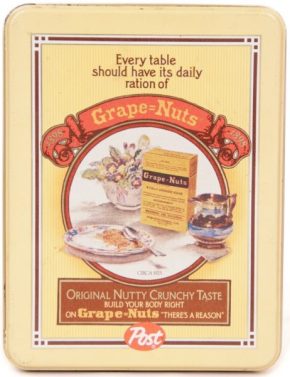
Post, TX has a fun history. It was founded in 1907 by cereal manufacturer Charles William “C.W.” Post. Anyone eaten a bowl of Grape-Nuts ( first produced in 1897) lately? I usually have a box in my pantry.

C. W.  Post purchased 200,000 acres of ranchland and established the Double U. Company to manage Post City’s construction. The company built trim houses and numerous structures. They planted trees along every street and prohibited alcoholic beverages and brothels. The Double U. Company rented and sold farms and houses to settlers. A post office began in a tent during the year of Post City’s founding. Two years later the town had a school, a bank, and a newspaper, the Post City Post. (Because what else would you call it? Ha!) The railroad reached the town in 1910. The town changed its name to Post when it incorporated in 1914, the year of C. W. Post’s death. (Source: Handbook Of Texas Online)

Well, one the buildings Mr. Post paid to construct was a hospital. This gorgeous brick building with tall, white columns is now the local history museum and the building next door to where I spoke at the author luncheon. The building where I spoke was originally constructed in 1911 as a boarding house for the nurses who worked at the hospital. It has been renovated and turned into a wonderful community center. The perfect place for me to give my talk on the subject of Plotting with History.

Boarding House on left, Hospital on right.

Here is the beautiful entry hall and part of the cute bathroom. I just had to take a picture.


And I was blessed with a wonderful turnout. We talked history and reading, and I learn wonderful details about the marvelous town of Post that makes me want to come back for another visit when I can stay longer and explore.


  • What hidden gems have you uncovered in your travels?
  • What are some fascinating historical tidbits or trivia people would be surprised to learn about your own hometown?