Love on Target – Pink Pistol Sisterhood Book 2

Years ago, when I first inquired about being a guest author on the Petticoats & Pistols blog, I had a fan-girl moment when Karen Witemeyer replied to me. I’ve been a fan of her books since I first discovered them!

She was so gracious and welcomed me with kindness. I admired the women who were part of this group and wished I could be one of their “Fillies” too.

Sometimes wishes do come true! In 2017, I was invited to join them as a regular author, and I’ve loved being one of the Fillies in their corral of western authors. So, when Pam and Karen started kicking around the idea of a legacy project for Petticoats & Pistols, something we could all participate in, I was excited at the prospect. Then the decision was made to tie the stories in our series to Annie Oakley, which made it even better.

In case you’ve missed all the announcements, our joint endeavor is called the Pink Pistol Sisterhood. Eleven of us have written sweet western romances, all tied to the journey of a pink-handled pistol that Annie passes on to the heroine in the first book, which just happens to be written by Karen. Make sure you read In Her Sights! It releases March 30!

Captain Cavedweller happened to be in an antique shop last fall and found a book about Annie Oakley that he knew I needed to have. Written in 1981 by Isabelle S. Sayers, Annie Oakley and Buffalo Bill’s Wild West from Dover Publications features more than a hundred photos, illustrations, posters and advertisements. Being able to see so many visuals of Annie really helped not only clarify in my mind the hero she would be to Rena (my heroine), but also how her influence would help shape Rena’s character in my book (#2 in the series), Love on Target.

When I was thinking about my story and the characters, I knew I wanted it to be set in the town of Holiday, a place that exists only in my imagination, but it’s at the heart of several of my books, both historical and contemporary. (You can read the beginning of the town in Holiday Hope. )

My hero in Love on Target, Josh Gatlin, was a character who had a brief mention in my book Henley. I thought he’d be wonderful for the hero in this story. Since nine years had passed from then, though, I wanted him to have experienced love and loss, and it provided a perfect way to include the character of his five-year-old daughter, Gabi.

Rena is strong and courageous, but she’s also soft-hearted, and whether she admitted it or not, she really, really just wanted someone to accept her for who she was, scars and all, and love her.

Here’s one of my favorite scenes from the book!

~*~

“Laura has lost her mind if she believes all this romantic nonsense,” Rena groused as she returned the letter to the pocket in the case and set Laura’s letter aside to tuck into the packet of letters she’d kept from both of her cousins over the years.

“Of all the silly, pretentious …” A snort rolled out of her. “True love my foot. I’m more likely to lasso the moon than I am to fall in love because I held this gun. Although, it is a beautiful piece of craftsmanship.”

She started to close the case, but changed her mind and lifted out the pistol. The thought that the gun had been in the possession of her hero, Annie Oakley, made her long to shoot it. Just once.

With a plan in mind, Rena set aside the case, tugged on her boots, and rushed down the ladder. She gathered a pocket full of cartridges and her pistol in the gun belt, which was the same caliber as the pink-handled weapon, and headed outside. She stopped by the woodpile and selected a large slab of bark that had fallen off a chunk of wood, then went to the barn where she painted a red heart on the bark, then added a white circle in the center of it.

She experienced an almost giddy sensation as she carried the bark and the pistols to what had once served as a corral. The whole thing needed to be rebuilt, which was on Theo’s long list of tasks he wanted to finish before summer arrived.

Rena knew he wouldn’t care if she practiced her shooting there since there was nothing behind the fence she could damage.

She used a nail to hang the bark on the fence, then retreated to the burn pile by the outhouse where she retrieved half a dozen tin cans that had once held peaches. It had been a while since she’d practiced shooting targets.

To make sure she hadn’t lost the skill, she lined up the cans on fence posts on either side of the heart she’d painted on the bark, took out her pistol, moved back several yards, and loaded rounds into the cylinder.

After widening her stance, she lined up her first shot, released a breath, and pulled the trigger.

The sound of the bullet pinging the target rang out as the can flew backward off the post. Rena shot the remaining cans, then smiled with satisfaction as she climbed over the fence to retrieve them. She set them back up on the posts, rested for a minute on the top pole of the fence, face turned to the sunshine as she soaked up the warmth. Then she hopped down and riddled the cans full of more holes before she stowed her gun in the gun belt and draped it over a fence post, then took the pistol with the delicate pink handle from where she’d set it on a stump.

“Promise of true love,” she whispered, rubbing her thumb over the handle before she loaded five shots in the revolver and took aim at the target she’d painted. “True love. What an absurd notion. Laura really should mind her own business and cease meddling in mine. If she thinks this gun will lead me to romance, she needs to have her thinker checked for defects. Instead of dreaming of true love, setting love on target seems like a much better idea.”

She blasted five holes in the middle of the white circle she’d painted inside the heart on the slab of bark, taking a great deal of satisfaction in blasting holes into something that represented romance and love, at least in her mind.

“Now that’s some fine shooting, Miss Burke.”

Rena yelped in surprise and spun around, pistol still in her hand as she pointed it at the intruder who dared to interrupt her target practice.


Will romance hit its mark when true love is the target?

Desperate for a fresh start, Rena Burke journeys from Texas to Oregon with only her father’s pistol and a plodding old mule for company. She takes a job working with explosives at a mine, spends her free time emulating her hero Annie Oakley, and secretly longs to be loved.

Saddle maker Josh Gatlin has one purpose in life and that is his daughter. Gabi is his joy and the sunshine in his days. Then he meets a trouser-wearing woman living life on her own terms. Rena is nothing like his perception of what he wants in a wife and mother for his child, but she might just prove to be everything he needs.

When tragedy strikes, will the two of them be able to release past wounds and embrace the possibilities tomorrow may bring? Find out in this sweet historical romance full of hope, humor, and love.

If you were in Rena’s shoes (or boots), what would you do? 

Post your answer for a chance to win a digital copy of Holiday Hope and Henley –

to get you ready to read Love on Target when it releases April 10!

Forged in Love Giveaway!

I’m doing a giveaway for
Forged in Love
Book #1 of the Wyoming Sunrise Series releasing February 28
When sparks begin to fly, can a friendship cast in iron be shaped into something more?
After surviving a brutal stagecoach robbery, Mariah Stover attempts to rebuild her life as she takes over her father’s blacksmith business, but the townspeople meet her work with disdain. She is drawn to the new diner owner as he faces similar trials in the town. When danger descends upon them, will they survive to build a life forged in love?
Find the book cover: http://cdn.bakerpublishinggroup.com/…/9780764241130.jpg…
Find the excerpt: http://cdn.bakerpublishinggroup.com/…/Excerpts…
Get 30% Off + Free Shipping at Baker Book House: https://bakerbookhouse.com/products/465104
Facebook: Mary Connealy
Instagram: @maryconnealy
BookBub: Mary Connealy
It’s finally here! After a year of googling Women’s Suffrage and all related topics to bring Forged in Love to life!!! It hits the shelves next week!!!
My tough wild west blacksmith begins banging iron and falling in love on February 28th
She’s against type more than most any other character I’ve created, second in line, that comes to mind is a western painter from Wrangler in Petticoats. A guy painting in the old west, now that was a weird one.
I’m doing a giveaway. Leave a comment about how it suits you to read about characters are out of the ordinary.
Do you like damsels in distress…although honest, Mariah’s in danger so in a sense, tough as she is, she’s in some distress.
Do you like heroes that protect a weaker woman?
What are your favorite kind of heroes and heroines?
I’ll draw a name from the comments to win a copy of Forged in Love

Alabastine Wall Coloring

I’ve been working on a super secret writing project, like some of the other Fillies, and the research has been so fun.

In one scene in my story, I wanted to have a character paint a room pink. Before I whipped out the paintbrush in the story, I decided I better do some research about the colors available at that time (hint: my story is historical!).

I Googled “paint colors 1890s” and one of the websites that popped up had images of old color samples. For a visual person, this was a treasure trove of detail!

But one of those samples really caught my attention.

It was from the Alabastine Company. Since the color I was searching for was this exact shade of pink, I did a search for Alabastine paint.

What I discovered was that they promoted their company as offering “Sanitary Wall Covering.”

What, now?

Alabastine claimed their product would “keep the walls sweet, fresh, pure, and healthful, — as pure as the natural rock from which Alabastine has its origin.” The health benefits touted for their “sanitary wall finish” included resisting problems associated with contagious diseases such as scarlet fever and typhoid because germs and insects would have anywhere to “set up housekeeping” on their superior finishes.


Melvin B. Church founded the Alabastine Company in New York in 1879. Something of an inventor, he tinkered with a new way to paint walls and formulated Alabastine.

The product was derived from gypsum that was mined from shale beds around Alabaster, Michigan. The paint was a base of calcined gypsum which took the place of the widely used calimine in wall coatings and finish.


During the early years of the 1900s, paint and stencils were a colorful and popular way to decorate the walls of a home. Alabastine capitalized on the trend. One of the company slogans was, “Alabastine Your Walls and Combine Healthfulness With Beauty.”


The product was a powder that was mixed with water and applied, rather like Plaster of Paris. The durable surface it created was reportedly easy to maintain and touch up. It could be applied over painted walls – or even wallpaper. One article said it could be modeled into tiles and sealed with varnish to use in kitchens and bathrooms.

The company produced a number of colorful advertisements in various magazines that included some of the most popular of the day like the Ladies Home Journal, the Delineator, and House Beautiful.

They also produced small booklets of stencil designs that were distributed to painters and decorates. Postcards with varied color schemes were printed by the thousands and distributed.  The company even maintained a staff of artists to help with color schemes and design. If you really want to see more of what they produce, an antique booklet is available at Abe Books for $75!

Sadly, the company went out of business in 1948 due to “mismanagement.”

At any rate, I thought it was neat to learn about this unique type of wall tint that I had no idea existed!

When it comes to decorating your home, do you like to paint?

Hate to paint? Fall somewhere in the middle?

Do you have a favorite room in your home?

THE WILD WEST REVISITED–by NANCY FRASER

I have to admit, it had been a few years since I’d written a western historical romance. When a friend invited me to take part in a multi-author series she was putting together, I had to stop and think about it… for all of five minutes.

Of course I was in. The thrill of having to research specific to the topic of the series drew my interest immediately. Not to mention the notion of refreshing my use of language and syntax. It was a writer’s dream to step into a brand new world in order to create vibrant characters and historically accurate storylines. The additional lure of the sweet and inspirational romance had me jumping feet-first into long-forgotten territory.

One of the first places I turned was to my attic, where boxes and boxes of family archives awaited me. My grandfather was a Methodist minister in the late 1800s through the early 1950s, just after I was born. While he spent most of his career serving three different churches in the small towns of middle Tennessee, he also ventured west on two occasions. The first time, in 1904, was on a steam locomotive and then via stagecoach to the smaller, more distant locations. Then, in 1927 he bought his first car and returned to Colorado via the very rough beginnings of the roadway system we know now.

His journals from both trips provided me with hours of insight I may never have found perusing the internet. I used his accounts of his stagecoach rides in that first sweet historical, Seth’s Secretive Bride, and made sure my heroine got a firsthand experience when traveling to meet her mail-order groom, and in the most uncomfortable way.

I continue to refer to grandpa’s journals, along with historical archives of certain events and locations, with every new historical romance that I write. I also rely on his daily notes of faith when I’m adding a touch of inspirational affirmation to my stories.

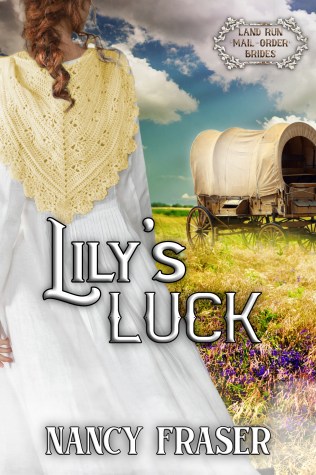
Earlier this year, I wrote my first Oregon Trail/wagon train romance. That truly took some research, as well as a smidge of imagination. However, it wasn’t until I began writing my most recent release, Lily’s Luck, that I found myself in totally unfamiliar territory.

Based on the Oklahoma Land Runs of the early 1890s, I found the subject of reassigning land on a first-come, first-served basis fascinating. I devoured everything I could find, and even downloaded a map where I plotted out my hero and heroine’s journey to claim their homestead in the land run of spring, 1892.

My next historical western project, Millicent’s Miracle, is a Thanksgiving Bride book and it brings me back to the Midwest. The characters I’m writing about have already made an appearance in my earlier Oregon Trail book, Ella (Prairie Roses Collection). Now it’s time for them to get their story.

I hope you’ll consider coming along on my western romance journey with me. So far, it’s been a fun ride and I can only imagine it getting better by the book.

PURCHASE LILY’S LUCK HERE.

Giveaway!

I’m offering a signed copy of LILY’S LUCK to one “lucky” commenter today. (USA ONLY)

Just tell me… Do you have any old journals or letters from an ancestor?

Or have you gotten into genealogy to research your past?

Thanks again for stopping by!

The Hermit of the Superstition Mountains

I have the really good fortune of living not too far from the Superstition Mountains – a range of about 160,000 acres east of Phoenix and north of Mesa and Apache Junction. I mentioned in a previous blog that my next Love Inspired Suspense Mountain Rescue book will be set there. When I first planned this blog, I thought to write about the legend of the Lost Dutchman’s Mine, something which the Superstitions are perhaps most known for. Instead, I decided to tell you a little about another famous legend, that of Elisha Reavis, and one I have much more experience with.

He was known as the hermit of the Supersitions, though, by some newspaper accounts, he was actually quite social and likeable when he came to town to sell his produce. Social, and a little touched in the head as they said in those days. He was born to a well-off family in Illinois and came to Arizona in 1869, abandoning his wife and child. Why exactly no one is sure, but he established a ranch in the heart of the Superstitions at the only location with enough natural water to grow fruits and vegetables. Mind you, he didn’t buy the land, he simply settled there and began to farm it.

Constructing a house and out buildings, digging wells, and bringing in equipment was no small task, considering the remote location of his new home. Not to mention transporting his produce to town for sale. It takes a special person with an incredible amount of determination. There are plenty of wild stories about Elisha, which may or may not be true. He supposedly fought off a band of local Apaches who weren’t happy about him settling on their hunting ground by taking off his clothes and running around naked with a butcher knife. Some thought he had supernatural powers. It’s been said the house contained an impressive library. What is know for sure, he died on the trail, and a small monument now marks the spot.

The legend of Elisha Reavis lives on today in the form of apples. He planted a large orchard that produces an impressive harvest still to this day — depending on weather conditions, of course. I’ve visited Reavis Ranch, as it’s called, many time, riding in on horseback (though you can also hike in if you’re up to it). We used to make several trips each year, always one in the fall to collect bushels of apples. We’d carry out the apples on a packhorse and later turn them into apple sauce, apple pie, and fried apples. One year, we even spent the night in the old abandoned ranch house. I’m glad to have had the chance because, sadly, the house was burned down by vandals some years ago. Only the foundation remains.

There are some incredible views to be had on the Superstition trails to Reavis Ranch that will quite literally take your breath away. Weaver’s Needle is easily recognized by its distinctive shape (check out the first picture at the top of the blog). And if you know where to look, you can also visit ancient Indian ruins and natural springs that create an oasis in the middle of desert mountains. I’ve been to both. But, as often as I’ve ridden the mountains, I’ve never found the Lost Dutchman’s Mine. That’ll be a blog for another day!

Traveling, Christmas, and a Give Away!

Hello, P&P readers. Lacy Williams with you today asking a couple of questions: How far would you travel to be with your loved ones at Christmas? What are you willing to go through to get there?

During my freshman year of college, we had a massive, unusual-for-us snowstorm here in Oklahoma. It delivered a massive twelve inches of snow and the (few) snowplows couldn’t keep up. I was living on campus, and even though I was only ten miles away from home, I can still remember the adrenaline rush and my white knuckles as I drove home for Christmas break with my laundry basket of belongings in the back of my small car.

Probably the worst experience I’ve had traveling home at Christmas was flying cross-country to visit my in-laws for the holiday. This was before we had kids, and between my husband and I one of us is the kind of person who likes to have a list and be packed and double-check the night before. The other one likes to throw things in a bag just before we walk out the door. I will let you try to figure out which is which.

Hubby and I arrived at the airport with what we thought was enough time to check our bags and get through security, but it turned out we were wrong. The airline wouldn’t let us check our bags because it was too close to the flight time and it was possible they might not get on board the plane. We had gifts for his family packed in our luggage and we couldn’t leave them behind or combine them into our carry-on luggage, so basically we missed our flight because of our luggage.

It was devastating for two broke college kids (we were paying our way through night school at the time) to think we had missed our chance to be with our family. Luckily, we were able to get on another flight a few hours later. It could’ve turned out much worse than the couple hundred dollars it cost us.

(Am I wrong or does Hallmark have a sub-genre of their Christmas movies like this? Films about travel gone awry where either the hero or heroine gets stranded in a small town and falls in love while they are trying to get through all the obstacles it takes to get home.)

Fighting to get home for Christmas is the premise of my new release, Christmas Homecoming. Set in 1914, my hero Walt is on a train ready to take the wanted criminal in his custody to a judge where he will face justice. Surprise! His younger sister and her beautiful friend hop on the train mid-journey and suddenly Walt is getting lectures about why he should come home for Christmas when he hasn’t been home in years due to a broken relationship with his father and brother. Before he can blink, the train is part of a hold-up and Walt finds himself in a heap of trouble. It’s gonna take a lot more than he thought to get home for Christmas and to rescue the woman he’s falling for from the bad guys.

This new book is an adventurous romance. Tell me about your most disastrous trip home for the holidays. If you don’t have a story like that, tell me your favorite holiday food.

I would love to give away a paperback copy plus a $10 gift card to one of the readers who makes a comment today.

Thanks for chatting with me today!


About the book:
All traveling nurse Libby wanted was a quiet Christmas to grieve losing her younger brother. She’s on a westbound train heading home when she and a friend find themselves in the middle of a hijacking and then taken hostage by a gang of outlaws.

Walt White is a U.S. Marshal who has been chasing down the Seymour gang for years. But he’s kidnapped along with two innocent women, he must figure out how to keep them alive—and it doesn’t help that he’s completely distracted by the beautiful Libby. He’ll need his wits about him if he hopes to save them.

As they work to engineer an escape, Walt realizes that Libby is resilient and cunning—and vulnerable, though she hides it well. He must give his all to protect her heart and bring her home in time for Christmas.


Find it on Amazon    
Available soon on OverDrive!


Author bio:
Lacy Williams wishes her writing career was more like what you see on Hallmark movies: dreamy brainstorming from a French chateau or a few minutes at the computer in a million-dollar New York City penthouse. In reality, she’s up before the sun, putting words on the page before her kids wake up for the day. Those early-morning and late-night writing sessions add up, and Lacy has published fifty books in almost a decade, first with a big five publisher and then as an indie author. When she needs to refill the well, you can find Lacy birdwatching, gardening, biking with the kiddos, or walking the dog. Find tons of bonus scenes and reader extras by becoming a VIP reader at http://www.lacywilliams.net/vip .

Snake Oil, Anyone?

Even though the term “snake oil” evokes images of charlatan salesmen making outlandish claims about the benefits of their elixirs, therapeutic snake oil had actual health benefits.
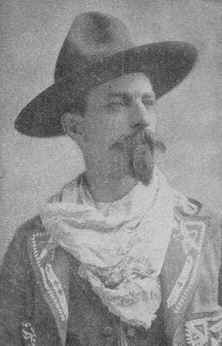
Originally snake oil was made from the oil of the Chinese water snake, which contains omega-3 acids, which works as an anti-inflammatory agent. In the 1800s, thousands of Chinese immigrants arrived in the United States to work on the Transcontinental Railroad. With them they brought snake oil, which they rubbed into their joints to treat swelling, arthritis and bursitis after long workdays. The word of snake oil’s effectiveness spread, and people began to wonder how they could produce their own snake oil. Enter the rattlesnake.

Clark Stanley, a former Texas cowboy, became The Rattlesnake King. He claimed that he studied with a Hopi medicine man in Arizona for two years and learned the secret of snake oil. He attended the 1893 World’s Fair in Chicago, where he would take a live snake, slice it open, drop it in boiling water and then skim the fat off the top to create Stanley’s Snake Oil, a topical liniment. People snapped up the product after the demonstrations.
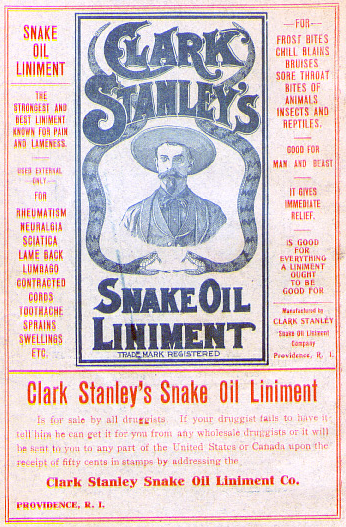
The problem with rattlesnake oil is that is doesn’t have high levels of omega-3 acids, so it does not help with inflammation, so it would never have been effective against joint pain. But that wasn’t the biggest problem with Clark Stanley’s snake oil. When Pure Food and Drug Act was passed in 1906, Stanley’s Snake Oil was tested and found to have no snake oil at all. It was mainly mineral oil which has zero effect on joint inflammation, combined with chili peppers and turpentine. Clark Stanley was a fraud and the term “snake oil” has become synonymous with fake cures and medicines.

Clark Stanley was fined $20 for misleading the public and violating the Pure Food and Drug Act.


Fortune Hunting in the Old West

By Linda Shenton Matchett

Thanks to the Homestead Act of 1862, the West was populated by farmers and ranchers who took their chances with 160 acres and a dream. But from 1828 in Georgia through the early 1900s in Alaska, thousands more flocked across the U.S. and its territories seeking their fortune.

Have you seen photographs of those intrepid miners: scruffy-looking, bearded men in dirt-encrusted garments, a man wearing a broad smile and holding a lump of ore, and men on mules or standing in a river gripping what looks like an oversized dinner plate? If you look further, you might stumble on pictures of women in these same poses.

You didn’t misread that last sentence. A small percentage of women worked alongside the men who converged on the the gold, silver, and copper fields. The reasons for the women’s presence are as varied as the women themselves. Some came with husbands, fathers, or brothers, then stayed after said male relative died. Other ladies were already in the area and decided to give mining a go. Still others heard about the possibilities for riches and were adventuresome enough to try mining on their own. A few came out of desperation.


However, men were not happy to have the women “horn in” on their domain, so many of the ladies dressed as men to blend in or fool their competitors. Apparently, the practice was so common during the California gold rush that when a newspaper photographer advertised for a “lad” to help him, he specified that “no women in disguise need apply.”

Widespread prejudice from the men made life as a female prospector difficult. Claim jumping and stealing by the men were common practices among themselves, but some reports indicate it may have been worse for the ladies. The women also had a tough time selling the claims they did keep. Then it became official when the United States National Bureau of Mines banned the women from mining in 1915. But still they persevered.

                           Fanny Quigley Home

Because of the lack of sources, it is unknown how many women prospectors were successful, but there are articles and books about some of the more “colorful” characters such as Fannie Quigley who started her career as a dance hall girl, then headed to the Alaskan gold fields to cook for the miners.

She eventually staked her first claim in 1907, going on to own twenty-five more. Her personal life was less successful-she left two husbands during her search for gold. Then there’s Lillian Malcom (also part of the Klondike rush) who was a Broadway actress. Several of her claims were stolen by men, so she moved to Nevada, acting out her Alaskan adventures along the way to fund her journey. The picture below is of a gold nugget in 1920.

Panning for gold the old-fashioned way is a simple, yet backbreaking process of scooping gravel from a river into a pan, swirling and dipping the pan to let the current carry most of the silt away, then repeating the action until there are about three tablespoons of sand from which to pick out the eyelash-sized flakes. And just in case you’re wondering, prospectors typically worked from sunup to sundown.

Would you have taken your chances as a prospector in the Old West?

I WILL GIVE AWAY AN EBOOK EDITION OF GOLD RUSH BRIDE HANNAH TO ONE RANDOMLY SELECTED COMMENTER.

About

Gold Rush Bride Hannah

(Book 1, Gold Rush Brides):

A brand-new widow, she doesn’t need another man in her life. He’s not looking for a wife. But when danger thrusts them together, will they change their minds…and hearts?

Hannah Lauman’s husband has been murdered, but rather than grief, she feels…relief. She decides to remain in Georgia to work their gold claim, but a series of incidents makes it clear someone wants her gone…dead or alive. Is a chance at being a woman of means and independence worth risking her life?

Jess Vogel never breaks a promise, so when he receives a letter from a former platoon mate about being in danger, he drops everything to help his old friend. Unfortunately, he arrives just in time for the funeral. Can he convince the man’s widow he’s there for her protection not for her money?

Purchase Link:  Linda Shenton Matchett, author of

History, Hope and Happily Ever After

Linda Shenton Matchett Website

The Hardships of Traveling to the West (And a Giveaway!)

By Jody Hedlund

Howdy, everyone! Thank you for having me back here on Petticoat and Pistols! I’m thrilled to have another chance to hang out with you all!

I recently had another cowboy book release, The Heart of a Cowboy (and I’m giving away a copy today here!). This one has to do with the very fun and interesting topic of traveling west by covered wagons.

Almost everyone has heard of the Oregon Trail and the many people who traveled to the west in covered wagons (and by stagecoach) over the well-worn route.

The Santa Fe Trail was another such trail to the west. It ran parallel to the Oregon Trail (mostly) but was a more southerly route through Kansas that eventually led to New Mexico (and was also used to reach southern Colorado).

Whether the Oregon or Santa Fe trails, the months-long journey to the west was marked by incredible difficulties. In researching for my book, I read countless diaries and journal entries by many of the brave people who ventured across the country. One classic I read was The Prairie Traveler which was actually a book written in 1859 by an army captain by the name of Randolph B. Marcy. The U.S. War Department asked him to publish a guide for settlers traveling across the American frontier based on his extensive experiences. His little book soon became an essential handbook for those pioneers. They used his advice on how to prepare for the trip as well as what to expect in the open country.

Even with sufficient preparation, good equipment, and an experienced guide, the travelers still faced incredible challenges. The npshistory.com site (National Park Service) indicates that nearly one in ten travelers on the Oregon Trail died on route to the west.

The Heart of the Cowboy tackles many of the hardships travelers had to endure including a near-river drowning, lost livestock, lost people, vicious storms, threats from Confederate Irregulars, danger from rattlesnakes, hot and dry weather, lack of water for both people and livestock, and much more.

One really dangerous aspect of traveling the Santa Fe Trail was the possibility of running out of water. I read an account of this very thing happening to travelers and how they dug down into the dry riverbed, placed their wagon box into the hole, and finally were able to tap into water buried a little deeper in the ground. So, of course, I had to include such an incident in my story too! (Along with many other dangers that really did happen to real-life travelers!)

Such stories of bravery make me appreciate those early pioneers all the more! (And make me grateful for our easy, fast, and comfy modern cars and airplanes!)

Leave a comment on this post if you’d like the chance to win a signed copy of the book! (Sorry, U.S. mailing addresses only.) I will choose a random winner on November 7, this Sunday. To find out more information about the book visit: http://jodyhedlund.com/books/the-heart-of-a-cowboy/

If you had to travel in a covered wagon to the west, what would you like most? Like least?


Jody Hedlund is the best-selling author of over thirty historicals for both adults and teens.

She is the winner of numerous awards including the Christy, Carol, and Christian Book Award.

Jody lives in central Michigan with her husband, five busy teens, and five spoiled cats.

Visit her at jodyhedlund.com


Charlene Raddon: Sheep and Cattle Wars

The Fillies welcome the return of Charlene Raddon. Her series are much in demand for their unusual storylines. She’s giving away two copies of CONNOR so leave a comment to be entered. 


Cattle ranchers are notorious for hating sheep. The hero in my new book, Connor, Cupids & Cowboys Book 12, is no exception but doesn’t believe violence is the answer, and so, Connor sets about finding a solution.

There were many armed battles in western states, particularly Arizona, Wyoming, and Colorado, between cattlemen and sheepmen over grazing rights. Cattlemen saw the sheepherders as invaders who destroyed the public grazing lands, which they had to share on a first-come, first-served basis. Between 1870 and 1920, approximately 120 engagements occurred in eight different states or territories, resulting in the deaths of over 50 men and the slaughter of 50,000 to over 100,000 sheep.


One of the most famous cattlemen/sheepmen battles occurred in Pleasant Valley, Arizona, resulting in the near annihilation of the men of three families. In 1884, angry Arizona cattlemen rounded up wild horses, strapped cowbells to their necks, rawhide to their tails, and drove them into a series of sheep herds numbering more than 25,000, yelling and firing guns in the process. The sheep scattered in all directions, many killed or wounded. That same year, cowboys drove over 4,000 sheep into the Little Colorado River, many of which died in quicksand.


The sheep wars in Wyoming and Colorado were exceptionally violent and lasted well into the 1900s. Wyoming saw about twenty-four attacks and at least six deaths between 1879 and 1909. In Garfield County, Colorado, 3,800 sheep were driven over cliffs into Parachute Creek. About 1,500 more sheep were massacred there in the same year. In November 1899, forty masked men attacked a sheep camp located on the lower Snake River. Over 3,000 sheep were “clubbed and scattered,” the shepherds robbed, and their wagon burned.

In Wyoming, 1896, about 12,000 sheep were slaughtered in a single night by being driven off a cliff near North Rock Springs. In 1905, ten masked men attacked a sheep camp on Shell Creek in the Big Horn Basin. The cowboys clubbed about 4,000 sheep and burned the wagons with two live sheepdogs tied to the wheels. The owner of the flock lost about $40,000. Similar events took place up until about 1912.

Near Ten Sleep, Wyoming, three sheepherders were killed, along with many of their sheep and dogs. No one expected anything to come of it, but seven men were arrested, five of them sent to prison, and cattlemen became reluctant to attack sheepmen.

In Montana, where my story, Connor, Cupids & Cowboys Book 12, is set, similar proceedings took place, few as severe and deadly as those in other states.

According to Robert Elman, author of Badmen of the West, the sheep wars ended because of the decline of open rangeland and changes in ranching practices, which removed the causes for hostilities.

How did Connor resolve the cattle/sheep war in my story? Here’s an excerpt:

“Folks,” Connor began (addressing the members of the Cutthroat, Montana Stockgrowers Association), “this is Mr. Dean Rivers. He has a ranch near Hawksville where he raises cattle and sheep and kindly consented to tell us of his experiences. I hope you’ll do him the courtesy of listening as you would with any other speaker.”

Rivers cleared his throat. “As Connor said, I have a ranch about forty miles east of here. I know how you feel. That’s how I saw the matter at first. Never intended to raise sheep. It was my wife who went out and bought fifty of ’em and herded them home.” He chuckled. “We had quite a row about it, I can tell you. Before coming here tonight at Connor’s request, I sat down and calculated the monetary differences between raising sheep and cattle. The results surprised even me. I think they’ll come as a bit of a shock to you.”

Before continuing, he laid his hat on his chair and moved behind the podium. “Hope you don’t mind if I rest my weary bones on this here Bible stand.”

A few in the audience chuckled. The others sat stone-faced, determined not to listen.

“Now, these figures are only as accurate as my mathematics, which my old schoolteacher will tell you ain’t much.”

More laughter. Connor glanced around. The ranchers had settled down and appeared to like Dean Rivers. No doubt because of his friendly, down-home looks and manner of speaking.

“For the purposes of this here talk,” Rivers went on, “we’ll say an animal unit is a one-thousand-pound cow with a five-hundred-pound calf pulling on her teat. And we’ll say six sheep equal that cow. Now, my figures can differ somewhat with grass/forb ratios, terrain, and grazing management, but I’d call it whisker close. That cow and calf, or animal unit, should be worth about sixteen dollars. Am I right?”

Several men shouted, “Close.”

“All right. Now, those six sheep, or animal unit, should produce ten lambs worth three dollars and twenty cents apiece. That comes out to thirty-two dollars per animal unit compared to sixteen dollars for the cow and calf. See where I’m going here?”

Heads nodded.

“That’s a fairly noticeable difference,” Rivers said. “Should I lose a cow, I’m out sixteen dollars. If I lose a sheep, I’m out three-fifty. But we’re talking animal units, so losing those six sheep would cost me thirty-two dollars.

“There’re costs to raising these critters, of course.” Rivers continued. “Deworming, de-licing, de-ticking, salt, ear tags if you use ’em, hiring extra hands for roundup and branding. That’s just for cows. To herd a hundred cows, you need at least two hired hands on horseback. Three would be better. To bring in a hundred sheep, you send out a couple of sheepdogs. They don’t ask for wages, just a bone and a pat on the head. Try that with your hired hands.”

Some laughter broke out.

“We never make it through a season of handling cows without our share of physical injuries,” Rivers said. “Stomped-on toes, crushed ribs, broken arms. Had a hand once got his eye poked out by a steer’s horn. Ain’t had no injuries with sheep. Another thing; sheep’ll eat ‘most anything. Weeds, thistles, and plants poisonous to cows. Cows gotta have grass.”

“That’s the trouble,” someone yelled. “The damned sheep don’t leave nothing left for the cows to eat.”

Rivers held up a hand. “Not if you move them often enough. Just takes some monitoring. Plus, you can put your sheep higher up the mountain where not much grass grows, but there’s plenty of weeds. So far, I’ve had no problems with cows refusing to graze where sheep have been.”

“Aw, bull-cracky,” a man spat. “You genuinely expect us to believe that?”

Chatter broke out among the men, and several booed.

Rivers shrugged. “I’m only telling you my experiences, friend. You can believe what you want. When you get right down to the facts—and you can figger ’em yourself from what I’ve told you—three hundred cows will give you a profit of four thousand, eight hundred dollars at the end of the year.”

He waited a moment while murmurs of agreement and approval circulated through the audience.

“The same number of animal units in sheep,” he added with a pause, “will bring you nine-thousand, six hundred.”

A stunned silence followed.


Not all the ranchers were convinced, but enough to defuse the hostilities. The fact that Rosalina Camila Antonella DeLeon, the beautiful owner of the sheep in question, also spoke and won the ranchers’ respect helped. It also worked to move the romance between Connor and Rosalina along, and, after all, that’s what the book is truly about.

If you had been a sheepherder back then, would you have stayed and fought (possibly dying) or packed up and gone someplace else?

Leave a comment to get in the drawing for two copies of CONNOR!

About Charlene:

Charlene Raddon is an Amazon bestselling author with twenty-two western historical romance books to her credit. She never intended to become a writer, however. Charlene was an artist until she discovered romance novels and had a vivid dream that begged to be put into a book. So, she dragged out a typewriter and went to work. She’s been writing ever since. Her other interests are crocheting, genealogy, travel, Ukranian egg dying, and graphic design. Charlene has her own book cover website offering premade covers. She specializes in western historical covers.

AMAZON AUTHOR PAGE | SILVER SAGE BOOK COVERS | TWITTER |  GOODREADS | BOOKBUB | FACEBOOK