 Even though the term “snake oil” evokes images of charlatan salesmen making outlandish claims about the benefits of their elixirs, therapeutic snake oil had actual health benefits.
Originally snake oil was made from the oil of the Chinese water snake, which contains omega-3 acids, which works as an anti-inflammatory agent. In the 1800s, thousands of Chinese immigrants arrived in the United States to work on the Transcontinental Railroad. With them they brought snake oil, which they rubbed into their joints to treat swelling, arthritis and bursitis after long workdays. The word of snake oil’s effectiveness spread, and people began to wonder how they could produce their own snake oil. Enter the rattlesnake.
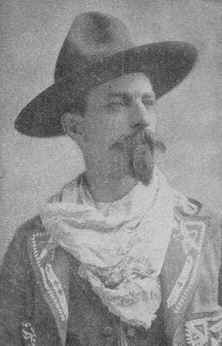 Clark Stanley, a former Texas cowboy, became The Rattlesnake King. He claimed that he studied with a Hopi medicine man in Arizona for two years and learned the secret of snake oil. He attended the 1893 World’s Fair in Chicago, where he would take a live snake, slice it open, drop it in boiling water and then skim the fat off the top to create Stanley’s Snake Oil, a topical liniment. People snapped up the product after the demonstrations.
The problem with rattlesnake oil is that is doesn’t have high levels of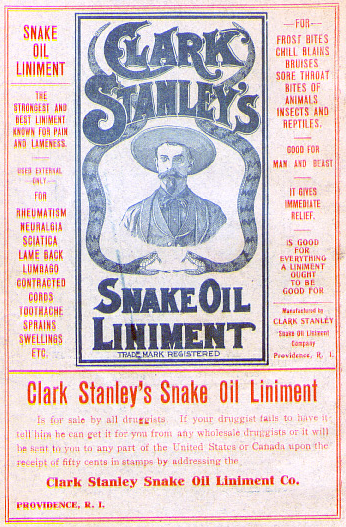 omega-3 acids, so it does not help with inflammation, so it would never have been effective against joint pain. But that wasn’t the biggest problem with Clark Stanley’s snake oil. When Pure Food and Drug Act was passed in 1906, Stanley’s Snake Oil was tested and found to have no snake oil at all. It was mainly mineral oil which has zero effect on joint inflammation, combined with chili peppers and turpentine. Clark Stanley was a fraud and the term “snake oil” has become synonymous with fake cures and medicines.
Clark Stanley was fined $20 for misleading the public and violating the Pure Food and Drug Act.