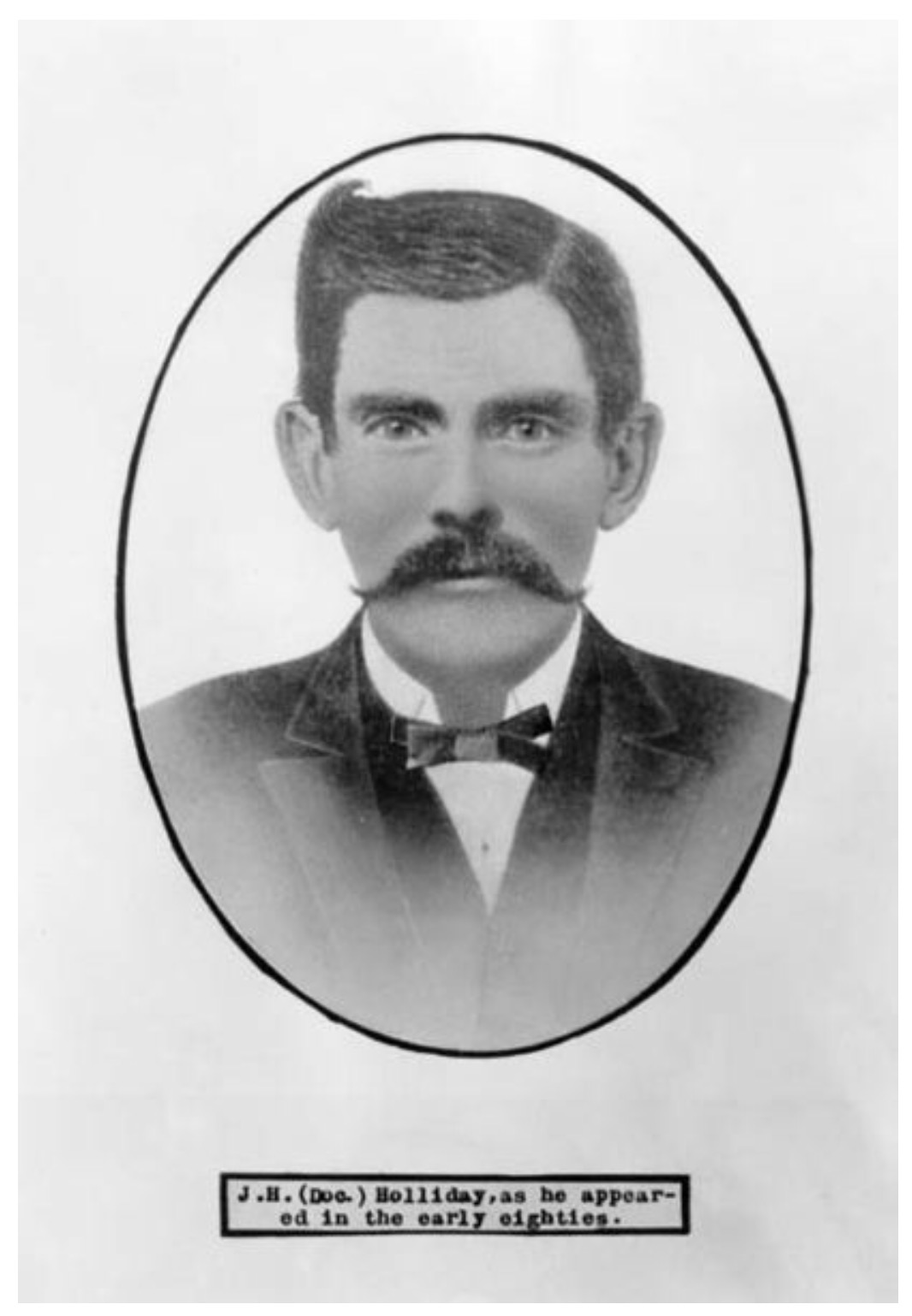
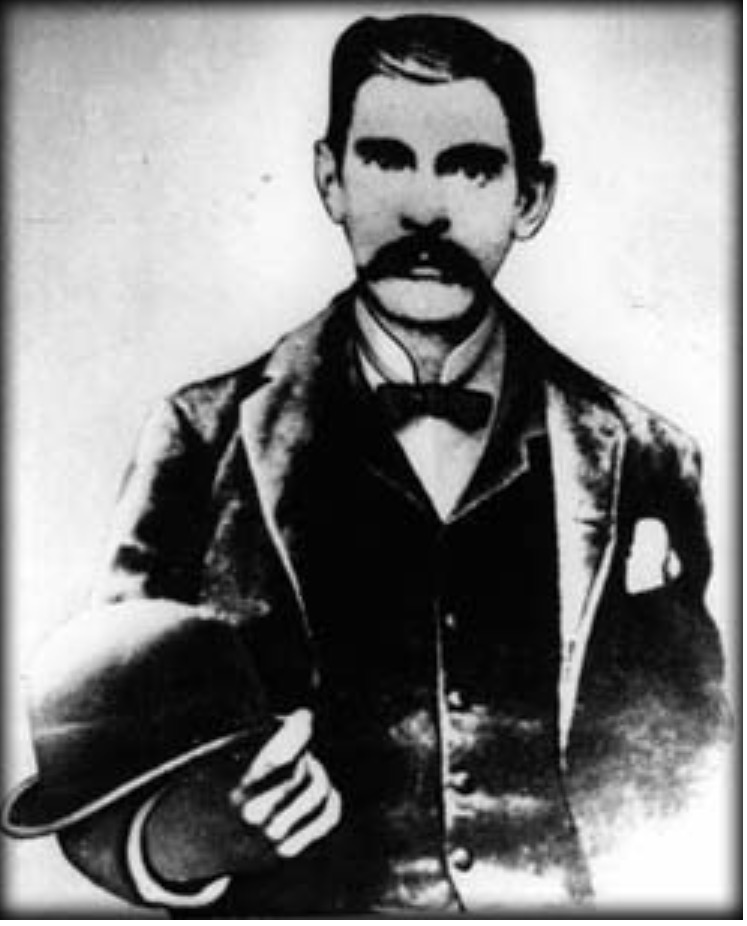
Outlaw Lawmen


Life on the open range could be a discomforting experience, But you can simplify lead flow with outlaws popping out from behind the sagebrush without the slightest provocation, nesters “accidentally” mistaking a cattleman’s range for the quarter section they’d purchased, steers stampeding wherever they pleased, and wild animals running amok in settlers’ vegetable gardens—not to mention all those Indians to keep track of.

wanted posters on deskThings weren’t much easier for townies. For one thing, outlaws didn’t confine themselves to the countryside. Drunks stumbled out of saloons with reckless abandon, ladies of questionable virtue roamed the streets at will, and barbers pulled teeth or performed surgery like they knew what they were doing. Even church socials sometimes got out of hand.

At least folks in town could count on the law to keep things somewhat under control, right?

Not always.

Finding a reliable lawman was anything but easy. El Paso, Texas, discovered that when it hired Dallas Stoudenmire as city marshal. Stoudenmire, a deadly gunman with a mean temper and a fondness for strong drink, insisted on starting fights and shooting people—some of them even criminals. As a young man, famed lawman Wyatt Earp stole horses. Between gigs as a county sheriff, town marshal, and city policeman, Earp ran faro tables, owned brothels, got arrested for a number of crimes, broke out of jail, led a vigilante group, and otherwise made a nuisance of himself. Pat Garrett may have been a straight arrow legally speaking, but he was unpleasant to be around. Even his fellow officers objected to his disposition: a refreshing mixture of arrogance and surliness.

Some men found a badge to be an excellent disguise for nefarious activities. Take these guys, for example:

Henry Plummer

outlaw lawman Henry Plummer
Henry Plummer

In 1856, at the age of 24, Plummer became the marshal of Nevada City, Calif., the third-largest settlement in the state. In 1859, the marshal killed the husband of a woman with whom he was having an affair. Sentenced to ten years in San Quentin, he received parole in six months and immediately joined a gang of stagecoach robbers.

In January 1862, Plummer formed his own gang and began hijacking wagons transporting gold out of mining camps. When that enterprise petered out in January 1863, Plummer relocated to the newest gold rush in Bannack, Montana. There, he formed the Innocents, a network of road agents that numbered more than 100 men within a few short months.

In May 1863, Plummer lost a sheriff election and subsequently threatened his rival until the man high-tailed it, fearing for his life. Plummer took over the sheriff’s job and right away appointed two of his Innocents cronies as deputies. Oddly, crime dramatically increased. In about nine months, more than 100 murders occurred and robberies, assaults, and assorted other crimes reached unprecedented levels. All the while, Plummer—under the guise of cracking down on lawlessness—hanged witnesses.

On January 10, 1864, having had enough law enforcement for a while, fifty to seventy-five vigilantes rounded up Plummer and his two deputies and hanged them in the basement of a local store.

Burt Alvord and Billy Stiles

outlaw lawman Burt Alvord
Burt Alvord, Yuma Territorial Prison, 1904

In the 1890s, Alvord and Stiles served as deputy sheriffs in Willcox, Arizona. Unsatisfied with their salaries, the two began robbing Southern Pacific Railroad trains to supplement their income. Emboldened by pulling a number of successful jobs, they undertook their most daring escapade on September 9, 1899, in what came to be known as the Cochise Train Robbery. Instead of clinging to tradition and stopping the train on a lonely stretch of track in the middle of nowhere, Alvord and Stiles had five members of their gang blow up the safe while the train was stopped in the town of Cochise. Alvord and Stiles, maintaining their law-enforcement decorum, were part of the posse that unsuccessfully attempted to apprehend the robbers in the Chiricahua Mountains.

About five months later, on February 15, 1900, the gang struck again, in broad daylight in the tiny town of Fairbank, Arizona. While the train was stopped at the station, the Alvord-Stiles gang approached the express car, guns drawn, only to find the messenger responsible for the safe unwilling to abide such rude behavior. During the gunfight that erupted, two of the five gang members were wounded and one ran away. The messenger, also wounded, hid the safe’s key before losing consciousness. Unable to find the key and without a single stick of dynamite between them, the rest of the gang vamoosed.

Fairbank_Railroad_Depot_Arizona_Circa_1900
Fairbank, Ariz., railroad depot circa 1900

Once again, Alvord and Stiles rode with a posse to track down the outlaws, one of whom was injured so badly he had to be left behind about six miles outside town. Despite Alvord’s and Stiles’s attempts to misdirect the pursuers, they stumbled across the wounded man. Before he died, the outlaw fingered Alvord as the ringleader. Stiles confessed and turned state’s evidence, allowing him to remain comfortably outside the bars while Alvord cooled his heels inside. A short while later, Stiles broke Alvord out of the hoosegow and the two of them lit a shuck for Mexico.

The Arizona Rangers invaded Mexico and, in 1904, engaged the two now-expatriates in a gun battle. They captured Alvord, but Stiles got away. After a brief stint in the Rangers under an assumed name, Stiles was killed a few years later while working as a lawman in Nevada, also under an assumed name. Alvord did two years in Yuma Territorial Prison and took it on the lam for Panama upon his release.

H.D. Grunnels

steam-train-1898
Steam train, 1898

In 1898, Fort Worth, Texas, Assistant Police Chief Grunnels talked a gang of Oklahoma bank robbers out of robbing a local diamond merchant and into robbing a train in Saginaw, Texas, instead. Grunnels masterminded the operation, planning to apprehend the bandits after they made off with the money, then collect the reward and keep the loot.

The Apple Dumpling Gang might have performed the train heist with more aplomb. While crawling across the top of the coal tender to reach the engine, the gang’s leader slipped and accidentally discharged his pistol. His minions mistook the misfire as their signal to hop on the train and commence whatever mischief their roles required. Chaos ensued.

Meanwhile, Grunnels and a cadre of Fort Worth police officers not in on the plan raced to the rescue of a train that had yet to be robbed. The discombobulated robbers scrammed. The Fort Worth Police Department became suspicious when it discovered Grunnels reached the scene of the crime before the crime had been reported. Grunnels was fired and indicted, but he disappeared before trial.


The heroes in the two novellas that compose Robbing Banks, Stealing Hearts could give lessons in how to fail at outlawry to all of the compromised lawdogs above. So, here’s my question for this month: If you were going to commit a crime in the Old West, what crime do you think you could pull off? Bank or train robbery? Horse or cattle rustling? Murder for hire? Spitting on the sidewalk? Something else? I’ll give an e-book of Robbing Banks, Stealing Hearts to one of y’all who’s brave enough to expose your criminal dreams. 😉

Robbing Banks Stealing HeartsEveryone should have career at which they excel. At failing to commit crimes, nobody is better than Laredo and Tombstone Hawkins. Maybe they can bumble their way into love.

The Worst Outlaw in the West
Laredo Hawkins has one ambition: to redeem his family’s honor by pulling the first successful bank robbery in the Hawkins clan’s long, disappointing history. Spinster Prudence Barrett is desperate to save her family’s bank from her brother’s reckless investments. A chance encounter between the dime-novel bandit and the old maid may set the pair on a path to infamy…if either can find a map.

Family Tradition
Haunted by his kin’s tradition of spectacular failure, bank robber Tombstone Hawkins is honor-bound to prove his family tree produced at least one bad apple. When carnival fortuneteller Pansy Gilchrist tries to help, she accidentally summons a pair of dishonest-to-goodness ghosts. Getting into the spirit of a crime is one thing…but how do you get the spirits out?

Outlaw Heart and Doc Holliday Trivia~Tanya Hanson

MarryingMinda Crop to Use

image

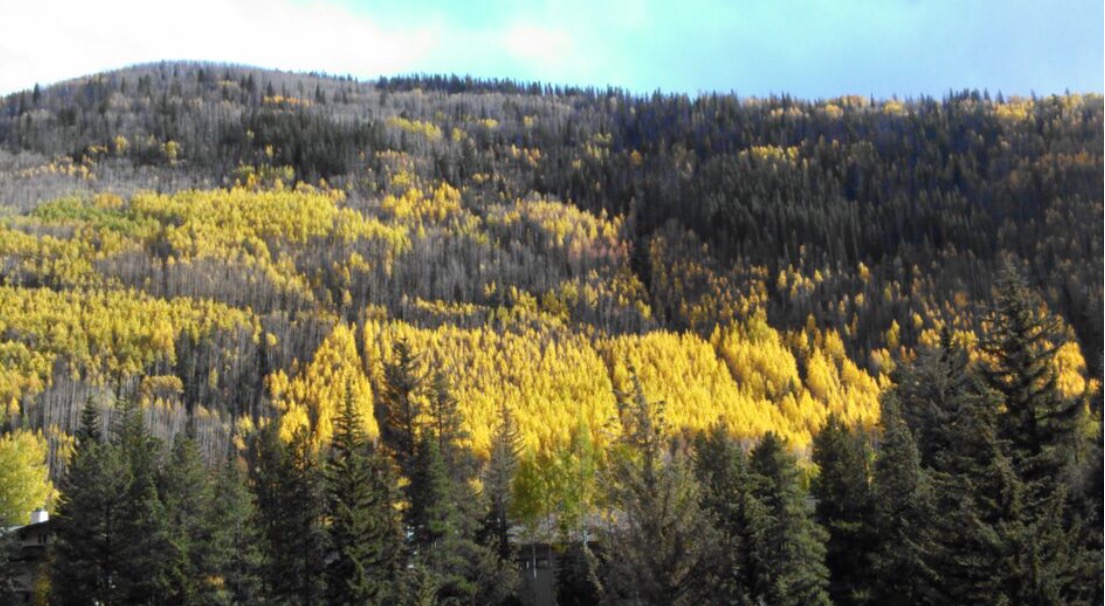
A couple of autumns ago, Hubs and I visited Colorado during peak aspen season and found ourselves in Leadville.

Well, you don’t just find yourself in a place two miles high…we went on purpose, had a great visit and lunch in a historic saloon. Finding Wild West memorabilia all over the walls of the Silver Dollar Saloon (formerly The Board of Trade) told me I had to set a story in this “Cloud City” breathing and seething with history, and somehow, Doc Holliday would play a part.

image
And I found out some stuff I thought I’d share. Please leave a comment today for a chance to win an e-copy. What info about Doc Holliday did you find most interesting?

image

  1. John Henry Holliday, was born in Griffin, Georgia, on August 14, 1851, with a cleft pallet. His uncle, physician John Stiles Holliday surgically repaired the newborn’s defect and possibly the baby was named for him. The doctor’s first cousin Dr. Williamson Crawford Long was the anesthesiologist. John Henry Holliday most likely had a slight life-long speech impediment.
  2. John’s beloved mother Alice died of tuberculosis when he was 15. His father’s remarriage only three months later to a woman just a few years older than John added to his terrible loss.

  3. His father Henry Burroughs Holliday was a planter, druggist, and a soldier who moved the family near the Florida-Georgia line when he realized their home in Griffin GA was in the warpath of U.S. General Tecumseh Sherman’s March to the Sea.

  4. John Henry Holliday had been close friends with his first cousin Martha Anne “Mattie” Holliday since childhood, and after his father’s second, unpopular marriage, he spent even more time with her family. Romance bloomed, to both families’ displeasure. Although John eventually went west and Mattie joined a convent using the name Sister Mary Melanie, the two were in touch his whole life. Mattie is said to have burned his letters upon his death. The great granddaughter of her step-uncle named a character Melanie after her in her one and only novel. A character in love with a first cousin. The author, Margaret Mitchell. The book—Gone With the Wind.

image

  1. I don’t know if the nature of John’s birth defect influenced his decision to become a dentist, but his family’s status required a respectable profession. One of 26 candidates, he graduated from Pennsylvania College of Dental Surgery during its 16th commencement ceremony in 1872. His thesis was titled “Diseases of the Teeth.”
  2. In 1873, John H. Holliday and his partner Dr. John Seegar won dentistry awards for “best set of teeth in gold”, “best set in vulcanized rubber”, and “best set of artificial teeth and dental ware”. (From “Facts Any Doc Holliday Aficionado Should Know and Probably Doesn’t” by Susan Ballard)
  3. Not long after graduation, John Henry Holliday set up practice in Atlanta. Shortly thereafter, he was diagnosed with tuberculosis and given the prognosis of a short life. It is highly likely he contracted the incurable disease from his mother. To improve his condition, he headed to the drier climes of the west. Eventually, wracking coughs during dental procedures and extractions helped him accept that dentistry was not for him and he needed to seek anther profession.

Leaving his dental practice behind, John Henry Holliday embarked on a new journey, one that would make him a legendary figure in the history of the American West. Despite leaving dentistry, his training as a dentist would come in handy as he gained fame as a skilled gambler and gunfighter. Holliday would become an iconic figure of the Old West, infamous for his role in the gunfight at the O.K. Corral. While his days as a dentist were behind him, his legacy lives on as one of the most well-known figures of the Wild West. Today, those in need of dental care can seek out the expertise of a dentist Jamaica Queens, who can provide a wide range of dental services to keep their patients’ smiles healthy and bright.

  1. He discovered a natural ability for gambling. Which meant developing gun fighting and knife skills to protect himself against disgruntled opponents. His reputation spread. Tall but often pale and frail from his illness, he encouraged and maybe even embellished stories about the “deadly dentist” out of self preservation. Supposedly he aimed overhead or for the hand or arm, so as to disarm, not kill, an opponent.


9. He could handle his liquor, but the tales of him consuming three bottles a day were highly exaggerated. As are the numbers of his purported massacres. Holliday most likely killed 2 men and wounded 8 others. No legal reports or newspaper accounts support anything else. Some believed Holliday accepted his diagnosis of a short life and lived dangerously because he didn’t have much time left anyway.

  1. Oh, not that he didn’t make enemies. And friends such as Wyatt Earp. Truth is, Holliday was very much a part of the 30-second shootout at the OK Corral in Tombstone, Arizona, and was himself wounded. Not long after, he was accused of killing Frank Stilwell, the man who murdered Wyatt’s brother Morgan in cold blood. Wild with grief and vengeance, Wyatt and Doc did pursue the man but Wyatt fired the fatal shots. Doc let loose two bullets after the fact. He willingly stuck by Wyatt on his ride for bloody retribution.
  • After embalming, Morgan Earp’s body was dressed in Holliday’s own blue suit before beginning the funeral cortège from Arizona to the elder Earps’ home in Colton, California.

  • Doc ended up in Denver by 1882. When The Territory of Arizona tried to extradite him, Colorado’s Governor Frederick Pitkin refused. Safe in Colorado, Doc spent time in Leadville at exactly the same time I set my story Outlaw Heart, 1885. This was shortly after a jury acquitted the popular Doc from shooting a man he actually did shoot. I found I simply could not tell Doc to stay silent when he asked for a speaking role in my story.

    1. In addition to Mattie, Doc found romance with Mary Katherine Harony, but their complex 10-year on and off relationship deserves its own blog and I’ll do one on her in the near future.
  • Whatever his crimes, misdemeanors, and reputation, the flaxen-haired, elegant John Henry Holliday was easily likable, had many friends, inspired loyalty from just about anyone, and ever remained a gently-spoken, easy tempered charming Southern gentleman. He died of his long illness in Glenwood Springs, Colorado, on November 8, 1887, at only 36 years old.


  • I hope you enjoy meeting my highly, and apologetically fictionalized version of Doc Holliday in OUTLAW HEART, which releases tomorrow and is available for preorder. Please leave a comment for a chance to win an ecopy…what was the Doc fact that most surprised you?

    Outlaw Heart

    Outlaw Bronx Sanderson, saved from the hangman five years before, trudges two-miles high to Cloud City to find absolution and forget the wrongs caused by a redheaded widow up in Canada.

    Then Lila Brewster enters his new world and opens his heart to new possibilities. But this flame-haired beauty married to a memory won’t break the vow she made to a dead man. How can Bronx convince her, and himself, the time is right to take a chance? Especially when her brother-in-law blusters into Leadville with impossible demands.

    Here’s a little excerpt, when Bronx first meets Doc Holliday:

    Bronx ran past a laundry and four saloons before he stumbled into one called the Board of Trade.

    Not many noticed him, which was a good thing, but not many men crowded the tables, either. Then again, most were likely still digging or sweating or otherwise earning their wad. Guilt shoveled through him. He ought to be finding an occupation himself instead of lollying an afternoon away with a red-headed widow, and now, taking the edge off because of it.
    The place was civilized, though. Tall dark paneled walls with a long horizon of mirror behind the bar.

    “Take a seat, newcomer.” A somehow familiar face invited Bronx to a faro table. The voice wore a silky drawl, the hand tapped the chair next to him. “Welcome to this fine establishment.”

    Bronx nodded, polite, for sometimes the impolite invited gun fighting. “Thanks but kindly. Not a gambling man,” he said, meaning it, despite eager for masculine company.

    Instead of a red-headed widow.

    “Well now, sit anyway. You look like a Kentucky bourbon man, if I may be so bold. My tab is yours.”

    The brown mustache and smooth-cut hair. Many a wanted poster described just this face. Oh, and Bronx had studied them all for years, since turning outlaw at fifteen. Been both proud and terrified when his own face showed up on one. Recognition niggled like fleas. Then familiarity smacked him hard as legend became life. Asa’d been right.

    “John Henry Holliday. You’re John Henry Holliday.” Bronx sank to the chair, out of breath like he’d been running fast on a hot day. The deadly dentist.

    “Pleased if you’d simply call me Doc. So many already do. I’m charmed to meet you, I’m sure.” Doc Holliday raised an empty hand from his belt.

    Bronx half rose and shook it, found his words. “Doc, then. I’m pleased to make your acquaintance. Bronx. Bronx Sanderson.”

    Pleased how easy his true name slipped off his tongue, Bronx relaxed against the hard back of the chair. Nodding at the barkeep for a second glass, Doc filled it up half.

    Bronx raised it in a toast of sorts, while Doc Holliday studied him, careful, finally tapped a fingernail on his front tooth. Eyebrows clenched together over a fine-looking nose if Bronx might say so himself. But his neck twitched where his hair lay against it when Doc Holliday’s eyes narrowed.

    “I’m recalling such a name from my Arizona days,” Holiday mused. “And yourself on a poster or two. Yet…I was led to believe…” He took a long drink. “…a man with your face and name died in a jail break in Prescott. Just hours before getting your neck stretched. It was a sad thing, dying just as one got free.”

    For a flash, Bronx’s thoughts turned black at the momentous day. The jailer’s granny had believed in him, tucked the key in a cake. Seems like she’d spread a lie to keep him safe all the way through…

    Bronx clenched his fists in disbelief. Who had she buried in his stead?

    “You did not know?” Doc Holliday stared at him, thoughtful, like he was thinking many thoughts himself. “So you have been someone else. Someplace else. Four, five years now?”

    Nodding, Bronx gulped a huge swallow. Shuddered as the raw brew struggled down his tight throat.

    Doc burst into laughter. “So…how many know you’re back here? From whenever you came back from?”

    “Uh, three. No, four including you and two ladies at the boarding house.”

    “Well, if they’re proper females, they likely won’t suspect you have been a wanted man. And the improper ones, well. Likely they can be bought off.”

    “I won’t be showing them my face, there.” Bronx huffed. “I need to save my coin. But truth is Doc, I didn’t kill the U.S Marshal. They were folks in Prescott out to get me.”

    Doc grunted, amused, as his mouth touched his glass. “Always the same story, my friend. Never quite one’s own fault. But I won’t say a word. We’re a brotherhood of sorts, are we not?”

    The “Pinks” and Jesse James

    Phyliss Miranda sig line for P&P BluebonnetHappy day after Memorial Day to all.  I’m out in California celebrating the high school graduation of one of my granddaughters, so I decided to rerun one of my very favorite blogs that I wrote long before I became a P&P Filly.  I hope you enjoy it!

    In 1852, celebrated Chicago hero and former Deputy Sheriff, Allan Pinkerton, founded the first detective agency in the United States. Hated and feared by criminals, the Pinkerton Agency eventually became known as the “Pinks,” enjoying a colorful history, which included averting a plot to assassinate Abraham Lincoln on the way to his inauguration.

    During the Civil War, Pinkerton had a flourishing career as head of the pinkerton_logoAmerican Secret Service. Adamantly opposed to slavery, he worked for the Union Army to trap southern spies. With his law enforcement agency, he garnered great success. His slogan “We Never Sleep” was painted on his door, along with a huge, black and white eye, resulting in the origin of the term “private eye”.

    Said to have a third sense, Allan Pinkerton had an uncanny ability to allanpinkertonidentify guilty parties long before police investigators came up with a suspect. Although some thought he had mystic powers, he proclaimed it nothing but experience because he researched the habits and practices of not only specific criminals on the lam, but of the criminal mind in general.

    By the late 1860’s his sons, William and Robert, joined him and opened branch offices in several cities. Predecessors to the modern day FBI, the agency focused on swindlers, confidence men, and other no-gooders plaguing the big cities and little towns of America. Their field agents clipped newspaper articles and pictures, organizing them in categories. By the 1870’s, they had the largest collection of mug shots in the world and became a data base of criminal activity, leading to the FBI identification system used today.

    jesse2As the New Frontier spread west, so did the “Pinks”, chasing outlaws like Butch Cassidy and the Sundance Kid and “Black Jack” Ketcham, but it was the infamous outlaw Jesse James who, for a short time, created scandal and bad publicity for Pinkerton.

    Until 1875, the agency held a stellar reputation that even some outlaws admired. But not the James brothers; Jesse, in particular, had an intense dislike for Allan Pinkerton. For years, the renegade managed to outwit the lawman. “Old Man Allan” knew if he continued widening his network of men hunting Jesse and kept pressure on him, the cocky, wanted man would eventually panic and do something stupid.

    On January 5th, two members of the James family were innocently attacked by a Pinkerton-led posse. Believing Jesse was hiding inside, the men surrounded a cabin near Kearney, Missouri. When he didn’t surrender, an iron torch was tossed inside. Jesse James’ mother was maimed and his handicapped stepbrother killed.

    At this point, fact and fiction collide. Some scholars believe this sparked jesse1Jesse James’ path of retaliation, taking him to Chicago for only one reason…to kill Allan Pinkerton. As the story goes, for weeks the outlaw roamed the city’s streets with a loaded gun. Inside was a bullet with the name “Pinkerton” on it. But the famous detective never knew James was in town. Being frustrated and unable to get Pinkerton at the right time and right place, James returned home. This tale has never been substantiated.

    For certain, the incident involving James’ family strengthened the outlaw’s position of being viewed by some as a modern-day Robin Hood fighting the wealthy Yankee bankers and rail men tooth and toenail. Well into the 1870’s many Missourians were still riled that, in their opinion, the North had won the war. The “Pinks” were considered the tools of the tycoons. The atrocities against the gang’s family only fueled support for them. Allan Pinkerton staunchly denied that one of his agents tossed the torch and patiently waited his turn to take Jesse into custody.

    As history would have it, the gang eventually got overconfident, made pinkagentsmistakes, and lead by Jesse ventured from their beloved south to hold up a bank in Northfield, Minnesota. They found a less sympathetic public, meeting with savage resistance. Because the Pinkertons had sent information in advance that the James Gang, which by then included three of the renegade Younger brothers, was heading north, the town’s citizens were prepared. Caught in a hellish barrage of bullets, the outlaw band withered. Several of the gang were captured. Wounded and bloody, Jesse and Frank escaped, but it was the beginning of the end for them.

    On April 3, 1882, after another robbery and with a bounty on his head, one of Jesse’s own gang shot him. Two years, after writing eighteen books, Allan Pinkerton died in his Chicago mansion.

    I’ve been asked why I decided my hero in “Ropin’ the Wind” in our anthology Give Me a Cowboy released in 2009 would be a Pinkerton Agent. I wanted a different kind of law enforcer. When you read a western historical romance you are pretty much guaranteed there will be somewhere a mystical, reputable Texas Ranger or a tough-as-leather-strop sheriff. You expect one, just like horses and sagebrush. I wanted someone unique; thus, out of my imagination and research surfaced a citified, undercover Pinkerton Agent with a Texas background. It was so much fun to once again partner with one of the founding fillies of Petticoats and Pistols, Linda Broday, along with Jodi Thomas and the late DeWanna Pace to write the anthology, “Give Me a Cowboy.”

    I have to admit a Texas Ranger turns my head, even a modern day one. That’s why I cast my “Pink’s” Achilles ‘ heel a rebel-rousing, retired Texas Ranger. There’s just something about a fearless Ranger that ladies love, but I was sure happy how different my hero, Morgan Payne, turned out in “Give Me a Cowboy”.

    What kind of cowboy turns your head and wiggles into your heart?


    To one lucky reader who leaves a comment today, I will

    send you a Bath and Body Works Gift Certificate

    or you  can choose one of my eBooks at Amazon.com.

    Watch for “Out of a Texas Night” coming in the fall.  It’s the second in the

    Kasota Springs Contemporary Series and follows some of the families

    from “Give Me a Cowboy” several generations later.


    Jane Porter: Life with the Alpha Hero

    TheLostSheenanBride-MEDIUM

    We’re heading towards Valentine’s Day and I’m in the thick of writing my next, and final, Taming of the Sheenans story, set in Marietta, Montana and I love this series because it celebrates tough rugged men and equally strong women.

    The series started with five brothers that grew up together on the Sheenan ranch in Paradise Valley and each of the brothers (including the lost brother, Shane, that shows up this April) is a true alpha hero.

    American actors Robert Redford (left) and Paul Newman in a still from the film, 'Butch Cassidy and the Sundance Kid,' directed by George Roy Hill, 1969. (Photo by 20th Century Fox/Archive Photos/Getty Images)
    American actors Robert Redford (left) and Paul Newman in a still from the film, ‘Butch Cassidy and the Sundance Kid,’ directed by George Roy Hill, 1969. (Photo by 20th Century Fox/Archive Photos/Getty Images)

    An alpha hero is my favorite hero to write, and read. He isn’t defined by money or success. He might be powerful and successful, but that’s not what sets him apart.


    What makes him riveting reading is that he is almost always a masculine, primal male. He doesn’t need to be rich, but he must have the means to provide for his woman. And he can and will, because he is strong, mentally and physically.

    But alpha males are not perfect. They make mistakes…maybe even more than other men…and that’s because they take risks and they aren’t quitters and they refuse to walk away from a fight where something important is at stake.

    john-wayne-movie-poster-1971-1020222804These heroes may have painful pasts, too, and because they’ve had to overcome challenges and tragedies, they can be overly confident. Possibly arrogant.

    But when they love, oh how they love. Once an alpha hero finds his match…his mate…he will never be content with another woman.

    I adore reading and writing alpha heroes because they sizzle and are sensual in bed (whether they seduce the heroine before marriage or wait til after), but he’s complex, and he demands more from his woman. He doesn’t want a doormat. He wants an equal, and he’s going to demand a lot from his woman. Maybe even in bed.

    UnknownA great alpha hero must know how to satisfy a woman. He must focus on her, and focus on her pleasure, ensuring she is going to have the most sensual, satisfying experience of her life. He’s a man that’s gifted in foreplay, and can, and will, put her needs before his.

    Readers that enjoy love scenes, want to read love scenes where the hero does satisfy the heroine…but not just sexually, emotionally, too. A great love scene requires connection and time. In real life people are rushed and tired and there might just not be enough foreplay, but in a romance novel, the hero better make sure he has endless time and energy to please his woman.

    4343437733_remembering_paul_newman_photos_02152009_43_820x1003_answer_3_xlargeAnd thank goodness this same hero doesn’t ignore his ranch responsibilities. We don’t read about him leaving his socks or boots all over the bedroom. His dirty Wranglers aren’t crumpled on the bathroom floor. His truck isn’t filled with junkfood wrappers. Even better, he always takes care of the livestock and the chores so that she doesn’t have to pick up his slack. No, the great alpha hero in our western romances is concerned about making life better for her. He isn’t there to make life harder, but easier.

    images-1I love that.

    I love that in a romance, we get a man who wants and needs his woman, but doesn’t want her trapped in the laundry room, or the kitchen.

    Heaven.

    Do you have a favorite type of hero? What makes him special? I’d love to hear what kind of man makes you swoon! (He can be real or fictional!)  Leave a comment for a chance to win a $15 gift card from Amazon!

    TheTycoon'sKiss-SMALLWinner announced on the 10th!

    PS: In case you’re interested in catching up with my Sheenan Brothers, Book 2, The Tycoon’s Kiss is on sale for .99 until Feb 8th so be sure to get your download soon!


    Jailbreak!

    MargaretBrownley-header

    The hero in my current work in progress is in jail and needs to escape or he’ll soon be keeping company with the daisies.  The question is how? As usual, whenever I have a plotting problem I hit the books. Much to my surprise my research showed that escaping jail was no big deal in the Old West.

    There was a good reason for this. Jails were often built in a hurry and were flimsy affairs. Adding to the problem, towns didn’t have the money to hire jail guards. One California jail was so poorly built that prisoners were put on their honor not to escape.

    The way prisoners escaped varied and, in some cases, were even laughable. Dynamite was used on occasion, but was seldom necessary. Some prisoners simply walked out of unlocked cells. Others, like a man in a Yuma jail, wiggled the bars loose in a window.

    AG jailArroyo Grande’s wooden jail house was the object of scorn and breaking out was somewhat of a town joke. On several occasions prisoners skipped town taking along the iron chains that were meant to hold them prisoners.

    Roy Bean (yes, that Roy Bean) supposedly escaped a San Diego hoosegow by using a jackknife to cut through soft mortar. Bean went from escapee to the colorful judge known as The Law West of the Pecos.

    Ten men escaped the Tombstone jail while the guards were having supper. They simply dug a hole in the wall and jumped fifteen feet to the ground.

    Billy the Kid escaped from the Silver City prison through a chimney.

    San Francisco’s first jail was a flimsy log structure built around 1846. John Henry Brown, editor of the California Star, wrote in ACTUAL EXPERIENCE OF AN EYE-WITNESS, FROM 1845 TO 1850: “One night a man, by name of Pete, from Oregon, was put in the Calaboose, for having cut the hair off the tails of five horses and shaved the stumps. As Leavensworth (the Alcalde) did not send him his breakfast, he called on Leavensworth at his office, with the door of the Calaboose on his back, and told him if his breakfast was not sent up in half an hour we would take French leave. Leavensworth sent his breakfast.”

    jail treeWickenburg, Arizona didn’t have a jailhouse. Instead, prisoners were chained to a large Mesquite tree until they could be transported out of town. No one ever escaped the tree. However, so many prisoners were once chained to the boughs, there was no room for more.

    Out of necessity one criminal was tied to a nearby log. He got sick of waiting, so he picked up the log and walked to the closest saloon.

    One woman escaped jail with nothing more than her feminine wiles. After stagecoach robber Pearl Hart slipped out of Sheriff Wakefield’s supposedly secure jail, she boasted “he fell in love with me.”

    Jailbreaks were so prevalent that New Mexico governor Lionel Sheldon declared that “escapes are as easily made as from a paper bandbox.”

    Not all jailbreaks were successful, of course, and some escapees were either shot dead or caught a few days later. But many did manage to get away. Out of those who were caught, some went on to escape again and again.

    More Love and Laughter from Margaret Brownley

    Margaret’s story The Nutcracker Bride: He’s a Texas Ranger and she just shot him!

    12brides of Christmas

    Amazon

    B&N

    The Fake Ghost Who Started a Real Religion

    Kathleen Rice Adams header

    Once upon a time in a farmhouse in Hydesville, New York, there lived two sisters who loved to scare family and friends with their vivid imaginations. One day in late March 1848, the girls told a neighbor about spooky happenings in their bedroom. Eager to disprove the girls’ claims that the ghost of a murdered traveling salesman inhabited their home — a tale with which they’d already terrified their mother — the neighbor accompanied fourteen-year-old Maggie Fox and her eleven-year-old sister Kate into their bedroom … where the neighbor, too, was dutifully terrified by the apparently sentient wall-rapping in response to the girls’ questions.

    The old fox cottageThus began a religion known as Modern Spiritualism, which is still practiced today.

    After having their worst fears seemingly confirmed, the Fox family abandoned the farmhouse, sending Maggie and Kate to live with their older sister, Leah Fox Fish, in Rochester, New York. That may not have been the wisest decision. Rochester was a hotbed of religious activity. Mormonism and the movement that later became Seventh Day Adventism both saw their genesis in the Rochester area.

    Upon hearing the tale of the murdered salesman and the unearthly sounds, a group of Rochester residents examined the Fox homestead and found strands of hair and bits of bone in the basement. At a subsequent community meeting, the girls were put to the test: Could they communicate with the dead in Rochester, too?

    fox-sisters
    The Fox sisters: Left to right: Leah (1814–90), Kate (1838–92), and Maggie (1836–93)

    The girls proved they could by summoning raps on the floor. In addition, Leah seemed to communicate with one community leader’s deceased daughter. All three Foxes were escorted into a private room after the demonstration, where they disrobed and were examined for any hints of duplicity. None were found.

    Word of the sisters’ uncommon abilities reached Andrew Jackson Davis, later to become known as “John the Baptist of Modern Spiritualism.” Davis claimed to have received a Divine message on the very day the Fox sisters first channeled spirits on the family farm. In response to the dreary Calvinist teachings of the day, people could not wait to adopt a new spiritualism that taught each individual was the master of his own salvation. The spirits of those who had passed on were there to guide them to their ultimate fate, as they, in turn, would guide those who came after them.

    The Fox Sisters embarked on a tour of New England and the Midwest, demonstrating their abilities to notables including newspaperman Horace Greeley, author James Fennimore Cooper, and abolitionist William Cullen Bryant. Many accused the girls of perpetrating a hoax, but a growing number of people, convinced by the knocking and apparent communication with dead relatives, embraced the Spiritualist movement.

    In 1857, Maggie married explorer Elisha Kent Kane, a man thirteen years her senior who, though he reportedly loved her to distraction, insisted she was a fraud. He died an untimely death shortly after the wedding. Maggie began drinking heavily and abandoned Spiritualism to honor his memory. Kate married a devout Spiritualist leader and continued to develop her skills as a medium, including the use of blank cards upon which messages from the Beyond seemed to appear magically. Among the hazy apparitions she allegedly summoned was Benjamin Franklin’s.

    tablelev
    The Fox sisters demonstrate their ability to levitate a table (1850).

    By the end of the Civil War, more than two million believers had converted to Spiritualism; by 1880, adherents grew to more than eight million.

    In 1888, Maggie received $1,500 to tell her story in front of a large audience at the New York Academy of Music. By then doing her best to live a life of sobriety, Maggie confessed to the hoax that started the mass hysteria.

    “My sister Katie and myself were very young children when this horrible deception began,” the New York World reported. “At night when we went to bed, we used to tie an apple on a string and move the string up and down, causing the apple to bump on the floor, or we would drop the apple on the floor, making a strange noise every time it would rebound.”

    The sisters soon discovered they could manipulate their knuckles, toes, and other joints to make a variety of unusual sounds. Maggie demonstrated by removing her shoe, placing her foot on a small stool, and producing “rapping” noises

    “A great many people when they hear the rapping imagine at once that the spirits are touching them,” Maggie said. “It is a very common delusion. Some very wealthy people came to see me some years ago when I lived in Forty-second Street, and I did some rappings for them. I made the spirit rap on the chair and one of the ladies cried out: ‘I feel the spirit tapping me on the shoulder.’ Of course that was pure imagination.”

    Spiritualists quickly split on the matter, one camp saying Maggie was a true medium who had been consumed by spirits intent on deceiving humanity, and the other claiming she had sold out her religion because, as a poor widow, she needed the money.

    Fox1
    The Fox sisters conduct a seance in New York (ca. 1855)

    Leah, a popular medium in New York City, disowned her younger sister. Kate hit the bottle with increasing frequency and enthusiasm. The sisters never reconciled, even after Maggie recanted her confession a scant year after she embarrassed the family.

    Leah, embittered by her sister’s betrayal, died in 1890. Kate died two years later while on a drinking binge. Maggie followed eight months later, in March 1893. Later that year, the diverse Spiritualist groups came together to found the National Spiritualist Association, the forerunner of the National Spiritualist Association of Churches, which exists today.

    Postscript: In 1904, a group of children discovered what appeared to be a skeleton among the ruins of the abandoned and crumbling Fox homestead. A doctor who examined the bones estimated they had been in the basement for about fifty years. Although the find lent some credence to the Fox sisters’ tale about the murdered salesman, the media and society at large continued to scoff at Spiritualists.

    Five years later, another doctor examined the bones and pronounced them a clear attempt to defraud. The alleged skeleton was composed of bits and pieces from several bodies, including those belonging to chickens and other animals.

    The Fox homestead burned to the ground in September 1955. A marker now stands on the spot where Modern Spiritualism was born:

    Upon this site stood the Hydesville Cottage
    The home of the Fox Sisters
    Through whose mediumship communication
    with the Spirit World was established
    March 31, 1848
    THERE IS NO DEATH
    THERE ARE NO DEAD


    The dearly departed who refuse to depart cause problems for the hero and heroine in “Family Tradition,” one of two related stories that compose Robbing Banks, Stealing Hearts. The book releases Friday, but it’s available for pre-order now at Amazon.com.


    RBSH_3D_200x300_shadowEveryone should have career at which they excel. At failing to commit crimes, nobody is better than Laredo and Tombstone Hawkins. Maybe they can bumble their way into love.

    The Worst Outlaw in the West
    Laredo Hawkins has one ambition: to redeem his family’s honor by pulling the first successful bank robbery in the Hawkins clan’s long, disappointing history. Spinster Prudence Barrett is desperate to save her family’s bank from her brother’s reckless investments. A chance encounter between the dime-novel bandit and the old maid may set the pair on a path to infamy…if either can find a map.

    Family Tradition
    Haunted by his kin’s tradition of spectacular failure, bank robber Tombstone Hawkins is honor-bound to prove his family tree produced at least one bad apple. When carnival fortuneteller Pansy Gilchrist tries to help, she accidentally summons a pair of dishonest-to-goodness ghosts. Getting into the spirit of a crime is one thing…but how do you get the spirits out?

    Have you ever encountered a ghost? Tell us about it in the comments! I’ll give an E-BOOK of Robbing Banks, Stealing Hearts to one of today’s commenters.


    Famous Last Words: Outlaws of the Old West

    Kathleen Rice Adams header

    Bad boys of the Old West—they’re endlessly fascinating. Why is that? Maybe it’s because they lived such bold, flash-in-the-pan lives, as untamed as the land they roamed. Some have become such mythic figures, it’s difficult to tell fact from fiction. True or not, their legends live on…and in some cases, so do the last or near-last words that—in a strange, sad way—defined their short, reckless lives.

    Bits and pieces like the ones below bring real-life villains to life and sometimes provide insight into the men behind the myths. Still, I often find myself wondering “who were these guys?” Had I been a contemporary, would I have seen the same life historians recorded? Or would the real person have been astoundingly different from what we think we know 100 years later?

    All of the bad guys below had parents, grandparents, siblings. Some had wives and children. One, Deacon Jim Miller (also known as Killer Jim Miller) was a pillar of his community…when he wasn’t eliminating someone for money.

    As an author of historical fiction, part of my job is to entertain, but I believe there’s another, equally important part, as well: getting the facts straight—or at least trying to hide the wrinkles. Of course, fiction isn’t fact, and no fiction author worth his or her salt lets facts get in the way of a good story. Nevertheless, studying the past and the kinds of people about whom we write is almost a sacred trust for many of us who write historical fiction. Only by familiarizing ourselves with the larger-than-life and the mundane can we give any authority or verisimilitude to the fictional lives we create.

    As the writerly saying goes, “Even the villain is the hero of his own life story.” Maybe that’s why I spend so much time researching bad boys…and why the heroes in my stories so often are outlaws, even the ones who wear badges. After all, somebody has to tell the villains’ life stories, right?

    Wild Bill Longley


    “I deserve this fate. It is a debt I owe for my wild, reckless life.”
    —Wild Bill Longley, outlaw and mean-tempered bully, age 27. Hanged in Giddings, Texas, Oct. 11, 1878, for the murder of a childhood friend.
    TomOFolliard


    “Aw, go to Hell you long-legged son-of-a-bitch.”
    —Tom O’Folliard, rustler and best friend of Billy the Kid, age 22. Spoken to Sheriff Pat Garrett shortly after Garrett mortally wounded him during a manhunt near Fort Sumner, New Mexico, Dec. 19, 1880.
    BillyTheKidFerrotype_c1879-80


    “I’m not afraid to die like a man fighting, but I would not like to be killed like a dog unarmed.”
    —Billy the Kid, hired gun, age 21, in a March 1879 letter to New Mexico Governor Lew Wallace. Shot to death by Sheriff Pat Garrett at Fort Sumner, New Mexico, July 14, 1881.
    BlackJackKetchumYoungUNM


    “Can’t you hurry this up a bit? I hear they eat dinner in Hades at twelve sharp, and I don’t aim to be late.”
    —Black Jack Ketchum, train robber, age 37. Decapitated during hanging for train robbery, Clayton, New Mexico, April 26, 1901.
    TomHornWyoStateArchives


    “Killing men is my specialty. I look at it as a business proposition, and I think I have a corner on the market.”
    —Tom Horn, Pinkerton detective turned assassin, one day shy of 43. Hanged in Cheyenne, Wyoming, Nov. 20, 1903, for the murder of a 14-year-old boy.
    DeaconJimMiller_c1886


    “Let the record show I’ve killed 51 men. Let ’er rip.”
    —“Deacon Jim” Miller, age 42, professional assassin. Lynched in Ada, Oklahoma, April 19, 1909, for the contract killing of a former U.S. marshal.
    HenryStarr_UALR


    “I love it [the bandit life]. It is wild with adventure.”
    —Henry Starr, age 53, to a reporter shortly before he was shot to death during an attempted bank robbery in Harrison, Arkansas, 1921.


    Image credits
    Black Jack Ketchum: University of New Mexico
    Tom Horn at the Cheyenne Jail, 1902: Wyoming State Archives
    Henry Starr: University of Arkansas, Little Rock

    History, Ancestry & Story

    I’m Jane Porter and new here, but not a new author. I’ve written 50 stories since I sold my first book to Harlequin Presents in January 2000, including 10 women’s fiction titles and 40 romances.

    With that first sale, I launched my career writing about alpha heroes and glamorous, international settings, but long before that, I wrote cowboys. Lots of cowboys. None of them sold, even though I did win a Golden Heart from Romance Writers of America for Best Long Contemporary with my western romance, ALL-AROUND COWBOY, so I shelved my cowboys when a London editor encouraged me to write a story for her. I did, and I built a career writing sexy Greeks, Sheikhs and Italians, but I began to miss what I knew best: small towns, ranches, and independent, rugged men who love the land.

    1df6eb37-fac9-47a5-b2b8-3170c96116f4You see, I’m a small town girl myself, growing up in Central California with miles of farmland stretching in every direction, spending vacations on my late grandfather’s cattle ranch near tiny Parkfield, California. My grandfather Lyles was from Texas, just like his grandfather was from Texas, having moved there as a young boy from Mississippi following the end of the Civil War.

    According to those that knew him, that great-great-great grandfather, William Durham Lyles, was big and physically tough. He stood 6’4”, had dark hair, dark-eyes and an intimidating stare. He also had a reputation for being able to work as hard, if not harder, than any professional cowhand.

    According to an article on the front page of the New York Times in May 1889, he was a desperado.

    NYT May 4 1889 article WD Lyles murderBy definition a desperado is someone who is a “desperate or reckless person, especially a criminal.” (Synonyms: bandit, criminal, outlaw, lawbreaker, villain, renegade.)

    That sounds bad. And there are plenty of newspaper articles claiming that he was a cattle rustler, stealing cattle and horses in Texas and crossing state line to sell the stock in Louisiana.

    There is no proof he did it. We, his descendants do know he settled in Vernon, Louisiana because he fell in love with my great-great-great grandmother, married her, moving to her hometown to raise a family. My great-great-great grandmother came from a wealthy family. William Durham Lyles wasn’t wealthy. Just big, and powerful, as well as fast with a bullwhip and gun.

    Not everyone liked him. In fact, the wealthy establishment really disliked him. He was so disliked, that he was murdered at the age of 37, when a group of concerned citizens (vigilantes?) fired 18 rounds of buckshot, peppering his body, leaving him to die on a bridge six miles from his home.

    His death would have been just one of many in the still wild west, if his murder hadn’t created tremendous controversy, with his close friends and family vehemently protesting Lyles’ innocence, while the media reported that he was “inclined to murderous aggressiveness”. True, he nearly always carried a gun, a rifle or a pistol (or both), and famous for his adroit use of the bullwhip, but he was a farmer, a rancher, and the border of Louisiana and Texas was still little more than a frontier.

    IMG_2899William’s younger brothers rode over from Navarro, Texas to investigate the death, and things got pretty tense in Vernon, Louisiana. It didn’t help that one of William Durham’s friends was an editor at a small newspaper called People’s Friend, and the editor, Sorrell demanded justice for William Durham Lyles. “The editor of the People’s Friend, attacked State Senator E.E. Smart, a prosperous and influential citizen, demanding punishment. The Vernon News defended the Senator. The parish speedily divided into factions, the old element supporting the News and the border ruffians the Friend. Sorrell, the editor of the latter, has made himself very conspicuous and its feared he will be killed.” (NYT May 4, 1889)

    WD Lyles grave marker Vernon Parish, LouisianaThe media loved this story. The New York Times was just one of a dozen papers to report on the “Texas Border Town on the Eve of Bloodshed”.

    The newspapers focused on Lyles’ aggressive personality, repeatedly sharing colorful gossipy tidbits like, “He was said to have struck several parties with his rifle and deliberately stepped upon the toes of men while entering stores.” But family and friends claimed Lyles was definitely tough, but also fair. I can’t help wondering if part of the problem might have been that he wasn’t local, and he wasn’t born into money. And yet his gravestone in the Vernon cemetery is impressive. Someone must have loved him.

    William Murray LylesWas he a cattle rustler? A criminal? A desperado? Or was he a fierce, independent Texan who rubbed the wealthy and influential the wrong way?

    I won’t ever know what really did happen, but I do know this. William Durham’s first born, my great grandfather William Murray Lyles, attended LSU where he ran track and played football, and earned a law degree.

    My great-grandfather “Pap” was a brilliant, athletic, kind man. I don’t know how he could have turned out quite so wonderful if his father had been such a ruthless, terrifying desperado.

    TakeMeCowboy_JanePorter_thumbnailI love history, ancestry, and stories. Especially stories with tough heroes and the strong women who love them.

    What do you like to read? I’d love to know. And I’d also love to hear if you have any juicy stories in your family. I can’t be the only one with a desperado in the family tree!

    I’m giving away three digital copies of Take Me, Cowboy so leave a comment, share your thoughts and you could be a winner!


    Black Jack Ketchum: An Outlaw Meets a Gruesome End

    Kathleen Rice Adams header

    “Can’t you hurry this up a bit? I hear they eat dinner in Hades at twelve sharp, and I don’t aim to be late.” —Black Jack Ketchum

    "Black Jack" Ketchum as a young man. (Image: University of New Mexico)
    Black Jack Ketchum as a young man. (Image: University of New Mexico)

    Whether or not he aimed to be late, Thomas Edward “Black Jack” Ketchum missed the dinner bell by more than an hour on April 26, 1901. In fact, his original 9 a.m. appointment on the gallows was delayed by more than four hours while authorities tried to ensure Ketchum’s execution was both humane and permanent.

    They got the permanent part right.

    Ketchum, the youngest of five children, was born in San Saba County, Texas, on Halloween 1863. His father, a prosperous farmer, died when Black Jack was five years old; his mother when he was ten. Because the family’s property went to the eldest son, Black Jack and his other brother, Sam, made their living cowboying in Texas. The work never suited either of them. By 1890, both had left the state.

    By 1892, they were robbing trains.

    Together with a gang of other young men—all of whom were described as well-mannered and well-dressed, riding good horses, and flashing plenty of money—between 1892 and 1899 the Ketchum gang liberated payrolls and other large sums of cash from trains passing through the Four Corners area of the Southwest. In 1895 and 1896, the gang included Kid Curry and his brother Lonnie Curry, who reportedly departed after a dispute over the division of proceeds from a holdup.

    (Image: Herzstein Memorial Museum, Union County, New Mexico)
    (Image: Herzstein Memorial Museum,
    Union County, New Mexico)

    In 1897 alone, the Ketchums heisted more than $100,000: $42,000 from a Wells Fargo safe outside Langtry, Texas, in May and another $60,000 in gold and silver near Twin Mountain, New Mexico Territory, in September.

    Two years later, in July 1899, Sam Ketchum partnered with Wild Bunch members Will Carver and William Ellsworth “Elzy” Lay to rob the Twin Mountain train a second time. A posse chased the outlaws into Turkey Creek Canyon near Cimarron, New Mexico, where Sam was wounded in a shootout. He died of his wounds in Santa Fe Territorial Prison a few weeks later.

    In August 1899, unaware of his elder brother’s fate, Black Jack lost his right arm to a shotgun blast fired by the conductor of a train he attempted to rob alone. “The handsome train robber” didn’t resist when either a posse or a railroad crew (there’s a dispute) found him near the tracks the following morning.

    At trial, Ketchum was sentenced to hang, but the date of execution was delayed several times by arguments about where final justice should take place, since several towns wanted the honor. Finally, reacting to a rumor that the old gang planned to break Black Jack out of jail, the hanging became the center of a carnival in Clayton, Union County, New Mexico. Despite an extended debate about the length and strength of the rope necessary for the deed, something went horribly wrong.

    "Black Jack" Ketchum, center. (Image: National Archives)
    Black Jack Ketchum, center. (Image: National Archives)

    Shortly after 1 p.m., the scaffold’s trapdoor opened and Ketchum, 37, plunged through. He died instantly, decapitated by the fall.

    Black Jack Ketchum bears the dubious distinction of being the only man sentenced to die in New Mexico for “felonious assault upon a railway train.” Apparently his botched execution set the residents of Union County back a mite, because Black Jack also was the only man ever hanged in Union County. Until serial murderer Eva Dugan suffered the same fate at the Pinal County, Arizona, prison in 1930, Black Jack Ketchum was the only person in the U.S. who literally lost his head to a hangman’s noose ordered by a court.

    ****

    No train robberies or grisly executions take place in the Civil War-era duet The Dumont Brand, although the hanging of a cattle rustler in her past plays a role in one heroine’s present. The book, which contains two stories about two brothers, debuted July 24. It’s the first in a trilogy about a Southeast Texas ranching dynasty with more skeletons than you can shake a stick at in its closets. Links and excerpts are on my website.

    Here’s the blurb, and below that is a video trailer.

    The Dumont BrandThe Civil War burned Texas…and fanned the flames of love.

    On the eve of the Civil War, family secrets threaten everything a ranching dynasty has built…until one son finds salvation in the wrong woman’s love. In the aftermath of battle, a woman destroyed by betrayal brings peace to his brother’s wounded soul.

    The Big Uneasy: To escape the unthinkable with a man about whom she knows too much, New Orleans belle Josephine LaPierre agrees to marry a Texan about whom she knows nothing. Falling in love with his brother was not part of her plan.

    Making Peace: After four long years in hell, Confederate cavalry officer Bennett Collier just wants to go home—assuming home still exists. Widowed Jayhawker Maggie Fannin will hold onto her home at any cost…even if she must face down the imposing Rebel soldier who accuses her of squatting.

    The Bandit Who Wouldn’t Give Up

    Kathleen Rice Adams header


    Some men are born to infamy; others have infamy thrust upon them.

    And then there are those like Elmer McCurdy who slip into infamy sideways…sixty-five years after they should have faded into obscurity.

    Elmer McCurdy in his army days.
    Elmer McCurdy in his army days.

    Except for his out-of-wedlock birth in Washington, Maine, in January 1880, McCurdy seems to have enjoyed an uneventful childhood as the adopted son of his 17-year-old biological mother’s older, married sister. When McCurdy was ten, the man he believed to be his father died, and the truth of his parentage came out. At fifteen, he ran away from home and drifted through the Midwest, developing a fondness for alcohol and working odd jobs until he joined the army. Trained in demolition, he left the service in early 1911 with an honorable discharge and a professional familiarity with nitroglycerin.

    That’s when things took a turn for the worse. Unable to find a civilian job, McCurdy resolved to gain fame and fortune the old-fashioned way: by stealing it—specifically, by robbing trains. The career choice didn’t work out well for him. On his first job, he overdid the nitro and not only nearly blew the train’s safe through the wall, but also melted $4,000 in silver coins to the floor. McCurdy and three accomplices pried up about $450 in silver lumps before scramming barely ahead of the law.

    After that, McCurdy backed off on the explosives, producing less than stellar results when trains’ safes failed to open. Apparently deciding a stationary target might prove less vexing, McCurdy aimed his demolition skills at a bank vault in the middle of the night. The resulting blast woke up the entire town, and the gang made off with about $150.

    They went back to robbing trains.

    On Oct. 4, 1911, despite careful planning, the outlaws held up the wrong train, netting a haul of about $90 and some whiskey. Evidently disgruntled, McCurdy’s cohorts abandoned him.

    Undaunted, he quickly put together a new gang and three days later—on Oct. 7, 1911—held up a Missouri, Kansas, and Texas passenger train near Pawhuska, Oklahoma. The take was an unimpressive $46, two jugs of whiskey…and a posse.

    Elmer McCurdy on display at the Pawhuska, Oklahoma, mortuary.
    Elmer McCurdy on display at the Pawhuska, Oklahoma, mortuary.

    Mere hours later, during an armed standoff on an Oklahoma farm, a drunken McCurdy announced from a hayloft that the posse would never take him alive. Foregoing the $2,000 bounty for bringing the bandit in alive, the lawmen obliged by killing him.

    When no one claimed the hapless train-robber’s remains, the mortician put McCurdy’s body on display as a somewhat gruesome promotional gimmick. For the next four years, the embalmed corpse, in a pine box bearing a sign that read “The Bandit Who Wouldn’t Give Up,” adorned the front window of the mortuary.

    In 1915, two men claiming to be McCurdy’s brothers took possession of the body, ostensibly to provide a proper burial. Instead, they exhibited “A Famous Oklahoma Outlaw” as part of the Great Patterson Shows traveling carnival.

    McCurdy’s corpse changed hands several times over the next two decades, popping up in all sorts of places: at an amusement park near Mount Rushmore, in several freak shows, and even in the lobby of a theater during a screening of the 1933 film Narcotic. For much of the 1930s and ’40s, McCurdy’s mummified remains, thought to be a mannequin, held a place of honor in the Sonney Amusement Museum of Crime in Los Angeles.

    In 1971, an L.A. wax museum bought the by-then-unidentified “mannequin.” Until 1976, McCurdy was part of the museum’s display about Bill Doolin, an Oklahoma outlaw who actually achieved a good deal of criminal notoriety while he was alive.

    More than sixty-five years after his death, McCurdy would achieve notoriety, too, though not in quite the way he may have hoped. The failed outlaw, painted fluorescent orange, made one final public appearance in December 1976, as a prop inside the Laff in the Dark funhouse at the Nu-Pike amusement park in Long Beach, California. While filming an episode of The Six Million Dollar Man inside the building, a crew member accidentally broke an arm off what he thought was a wax dummy hanging from a gallows. A protruding bone revealed the truth. Forensic anthropologists and the Los Angeles County Coroner identified the body.

    ElmerMcCurdyAndMummy
    Left: Elmer McCurdy in coffin. Right: The “wax mannequin” recovered from the funhouse.

    On April 22, 1977, Elmer McCurdy’s well-traveled remains were interred in the Boot Hill section of the Summit View Cemetery in Guthrie, Oklahoma—ironically, alongside the final resting place of Bill Doolin. As a precautionary measure, the state medical examiner ordered two cubic yards of concrete poured over the casket before the grave was closed.

    So far, at least, it appears “The Bandit Who Wouldn’t Give Up” finally did.


    Not that my latest release has anything to do with Elmer McCurdy, inept outlaws, or traveling corpses, but I thought I’d mention it anyway. Besides, the cover is much prettier than poor Elmer, isn’t it?

    Released July 24 along with twenty-one others published by Prairie Rose Publications, The Last Three Miles features a hero and heroine who are outside the norm in their own inimitable ways. A video trailer is here, and you can read an excerpt here.

    The Last Three Miles


    The Last Three Miles

    When an accident leaves Hamilton Hollister convinced he’ll never be more than half a man, he abandons construction of a railway spur his lumber mill needs to survive. Believing no woman shackled by social convention can be complete, railroad heiress Katherine Brashear refuses to let the nearly finished track die.

    The magic of Christmas in a small Texas town may help them bridge the distance…if they follow their hearts down The Last Three Miles.

    Kindle  •  Nook  •  Apple  •  Kobo  •  Smashwords


    Petticoats & Pistols