Dental Care in the Old West

Hello – Winnie Griggs here. If you were in the path of the latest winter storm, I hope you stayed warm and safe. Here in northwest Louisiana, we had an unusual-for-us amount of snow and ice that brought much of daily life to a standstill.

I took advantage of the downtime to get a head start on this blog. While searching for a topic, I paged forward on my calendar and discovered that today, February 9th, is National Toothache Day (ugh – made my jaw ache just to think about it!). That, in turn, made me wonder how tooth trouble was actually handled by people in the American West.

I mean, I know how it’s usually depicted in Western novels, movies, and television shows. The familiar image usually involves a grimacing patient, a pair of pliers, and a generous dose of whiskey.

But I thought I’d dive deeper, do some research, and see if I could discover just how true-to-life that was. And what I found was that while there is some truth behind that picture, it represents only part of the story. And usually the earliest and roughest part at that. In reality, dental care on the frontier evolved over time, improving steadily as towns grew, training expanded, and access increased. Below is a summary of what I learned.


Early 1800s

In the early decades of the nineteenth century, dentistry was not yet a clearly defined profession, especially in frontier regions. Tooth problems were often handled by whoever was available and willing, including physicians, barber-surgeons, or occasionally a well-meaning neighbor or family member.

Extraction was often the only option once pain became severe. Preventive care was minimal, and pain relief was limited to home remedies or alcohol. Many people simply endured toothaches as long as they could, knowing that treatment options were few and often unpleasant.

This era, more than any other, is where many of the grim legends of Western dentistry originate.


Mid-1800s

As settlement pushed westward and towns became more established, dental care began to change. Dentistry was becoming recognized as a profession. One thing that surprised me was that traveling or itinerant dentists popped up during this time. Some had formal training, while others learned through apprenticeship or experience, and the quality of care could vary widely.

These itinerant dentists often announced their arrival ahead of time. They would set up temporary offices in hotel rooms or rented storefronts and stay just long enough to treat as many patients as possible before moving on to the next town. Their arrival was often welcome news, since even temporary access to dental care was better than waiting months, or even years, for help.

During this period, people typically tried home remedies first. Clove oil, herbal poultices, and alcohol were commonly used to dull pain or soothe inflammation. Tooth extraction was still common, but it was often delayed until pain became unbearable or infection set in. This is also the period most often depicted in popular culture—and often exaggerated for dramatic effect.

1880–1895

This was a time of real progress for dentistry and it also happens to be the timeframe where I set most of my stories. Dentistry became increasingly recognized as a distinct profession. Dental schools were more established, professional standards were improving, and trained dentists were far more common than many people (myself included!) realize, particularly in larger towns and railroad hubs.

Dental tools had improved, and while procedures were still uncomfortable by modern standards, they were often more controlled and deliberate. In better-equipped settings, anesthetics such as ether or chloroform might be used, though access varied depending on location and resources.

That said, progress was uneven. A resident of a well-connected town might have access to competent dental care, while someone living miles from the nearest rail line could still face long delays or limited options. Toothaches remained a serious concern—not just a matter of discomfort, but a threat to health, livelihood, and daily function.


Everyday Reality Across the Frontier

No matter the decade, tooth pain could interfere with nearly every aspect of life. Eating, sleeping, and working became difficult. Infections could spread, sometimes with dangerous consequences. Winter months made matters worse, limiting travel and access to care.

Because of this, dental care, however imperfect, was taken seriously. People feared toothaches not because they were weak, but because they understood the risks of letting them go untreated.


A Few Old West Dentistry Tidbits

  • Early telegraph, railroad, and mining towns were more likely to attract trained dentists due to steady populations and income.
  • Many early dentists traveled from town to town, staying only as long as there was enough work to justify the stop.
  • Skilled dentists in the late 1800s often emphasized preservation over extraction whenever possible, reflecting growing knowledge and professionalism.
  • A skilled practitioner could extract a tooth quickly, but accuracy mattered as much as speed—mistakes could lead to serious complications.
  • On the subject of dental hygiene, toothbrushes did exist by the late nineteenth century, though regular brushing wasn’t yet a universal habit. Some people used manufactured brushes, while others relied on cloths, chew sticks, or tooth powders to clean their teeth.

Looking back, dental care in the Old West wasn’t quite as crude or hopeless as I’d always imagined. It wasn’t uniformly primitive, and by the late nineteenth century, real strides had been made—even if access still depended on where you lived. I’ve dealt with toothaches myself – not fun! So what strikes me most is the grit of everyday people who coped with toothaches when options were limited, and the very real gratitude they must have felt when skilled help was finally available.

So there you have it. Did any of this change your previous view of what dental care was like in the old west? Leave a comment to be entered in a drawing for a signed copy of one of my books.



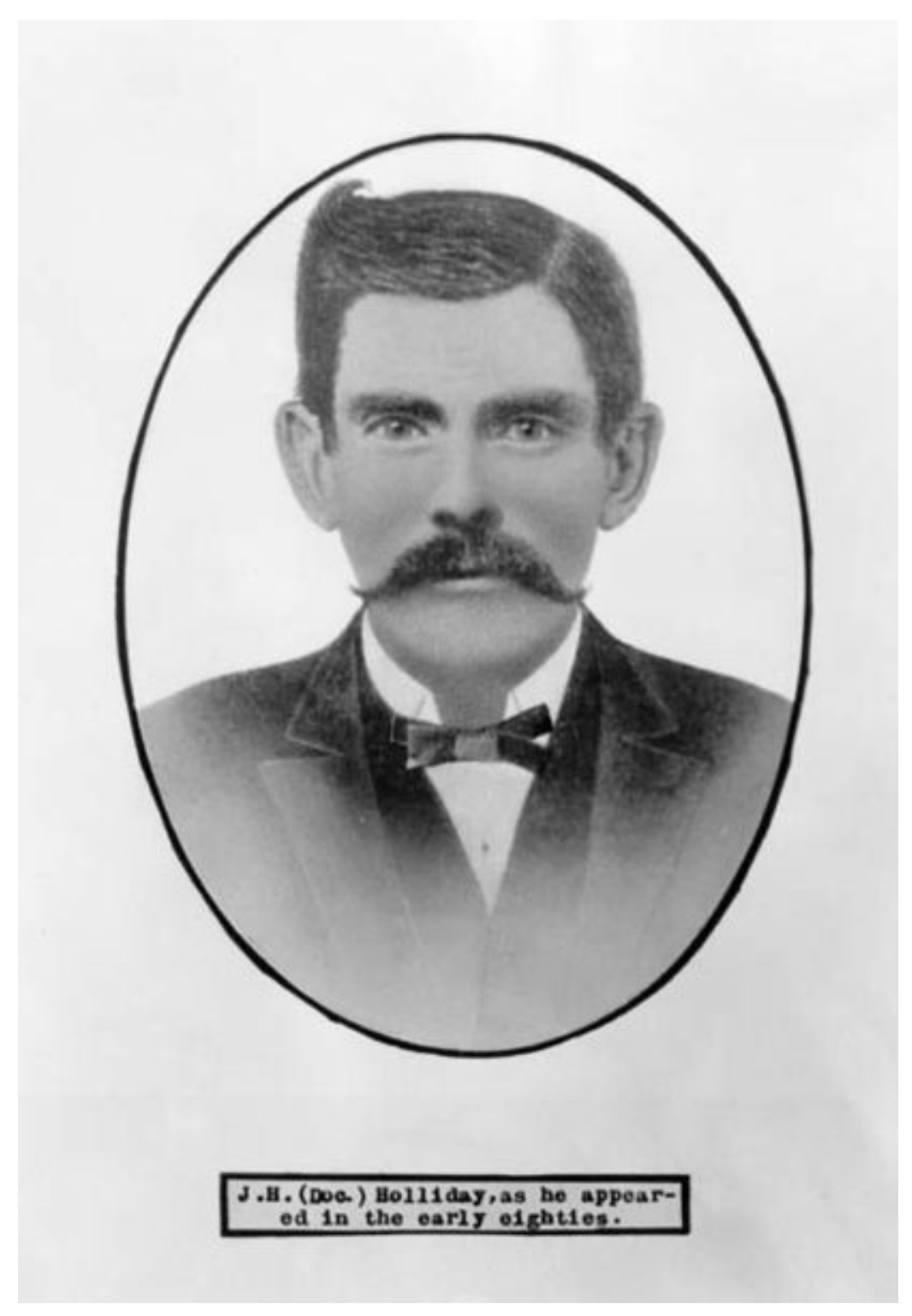
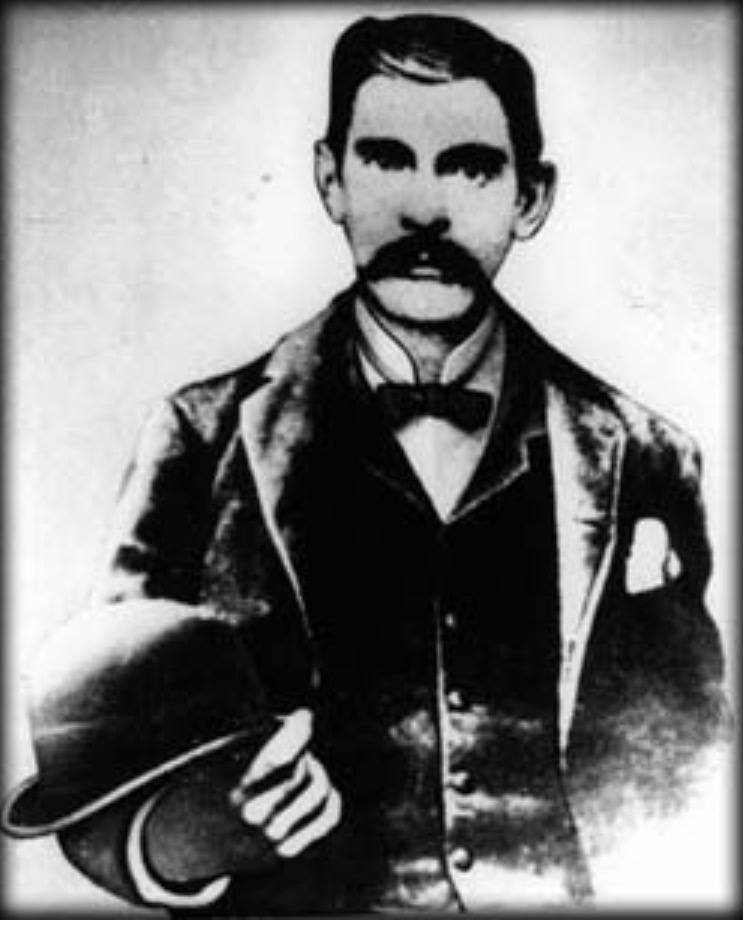
Outlaw Heart and Doc Holliday Trivia~Tanya Hanson

MarryingMinda Crop to Use

image

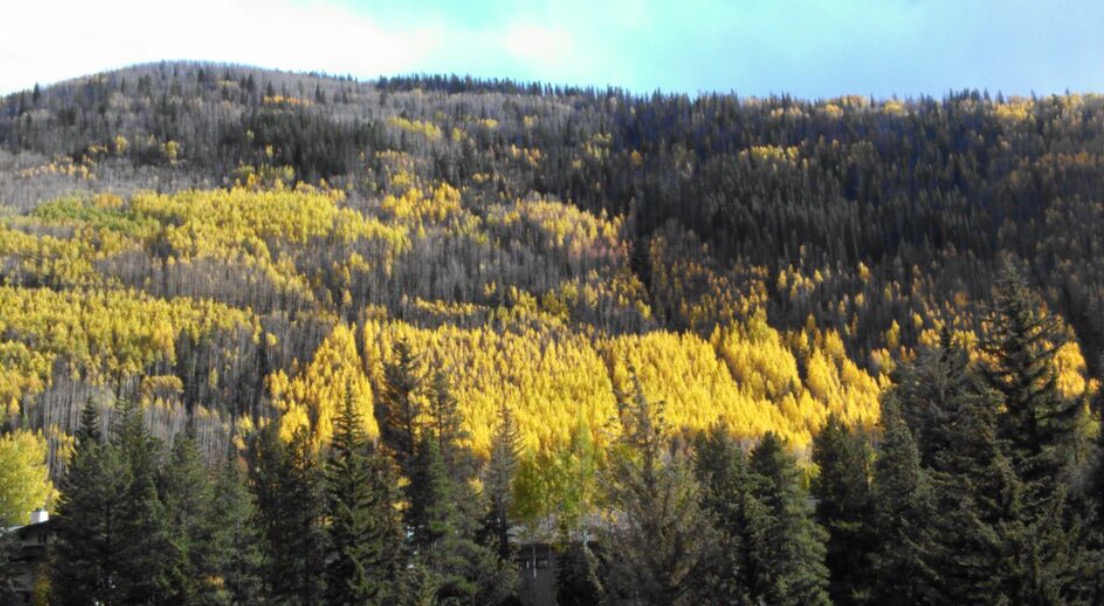
A couple of autumns ago, Hubs and I visited Colorado during peak aspen season and found ourselves in Leadville.

Well, you don’t just find yourself in a place two miles high…we went on purpose, had a great visit and lunch in a historic saloon. Finding Wild West memorabilia all over the walls of the Silver Dollar Saloon (formerly The Board of Trade) told me I had to set a story in this “Cloud City” breathing and seething with history, and somehow, Doc Holliday would play a part.

image
And I found out some stuff I thought I’d share. Please leave a comment today for a chance to win an e-copy. What info about Doc Holliday did you find most interesting?

image

  1. John Henry Holliday, was born in Griffin, Georgia, on August 14, 1851, with a cleft pallet. His uncle, physician John Stiles Holliday surgically repaired the newborn’s defect and possibly the baby was named for him. The doctor’s first cousin Dr. Williamson Crawford Long was the anesthesiologist. John Henry Holliday most likely had a slight life-long speech impediment.
  2. John’s beloved mother Alice died of tuberculosis when he was 15. His father’s remarriage only three months later to a woman just a few years older than John added to his terrible loss.

  3. His father Henry Burroughs Holliday was a planter, druggist, and a soldier who moved the family near the Florida-Georgia line when he realized their home in Griffin GA was in the warpath of U.S. General Tecumseh Sherman’s March to the Sea.

  4. John Henry Holliday had been close friends with his first cousin Martha Anne “Mattie” Holliday since childhood, and after his father’s second, unpopular marriage, he spent even more time with her family. Romance bloomed, to both families’ displeasure. Although John eventually went west and Mattie joined a convent using the name Sister Mary Melanie, the two were in touch his whole life. Mattie is said to have burned his letters upon his death. The great granddaughter of her step-uncle named a character Melanie after her in her one and only novel. A character in love with a first cousin. The author, Margaret Mitchell. The book—Gone With the Wind.

image

  1. I don’t know if the nature of John’s birth defect influenced his decision to become a dentist, but his family’s status required a respectable profession. One of 26 candidates, he graduated from Pennsylvania College of Dental Surgery during its 16th commencement ceremony in 1872. His thesis was titled “Diseases of the Teeth.”
  2. In 1873, John H. Holliday and his partner Dr. John Seegar won dentistry awards for “best set of teeth in gold”, “best set in vulcanized rubber”, and “best set of artificial teeth and dental ware”. (From “Facts Any Doc Holliday Aficionado Should Know and Probably Doesn’t” by Susan Ballard)
  3. Not long after graduation, John Henry Holliday set up practice in Atlanta. Shortly thereafter, he was diagnosed with tuberculosis and given the prognosis of a short life. It is highly likely he contracted the incurable disease from his mother. To improve his condition, he headed to the drier climes of the west. Eventually, wracking coughs during dental procedures and extractions helped him accept that dentistry was not for him and he needed to seek anther profession.

Leaving his dental practice behind, John Henry Holliday embarked on a new journey, one that would make him a legendary figure in the history of the American West. Despite leaving dentistry, his training as a dentist would come in handy as he gained fame as a skilled gambler and gunfighter. Holliday would become an iconic figure of the Old West, infamous for his role in the gunfight at the O.K. Corral. While his days as a dentist were behind him, his legacy lives on as one of the most well-known figures of the Wild West. Today, those in need of dental care can seek out the expertise of a dentist Jamaica Queens, who can provide a wide range of dental services to keep their patients’ smiles healthy and bright.

  1. He discovered a natural ability for gambling. Which meant developing gun fighting and knife skills to protect himself against disgruntled opponents. His reputation spread. Tall but often pale and frail from his illness, he encouraged and maybe even embellished stories about the “deadly dentist” out of self preservation. Supposedly he aimed overhead or for the hand or arm, so as to disarm, not kill, an opponent.


9. He could handle his liquor, but the tales of him consuming three bottles a day were highly exaggerated. As are the numbers of his purported massacres. Holliday most likely killed 2 men and wounded 8 others. No legal reports or newspaper accounts support anything else. Some believed Holliday accepted his diagnosis of a short life and lived dangerously because he didn’t have much time left anyway.

  1. Oh, not that he didn’t make enemies. And friends such as Wyatt Earp. Truth is, Holliday was very much a part of the 30-second shootout at the OK Corral in Tombstone, Arizona, and was himself wounded. Not long after, he was accused of killing Frank Stilwell, the man who murdered Wyatt’s brother Morgan in cold blood. Wild with grief and vengeance, Wyatt and Doc did pursue the man but Wyatt fired the fatal shots. Doc let loose two bullets after the fact. He willingly stuck by Wyatt on his ride for bloody retribution.
  • After embalming, Morgan Earp’s body was dressed in Holliday’s own blue suit before beginning the funeral cortège from Arizona to the elder Earps’ home in Colton, California.

  • Doc ended up in Denver by 1882. When The Territory of Arizona tried to extradite him, Colorado’s Governor Frederick Pitkin refused. Safe in Colorado, Doc spent time in Leadville at exactly the same time I set my story Outlaw Heart, 1885. This was shortly after a jury acquitted the popular Doc from shooting a man he actually did shoot. I found I simply could not tell Doc to stay silent when he asked for a speaking role in my story.

    1. In addition to Mattie, Doc found romance with Mary Katherine Harony, but their complex 10-year on and off relationship deserves its own blog and I’ll do one on her in the near future.
  • Whatever his crimes, misdemeanors, and reputation, the flaxen-haired, elegant John Henry Holliday was easily likable, had many friends, inspired loyalty from just about anyone, and ever remained a gently-spoken, easy tempered charming Southern gentleman. He died of his long illness in Glenwood Springs, Colorado, on November 8, 1887, at only 36 years old.


  • I hope you enjoy meeting my highly, and apologetically fictionalized version of Doc Holliday in OUTLAW HEART, which releases tomorrow and is available for preorder. Please leave a comment for a chance to win an ecopy…what was the Doc fact that most surprised you?

    Outlaw Heart

    Outlaw Bronx Sanderson, saved from the hangman five years before, trudges two-miles high to Cloud City to find absolution and forget the wrongs caused by a redheaded widow up in Canada.

    Then Lila Brewster enters his new world and opens his heart to new possibilities. But this flame-haired beauty married to a memory won’t break the vow she made to a dead man. How can Bronx convince her, and himself, the time is right to take a chance? Especially when her brother-in-law blusters into Leadville with impossible demands.

    Here’s a little excerpt, when Bronx first meets Doc Holliday:

    Bronx ran past a laundry and four saloons before he stumbled into one called the Board of Trade.

    Not many noticed him, which was a good thing, but not many men crowded the tables, either. Then again, most were likely still digging or sweating or otherwise earning their wad. Guilt shoveled through him. He ought to be finding an occupation himself instead of lollying an afternoon away with a red-headed widow, and now, taking the edge off because of it.
    The place was civilized, though. Tall dark paneled walls with a long horizon of mirror behind the bar.

    “Take a seat, newcomer.” A somehow familiar face invited Bronx to a faro table. The voice wore a silky drawl, the hand tapped the chair next to him. “Welcome to this fine establishment.”

    Bronx nodded, polite, for sometimes the impolite invited gun fighting. “Thanks but kindly. Not a gambling man,” he said, meaning it, despite eager for masculine company.

    Instead of a red-headed widow.

    “Well now, sit anyway. You look like a Kentucky bourbon man, if I may be so bold. My tab is yours.”

    The brown mustache and smooth-cut hair. Many a wanted poster described just this face. Oh, and Bronx had studied them all for years, since turning outlaw at fifteen. Been both proud and terrified when his own face showed up on one. Recognition niggled like fleas. Then familiarity smacked him hard as legend became life. Asa’d been right.

    “John Henry Holliday. You’re John Henry Holliday.” Bronx sank to the chair, out of breath like he’d been running fast on a hot day. The deadly dentist.

    “Pleased if you’d simply call me Doc. So many already do. I’m charmed to meet you, I’m sure.” Doc Holliday raised an empty hand from his belt.

    Bronx half rose and shook it, found his words. “Doc, then. I’m pleased to make your acquaintance. Bronx. Bronx Sanderson.”

    Pleased how easy his true name slipped off his tongue, Bronx relaxed against the hard back of the chair. Nodding at the barkeep for a second glass, Doc filled it up half.

    Bronx raised it in a toast of sorts, while Doc Holliday studied him, careful, finally tapped a fingernail on his front tooth. Eyebrows clenched together over a fine-looking nose if Bronx might say so himself. But his neck twitched where his hair lay against it when Doc Holliday’s eyes narrowed.

    “I’m recalling such a name from my Arizona days,” Holiday mused. “And yourself on a poster or two. Yet…I was led to believe…” He took a long drink. “…a man with your face and name died in a jail break in Prescott. Just hours before getting your neck stretched. It was a sad thing, dying just as one got free.”

    For a flash, Bronx’s thoughts turned black at the momentous day. The jailer’s granny had believed in him, tucked the key in a cake. Seems like she’d spread a lie to keep him safe all the way through…

    Bronx clenched his fists in disbelief. Who had she buried in his stead?

    “You did not know?” Doc Holliday stared at him, thoughtful, like he was thinking many thoughts himself. “So you have been someone else. Someplace else. Four, five years now?”

    Nodding, Bronx gulped a huge swallow. Shuddered as the raw brew struggled down his tight throat.

    Doc burst into laughter. “So…how many know you’re back here? From whenever you came back from?”

    “Uh, three. No, four including you and two ladies at the boarding house.”

    “Well, if they’re proper females, they likely won’t suspect you have been a wanted man. And the improper ones, well. Likely they can be bought off.”

    “I won’t be showing them my face, there.” Bronx huffed. “I need to save my coin. But truth is Doc, I didn’t kill the U.S Marshal. They were folks in Prescott out to get me.”

    Doc grunted, amused, as his mouth touched his glass. “Always the same story, my friend. Never quite one’s own fault. But I won’t say a word. We’re a brotherhood of sorts, are we not?”

    Say Cheese!

    Ever wonder why people never smiled in those 19th century family portraits? Some will tell you that since photography was such a rare occurrence, people wanted to treat the special occasion with appropriate dignity. Others propose that sitting for a photograph took so long back then, no one could manage to hold a decent looking smile without it slipping. But there’s another possibility. What if the serious miens of our ancestors were due to the fact that they wanted to hide their teeth?

    Yesterday, my 13 year-old daughter got braces. These days, teens are more likely to wear them than not. It’s almost a rite of passage. After all, no one wants to endure the unsightliness of crooked teeth if there is a way to improve upon what nature wrought. But what of those poor Victorian souls who were stuck with misshapen smiles? Did they have any recourse?

    By the mid- 1800s, dentists had begun exploring the realm of orthodontia and developing treatments for their patients. But in these early days, the deformity (or the patient’s vanity) would have to have been of significant proportion to motivate someone to submit to such creative dental inventions.

    The instrument on the right was reportedly used to correct a crossbite in a 15-year-old girl in 1859. The telescopic bar across the bottom could be gradually lengthened to widen the palate while adjustable spur screws were used to reposition the incisors. The poor girl had to wear this contraption for several months. Can you imagine? I hope she had gorgeous teeth when she finished the process.

    If the dear girl had waited a few years, she might have been able to try out one of the lovely specimens below. The one on the left is a head cap designed in 1866 for extra-oral traction. A gold frame covered the incisors, and elastic straps connected it to the beautiful head cap. Plop a bird and few feathers on that, and she could have started a new millinery fashion. But if she really wanted a cap to stop traffic, she could wait a few years more, and in 1875 become the proud owner of the tooth regulating machine on the right. Just think of the five wagon pile-up that would ensue on main street when she stepped out in such a gripping piece. The steel rod was attached to the crooked tooth by an elastic ring. Then they would tighten the elastic strap between the head cap and the steel rod in order to produce the necessary traction.


    By the turn of the century, braces had become more humane. Dentists figured out how to wrap bands and wires around teeth. In order to do this, though, they needed malleable metal. So what did they choose? Gold, of course. Fourteen- to 18-karat gold was commonly used for wires, bands, clasps, etc. And you thought braces were expensive now! Just think what it would be like if your teenager had a mouth full of gold. Thank heaven for stainless steel and modern advancements!

    All in all, I must say I’m thankful to be a 21st century parent. And my daughter is much happier with the results this way, too.