An Interview and an e-Book giveaway

Howdy!

Welcome!  Welcome to a terrifically beautiful Tuesday!

Recently, I was interviewed by Tory Richards at Coffee Time Romance concerning the book, SHE STEALS MY BREATH.  She asked me some interesting questions and so I thought I’d share the interview with you.  Tory is the author of many erotica romances.  So, without further ado, here is the interview:

Interview for Coffee Time Romance and More

Welcome, today we are talking with Karen Kay! I would like to thank you for taking time out of your busy writing schedule to answer a few questions. First, let’s delve into who you are. Some of the questions may be untraditional but you’d be surprised at what readers connect to, and sometimes the simplest ‘I can relate to that’ grabs their interest where nothing else can.

**Can you share a little something about Karen Kay that’s not mentioned in your bio on your website? 

This question got me to thinking a bit, because, on my website, I really do tend to share my life with my readers.  But, here’s something I don’t usually share:  I’m pretty much a food purist, so to speak.  I don’t eat anything that comes in a box and nothing processed by another.  I make all my own catsup, mustard, sauces, sweets, etc.  Takes a bit more kitchen time and tends to make my life constantly busy.  It has taken me a bit of time, a lot of research and a couple of illnesses to reach this point, because I have loved fast food as much as anyone else.  But, not any more. 


**How long have you been writing? 

Twenty-six years round about.


**What have you found most challenging about it? 

Golly, what don’t I find challenging about it?  I’m not a slow writer, but I’m also not a fast writer.  I ache and struggle over sentences and descriptions that really matter.  Promotion also tends to make me a little high strung when a new release comes out. 

But, the things I do love, which keeps me going, is the research about the American Indian long-ago way of life — I’m always learning…taking on new things, i.e. recently I’ve become very interested in really learning to “speak” the gesture/sign language in common use all over America before English came in and replaced it.  And, love.  I truly believe that the love and love-making between a man and a woman who are truly committed to each other are probably one of the most beautiful creations on earth, their love, of course, creating a whole new generation. 

There are factions at work, in my opinion, who work to make us think that this (love-making) is filthy or dirty and they go out of their way to make it appear this is true. 

But, love and love-making between two people committed to one another is God’s plan, and, being God’s plan, is naturally one of the most beautiful things still found on this earth.  I do believe this to be true, and so in my stories, I try my best to make the love scenes as beautiful as I possibly can.


**What does writing do for you? Is it fun, cathartic, do you get emotional? 

Great question — I had to go and look up the word, cathartic, to make sure I understood it…and it means using some sort of medium to purge or cleanse some emotional aspect about something.  Okay, so I admit that sometimes when it comes to the bad guys in my story, I sometimes am writing real dialogue and real happenings — not always — but I’ve noticed when it comes to the bad guys in the story, I generally am working from real life, unfortunately.

 A story where I specifically remember doing this is PROUD WOLF’S WOMAN — and even then, I went back and edited out much of the bad parts because I thought no one would ever belief a man could say such things to a woman.

 Actually, I get very emotional about the stories and try to make them as light-hearted as possible, given the subject and the fact that one is writing a novel which must contain conflict.  In Native America, there is so much real trauma from the past, and even today, that I like to make my stories somewhat light-hearted, even when dealing with subjects that are not light-hearted.

 And, of course, they must always end well.


**Describe what your writing routine looks like. Are you disciplined with a strict schedule or do you have to be in the mood?

 I’m pretty disciplined.  I’d had to be when I wrote for two major publishing houses in New York.

 No, I don’t have to be in the mood.  But, I do like to look at pictures of what I’m writing about or pictures of a possible hero before I sit down to write.  I’ve tried to get rid of that habit, but I still do it, nonetheless.


**Did you go into writing thinking that it would be a hobby or a job?

Actually, no to both.  When I was growing up, my life was filled with music — I play piano and clarinet.  I practiced everyday and I loved it.  It filled a creative need.  When I had young children and my ex-husband was often gone (out-of-town), I began to feel the need to bring a creative influence back into my life.

I began to read love stories to fill that gap, but even this wasn’t enough.  I began to yearn for a piano or clarinet to play.  We were mighty poor and the thought of getting a piano was out of the question.  But, I discovered that it didn’t take much cash to buy paper and pen.  That’s when I started to write.


**What inspires you?

Golly, a lot.  My husband is number one inspiration.  Native America and doing my best to “set the record straight” on what happened here in America also inspires me.  It makes me hunger for doing the research and so I have my nose in some sort of book almost constantly — history books or another Indian book.  And, I love to tell stories.  When I pick my grand kids up at school, I often tell them stories I’ve heard, but sometimes I make them up.

**Let’s move on and give readers some insight into your personal life.

** What are your pet peeves?

Many of the old movies tend to irritate me.  They tell bad history, tell lies about Native Americans, usually have non-Indian people playing the major roles and don’t show the facts as they were.  Rarely, do they present the truth of the people who were first here.  And, almost always those old movies end in a bad way for the Indians.

The truth is that the Native American of old was honest almost to a fault, deeply spiritual and religious, trained his body so that he could run miles in order to save his people if the need ever arose.  He respected (as a rule) women and their voices and their roles in the Indian culture.  He was often wise, could track better than anything we’ve ever known, and if he were a true medicine man, his ethics had to be without fault.  He did not deal in magic, as the movies depict — this is the true medicine man I’m talking about — he healed by being completely ethical in his life so that God could work through him to heal others.

Yes, some men pretending to be medicine men who were yet not true medicine men, went astray and often, when they let hate fill their spirit, ended up on the black side of magic and sometimes were cruel or used their “medicine” against others.  But, these were not the men whom God chose to work through.  History tells us that the God of Creation abandoned them.

I’m only learning this now because of the series I’m writing about the medicine man.

** Who is your hero?

My husband.


**Give us one thing on your bucket list.

Okay, back to the dictionary…I didn’t know what a bucket list is.  Am I showing my age?  I’d say the one thing on my bucket list is what I try to do in my writing is to depict the American Indian of the past in as true a picture as I can paint him, given that I am writing some 150 years after the fact.  I try to do this by reading and learning the writings of George Catlin, James Willard Schultz and others, who lived with the Indians and saw them with a contemporary view.


**What would readers find surprising about you?

Perhaps that I love reading and learning about law and common law, as well as our Founding Fathers.  Often, I search for and read their own documents, not what others say about them.  There’s a book entitled, the Politically Incorrect Guide to the Founding Fathers.  Although I haven’t read it cover to cover, it certainly is interesting.


**If you could go to heaven, who would you visit?

Many people.  My parents, my sister, many of my friends, and people I admire, including but not inclusive of: John Trudell, Russell Means, Sitting Bull, Crazy Horse, Thomas Jefferson and L. Ron Hubbard.  The first five I didn’t know personally in this life, but the last I did, and he was always one of my best friends.

**Just for fun. What is your least favorite:

Least favorite Hero type –  Probably men who murder for a living.

Body part – Hmmmm.  Not sure on this one.

Overused word in a title – Hmmmm.  Again, not sure.

Least favorite Genre – I tend to read in many different genres, but I’d say any genre that makes fun of being human and/or being humane.

Least favorite Dirty word – I’d say it would be any word that takes the name of the Lord in vain.


**Now that our readers know who Karen Kay is let’s get down to the business of your book, She Steals My Breath, The Medicine Man Book 1, which just came out in March of this year.

 Please tell us a little bit about, She Steals My Breath.

This book was inspired by being in a point in my life when I truly desired to have a tough, rugged hero who was also very kind.  The story was one I began to tell to my grandchildren, but was also inspired by several different things, one of them being that in Montana there is a lot of snow and many blizzards that can kill a man in minutes.  I’d never written a story set in the snow.  While visiting on the Blackfeet reservation a few years ago, I became aware that they’d had 8 feet of snow that winter.  Eight feet!  Wow!  This added to wanting to write a story set in the snow.

At this time period in history, there were supposed to be no white women in the West, but this wasn’t quite true…although almost true.  There were women married to traders and those women and their daughters sometimes made the journey upriver.  While they may not have gone completely up to Fort Union, why not?  They often traveled on the steamships and went north and this was considered acceptable at this time.

So the heroine is the daughter of a trader and the hero is a Blackfoot medicine man, who has come to the fort to find his missing brother.  When the hero first sees the white woman, she is so beautiful that she takes his breath away, thus the title of the book.

She is caught out in a roaring blizzard, and, when the hero discovers this and that she is out there alone, he leaves the fort to go and find her and save her if he can.

**What was your hardest challenge writing this book?

The ending of the story.  All the while I was writing the book, I had no idea how to end the story.  Yes, I knew how things had to be at the end, but how to get there.  I brainstormed with some of my readers and a good friend, as well as my husband and it was their imput — especially my husband’s– that showed me how I might get from where I was to where I needed to be to end the story.  Those readers who were corresponding with me at the time often heard me mention that I had no idea how to end the story.  Finally, I had to sit down, and, using the ideas from my husband, I just wrote it and then went back through it several — many, many times — to get it “right.”  I hope I accomplished it.

**What kind of research did you have to do?

 Lots of research on the medicine man including a book on an Apache medicine man, two medicine men of the Lakota, Fools Crow and Black Elk.  Also, the writings of James Willard Schultz and his observations of the medicine men and women.  Also, I had to research snow storms and blizzards and shelters and gullies and Fort Union and the surrounding landscape, as well as a little about steamboats.

**What in your opinion makes good chemistry between your leading characters?

 For me, I think they have to really be in love with each other, though it’s not acknowledged, and they each one have to have solid, hard and firm reasons or beliefs why a union between them is not possible now or ever.  Their beliefs can be completely 180 degrees different.  The American Indian culture makes this a little easier than other sub-genres in romance, I think.

 **How many books do you plan in the series?

 Right now I plan four books in this series. 

 **Any other works in progress?

 The book I’m writing now is about half done and is the next book in The Medicine Man series and right now is called, SHE CAPTURES MY HEART. 

**Any advice for aspiring authors? 

It’s my belief that storytelling is the most important thing in writing a fictionalized novel.  I would say to forget about grammar, spelling, punctuation and other things if you don’t think them helpful or if knowing about them keep you from writing what is in your heart.  You can go in later and fix them. 

Set a time each day and write.  Don’t worry about page count, just write as much as you can and don’t beat yourself up if you sit for 4-5 hours staring at a blank screen.  Get in there the next day, same time, and write.  Tell your story. 

This is what I would suggest. 

 **Final words? 

Although my heritage is mostly European, I figure I am about 1/8 or thereabouts, Choctaw Indian.  My grandmother used to talk to her best friend about her Indian heritage and I learned that she was proud of it.  When I was growing up, I was sure that I must have had some kind of Indian heritage.  One has only to look at my features to see it is there.  But, my mother insisted there was none in our family tree and I know she did this to protect me because we lived in a small, southern town.  But, when I finally discovered the history passed down verbally from my grandmother, I, at last, knew why I had always felt I had so much in common with the American Indian.  And, so I did.

Please include the following links: 

Website:  https://novels-by-KarenKay.com

Blog:  https://petticoatsandpistols.com — I blog usually the second Tuesday in the month.

Email: karenkay.author@startmail.com — I love to hear from readers


SHE STEALS MY BREATH:

Amazon: https://tinyurl.com/4y6kdvaa

Barnes & Noble: https://tinyurl.com/4anbp4az

Itunes:  https://tinyurl.com/2w6f7epv

KOBO:  https://tinyurl.com/pwa88n3v

Google:  https://tinyurl.com/mr2byszp


 NOTE:  To enter into the drawing for the free e-book giveaway, please look at the give-away rules over to the right here and just leave a comment.  Be sure to check back in a couple of days to see if you are the winner.


Whoopie Pies and An Upcoming Release

Hello everyone, Winnie Griggs here. Today I’m excited to report that the release date for the second book in my Amish of Hope’s Haven series, Her Amish Springtime Miracle, is almost here! It will hit the shelves on May 24th. This book features the youngest of the three Eicher sisters, Hannah, who happens to work in a bakery.

One of her specialties is Whoopie Pies. And it turns out they are the hero’s favorite treat. However he’ll only eat the chocolate ones with white filling and the heroine makes it a mission of sorts to try to get the hero to try one of her other flavors.

Since the whoopie pies play a role in this book, I thought it would be fun to share a bit of trivia about these yummy pastries.

But first of all, for the uninitiated, a traditional whoopie pie is a delicious dessert sandwich made by taking a fluffy white marshmallow-y filling and placing it between two domed chocolate bun-sized cakes.

Now, on to the trivia:

  • The whoopie pie goes by several other names. Among them are a gob, a bob, a black and white, and “BFO,” which stands for Big Fat Oreo or Big Fluffy Oreo.
  • You can actually buy whoopie pie baking pans.
  • The record for the world’s largest whoopie pie is one that weighed in at 1,062 pounds. It was made on March 26, 2011 in South Portland, Maine.  The record setting pastry was cut in pieces which were sold and the proceeds helped send pies to soldiers serving overseas.
  • There are 5 states that lay claim to have been thee birthplace of the whoopie pie:
    • Pennsylvania – they claim the whoopie pie recipe comes from the Pennsylvania German culture and that it has been handed down through many generations
    • Maine – Labadie’s Bakery in Lewiston, Maine has been making them since 1925
    • Massachusetts – Berwick Cake Company of Roxbury, Massachusetts, which is sadly no longer in business, had them on the menu in the 1920s
    • There have also been claims from Virginia and  New Hampshire but I couldn’t find any info on what these claims were based on
  • There are two theories on where the name whoopie pie came from
    • The first, put forth by those who support the Pennsylvania claim, is that Amish housewives would bake these and put them in her family’s lunch pails. And when the lucky farmer or schoolkid would find them they would yell “Whopee!”
    • The second, put forth by those who support other claims, is that it came from the 1928 Gus Kahn song, “Makin’ Whoopie.”
  • Maine has declared the third Saturday in June to be the state’s official Whoopie Pie Day. There is also a Whoopie Pie Festival in September that is held in Piscataquis County
  • There have been two whoopie pie inspired ice creams by national brands. Ben & Jerry created Makin’ Whoopie Pie in 2002 (it has since been discontinued) and Turkey Hill has a limited edition version.


Back to my book – some of the flavors Hannah tried tto tempt Mike with were

  • chocolate whoopie pies with a special mixed- berry filling
  • chocolate whoopie pies with strawberry cream filling
  • lemon whoopie pie with cream cheese filling

If you could develop your own flavor for a whoopie pie, what would it be?

Leave a comment to be entered in a drawing for an advanced copy of Her Amish Springtime Miracle.

Her Amish Springtime Miracle


An orphaned baby brings together an unlikely couple who learn the true meaning of family. 

When Hannah Eicher discovered sweet baby Grace in her barn last spring, the adorable infant seemed like the answer to her prayers. The young Amish baker has always wanted a familye of her own and now that she’s fostered Grace for nearly a year, her adoption application is almost certain to be approved. But an unexpected visitor to Hope’s Haven could change everything . . .

Englischer paramedic Mike Colder is only returning to his childhood hometown to locate and adopt his late sister’s baby. But when the trail leads to Hannah and Grace, Mike’s determination falters. With Hannah, the simple life he left behind suddenly seems appealing. Despite their wildly different worlds, can Mike and Hannah give each other—and Grace—the greatest gift of all: a life together?


You can preorder HERE


Old Fashioned Treats with a Modern Twists – Malory Ford

I don’t know about you, but I love a good old-fashioned treat. Give me an icebox cake or a gorgeous loaf of sourdough any day of the week. Sometimes, if I have a minute to myself to enjoy it with a cup of coffee before my children wake up, I’ll imagine what it must have been like for my great grandmother and the women who went before her. Did they have the same concerns I do? Did they relish the quiet before the chaos too?

I feel certain they did. Whether it’s a breakfast dish passed down through the generations or a slice of buttered bread enjoyed in the evening, recipes have the power to connect us to our past.

Still, I do love the modern convenience of my stand mixer and electric oven. This is where old fashioned bakes with a twist come in. Some of them are shortcuts to achieve something similar to what has been done for generations, others are simply a new way of enjoying an old favorite. Step into my kitchen with me, and let’s see what we come up with.

Shortcut Sourdough

Show of hands – who started making bread during the pandemic? It’s all right, I see you. Unfortunately, many have abandoned their starters in exchange for something a little easier. This wouldn’t be a problem except that sourdough in and of itself is an experience that should not be missed.

Enter: Shortcut Sourdough. (https://www.allrecipes.com/recipe/277983/mock-sourdough-bread/)

This recipe is not only delicious, but it utilizes active dry yeast and yogurt in place of that sourdough starter that died on your counter a year ago.

You can find different variations of this dish, but they all mostly follow the same format. Enjoy the flavor, tang, and texture of sourdough without babysitting your starter – I won’t tell if you won’t.

Oreo Icebox Cake

My mom talks about how delicious my great-grandmother’s lemon icebox cake was. I’m sure that’s true, but I have to admit I’m partial to a delicious chocolate cookie sandwich with cream in the middle. Icebox cakes became popular in the 1920’s, and were more or less a descendant of trifles and similar layered desserts.

This oreo icebox cake (https://chocolatechocolateandmore.com/oreo-icebox-cake/) is a modern take on the classic recipe and makes the process even easier than it would’ve been nearly a hundred years ago. You could also adapt this recipe into miniatures by utilizing a muffin tin and placing the single oreo on the bottom. If you try this, make sure you allow a little extra time for the cake to set or you’ll end up with a dozen tiny (but still delicious) messes. One of the best parts of this recipe is that any little hands you might find in your kitchen can absolutely help you with it. My three year old was delighted to help me lay down the cookies, pipe the cream, and sprinkle the oreos on top. The newborn was decidedly less help, but give him a few years.

No-Churn Ice Cream

Did you know that the earliest renditions of ice cream date back thousands of years? Granted, the versions they enjoyed weren’t the sweet, creamy goodness we enjoy today. Those are a bit more modern but still something 18th century Americans would’ve enjoyed. Still, while homemade ice cream is infinitely worth the trouble, it does take a bit of work and some bulky equipment.


No-churn ice cream (https://www.foodnetwork.com/recipes/food-network-kitchen/no-churn-vanilla-ice-cream-3364776)  saves the day. With just four ingredients and some time in the freezer, this recipe would certainly make our foremothers jealous. Of course, you can add in any of your favorite toppings, and if those toppings weren’t around when the first ice cream sundaes were popularized? Well, that’ll be just fine.


Malory Ford is giving away one copy of her book

Do you have a favorite recipe that might’ve been made in the 1800s? Leave a comment for a chance to win.


The Way to Hope

Simon Carson is a self-declared lifelong bachelor interested in three things: ranching, woodworking, and staying as far from the responsibility of a family as he can. Plenty of young ladies catch his eye, but they all want something he’s just not interested in giving.

Samantha Paulson is a trick-riding, back-talking cowgirl who has made a life for herself riding in Jed Harper’s Wild West Show. She’s tough, smart, and if her fans are to be believed, a little crazy.

Samantha’s life is exactly as she wants it, thank you very much. That is, until someone starts sabotaging her act in the show and putting her in grave danger. The bosses send her out to a friend’s ranch to hide out while they find the perpetrator, but her single cowboy father didn’t exactly teach her to act like the other ladies in town. No, she knows horses better than she does people, and she’ll earn her keep if she can.

When Simon and Samantha meet, sparks fly and Simon starts to reevaluate everything he knows. That is, until Samantha’s attacker goes on the hunt and may just be closer than they think. It’ll be up to the Lord whether they have any hope for a future, or if they’re doomed before they even start.


Find Malory online at : Malory Ford Books – Author of Historical Christian Romance (wordpress.com)

Malory is a wife and mother, avid gardener, aspiring baker, and a voracious reader. She is a believer inspired by everyday encounters with the Lord, interactions with her friends and family, and the occasional trip into a history book.

Songs that take you back by Jodi Thomas

Last night I went to a lecture/concert at West Texas A&M University to hear a legend, Red Steagall.

He talked about this way of life in the West and how important it is to America. He told stories of ‘Riding for the Brand’ and being loyal to the man who signs your checks and doing the best you can. He talked of ‘Working until the job’s done’ and I was reminded I’d been burning midnight oil to get my next book finished for about a month.

Now I’ve never dug a post hole or ‘Ridden the River’ but I understood what he was saying. By the way (for you city folks—like me) Riding the River with someone means you trust them with your life.

I come from five generations of farmers and ranchers. Mostly dry land and small ranches. ‘Helping your neighbor.’ ‘Being kind.’ ‘Loving your country’ were a few themes Red talked about.

As a writer I often feel I live in two worlds. One is real and the other is in my mind. Somedays Honey Creek is real to me. I know just where it is, a small town in the heart of Texas.

But last night the country music was what touched my heart and made me smile. The song took me back in time to an old Ford on the way to Hollis, Oklahoma. Four kids in the back seat and my dad singing cowboy songs to put us asleep.

Red sang a few early cowboy songs last night that my father sang on road trips. Sometimes stepping into fiction is great, but then again so is walking into the past. I’ll be playing Red’s songs while I’m writing the west.

Here are two versions of the songs:

https://www.youtube.com/results?search_query=there+is+a+bunk+in+the+bunkhouse+tonight

https://www.youtube.com/watch?v=OCtqvGhXqt8


Click to Buy
………..Click to Buy………..

If you’re looking for something new to read, my latest book will be out April 26. SUNDAY AT THE SUNFLOWER INN is a fun read about Honey Creek. Love must be in the air because in addition to the mystery, I’ve added lots of laughs and three love stories. Please order your copy at http://www.jodithomas.com.

I’d love to hear the name of your favorite country song. I’ll listen to them all and pick one lucky winner for an autographed copy of my new book SUNDAY AT THE SUNFLOWER INN.

Looking forward to chatting with you,

Jodi is giving away one autographed copy of

Sunday at the Sunflower Inn

Jessica Ann McKenzie—“Jam” to everyone in Honey Creek—has fulfilled her dream of owning the best restaurant for miles around. Serving candlelit dinners to every couple in town on Valentine’s Day is a reminder of another dream, one she’s just about given up on. Until, that very night, Sergeant Tucson Smith clambers out of the muddy river and onto her land, bringing the promise of something they’ve both been searching for.
 
When McCoy Mason crashes on Interstate 45, he doesn’t just bust up his Mustang, his leg, and his relationship. He also loses his prospects of a job and apartment in Houston. Honey Creek, home to his estranged grandfather, offers a temporary respite, a place to recover before moving on again. After all, what permanent use could a town so picture-perfect have for a man like him?
 
At sixty-seven, Charles H. Winston III lives by order and routine. One of his most cherished rituals is a regular lunch date with three lovely ladies at the Honey Creek Café, including the very proper Miss Lilly Lambert. But it’s not too late to surprise the whole town—or himself—by seizing a chance for a once-in-a-lifetime adventure. And there’s no better season than spring, when the warm breeze blowing in from the Brazos River brings fresh hope and second chances to those who need them most . . .

About Jodi

With millions of books in print, Jodi Thomas is both a New York Times and USA Today bestselling author of over 50 novels and countless short story collections. Her stories travel through the past and present days of Texas and draw readers from around the world.

In July 2006, Jodi was the 11th writer to be inducted into the Romance Writers of America Hall of Fame. With five RITA’s to her credit, along with National Readers’ Choice Awards and Booksellers’ Best Awards, Thomas has proven her skill as a master storyteller. You can connect with her on Facebook, Twitter, Instagram, and her website – https://www.jodithomas.com/

Ahh, Let the Fresh Air in!

My newest book A MAN OF LEGEND is now available everywhere. This is Book 3 of the Lone Star Legends series and brings it to a gripping conclusion.

Quite a bit of research was necessary, some because I wasn’t sure about the early 1900s as I’d never set a book during that time period. It was really an interesting time with thousands of inventions and improvements in just about every part of life. Automobiles were just beginning to be driven and phones used.

One thing I wanted to add that I had questions about were screen doors and windows. In the 1880s, when diseases caused by mosquitoes and flies began to reach the public, folks started paying attention and installing screens. Then by the 1890s, companies began to mass produce and make them rust-poof and they really took off.

Since my story is set in 1908, I put them on the doors and windows at ranch headquarters of the Lone Star. I mention them quite a bit since Stoker Legend refused to have very much to do with innovations. Up in years at 83, he preferred the old ways.

A lot of people, including Charles Goodnight, slept on screen-in porches. A lot of folks did.

When I was growing up, we didn’t have air-conditioning and always slept with the windows up and doors open in the summer. I can still smell the fragrant night air coming in. I loved that smell. That was some good sleeping. It’s too bad those days are gone now, replaced by manufactured air.

Do you have any favorite memories of a screened porch or open windows? And sometimes we could overhear things we weren’t supposed to. I’m giving away three more copies of A MAN OF LEGEND so leave a comment.

About the book

Crockett Legend has always loved Paisley Mahone, but a family feud sure can ruin a romance. When her father turned against the powerful Legend clan, she took her family’s side and broke Crockett’s heart into pieces. Now her father’s dead and Paisley and her last remaining brother are convinced the Legends are to blame.

If only he can find a way to prove their innocence…

A chance meeting throws the couple together, and when their train is held up by outlaws, Crockett and Paisley have to team up to save a young boy from dying. A tenuous truce is born. Together they may have a chance of bringing the truth to light…if they can get to the bottom of who’s been trying to turn the two powerful families against each other. With so many secrets to unbury, it isn’t long before Paisley finds herself in the crosshairs, but Crockett vows there’ll be hell to pay if anyone hurts the woman he loves…or stands in the way of a Legend in the making.

Here’s my book trailer:


Laura Ashwood Adds Fact to Fiction

Hi, I’m Laura Ashwood and I’m honored to be guest blogging here today. I write sweet historical western romance, contemporary small town romance and women’s fiction. Something for everyone, LOL. Today though, I’d like to talk about one of my historical western romances.

One of my favorite things about being an author is having a reason to research and a place to use that information. But that doesn’t come without its own challenges either. Too little research will upset readers familiar with a time period, and too much research can take readers out of your story. It’s a delicate balance.

So, where does one start? When I write a story, I generally have a location in mind. It might be a specific location or it might be as general as simply knowing what state I want it to be set in. Once I know that, I’ll spend some time looking at the location. The topography, the average weather – if it’s a historical book, I’ll look at the averages and topography from the year I am setting the story.

Courting Danger is a historical western suspense that starts in St. Paul, Minnesota in 1873. I knew my character, Clarissa, came from a wealthy family, that she was an only child, and that her parents (her mother in particular) wanted her to marry “up” to help further cement their place in society. Very common practices during that time period.  Clarissa didn’t want to have anything to do with it though. My research told me that the suffragette movement was strong at that time and she was a well-read young lady. She wanted to make her own way.

During that time frame, the Pinkerton Detective Agency was in its prime – solving crimes across the nation and had even started taking on female agents. The first official female Pinkerton agent was Kate Warne. So I did come research about Kate and some of the cases she worked on. So, I had Clarissa find an advertisement from the Pinkerton Agency in the newspaper – looking for female agents. She immediately replied and was chosen to work a case in St. Louis, Missouri. This case was modeled after one of Kate Warne’s cases. I used several of the details of the actual case, but added my own twists to make it original.

So because a great deal of the story was set in St. Louis, I wanted to incorporate as much “fact” into it as I could. The first thing I looked for was a City Directory. Think of it as a phone book before there were phones. The City Directory gave me names of stores, hotels, even characters. The names of the nurse, the undertaker, and the Chief of Police in my story were taken from this directory as the actual undertaker, nurse and Chief of Police in St. Louis in 1873.

The hotel Clarissa stays in while she’s in St. Louis, The Planter’s House Hotel, was an actual hotel in 1873. Because it actually existed in 1873, I was able to find photographs of it and that helped me describe it as though I was actually there, including the famed Turkish Lounge.

St. Louis is famous for its Eads Bridge and Gateway Arch, but through my research, I discovered that the construction on the Eads Bridge wasn’t completed until 1874 and the Arch wasn’t constructed until the 1960s. So, when Clarissa saw the bridge at one point in her adventure, I made sure to mention it was under construction. I also consulted a city map of St. Louis when determining what to name my streets and neighborhoods my characters visited. They were all authentic to that time.

How important is all of this? Will my readers know this? The answer to both of those questions is probably no. Those details will not make or break my story. But they’re Easter Eggs I’ve sprinkled throughout and they make the story come alive for me because I know Clarissa is seeing the actual things she’d see if she were alive and in St. Louis in 1873. Plus, it’s a lot of fun.

If you’d like to read about Clarissa’s adventure as a Pinkerton Detective in training, you can find it on Amazon, both in paperback and ebook. (buy link: https://www.amazon.com/gp/product/B09TJTSVFZ?tag=pettpist-20)  It’s also available in Kindle Unlimited.

I’d also love to give away three copies (ebook only) of Courting Danger – Just answer the question “how much does historical accuracy and detail mean to you when reading a book?” in the comments below. Three random winners will be announced on Sunday.

Laura is giving away 3 e-book copies of Courting Danger

Courting Danger

She thought the biggest danger would be to her reputation. She didn’t realize it would be to her life and her heart.

Clarissa Ferguson craves a life of adventure. The last thing she wants is to become a socialite and marry a curmudgeon to appease her mother. When she sees an advertisement for female Pinkerton Agents, she leaves on the next available train to Denver Colorado. What she doesn’t expect is the handsome man she meets on the train to be her new trainer.

Noah Harding, recovering from the loss of his wife and family, vows never to marry again. Throwing himself into his work as a Pinkerton agent, he has finally found a sense of purpose. He prides himself on being able to read people, until he observes a peculiar woman on a train headed west. He soon discovers she’s his new trainee, and he must temporarily wed her while they solve a murder, or he’ll jeopardize his career.

Will Noah be able to stay focused on the case with Clarissa distracting him? When the case forces them to pretend to be something they aren’t, what happens when their feelings become real?

* * * *

ABOUT LAURA……

Laura and her husband live in northeast Minnesota. She works a full time day job, and in her spare time, she likes to read, cook and spend time with her husband. She is a devoted grandmother and chihuahua lover.

In her novels, Laura brings to life characters and relationships that will warm your heart and fill you with hope. Her stories often have themes involving redemption, forgiveness, and family.

Laura’s website: https://www.lauraashwood.com 


SHE STEALS MY BREATH — Still on sale, but only for a short while longer

Howdy!

And here we are gathering together again on another terrific Tuesday.

This series of The Medicine Men is really opening my eyes to many things.  And, I thought I’d share of few of those with you today.

Am reading the book FOOLS CROW by Thomas E. Mails and I have to admit to having to leave behind many misconceptions I’ve had about the American Indian medicine man.  I had really thought that the medicine men helped their people heal using herbs and driving out the evil spirits with their songs and drumbeats.

Sometimes they did this.  They certainly used herbs and drumming and other rituals to help another become well.  Here is what Fools Crow said about some of the healings he did:

“You know that it is not our custom to talk about healings.  Instead, our words and hearts are sent up to God in prayerful thanksgiving for them.  We tell Him this in our private prayers and in our ceremonies.  No medicine man or patient makes a big thing of it when a healing takes place.  This is why sick people do not come to me or to other medicine men in greater numbers….”

What I’m learning is that the true medicine man from the long ago did not, himself, heal.  Only God did, working through the medicine man, as though the medicine man were a hollow bone, and was there only so God could work through him.

Wow!  I mean, think of it.  God was never divorced from the healing of the sick because the medicine man realized fully and completely that God was healing the person, not he, the medicine man.  This is why Fools Crow devotes an entire chapter in this book about the medicine man and the strict and narrow path such a man had to walk.

Now, since we know that it was God doing the healing, Fools Crow goes on to say that every person he ever did a ceremony for in order for the person to get well — they did get well…and without exception.

Another medicine man — a very handsome man, Black Elk — is once noted as saying that the life of a medicine man is a hard one, because a man must never step foot off the very narrow and ethical path laid out by God, The Creator.  No alcohol, no drugs, no womanizing, no swearing and a medicine man must keep in mind always that the person seeking help may never be able to repay him.  He goes on to say a medicine man has to understand this, and, if necessary be content to never be repaid for the service he rendered.

Black Elk is noted as saying, also, (I heard this online) that the path of a medicine man is so rough to keep to, that one should not seek to become a medicine man, but should wait to be asked and then make his decision.

However, Fools Crow often points to his complete happiness in being able to help and lead his fellow Lakota Indians.  He may not have been rich in material goods, but he was rich in friendships and in the knowledge that he was helping his fellow man.

In the words of Fools Crow:  “Even the medicine men are jealous of one another today.  And that is very bad.  Years ago all of the holy men and medicine men worked together, and as a result accomplished great things.  The medicine men shared their power in the healing rites and in the other ceremonies.  Even when they paid homage to God they did so in such a way as to help one another.  There was unity of purpose.”


In the book, SHE STEALS MY BREATH, I don’t actually go into much of the healing ceremonies because I don’t know them.  But what I would like to do is share with you a little bit from the book that I think really defines the American Indian’s point of view of the world.

And so, I hope you will enjoy this excerpt from the book, SHE STEALS MY BREATH.

CHAPTER SIXTEEN

One day turned into another.  In the mornings, Eagle Heart left their simple home to hunt, and, when she asked him why he always traveled so far away on his quest for game, he told her a man never looks for or kills animals for food close to where he lives.  To do so could make a man’s home very dangerous, indeed.

During the afternoons, Laylah made it a point to help Eagle Heart skin the animals he brought home.  She also aided him in preparing their meat for roasting, learning this skill gradually.  But, Laylah noticed a few aspects about skinning an animal she had never witnessed before, and it made her curious.

Always, Eagle Heart said prayers over the beast he had killed, and Laylah, under his influence, had begun doing much the same.  Laylah noticed, also, that Eagle Heart gave away much of their food to the Little People and to any of their other animal friends who came to visit.

Once, she had questioned him about this practice of giving away a good deal of their food, and she’d asked, “Do you think it wise to share so much of the meat we have?”

“We have plenty, more than we need, and the hunting here is good because so few predators come to this valley.”

“Of course,” she said.  “Still, wouldn’t it be wise to preserve some of it?  I remember during the snowstorm you had a good supply of dried meat.  Could you show me how to prepare meat this way?”

“Áa,” he signed.  “I will show you how to smoke the meat, and your suggestion is a good one.  We should make meat for hard times.  But, an honorable man gives away as much food as he consumes.  It is his duty to ensure his friends are as well fed as he is.  If he has to hunt more often, so be it.”

“No wonder the animals love you so much.”

His simple smile at her gave her much pleasure, as though he bestowed a little bit of heaven on her.

The evenings were all she could have ever wanted, for she had this man entirely to herself, and, after their supper, they made love throughout most the night, both of them catching up on their sleep between lovemaking.

Sometimes Eagle Heart even slept in late, delaying his hunting until the afternoon.  Indeed, the days and evenings were romantic in so many different ways, and Laylah couldn’t remember ever being so happy.

One afternoon, as she was assisting Eagle Heart in skinning the deer he had brought into their camp, she asked, “What is the yellow powder you sprinkle over the animal you have killed?  I hear your prayers, and I understand why you pray over the animals, but what is the yellow dust for?”

“I will show you,” he signed.

She nodded.

“Hunting is and should always be a prayer,” signed Eagle Heart, “for a man must take the life of another in order to ensure his own family does not starve.  Being so close to the animals one needs to kill in order to survive, a man becomes aware of the creation of life all around him.  It is why we pray over the animals we have killed.  But, we do more.

“It is possible I might be able to show you how we try to help the animal we have killed.  I think I could do this with this deer, because the living spirit of this animal has not yet left its body.  If you watch closely, you might be able to see the spirit of the animal as it departs its body.”

Laylah frowned.  “I thought animals didn’t possess a spirit.”

“There are white trappers who have told me they believe this, also, and they are welcome to think this if they choose.  But, my tribe and all the tribes around us, even our enemies, know that all of creation is alive; all things are made up of the same rocks, stones and dirt of the earth and all are alive.  But, you must decide this matter for yourself.  Watch.”

Eagle Heart began to sing and pray over the animal as he usually did, and, taking some of the powder from the small bag he always wore around his neck, he sprinkled the yellow dust over the animal, the color of the dust catching hold of and reflecting the rays of the afternoon sun.

“Do you see it?” he asked in sign.  “Look for the aliveness of the animal rising up out of its body.  It is not physical, but if you pay close attention, you might see it because you, too, are spiritual.  Here comes the spirit as it rises out of its dead body.  Do you perceive that it follows the path of the dust I have sprinkled, its path guiding it up toward the sky and the Creator of all, Sun?”

Laylah had looked on and at first had seen nothing.  But then, glancing all around the animal, she became aware of something rising up and departing from the body of the animal.

Not really sure what she was looking at, she yet watched as an invisible something left this animal’s body—she even watched it as it followed the yellow path upward toward the sky.  With what must have been large eyes, she turned her head to stare at Eagle Heart.

She whispered, “I didn’t know animals had a soul.”

He signed, “Have you not now seen one leave the body of this poor deer?”

“I did see it.”

“We are all connected,” he told her in sign, bringing his two hands together, linking them as though in brotherhood.  “We all live and enjoy the thrill of life, and we all die.  All life must depend upon animal or plant life, or sometimes both, to become food so all may live.  Plants do the same, taking what they need from our Mother, the Earth.  All life must do the same as we do.  Simply because we must eat does not mean we must divorce ourselves from the life that is all around us and pretend it is not also alive and lives much the same as we do.”

Still feeling as if her eyes were mirroring her incredulity, she remarked, “Should I not eat meat, then?  Perhaps I should change my diet so I am eating no meat at all?”

“Do you ask this question because you think plants do not have a spirit that, like us, desires to live?”

“Of course a plant doesn’t have a spirit.  It is only a plant, after all.”

He smiled at her and reached out to take her hand in his, bringing it to his lips.  Then, releasing her hand, he signed, “Come, let us finish skinning this deer and putting its meat over the fire, and I will introduce you to the plants, for all things are connected and all things on this earth are alive.  And, if it is alive and if it is on this earth, it is, like us, spiritual. When the body dies, that which makes the plant or animal aware it lives, is released.  We of the Blackfoot Nation at least try to guide its spirit up to the sky and to Sun, the Creator.”

Laylah frowned.  Even though she had “seen” the spiritual entity leave its body and float upward, this was too new and too different a viewpoint for her to readily accept as true.  But, it did cause her to wonder if she had really been truly living before she’d met this man.  Wolves who, when asked, came to her aid; a deer as a spiritual being; the love of the Little People and now plants, too?  They, like human beings, were alive and possessed a spiritual quality about them?  She swallowed hard before asking, “What is the yellow dust you sprinkle over the animal?”

“Pollen.”

She nodded.

“Come,” he signed, “let us finish this task and then, if you will follow me, we should go and talk to the plants.”

And, Laylah did, indeed, help him finish the task, knowing they would do exactly as he said they might do.  And, before they sat down to enjoy their supper, she found herself silently conversing with the flowers that graced a beautiful and colorful meadow….

By the way, I love the picture to the right, taken by James Willard Schultz at the turn of the last century.  On the left in the picture is Black Bull and on the right is Stabs-by-mistake, both from the Pikuni Nation (the Blackfeet).  They are looking out upon Glacier National Park.

SHE STEALS MY BREATH

Amazon; 

tinyurl.com/4y6kdvaa

Barnes & Noble:

tinyurl.com/4anbp4az

ITunes: 

tinyurl.com/2w6f7epv

KOBO: 

tinyurl.com/pwa88n3v

Google:

tinyurl.com/mr2byszp


SHE STEALS MY BREATH — Why Montana? And Why a Snow Storm?

Howdy!

Welcome!  Welcome!

This is one of our fun days here at the P & P Blog, where we get to talk about things we don’t usually blog about.  Now, interestingly,, Linda Broday asked me recently (when we were talking about the blog) how I decide on the places I write about — the locations.

It was a question I’d never given much thought to until she suggested it and then decided it would be great to talk about it.  Particularly this most recent story.

Usually, the story itself sets the location, as well as the tribe I’m writing about.  The Wild West Series was a fun series to write because it was a Western set in both England and New York, which I found to be exciting.
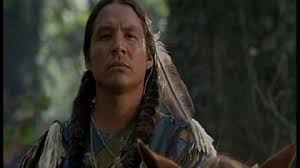
This new story, She Steals My Breath, was inspired by the passing of a good friend of mine and my husband’s — Native American Actor, Steve Reevis.  Because he is Blackfeet, this took my story line to Montana, of course.  But, a couple of years ago, I had visited my Blackfeet sister on the reservation and she mentioned they’d had eight feet of snow that winter.

Eight feet!  Wow!

And then I realized that, although I’ve written books about the Blackfeet before, they were always set in the summer, and yet where the Blackfeet are in Montana, they have long winters and often there are blizzards and squalls, much snow and below zero temperatures.  There is a book I was reading recently entitled, “Yellow Wolf, His Own Story,” by L. V. McWhorter and in that story Yellow Wolf makes the point that even hardy men, used to the weather changes in the northern regions could freeze in a matter of minutes if they weren’t prepared for it.

And so, I decided to set a Blackfeet tale in the winter months in Montana.  By the way, the picture here to the left is Steve Reevis in the Movie, The Last of the Dogmen.

This recent book, She Steals my Breath, is book #1 in the Medicine Man series.  This is a bit of a different kind of story for me since this series lends itself into going a little deeper into the customs and mores of the Blackfeet and in particular the medicine men.  I have to admit that I have a lot to learn about these men, who were trusted by their people to help them through hard times.  And, one of the things I found that has fascinated me is that they realized their ethics had to be without fault, because if they were to go down the path of darkness even a little or black magic (so to speak), they would lose their ability to help and perhaps to heal the people who came to them for help.  Their code of ethics was strict.  It had to be and they felt such an obligation to their people, few ever stepped off this moral and ethical high ground.

Here is a fact I had little knowledge of prior to my study:  The Medicine Men had many rituals that weren’t really about magic, but were rituals to enable them to become like a “hollow bone,” so the Creator (God) could work through them.  This comes to me from the book, Fools Crow by Thomas E. Mails.  In writing about the medicine men, I am realizing more and more that I’ve had a rather false idea of them due to Hollywood movies.  I have always realized Hollywood’s depiction of the Indian warrior was not a true image, but I hadn’t taken into account that their depiction of the medicine man might also be one which is very far from the truth.  I am still learning.

I’m going to leave you with an interview recently done with me about this book, SHE STEALS MY BREATH, and then I thought I’d share an excerpt of the book with you.  Would love to hear your thoughts and ideas about this, about the interview, the medicine men or the excerpt or anything else you’d like to say or ask.  So, without further ado, here at the start is this short interview:

What’s the story behind the story? What inspired you to write She Steals My Breath?

Lately, I’ve been at a point in my life where I really wanted a story where the hero was, indeed, a very muscular and handsome hero, but also a very kind hero. The Native American Medicine Man could be such a person. If the man were to be a true medicine man, he understood his power came from God, or whatever it was in his own language that he called God. Because of this, they had to adhere to a very strict code of ethics, and part of that code was kindness.

If you had to pick theme songs for the main characters of She Steals My Breath, what would they be?

“You Raise Me Up.”

What’s your favorite genre to read? Is it the same as your favorite genre to write?

Romance to both questions. I enjoy all sub-genres of Romance. But, my heart is particularly drawn to Historical, Native American, Romance.

What books are on your TBR pile right now?

Adolf Hungry Wolf; and “Blackfeet Tales of Glacier National Park,” by James Willard Schultz

What scene in your book was your favorite to write?

I think the very beginning scene in chapter one, where the hero and heroine first meet each other and speak to each other in sign language.

Do you have any quirky writing habits? (lucky mugs, cats on laps, etc.)

Not really, although I might take this as a suggestion and try to adopt some training pattern of one kind or another.

Do you have a motto, quote, or philosophy you live by?

Upon thinking about this, perhaps it might be that the real path to spiritual enlightenment is a very narrow path. One would do well to read about the philosophy of the Lakota Medicine Man, Fools Crow, and that one has to be strong to resist the temptation to commit an evil act.

If you could choose one thing for readers to remember after reading your book, what would it be?

Again, I had to ponder this for a bit. And I think it might be this: that there was, and still is, a lot to be learned about these ways of life that might be passing away under the thrust of “civilization.”


Karen Kay is the author of the new book She Steals My Breath

Connect with Karen Kay

Author Site

Facebook

Buy The Book


B09TNDS67H cover image

And now, I’d like to leave this post with an excerpt from the book:

SHE STEALS MY BREATH, by Karen Kay

Eagle Heart was honestly worried, and, to counter this, he reached out into the environment, looking for She-steals-my-breath in the age-old manner of communication known and practiced by and between medicine men, as well as the Indian scout.  Was she still alive?

He could no longer check his path for accuracy.  The snow was too thick and spinning about the ground, and he could not see even a few hand lengths in front of him.  There was now danger of losing his direction, as well.  But, he wouldn’t be turned away.  No woman as beautiful as she should be made to die because her man did not understand the dangers of this land.

He reached out to her with his mind until he thought he’d found her, then said to her in the ancient way of medicine men, “I am coming for you.  You must talk back to me with your mind so I can locate where you are.  The snow is too dense, and I could lose my way.  Can you speak to me with your mind so I can find you?”

“Yes,” came her response.

With relief, he let out a deep breath.  She had heard him and had even spoken back.  He reached out again with his mind and said, “It is I, Eagle Heart, from the Pikuni tribe.  Are you cold?”

“Yes.  My fingers are frozen, I fear.”

“Are you hurt?”

“Yes,” she answered with her mind.  “I can’t move my right leg and my right arm.  I fell upon them.  My spine is hurt, too, I think.  Maybe it’s broken, for the agony in my spine when I try to move is very painful.”

“I understand.  You must remain warm, for the blizzard is coming upon us fast.  I am going to see if there are wolves close to you who might come and surround you to keep you warm until I can get to you.”

“Wolves?  I’m afraid of wolves.”

“You will not be afraid of these.  I will try to find them and speak to them so they can come to you.  If I locate them, they will help you and keep you from freezing.  Do not be afraid of them.”

“But, how can you do this?” she asked.  “Talk to wolves?”

“I am speaking to you this way.  I can also speak thusly to the wolves.  I will send them to you.  Do not be afraid of them.”

The communication between them stopped, and, quickly, he reached out to her again and said, using the same ancient manner of communication, “You must keep talking to me with your mind even if I do not answer, for I am also seeking to find the wolves.  Wait!  I have found them.  They are close and will come to help you.  Let them keep you warm.”

“I will try,” she silently spoke back to him.  “If I am to continue talking to you, as you say, what shall I tell you?  I know not how to help you find me, and I am afraid for my life because I am so cold.  Is there something else I could talk to you about to keep my mind off my fear?”

“Tell me about yourself.  Why are you here?  Are you in love with the man you are to marry?”

He sensed she might have found a little humor in his question.  This was good.  If she could laugh—even a little—perhaps she wouldn’t center all her attention on her fear.

She silently spoke again in the mind-to-mind speak and said, “My name is Laylah McIntosh, and I have come here to help my father and also to marry the man I am engaged to.”

“Do you love him?”

“Why do you ask?”

“It matters.”

“Then I will tell you honestly,” she told him, “that I don’t know if I love him or not.  I have believed I am in love with him, but recently I am beginning to experience doubts.”

“How old are you?”

“I am eighteen years old.  How old are you?”

“I am twenty and four snows.”

“Snows?  Do you mean years?”

“Yes.”

“Mr. Eagle Heart, the wolves are here.  I am afraid of them.”

“Do not be.  Let them lie next to you.  They have answered my plea and are there to help you.  You are close to me now.  I have found the coulee, for I almost fell into it when I dismounted from my horse.”

“Are you certain it is the coulee I am in?”

“Yes.  The snow here is already deep.  I do not wish my horses to lose their footing, so they and I must climb down to you slowly, one step after another.”

“I understand.  Should I keep talking to you with my mind?”

“Yes.”

It was a slow, tortuous climb down the incline.  But, at last, he and his ponies managed to step onto a more level ground and he found her lying there before him.  Indeed, he almost stepped on one of the wolves who had come to surround her.  He then said to her with his mind only, “I am here, but you must continue to speak to me silently and with your mind, for I must construct a shelter for us.  Do not let yourself sleep.  Stay awake.”

“Very well.  Should I continue to talk, then?”

“Yes.  Can you see me?”

“No.  The swirling of the snow is too thick.”

“I am going to bend down toward you.  Do not fear me.  I am going to feel your body for injury.  I shall try to touch your arm, your leg and your spine.”

So saying, he bent toward her while the wind blew the snow around them.  Reaching out to her, he felt underneath the blankets placed over her and ran his hands along her right arm and right leg.  He said in Blackfeet, “I believe both your arm and your leg might be broken.  I cannot feel your spine at this moment.  I will need to move you carefully into a shelter, where I can determine if you have broken bones or if your muscles are merely strained.”

“I don’t understand you,” she said in English, but he was aware of the concept of what she said anyway.

He nodded, then realized the snow was so thick, she couldn’t see the movement.  He repeated his words, but with the mind-to-mind talk only.  Then he told her, “I must make us a shelter and a travois so I can move you without further injury.  Do you understand?”

“I do.”

“I have a warm buffalo robe to place over you to keep you as warm as possible.  Stay close to the wolves and allow them to share the robe while I make a shelter and a travois to carry you. You have only to reach out to me with your mind if you need me.  Thank you, my friends.  My family.  Please stay with her a little while longer.  And, even when the storm passes, please stay close to me if you can.  I might need your help again.”

Only then did he rise to his feet, and he soon left to build a shelter that might keep them warm against the storm.  And, it had to be quickly done.

CHAPTER THREE

Laylah felt a little warmer, but she was still very cold.  It seemed as if the temperature had dipped even further, causing her to wonder if the air in the canyon was well below freezing.  She couldn’t feel her fingers anymore and her toes were now following the same pattern as her fingers.

With her mind, she reached out to Eagle Heart and said, “I believe I am freezing to death.”

He didn’t answer.  Was he still there?  She panicked.  “Eagle Heart, are you still here?” she yelled out in English.

“I have not left you,” he answered without words.  “I must secure a shelter.  Keep awake.  Do not freeze.  It will be ready soon.  Instead of the cold and snow, think of a fire and how warm you are as you sit beside it.”

“I will try.”

The communication dropped then between them, and she felt so sleepy of a sudden, she could barely keep her eyes open.  But, she tried to envision a fire and its warmth.

She wasn’t aware how long it was before she felt him beside her again.  Carefully, and yet with manly strength, she could feel him lifting her onto some contraption that she thought must be made out of wood, for she could feel some of its branches beneath her.  Then, she was aware they were moving through the spinning, heavily-falling snow.

But soon, a particular kind of tiredness closed in upon her.

“Do not sleep,” he said, using his mind only.

“I must.”

“No, do not do it.  We are almost at the shelter.  Keep awake.  Speak to me, either with your mind or words.”

“I can’t.”

“Yes, you can.”

“I tried thinking of the fire.  But, I was so cold, I couldn’t do it any longer.”

“Then, tell me of things you find joy in.”

“Christmas, new clothes.  Fashion.  Strips of cloth I use to curl my hair.  And you.  I am suddenly thinking you bring me joy.”

“You flatter me.  We are here at the shelter at last.  Do not leave me.”

“It’s so hard to keep from sleeping.”

Suddenly, his arms were around her, and she was so cold she didn’t feel the pain when he picked her up.  Soon, he was carrying her into a place of warmth.

He deposited her onto something soft, and, without pausing a moment, he began to rub her hands and then her feet.  It went on and on.  She felt his hands all over her.

Suddenly he was speaking to her in concepts only again.  “Do not be alarmed.  I must remove your clothing, for it is wet and frozen.  I have a warm robe that is not wet, and I will wrap you in it.  I will have to move you a little to remove the clothing from you.  I might have to cut some of your clothing from you.”

She didn’t answer.  It was beyond her.

Again, with his mind alone, he said, “Talk to me.”  When she didn’t answer, she heard him speak to her in his own language.  She tried to communicate back to him, but found she couldn’t and so remained silent.

However, she held on to the sound of his voice, afraid to sleep for fear she might not wake up.  There was a quality about his words she found beautiful, and she responded to his voice and to him, refusing to give in to the darkness.  Indeed, it was as though with his touch and his voice alone, he was keeping her alive and conscious.

She felt him pick her up and wrap her in something very warm, and, as she settled back into its heat and against her bed, sleep claimed her at last.

************************************************************************
Well, that’s all for today.  Don’t forget to come on in and leave a comment.


Guest Linda Shenton Matchett – Law Enforcement in the Old West

Photo credit: Pixababy/ArtTower

I settled on Gunnison, Colorado as the setting for my upcoming release, Ellie’s Escape. I’ve been fascinated with the state since visiting on business many years ago. The rugged mountains, deep canyons, and expansive vistas captivated me, and when I discovered that my boss is from Crested Butte (the next town over), I knew I had my location. He shared lots of photos and information that only a “local” would be privy to.

The premise for Ellie’s story is that she is an eye witness to a bank robbery and can identify the thieves. Frightened for her life, she decides to leave the area and agrees to become a mail-order bride. I knew very little about law enforcement in the Old West, so dug into my research with gusto.

Most folks think a constant stream of gun duels, shootouts, hangings, and chasing stage and train robbers made up the typical career of a lawman in the Old West, but in reality most of their work involved mundane and routine tasks such as collecting taxes, ensuring licenses were current, preventing the illegal sale of liquor, checking that businesses were locked up tight after hours, cleaning the streets, and keeping order in the saloons, gambling sites, or other entertainment venues.

Photo credit: Pixabay/Prawny

Sheriffs and marshals were the two main types of lawmen. U.S. Marshals have been appointed by the U.S. Marshal Service since its inception in 1789. They are not elected, and as federal employees their jurisdiction extends beyond county lines, often working with an assigned territory. Prior to 1896 when they were put on salary, marshals worked on a fee system, collecting set amounts for performing certain tasks. Between 1790 and 1870, marshals were responsible for taking the census every ten years. Up until 1861 when Congress created the Department of Justice, they reported to the Secretary of State.

Town marshals were elected or appointed depending on town laws and worked strictly within town limits. Towns and counties were also served by sheriffs (again depending on their laws). Privileges and responsibilities varied widely by territory and state. Most hired their own deputies and only rounded up a posse when necessary. In states that have not expressly repealed it by statute, forming a posse is still legal. Additionally, in some places the sheriff had the authority to carry out death sentences, most frequently by hanging.

The majority of lawmen were good and honest people, performing their jobs to the best of their abilities. Others were dependable only when wearing their badge, but lived outside the law during their off-hours. Still others were evil, using their powers and authority to break the law.

Photo credit: Pixabay/ddzphoto

A fun tidbit I unearthed is that famous marshal Wyatt Earp spent the winter of 1882-1883 in Gunnison. His cohorts Warren Earl, Doc Holliday, Texas George, and Big Tip were with him, all well-armed with a team of mules and entire camp outfit. Earp is said to have run the faro bank at one of the local saloons. Described as a fine-looking man, Earp had a drooping mustache that curled at the ends.

Gunnison “busted” shortly after that year, losing nearly half its population. The ore deposits had been exaggerated, with most mines producing low amounts and quickly running dry. Those who remained soon turned to cattle, ranching, and timber.

What areas of the Old West, if any, have you visited or lived in? I WILL GIVE AWAY AN EBOOK EDITION OF ELLIE’S ESCAPE TO ONE RANDOMLY SELECTED COMMENTER.


Ellie’s Escape

She’s running for her life. He needs a trophy wife. They didn’t count on falling in love.


Ellie Wagner is fine being a spinster school teacher. Then she witnesses a bank hold up and can identify the bandits. Fellow robbery victim Milly Crenshaw happens to run the Westward Home & Hearts Matrimonial Agency so she arranges for Ellie to head West as a mail-order bride. But her groom only wants a business arrangement. Can she survive a loveless marriage?


Banker Julian Sheffield is more comfortable with numbers than with people, but he’s done well for himself. Then the bank president tells him that in order to advance further he must marry in six weeks’ time. The candid, unsophisticated woman sent by the agency is nothing like he expected, but time is running out. When her past comes calling, does he have what it takes to ensure their future?


Purchase HERE 

Linda Shenton Matchett is an author, speaker, and history geek. She writes about ordinary people who did extraordinary things in days gone by. Her books are regularly praised for their accuracy and realism. A volunteer docent and archivist for the Wright Museum of WWII, Linda is also a trustee for her local public library.

She was born a stone’s throw from Fort McHenry in Baltimore, Maryland and has lived in historic places all her life. Now located in central New Hampshire, Linda’s favorite activities include exploring historic sites and immersing herself in the imaginary worlds created by other authors.

Joined by a Fence

It’s a fact that communication on a large ranch was one of the biggest problems. At times it was crucial to get some way to relay information to the cowboys on the range as quickly as possible. Or for them to notify headquarters in the event of a medical emergency or wildfire. Before the late 1800s, it was done by sending a fast rider out.

I found an interesting article in my Texas Electric Co-op magazine about this and have to share.

One of the largest ranches in the world was the massive XIT in the Texas Panhandle at over three million acres, all fenced. That’s hard to fathom. The powers that be there heard about a way of attaching a very basic form of telephone onto the barbed wire fences and letting the wire carry the transmission. Though the quality was horrible, it sure proved to be a blessing. And all at no charge. They didn’t have to pay the phone service anything and they could even connect neighboring ranches with each other.

Later, when the phone company began to provide rural service, they took that idea and used existing power lines instead of stringing new.

I have a new release on March 29th—A Man of Legend. It takes place in 1908 in the middle of an industrialization boom and although the patriarch Stoker Legend wouldn’t allow telephones or automobiles on the Lone Star Ranch, they were widely available.

There’s a crucial scene near the end of the book where Crockett Legend needs to get word quickly to his grandfather of the trouble and bemoans the lack of telephone access. It all works out and Crockett had to hitch a ride in an acquaintance’s new automobile to arrive in time to help save the day.

Here’s a short excerpt from that scene:

Crockett glanced up into John’s laughing eyes. The only person the man would do a favor like this for was Farrel Mahone. His gut twisted, and he broke out in a cold sweat. Suddenly, it all made sense. John was supposed to get Crockett off the ranch. He froze.

Farrel was going to make good on his promise to kill either Paisley or Hilda or both.

Or maybe he intended to abduct Tye. Maybe all three. 

Crockett stood so fast, he knocked his chair over. He had to get to a telegraph. He hurried out and collided with a woman in the hall. “Pardon me, ma’am. This is life and death.”

Cursing the fact that Stoker had yet to install a telephone at headquarters, Crockett rushed down the street and sent a message to the Lone Star.

“I’ll wait for a reply,” he told the operator. Ten minutes passed. Crockett paced, praying for a miracle. Then the machine began to tap while the man scribbled it down.

“Here you go.” The operator handed the paper to him.

Too late. Boy has disappeared, and women riding to get him back.

A moment later, Crockett fired off another, asking about his dad. The return message said he and Stoker had gone to Medicine Springs to pick up a shipment.

He sagged. Too late. He read the first message again. What women? Paisley and Hilda? Where were the men? Had they all left the ranch? He thrust a hand through his hair. He had to get home.

“Isn’t there a noon train to Medicine Springs?” he asked the operator.

“Not today.”

“Thank you.” Crockett‘s thoughts whirled. He couldn’t wait that long. He was eighty miles away. If he bought a horse and rode it hard, he still wouldn’t make it by dark. He’d have to wait on the train. That would get him to Medicine Springs by eight, then forty-five minutes to the ranch.

That was it. All the air went out of him. Whatever was going on, the women were on their own. He dropped into the nearest seat and put his head in his hands.

* * * *

I put a talking parrot named Casanova in this book that provides a lot of comical relief. He is quite taken with Paisley Mahone and fancies himself her boyfriend. And since Paisley becomes a nurse on the ranch, there are heartwarming scenes with her patients. Crockett watches all with love in his heart for this special woman.

Click HERE for more information and a longer excerpt.

This is the first series I’ve written set in the 1900s. What is your favorite time period to read? Do modern conveniences bother you? I’m giving away a copy of A Man of Legend (print or ebook) to three people who comment.

This book concludes the Lone Star Legends. I have another exciting project that’s completely different that I’ll talk more about in the coming days so stay tuned.