Whittled, Woven, and Wrapped in Western Love

The Fillies welcome Laura Ashwood and her fun post about handmade Christmas gifts in time’s past. Don’t miss her giveaway further down. 

Whittled, Woven, and Wrapped in Western Love

Can you feel it? That crispness in the air that whispers of winter and the festive times just around the corner. It’s got me all wrapped up in thoughts of those simple, heartfelt holidays of yesteryear. You know, the kind where every gift had a touch of personal charm because it was made by hand, with love woven into every fiber and stitch, along with a sprinkle of family tradition. Let’s take a moment to appreciate the art of homemade gifts that might have been crafted by the characters we adore.

Picture a cozy homestead, the fireplace crackling as a family gathers to celebrate the season. There, on the mantle, rests a hand-quilted throw, each patch a different color, each thread a different memory. Quilting was more than a pastime; it was a way to tell a story, a way to keep a family’s history alive. A mother might have spent months stitching together a quilt for her daughter or daughter-in-law – a symbol of her love and prayers for warmth and comfort in the years to come.

In the kitchen, the scent of cinnamon and sugar mingles with the earthy smell of pine. Jars of preserves line the shelves, each one filled with the fruits of summer’s labor. These jars are not just food; they’re a reminder of sunny days and the laughter that echoed through the fields as families worked side by side. Gifting a jar of homemade jam or pickles was like sharing a piece of the summer gone by, a sweet taste of the past to savor during the long winter months.

And how about the simple yet profound act of candle making? In a time when electric lights were a novelty, candles were a necessity. Making candles from beeswax or tallow was a way to ensure that the light of the family’s love would continue to shine, even on the darkest nights.

Not all gifts were practical, of course. Some were purely for the joy they brought. A father might whittle a small toy for his child, creating it from a piece of wood with his own hands, imagining the smile it would bring to his little one’s face. Or a young man might pen a poem for the girl who had captured his heart, pouring his feelings onto the page in the hope that his words might convey what he may not have had the courage to speak out loud.

In those times, every gift told a story, every gift was a prayer. They were tokens of affection, crafted not just with hands but with hearts full of love and hope. As we look for ways to share our love with those dear to us this holiday season, perhaps we can take inspiration from the past. Maybe we can find joy in the simple act of creating something with our own hands, something that says, “I love you,” in a way that words or a store-bought gift never could.

In my own book, A Groom for Ruby, Ruby has opened her heart and home to an orphaned child name Everett. Everett has never experienced the joys of Christmas. As Ruby shares As Ruby shares Bible stories with him, Everett becomes captivated by the tale of Noah’s ark. Moved by Everett’s wonder, Cullen, with skilled hands and a generous heart, crafts a miniature ark complete with hand-whittled animals, creating not just a gift, but a cherished memory.

I’d love to give one of you a signed paperback copy of A Groom for Ruby. Simply leave a comment and tell me the most memorable gift you have either made or received. I can’t wait to hear your stories.


Buy link: https://www.amazon.com/dp/B08S6YBQPM?tag=pettpist-20/

Website: http://www.lauraashwood.com

Pets in the Wild West: More Than Just Man’s Best Friend–by Laura Ashwood

Hello everyone! I’m thrilled to be here as a guest blogger today. My name is Laura Ashwood, and I’m a USA Today bestselling and award-winning author of Christian historical western romance, small town contemporary romance and women’s fiction. I’ve always been fascinated by the rich tapestry of the past and how it intertwines with our present, including when it comes to our relationships with our beloved pets. I’m excited to share some insights with you today about the role of pets in the 19th century, inspired by my own heartwarming historical romance, A Groom for Violet.

Now, you might be thinking, “Pets? In the Wild West?” Yep, you heard that right. Back in the day, pets weren’t just for the aristocrats in their fancy houses. Nope, even in the rough and tumble world of the Wild West, folks found comfort and companionship in their furry friends.

In fact, it was during the Victorian era that people really started to see pets in a new light. Instead of just being useful for hunting or guarding the homestead, pets started to become part of the family. They were there to lend a listening ear after a long day, to provide a sense of comfort in times of hardship, and to teach kids about responsibility and care.

But let’s not sugarcoat it – being a pet parent back then was a different ballgame. There weren’t 24/7 vet clinics or pet wellness plans like we have today, and pet owners often had to rely on home remedies to treat their pets’ ailments if a veterinarian couldn’t be found. When Daisy, the beloved dog of our heroine in A Groom for Violet suffers an injury, Violet was lucky as a local veterinarian is available to come to come and assist. It’s a reminder that even in the rough and tumble world of the Wild West, there were folks dedicated to the care and well-being of animals. And that’s what love is all about, right?

And it wasn’t just dogs that were popular. From wild birds to rabbits, and even exotic pets like parrots and monkeys, Victorians had a wide range of pets. Each of these animals, in their own way, contributed to the rich tapestry of life in the 19th century.

Interestingly, pets also found their way into the literature of the time. In fact, there were even “diaries” that were written from the perspective of pets, providing a humorous take on their daily lives and adventures. These stories offered a unique insight into the secret lives of pets, and how they might view the world around them.

Portrait of a Maltese dog in winter outdoors

Cats, in particular, were just beginning to be seen as household pets. While they were often compared to dogs, cats were seen as having a particular affinity for the home, and became associated with the household, and by extension, women. Conversely, dogs were known to travel outside with their owners, tagging along for masculine activities like hunting.

In A Groom for Violet, we see the profound impact that a pet can have on a person’s life. Daisy is not just a pet to Violet; she is a friend, a companion, and a link to her past. This relationship underscores the important role that pets played in the 19th century and continues to play today.

Click cover to order.

What do you think are some of the biggest differences between pet ownership in the 19th century and today?

I’d love to give away a free eBook copy of A Groom for Violet to one lucky commenter. Share your thoughts on this blog post, answer the question above, or simply tell me about your own beloved pet. I’ll randomly select a winner from the comments. Good luck!

XO, Laura

Laura Ashwood Adds Fact to Fiction

Hi, I’m Laura Ashwood and I’m honored to be guest blogging here today. I write sweet historical western romance, contemporary small town romance and women’s fiction. Something for everyone, LOL. Today though, I’d like to talk about one of my historical western romances.

One of my favorite things about being an author is having a reason to research and a place to use that information. But that doesn’t come without its own challenges either. Too little research will upset readers familiar with a time period, and too much research can take readers out of your story. It’s a delicate balance.

So, where does one start? When I write a story, I generally have a location in mind. It might be a specific location or it might be as general as simply knowing what state I want it to be set in. Once I know that, I’ll spend some time looking at the location. The topography, the average weather – if it’s a historical book, I’ll look at the averages and topography from the year I am setting the story.

Courting Danger is a historical western suspense that starts in St. Paul, Minnesota in 1873. I knew my character, Clarissa, came from a wealthy family, that she was an only child, and that her parents (her mother in particular) wanted her to marry “up” to help further cement their place in society. Very common practices during that time period.  Clarissa didn’t want to have anything to do with it though. My research told me that the suffragette movement was strong at that time and she was a well-read young lady. She wanted to make her own way.

During that time frame, the Pinkerton Detective Agency was in its prime – solving crimes across the nation and had even started taking on female agents. The first official female Pinkerton agent was Kate Warne. So I did come research about Kate and some of the cases she worked on. So, I had Clarissa find an advertisement from the Pinkerton Agency in the newspaper – looking for female agents. She immediately replied and was chosen to work a case in St. Louis, Missouri. This case was modeled after one of Kate Warne’s cases. I used several of the details of the actual case, but added my own twists to make it original.

So because a great deal of the story was set in St. Louis, I wanted to incorporate as much “fact” into it as I could. The first thing I looked for was a City Directory. Think of it as a phone book before there were phones. The City Directory gave me names of stores, hotels, even characters. The names of the nurse, the undertaker, and the Chief of Police in my story were taken from this directory as the actual undertaker, nurse and Chief of Police in St. Louis in 1873.

The hotel Clarissa stays in while she’s in St. Louis, The Planter’s House Hotel, was an actual hotel in 1873. Because it actually existed in 1873, I was able to find photographs of it and that helped me describe it as though I was actually there, including the famed Turkish Lounge.

St. Louis is famous for its Eads Bridge and Gateway Arch, but through my research, I discovered that the construction on the Eads Bridge wasn’t completed until 1874 and the Arch wasn’t constructed until the 1960s. So, when Clarissa saw the bridge at one point in her adventure, I made sure to mention it was under construction. I also consulted a city map of St. Louis when determining what to name my streets and neighborhoods my characters visited. They were all authentic to that time.

How important is all of this? Will my readers know this? The answer to both of those questions is probably no. Those details will not make or break my story. But they’re Easter Eggs I’ve sprinkled throughout and they make the story come alive for me because I know Clarissa is seeing the actual things she’d see if she were alive and in St. Louis in 1873. Plus, it’s a lot of fun.

If you’d like to read about Clarissa’s adventure as a Pinkerton Detective in training, you can find it on Amazon, both in paperback and ebook. (buy link: https://www.amazon.com/gp/product/B09TJTSVFZ?tag=pettpist-20)  It’s also available in Kindle Unlimited.

I’d also love to give away three copies (ebook only) of Courting Danger – Just answer the question “how much does historical accuracy and detail mean to you when reading a book?” in the comments below. Three random winners will be announced on Sunday.

Laura is giving away 3 e-book copies of Courting Danger

Courting Danger

She thought the biggest danger would be to her reputation. She didn’t realize it would be to her life and her heart.

Clarissa Ferguson craves a life of adventure. The last thing she wants is to become a socialite and marry a curmudgeon to appease her mother. When she sees an advertisement for female Pinkerton Agents, she leaves on the next available train to Denver Colorado. What she doesn’t expect is the handsome man she meets on the train to be her new trainer.

Noah Harding, recovering from the loss of his wife and family, vows never to marry again. Throwing himself into his work as a Pinkerton agent, he has finally found a sense of purpose. He prides himself on being able to read people, until he observes a peculiar woman on a train headed west. He soon discovers she’s his new trainee, and he must temporarily wed her while they solve a murder, or he’ll jeopardize his career.

Will Noah be able to stay focused on the case with Clarissa distracting him? When the case forces them to pretend to be something they aren’t, what happens when their feelings become real?

* * * *

ABOUT LAURA……

Laura and her husband live in northeast Minnesota. She works a full time day job, and in her spare time, she likes to read, cook and spend time with her husband. She is a devoted grandmother and chihuahua lover.

In her novels, Laura brings to life characters and relationships that will warm your heart and fill you with hope. Her stories often have themes involving redemption, forgiveness, and family.

Laura’s website: https://www.lauraashwood.com 


Welcome Laura Ashwood and a Give Away!

Hi Everyone! My name is Laura Ashwood and I’m writing to you from the chilly state of Minnesota. Having grown up in North Dakota/Minnesota I am no stranger to the occasional winter blizzard, but I’ve thankfully never been through anything like the Schoolhouse Blizzard of 1888.

In January, 1888, a massive cold air mass with a spread of over 780 miles, moved into the United States from Canada. The temperature on the front end of the cold front in some places dropped from above freezing to -20°F in just hours. The storm was extremely fast moving. It entered Montana in the early morning hours of January 12, swept through Dakota Territory and was in Nebraska by mid-afternoon of that same day. Because of the warm spell preceding the storm and the swiftness with which it moved, most people were ill prepared. In just minutes, the strong winds and powdery snow made for zero visibility. The combination of bitter cold temperatures and high winds resulted in a death toll of 235. 

Another massive blizzard struck Easter Sunday, April 13, 1873, which began as a pleasant day in southeast Nebraska. That afternoon, rain moved in and temperatures began to drop. During the night, the wind picked up and by morning eighteen inches of heavy, wet snow had fallen. The storm raged for two more days, finally abating on Wednesday, April 17. Drifts as high as 20 feet had accumulated in some areas. Many people perished, including a woman with an infant that died just feet from her home, along with thousands of head of livestock.
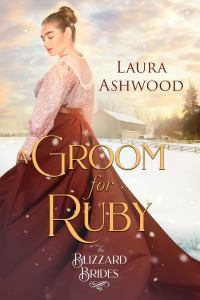
So, why am I telling you about blizzards that happened over one hundred years ago? It’s because I’m part of a multi-author series called The Blizzard Brides. This series is loosely based on both of those blizzards. What happens when nearly all the men in town get killed during a blizzard? What are the women to do? This group of talented authors takes that question to task, each story following the journey of one of the women as she begins to rebuild her life.

This is my second historical romance. One of the things I strive for when I write historical is to make sure that I get as much accurate detail for the time period as I can. In my story, A Groom for Ruby, Cullen Parker has a dark past before he ends up in Last Chance. I got to research such things as train robberies, stagecoach robberies, gold mines, and place like Dodge City and San Francisco. Much of that research doesn’t make it into the book, but I love being able to work in some of that information.

In this book, Cullen is making his way back to Dakota Territory, hoping to get a job at the Homestake Mine in Lead. The Homestake Mine was a real working gold mine during that time period. It was actually the largest, deepest mine of its type in the United States. It was operational until 2001, and two of my uncles worked there in 1950’s and 1960s. So, not only did I get to add a bit of reality to my fiction – I was able to make it personal.

Do you like it when authors do little things like that? Do you want to know about it?

I’d love to give away a copy of A Groom for Ruby, as well as a copy of my first historical, An Agent for Clarissa, which is part of the Pinkerton Matchmaker series.

Please stop by my website, and if you sign up for my newsletter, you’ll get a free copy of Snowflakes & Second Chances, a contemporary novelette. I’d love to connect with you on Facebook or Instagram, and you can find inspiration boards for all my books on my Pinterest.


Buy A Groom for Ruby on AMAZON