Welcome Guest – Nerys Leigh!!!

MARRIAGE, CONSENT, AND MAIL ORDER BRIDES
by Nerys Leigh

The issue of consent is very much a hot topic these days, and I think we would all agree that forcing one’s attentions on someone without their consent is wrong. But what about back in the nineteenth century, between a husband and wife? What was a mail order bride to do who had just married a man she didn’t know?

So far in my Escape to the West series, the issue hasn’t come up, with my brides for one reason or another not having to face the prospect of intimacy with a man they’ve only just met. But in More Than Gold, the sixth book in the series, all Gabriel wants is a woman to cook, clean, and warm his bed. In his world, people get married for practical purposes and nothing more. His new wife, however, has different ideas. Despite being forced to travel across the country to marry a man she’s never met, Grace refuses to give up on her dream of being loved and cared for.
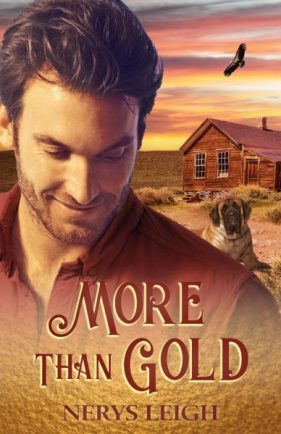
So when Gabriel makes his move barely three hours after she arrives, he doesn’t get the response he’s expecting!

Excerpt from “More Than Gold” by Nerys Leigh.

Gabriel rose and walked across the room to her, stopping just a foot away when she turned around.

“You’re a real handsome woman, Grace,” he said, sliding his hands around her waist and leaning in for their first kiss.

A fist slammed into the side of his face, whipping his head round and sending him reeling backwards.

She grabbed a skillet from the cupboard and held it in front of her like a weapon. “What are you doing?!”

He shook his head to clear it. The woman had a right hook most men would have been proud of. “What do you think I’m doing? We’re married. We’re going to do what married folks do.”

It was a perfectly natural assumption, as far as he was concerned.

But not for her, apparently. “We’ve known each other for less than three hours and you expect me to just allow you to have your way with me?”

What was going on here? “Uh… yes?”

She gasped in a horrified breath. “You… you… uncouth brute!”

He was fairly sure uncouth was a bad thing.

Drawing himself up, he pointed his finger at her. “Now wait just a minute. We’re legally wed. It’s not like you’ll be whoring yourself out to me. I’m your husband.”

Her eyes looked like they could pop right out of her head. “Whoring?!”

It may have been a poor choice of words.

He raised both hands, palms out in surrender. “That ain’t what I meant. I’m just saying that it’s natural for a husband and wife to want to…”

“Well I don’t want to, so you keep your hands to yourself!” She brandished the pan, forcing him to step back.

He rubbed at his aching face. If she could do that with just her fist, no telling what kind of damage she could do with a skillet.

He decided to try reasoning with her, from a safe distance. “I know we haven’t been together for long, but we’d been writing letters to each other for nigh on three months before you came. I reckon we know each other plenty. I promise I’ll be real gentle and…”

“You won’t be gentle. You won’t be anything.” She waved the skillet. “Because it isn’t happening!”

So what do you think? Is intimacy simply a matter of being married? Or is it something deeper, coming out of the kind of love, care and respect that will last a lifetime?


Comment your thoughts below for the chance to win an ebook of your choice from my Escape to the West series!

Halloween, Ghost Stories, and Weddings! What? Weddings?


Yup, you read that right.  How do I get from the first two to the later? It’s easy when the wedding is in Estes Park, Colorado, at The Stanley Hotel, the famed inspiration for Stephen King’s The Shining.

First a little history. Freelan Oscar Stanley and his wife Flora, missing the east’s grandeur, opened The Stanley Hotel complete with electric lights, telephones, en suite bathrooms, uniformed staff and a fleet of automobiles in 1909 among the Rocky Mountains in Estes Park, Colorado. However, by the 1970’s the hotel’s splendor had faded, and it might have been demolished if not for Stephen King.

The famed author stayed in Room 217 and a dream here inspired The Shining. The room is thought to be haunted by Elizabeth Wilson. Injured in 1911 in an explosion lighting lanterns in Room 217, when recovered, Mrs. Wilson became head chambermaid and worked at the hotel until her death. Since then, guests have reported luggage being unpacked (now this I’d appreciate ?) and lights being turned on and off. Mrs. Wilson, not a fan of unmarried couples sharing the room, has been known to show her displeasure by climbing into bed between them!

The Concert Hall is another room frequented by otherworldly inhabitants including Flora Stanley. When the hotel opened, F.O. presented Flora with a Steinway Grand Piano. Since her passing, guests and staff claim Flora can still be heard playing. Paul, a jack-of-all trades at the hotel, enjoys frequenting this room as well. Charged with enforcing the hotel’s curfew during his tenure, guests and workers claim Paul can be heard saying “get out” after hours. He’s also said to “nudge” construction workers and flicker flashlights for tour groups here.

On the hotel’s fourth floor, originally a cavernous attic where female staff, nannies and children stayed, guests report hearing children running, laughing, giggling and playing. People also claim a certain closet opens and closes on its own. In room 428, guests report footsteps and furniture being moved above them. However, many claim this impossible due to the roof’s slope. But the room’s most frequent ghostly visitor is a “friendly cowboy” appearing by the bed. Now that’s the room for me! What a great opportunity for hero research!

These are a small sample of the ghost stories associated with The Stanley Hotel. If you’re interested in more tales, I recommend Ghost Stories of the Estes Valley Volumes 1 and 2 by Celeste Lasky. (I purchased mine at The Stanley but they’re available on Amazon.)

If you visit Estes Park, maybe you’ll be inspired as I was. That’s where the idea for my first novel sold to Harlequin, Big City Cowboy, literally walked up to me. But that’s a story for another blog…

If you stay at The Stanley Hotel, could you’ll encounter F.O. Stanley hovering behind his staff at the reception desk. ? If you do, keep these tips from tripsavvy.com on how to capture ghosts on camera in mind. “Take five or six quick shots to capture a fleeting spirit. Oh, and bring up back-up batteries because paranormal experts will tell you if spirits are present, they’ll have a draining effect on your batteries.”

Now it’s your turn. Leave a comment about a place where you’ve encountered a ghost or that’s left you feeling a bit creepy to be entered in my give away. And oh, yes, Happy Halloween!


Tuesday’s Winner — Here we come a wassailing!


Congratulation to my blog winner …

ROSIE!

Rosie, watch for an email from me that will give you instructions

on how to claim your eBook.

Again, congratulations and I hope you enjoy my book.


And, the winner to my question … what is your favorite holiday drink?

Drum roll, please, the winner is Eggnog!

Welcome Guest Author ~ Tina Dee!


Heritage and Legacy – Lessons from Rankin Ranch to an Author

Tina Dee author photo
Tina Dee with Molly


My name is Tina Dee and I write Christian romantic-comedy, both contemporary and historical.
My stories feature heroines with grit, gumption, and grace—and the heroes who fall in love with them. My characters are flawed but loveable.

I love the old west. But what I really love is bits of the old west’s grit, gumption, and grace preserved in today’s world. Dude or guest ranches fascinate me, especially ones that had their beginnings, of some sort, over a hundred years ago.


~ Researching Rankin Ranch ~

I found one such place while researching ranches for my Wildflower Ranch series—a fascinating 31,000-acre place called Rankin Ranch, located in what they describe as a ‘mountain valley deep in the heart of California’s Tehachapi mountains, and at the southern end of the Sequoia National forest.’

Rankin Ranch has all the makings of a great western story—it is a great western story, but I’m not going to retell it, since the Quarter Circle U Rankin Ranch has its own incredible story already shared on their website. I’ll just highlight a few things and invite you over via their link later in this post.

For now, I wanted to share what really pulled me into their story and why their place—their story—is an inspiration for a story I’m writing now (which will be out at the end of the month, called The Bonnets of Rescue Ranch, book 15 in the Whispers in Wyoming series), and why it’s my continued inspiration for my own series called, Short Stories from Wildflower Ranch (Wildflower Ranch, book 1 and Wrangled Into Love, book 2—with more stories to come this year and next).

Overland Team at Rankin Ranch barn

-The Quarter Circle U Rankin Ranch once served as a stage stop for the Overland mail route. The old barn where the teamsters’ horses were tended to is still used today for hay storage.

-The ranch is still run by 4th, 5th, and 6th generation Rankins.

The Rankin Family

For me, the most incredible part of the story comes during the 1950s when the matriarch of the family, Helen—who was newly widowed—had to make a decision about the ranch—to sell it, or to keep it. I invite you to read about the cattle ranch’s rich history here, and then read about its guest ranch history here. I promise you won’t be disappointed.

Helen Rankin

In my stories, I always try to write about women with grit, gumption, and grace who are facing challenges that they feel are beyond them but they find their way to their future and their everyday-romantic-hero by those same virtues. Helen Rankin was an archetype of those very qualities; she was faced with overwhelming challenges that she met head-on, and generations later, the family and the ranch are still thriving.

Here’s a little blurb from my book …


Sometimes love blooms in the places you least expect…

Charlene “Charlie” Evans is ready for a new beginning after a terrible riding accident leaves her unable to compete in the Rodeo World Championship. When she receives a job offer, as foreman for a ranch, she gladly accepts. So what if she sort of passed herself off as a man in order to get the job?

Dan Richards is offered the ranch of his dreams from his terminally ill uncle for a price he can’t refuse. He jumps at the chance to own a ranch he has loved since childhood. However, when he arrives at the place it’s not what he had hoped for, or as he remembered. The ranch is in shambles. With no experience, where does he go from here?

Will Dan and Charlie let God help them find new dreams on Wildflower Ranch?

A Christian romantic-comedy novella.

Thank you for letting me share a bit about my Wildflower Ranch series and where the real-life inspiration for the ranch came from. 

For updates about my stories, I send out a newsletter twice a month with giveaways and other fun stuff. Please feel invited to sign up for my newsletter at Tina Dee Books Newsletter. You can also follow me on Amazon here.

I will be giving away a copy of Wildflower Ranch to three commenters. If you’re not chosen, you can still get the book on Amazon here.

Kathryn’s Winner!

Congratulations!


Thank you to all who stopped by my post yesterday and joined in the conversation!

The name drawn for the giveaway and a copy of A Western Christmas Homecoming is


Hebby Roman! 


Hebby ~ contact me at kathryn at kathryn albright dot com (no spaces)
and let me know if you would like print or ebook!


Researching the 1880’s Newspaper Office


Composing sticks, tympans, and friskets…Oh My! What do these all have in common? 

They are all parts that make up an Old West newspaper office. 

When I decided to write Abigail White’s story as the last addition to The Oak Grove Series, my research into the early newspaper office of the 1880’s took me back to my local “living history village” where I was able to glean information on American small-town newspapers from our local historian and docent. As you can see — it was a foggy, damp, day in early March.

For a town like Oak Grove, situated on the Kansas plains, paper was ordered and arrived on large rolls by wagon or by train. Once delivered, it was cut to the desired size.


Type was made of a composite of cast iron and steel. The most common were Wisconsin type and Hamilton type. Type was stored in type-cases – large drawers with many different sized compartments. The higher or upper case held capital letters. The lower case held… you got it…lower-case type.

The composer stick was the width of the column that would be used in the paper. The one at Midway Village was manufactured in Chicago by the H.B. Rouse Company which was a common national supplier of these devices in the U.S. The type would first be arranged in this and then transferred to a large frame. 

The compositor or typesetter (or in my story – Abigail or her brother, Teddy White) – removes a piece of type from one of the compartments of the type case and places it in the composing stick. Not so difficult until you realize this had to be done working from left to right and bottom to top, placing the letters upside-down! Can you tell what this type says? (Answer at bottom of post.)

Composing Stick ~ Photo by Wilhei [CC BY 3.0] from Wikimedia Commons

The composer stick was the width of the column that would be used in the paper. The one at Midway Village was manufactured in Chicago by the H.B. Rouse Company which was a common national supplier of these devices in the U.S. The type would first be arranged in this and then transferred to a large frame. 

For pictures, the newspaper office would purchase a few etchings from a factory, and then used them in numerous ways. For example – an etching of pine trees to be used at Christmastime or a fancy United States Flag etching to be used on National Holidays such as the Fourth of July. Local companies that used the newspaper for sale announcements would have their own etchings made and supply them to the newspapers to be used frequently over the years.

Printer’s ink was oil-based, thick and tarry. It won’t spill if turned upside down. On cold days, the ink didn’t flow well and would become so thick that it would create a blob on the letters and thus on the paper if used. A blade would be used to scoop it up and spread it on a flat plate. Here you can see the round, disk-like flat plate.

Oak Grove Gazette Printing Press

With the linotypes of the 1870s and 1880s, “printer’s disease” was a danger.  It was contracted by working with lead in the linotype. The workers would absorb the lead through their skin and get lead poisoning. These types of printers were in the larger cities and so I didn’t make mention of it in Christmas With the Outlaw. The plate would be pressed against the letters and then against a piece of paper. A rhythm would start up, and if not very careful, the plate could easily smash fingers. For newspapermen, it was the middle two fingers that most often were smashed or severed.

A “galley proof” or test copy was always made before any further papers were printed. This was to ensure that the type had been set accurately. A piece of type could accidentally be stored in the wrong case and as rapidly as the apprentice had to work, it could end up being placed back into a composing stick. The metal type, being comparably soft, could also become damaged or worn.

A cylinder printing press

Once the galley proof was checked and last-minute corrections were incorporated, the type would be fixed in the frame to ready it for printing.

A rope stretched across the length of the newspaper office so that once printed, pages could be placed over the rope for drying. Once the ink was dry on the “front,” the back side of the paper could then be printed upon.

It was a dirty job and as you’ve read…could be dangerous. The large paper cutters could easily cut off fingers that got in the way! Newspaper men had ink-stained fingers and they often worked overnight to get the paper out in the morning.

In Christmas With the Outlaw (in A Western Christmas Homecoming Anthology,) siblings Teddy and Abigail put out a weekly paper along with flyers for town events. They inherited their printing press from their parents and transported it by wagon to Oak Grove, looking for a fresh start in a growing new town. Abigail is also the town reporter and takes her job seriously.

Oh yes! And the answer to the above type in the composing stick is:  

The quick brown fox jumps over the lazy dog and feels
as if he were in the seventh heaven of typography. 

Leave a comment for your name to be entered into the drawing for an autographed copy of my just out ~

 A Western Christmas Homecoming!

Connect with Kathryn!

FACEBOOK  |  NEWSLETTER  |  WEBSITE


Guest Author Sophie Dawson!


Please welcome author Sophie Dawson
to the corral today! 

Sophie Dawson Author PictureSophie Dawson has been making up stories in her head ever since she was a child. She has written fiction and non-fiction, contemporary and historical romance, and has also ventured into the increasingly popular arena of audio books.
She lives with her husband on the family farm in Illinois.
Two grown sons, a daughter-in-law and granddaughter round out her immediate family.

Sophie is giving away a copy of each book she talks about today,
one to each of two commenters. 


Disaster Comes To Silverpines


Women were scarce in the West in the 1800’s. We all know that. Mail Order Brides were, maybe not as common as in romance novels of today, but one way men could find wives. How scary would it be to leave all you knew, whether it was a good situation or terrible, travel the arduous hundreds of miles of empty land, then marry a man you only knew from a few letters? In our novels, every couple has a happily ever after ending. We know this wasn’t the case. Common sense and human nature tells us that.

But, what if you lived in a mining and logging town in Oregon, having moved there or been born and raised there and suddenly all the men, or those who were marriageable or husbands already, died in a disaster leaving the women to pick up the pieces of the town and their lives? That’s the premise of the Silverpines Series.

Many women in the West were widowed and left with children they needed to support and raise. Men were widowed too in the same situation. It wasn’t unusual for these grieving people to rapidly marry, sometimes the same day they buried their spouse. She needed a protector, a supporter, a father for her children. He needed someone to take care of his children, be their mother, and to do the work in the home so they could all eat, stay healthy, and teach the children as there might not be a school nearby.

In Silverpines, Oregon in 1899 there weren’t men in town to marry. And there were many women left as widows or young women who wanted to marry someday. The solution… Send for Mail Order Grooms. I’ve written two books in the series so far; Wanted: Shopkeeper and Wanted: Bookkeeper.


Shopkeeper book cover

Millie Messer is the widow of the mercantile owner with four young children to raise. One still in diapers. She needs to run the store, do her regular work tending the children, help those in need, and be wary of the con men who’ve come to town in the wake of the disasters.

Clay Cutler answers her advertisement. He’s experienced in running a store. His family owned on and he’d been raised in it. He seems the answer to her prayers. There’s just one detail he forgot to mention; he has five children. Millie finds out when they get off the train. Needless to say, she is not pleased.

Do they get their HEA? What antics do nine children come up with as they blend the two families? What danger lies ahead for all of them? What secret is Clay keeping from Millie?

Find out in Wanted: Shopkeeper.


Bookkeeper book cover

Poor Tilde Lasek, she’s lost her father and brother in the disaster. her mother is overwhelmed with her grief. She’s left to run the bank they own by her herself and is in way over her head. Then there’s the attempted bank robbery. Thankfully, it was foiled and she wasn’t kidnapped or injured. BUT, it was the last straw. Not telling her mother, who is against the idea, Tilde advertises for a husband.  She’s smart enough not to mention the job he’ll do is in a bank.

Joel Richards is her choice.  They marry hours after he arrives in Silverpines, without informing her mother who isn’t happy with the marriage. Then there are the changes Joel hopes to make at the bank. Tilde’s not happy with those.

Can Joel convince Tilde to bring Silverpines bank into the 20th century? Will Tilde be able to be the wife he wants without letting him bring even more change to her life? Will Mabel Lasek ever accept her daughter’s marriage? Will there be a Happily Ever After with all three living in the same house?

Read to find out.  Wanted: Bookkeeper.


Get these and the other great Silverpines Series books on Amazon Kindle, print and KU.

Sophie Dawson is an award winning author of sweet historical romance set after the Civil War, as well as Contemporary romances. She’s participated in several Multi-Author Projects with her newest one being The Pinkerton Matchmaker. Her novel, An Agent for Mina debuts November 9. Check her Amazon author page for details. http://amazon.com/author/sophiedawson

Sophie Dawson Reader Friends group:  http://www.facebook.com/groups/139425236751751/ 

Website:  http://sophie-dawson.com

Guest Author Tina Radcliffe!

Lets give a big Wildflower Junction Welcome to author Tina Radcliffe! Many of you already know her and her stories! They’ve won all sorts of hi-falutin’ awards. Most recently Claiming Her Cowboy was a finalist in the 2018 ACFW Carol Awards. She has always been one to “give a hand up” to others and was honored recently as the 2018 ACFW Mentor of the Year. Tina is giving away two copies of her book, Christmas With the Cowboy to two lucky folk who comment!


Victorioan Christmas Card
Christmas Card Circa 1880 ~ Public Domain


Christmas in the 1800s wasn’t that much different from our celebrations today. But out West, it was most certainly simpler. Many prairie families couldn’t even fit a tree inside their small dwellings. Decorations were homemade and the presents beneath less fanciful and more practical. While cowboys on the trail didn’t have the luxury of a fireplace with stockings or a tree in the corner, caroling, and libations were still in order.

Researching this topic piqued my curiosity about the food prepared to celebrate the holiday season.

I’m all about the food!

According to Food Timeline’s review of the time period, “Christmas menus reflect traditional foods of the celebrant’s original culture.” 

From “American System of Cookery,”by  Mrs. T. J. Crowen [T.J. Crowen:New York] 1847 

“To Arrange a Christmas Dinner. Place a high pyramid of evergreens (made as before directed) in the centre of the table. Let a roasted turkey of uncommon size occupy the middle or centre of one side of the table, on one end let there be a cold boiled ham, and at the other, fricasseed chicken or a roast pig; with the turkey serve mashed potatoes and turnips, boiled onions and dressed celery, or other salad with apple sauce–near the ham place fried or mashed potatoes and pickles or mangoes: and with the pig or fricassee, the same as with the turkey; large pitchers of sweet cider (or where that is not desired, ice water) should be placed diagonally opposite each other, on two corners of the table; boiled turkey with oyster sauce may occupy the place of the fricassee, or instead, a fine oyster pie. For dessert, there should be only two very large and ornamental mince pies, one sufficiently large that each of the company may be helped from it, in token of common interest, is desirable. Ice creams and jellies and jams and ripe fruits and nuts, with sweet cider and syrup water of different sorts, or wines, complete the dessert. Biscuit and jelly sandwich may be served at dessert, or paste puffs and charlotte de russe or blancmange with strands of jelly.”

Charlotte de Russe?

Betty Crocker tells us that the Charlottes are molded desserts. “The mold is lined with cake and filled with fruit and custard or cream mixed with gelatin. Charlotte Russe, made with ladyfingers and rich Bavarian cream, is served with fruit sauce.”

And Blancmange?

“Blancmange is a sweet dessert commonly made with milk or cream and sugar thickened with gelatin, cornstarch or Irish moss, and often flavored with almonds. It is usually set in a mold and served cold. Although traditionally white, blancmanges are frequently given alternative colors.” Wikipedia

 * * * * * * * * * *

Sounds a bit fancy for prairie homes and cowboys on the trail who made due with what they could obtain.
A perfect example would be Black Pudding and Butterless, Eggless, Milkless Cake.

Black Pudding

From Wink Crigler, owner of the X Diamond Ranch and curator of The Little House Museum in the White Mountains.

6 Eggs
1 Cup Sweet Milk
2 Cups Flour
1 Tsp Soda
1 Cup Sugar
1 Tsp Cinnamon
1 Cup Molasses

Mix well.  Pour into 1-pound can and steam for 2 to 3 hours by placing in a kettle of boiling water. Keep covered.
This is to be served with a vinegar sauce:

1 Cup Sugar
1 Tbsp.  Butter
1 Tbsp. Flour
2 Tbsp. Vinegar
½ Tsp Nutmeg

Put in enough boiling water for the amount of sauce wanted.
Add two slightly beaten eggs and cook stirring constantly to the desired consistency.


Butterless, Eggless, Milkless Cake

 Adapted from the Homesteading Handbook

Boil a cup of brown sugar in a cup of cold water with 1 and 1/2 cup raisins.
Add a teaspoon each of salt and cloves, and cinnamon.
Also, add 1/4 teaspoon of nutmeg and 1/3 cup of shortening.
Boil for 3 minutes and let cool.

Dissolve a teaspoon of baking soda in 5 teaspoons of hot water, add 2 cups of flour, and half a teaspoon baking powder. Add the baking soda mix with the first mixture.  Bake for 35 to 40 minutes at 350 F.

 * * * * * * * * * *

This talk of food circles back to my holiday release, Christmas with the Cowboy
and the favorite food in the story, made by the heroine, Emma Maxwell Norman.

Emma’s Chocolate Muffins

Enjoy!

1 3/4 cups all-purpose flour
1 cup sugar
1?2 cup unsweetened cocoa powder
1?4 teaspoon baking soda
2 teaspoons baking powder
2 large eggs
1 cup milk
1?2 cup butter, melted
1?2 cup mini chocolate chips (optional)

Heat oven to 350 degrees. Grease 12 cup cupcake tin or use liners.
Combine flour, sugar, cocoa, baking powder, baking soda in a large bowl, mix together.
Add eggs, milk, chips and melted butter. Stir until well blended. Spoon into muffin tins.
Bake 18-20 minutes.

Dust with powdered sugar or sprinkle with extra mini chips (optional).

Adapted from Genius Kitchen.

 * * * * * * * * * * *

Now that I’ve made you hungry, leave a comment or even a recipe sharing about your own historic family recipes. Two commenters will be drawn for a print (or ecopy for international winners) of Christmas with the Cowboy.


Merry Early Christmas to you the Fillies and you readers!


Home for the holidays

A second chance at love on Big Heart Ranch


Former navy SEAL Zach Norman has been avoiding his ranching roots—and the woman he couldn’t have. Back to visit his brother’s widow, Emma Maxwell Norman, and her adorable toddler twins, the bah-humbug cowboy is roped into helping prepare the ranch for the holidays. Working side by side, can Emma and Zach overcome their troubled past…and receive the greatest Christmas gift of all—love?

AMAZON BUY LINK 


Connect with Tina

Twitter  |  Facebook  |  Instagram  |  Webpage 

 
A freelance writer for over twenty years, Tina Radcliffe is an RWA Honor Roll member, a two-time RWA Golden Heart finalist, and three-time ACFW Carol Award nominee.  She is a 2018 ACFW Mentor of the Year recipient and a 2018 Carol Award finalist. Her 10th book for Harlequin released in October 2018.  In addition to novel-length fiction, Tina has sold over two dozen short stories to Woman’s World Magazine. A former library cataloger, Tina is a frequent presenter on writing topics and an online instructor. She currently resides in Arizona, where she writes fun, heartwarming romance.


TODAY’S WINNER IS . . .


Sally!

Please contact me at pamcrooks1@gmail.com and we’ll make arrangements to get your copy of WANTED! right off to you!


Everyone did super-great answering my question!   It was a fun little game, a nice change of pace, and I appreciate everyone who played.


Autumn Beauty, Seasons of Celebration and Give-Away

Yummmmm…  Autumn — crisp air, scented delicately with falling leaves and the smoke from wood stoves;  Cinnamon and fresh apple cider, pumpkin pie, turkey and cranberry sauce, apple pie, the last of the corn on the cob…

And what about the “feels” of autumn? Traipsing through leaves, racking them up and jumping in them; picking up a leaf and tracing its pattern; warm days, cool nights, the pleasure of feeling Mother Earth prepare for a few months’ sleep.

And how about the sounds of autumn?  Cold nights and warm blankets, football games announcing the players; the sounds of cheerleaders and marching bands; long practices — even the quiet sound of leaves falling to the ground.  How I love it.

thanksgivingOf course, to the people who lived close to the earth in our not-so-distant past, these senses that declared this time of year were all very beloved, much as they are loved today.  So much was this the case that the Iroquois devoted an entire festival of fun and merriment to autumn — and that festival was called the Harvest Festival.

Naturally, we are all pretty much aware that our Thanksgiving comes from the Eastern Indians, and in particular Squanto — and if you didn’t know about Squanto, I would highly recommend the movie, Squanto, starring a young and dreamy Adam Beach.  Sigh…

Autumn was very much loved by Native Americans.  In fact, it was one of many, many ceremonies honoring the seasons of the earth, and Thanksgiving (still a few month’s away) was part of an ancient celebration of the American Indians to give Thanks to He who is known as the Creator.

Now this autumn ceremony was common to all Eastern tribes.  And as I’ve already mentioned, these ceremonies tended to follow the different seasons.

The Iroquois celebrated six festivals, wherein they gave thanks to the Creator for all they had.  These festivals would open usually with speeches by leaders, teachers, and elders.  And of course there was much dancing, which was done not only for the fun of simply dancing, but it was also a sense of worship.  It was thought that because the Creator needed some sort of amusement, He gave the people dancing.  Let me tell you a little about some of these celebrations.

In spring — early March — it was time to collect together tree bark and sap – this was needed to repair houses and other things, such as canoes, bowls, etc.   Spring was also the time for planting.  This was the maple festival.  Next was the Planting festival.  Here prayers were sent to the Creator to bless their seed.

The Iroquois’ main food source was corn, beans and squash (the three sisters), and of course deer meat or other meat when available.  Family gardens were separated by borders that were broad and grassy — they would even camp on these borders and sometimes they were raise watch towers.

The next festival of the Iroquois was the Strawberry Festival.  This is where the people gave thanks to the Creator for their many fruits (like strawberries).  It was summertime.  The women gathered wild nuts and other foods, while the men hunted, fished and provided various meats for cooking.  Again, each festival was greeted with much dancing and merriment.  Did you know that the some Iroquois believed the way to the Creator was paved with strawberries?

The festival after that was the Green Corn Festival.  Again, the people thanked the Creator for the bounty of food that had been raised all through the summer.  Dancers danced to please the Creator and musicians sang and beat the drum.  Again there were many speeches to honor the people and the Creator.  There were team sports.  Lacrosse was the game that was most admired and it was played with great abandon by the men.  Women played games, too, and often their games were as competitive as the men’s.

The festival following that was…are you ready?  You’re right — The Harvest Festival.  By this time the women had harvested the corn, beans and squash.  Much of it would be dried.  Much went to feed families.  Husks were made into many different items.  Dolls, rugs, mats.  Did you know that the dolls didn’t have faces?  Now was the time to gather more nuts and berries.  Men were busy, too, hunting far away.  Bear, moose, beaver were all sought after and hunted.  Again, there was much celebration.  Dancing, speeches, prayer.  And of course — food.  It was this particular festival that was shared with the newcomers to this continent.

Can you guess what the next festival was?  Although this is a Christmas tree, it was not a celebration of Christmas — but if you guessed this, you were very close.  The next and last festival of the year was New Year’s.  At this time, a white dog was sacrificed as a gift to the Creator.  This was also a time for renewing the mind and body.  (Does that not remind you of our New Year’s resolutions?)  At this time, the False Face Society members would wear masks to help others to cleanse themselves of their bad minds and restore only their good minds.  There was again much celebration, much dancing, much merriment and enjoyment as each person would settle in for the long winter ahead of them.

The First Americans indeed did give this country very much, not only its festivals which we still remember to this day, but also it gave to this nation a fighting spirit for freedom.  In these times when there seems to be a forgetfulness about our American roots, it is wonderful to remember that the American Indian and the Love of Freedom went hand-in-hand.  What seems interesting to me is that our Thanksgiving festival still honors the custom of giving thanks for those gifts that He, The Creator, has given us.  To the American Indian all of these festivals contained this special element — that of giving Thanks to our Maker.

Perhaps it’s only because this one festival — Thanksgiving — was shared by American Indian and Colonist alike that set the tone of Thanksgiving for future generations.  And I do believe that the love of autumn and giving thanks for that which belongs to us has its roots in The Harvest Festival, so beloved to the Eastern Indian Tribes.

What do you think?

I’ll be giving away a free e-book of SENECA SURRENDER, to some lucky blogger — Giveaway Guidelines are off to the right here on the main webpage, and they apply to all our giveaways — so please do read them. Now, the book, Seneca Surrender, is set in the autumn, in upper state New York.  The time is around the 1750’s — The French and Indian War.  Now, I did deliberately set the novel at this time of year, because I think that I have never seen an autumn quite like those that one sees here in the East.  So very beautiful, and so SENECA SURRENDER, as well as the book, BLACK EAGLE, honor this time of year.  Here’s the link to go and read an excerpt:  http://www.amazon.com/Seneca-Surrender-Warriors-Iroquois-Book-ebook/dp/B07HXTN4B1/ref=sr_1_1?ie=UTF8&qid=1539032028&sr=8-1&keywords=seneca+surrender+by+karen+kay%3C%2Fp%3E&tag=pettpist-20

Hope you will enjoy!