The History Behind the Story

by Kathleen Denly

My upcoming release, Harmony on the Horizon, book three in my Chaparral Hearts series, was inspired by the true life story of San Diego’s first teacher to teach in their first schoolhouse.
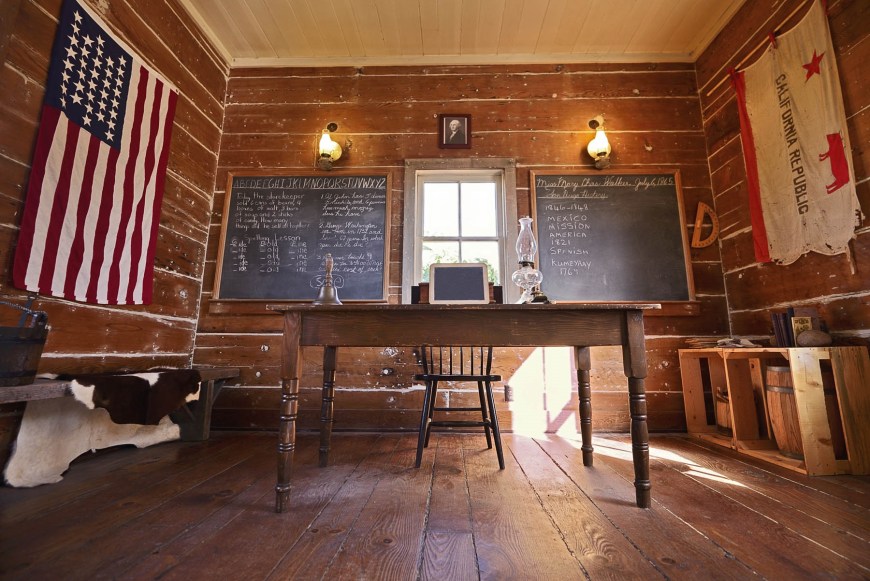


The wooden structure was originally built in 1865 from the scavenged pieces of abandoned homes and businesses left in an area then known as Davis’s Folly (a location visited in my first novel, Waltz in the Wilderness). Today the long, red building is known as The Mason Street Schoolhouse, and has been reconstructed on its original site as part of the Old Town San Diego State Historic Park. This structure is featured on the cover of Harmony on the Horizon.


It was during a field trip to this park that I first heard the tale of the Mary Chase Walker scandal. Mary Chase Walker was originally from Massachusetts and earned her teaching certification from the Framingham Normal School. The Civil War negatively impacted the ability of eastern school districts to pay their teachers. So when Mary learned of the higher wages being offered teachers in San Francisco, she set sail for California.


On arrival in San Francisco, Mary learned that there were more teachers applying for positions than there were positions available in that city. However, San Diego was in immediate need of a teacher and was offering an even higher salary. So, Mary set sail once more and endured a miserable bout of seasickness as she traveled down the California coast. Fortunately, there was a kind, mixed-race stewardess aboard who worked to comfort Mary as best she could and the two formed a close bond.

Mary arrived in San Diego on July 5, 1865. Unfortunately, San Diego is a very brown place in the summer (without today’s modern irrigation solutions) and at that time, it was still a very small town of only a few thousand people spread over thousands of acres. The culture and climate came as something of a shock to Mary who revealed a severe disappointment in her new home when writing her brief memoirs.

Too bad for Mary, things only got worse.

Not long after she began teaching, Mary discovered her stewardess friend was in town. So she invited her friend to dine with her at San Diego’s nicest hotel, the Franklin House. This did not go over well in a town dominated by Southern sympathizers on the heels of the Civil War. Half of the patrons abandoned the establishment on the women’s arrival. Worse, the parents of the town were so incensed that many of them refused to send their children to school so long as Mary continued as teacher.

An emergency meeting of the board was called to determine Mary’s fate as teacher. The records of that meeting were lost in a later fire, so no one currently knows what decision was made at that time. What we do know through other sources is that one member supported keeping the teacher, another supported firing her, and the third was a man named Ephraim Morse. We also know that one month later, Mary was no longer teaching at the schoolhouse, but had taken a position as a tutor for a local family. We also know that shortly thereafter, Ephraim Morse courted and subsequently married Mary.

These are the historical facts, the framework, upon which I built my novel, Harmony on the Horizon. Being a lover of adventure, however, I used my artistic license to throw in the secondary setting of San Francisco’s Barbary Coast, two more main characters, and loads of trouble.


This video featuring a quote from the first scene in Harmony on the Horizon gives a hint at some of the trouble I’m referring to:


Preorder your copy HERE. 


To receive your bonuses, register your preorder HERE 


Harmony on the Horizon releases January 4, 2022. To celebrate, I’m offering this giveaway bundle to one winner*:

  • 1 Tote Bag – Harmony on the Horizon
  • 1 Aromatherapy Pendant – with dried  Lavender inside + scent ball
  • 1 Traveler’s Junk Journal – Vintage Reporter Style
  • 1 Lavender Sachet
  • 1 ebook copy of either Waltz in the Wilderness or Sing in the Sunlight – readers’ choice
  • 1 Chaparral Hearts Pen
  • 1 SITS Bookmark
  • 1 HOTH Sticker


To enter, leave a comment below letting me know what you think happened during that 1865 board meeting.


*Must have a U.S. Mailing address to win. Void where prohibited.


Thank you so much for spending time with me today.

To keep up with all my latest news and enjoy more historical tidbits like this one, please join my Kathleen’s Readers’ Club here: http://bit.ly/KRCMemberSignUp

Find Katheen online

Was she a heroine, a villainess, or just a fool?

By Heather Blanton

 The life of Ellen Watson, aka Cattle Kate, was defined for us by greedy cattle barons, and dutifully reported by a cowardly, boot-licking press. According to these men, Ellen was a prostitute, a cattle thief, and a fornicator. She traded sex for cows and had no compunctions about doing a little cattle rustling on the side.

All that was a smear campaign to protect the cattle barons.

So, what was the truth about Ellen Watson? For one thing, she was a woman with a brain in her head and a fire in her eye.

At 18, Ellen married an abusive drunk who beat her with a horse whip. She put it up with it for a couple of years, then left the loser and filed for divorce. Truly a rare thing in 1883. Strong-willed and stubborn, she moved away to escape the ex. Life took her from Nebraska, to Denver, to, finally, fatefully, Wyoming. She made her living alternately as a seamstress and cook. There is no evidence she ever worked as a prostitute at any time in her life. She did drink, smoke, and cuss, though.

She met Jim Averill while she was cooking at the Rawlins House. Jim had a road ranch on his homestead, catering to travelers and cowboys. Ellen worked as his cook and was paid for her time. She eventually bought her own land—adjacent to Jim’s—started her own ranch and acquired her own legally registered brand. All while she and Jim were courting.

The couple applied for a marriage license in 1886, but never filed it. Homesteads were limited in size per family so it would have been to their benefit to keep the marriage a secret. Ellen also took in two young boys who came from abusive homes and they, in turn, worked her ranch.

Ellen’s independent ways brought her into direct conflict with the Wyoming Stock Growers Association and a neighboring rancher named Bothwell. Still big on the open range way of ranching, he despised Ellen and Jim’s piddly ranches. For nearly two years, Bothwell saw to it that the couple were threatened, harassed, and watched incessantly by riders from the WSGA.

Not interested in kowtowing to the cattle barons, Jim wrote fiery letters to the newspapers, decrying the men’s greed and tyranny. Ellen just kept on ranching, and to the devil with anyone who didn’t like it. Eventually, Bothwell ran out of patience.

On July 20, 1889, Ellen and Jim were accused of rustling cattle from his ranch. He and some his riders took the couple to a gulch and hung them from a stunted pine, not more than two feet off the ground. Witnesses said Jim begged for mercy, but Ellen went down cussing and swinging.

At the time of her death, 28-year-old Ellen had 41 head of cattle, a little over 300 acres, and a tenacious fighting 

spirit that burnt bright right up to the last second of her life. If there is any justice here, it is that we remember her to this day, not the cowards who hung her.

My book, Grace be a Lady, is set during the Johnson County War, in the aftermath of Ellen’s murder. I’ll give two winners paperback versions of the book. Just comment on Ellen and tell me what you think of her life and death. Was she a heroine or a fool? Did she bring this on herself? Should she have sold out and left Wyoming?

Leave a comment to get your name in the drawing for one of the 2 print copies of Grace be a Lady.

Buy Grace be a Lady on Amazon.

Find Heather online at Heather Blanton 


The Hardships of Traveling to the West (And a Giveaway!)

By Jody Hedlund

Howdy, everyone! Thank you for having me back here on Petticoat and Pistols! I’m thrilled to have another chance to hang out with you all!

I recently had another cowboy book release, The Heart of a Cowboy (and I’m giving away a copy today here!). This one has to do with the very fun and interesting topic of traveling west by covered wagons.

Almost everyone has heard of the Oregon Trail and the many people who traveled to the west in covered wagons (and by stagecoach) over the well-worn route.

The Santa Fe Trail was another such trail to the west. It ran parallel to the Oregon Trail (mostly) but was a more southerly route through Kansas that eventually led to New Mexico (and was also used to reach southern Colorado).

Whether the Oregon or Santa Fe trails, the months-long journey to the west was marked by incredible difficulties. In researching for my book, I read countless diaries and journal entries by many of the brave people who ventured across the country. One classic I read was The Prairie Traveler which was actually a book written in 1859 by an army captain by the name of Randolph B. Marcy. The U.S. War Department asked him to publish a guide for settlers traveling across the American frontier based on his extensive experiences. His little book soon became an essential handbook for those pioneers. They used his advice on how to prepare for the trip as well as what to expect in the open country.

Even with sufficient preparation, good equipment, and an experienced guide, the travelers still faced incredible challenges. The npshistory.com site (National Park Service) indicates that nearly one in ten travelers on the Oregon Trail died on route to the west.

The Heart of the Cowboy tackles many of the hardships travelers had to endure including a near-river drowning, lost livestock, lost people, vicious storms, threats from Confederate Irregulars, danger from rattlesnakes, hot and dry weather, lack of water for both people and livestock, and much more.

One really dangerous aspect of traveling the Santa Fe Trail was the possibility of running out of water. I read an account of this very thing happening to travelers and how they dug down into the dry riverbed, placed their wagon box into the hole, and finally were able to tap into water buried a little deeper in the ground. So, of course, I had to include such an incident in my story too! (Along with many other dangers that really did happen to real-life travelers!)

Such stories of bravery make me appreciate those early pioneers all the more! (And make me grateful for our easy, fast, and comfy modern cars and airplanes!)

Leave a comment on this post if you’d like the chance to win a signed copy of the book! (Sorry, U.S. mailing addresses only.) I will choose a random winner on November 7, this Sunday. To find out more information about the book visit: http://jodyhedlund.com/books/the-heart-of-a-cowboy/

If you had to travel in a covered wagon to the west, what would you like most? Like least?


Jody Hedlund is the best-selling author of over thirty historicals for both adults and teens.

She is the winner of numerous awards including the Christy, Carol, and Christian Book Award.

Jody lives in central Michigan with her husband, five busy teens, and five spoiled cats.

Visit her at jodyhedlund.com


A View Worth the Climb – by Regina Scott

When I look out my backdoor and catch sight of Mt. Rainier, I know I am one fortunate gal. Something about that mountain, one of the tallest in the Continental U.S., draws me in. I’m not the only one. The first white men reached the summit in the mid-1800s. The first white woman reached it in 1890. And the heroine of A View Most Glorious, Coraline Baxter, is determined to climb it in 1893 as a way to raise awareness of a woman’s right to vote. After all, if a socialite like her can climb a mountain, why shouldn’t she be able to vote?

Today, safely reaching Rainier’s summit at more than 14,000 feet requires months of training, special equipment, and an experienced guide. Journals, letters, and newspaper accounts from the 1800s show that many climbers had no such advantages. Why, young Len Longmire, whose grandfather built the first hotel at the base of the mountain, was said to have reached the top in his shirtsleeves! Fortunately, most climbers were more prudent.

But as challenging as it was for a man to climb, it was even harder for a woman. For one thing, most expected a woman to climb in skirts. Pretty hard to jump a crevasse or clamber up a glacier with ice crusted on your narrow hem. While a few hardy lady bicyclists and sportswomen had dared to try bloomers, the loose trousers were still considered scandalous. When Fay Fuller, the first woman to reach the summit, was photographed after her climb, the photographer carefully took the picture to avoid any appearance of the flannel bloomers she’d worn.

Then there was the matter of simply getting to the mountain. Few roads led from Tacoma, Yelm, and Olympia, the cities closest to the peak, and those that did petered out just past Elbe, some twenty miles from Longmire’s Springs at the base. James Longmire, his sons, and his grandsons built a private road to his hotel and the hot springs there. When they opened the road in 1893, it still had a few stumps standing. Most people came in by horse or mule, and more than one traveler got a dunking or worse trying to cross the rivers of glacial runoff at the wrong time of the season. Other travelers complained of poor food, stinging yellow jackets, freezing temperatures, ice falling from glaciers, and crevasses so deep it was impossible to see the bottom.

But none complained about the view. Then, as now, reaching the summit of Mt. Rainier was a major accomplishment. Groups affixed plaques they had made beforehand to rocks to commemorate the occasion. Others carried a flag to be planted on the heights, only to watch the wind whip it away, sometimes before they’d even taken a step back to admire it! Individuals left mirrors, bullets, and other mementoes to prove they had made it.

After all, the best view comes after the hardest climb.

In honor of Cora’s climb, I’m giving away two print copies of A VIEW MOST GLORIOUS, U.S. only. Answer this question in the comments to be entered in the drawing:

What would you have wanted along for the trip to the mountain and the climb?

Buy on AMAZON

BIO:  Regina Scott started writing novels in the third grade. Thankfully for literature as we know it, she didn’t sell her first novel until she learned a bit more about writing. Since her first book was published, her stories have traveled the globe, with translations in many languages including Dutch, German, Italian, and Portuguese. She now has more than fifty published works of warm, witty romance. She currently lives forty-five minutes from the gates of Mount Rainier with her husband of thirty years. Regina Scott has dressed as a Regency dandy, driven four-in-hand, learned to fence, and sailed on a tall ship, all in the name of research, of course. Learn more about her at her website at http://www.reginascott.com


American Literature in the 1800’s – Why My Characters Read by Sally Britton

In my latest novel, Copper for the Countess, I revisit characters and places from my first foray into the world of writing Historical Western Romance. This time, because I’ve established this fictional place in a time long ago, I concentrated more on what made the houses on this ranch true homes. One of the first things I did for my hero, a foreman on a cattle ranch, was give him a personal library in his house. While only a few shelves exist in his main room, they tell a story about literature and its impact during the expansion westward.

Long ago, when I read an article about Louis L’Amour, he mentioned that some of his cowboys had expansive vocabularies. I remember he said he’d never met a cowboy who hadn’t read Shakespeare, or couldn’t rattle off favorite poems or snatches of great literature. L’Amour postulated that life on the open range left a man a lot of empty time on his hands. Time when he could read a book, and swap books with his friends. Doing a little research of my own, I discovered that many people in the west were better read than we’d guess. We had our own authors Americans loved, but we spent a fair amount of time reading books from across the pond, too.

So my cowboy is a literary cowboy. He loves a good book. On his shelves, you’d find a battered copy of Les Miserables, by Victor Hugo. That particular title gained notoriety in America during the Civil War. Soldiers on both sides of the war took copies of that book into battle. So much so that the book earned the nickname “Lee’s Miserables,” after a confederate general. (Source, Opinionator, NYT.)

Collections of Shakespeare’s work was greatly revered. Of Shakespeare, a cowboy is said to have said, “That fellow Shakespeare could sure spill the real stuff. He’s the only poet I ever seen what fed on raw meat.” (Source, The Washington Free Beacon.)

Jules Verne, a founder of science fiction, was popular in the late nineteenth century, too. We don’t often consider that he was publishing tales about journeying to the center of the earth or Twenty Thousand Leagues Under the Sea when drifters went from one dusty town to another.

By the 1890’s, when my most recent book takes place, books were available at low costs. MacMillan’s Pocket Classics were widely available – I’ve come across several in used bookstores and antique shops in the west, with penciled in names of men and women who lived in Utah, Arizona, New Mexico, and Idaho. A cowboy might have Sir Walter Scott’s Ivanhoe in his saddle bag and trade it with a friend for Shakespeare’s Hamlet.

The love of literature is older than the printing press, and putting beloved books into the hands of my cowboys makes them that much more real, and tangible, to my readers.

In this newest book, Copper for the Countess, my heroine comes upon my cowboy’s library in this way: Evelyn volunteered to dust the bookshelves, and she took extra time to examine the titles of the books […]. The book titles were rather surprising. Many of them she had heard of or seen in London bookshops and libraries. Though none of the volumes she’d seen before looked as worn or weather-beaten as the books in Mr. Morgan’s care. He had a shelf with several volumes of poetry, including Tennyson—England’s poet laureate. He had Victor Hugo’s Les Misérables, and the Scot, Robert Louis Stevenson’s Strange Case of Dr Jekyll and Mr. Hyde. American titles and authors greeted her, too. Mark Twain’s Adventures of Tom Sawyer and Adventures of Huckleberry Finn sat together, as the two friends ought. – Copper for the Countess: An American Victorian Romance 

Buy on Amazon

In my story, a Victorian countess – widowed and with a child – makes her way to the west. When she meets a ranch foreman with a heart of gold and a love of the written word, she takes a chance on him and his own adopted children. I hope you’ll take a peek at my book, and maybe grab a copy for yourself.

I’m giving away signed paperbacks for two winners. One copy of Cooper for the Countess. One copy of the first book in the series, Silver Dollar Duke.

What are some of your favorite books mentioned in the stories you read?

What is your favorite classic novel?

Lighthouses – a Brief History by Annee Jones

Greetings!  I’m excited to be your guest author today on the Petticoats & Pistols blog!  I write inspirational romance, both historical and contemporary.  It is my hope that my books will encourage you and warm your heart!

I live in the Pacific Northwest, on the coast of western Washington.  My upcoming book, A Child’s Faith in the Keepers of the Light series is loosely based on the Browns Point Light Station that marks the hazardous north entrance to Commencement Bay, located outside of Tacoma.  In writing this story, I became curious about the history of lighthouses and their development in America, particularly along the Pacific coastline.

Before the development of clearly defined ports, mariners were guided by fires built on hilltops.  They realized that by raising the fires up high, they would be more visible to sailors out at sea and began lifting the fires onto platforms.  In antiquity, the lighthouse functioned more as an entrance marker to ports than as a warning signal for dangerous promontories and reefs.  The first lighthouse, a stone column with a fire beacon regularly maintained to guide mariners, was built in Athens sometime during the 5th century BC.

The first lighthouse in America was the Boston Light, built in 1716 at Boston Harbor.  In 1851, the U.S. Congress passed “An Act Making Appropriations for Light House, Light Boats, Buoys, &c.”, leading to the creation of the United States Lighthouse Board to replace the Department of Treasury’s Lighthouse Establishment as the governmental agency responsible for the construction and maintenance of all lighthouses and navigation aids in the United States.

The intermittent flashing mechanism was developed in 1870 and used clockwork to time the gas supply.  A Swedish engineer, Gustaf Dalen, helped commercialize gas as an illuminant and his equipment was used as the predominant light source in lighthouses from the early 1900s to the 1960s when electricity became dominant.

The Northern Pacific Railroad reached western Washington in 1873 and the Lighthouse Board recommended that Point Brown be marked with a light; however, it wasn’t until 1887 that Browns Point Light Station was marked with a post lantern.  The light at a height of 12 feet was built on tideflats, about 50 yards offshore and at high tide could only be reached by rowboat.  A contract lightkeeper was hired to row from Tacoma once per week to clean the glass, replenish the fuel tank, and trim the wick.

Unfortunately the channel from Commencement Bay to Elliott Bay was treacherous, renowned for its thick fog blankets.  Mariners complained that the light at Browns Point couldn’t be seen.

A wooden tower finally replaced the post in 1903 to house a brighter light as well as a fog signal.  The beacon and fog signal are still in use as navigational aids today, and both the lighthouse and keeper’s cottage are on the Washington State Heritage Register and the National Register of Historic Places.

Have you ever visited a lighthouse before?  Where?

Let’s talk about lighthouses, and I’ll give away an ebook from my backlist to one lucky winner!

My book, A Child’s Faith, is set in 1892 in Tacoma, WA.  Elin Kristiansen has her hands full as a single mother following the tragic death of her husband in a shipwreck off the rocky coast of the Pacific Northwest. Thankfully, the U.S. government has recognized the need for a lighthouse at Brown’s Point, and Elin couldn’t be more pleased when her father accepts the position of Keeper. However, she just can’t seem to bring herself to accompany him on his weekly rowboat trips to the station to tend the lamp – and what’s more, the mere thought of Finn, her son, setting foot on board sets her insides churning.

Elin knows her father keeps hoping she’ll get over the terror that washes over her every time she considers braving the waters, but she’s starting to have doubts. When she gets into an argument with Finn over his adamant wish to learn how to swim, she can’t possibly trust the handsome captain who offers to instruct him and vows to keep him safe – or can she?

Links:

PreOrder/Buy link to the book on Amazon:  https://amzn.to/3uFy0We

Amazon Author page:  https://amzn.to/3Fgbk3Y

My website:  https://www.anneejones.com/

https://www.facebook.com/AuthorAnneeJones

Bio:

Annee Jones is an inspirational romance novelist who enjoys sharing her heart and imagination with others.  She is passionate about writing stories that offer hope and encouragement and likes to think of her books as “romance filled with faith and a sprinkle of fairy dust!”

Annee is also a professional book reviewer for Publishers Weekly in the genre of faith-based fiction (fun tidbit: she drafts many of the editorial reviews you see on Amazon).

Professionally, Annee works as a disability counselor where she helps her clients navigate through complex medical and legal systems while rediscovering their wholeness in Spirit.

Jodi Thomas Returns!

Ancient Chinese Curse: “May you live in a time of change.”

I’m hopeful change will come. Soon. But for now, welcome to the past year. I’ve been waking up lately thinking I must be stuck in Groundhog Day. Just when I thought we were beginning to win the fight against Covid, everything is right back where we started. Again. We’re all adjusting to a new not-so-normal. Still not much shopping. The shelves are pretty bare anyway. Not much eating out with friends. No arguments over politics. (I’m being delusional.) No traveling to exotic places to have wild affairs. (Sorry, that one was my imagination talking.)

I’ve been hibernating. Again:

  • Waking up and putting yesterday’s clothes back on.
  • Having to ask my phone what day it is.
  • Talking to myself and sometimes getting in an argument.
  • Watching movies that don’t have plots.
  • Waiting for the mailman then reading the junk mail
  • Driving around for no reason at all.

Same as the first time around, for a few months I did nothing productive. I binged series on Netflix and cooked. My favorite saying, if I’d had anyone to say it to, was:

“I don’t suffer from insanity; I enjoy every minute of it.”

Yep, I’m living the crazy loop of Groundhog Day! Then, one day it occurred to me that I had imaginary friends to play with. I spent a week reading a book a day. Then, characters started lining up in my mind. They all wanted to me to write their story. Fiction was suddenly my place to go.

Last month I visited a quilter’s meeting as a guest. I gave my little talk about writing about quilting, then they all gave me a dear gift. Each one had brought a quilt passed down in the family, and each quilt had a story. We might have been 10 feet apart, but we were sharing.

One lady ended her talk by looking straight at me and said, “I’ve got to tell you that your books were my joy this year. When I got down, I could step into a Jodi Thomas book.”

Writing is a lonely career sometimes, just as Covid is a very lonely time, but I realized I can help in a small way. This crazy imagination I’ve been blessed with, and sometimes haunted by, can take readers on a journey.

So, I’d better get to work creating a world anyone reading can step into. A place for a time, you can relax, sit among friends, and talk about living.

And always remember, you are the main character of your life, and your story isn’t finished.

Three lucky winners will win one of my new releases. To enter, leave a comment about something that brings you joy during the hard seasons of life.

As an added bonus…your name will be entered twice if you can tell me where I got the title of my story “Father Goose” in The Cowboy Who Saved Christmas!

Enjoy some time to read,

Jodi

BUY The Cowboy Who Saved Christmas

PREORDER Dinner on Primrose Hill

PREORDER One Night at the St. Nicholas

Frontier, Folklore, and Feuds: Harnessing the Best of the West to Create a Fictional Town By Janine Rosche

There was a time in my childhood when I stumbled into the world of soap operas. I loved the angst, romance, and the evil twins! But one detail really caught my attention. There were catacombs beneath General Hospital! What?! Even at nine years old I understood that catacombs weren’t exactly common, but that didn’t matter. Since Port Charles was a fictional city, all the writers had to say was, “Let there be catacombs,” and there were.

When I decided to set my new series in a fictional Colorado town, I didn’t realize how much fun I would have. Picture creating a world with every cool thing you could imagine!

Now, I didn’t go crazy. I still needed my town to be somewhat realistic so I based all of Whisper Canyon’s eccentricities on other cities and towns in the west. Here are some of the TRUE places and stories that inspired my town in Aspen Crossroads:


The Feud

There’s nothing like a good old feud to liven up a town! Take it from me—my brother-in-law is a Hatfield. Luckily, my sister is not a McCoy. In my series, the canyon was discovered by Alva Haviland who fled the south after he burned down a pro-slavery newspaper office, leaving behind a heartbroken fiancée. To avenge her heartache, her uncle Prescott Garrison chased Alva across the prairie and into the mountains. When he laid eyes on Whisper Canyon, he saw the potential for wealth and took more than his fair share of land. The Haviland/Garrison feud has been brewing ever since, nearly destroying the town in the process.

The Caverns

Three hours west of Denver, the quaint mountain town of Glenwood Springs hosts tourists looking for both relaxation in their natural hot springs and adventure in their caverns. Aren’t caverns amazing? There’s something magical about seeing the awe-inspiring tunnels and caves while knowing you could die any minute, am I right? Talk about angst!! This is why in Aspen Crossroads, Haven and Jace go spelunking in Whisper Canyon Caverns, where they are forced to confront their fears and their feelings for each other.

My children and I at Glenwood Springs Caverns

The Mill

My favorite restaurant west of the Mississippi is in a little tourist town known for river tubing. The town is Gruene, Texas, and the restaurant is The Gristmill.  An 1878 water-powered mill was turned into a restaurant ninety-nine years after it first opened. The food ranges from casual lunches to the delicious peppercorn steak that I’ve been craving since I moved from Texas fifteen years ago. And because you can eat outside overlooking the Guadalupe River, in the beer garden, or on one of three floors inside the restaurant, every dining experience feels new. It’s simply cinematic. So when I needed to give my characters a new life (after being rescued from sex work), I created a mill-to-restaurant renovation that these women could be proud of!

The Gristmill, Gruene, Texas
Photo courtesy of @gristmillriverrestaurant on Instagram

A Legend

What good is a town without a local legend? In Whisper Canyon, that legend is Ol’ Six Claw, a bear with, you guessed it, six claws on one paw. His ghostly form has been spotted in the canyon for more than one hundred and fifty years, and it’s believed he started the fire that turned Whisper Canyon into a ghost town in 1885. This troublesome bear was inspired by West Yellowstone, Montana’s Snaggletooth—a grizzly bear that was known to forage in the town dump in the 60s and 70s and is now stuffed and on display in the town’s museum.

Old Snaggletooth, West Yellowstone Historic Center

Now that you know a little bit about the making of Whisper Canyon, I’d love for you to visit by picking up the first book in the series, Aspen Crossroads.

BUY on Amazon

GIVEAWAY: It’s your turn! If you were to create a town, what would you be inspired to include? One commenter will win a Love Wander Read sweatshirt from my new LWR Apparel collection. Winner to choose size and color. Winner must be 18 and, due to shipping costs, must have a US mailing address. Contest runs October 1-4th. Winner will be notified by email.

Bio: Prone to wander, Janine Rosche finds as much comfort on the open road as she does at home. This longing to chase adventure, behold splendor, and experience redemption is woven into her Madison River Romance and Whisper Canyon series. When she isn’t writing or traveling, she teaches family life education courses to college students, takes too many pictures of her sleeping dogs, and embarrasses her four children and husband with boy band serenades. Her latest story, Dreams in Toyland, can be found in the Christmas in Mistletoe Square novella collection, available now.  http://www.janinerosche.com

Forts of the Old West with Krystal M. Anderson

Please join me in welcoming guest author Krystal Anderson to the Junction.

There’s something about standing in front an old western fort that brings that bygone era to life. The chipped stone walls and thick timbers tell a story of conflicts withstood, the battlements and gun ports atop eighteen-foot walls a sense of strength and security.

For many traveling through America’s untamed west, forts were among the only places of safety from Indian attack and harsh elements and were utilized by mail carriers, stagecoach operators, and weary travelers alike. Some, such as Fort Vancouver in Washington, weren’t even established with defense in mind, but industry and commerce. Others served as way stations along main travel routes, such as Fort Benton along the Missouri River in central Montana, or Fort Bridger, Wyoming, which became a vital resupply point for those traveling the Oregon, California, and Mormon Trails.

In my little corner of Utah there are plenty of old forts to explore, some only remains of crumbled stone wall, that were constructed to protect the herds and homes of local settlers during the Black Hawk War (1865-1870). Recently I took my children to explore historic Cove Fort in central Utah and boy, did it fuel my imagination! Details from that visit will likely carry into many of my future stories.

Cove Fort is rectangular in shape and made of volcanic rock with six rooms on each of the long sides, each with its own chimney. A central courtyard opens in the center, and when those thick wood doors were closed, I don’t see how anything or anyone could have gotten through. Just outside the fort, which also served as a ranch, was a bunkhouse, vegetable garden, ice house, blacksmith shop, derrick, livestock barn, and supply store. It was to imagine how people were able to labor and live in such a place, but I’m certain it was immensely difficult. The women spun their own thread and fashioned rugs and blankets on a loom, scrubbed the laundry, and tended to the fort’s guests in addition to their own families. Years of harsh winters were spent enveloped in the fort’s cold stone walls. Do you think you would have possessed the fortitude to live in a remote, rugged western fort without many of the comforts of the day?


With that fort in mind, I created a fictional fort on the coast of Oregon for my latest story titled Her Keeper’s Heart. Fort Donnelly, I called it, stationed somewhere in Tillamook County. The book’s heroine, a mail-order bride named Orissa, is making her way to the Oregon coast from Connecticut via sailing around Cape Horn when catastrophe strikes. I won’t divulge the details (no spoilers here!), but she and the sailors find sanctuary at industrious Fort Donnelly. And that’s not all she finds there…


I’d like to give away a signed paperback copy of Her Keeper’s Heart to one of you lovely people. To enter, tell me something you couldn’t live without should you have been called upon to man an old western fort. I look forward to reading your responses, and thank.


HER KEEPER’S HEART

Living as the assistant keeper at the Puffin Point lighthouse for four years, Leonard Tarby admires everything about his coastal home: sweeping ocean seascapes, lush, tangled forests, and unobstructed views of the stars he enjoys charting. There was only one thing Leonard would change, and that is the absence of a loving bride by his side. Certain the only way to achieve that goal is to send for a bride through the mail, Leonard sits back to wait for her arrival, dreaming of a life of wedded bliss soon to come.

The young lady is soon on her way to Puffin Point but goes missing en route. Is there foul play involved or did she simply get cold feet? Will Leonard ever have a bride of his own?

Find out in this sweet historical romance full of dangers, intrigue, and love, all beneath the ever-watchful beam of a Pacific lighthouse.


To learn more or order a copy, use THIS LINK

Welcome Guest Author Tina Dee!

Today the Fillies are pleased to welcome guest author Tina Dee to the Junction. Tina is here to tell us about her new release and one aspect of her research. She’s also got a fun giveaway in store so read on to learn the details!

Hi, everyone! Thank you to the Petticoats & Pistols blog hosts and to you, sweet readers, for having me here today. I love spending time with you all! For those of you who aren’t familiar with me, I write heartwarming historical and contemporary Christian romances with a good deal of humor.

Today, I’m sharing about my upcoming release, For the Love of Penni, which takes place in the late 1800s. This story is about a woman in search of her brother who is slow of learning and became lost in the War Between the States. And now, she is torn between finding him and her new life as a mail-order bride.

One of the things in life that calms Penni’s heart is to pet her favorite hen, Dainty, when chores on the farm are finished. Later, Dainty travels with her onboard a steam train in a homemade cage.

One of the things I had the most fun researching for this story was chickens. Penni’s hen, Dainty, is a Dominique breed. It is said that they are the oldest known breed, being favored by settlers back in the 1750s. They were hardy birds and were important to settlers because they didn’t require a lot of special care.


The hen pictured below is actually from the Barred Rock breed but looks very similar to the Dominique—though the Dominique has a ruffled-rose type comb (the place where I get my stock photos only had this chicken breed’s pics available). These Dominiques, and their rose combs, were resistant to frostbite. The hens roamed freely and foraged for their existence. Their feathers were also used for stuffing pillows. I hope to have a few of these one day. Many thanks to thehappychickencoop.com for the fun facts. Do you raise chickens? If you do, share what breed, and what you love about them?

DepositPhotos image ID:55710581 ewastudio


More about my story, For the Love of Penni:


She’s in search of a family. He has one to offer. Can she be the wife he needs or will her desire to find her brother pull her heart away?

Penni Pembrooke has stopped at nothing to find her long lost brother after the War Between the States. With years of searching behind her, she’s just about given up hope. Now, the home where she resides has become overcrowded. With extended family pressing in on all sides, Penni writes to a mail-order bride agency in hopes of a new life. Meanwhile, she continues to search for her brother who is slow of learning. He still needs her; a war wouldn’t change that.

Connor Callaghan finds himself the father of a brand-new infant. While he’s bringing his orphaned niece and his mother home from Ireland to Pelican Rapids, Minnesota, he learns the mail-order bride he left behind is now married to another.
With a farm to run and more mouths to feed it’s more than he bargained for. Yet, Penni comes as a fresh surprise—but will she make her heart available to him?

For the Love of Penni is a lighthearted, Christian mail-order bride romance and is part of the multi-author Brides of Pelican Rapids series. All books in this historical Christian romance series are stand-alone stories and can be read in any order.


For the Love of Penni releases on 9/30/21. It’s currently on pre-order for 99 cents. To pre-order from Amazon click on the image below


About Tina:

Tina Dee enjoys writing historical and contemporary western romances. She lives on the west coast with her family, including a heard of crazy cats and a bossy little Yorkie named Molly.

She loves coffee and almond croissants. She enjoys campfire cooking, and her favorite seasons are autumn and winter.


Tina is giving away the adorable towel pictured below. Just leave a comment to be entered in the drawing