Rifles of the Civil War & Frontier

By Kathleen Denly

In my upcoming novel, Murmur in the Mud Caves, the hero, a veteran of the Civil War, carries a Henry repeating rifle. Patented in 1860, a single man armed with this weapon held the firepower of a dozen marksmen armed with muzzle-loading muskets. 

Caption: This photograph shows an early Henry Rifle. (Photo Credit: Hmaag. CC BY-SA 4.0, via Wikimedia Commons.)


President Lincoln, the Secretary of War, and the Secretary of the Navy were all gifted beautifully engraved, gold-plated Henry rifles in an attempt to convince the Union to order the weapon for their soldiers. Unfortunately, only 1,731 were ordered by the Union. 

Caption: This photograph shows an early Henry Rifle and a Winchester Model 1866 Rifle. Both shoot .44 caliber Rimfire. (Photo Credit: Hmaag. CC BY-SA 3.0, via Wikimedia Commons.)

However, the weapon was so well regarded for its faster loading and greater reliability that many soldiers invested their own money to purchase a Henry rifle. In the end, it is estimated that 6,000 Union Soldiers were armed with the Henry rifle. Major William Ludlow was said to claim that what saved his men at the Battle of Allatoona Pass was the fact that many of his men were armed with Henry rifles. Confederate Colonel John Mosby, after encountering Union soldiers armed with Henry rifles, declared, “It’s a rifle you could load on Sunday and shoot all week long.” Despite its solid reputation, the Henry rifle was discontinued in 1866.

Caption: This photo shows an 1873 Winchester rifle. (Photo Credit: Ricce, CC BY 3.0, via Wikimedia Commons.)

Today, the 1873 Winchester is known as the gun that settled the west. What many people don’t know, however, is that it was based on the Henry rifle. My husband, Luke, has an interest in historical weapons, so for Christmas I bought him a replica of the 1873 Winchester. Recently, I talked him into:

  • Explaining how the 1873 Winchester differs from the Henry rifle
  • Discussing what made these two weapons so important to fighting the Civil War and settling the frontier
  • Demonstrating and explaining how the 1873 Winchester works and is maintained 

In the video below, you’ll get to see and hear what it was like to fire this weapon. I hope you enjoy his presentation.

Did you learn something new today? Which part of Luke’s presentation did you find the most interesting?


He came to cook for ranch hands, not three single women.

Gideon Swift, a visually impaired Civil War Veteran, responds to an ad for a ranch cook in the Southern California desert mountains. He wants nothing more than to forget his past and stay in the kitchen where he can do no harm. But when he arrives to find his employer murdered, the ranch turned to ashes, and three young women struggling to survive in the unforgiving Borrego Desert, he must decide whether his presence protects them or places them in greater danger.

Bridget “Biddie” Davidson finally receives word from her older sister who disappeared with their brother and pa eighteen years prior, but the news is not good. Determined to help her family, Biddie sets out for a remote desert ranch with her adopted father and best friend. Nothing she finds there is as she expected, including the man who came to cook for the shambles of a ranch.

When tragedy strikes, the danger threatens not only her plans to help her sister, but her own dreams for the future—with the man who’s stolen her heart.

Ebook purchase links: Amazon | Barnes and Noble | Apple Books | Kobo

Paperback purchase links: Amazon | Barnes and Noble | Books-a-Million


If you preorder Murmur in the Mud Caves before May 16th, 2023, don’t forget to register your purchase by emailing proof of purchase (screenshot) to kdpreorderbonuses@gmail.com before May 16th.

Everyone who registers their preorder purchase will receive a FREE ebook copy of the 31-day companion devotional, His Broken Treasure, written by Kathryn Breckenridge and edited by Kathleen Denly.


His Broken Treasure will also be available for separate purchase beginning May 20th, 2023.


About Kathleen Denly

Kathleen Denly writes historical romance to entertain, encourage, and inspire readers toward a better understanding of our amazing God and how He sees us.

Award winning author of the Chaparral Hearts series, she also shares history tidbits, thoughts on writing, books reviews and more at KathleenDenly.com.

Connect with Kathleen:

Website | NewsletterBookBub | Amazon | FB Author Page FB Reader Group | Instagram | Twitter | Goodreads | Pinterest  


Giveaway Details

One Winner will receive:

  • 1 Antique Map Leather Pen/Pencil Organizer
  • 1 ebook copy of Waltz in the Wilderness 

Eligibility: Due to the cost of shipping, Winner must have a U.S. shipping address to receive the prize as described. An international winner must accept a $5 Amazon giftcard in lieu of the Leather Pen/Pencil Organizer. Void where prohibited.

To Enter:

Leave a comment on this blog post answering one or both of these questions: Did you learn something new today? Which part of Luke’s presentation did you find the most interesting?


PSST! Are you new to my Chaparral Hearts series? If so, you may be happy to know that members of my Kathleen’s Readers’ Club can download a free copy of the prequel novella, Ribbons and Beaus. Click here to join!


Guest Blogger – Kathleen Denly – Cakes and Kisses

Have you ever been let down or even betrayed by someone you trusted? How did you respond and did it differ from how Scripture instructs us to respond? This is the major theme of my interquel novella Cakes and Kisses. So when I discovered the following event described in the June 9, 1854 edition of the Daily Alta California I knew it was perfect for my story.

“View of San Francisco taken from Telegraph Hill 1850”

“Another Squatter Disturbance — At a squatter disturbance, which occurred yesterday morning on Front street below Mission, a woman who lived in a house which a party were endeavoring to take down, became so incensed that she laid her baby down, picked up a shovel, and attacked Capt. Folsom. After she was disarmed of this weapon she went into the house and brought out a revolver, with which she endeavored to shoot the same party. The police interfered and prevented the woman from doing harm.” [spelling, punctuation, and capitalization have been maintained from the original article]

During my research I have encountered many similar “squatter riots” or “disturbances,” as the newspapers referred to them, but this one caught my attention because of the lone woman and child facing a group of men determined to see her homeless. Not only did it closely parallel the essence of the situation my heroine found herself in, it brought to mind the numerous accounts I have read of women being abandoned in San Francisco by husbands who headed for the gold fields—sometimes never to be heard from again. While some of these women were widowed by the harsh mining conditions, others were permanently abandoned by husbands who found themselves weary of being married. These women faced the daunting challenge of learning to survive in a burgeoning town fraught with criminal activity, an insufficient police force, and a frequently corrupt justice system.

Daily Alta California, November 22, 1851 — …the present police force is not sufficiently large to guard effectually against the commission of crime…

Daily Alta California, February 24, 1854 — …we think the force is scarcely sufficient, that our growing city demands a larger one…

Domingo Ghirardelli in San Francisco circ 1862

All of this dark history fit well with my theme.

However, not all of San Francisco’s history is dark and gloomy. One of my favorite parts of the city’s history involves the world famous Ghirardelli Chocolate Company. No doubt you’ve seen Ghirardelli chocolates in your local store and may even have received a Ghirardelli chocolate or two in your Christmas stocking. What you may not know is that the Ghirardelli Chocolate Company has been around since the nineteenth century and was founded in San Francisco, California, by Domingo Ghirardelli.

“Hydraulic mining for gold in California”

Born in 1817 Rapallo, Italy, as Domenico Ghirardelli, he apprenticed with a local candy maker at a young age. He later sailed to Uruguay with his wife to work in a chocolate and coffee business and changed his Italian first name to the Spanish equivalent, Domingo. In 1847 Ghirardelli was operating a store in Peru when his neighbor, James Lick, moved to San Francisco, bringing with him 600 pounds of Ghirardelli’s chocolate.

Like many men, Ghirardelli left his family behind to join the rush of 1849 and seek gold among California’s hills. Not long after arriving, he gave up prospecting and opened a tent-based general store in Stockton, California where he offered supplies as well as confections to minors. In 1850 he opened a second store in San Francisco but in 1851 both stores burned to the ground.

Ghirardelli also had a store in Hornitos, California from 1856-1859. The historical marker at this location was my first discovery of Ghirardelli’s connection to California.

Demonstrating incredible resilience, Ghirardelli used what he had left to open the Cairo Coffee House in San Francisco. Unfortunately his coffee house proved unsuccessful. So he acquired a partner and opened a new store named “Ghirardelli and Girard,” again in San Francisco. This store did well enough that by 1851 Ghirardelli was able to send for his family to join him in California. In 1852, the company changed its name “D. Ghirardelli & Co. “ and was incorporated. It has been in continuous operation ever since—eventually becoming the modern-day Ghirardelli Chocolate Company.

“Wife of Domenico Ghirardelli, founder of the Ghirardelli Chocolate empire.”

I’ve been fascinated by this sweet part of San Francisco’s history for more than two decades, so incorporating Ghirardelli’s chocolate and his San Francisco store into my novella, Cakes and Kisses, was a piece of cake. (I couldn’t resist.)

Cakes and Kisses (~49,000 words) releases December 1, 2022 and will be available for FREE to my newsletter subscribers for thirty days. After which, it will be available for purchase through Amazon. Click here to subscribe!


***Giveaway***

To win an ebook copy of my debut novel, Waltz in the Wilderness, (which introduces the heroine of Cakes and Kisses), leave a comment below letting me know which type of chocolate you prefer.

NOTE: All newspaper quotes used in this post are in the public domain and were found at: California Digital Newspaper Collection, Center for Bibliographic Studies and Research, University of California, Riverside, <http://cdnc.ucr.edu>.


Connect with Kathleen here:

http://www.KathleenDenly.com


The History Behind the Story

by Kathleen Denly

My upcoming release, Harmony on the Horizon, book three in my Chaparral Hearts series, was inspired by the true life story of San Diego’s first teacher to teach in their first schoolhouse.


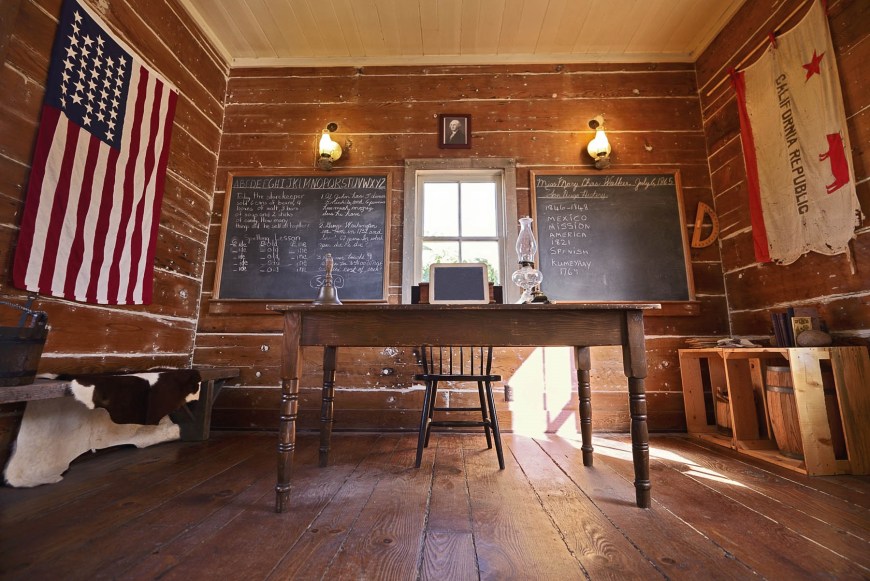
The wooden structure was originally built in 1865 from the scavenged pieces of abandoned homes and businesses left in an area then known as Davis’s Folly (a location visited in my first novel, Waltz in the Wilderness). Today the long, red building is known as The Mason Street Schoolhouse, and has been reconstructed on its original site as part of the Old Town San Diego State Historic Park. This structure is featured on the cover of Harmony on the Horizon.


It was during a field trip to this park that I first heard the tale of the Mary Chase Walker scandal. Mary Chase Walker was originally from Massachusetts and earned her teaching certification from the Framingham Normal School. The Civil War negatively impacted the ability of eastern school districts to pay their teachers. So when Mary learned of the higher wages being offered teachers in San Francisco, she set sail for California.


On arrival in San Francisco, Mary learned that there were more teachers applying for positions than there were positions available in that city. However, San Diego was in immediate need of a teacher and was offering an even higher salary. So, Mary set sail once more and endured a miserable bout of seasickness as she traveled down the California coast. Fortunately, there was a kind, mixed-race stewardess aboard who worked to comfort Mary as best she could and the two formed a close bond.

Mary arrived in San Diego on July 5, 1865. Unfortunately, San Diego is a very brown place in the summer (without today’s modern irrigation solutions) and at that time, it was still a very small town of only a few thousand people spread over thousands of acres. The culture and climate came as something of a shock to Mary who revealed a severe disappointment in her new home when writing her brief memoirs.

Too bad for Mary, things only got worse.

Not long after she began teaching, Mary discovered her stewardess friend was in town. So she invited her friend to dine with her at San Diego’s nicest hotel, the Franklin House. This did not go over well in a town dominated by Southern sympathizers on the heels of the Civil War. Half of the patrons abandoned the establishment on the women’s arrival. Worse, the parents of the town were so incensed that many of them refused to send their children to school so long as Mary continued as teacher.

An emergency meeting of the board was called to determine Mary’s fate as teacher. The records of that meeting were lost in a later fire, so no one currently knows what decision was made at that time. What we do know through other sources is that one member supported keeping the teacher, another supported firing her, and the third was a man named Ephraim Morse. We also know that one month later, Mary was no longer teaching at the schoolhouse, but had taken a position as a tutor for a local family. We also know that shortly thereafter, Ephraim Morse courted and subsequently married Mary.

These are the historical facts, the framework, upon which I built my novel, Harmony on the Horizon. Being a lover of adventure, however, I used my artistic license to throw in the secondary setting of San Francisco’s Barbary Coast, two more main characters, and loads of trouble.


This video featuring a quote from the first scene in Harmony on the Horizon gives a hint at some of the trouble I’m referring to:


Preorder your copy HERE. 


To receive your bonuses, register your preorder HERE 


Harmony on the Horizon releases January 4, 2022. To celebrate, I’m offering this giveaway bundle to one winner*:

  • 1 Tote Bag – Harmony on the Horizon
  • 1 Aromatherapy Pendant – with dried  Lavender inside + scent ball
  • 1 Traveler’s Junk Journal – Vintage Reporter Style
  • 1 Lavender Sachet
  • 1 ebook copy of either Waltz in the Wilderness or Sing in the Sunlight – readers’ choice
  • 1 Chaparral Hearts Pen
  • 1 SITS Bookmark
  • 1 HOTH Sticker


To enter, leave a comment below letting me know what you think happened during that 1865 board meeting.


*Must have a U.S. Mailing address to win. Void where prohibited.


Thank you so much for spending time with me today.

To keep up with all my latest news and enjoy more historical tidbits like this one, please join my Kathleen’s Readers’ Club here: http://bit.ly/KRCMemberSignUp

Find Katheen online