The Wild West Lives On!

newsletter_headerjpg - 2Last week, I had the privilege of attending the Romance Writers of America national conference in San Antonio, TX. I came home with a suitcase full of new books, a brain full of great information, and a camera full of pictures. This was the first time my hubby tagged along for the ride at one of these conferences, so he and I had a lot of fun exploring in the evenings. The River Walk was gorgeous, of course, and the Alamo is a classic not to be missed, but my favorite attraction of the week was the chuck wagon dinner and wild west show we treated ourselves to at Enchanted Springs Ranch.

The Wild West lives on at the ranch with an authentic old west town on this 86-acre working cattle ranch. They have a heard on longhorn cattle as well as many exotic animals. For example:Enchanted Springs Animals

Pet alpacas named Wyatt Earp and Doc Holliday. Wild oryx and zebras we saw on our tractor ride to the fun feathered friend strutting down main street in all his plumed glory.

The ranch boasted numerous buildings. A church with it’s own graveyard. Two saloons. A gunsmith. A dressmaker. A general store. The blacksmith. Even a Texas Ranger office filled with museum worthy exhibits.

photo 2(8)


photo 5(5)


My hubby and his finger gun and the gunsmith shop.


Enchanted Springs Church


The buildings were so much fun to explore and proved great fodder for the imagination. However, there were two true highlights of the evening for me.

The first was the singing cowboy who entertained us while we feasted on barbeque chicken, brisket, warm potato salad, and peach & blueberry cobbler.

Dressed in cowboy gear and playing guitar, our host sang the greatest cowboy songs of all time. Everything from The Streets of Laredo to Home on the Range to Happy Trails. His voice was smooth, his guitar melodic, and in between, he gave us a little history lesson regarding the origins of each song. Fabulous!


photo 2(6)

After the supper dishes had been cleared away, we all gathered around the corral for a rootin’-tootin’ wild west show in the style of Buffalo Bill Cody. The show featured Pistol Packin’ Paula. She was a tiny little thing, but she sure packed a wallop! She is an honest to goodness, two-time world champion pistol twirler. She spun those pistols around her fingers faster than a blink, in and out of the holsters, over her shoulders, around her back. Whew! It was crazy. Then she started in with the trick shooting. She even reproduced Annie Oakley’s famous, over the shoulder rifle shot with a hand mirror. Her horse Jake did tricks as well.

Pisol Packing Paula


photo 4(6)


Overall, it was a fabulous evening. It was hot as blazes with temps in the upper ’90s but no one seemed to care. If you are ever in the San Antonio area, make the short trip to Enchanted Springs Ranch and treat yourself to the chuck wagon dinner. You’ll be glad you did!

  • What is your favorite hidden vacation gem?
  • Any western-themed places you would recommend for a visit?


Going On an Adventure and a Giveaway with Donna Alward

new color donna alward L-R 1594 HER RANCHER RESCUER marks my first book for Harlequin’s AMERICAN line. When I found out I’d be moving out of Romance and into American, I was a little discombobulated. But I really think that in general, things work out if we look at them as opportunities and adventures. And let me say: so far so good. I’ve had great fun writing my Americans (there are more coming your way in a few months’ time!).

My heroine in HER RANCHER RESCUER hasn’t really been out of Cadence Creek, so for her to travel to Montana with a man who is practically a stranger is quite a leap. And that’s not the end of her adventures. Jack owns a ranch that caters to corporate team-building, so there are always fun activities going on and a lot of firsts for Amy.

I had a ton of fun writing this story. I will say, I have never experienced riding behind a dog sled first hand, but a pal of mine did and helped me out. There was snowshoeing, sleigh rides, spa days, romantic nights. Amy had a job to do, but Jack made sure she experienced things too. More than she really bargained for, it turns out.

While there are lots of winter activities, one that I HAVE done that I haven’t written about yet is zip-lining. I still kind of hope that’s going to show up in a book. J I was terrified. And after I stepped off the platform for the first time, I LOVED it! I wanted to go again and again.

I do like the ideas of adventures. Life is an adventure all on its own. There are ups and downs, bumpy and smooth rides, but there are also exciting, steal-your-breath moments.

What was your last steal-your-breath moment?   Post a fun comment and be entered to win a digital copy of Her Rancher Rescuer! 


HerRancherRescuer

HER RANCHER RESCUER, February 2014

Small-Town Girl, Big-Time Crush

Amy Wilson longs to escape the pointed barbs and knowing looks that come with having a certain reputation in a small town. A temp job with CEO and rancher Jack Shepard seems to offer a way out, if only she can stay focused on her goal.

Former world-class athlete Jack is as relationship-phobic as they come, so he’s not worried that the soul-shattering kiss he and Amy shared will affect their working partnership. She’s a girl who’s going places, but Jack starts to wish that maybe he could tag along for the ride….


AVAILABLE ON AMAZON 

Hangin’ or Jury?

Phyliss Miranda sig line for P&P BluebonnetAs hard as I tried, I couldn’t resist posting a blog I did in 2009 before I became a regular Filly here at Wildflower Junction.  

In the Old West, the terms rustling and rustler had several meanings. Livestock who forged well were called rustlers by cowmen; meaning the animals could graze or “rustle up” nourishment on marginal land. A horse wrangler or camp cook was also a rustler, but the most widespread and notorious use of the word referred to a cattle thief.

On the vast open ranges of yesteryear, rustling was a serious problem and punishable bycattle-rustlers hanging. At its peak, one of the largest ranches in the Texas Panhandle had over 150,000 head of cattle and a thousand horses. Obviously, thieves could drive stolen livestock miles away before a rancher learned he had animals missing.

The vast distances to town, hence law enforcement,often prompted ranchers to take actions of their own. Court convictions for rustling were difficult because of the animosity of small ranchers and settlers toward big cattle outfits. Many times, “vigilante justice,” hang ‘um first…ask questions later, was handed down by organized stockmen. Like horse thieves, cattle rustlers could be hanged without benefit of trial, judge or jury.

Today, even with detailed brands logged in books, registering with state officials, inspectors, and the meticulous paperwork involving transportation, not to mention a new era of branding technology to keep track of animals, ranches still face cattle rustlers…those dishonest people who want to profit from selling cattle without the bother of raising them.

cowsNo longer is a single head of beef stolen for food or an occasional Native American slipping off the reservation to provide for his family… it is big business. Modern day rustlers often sneak onto rural ranches at night, or on weekends when the owners are away, steal and sell cattle. An average calf can bring thousands of dollars on the open market; so multiply that by a trailer, or even a truck load, of cattle and you can see why it’s a profitable business for thieves.

Amid warnings that cattle rustling is on the rise in Texas, recently the state Senate passed a measure that would stiffen penalties for stealing farm animals, making theft of even one head of livestock a third-degree felony drawing up to a ten year prison sentence and a fine. Until the proposal is signed into law, a rustler can steal ten or more head of livestock and the punishment is a drop in the bucket in comparison to the law of the Old West … hang ‘um high and fast.

rustling-wanted-poster

But was hanging always fast and efficient?

I delved into the subject of cattle rustling and the methods of rustlers while researching for Give Me a Cowboy where my Pinkerton Agent comes to the Panhandle to break up an outfit of rustlers. But I became interested in “vigilante justice” from my mother-in-law, who recently passed on at the age of 92. A story teller, she was reared in Clayton, New Mexico. One of her favorite tales was about the outlaw Black Jack Ketchum, the first man hanged in the town. His execution turned into a big town event, with the lawmen actually selling tickets to the hangin’. As history has it, the sheriff had to use two blows of the hatchet before the rope broke. Probably because of their lack of experience in “structured” hangings, coupled with the lawmen misjudging Ketchum’s weight and stretching the rope during testing, he was beheaded.  Ketchum was buried at Clayton’s Boot Hill on April 26, 1901.

blackjackketchum-hanging

But my mother-in-law’s story only began there. Three decades later, when she was in grade school, Ketchum’s grave was moved to the new cemetery. Because her father was Clayton’s mayor, she witnessed the reburial. According to her, they opened the grave and she and her cousin touched the bones of Ketchum’s little finger. I’m sure in those days a casket did not weather well.

To me it’s so fascinating when history bridges time and touches our lives. Do you have a family story where history inserted itself into reality?

I will give away an eBook of my newest contemporary romance from Kensington to one lucky winner.  TheTycoonAndTheTexaneBook

The Tycoon and the Texan just came out as a printed book

and can be purchased from

http://Amazon.com or http://BN.com.

Texas Fever . . . with Guest Sherri Shackelford


SherriShackelfordWhile many people assume the proliferation of railroads doomed the classic cattle drive immortalized in song and film, a much more insidious cause was also at play. In 1868 the Veterinarian Journal reported that a ‘very subtle and terribly fatal disease had broken out amongst cattle in Illinois. Called Texas Fever, the disease was traced to longhorn cattle driven from south Texas. The disease went by many names: Red Water Fever, Spanish Fever, Splenic Fever, but all these names led to the same fate for Midwestern cattle…death.

To protect their cattle, states along cattle trails began enforcing quarantines and restricting the movement of cattle to winter months–when the spread of the disease slowed. By 1885, Kansas had closed its borders altogether. This protective measure ensured the safety of Midwestern cattle, but doomed numerous cattle towns to stagnation. longhorns

For many years the cause remained unknown, therefore, complete quarantine was the only option. The Texas longhorns remained immune, but the disease was almost always fatal to Midwestern cattle. By the late 1800’s, scientists had discovered the Texas longhorns contained a pathogen that killed red blood cells. The pathogen was spread by ticks—which accounted for the slowing of the spread in the winter months.

Further research revealed that since the disease was widespread in southern Texas, the longhorn cattle had developed immunity.  All calves are born with a natural resistance and exposed during this time of protection which provided the cattle with antibodies. The Midwestern cattle, exposed as adults, lacked this immunity.

While the disease still flourishes in other countries, the United States eradicated the disease by an extensive program of ‘cattle dipping’. (Must have been a pretty big pool!) Northern cattle imported to the south were immunized.

So while droughts, blizzards, railroad expansion, barbed wire, settlements and embargos also played a factor in ending the cattle drives, Texas Fever played the dominant role. On a more productive note, the disease brought about the separate veterinarian division of the United States Department of Agriculture. Standards and regulations helped regulate the industry. When you look at Texas Fever through the lenses of history, this disease has directly affected each and every one of us.

If you have a hankering for a City Slickers experience, there are plenty of modern ranches willing to oblige—for a hefty price! I think I’ll just watch John Wayne in The Cowboys…

cowboys

A wife and mother of three, Sherri’s hobbies include collecting mismatched socks, discovering new ways to avoid cleaning, and standing in the middle of the room while thinking, “Why did I just come in here?” A reformed pessimist and recent hopeful romantic, Sherri has a passion for writing. Her books are fun and fast-paced, with plenty of heart and soul. Write to Sherri at P.O. Box 116, Elkhorn, NE, 68022, email at sherri@sherrishackelford.com or visit sherrishackelford.com.

sDSCN0162

The Marshal’s Ready-Made Family releases in February, 2014:

A Marriage of Necessity 

Gentlemen don’t court feisty straight shooters like JoBeth McCoy. Just as she’s resigned to a lifetime alone, a misunderstanding forces the spunky telegraph operator into a marriage of convenience. Wedding the town’s handsome new marshal offers JoBeth a chance at motherhood, caring for the orphaned little girl she’s come to love. 

Garrett Cain will lose guardianship of his niece, Cora, if he stays single, but he knows no woman could accept the secrets he’s hidden about his past. The lawman can’t jeopardize Cora’s future by admitting the truth. Yet when unexpected danger in the small town threatens to expose Garrett’s long-buried secret, only a leap of faith can turn a makeshift union into a real family.

I’ll preorder a copy of the Marshal’s Ready-Made Family to one commenter along with a $5 gift card to buy something to read during the wait 😉

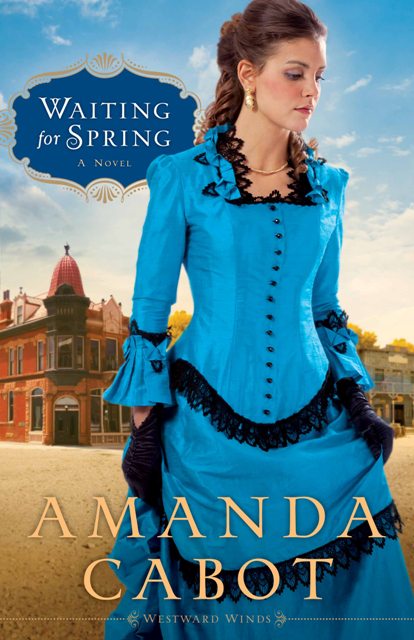
Amanda Cabot: Boom and Bust Wyoming Style


I don’t know about you, but when I hear the term “boom and bust” in the context of the American West, I think of gold, silver, maybe even oil.  Four-legged critters don’t come to mind, or they didn’t until I started the research for Waiting for Spring.  That was when I learned that cattle – the same thing that made Cheyenne the richest city per capita on earth in the late nineteenth century – had a boom and bust cycle like other get-rich-quick schemes.


Though Cheyenne was founded as a railroad town and though the Union Pacific and the territorial government were major contributors to the city’s growth, the primary source of wealth during the 1880s was cattle.  The demand for beef was high, and the presence of the railroad in Cheyenne made it easy to get meat east and to Europe.  But I’ve gotten ahead of myself.


Believe it or not, raising cattle in Wyoming came about almost by accident.  When bad timing forced one herd to remain in Wyoming rather than be driven east during the winter of 1854, the owner left, probably expecting the worst.  Instead, when he returned in the spring, he discovered that not only was his herd still intact, but the animals had thrived on the air-cured grasslands of eastern Wyoming.


If you’re from the East as I was, you may wonder about the term “air-cured grasslands.”  Eastern grasses, at least the varieties I was used to, are packed with nutrients during the growing season.  Winter’s another story.  The grass is often covered with snow, and even when it’s bare, there’s little to tempt a cow.  Wyoming’s grass is different.  The very dry climate of the high plains has the effect of curing the grass much as freeze-drying might.  The result is that the grass retains its nutrients throughout the winter, providing excellent forage for animals.  Once that first rancher discovered the secret, the word spread quickly.  I can picture the telegraphs buzzing with the news of good, year-round forage and an open range.  Who could resist the lure of free grazing?


Not many, as it turned out.  The result was an influx of ranchers and rancher-wannabes from around the world, some of whom banded together to form cattle companies.  All this culminated in what was called the “Great Grass Bonanza” of 1876 to 1886.  Some historians refer to these men as “cattle kings,” but I prefer the term “cattle baron.”  It was the cattle barons who built mansions, some of which even boasted their own ballrooms.  It was the cattle barons who frequented the opera house and who made their private club, the Cheyenne Club, the epitome of wealth and elegance in a

city that had more than its share of both.  It was the cattle barons who dominated the city’s social events.


But all things end.  This is, after all, a story of boom and bust.  The result of all those cattle barons and cattle companies coming to Wyoming Territory, determined that they too would become millionaires, led to overgrazing.  Quite simply, there were too many head of cattle on the prairie.  That would have been bad enough, even if there had been normal weather conditions.  As it turned out, the summer of 1886 was particularly dry, resulting in less than normal growth of the grass.  The cattle might have survived that, had it not been for a particularly brutal winter.  The snow started early, blanketing the ground with huge drifts.


Though it takes effort they can’t afford to expend, cattle can paw their way through snow to find the grass underneath.  But what if there’s a thick coating of ice?  That’s exactly what happened in January 1887.  The warm winds of a Chinook melted the snow, causing deep puddles.  That was followed immediately by a deep freeze.  You don’t need to be a meteorologist to know what happened next.  The ponds froze, leaving the cattle without water.  The grass was covered by ice so thick they couldn’t reach the grass.  Those poor animals died from hunger and thirst.  By the time spring came, the herds were destroyed, and so were the cattle barons’ fortunes.  The boom had ended.


It sounds pretty depressing, doesn’t it?  That might make you wonder why I chose this timeframe as the background for Waiting for Spring.  The truth is, I believe we can find hope in even the most dismal of circumstances, and so I made my hero a cattle baron.  And, yes, I gave him a happily-ever-after.


About Amanda

From the time that she was seven, Amanda Cabot dreamed of becoming a published author, but it was only when she set herself the goal of selling a book by her thirtieth birthday that the dream came true.  A former director of Information Technology, Amanda has written everything from technical books and articles for IT professionals to mysteries for teenagers and romances for all ages.  She’s delighted to now be a fulltime writer of Christian historical romances.  Her Texas Dreams trilogy received critical acclaim, and Waiting for Spring, the second in her Westward Winds series, was released in January.

A LITTLE HELP FROM MY FRIENDS by Charlene Sands


They say if you want something done, ask a busy person!

Raising my hand here!!   I’m ultra busy.  It seems to be the way of the world, so no complaints here.  There’s nothing I would trade in my life right now.  I’m blessed with a good family, nice home and recently two lovely granddaughters were added to the mix.  Little Everley is 16 months old and baby Kyra is 8 months old.  I watch them 2 to 3 days a week and it’s truly the highlight of my week.  The other hours are spent writing and I usually have 2 to 3 projects going at once. 

Right now, I’m working on a Harlequin Desire continuity called TEXAS RENEGADE RETURNS.  This story anchors the 9 book series and is a unique challenge for me to tie up loose ends of all 9 books and tell my hero’s story to a satisfying and hopefully compelling conclusion. 

It’s my next project that is baffling me. And I will admit to being frustrated with decisions that I don’t usually make on my own.

 I will be self-publishing a story that was one of my earlier works, called Like Lightning.   Luckily for me, my daughter is an editor and she’ll be my grammar guru.  One problem solved.

 The cover art will be pretty…not a clench scene or a sexy cowboy, but a cropped shot of a bride in a flowing lacy wedding gown, wearing cowgirl boots nestled next to a groom in cowboy boots.   We may not even see their faces. That’s to be determined by the cover artist.  Second problem solved.  

The original title (I never cared for…the cover and title an experiment for the line) really had nothing to do with storyline and now desperately needs a makeover. We’ve narrowed it down to a few titles and I’d love the wonderful bloggers at Petticoats and Pistols to give me your pick!  Will you help me solve Problem Three?  

Here’s is the story in a nutshell:

When a fire destroyed everything Maddie Brooks owned, rancher Trey Walker offered the pretty veterinarian a deal, he’d give her a place to stay and a barn to treat her animals if she’d help out at 2 Hope Ranch.  Maddie was sweet and sexy, and had “keeper” written all over her. But Trey didn’t dare act on the sizzling attraction between them—because of the Walker Curse.

Trey came from a long line of men who broke women’s hearts. And he was determined not to break hers, too. But with Maddie sleeping next door, she was impossible to ignore. He wanted to hold her, feel her body against his. He knew Maddie was the last woman on earth he should fall for. 

Which title do you find most appealing?  Which title would make you wonder about the story?  Which title would compel you to open the book and read the first few pages?

Rancher to Her Rescue

The Cowboy Contract

Contract with a Cowboy

Making Maddie Mine

Two Hope Cowboy

Cowboy Be Mine


I’ll be drawing a random winner today to win a book from my available backlist!! It’s the winner’s choice.  I hope to hear from all of you! And thanks for your help!!


.


Smooth-Talking the Hometown Girl my Digital Only book is 99 cents all during the month of March! 

 Amazon, Barnes and Noble and other online retailers

Kaki Warner: Bride of the High Country

In my latest release, BRIDE OF THE HIGH COUNTRY, I had to get my main characters from NY to Heartbreak Creek, CO.  Since the Transcontinental had been finished the previous year (1869), I picked the train.  Oops.


Even though train travel had been available in the east for three decades, cross-country hauls were rare.  Amenities, rarer.  No bathrooms, for instance.  But that was OK since the trains had to stop every twenty miles to fill the tenders with water.  If the passengers were lucky, there might be an outhouse beside the tracks.  Or if they had a dime, they could purchase a box lunch from an enterprising local, or enjoy a hot meal of beans, bacon and stale biscuit.  Then back on the train and the hard bench for another lurching, bouncing twenty miles. YIPEE.


But, of course, my characters were rich, so they traveled in style in a Pullman Palace Car, which was as plush as a gamblers’ steamboat, complete with velvet couches, carpet and wooden inlay around the windows.  There was even a washroom in every four-berth car, which emptied directly onto the tracks (and you thought it was hunters who decimated the buffalo—HA!)  Also included on the luxury runs were a parlor car and dining car, which served mostly-edible meals when your plate wasn’t sliding into your lap as the train clickety-clacked along.


Ah, the beautiful scenery and fresh air—if only you could see through the soot-streaked windows or breathe through the billowing smoke wafting back from the locomotive.  Still, it was faster than a three-month trip by wagon.  Plus, you got to shoot at stuff as you careened along at ten, twenty, or—OMG—even thirty miles an hour.  What a treat!


FACT:  Each Pullman Car was owned and operated by the Pullman Company, and was serviced by a white-jacketed Negro man universally named “George” in deference to his employer, George Pullman.


The West would have been a vastly different place without the influence of the railroads.  For one thing, they offered incentives for people to settle along the right-of-ways, thereby creating permanent customers for the goods they were hauling.  They also carved routes through impossible country, built thousands of trestles, bridges, and culverts, or—since anything steeper than a 3% grade was prohibitive in fuel, construction, maintenance, and equipment costs—they laid tracks miles out of the way to avoid them, thus opening up even more country.


FACT:  In constructing the Transcontinental, Irish immigrants laid tracks west from Nebraska, while Chinese workers came east out of Sacramento—and they arrived at the EXACT SAME SPOT at Promontory Summit!  Amazing!


FACT:  The standard width between rails was determined by the Romans when they built stone roads in England.  4’ 8.5” was the width between the wheels of a two-horse chariot.  Over time, those wheels wore such deep grooves into the stone that later wagon-makers had to space their wheels to fit them.  Then somebody figured wheels roll easier metal-on-metal, so they laid down metal-capped wooden rails, put flanged, metal-treaded wheels on their horse-drawn wagons, and soon coal was rolling out of Newcastle at record rates.  And all because of the width of two horses’ asses pulling an old Roman chariot.  Who knew?


So there you have it.  More than you ever wanted to know about the joys and hazards of riding the rails west.  Have you ever taken a cross-country train trip or slept in a Pullman?  Would you do it again?


Leave a comment, and your name will be entered for a signed copy of BRIDE OF THE HIGH COUNTRY.  Thanks for coming by, and my thanks to you, too, fillies, for letting me chat with your readers.

Cattle Ranch or Castle?

On Tuesday, my husband and I celebrated 20 years of marriage. He planned an elaborate mystery trip for me, not telling me anything about where we were going. Not even when we were on the plane. We were married in California and spent our honeymoon night at the legendary Madonna Inn in San Luis Obispo. Our only regret at the time was that we arrived after dark and left early the next morning so we didn’t get the chance to fully enjoy this one-of-a-kind inn. So where did we go after 20 years? Yep, back to the Madonna Inn for a leisurely 3 night stay. (I may have to do a separate post someday just on the Madonna Inn. Every room is unique, decorated with it’s own theme, rock showers, a two-story waterfall at the pool, and a steak house that is completely done in pink.)

One of the days we were there, we drove up to San Simeon to tour Hearst Castle. I’m sure many of you have heard of William Randolph Hearst, the multi-millionaire media mogul who hit his peak in the 1920s and 30s. But what you may not know is that the land where Hearst Castle is situated was originally a family cattle ranch where young William grew up with his parents.

In 1865, George Hearst bought 40,000 acres of California ranchland with the wealth he’d accumulated from his mining endeavors. By the time William inherited the land from his mother Phoebe in 1919, the ranch had grown to encompass over 250,000 acres. The hill where Hearst eventually built his palatial mansion started as a favorite family camping spot. When he inherited the land, however, he decided he was getting too old to camp out and went in search of an architect to help him “build a little something”.

The architect he hired was Julia Morgan, one of the first female architects in California. Hearst chose her for his project for several reasons, one being the fact that she’d studied in Paris. Since he was a collector of European art, he wanted his home to reflect European influences. But even more valuable to Hearst, was the fact that Miss Morgan had studied concrete construction. After the devastation of the great San Francisco earthquake in 1906, Hearst wanted to ensure his home withstood whatever the California landscape threw at him.

As Wes and I toured the grounds and the inner rooms of this castle which Hearst always referred to as simply The Ranch, we were awed by the antique furniture and amazing architecture. The grand assembly rooms were panelled with 15th century tapestries and wood carvings from old European churches that still had the wooden built-in seats attached. Nothing like being so practical as to bring in antique wall panelling that could double as additional seating.

Hearst also collected ceilings. Can you imagine? What a thing to collect. But each of the 165 rooms of the castle has a different ceiling. Some are elabroate wood carvings. Other are painted masterpieces. All are awe-inspiring. This blue one from one of the upstairs bedrooms was my favorite.

Some of my other favorite rooms included, of course, the library and Mr. Hearst’s study. He had the house wired for telegraph, telephone, and teletype so he could run his empire from this remote estate. Even before the Internet, he had a fully functioning, global, home office.

Here I am in one little nook of this huge library with wall-to-wall books.
How does your home office compare?


Now this castle is central California’s biggest tourist attraction, but if you are looking out your window on the way up the mountain, you can still see the hacienda where the cattle ranchers continue on the family legacy. Yes, Hearst castle may sit atop the hills of San Simeon, but the Hearst family still runs their cattle ranch there. A true rancher’s legacy never dies.

What Could Go Wrong? – A Trip Up the Cattle Trail with Regina Jennings


Karen here: We have a special guest with us today at Wildflower Junction. Regina Jennings is a debut novelist for Bethany House, and she’s written a fabulous western romance that  features a beautiful Mexican heroine and a handsome Texas rancher. They come from two different worlds, yet both carry secret heartaches that have dictated the paths their lives have taken. Paths that suddenly cross. (By the way – I read Sixty Acres and a Bride last week and loved it!) So without further ado . . . here’s Regina!

In my new release, Sixty Acres and a Bride, a heartsick rancher returning home from the cattle trail searches for the courage to reenter society. You’d think going to church socials and attending barn dances wouldn’t be that scary, but Weston would much rather tangle with the dangers of Old Chisholm’s trail.

Today, whether you’re in Central Texas or Oklahoma the name Chisholm is as common as windstorms, oil derricks and football stars. Seeing how the cattle trails were to 1870 ranchers what the personal computer was to Silicon Valley, it’s only natural that the name is applied to everything from churches to subdivisions. The Chisholm Trail was responsible for many fortunes—and misfortunes.

Walking cattle up a trail sounds simple enough—one cowboy for every 200 cattle or so, just moseying them northwards as they ate and sunned in the mild spring temperatures.

Of course, while the spring temperatures in Oklahoma and Texas might be mild, the weather is anything but. Thunderstorms can be a weekly occurrence capable of producing hailstones the size of grapefruits, not to mention tornadoes. The cowboys had to hide in a… um… actually shelter was scarce on the Chisholm Trail. While the flat prairie was ideal for driving cattle, it left cowboys as vulnerable as a spider in a frying pan when storms struck. And if you found a tree to huddle beneath, you risked dying of a lightning strike.

When lightning did strike there was a good chance you’d get yourself a stampede (or stompede as they sometimes called it). Herds of up to 3000 cattle could run from 5 to 10 miles, trampling each other to death and anything else that stood in their way. In good times, the trail bosses paid tolls for safe passage across Indian Territory, but some stampedes were purposely started by opportunists looking to steal a few head of cattle or horses in the confusion.

Another peril our stalwart drovers faced was river crossings. Once the cattle sidestepped any quicksand they could swim across, but a branch floating downstream was all it took to turn the high-strung longhorns. Soon the herd would be swimming in circles—called milling—growing weaker and weaker until they were swept downstream or drowned. Halting a milling herd was extremely dangerous as the cowboy and his horse could easily get pulled under by the thrashing cattle before they could lead them to the riverbank.

So why risk life and limb? Because those cattle that were stripping their pastures and trampling their gardens were worth $40 a piece at the railhead in Kansas. In Texas they’d only bring $4 a head. That 700 mile trail was all that stood between a man and his fortune. Naturally the common cowboy’s pay wasn’t that good, but he had dreams of someday driving his own herd to market.

Unless a wealthy rancher like Weston wanted to make himself scarce, he most likely would’ve hired those hapless cowboys, but our protagonist needed space and there’s plenty of space available on the trail. Fortunately for all involved, Weston couldn’t hide forever. There’s a surprise waiting at home in the lovely form of a senorita who is in desperate need of a hero.

How about y’all? Do you have any stories of animals behaving badly?

Leave a comment to be entered for a chance to win a copy of Sixty Acres and a Bride.

Sixty Acres and a Bride

She’s Finally Found a Place to Call Home . . .
How Far Will She Go to Save It?

With nothing to their names, young widow Rosa Garner and her mother-in-law return to their Texas family ranch. Only now the county is demanding back taxes and the women have just three months to pay.

Though facing eviction, Rosa falls in love with the countryside and the wonderful extended family who want only her best. They welcome her vivacious spirit and try to help her navigate puzzling American customs. She can’t help but stand out, though, and her beauty captures attention. Where some offer help with dangerous strings attached, only one man seems honorable. But when Weston Garner, still grieving his own lost love, is unprepared to give his heart, Rosa must decide to what lengths she will go to save her future.

Love Those Longhorns

Not being from Texas, I was hesitant to tackle this topic.  But I’ve always been a fan of  those tough, rangy cattle with their amazing horns, stretching as long as seven feet from tip to tip.  Longhorns are, and always will be, a symbol of the American West.

Their ancestry dates back to cattle brought to Mexico by the Spanish.  Some of these cattle went wild.  Over time they developed the resilience and survival skills that make Longhorns what they are today.  Early Texas settlers mixed the blood of these feral Mexican cattle with their own eastern cattle.  The result was a rugged, long-legged animal with spectacular horns and a coat that could be blue, yellow, brown, black, red or white, plain or speckled.   

But Longhorns are more than looks.  They have strong survival instincts and can find food and shelter in rough weather.  Longhorns can breed well into their teens or longer, and they’re known for easy calving.  A Longhorn cow will often go off on her own to have the calf in a safe place.  The calves can stand up sooner after birth than other breeds.

With their long legs and hard hoofs, Longhorns made ideal trail cattle.  After the civil war millions were driven to market.  They also stocked most of the new ranches on the Great Plains.    But times changed for the breed.  The “Big Die-up in the winter of 1886-87 and the spread of barbed wire fences brought an end to the open range.  Breeds like the white-faced Herefords put on weight faster and had fattier meat, providing needed tallow.  Ranchers crossed these breeds with Longhorns to produce hardier stock.  By the 1920s,  only a few small herds of Longhorns remained.

In 1927, Longhorns were saved from near extinction by the U.S. Forest service, who collected a small herd to breed in Oklahoma.  Other groups in Texas gathered small herds to keep in parks.  They were regarded as curiosities, but the stock’s longevity, disease resistance and low-fat, low-cholesterol meat revived the breed as beef stock—although many ranchers keep them purely as a link to Texas history.

Does anybody out there have experience with these amazing animals?  Any good stories?

There are no Longhorns in my March Western, THE LAWMAN’S VOW.  But you can get a sneak peek and an excerpt on my web site: http://www.elizabethlaneauthor.com

Watch for a giveaway next month.

Petticoats & Pistols