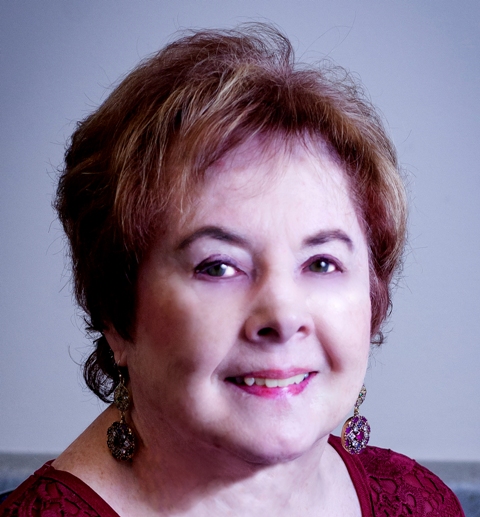
Gina Danna: The Frugal Housewife

The Fillies welcome historical author Gina Danna to the Junction. She has a giveaway at the bottom so leave a comment to get in the drawing.


Last winter in Texas, it was cold enough I pulled out my favorite Polo sweaters to wear and found holes! Moth holes! I pulled a couple more & the little buggers were chomping on most of my Polo and Izod sweaters. They love wool and here they’ve got good – expensive – taste but oh I was sooo mad! What do people do today when this happens? After muttering a few colorful metaphors, the sweater gets tossed, as we’ve become a throwaway society. Broken, buy new! But that’s not how people used to be…

For centuries, many people did not have the wardrobes we have today. Unless you were rich, the majority had a few articles for everyday and one dressy piece for church. During the time of the American Civil War, a great deal of men’s clothing was made of wool. Pants, frockcoats and waistcoats were wool. Why? Because wool is a great durable fabric. Made of tightly woven fibers, it held dirt, mud, and anything else on the surface unlike cotton, which absorbed it. If mud got on wool trousers or skirt, it’d be allowed to dry then a fabric beater, like a carpet beater, would be struck on the item and the dried wool would flake off.

For ladies with those long skirts that hit the floor, what did they do to make them not fray or mar with dirt? Many put a ruffle around the bottom and it took the filth off the streets, sidewalks and home. If it didn’t wash out, the ruffle was torn from the skirt and a new one attached. A new ruffle made of another color or new trims, made the skirt look new. Or they lined the bottom with twill-tape, sewn on the inside so only a glimpse of it showed on the hemline. Colored to match the skirt, this piece saved the hem from dirt and once it was beyond redemption, it was an easy to remove and cheap to replace.

During the Civil War, Southern ladies had to become the Frugal Housewife and find alternatives as the Union naval blockade kept imports out. Therefore, fabric from the North or England wasn’t available, neither were many notions such as stays for corsets, etc. So they redesigned what they had. Fixed their hoops by narrowing them or reverting to corded petticoats. They streamlined their skirts, cutting fabric to repair another area, thus making the skirt not as wide as fashion dictated. Pagoda sleeves were made narrow, cuffs and collars made from other scraps and they reversed the fabric to give it a ‘fresh’ appearance. Women already used shank buttons on their bodices. These buttons were not truly sewn on but the shank went through the slit at the buttonhole and was held there by a ribbon that ran the length of the bodice. To give a change of appearance, they pulled the ribbon, releasing the buttons and they threaded different ones in their place. Quite the ingenious way to make one outfit look like five.

Surprisingly enough, The Gone With The Wind portrayal of using curtains for material wasn’t that far off the norm.

During this time, ladies changed clothing many times a day. During the winter, it may be 3-5 times, summer 7-9 depending. They had their morning gown, working gown, cooking dress, traveling outfit, day dress as well as one for evening supper, evening party and ballgowns. It might sound insane to change but it was a way to keep the outfits cleaner than wearing one all day.

Laundry was a nightmare – an all day affair literally. Washed by hand with a scrub board and soap, it was a task assigned to Mondays. Whites were done in boiling water, colors in cold. Dresses were roughly 7-8 yards of fabric. A big piece to wash so they deconstructed it – bodice from skirt, sleeves from bodice – so smaller pieces to scrub and to dry. Drying was on clothesline outside. Whites placed in sunlight to bleach them whiter; colors turned inside out and hung in the shade to keep from fading. Ironing was with a cast-iron iron like we see for decoration today. It had to warm enough to iron but not hot enough to burn. Regardless of societal class, when they could afford to, they hired a 12 year old to do it for them. I read an account of a lady who wore a new dress in May and didn’t wash it until August! Yet some had to be done and it was much easier to wash collars and cuffs, which get noticeably dirty.

But what about those moth holes? They FIXED them. Women learned how to sew – whether they were good or not didn’t matter. They learned it enough to be able to repair things. Knitting was also a skill majority had. With that knowledge, and using things like cedar chests, they could keep most of their woolen fabric safe.

So what about my moth-holed sweaters? When my mother was alive, she fixed them. My mother was a Depression era child. These children were educated about getting by on nothing and making things last. My mother was great at sewing. Made all my childhood clothes. I remember wishing for store bought clothes…difficult being the one with the pretty – and unique – outfit. She also knitted and for these, she knew how to get into the sweater and reknit the holes closed. Alas, I never acquired those skills…

So, I did the best I could – I used needle and thread to sew them close.

There actually is a book on how to be a frugal housewife: The American Frugal Housewife, Dedicated To Those Who Are Not Ashamed Of Economy by Mrs. Child, 1833. A fascinating read.

Makes you wonder – could you become a “frugal housewife”? I’m giving away one digital copy of RAGS AND HOPE to someone who comments. The drawing will be Sunday.

* * * *

RAGS & HOPE –
 

Widower Colonel Pierce Duval only wants return to his Union command in Tennessee. A chance and harrowing encounter with a true-blue Southern belle stirs emotions he thought long buried. When her safety is at stake, how can he not help her? 

Cerisa Fontaine ran away for a new life far from her family’s awful secret. But her controversial marriage and southern drawl make her a pariah in the North. With her husband death, Cerisa is forced to seek employment at the only establishment that will accept her: a brothel.

To survive, Pierce and Cerisa embark on a journey to Tennessee posing as a married couple. But as secrets stand between them, passion wages its war within them. Do they  remain loyal to their cause, or give in to their heart’s desire?


AMAZON  |  iBOOK  |  KOBO  |  Nook 


The Cowboy Meets His Match & Book Giveaway

His first mistake was marrying her;

                  his second was falling in love.                               

How would you feel if you suddenly found yourself married to the wrong person?  That’s what happened to Chase and Emily in The Cowboy Meets His Match. 

Chase has to marry per his father’s will in order to keep the family ranch. Emily has just traveled to Texas from Boston as a mail-order-bride.  After vows are exchanged and the bride’s veil removed, Chase realizes he’s married to the wrong woman. His new bride has no affinity for cattle and doesn’t even know how to ride a horse! He immediately demands an annulment, but as the following scene shows, that doesn’t work out the way he’d hoped. 

(For a chance to win the book, leave a comment.  Giveaway guidelines apply.)

~~~~~~~~

With a glance at the clerk, the judge drew a handkerchief out of his pocket and dabbed at his sweaty forehead. Replacing the handkerchief, he cleared his throat. “I’m sure this isn’t the first time something like this has happened.” The judge’s hollow laugh was met with scowls. Growing serious, he reached for a leather-bound book and thumbed through the pages.

“Ah, here we are,” he said, sounding relieved. “Annulment.” Adjusting his spectacles, he quickly scanned the page. “This should only take a few minutes. You just have to answer a few questions.” Finger holding his spot, he looked up and asked in all seriousness, “Why do you want an annulment?”

Chase reared back. “Why? Because I married the wrong woman, that’s why!”

“Yes, yes, yes, I know that.” The judge stabbed the page with his finger. “But that’s not listed here as legitimate grounds for annulment.”

The uncle jabbed the muzzle of his shotgun on the floor and placed both hands on the butt. “What are legitimate grounds?”

The judge’s finger moved down the page. “Bigamy, for one.” He looked up. “Are either of you married?”

“Yes, we’re married,” Chase said, his voice thick with impatience. “To each other!”

The uncle stared straight at Emily. “I think he’s asking if either one of you is married to someone else.”

Emily’s eyes flashed him a look of disdain. If it wasn’t for him and his veiled threats, neither she nor Chase would be in this predicament. “I’m not married. Or at least I wasn’t until a few minutes ago.”

The judge checked the book again. “Okay, forget that. Are either of you underage?” The judge had directed the question to her.

“I’m twenty-two,” Emily said.

“Twenty-six,” Chase said.

The judge’s finger moved down the page again. “Are either of you related to the other?”

Chase shook his head. “Absolutely not.”

The judge peered at them over the frame of his spectacles. “Are either of you”—he cleared his throat—“unable to consummate the marriage?”

Emily’s face flared, and Chase threw up his hands. “This is getting us nowhere.”

The judge held up the palm of a hand. “Now hold on. There’s more.” He glanced at the uncle’s shotgun. “Were either of you coerced into the marriage?”

Emily felt a flicker of hope, but before she had a chance to answer in the affirmative, the door flew open. A man stormed into the chambers with a bride in tow, and he looked fit to be tied.

The uncle stepped in front of the new arrivals, his shotgun raised in a threatening pose. The newly arrived bride gasped and fell back.

“Sorry, Royce,” the uncle said. “You’re too late. The will said the first one married will have full ownership of the ranch.” He tossed a nod at Emily. “Meet Mrs. Chase McKnight, your new sister-in-law.”

Amazon

B&N

Creating a Multi-Author, Interrelated Series is Easy…Right?

This weekend we have Bestselling Author Charlene Raddon visiting. She’s heavily involved in writing big series’ with many authors and has become quite a pro at it. She’s just finishing up The Widows of Wildcat Ridge. So what’s next? Maybe you can ask her. Please give her a big welcome.

How many of you have followed the series, The Widows of Wildcat Ridge? For those who haven’t, this series consisted of sixteen novellas about the widows left behind after an explosion decimated the Gold King Mine in Wildcat Ridge, Utah Territory, 1884. Virtually every miner died. A second explosion killed many townspeople who had rushed in to try to save them. When it was over, the town of about five hundred residents had been reduced to almost 50 widows, their children and a few men.

If you think my series sounds similar to the film series, Godless, I’ll take that as a compliment because Godless was an excellent production. Had I seen it before coming up with my idea, the Widows of Wildcat Ridge would likely never have existed. No matter. The series did exist and has been extremely successful.

But now it has come to an end. The sixteenth, and final, book of the series came out on May 15.

Ophelia, book 16, was my fourth book in the series. Each was fun to write with different characters and challenges. All the stories in the series were interrelated, meaning that each likely contained or at least mentioned some events and characters from previous releases. This made the work much more difficult, confusing and problematic. But also more fun.

Each widow suddenly found herself alone, some with dependent children, no mate, no funds or income, and little hope. What did they do? They gathered together, sharing supplies and joining forces to bringing their town back to life and produce incomes for themselves and their families. They held a horse auction to bring in people, particularly marriageable men. They turned a nearby hot spring into a 19th century version of a spa.

They didn’t sit home and bawl. They dug in their heels and did what they must to survive. True pioneers, every one of them, and each had to deal with the series villain, Mortimer Crane, who owned the town (or believed he did), plus other antagonists unique to each tale.

In my first book of the series, Priscilla, Book 1, the minister’s daughter, who lost her husband and father in the second explosion, takes the town leaders to see a hot springs she had recently found. She comes home to find an unconscious man bleeding all over her bed from a gunshot wound. Braxton Gamble had been tricked into taking part in a bank robbery. Because he’d escaped—with the stolen funds—the outlaws are after him.

My second book, Thalia, Book 7, centers around Thalia’s long-time crush on Dinky Moon, the town drunk. Sobering him up and keeping him that way presents quite a challenge, but she handles it, along with a stranger who comes there believing she has something belonging to him.

In Cadence, Book 13, the series villain, Mortimer Crane, proves himself as evil as everyone believed him to be. On finding a young woman in dire straits, with a little sister in tow, he hires Cadence as a maid and brings her to Wildcat Ridge. Once there, she discovers the establishment she’s to work at is a bordello and her new employer wants more from her than her talent with a dust cloth. To keep her there, he takes her little sister away and refuses to tell where.

Finally, we have Ophelia, Book 16, the last of the series.

Ophelia was Mortimer Crane’s wife. After twenty years of a so-so marriage, she learns just who she had married—a letch, a liar, and a cheat. She also learns something else that gives her the key to controlling him. So, she leaves the house in Salt Lake City Mortimer had installed her in to keep her out of his affairs, moves to Wildcat Ridge, and sets about starting a new life. On her first day in town, she comes face to face with a man from her past, one she had loved with all her heart. Together, she and Brody Duvall must find a way to defeat Mortimer. Can they do it?

Creating this series was a huge project that could never have taken place without the wonderful authors who joined me in this endeavor: Caroline Clemmons, Zina Abbott, Linda Carroll-Bradd, Pam Crooks, Kit Morgan, Christine Sterling, Tracey Garrett, and Kristy McCaffrey. I’ve made new friends, not only my fellow authors, but many fantastic readers who helped to make the series a success.

And I learned a ton! About working with other authors and managing a big multi-author series. A quarter of the way through, I told my non-involved friends to shoot me if I ever said I was doing another one. These days, I’m keeping one eye on my back trail.

If I had this project to do over again, I’d make sure it was all laid out, all the decisions made, before ever inviting authors to join in. We’d have online meetings to decide further details and have one uninvolved person read each book, create a book Bible for them, and keep track of who did what when to avoid conflicting information in the stories. When did that horse auction take place? What was the marshal’s name? Has anyone named the owner of the bakery? What businesses exist in this town? Are they open or closed? Details, details, details. So much to keep track of.

Ah, but it’s done now, and every story is a gem.

If any of you consider the idea of starting your own multi-author, interconnected series, contact me. I might be able to save you some time.

As for the future, keep your eyes and ears open because even though the Widows of Wildcat Ridge is finished, some of its authors are not.

Here’s every book in the series on Amazon!

#kindleunlimited

Are you a big fan of these continuing series involving multiple authors? I’d like to hear your answers. I’m giving away two $5 Amazon gift cards so leave a comment to enter.

***********

Charlene Raddon is an Amazon bestselling author with fourteen western historical romance novels to her credit. Her books have won contests and awards. She is also a book cover artist who specializes in historical covers and lives in Utah with her husband and the most neurotic cat ever.

AMAZON  |  TWITTER  |  FACEBOOK  |  GOODREADS  |  BOOKBUB  |  PINTEREST |  INSTAGRAM


Jodi Thomas: The Power of Friendship

We’re so excited to have Jodi Thomas back to visit. We’re not sure what book this makes her but it’s over 50. Miss Jodi always has something interesting to talk about and this is no exception. We think you’ll enjoy it–and her giveaway at the end of the post. So make her welcome.

When I began writing THE LITTLE TEA SHOP ON MAIN, two stories came at once.

First, I wanted to write a story about a man who loved three women. One was his best friend, one his neighbor who needed a hero to turn to as they grew up, and the last was the love of his life even if she didn’t always agree with his plan. Readers will love Jack as he slowly figures out that the girls don’t belong to him; he belongs to them.

The second theme I wanted to write about was the power of friendship. My three little princesses grow to be close friends and maintain that friendship all their lives.


The number of close friendships between writers is peppered through history. It has been my experience with writers who become my friends that knowing each other makes us both stronger. We learn from one another, push each other and sometimes even compete.

In my first writing class, I heard Dee Pace read and I said I’d love to be able to write that good. When the class was over everyone agreed to keep meeting at the library. The next week, she and I were the only two who showed up. We began helping each other. Learning how to write. Learning the market. Entering contests.

Dee said once that when I won, she felt she’d won too. I realized I felt the same way. She’s now in Heaven, but every now and then I swear I hear her whispering, “Write deeper, Jo.”

There are friends you form a bond with and you remain close to even when there are months or even years you don’t talk. For some of us there is a very rare friend who follows you through all your life. I’ve heard it said that having one such friend for a lifetime is a very rare gift. They’ve known you all your life and still like you anyway.

I’ve been blessed with one–Reta. Our mothers were friends. There was never a time that we didn’t know one another. We went through school together and even were together when we met our future husbands.

As the years passed, we went different ways but were always still close when we saw one another. But, in good times and bad, I’ve always known she was a phone call away. (Below is a picture of the two of us a few years after we graduated.)

In my new book, THE LITTLE TEASHOP ON MAIN I had great fun watching my characters become friends and influence one another’s lives. My main characters were very different, one wild and creative, one grounded and brave, and one shy. When they really needed to talk or celebrate, or even cry, they’d have tea. The ritual became the thread that held them close no matter how far apart they might be in miles.

Let me know how your best friend enriches your life. I will be drawing for one print copy of THE LITTLE TEASHOP ON MAIN.

AMAZON  |  B&N  |  APPLE  |  KOBO  | 

Ada Carnutt – U.S. Deputy Marshal

Hello everyone, Winnie Griggs here.

Back in January I started a series of articles about 10 amazing women who paved the way for females in various branches of law enforcement. If you missed the prior posts you can find them here:

Kate Warne, the first female Pinkerton Agent.

Phoebe Couzins, the first woman to be appointed to the U.S. Marshal service.

Marie Owens – First US Female Police Officer

F.M. Miller – Female Deputy Marshal to the Indian Territory


This month I want to talk about Ada Carnutt, another trailblazing female Deputy U.S. Marshal.

Ada was the daughter of a Methodist minister and as such had a strong sense of ethics. Ada was 20 when the Oklahoma Territory opened to settlers and when her sister and brother-in-law moved there she joined them.

Shortly thereafter she took a job as the Clerk of the District Court in Norman, Oklahoma as well as that of Deputy Marshall to U.S. Marshal William Grimes.

The arrest for which she is best known occurred in 1893 when she was 24 years old. Marshal Grimes sent her a telegram with instructions to send a deputy to Oklahoma City to apprehend a pair of outlaws. The notorious duo, named Reagan and Dolezal, were wanted for forgery. Unfortunately all the other deputies were busy with other cases, so Ada decided to take matters in her own hands. She headed for Oklahoma City on her own and when she arrived she learned the two criminals were in a local bar. Unwilling to enter a bar unless absolutely unavoidable, she asked a passerby to go inside and ask them to step outside. She used the added incentive of asking that they be told a lady was waiting to have a word with them.

Apparently that did the trick because Reagan and Dolezal stepped out to see who this ‘lady’ might be. Ada proceeded to read the warrants and then declared them under arrest. The pair, who were well armed, thought it a joke and even allowed her to place handcuffs on them. However, their laughter soon turned to anger as they realized the joke was on them. Ada proceeded to take them in by train to the marshal’s office in Guthrie, Oklahoma.

The newspapers of the day did report the incident, noting her bravery and then ended it with a note that afterwards she went back to her favorite hobby, that of china painting.

The U.S. Marshals Service said of her “Like all deputies of her era, she had to be extremely tough and ready to face a wide range of situations.”


There you have it, another very brief sketch of the trailblazing life of a brave and ahead-of-her-times woman. What struck you most about her? If you’d already heard of her, did you learn anything new, or do you have more to add to her story?

I’m so excited about my new release that I’ve decided I’ll give a copy away to one reader who leaves a comment on this post.

THE UNEXPECTED BRIDE

Had she stepped out of the frying pan just to land in the fire?

Fleeing an arranged marriage, socialite Elthia Sinclare accepts a governess position halfway across the country. But when she arrives in Texas she finds more than she bargained for – more children, more work and more demands. Because Caleb Tanner wants a bride, not a governess. But marrying this unrefined stranger is better than what awaits her back home, so Elthia strikes a deal for a temporary marriage. She says I do and goes to work—botching the housework, butting heads with her new spouse, loving the children.

Caleb isn’t sure what to make of this woman who isn’t at all what he contracted for—she’s spoiled, unskilled and lavishes her affection on a lap dog that seems to be little more than a useless ball of fluff.  But to his surprise she gets along well with the children, works hard to acquire domestic skills and is able to hold her own with the town matriarchs.

Could the mistake that landed him with this unexpected bride be the best thing that ever happened to him?

You can find more info or get your copy HERE


Bicycling: Not Just For Men Anymore

We’re thrilled to have bestselling author Mary Davis this week. She’s written over thirty titles in both historical and contemporary inspirational romances. Please show her a warm welcome.


“Let me tell you what I think of bicycling. I think it has done more to emancipate women than anything else in the world. I stand and rejoice every time I see a woman ride by on a wheel. It gives women a feeling of freedom and self-reliance.” Susan B. Anthony.

The safety bicycle gave women independence like nothing else. A lady who had a bicycle could go places that were too far to walk without being dependent on a man to either take her or hitch up a buggy for her.

Before 1890 bicycles were more of a novelty and a challenge rather than a legitimate mode of transportation. They were hard to ride, hard to get on, and hard to steer.

The first vehicle that could really be classified as a bicycle was invented in 1817. Also known as a running machine, velocipede, Draisienne, or dandy horse. It had two same-sized wheels and no pedals. A man would straddle it, sitting on the seat, and use his feet to propel himself and the velocipede forward. I say “man” because this was not a machine suitable for ladies in dresses.

The 1863 Velocipede had steel wheels but had the improvement of pedals on the front wheel—direct drive, fixed gear, and a single speed. This version was popularly known as the boneshaker because that’s what it did on the cobblestone roads of the day—shake your bones.

In 1870 came the Ordinary or Penny Farthing also known as the “high wheeler.” That’s the one with the huge front wheel and the tiny back wheel. The inventors realized that a larger wheel meant you could go farther with one revolution. The pedals on the front wheel made steering a challenge because while pushing one pedal and then the next, it could make the front wheel veer one way and then the other. But the solid rubber tires and long spokes made for a much smoother ride than its predecessors. Not only was this one difficult to get up on because it was so high, but the rider was often above the center of gravity. If they hit a rock that stopped the front tire, over they would go onto their head. This is where the term “taking a header” came from. This was the first to be called a bicycle.

Over the next two decades, the inventions of the ball bearings, caliper brakes, chain drive, pneumatic tires, and improvements in metallurgy all contributed to the 1890 safety bicycle. This bicycle most closely resembles the bicycles of today. Two same-sized tires, pedals in the center of the vehicle rather than on a wheel, chain driven, inflatable tires, and a lever hand brake. The chain drive revolutionized the bicycle. With the safety bicycle, women gained an independence like they’d never had before.

Not only women in the cities, but women out west embraced the freedom the bicycle afforded them. Not all women thought bicycles were fitting for women, finding it too brash and unladylike.

In THE DAUGHTER’S PREDICAMENT, Isabelle, the heroine, enjoys the freedom her safety bicycle gives her. Even though some people don’t think it’s appropriate for a young lady and too bold. But each of her suitors are modern men who find her eccentricity endearing.


MARY DAVIS is a bestselling, award-winning novelist of over thirty titles in both historical and contemporary themes. She is the author of (Book 1 in the Quilting Circle series), “Zola’s Cross-Country Adventure” in the MISSadventure Brides Collection, “Holly & Ivy”  in A Bouquet of Brides Collection, The Prodigal Daughters series from Love Inspired, and Newlywed Games. Coming in 2019, The Daughter’s Predicament (Book 2 in the Quilting Circle series) and “Bygones” in Thimbles and Threads. She’s a member of ACFW and active in critique groups.

Mary lives in the Pacific Northwest with her husband of over thirty-four years and two cats. She has three adult children and two incredibly adorable grandchildren.


Newsletter  Blog  FB  FB Readers Group  Amazon  BookBub


THE DAUGHTER’S PREDICAMENT (Book 2 in the Quilting Circle series)

Can a patient love win her heart?

   As Isabelle Atwood’s romance prospects are turning in her favor, a family scandal derails her dreams. While making a quilt for her own hope chest, Isabelle’s half-sister becomes pregnant out of wedlock and Isabelle–always the unfavored daughter–becomes the family sacrifice to save face. Despite gaining the attention of a handsome rancher, her parents are pressuring her to marry a man of their choosing to rescue her sister’s reputation. A third suitor waits silently in the wings, hoping for his own chance at love.

   Isabelle ends up with three marriage proposals, but this only further confuses her decision. A handsome rancher, a stranger, and an unseen suitor are all waiting for an answer. Isabelle loves her sister, but will she really allow herself to be manipulated into a marriage without love? Will Isabelle capitulate and marry the man her parents wish her to, or will she rebel and marry the man they don’t approve of? Or will the man leaving her secret love poems sweep her off her feet?

Have you or do you enjoy riding a bicycle? Maybe you’ve had a few misadventures. Leave a comment to enter the drawing for one Kindle copy of The Daughter’s Predicament.


Old Feuds and New Loves…


This is a win it before you can buy it kind of day.

I have a wonderful new Love Inspired Western due to release next month and the members of the Love Inspired Book Club (through Reader’s Service) already have this book and I’m so glad that these thousands of early readers are loving it…

It’s a beautiful story. The one we’ve been waiting for, the third Fitzgerald sister has come to Idaho and she doesn’t come meek and mild.

No, ma’am.

Charlotte Fitzgerald may have been raised as a cossetted little Southern Belle but she’s hit the wall now that her no-good father stranded his daughters with no money, no jobs and a tractor load of debt… not to mention he kind of ran the family’s good name through a wood chipper, then a meat grinder for good measure…

But Charlotte’s a game one. She’s finished veterinary school with an internship in horse care and she’s been raised around Fitzgerald horses from the cradle. If there’s one thing Char knows, it’s horses… and now she knows how to provide their medical care, so that’s a big plus in a northern region that’s embracing all kinds of new ranches, including her uncle’s multi-million dollar operation that she’ll get a part of if she can work from the ranch for one year.

One year is nothing to Char… she’s ready to spread her wings and fly with her brand new (and heavily mortgaged) mobile veterinary van, the likes of which Shepherd’s Crossing has never seen… but not everyone who’s taken to horses takes to Fitzgeralds and when Charlotte is called in to pass judgment on a group of badly neglected horses… and disagrees with the older, established vet in the area… she sets herself up for a fight. And when the handsome Native American horse breeder agrees with her, and saves a horse his family shares a bad history with, the stakes get higher.

Trust doesn’t come easy to Char… And honesty is clutch with Isaiah so can he see the past for what it is before it ruins the present?  And is Char willing to give him a second chance after all she’s been through?


This is a great story of two strong people with vigorous roots and how sometimes those roots can twist and turn the wrong way, strangling the tree… but with the right care and trimming, even the threatened tree can thrive.


(Sorry, we’re having technical difficulties, the picture comes through as broken no matter which one I use or where I put it… silly blog! A bit temperamental today, I’d say! Here’s a link so you can see this great cover: LINK TO HEALING THE COWBOY’S HEART! )


Does forgiveness come easy to you? Or do you have to dig deep to move beyond things?

Give me a comment below and let’s talk grudge-holding and forgiveness. I came from a long line of grudgeholders on the Herne and Logan sides of the family, and those folks made the Hatfields and McCoys look like Mr. Rogers Neighborhood… so you know what I’m talking about!

I don’t hold grudges. It’s like the most unhealthy thing you can do, it’s so destructive to relationships but mostly to us. To our hearts, our souls, our mental health. Forgive and move on…

Life’s too short to be a tempest in a teapot!

Not Always by Choice: Mail-Order Brides

I love reading and writing mail-order bride stories set in the Old West.  I’m happy to say that next month my next mail-order bride story The Cowboy Meets His Match will be published. And boy, oh, boy, does that couple ever clash!

It’s hard to imagine a young woman traveling west to marry a man she’d never set eyes on. The original catalog-bride business grew out of necessity. The lack of marriageable women in the west was partly responsible, but so was the Civil War. The war not only created thousands of widows but a shortage of men, especially in the South.

As a result, marriage brokers and heart-and-hand catalogs popped up all around the country. According to an article in the Toledo Blade, lonely men even wrote to the Sears catalog company asking for brides. (The latest such letter received by Sears was from a lonely marine during the Vietnam War.)

In those early days, advertisements cost five to fifteen cents, and letters were exchanged along with photographs. Fortunately, the telegraph and train made communication easier.

Not all marriage brokers were legitimate, and many a disappointed client ended up with an empty bank account rather than a contracted mate.

For some mail-order couples, it was love (or lust) at first sight. In 1886, one man and his mail-order bride were so enamored with each other that they scandalized fellow passengers on the Union Pacific Railroad during their honeymoon.

Not every bride was so lucky. In her book Hearts West, Chris Enss tells the story of mail-order bride Eleanor Berry. On the way to her wedding, her stage was held up at gunpoint by four masked men. While signing the marriage license, she suddenly realized that her new husband was one of the outlaws who had robbed her.

No one seems to know how many mail-order brides there were during the 1800s, but the most successful matchmaker of all appears to be Fred Harvey.  He wasn’t in the mail-order bride business, but, by the turn of the century, five thousand Harvey Girls had found husbands while working in his restaurants.

Under what circumstances might you have traveled west to marry a stranger?

His first mistake was marrying her; his second was falling in love.

Amazon

B&N


Left Foot, Right Foot


Do you remember what it was like to put your foot into the wrong shoe? Young children do this all the time. I still remember how uncomfortable it felt when I got in a hurry and wasn’t paying attention. Shoot, sometimes I still do this! It feels horrible.

But did you know that up until as late as 1850 shoemakers didn’t differentiate between the left and the right? They made both shoes straight with no curve in them. I can only imagine how awful they were to wear.

Change came with the invention of machinery for making shoes and they were finally able to produce left and right shoes.

I had so much fun writing SAVING THE MAIL ORDER BRIDE that releases in two weeks. Nora and Jack are so funny. Nora has a real problem with her shoes and the pair she wears coming West to marry are very worn. The heels are shaky and the shoes are too narrow.

The book opens with a stagecoach carrying her and an outlaw who’d just been arrested. Everything is so new to her.

Complication #1. He’s attached to a marshal by manacles (which are two handcuffs separated by a six-inch chain.) When the stagecoach wrecks and kills the marshal, Jack Bowdre asks Nora to get the key from the dead lawman’s pocket.

Complication #2. The second Nora unlocks the cuffs she slaps them around her own wrist and tosses the key away because she’s terrified Jack’ll leave her at the mercy of the man who’s following her.

To put it mildly, Jack is furious. Now he’s handcuffed to a woman he’s never seen and he’s about to lose his one chance of escape.

Before leaving the wreck, he removes the marshal’s boots, thinking they might come in handy. He and Nora spend a little time searching for the key but can’t find it and he hears riders up above the ravine, so he rushes her away.

Complication #3. Nora can’t keep up because of her shoes. He stops and yanks them off, wraps her feet in one of her petticoats, and puts the dead marshal’s boots on her. They can move much faster. Then later on, she switches those boots for a smaller pair that belong to the man chasing her.

They’re afoot with nothing but the clothes on their backs and a posse close behind. It’s five days to reach the safety of the outlaw town and the rugged terrain is unforgiving. The odds are stacked against them.

Oh, and I forgot to mention that Jack didn’t tell her he’s an outlaw—one of several things he left out of his letters. Nora has her trials.

I think you’ll love this fast-paced fun story, the second in my Outlaw Mail Order Brides.

Click HERE for a link to an excerpt.

I also have a Spring Sweepstakes going on. Enter to win an e-reader plus 25 historical western romances. Margaret Brownley has hers in this too. Click on the image to enter.


I have a huge problem with shoes myself because my feet and ankles swell. Dressy shoes are the hardest to find. I just can’t find any that fit well, look decent, and are comfortable. Boots really are the best but not with a dress. I’ve finally gone to the Clark’s brand and they work pretty well. Do any of you have a similar problem? What do you wear for everyday and dressy?

I’m giving away an autographed copy of the book to three people who comment.


STAMPEDE! ~ Pam Crooks


http://amzn.to/2TPWiJgIn UNTAMED COWBOY, my heroine, Carina Lockett, is a cattle woman who owns the C Bar C Ranch. Unfortunately, she is blackmailed by the father of her precious daughter for a huge sum of money, her entire herd of cattle. To get  her daughter back after she’s been kidnapped, Carina must drive the herd to Dodge City and pay the ransom with the sale money.

Enter Penn McClure, one of her ranch hands who has burning revenge for the man blackmailing Carina. Penn is only too happy to help Carina get to Dodge City and settle his score.

Now, my friends, cattle drives ain’t easy. All kinds of things can go wrong and usually do. One of the worst is a stampede. 

You wouldn’t think animals weighing a thousand pounds each would get scared of the littlest thing, but they do. A rabbit, a fox, a coyote–or even the strike of a match on a quiet night–could spook the herd and send them running. And that’s exactly what happens in UNTAMED COWBOY.

Here’s an excerpt:

The cattle had turned themselves around and were heading south, losing the ground they’d gained all day. He had to get to the front of them and turn the leaders so the rest would follow. Their hooves hammered against the ground, surrounded him with a deafening roar. Dust clouded his vision, thickened in his throat, but he lay over the gelding’s neck and rode even faster.

In the moonlight, those three thousand head of wild-eyed, horn-swinging cattle were a dark mass of terrifying power. Penn hoped fervently none of the men would be trampled. Or gored. One wrong move, and it could happen. It’d be easy, so easy. Dangerous for anyone, but especially a woman…

He closed his mind to Carina Lockett, to the worry that she was out here with him and the rest of her outfit. He pressed on, at last passing the thundering longhorns. Moving in amongst them, he swung his bullwhip again and again, aware if his horse found a prairie dog hole, or a hidden ravine, he’d go down, stomped to his death by those heavy hooves.

Yelling, relentless, he fought to turn the animals into the center of the herd. Then, to the side of him, there was Woollie, Stinky Dale and Jesse, and damn it, the she-boss, too, lashing her quirt, as desperate as the rest of them to get her herd to shift direction.

Finally, finally, the cattle began to veer into a wide circle, changing their straight run into a giant wheel of heaving cowhide. The switch got them bellowing to one another in confusion, and relief flowed through Penn at the sound, a sign their stampede was nearing an end. Gradually, they slowed and shuddered to an exhausted halt.

Penn halted, too. Breathing hard, he vowed vengeance on the night-herders responsible. Orlin Fahey was one, and he’d better have one hell of a good reason for those steers to run like they did.

The stampede is a crucial point in the book and sends Penn and Carina’s relationship in a whole new direction. A romantic one, of course!

Like with most all disasters, someone was responsible, and I hope you’ll read UNTAMED COWBOY to learn more about the stampede that made all hell break loose for Penn and Carina.

http://amzn.to/2TPWiJg Amazon

#kindleunlimited


Let’s Chat!  Have you ever done something that created havoc?  

Has someone in your family? Or a pet?


I’ll go first. This winter, while visiting my sister in New Mexico, our Golden Retriever had to potty at 2:00 am. I put him off for a solid hour, but by 3:00 am, the poor dog just had to go out. When I opened the door to their patio, their alarm system went off. Lights flashed and sirens peeled. Their dog barked. The kids got scared. My brother-in-law came running toward me in his underwear . . . I felt awful, and I was so embarrassed. Yikes!