Early New Mexico – by Guest Janice Cole Hopkins


During the years when Spain ruled Mexico and territories to the north, they allowed very few foreigners to enter, and trade was nearly impossible. However, once Mexico gained its independence in 1821, things opened-up. Almost immediately, traders began to enter New Mexico Territory, and the legendary Santa Fe Trail began.

Much of the merchandise available from Mexico was inferior to that produced in the United States, and those in the territories were eager for the higher quality goods. Hauling the items that far was difficult and dangerous, but the lucrative profits were appealing. From its beginning, the Santa Fe Trail was only meant for wagon trains hauling goods. Other western trails, such as the Oregon Trail, the California Trail, and the Mormon Trail would be for settlers coming to the West. That didn’t keep settlers from trickling in, however, and for the most part, the Mexican government welcomed them.

This is the historical background to my new five-book series set in early New Mexico. The first book in the Cactus Creek series, Second-Choice Bride, is already out, and the second book, Sterling Orphans, will soon follow. In Second-Choice Bride, Abby Carter was horrified with herself when she blurted out a marriage proposal to Preston King. A proper lady would never do such a thing, but her cousin had just jilted Preston, and she wanted to ease his hurt. She cared too much for him. Preston is confused, but he knows he needs a wife to help him run his uncle’s ranch in New Mexico Territory, so he asks Abby to marry him. But will he ever purge Magnolia from his heart, and will they even survive the long journey west?

I lived in New Mexico for two years and learned much about the area and its history during that time. My husband and I bought an old adobe house and remodeled it. I had a great time decorating it with a southwestern theme. When my mother’s health began to fail, and her insurance wouldn’t pay out-of-state beyond six months, we returned to North Carolina, and I began writing some of those novels I had always wanted to write. Second-Choice Bride is my thirtieth published book.

I love writing about the places I have lived and worked, and I have a lot to choose from. I’ve been to all fifty states and about forty-five other countries. With my love of history, I always explore the past and culture of an area. Having grown up in the eastern part of the Appalachian Mountains, I often joke that I lived much as people did in the 1800s. However, there’s some truth in that statement, but it’s given me a good background for writing historical fiction.

Leave the answer to the question below in a comment, and I will give a Kindle copy of Second-Choice Bride to the winner whose name is drawn.

If you could temporarily move to a new place for a year or two, where would you choose and why?

Also, free to ask me any questions or make comments. I look forward to chatting with you.

You can check out Janice’s books HERE

Welcome Laura Ashwood and a Give Away!

Hi Everyone! My name is Laura Ashwood and I’m writing to you from the chilly state of Minnesota. Having grown up in North Dakota/Minnesota I am no stranger to the occasional winter blizzard, but I’ve thankfully never been through anything like the Schoolhouse Blizzard of 1888.

In January, 1888, a massive cold air mass with a spread of over 780 miles, moved into the United States from Canada. The temperature on the front end of the cold front in some places dropped from above freezing to -20°F in just hours. The storm was extremely fast moving. It entered Montana in the early morning hours of January 12, swept through Dakota Territory and was in Nebraska by mid-afternoon of that same day. Because of the warm spell preceding the storm and the swiftness with which it moved, most people were ill prepared. In just minutes, the strong winds and powdery snow made for zero visibility. The combination of bitter cold temperatures and high winds resulted in a death toll of 235. 

Another massive blizzard struck Easter Sunday, April 13, 1873, which began as a pleasant day in southeast Nebraska. That afternoon, rain moved in and temperatures began to drop. During the night, the wind picked up and by morning eighteen inches of heavy, wet snow had fallen. The storm raged for two more days, finally abating on Wednesday, April 17. Drifts as high as 20 feet had accumulated in some areas. Many people perished, including a woman with an infant that died just feet from her home, along with thousands of head of livestock.

So, why am I telling you about blizzards that happened over one hundred years ago? It’s because I’m part of a multi-author series called The Blizzard Brides. This series is loosely based on both of those blizzards. What happens when nearly all the men in town get killed during a blizzard? What are the women to do? This group of talented authors takes that question to task, each story following the journey of one of the women as she begins to rebuild her life.

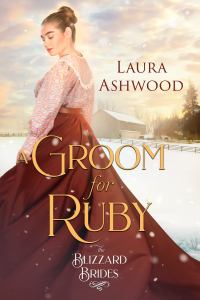
This is my second historical romance. One of the things I strive for when I write historical is to make sure that I get as much accurate detail for the time period as I can. In my story, A Groom for Ruby, Cullen Parker has a dark past before he ends up in Last Chance. I got to research such things as train robberies, stagecoach robberies, gold mines, and place like Dodge City and San Francisco. Much of that research doesn’t make it into the book, but I love being able to work in some of that information.

In this book, Cullen is making his way back to Dakota Territory, hoping to get a job at the Homestake Mine in Lead. The Homestake Mine was a real working gold mine during that time period. It was actually the largest, deepest mine of its type in the United States. It was operational until 2001, and two of my uncles worked there in 1950’s and 1960s. So, not only did I get to add a bit of reality to my fiction – I was able to make it personal.

Do you like it when authors do little things like that? Do you want to know about it?

I’d love to give away a copy of A Groom for Ruby, as well as a copy of my first historical, An Agent for Clarissa, which is part of the Pinkerton Matchmaker series.

Please stop by my website, and if you sign up for my newsletter, you’ll get a free copy of Snowflakes & Second Chances, a contemporary novelette. I’d love to connect with you on Facebook or Instagram, and you can find inspiration boards for all my books on my Pinterest.


Buy A Groom for Ruby on AMAZON

Timeless Elements of Western Romance by Guest Janine Rosche

Rugged, Dangerous, and Wild: The Timeless Elements of Western Romance

Something strange and majestic happens when you chase the sun across the Mississippi River. Your heart fills with promise and wonder. Your mind races with dreams of what could be. Your skin tingles with the fear and excitement of the unknown. Your very soul connects with those long since passed who risked all they had to experience a new world.

It’s easy to see why the most thrilling, adventurous, and romantic stories take root in the American West. Unlike other fiction genres, Western Romance doesn’t differentiate between historical and contemporary. All the stories share an understanding that no matter how hard we try, the land won’t be tamed, and neither will the human spirit.

Here are five timeless elements of Western Romance:

Danger

Who doesn’t love a story where the hero or heroine must face terrible odds to achieve their heart’s desire? The West has its fair share of natural danger to keep the characters on their toes: earthquakes, drought, dust storms, flash floods, wildfires, landslides, tornadoes, avalanches, etc. Seriously, in Yellowstone National Park, boiling water shoots out of the ground. At the summit of Pike’s Peak, there is a rocky area called The Devil’s Playground because lightning bounces from rock to rock. And if that doesn’t raise the stakes enough, there are human foes driven by desperation or greed to get what they want and need. See that man with the sharp-looking Stetson and shiny revolver? He’s probably an outlaw, train robber, greedy oil tycoon, or shady real estate developer.

Wilderness

Do you know why so many characters in western novels are hot-tempered? Because they realize that any time they walk outside, they could be bitten by a snake or killed by a grizzly. They could be wearing a prairie dress or yoga pants, and it doesn’t matter. The threat is still there. In addition to scary animals, there’s the chance one might get lost in a forest, break down in a desert, or fall off a mountain.

Ruggedness

Authors know that if you want to push a character out of their comfort zone, drop them into a western setting. Unless you are in one of the big cities, the West still has a rustic quality to it. Cell phone coverage is spotty. Wi-Fi is rare, and you can drive a hundred miles and never see a road sign except for Wall Drug. Even historical characters must learn to accept fewer “modern” conveniences than those on the East Coast. Sweet Bostonian schoolteacher, were you used to electric lighting and a warm bath? Here’s a lantern, pail, and a map to the creek.

New Beginnings

The first character of mine that I fell in love with was a desperate pastor who flees to Montana for a fresh start. Be it 1821 or 2021, there’s a certain romanticism in leaving one troubled world behind and beginning all over again with new dreams, new foes, and maybe a new love. Who doesn’t love a good fish-out-of-water story?

Independence

Show me a western novel, and I’ll show you a feisty, hard-headed, and determined hero or heroine willing to work to the bone to get what they’re after. Rules, traditions, and societal expectations didn’t often fit in the wagon on the Oregon Trail or the saddle pack en route to Texas. To survive the Old West, characters need grit, fortitude, and self-reliance. Generations later, their modern-day equivalents need confidence, drive, and even a touch of swagger to make their dream of a happy ending come true.

YOUR TURN: What do you love most about Western Romance? Would you say it’s timeless?

If you’d like to know more about my contemporary rustic romance novels, including my Madison River Romance series, please visit my website at http://www.JanineRosche.com or connect with me on Facebook. 

Giveaway:

A Society6 Mountain Landscape Tote Bag

The Madison River Romance series:

        This Wandering Heart

        Wildflower Road

        Glory Falls


Glory Falls: Released January 12th

Buy it on Amazon 

Prone to wander, Janine Rosche finds as much comfort on the open road as she does at home. This longing to chase adventure, behold splendor, and experience redemption is woven into her Madison River Romance series. When she isn’t writing or traveling, she teaches family life education courses to college students, takes too many pictures of her sleeping dogs, and embarrasses her four children and husband with boy band serenades.

Those Hunky Colorado Cowboys! (And a Giveaway!) with Jody Hedlund

Most readers know me for my historical romances about lighthouses, orphan trains, and bride ships. But a western? Whoa! What’s that all about?

No, I’m not switching genres. My friends here on Petticoat and Pistols have the western genre well covered! But I am delving into a five-book family saga set in the high country of Colorado in the ranching area of South Park.

The Colorado Cowboys Series has all my usual trademarks—deeply emotional characters, fun plot twists, and sizzling romance. But this time the package includes hunky cowboys!

Most of the time when we think about cowboys in Colorado, we think of the ranches on the eastern plains, not the mountainous high country. But believe it or not, ranches started popping up in the mountains very early in Colorado’s history.

One of the first ranches in South Park (near Fairplay), was Hartsel Springs Ranch, founded as a homestead in 1862 by Samuel Hartsel. He started his ranch by buying oxen brought into the mountains by men arriving to mine for gold. The oxen were often worn out and worth little after making the long trek to the West. But Samuel fattened them and then turned around and sold them as beef to the mining community.

By 1864 Hartsel decided to branch out and diversify his livestock. He went to Missouri and purchased a herd of shorthorns that he then drove to Colorado along the Santa Fe Trail. It was a tough trip, but he eventually completed the cattle drive and made it back to his ranch with 150 head of short-horned cattle. 

Figure 1 Picture in South Park that I took of a cattle ranch during my research trip

Hartsel went on to become a very successful rancher, capitalizing on the rich grassland in South Park that fed his cattle. He also took advantage of a natural hot spring near his land that he developed and used for tourists who wanted a chance to bathe in the “healing waters.”

A Cowboy for Keeps, the first book in the series, is inspired by this real life cowboy and ranch. The hero, Wyatt McQuaid, is attempting to make a go of homesteading and ranching. But with all the obstacles he faces, he’s having a hard time making a new home. When Fairplay’s mayor offers him a deal, one that involves taking a bride in exchange for cattle, Wyatt can’t resist.

If you like hunky cowboys, mail-order brides, and marriages of convenience, then I invite you to give A Cowboy for Keeps a chance!

Leave a comment on this post if you’d like the chance to win a signed copy of the book! (Sorry, U.S. mailing addresses only.) I will choose a random winner on January 16.

What’s your favorite thing about cowboy stories?

Jody Hedlund is the best-selling author of over thirty historicals for both adults and teens and is the winner of numerous awards including the Christy, Carol, and Christian Book Award. She lives in central Michigan with her husband, five busy teens, and five spoiled cats. Visit her at jodyhedlund.com

Guest Julie Lessman and a Give Away!

Dun-Dun-Dun-Dun-Dun-Dun-Bonanza!

Howdy, Everybody! My name is Julie Lessman, and I’m wondering if anybody remembers the above musical intro to the hit Western TV series back in the day, Bonanza? Probably not, because I’m pretty old, but it was a staple in our household growing up and not just in ours either. Bonanza is ranked No. 43 on TV Guide’s 50 Greatest TV Shows of All Time, and the 2013 TV Guide included it in its list of The 60 Greatest Dramas of All Time, still in syndication today.

So … why am I talking about an almost 60-year-old TV show? Well, despite the fact I’m primarily known as an Irish family saga author with novels set during the early 1900s on both coasts, one day I had this Western series percolating in my brain so strong I could smell the chicory coffee. Next I know, the dad-burned thing caught on fire like the Ponderosa map at the beginning of every Bonanza episode.

It’s called The Silver Lining Ranch Series, and it’s the story of two suffragists from New York, a godmother and her goddaughter, who fall in love with confirmed bachelor ranchers in Virginia City, Nevada (where Bonanza was set) from 1868 till the 1890s. This is an absolutely fascinating era on the heels of the transcontinental railroad and the discovery of the Comstock Lode silver mine upon which Virginia City was built. 

Now, I’ll be the first to admit that writing a Western scared the pejeebers outta me because, well, to be honest, I was intimidated by so many wonderful Western authors I love like Mary Connealy, Karen Witemeyer, Winnie Griggs, Kit Morgan, and Margaret Brownley, most of which—gulp—are part of this amazing blog!

But once I got into the fascinating research—like the Transcontinental Railroad, which lots of Irish workers helped build (YAY!) and Virginia City, which numbered as many as 115 saloons in its heyday (BOO!), I knew I found a home in the Wild West!

So I’m a-lookin’ to give away some books today, including my latest Western release, Love’s Silver Bullet, which is book 2 in the Silver Lining Ranch Series. Now, to give you the flavor of this novel, my talented artist hubby created a realllllly cool VIDEO/TRAILER that also features pix of my grandchildren, so I hope you check it out.

And if you do and send me an email via my Contact Julie tab on my website telling me where the heroine, Sheridan Donovon, went to school, I will send you a FREE E-COPY of the prequel novel to this series, For Love of Liberty. 

Have you ever run across some interesting tidbit in history that you wanted to learn more about?

Here’s a sneak peek of my series:

A Match Made in Heaven?
Or Someplace a Whole Lot Warmer?

She’s stubborn, educated, and looking
to give women the vote.
He’s bullheaded, successful, and looking
to give her a piece of his mind.
But when things heat up, they just may give each other
a piece of their hearts.


Next, here’s a gander at book 1 in the series, Love’s Silver Lining:

She tampers with his life.
He tampers with her heart.
Love tampers with them both.


And finally, my new release, Love’s Silver Bullet:

She’s targeting his love.
He’s aiming to steer clear.
Till true love picks them off
in a bull’s-eye of the heart


GIVEAWAY!

In addition to my video/trailer giveaway mentioned above, I am ALSO giving away winner’s choice of the entire Silver Lining Ranch series in e-book OR a signed paperback of her choice of one of the novels in the series. So leave a comment, and you’re automatically in the draw!

Hugs and GOOD LUCK!

Julie


Food Preservation the Pioneer Way ~ by Patty Smith Hall


One of my favorite childhood memories was harvest time at my grandmother’s house. After the crops were picked, Mom, my sister Rose and I would rise early, knowing we had a long day ahead of us. But whether it was shelling peas, snapping green beans or peeling apples, we had a good time just sitting and talking while we worked. It’s a good memory and one I relive every year when I’m canning various vegetables and fruits out of my garden.  

It also got me wondering—how did people back in the 1800s preserve food before canning and refrigeration were widespread?  

The type of food helps determine the best way to preserve it. Take corn. It could be shelled, ground into cornmeal, or left on the cob and stored in a corn crib. But what about other vegetables like green beans, cabbage or potatoes? One way of preserving fruits and vegetables in the early 1800s was to run a heavy thread through them and hang them by the fireplace or in a warm, dry room. This helps remove the moisture from them and keeps them from rotting. In order to cook them, you’d treat them the same way we do dry beans today. You’d put them in water overnight to rehydrate, then cook the following day. 

Another way to preserve food was by using a root cellar. If you’ve never been in one, it’s basically a small room, very dark and much cooler than the temperature outside. The walls have roots growing out of them and there’s a strong scent of dirt, fresh vegetation, and kerosene from the lantern used to light the room. Barrels filled with sawdust line the walls and inside them are various fruits and vegetables. Green beans and peas are strung from one side to the other. Root cellars were used up until the mid-1900s when home refrigeration become popular. 

When considering modern food preservation methods, it is essential to prioritize food safety in addition to convenience and longevity. With the increasing concerns surrounding foodborne illnesses and contaminants, ensuring that preserved foods are safe for consumption is paramount. This is where the use of toxin test kits can play a crucial role. By employing these kits, individuals can proactively test their preserved food items for any potential toxins or harmful substances that may have inadvertently been introduced during the preservation process. Incorporating such safety measures not only provides peace of mind but also aligns with the evolving standards of food quality and consumer health. By combining the convenience of modern food preservation techniques, such as dehydrators, with the vigilance offered by toxin test kits, individuals can confidently enjoy the fruits of their labor while upholding the highest standards of food safety.

In today’s era, while we have the luxury of widespread canning and refrigeration, modern food preservation methods continue to evolve, offering convenient options to ensure the longevity of our harvests. Whether it’s preserving the bountiful produce from your own garden or carefully selecting artisanal ingredients, one valuable tool to consider is how to choose the perfect food dehydrator. With its ability to gently remove moisture from fruits, vegetables, and even meats, a food dehydrator allows you to preserve flavors and nutritional value while extending the shelf life of your culinary creations. By harnessing the power of controlled temperature and airflow, you can savor the taste of peak-season produce year-round, all while honoring the traditions of the past and embracing the advancements of the present.

However, back in the days, we can thank Napoleon for home canning. In 1795, the French emperor offered a reward for anyone who could come up with a way to preserve food for his army. It was fifteen long years before Nicholas Appert unveiled his method of heat processing food in glass jars. Over the course of the next century, improvements to the equipment were made. John Mason introduced a glass jar with a screw-top lid and rubber seal. William Charles Ball and his brothers got into the home canning business and marketed their canning jars across the country, making it easier for families to preserve their own food. And Alexander Kerr developed the wide-mouth jar (praise the Lord!) and the metal ring with a lid that sealed the preserved jar. 

Funny story—I went to high school at a former Agricultural and Engineering College built during the 1890s. While I was there, one of the original buildings was torn down. The workers found the A&E school’s root cellar with canned beans, pickles, and squash dating back to 1913. And they still looked as fresh as the day they were picked! 

Do you can or freeze food for your family?   

Let’s Chat!  I’ll give away two print copies of THE HEART OF THE MIDWIFE 

The Heart of the Midwife

If Not For Grace by Patty Smith Hall
New York City, 1889
After her friend’s death in childbirth, Grace Sullivan converts her family home into a haven for immigrant families preparing for the birth of a child. But when the city threatens to close her down, her only hope is to ask for help from an unlikely source—her former fiancé, Patrick O’Leary.

Amazon

Barnes & Noble

Bio: Multi-published author Patty Smith Hall lives near the North Georgia Mountains with her husband, Danny, her two daughters, her son-in-law, and her grandboy. When she’s not writing on her back porch, she’s spending time with her family or working in her garden.  

Website: http://www.pattysmithhall.net 

Facebook: http://www.facebook.com/authorpattysmithhall 

Pinterest: https://www.pinterest.com/authorpattysmithhall/boards/ 

Instagram: https://www.instagram.com/authorpattysmithhall/ 

The First College for Women in the West ~ by Kathleen Denly

When we think of the western frontier, few of us picture a young woman seated at her desk, studying English grammar, yet many would argue that the West was shaped as much by education as by anything else. Thus, when I learned of the pioneering institution known at its inception as the Young Ladies’ Seminary in Benicia, California, I was immediately intrigued. Established in 1852, it was the first school of higher learning created for women west of the Rockies and continues today as Mills College.

Despite the word seminary in its name, the school’s purpose was not to prepare its pupils to be priests, ministers, or rabbis. It was established to fulfill the perceived educational needs of the daughters of California’s Protestant Christian families. The original trustees were concerned that the pioneering families of the West were forced to choose between forgoing a higher education for their daughters or sending them on a long ocean voyage to New York, potentially severing family ties.

Thus the school was established while the gold rush was still in full swing and Benicia was California’s capital. According to the school’s early catalogues, its aim was “to train healthy, companionable, self-reliant women—those prepared to be useful and acceptable in the school, in the family, and in society.” To that end, the teachers deemed it important for their students to “be able to spell correctly, to read naturally, to write legibly, and to converse intelligently.” The young ladies of the school performed regular recitations at which family and select members of the public were often invited to attend. In addition to an English course of study, the school offered what they called “ornamental branches” of study which included “instrumental music (pianoforte and guitar), drawing, crayoning, painting (in water colors and oils) and ornamental needle work.” (Keep, 1931)

Initially many of the school’s students came from the nearby cities such as San Francisco, Marysville, Sacramento, and Stockton, but most came from Mother Lode camps such as Hangtown, Park’s Bar, Rough and Ready, Angels Camp, and more. A few students also came from the southern part of the Golden State, which is where my heroine, Clarinda Humphrey, hails from in my novel, Sing in the Sunlight. Keeping in mind the incredible fluctuation of fortunes and social status going on in California during this time period, the idea of young women from such varied backgrounds coming to Benicia to learn and live beneath the same roof is fascinating. What I wouldn’t give to have been a fly on the wall of the Young Ladies’ Seminary in those early days.

I think I’d have planted myself on the shoulder of those early principals first, though. It seems they had a terrible habit of forgoing their duties to pedagogy in favor of matrimony. The romantic in me is incredibly curious about how those courtships began and progressed. Further adding to my curiosity surrounding the school’s romances is the manner in which the school’s students were required to attend church.

Escorted to church each Sunday by their principal, the students were required to sit at the rear of the church in the upper gallery near the organ so that they would be out of sight of the young men present. My guess, though, is that more than one man gained a crick in his neck during services. What do you think?

Source:  Keep, R. (1931) Fourscore Years, A History of Mills College


 Preorder https://kathleendenly.com/books/

I’m excited to share with you that Sing in the Sunlight, book two of my Chaparral Hearts series which features the Young Ladies’ Seminary, is currently on preorder.

So today, I’m giving away a signed copy of Waltz in the Wilderness, book one in the series. Leave a comment below to enter. (International Winners will receive a digital copy of the book & signed bookmark in place of printed book. Void where prohibited.)

How influential was your college experience, or lack of it, in creating who you are today?

Buy WALTZ IN THE WILDERNESS on https://kathleendenly.com/books/

The Lingering Appeal of the Wild West and Doc Holliday ~ Kimberly Grist

Happy Fall, y’all. I’m so pleased to be your guest blogger today. I love history, and one of my favorite parts about the writing process is doing the research required to ensure accuracy in my stories. I also like to try to find something that may not be widely known to keep the story interesting.

My family and I share our hometown of Griffin, Georgia, with a notorious gambler and gunfighter who’s also a dentist. I work only a block away from the location of his dental practice.

Doc Holliday is well known for his participation, along with Wyatt Earp, in the O.K. Corral gunfight in 1881. The battle itself lasted less than a minute. After almost 140 years, what do we still find so intriguing about the man? Multiple movies retell the story of the lawman, Wyatt Earp. But strangely, the character we’re most drawn to is a sickly dentist turned gambler and gunman known as Doc.

Pictured left Doc Holliday with Wyatt Earp and his brothers.

Perhaps the complexity of his character is the reason for his lingering appeal. His vibrant personality is rooted in contrast. Doc is critically ill but bold and gallant. He’s a deadly gunslinger and gambler, yet smart, educated, flashy, witty, compassionate, and loyal. Stir in a bit of vulnerability, a touch of vanity, and don’t forget a healthy dose of gallant southern charm to describe this critically ill man.


Born with a cleft palate on August 14, 1851, John Henry Holliday was fed by his mother with an eyedropper and a spoon.

The baby’s uncle, Dr. John Stiles Holliday, performed surgery, assisted by Dr. Crawford Long, the namesake of the Emory Hospital in Atlanta. The operation may have been the first time in history in which ether was used on an infant. He was schooled at home by his mother, who spent years training him to conquer his speech impediment. She also instilled in him Southern etiquettes, which would forever be part of his demeanor.

Two actors who played Doc Holliday, Stacy Keach and Jason Robards, were also born with the same condition.

Jason Robards played Doc in Hour of the Gun in 1967.

In 1864, his family moved to Valdosta, Georgia, where his mother suffered from consumption, now known as tuberculosis, and died when he was fifteen. Three months after his mother’s death, his father remarried.

 John Henry Holliday, age ten

Holliday attended Valdosta Institute, where he received a classical education, and in 1870, nineteen-year-old Holliday left home to attend the Pennsylvania College of Dental Surgery. He graduated five months before his twenty-first birthday. He returned to Griffin, Georgia, in 1872 to practice dentistry. 

John Henry was soon diagnosed with consumption and, in 1873, ended his career as a dentist. Some say he didn’t want his family to see him deteriorate and die from the disease. Others suggest he went west in hopes that the climate would be beneficial to his lungs. Regardless, Doc took the train to the literal end of the railroad line—Dallas, Texas.

Holliday understood the gravity of his disease and most likely considered himself a walking dead man. Though a realist, he remained hopeful for a cure. Doc found comfort in whiskey and gambling.

Texas was full of guns, knives, and violent men, some of whom were suffering from post-traumatic stress from the effects of war. Doc reinvented himself—from a southern gentleman dentist to a dangerous gunman who’d killed more than a dozen men in various altercations.

Holliday traveled from town to town, following the money and gaining a reputation as both a gambler and a gunman. In 1877, Doc was involved in an argument, but instead of going for his gun, he used his walking stick. His serious wounds, compounded by worsening tuberculosis, spurred a change of scenery. His next stop was Fort Griffin, where he met Wyatt Earp, who ultimately saved his life.

Earp and Holliday became fast friends. Eventually, Doc would join Earp in the wild boomtown of Tombstone, Arizona. Due to recent silver strikes, the town was flooded with merchants and cash but short on law and order. By the end of 1880, Tombstone was embedded with organized rustlers and thieves called the Cowboys. 

Val Kilmer as Doc alongside Sam Elliott, Kurt Russell & Bill Paxton as Virgil, Wyatt & Morgan Earp in 1993

On October 26, 1881. Tombstone City Marshal Virgil Earp deputized Holliday. Virgil asked Doc to carry his shotgun under his coat, and the four strode down the middle of the street to meet and disarm five members of the Cowboys near the O.K. Corral, which resulted in a thirty-second shootout.


GIVEAWAY: Leave a comment and you could win an ebook copy of WILLOW’S WORTH!


Telegraph operator, Willow Graham, has benefited from a unique lifestyle growing up with her grandfather at the livery. She’s independent and loves spending time riding and training animals. With her twenty-first birthday approaching, her family pressures her to return to the city and take up the lavish lifestyle her uncle has planned for her.

Her other alternative is to take her chances with a matchmaking agency’s recommendation and begin correspondence with a handsome farmer.

Leo Weaver is a man of many talents. Hardworking, he’s helped his father develop a successful farm. Loyal and giving, he volunteers as a deputy sheriff. Handsome and charming, he’s about to become the target of several well-meaning ladies in the community who have submitted his name for a new matchmaking venture.

 Willow craves the outdoors. Leo loves community life and wants to live in town. Can a matchmaking agency help two independent people realize the opposing desires of their hearts?

Buy on AMAZON

Kimberly Grist is married to her high school sweetheart, Nelson, a former teacher and coach, now a pastor. They have three adult sons, one with Down syndrome, and they have a passion for encouraging others with family members with special needs.

I’ve enjoyed writing since I was a young girl; however, I began writing my first novel in 2017. Inspired by so many things life has to offer, one of which includes our oldest son’s cancer diagnosis, it’s especially gratifying to write a happy ending.

I believe you should come away refreshed and inspired after reading a book. In my personal life, I wear so many hats, working inside and outside the home. I work hard, try harder, and then begin again the next day. Despite my best efforts, sometimes life stinks. Bad things happen. I need and want an outlet, an opportunity to relax and escape to a place where obstacles are met and overcome. My stories are designed to entertain, refresh, and inspire you, the reader. They combine History, Humor, and Romance, with an emphasis on Faith, Friends, and Good Clean Fun.

Links:

Website: https://kimberlygrist.com/

FB: https://www.facebook.com/FaithFunandFriends/

Sign up for my newsletter:  https://mailchi.mp/a920c145512a/kimberlygrist

Amazon: Author Page: https://www.bookbub.com/profile/kimberly-grist

Twitter: https://twitter.com/GristKimberly

Bookbub: https://www.bookbub.com/profile/kimberly-grist

Twitter: https://twitter.com/GristKimberly


A Different Kind of Christmas – by Jodi Thomas

It’s a crazy world out there right now, and Christmas is coming with a warning label to stay away from people. I can’t do that. It won’t be Christmas without the “grands,” I tell myself.

Calm down, I say to myself. I’ll wash my hands another hundred times and put on two masks, not just one. I’ll even jump back if I pass someone in the grocery aisle. I will whisper my new battle cry: I’ll live through this, or not. I’m in the danger zone.

I don’t know about everyone but for me now and then, I just have to relax and have fun or I will go completely nuts. I’m staying in, staying safe and staying up all night watching at least one Hallmark movie a night. And, of course stepping into fiction anytime I can. If I can’t see people, I have to talk to my characters and that’s how I got the idea for a new story.

When I started writing my new novella, THE COWBOY WHO SAVED CHRISTMAS, I wanted to put lots of love and laughter in the story because that’s what we’re all looking for.

So, of course I picked a dark time in Texas to start. In the ten years after the Civil War, almost half the people in Texas died, hard times. I picked a woman with no future and a man down on his luck, a broken soldier. The two get their chance to start a life when they get a job to transport five little girls from Jefferson, Texas, to a ranch north of Dallas.

Now the fun begins. Trapper knows nothing about little girls, and it seems every bad guy in Texas wants to kidnap the rich girls. He teaches them how to survive, and they teach him to care. Trapper risks his life to save them, and they open his heart.

So cuddle up with THE COWBOY WHO SAVED CHRISTMAS. I promise you’ll love the journey this story called “Father Goose” takes.

These are my little outlaws last Christmas who inspired the story. We may not all get to see our families this holiday, but if you have a comment about your family at Christmas, I’d love it if you’d share.

Do you have a funny story that happened at Christmas? What is one of your family traditions? (Do you have matching pajamas?) What is a favorite food your family always requests?

Join in, and I will send one lucky winner a copy of the book.

 Let’s all take a minute to remember happy days in the past and know that we’ll get to hug everyone next Christmas.

Until then, read on dear friends. I pray my gift to you this holiday is laughter.

Jodi 

Amazon

Kathleen D. Bailey Looks at Story Structure and the Classic Westerns

The Fillies welcome guest Kathleen D. Bailey. Please make her welcome.

Judge Henry Garth owns “Shiloh,” the largest ranch in and around Medicine Bow, Wyoming. When feuding ranchers and Indians from “up north” want to meet to settle their differences, Garth offers Shiloh as a neutral venue. He has two house guests: Ben, a city-slicker newspaperman come to visit Garth’s daughter Betsy, and the Indian Affairs agent who’s supposed to settle the whole mess. Garth wants a peaceful solution to the Indian/rancher problem, but his plans go awry when a group of thugs takes over Shiloh. He finds himself a hostage in his own home along with Betsy, the journalist, the Indian agent and Randy, his singing cowboy. His other hands are all at the roundup.

The hostages try various ways to foil the thugs. After the criminals take everyone’s guns, Randy mouths to Ben that there’s one in the desk Ben’s leaning on. Ben sneaks it out and aims it at the ringleader, but loses his nerve. When the captives discover a small bottle of laudanum they try to drug one of their captors’ coffee, but they are again foiled. The Indian Affairs guy turns out to be part of the problem when he reveals himself as allied with the criminals. There are other attempts at freedom, and each time the viewer thinks, “Well, they’ve got it now.” Except they don’t, because this is a 90-minute Western and there’s plenty of time for things to go wrong. Even The Virginian, Garth’s relentlessly resourceful foreman, can’t get them out of this one. He’s been shot.

Where will it all end? How will it all end, with every escape blocked?

Western movies and television have always known how to keep a viewer engaged. The classic stories hook viewers by baiting, switching and baiting again. Just when the viewer thinks the cowboy/wagon scout/marshal has figured a way out of their dilemma, someone or something will trip them up. Just when the viewer thinks there’s no hope, a solution appears, and they’ll wonder why they didn’t see it before. It’s like mystery writing only with horses.

The genre could be formulaic, especially in the early years. My husband and I are aggressive Western watchers and we’ve learned to recognize the archetypes such as the physician who won’t practice medicine any more, usually due to alcohol or losing someone precious to them. Or losing someone precious, then turning to alcohol. But it’s what they do with these archetypes that makes these tales stand the test of time.

I spent most of one summer watching “How The West Was Won,” the epic TV miniseries starring an aging James Arness as Zeb Macahan, one of the legendary Mountain Men. Arness was perfection in the role of his life, and supporting cast members included shoot-em-up royalty such as Slim Pickens and Dennis Weaver. But as I rolled through it a second time, I became hooked on the story itself. It wasn’t just Zeb meeting up with old cronies, or rescuing his kinfolk from one scrape after another. Oldest nephew Luke, played by a young Bruce Boxleitner, stumbled into serious trouble when he went back East to check on his father. He got conscripted into the Union army, ran away from same, stole a horse and shot a sheriff. The sheriff lived but lost the use of one arm, and that one rash act—and the sheriff’s lust for revenge—followed Luke through the entire series. Luke spent most of the show on the run, eluding the sheriff’s spies, hired guns and the sheriff himself. The threat to Luke’s life kept resurfacing, like Whack-A-Mole, every time he thought he had a chance at happiness. It’s perfect story structure, a thread that runs through the entire series and keeps the watcher hooked.

The best Westerns carry out the classic themes of guilt, shame, retribution and justice. They connect on a deeper level, as with John Wayne in “The Searchers.” It’s why I chose to write Westerns. Take two strong characters, give them something to fight about, give them an attraction—and set it against the Oregon Trail or a cattle drive or the Land Rush. Watch the magic happen.

What of Judge Garth? He solved his dilemma without a single bullet. Calling on his memories of a court case, he set two of his assailants against each other. A long-simmering grudge came to the front, and they destroyed one another. With all other escape routes blocked, Garth solved the problem with his mind.

The perfect ending to a not-so-perfect day.

Find Kathleen online

The Western genre is adventure, romance and at its best something more. Western stories pack a satisfying experience for the reader. And if you’re a writer of Westerns, you can chalk up all that movie watching as research. You’re welcome.

So…what’s your favorite Western movie, mini-series or TV program? I’ll be giving away a paper copy of my first book, “Westward Hope”; an e-copy of the sequel, “Settler’s Hope”: and a New England gift pack to three separate winners. Leave a comment to enter the drawing.

Kathleen Bailey is a journalist and novelist with 40 years’ experience in the nonfiction, newspaper and inspirational fields. Born in 1951, she was a child in the 50s, a teen in the 60s, a young adult in the 70s and a young mom in the 80s. It’s been a turbulent, colorful time to grow up, and she’s enjoyed every minute of it and written about most of it.

 Bailey’s work includes both historical and contemporary fiction, with an underlying thread of men and women finding their way home, to Christ and each other. Her first Pelican book, ‘‘Westward Hope,” was published in September 2019. This was followed by a novella, “The Logger’s Christmas Bride,” in December 2019. Her second full-length novel, “Settler’s Hope,” was released July 17, 2020. She has a Christmas novella, “The Widow’s Christmas Miracle,” scheduled for this December as part of Pelican’s “Christmas Extravaganza,” and is completing “Redemption’s Hope,” the third and final book in the Western Dreams series.

She lives in New Hampshire with her husband David. They have two grown daughters.


For more information, contact her at ampie86@comcast.net; @piechick1 on Twitter; Kathleen D. Bailey on Facebook and LinkedIn; or at http://www.kathleendbailey.weebly.com.