On the “Fringes” of History ~ Pam Crooks

Back in August of 2015, I announced that Petticoats & Pistols had opened up an official Pinterest account.  Pinterest was just gaining traction as a site featuring all kinds of fun pictures that one would pin to these strange things called ‘boards.’ It also turned into a valuable tool for businesses to market their goods, a big reason why we jumped on board (pardon the pun), too. Since then, we’ve grown to 164,200 views a month.

That’s right.  Our pins are viewed 164,200 times a month.

Pretty incredible, right?

Through the years, we’ve amassed more than 1,800 pins on 42 different boards that highlight not only each filly and an assortment of her books, but . . .

  • Recipes
  • Hunky Cowboys
  • Favorite Western Movies
  • Vintage Clothing
  • Wild West Weapons
  • Western Lawmen
  • Old-Time Medicine
  • Texas History
  • Turquoise and Silver Baubles
  • Windows
  • Cowboy Country Christmas
  • And more.

As I was drooling–um, I mean scrolling–through the boards, I was struck by several really cool western outfits decorated with really cool fringe.

Did you know fringe has been around since 3000 BC, was first discovered in Mesopotamia which is now modern-day Iraq, and was used on shawls and skirts and eventually the entire garment, and that depending on the fabric the fringe was made from denoted one’s class in society?

I didn’t.

Not surprisingly, linen and cotton fringe were worn by the lower classes, and silk fringe by the wealthy.  And . . . fringe was so important and carefully unique, it was actually used as a signature when pressed into clay business ‘contracts.’

Who knew?

Fast forward lots of years, and the Native Americans used fringe as a way to repel rainwater, forcing it to drip down the tassels and off their bodies.  We all know they wore leather, which took tons of time and effort to tan and prepare for wearing.  They refrained from trimming seams in their garments, which would be wasteful after all that work, and thus using fringe solved the waste problem.

Not long after, the 1920s hit, and who doesn’t love a flapper swirling and swinging fringe when she danced?

And then came the 60’s.

Elvis and Priscilla

Now, modern day western wear is adorned with fringe.  Here’s a few straight from our “Western Duds” Pinterest board.

Check out our boards on Pinterest for all things western!  https://www.pinterest.com/thefillies/_saved/ 

Moda Luxe Fringe Purse - Brown , Women's Brown Faux leather fabric lined purse Zipper closure Interior zipper and two pouch pockets Removable shoulder strap Dimensions: 11 1/2(L) x 14 1/2(H). Shell: Polyurethane/Leather. Lining: Polyester. Do not wash. Luggage & Bags

Back when I was twelve or so, I bought a faux suede purse that had a good 12 inches of fringe at the bottom very similar to this one.  I remember vividly coming home and showing my Italian immigrant grandparents (we were visiting them at the time).  As I pulled it from the sack with a great deal of pride, triumph, and flourish, neither of them said a word.  I could hear a pin drop, it was so quiet.  I can only assume their silence meant my prized purse was definitely not their style.

Did you wear fringe? Did you have a favorite garment or accessory with fringe?

Pam’s Kitchen Tools Winner!

Well, it seems I’ve stumped most of you today, but I hope you’ve enjoyed seeing what homemakers in the past used in their kitchens.

stejoc1968 did an amazing job knowing what these tools are used for.  Steph, you got 6 out of 7 correct!  You’re my winner!!! Watch for my Facebook message, okay?

Here we go – the answers to the vintage kitchen tools!


Number One

Pot Strainer

These are still available today and are very helpful in draining water from pasta or grease from browned hamburger.  Whatever needs straining!


Number Two


Baking mold for Cookies, specifically Pizzelles.


Number Three

French Fry Cutter

I thought for sure no one would guess this one, but Steph knew it.  Good job, Steph!


Number Four

Cookie Scoop

This was a strange one for me, but you scoop out the cookie dough, squeeze the lever, and the dough drops onto the cookie sheet.

Number Five

Cake Breaker

Used for delicate cakes like Angel Food cakes.  Who knew?


Number Six

Ice Shaver

Snow cone, anyone?

Number Seven

Chopper

Used to chop vegetables like cabbage for slaw.  Just put the vegetables into a bowl and chop away!

(I actually have one similar to this from Pampered Chef, Steph.)

BONUS!

This is a classic found in many kitchens mid-century.  I remember my grandmother had one, and in my youngest years, so did my mother!

Do you know what it is?

Vintage Tools for a Day in the Kitchen by Pam Crooks

As I wrote in my blog last month, the heroine in my newest release, CHRISTIANA, is a pastry chef, a skill she learned in France, which compelled my visit to a French patisserie.  For research, you know.  Ha!  Inside, the chef (named Ed) offered amazing pastries that you would not find in a fried donut shop, let me tell you.

I promised a few more pictures:


A fruit tart – oh, my goodness.  The crust was made from vanilla wafers ground so perfectly fine, they were almost like a powder.  On Ed’s only day off, he goes to select food markets to buy his fruits, taking the time to smell each one before buying.  This tart was filled with a vanilla and orange zest custard.


Mille feuille- means “thousand sheets” in French and is composed of three layers of puff pastry filled with creamy vanilla cream and topped with chocolate and vanilla icing.  The high-quality dark chocolate is hand-swirled with a toothpick.  This pastry is comparable to a “Napolean.”


Macarons (not to be confused with macaroons which are made of coconut). They were so beautiful in color, I had to buy one of each! The first thing I noticed (and didn’t expect) was that there was no crunch of the lemon macaron I chose. That’s because of the absence of sugar. What I got was a soft, chewy cookie that burst with the flavor of the lemon.  Fantastic!


The perfection and skill required to make these French pastries not only made me suspect that some things never change (as in how they were made in the 19th century when CHRISTIANA was set) but also made me curious what other kind of utensils cooks and bakers used in the past.

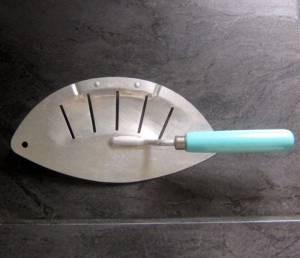
I found some unusual ones.  Try to guess what they are used for!

Number One

Number Two


Number Three

Number Four

Number Five

Number Six

Number Seven

Guess all seven correctly, and I’ll give away an ebook copy of CHRISTIANA.  If there are multiple winners, I’ll draw one winner from the pool of those who guessed them all correctly.  

Watch for my post tonight!


Sweet Historical Western Romance (Love Train Series Book 1)

When her mother is taken to jail, Christiana Turcotte loses the happiness of her childhood. By the time she’s a grown woman, she’s determined to escape the scandals in her past and live a respectable life. First, though, she must return for the diamond ring she’d hidden that terrible day.

As a rifleman for Union Pacific, Holt Maddock’s job is to protect the train from outlaws. But he’s been riding the rails too long, and it’s time to settle down. Only one thing stands in his way. The elusive beauty traveling on his train and the diamond ring she’s determined to keep.

Holt’s plans for the reward money threatens to destroy her dreams. Will stolen diamonds destroy their love, too?

Sweet Romance.

#kindleunlimited

BUY on Amazon


Pam’s Winner!

Many thanks to everyone for chatting with me about their favorite ethnic cuisine – and French pastries!


My winner is:


Lori Smanski


I’ll message you so I can send you an ebook copy of CHRISTIANA, the first book of the new Love Train series.

Amazon

(Winner chosen by Random.org)

Don’t forget – tomorrow (Friday), Book #2 of the Love Train series will be released!  

HENLEY

by Shanna Hatfield!


AMAZON

My Visit to the Grand Patisserie! By Pam Crooks

When I happened to notice this little shop tucked in the corner of a plaza on a busy main street I take almost daily, I thought “What the heck is a patisserie?”

My first thought was that it had something to do with ‘rotisserie’. They sound alike, right? But my friend, Google, set me straight. A patisserie is a French bakery (could also be used for an Italian or even Belgian bakery) that specializes in pastry.

I can’t say for sure, but perhaps it was a subconscious inspiration for my newest release and the launch book for Love Train, the new sweet historical western romance series, CHRISTIANA. After a traumatic childhood, Christiana goes to France to learn how to become a pastry chef so that she may lead a respectable and independent life once her mother gets out of jail.

One of Christiana’s specialties is making chocolate truffles and croissants. We’ve all heard of those, right? But another of her specialties is pain au chocolat.

Pan oh sho-coh-la.

Google helped me out with that one, too, and the pastry becomes a focal point in my book.  So it wasn’t long before I wanted to move beyond a YouTube video to learn how to make pain au chocolat.

I wanted to see and TASTE one, too.

A-ha! The Grand Patisserie.

My husband and I stopped by for a lesson in French pastries, and oh, my, the owner, simply called “Ed,” was a master of the subject. He is, of course, a pastry chef who learned to bake at the age of eleven, and yes, he did study in Paris! He left a six-figure job at a major financial company here in Omaha to follow his dream of opening his own little bakery so he could make French pastries every day and present our city with a rare and lovely cultural experience.

No fried donuts in his shop. No sirree. Instead, two simple display cases feature an array of perfectly baked and arranged desserts that made my eyes pop and my sugar addiction kick into overdrive.

But it wasn’t long before I learned that Americans cook with way too much sugar and most countries don’t.  The pastries Ed makes are not of the commercial variety we find in the majority of bakeries, especially in the food giants.  He uses only fresh eggs from a local farmer. He squeezes his own lemons and oranges for their juice.  Vanilla from a vanilla bean instead of a bottle. His tarts vary depending on the sweetest fruits in season. Everything is made fresh, never frozen. Every day brings a different line-up of pastries depending on ingredient availability and his own choices.

I could go on and on, but that would make this blog too long. I’ll share photos of Ed’s luscious French pastries next month, but for now, I’ll share a couple to get your mouth watering.

Ed was generous in giving us samples.  A lemon and caramel macaron, baklava (which I didn’t recognize) and mille feuille, similar to a Napoleon.


And of course, the pain au chocolat. I was delighted to learn that Ed’s pastry was as I described in CHRISTIANA. The croissant dough is light and layered, very buttery, and the small pieces of dark chocolate really make the pain au chocolat pop on the taste buds.


Forgive me for looking like a drowned rat.  It was super-windy, humid, and misty when we stopped by the Grand Patisserie. But I just had to take a picture with Ed, and he was very happy to let me.


I’ll stop here and save more pictures for my May blog.  Until then . . .

Have you ever been to a patisserie before?  What is your favorite type of ethnic food?  Do you have a favorite or uncommon ethnic restaurant you frequent?

Let’s chat, and one of you could win an ebook copy of CHRISTIANA.

AMAZON

Love Train Series Page on Amazon

And if you happen to be in Omaha, stop by the Grand Patisserie and see for yourself how wonderful Ed’s French pastries are!   Tell him Pam sent you!


London James’ Winners!


Did you enjoy London’s monkey story as much as we did?

Even better, HER MAIL ORDER MIX-UP, the first book of her new series, Brides of Lone Hollow, promises to be just as entertaining, and, of course, romantic!

The winners of an ebook copy of HER MAIL ORDER MIX-UP are:

Denise

Nancy

Judy Sexton


Thanks for stopping by and chatting with London

about animals that make you freak out!!  🙂


(Winners chosen by Random.org)

Pam’s Knock-Knock Joke Winners!


What a fun day we had!  Knock-knock jokes are timeless and make us all smile. Or roll our eyes from their corniness.  Maybe even urge us to write them down so we can say them, too!

I’ve picked my favorites, and these are my winners:

Colleen

Quilt Lady

Tonya

Watch for your $5 Amazon gift cards, ladies, and THANK YOU for making our world a happier place with your silly jokes.

During Troubled Times, We Need JOKES! by Pam Crooks

The situation in Ukraine is sad and frightening. Images of women in tears break my heart–wives terrified for the husbands they may never see again, mothers worried about how they will feed their babies as they huddle in cold bomb shelters, countless destroyed buildings with smoke curling in the sky from hurled bombs… It’s been depressing and worrisome for everyone.

The war is out of our control. With the exception of prayers, church services, and financial donations, there is nothing we can do but trust world leaders to make the right decisions.  It’s easier to shut off the news than to watch the tragedies, but our worries never go away. Our hearts remain heavy and sad.

JOKES are great mood-lifters. No matter who we are or where we are, they help us feel better.

There are generally five ways to tell a joke:

Little Stories have a longer set-up and are ideal for telling around the campfire, on a road trip, or in a social gathering. Delivery is key – build the suspense! Make your audience wait for the punchline. It’ll be worth the wait.

A man gets his house painted. When the painters are finished, they hand him the bill. He’s surprised to find that they have not charged him for the paint, just for painting.

“You did a great job, but why didn’t you charge me for paint, too?” he asks.

The painter replied, “Don’t worry about the paint, sir. It’s on the house.”

Riddles give you all the clues you need to solve the puzzle. Listen carefully and analyze the words to figure out the answer.

#1. What is often on the ground getting stepped on by others, but you don’t have to wash it because it never gets dirty. In fact, you couldn’t wash it if you tried. 

#2. Laura has four daughters. Each of her daughters has a brother. How many children does Laura have?

(Answers below.)

Puns shift word meanings. They’ll use the same word or words that sound very similar.

Did you hear about the new seafood diet?

Every time you see food, you eat it!

*****

Some guy just threw milk and cheese at me.

How dairy?


Tongue Twisters stretch and strengthen your mouth muscles. Actors, teachers, etc., use them to perfect speech and tackle tough pronunciations.  They are often silly and always challenging.

If a dog chews shoes, whose shoes does he choose?

*****

How many berries could a bare berry carry, if a bare berry could carry berries? Well, they can’t carry berries, which could make you very wary, but a bare berry carried is more scary!

Knock-knock jokes are likely the most recognizable joke of all. They became popular in the 1920s and are now told all over the world. Their simple format make them easy to remember.

Knock-knock.

Who’s there?

Thumpin’.

Thumpin’ who?

There’s thumpin’ furry crawling up your back.

*****

Knock-knock.

Who’s there?

Cash.

Cash who?

No, thanks. I want almonds.


Are you ready to have some fun?  Tell your own Knock-Knock Joke!

You could win a $5 Amazon gift card!

(I’ll pick three winners.)


Ready? Set! LAUGH!


Riddle Answer: #1-Shadow. #2-Five. Each daughter has the same brother.

Belle Siddons–Gambler, Legend, and Inspiration By Pam Crooks

If you happened to catch our Yee-Haw blog on Monday, you’ll know I announced a new series called Love Train. My book, CHRISTIANA, is the launch book and will be released on April 1st, but I’ll talk more about that later.

There’s few things more satisfying than writing a book to the finish. Starting one, however, isn’t quite as satisfying, at least not for me. In fact, it can be downright stressful until I find my way with the plot, the characters, and their conflict.

To do that, I must do plenty of research, especially if I’m writing an historical. Then, as inevitably happens, I stumble upon an article that I find absolutely fascinating, and voila, my story starts to take shape.

That’s exactly what happened with Belle Siddons.

The author of the article mostly pieced together information from two reporters’ sources–a jail cell interview when she was a bit, well, inebriated, and a death bed interview where she describes herself as a victim and whose account doesn’t quite match up with what little historical facts could be found.

Still, the author wrote a fascinating piece, and from the beginning, I was hooked. Here’s a quote from a reporter at the time:

She went to the wildest excesses in dissipation. When not sitting behind her gambling table she was eating or drinking. But she was never known to drink in her gambling hall. There she would sit, silent and brilliant, coldly shuffling the cards, or carelessly turning her roulette table. Women she despised and seldom spoke to or of them. She never quarreled or exchanged words of anger. Her prompt argument was her pistol, which always lay beside her stacks of money. Her favorite costume was red or black velvet, ornamented with a profusion of gaudy jewelry, mostly diamonds and rubies. Her luxuriant black hair usually hung carelessly looped over her shoulders with gold and diamond clasps. This sensational costume, she said, was a part of her stock in trade. “It excites curiosity and draws in the suckers,” she said.

—San Francisco Examiner, 1881

What’s not to love?

I won’t go too deep into her wild life given that not all of it can be backed up as factual. The author admits to fictionalizing Belle’s legend, and it made for fascinating reading.  But if you want to read the article, here’s a link.

From <http://shipwrecklibrary.com/deadlands/belle-siddons/>

Regardless, after poring over the writings, my story took off, and I love it when that happens.

Belle is the inspiration for my heroine’s mother, Olivia Turcotte. I softened her up quite a bit, and the story is truly Christiana’s, but the book is based on Olivia’s actions, Christiana’s love for her, and the hopes and dreams she has.

One thing I did keep was Olivia’s skill at the faro table. It was that skill which drew the villain’s interest, leads to the decisions she makes, and well, you’ll have to read the book when it comes out to learn more.

Suffice to say, everyone–even outlaws–have skills that everyone admires.

I’d like to think I have numerous skills–ha!–but probably my strongest would be organizational. It seems I’m always ramrodding something for my family or other authors, a throwback, I suppose, from being the oldest of seven children that were born boom-boom-boom.  Back in those years, my mother needed help, and she’d come to me saying “Pam, you handle it.”

So I did.

How about you? Can you name one skill that is your best?

Why are Barns Red? by Pam Crooks


Who hasn’t seen a red barn before? They’re traditional, they stand out, and the color is practical.

But there’s history as to how the red evolved on barns. Back in the 1700s, in the northeast part of the country, farmers covered them with thick vertical boards, allowing them to weather gray over time.

Later, in the mid-1800s, farmers went horizontal with the boards to close up drafts and improve warmth and efficiency for their animals. These horizontal boards, clapboards as we know them, were sawed thin. Because of their thinness, they needed paint for protection to lengthen their longevity, in addition to improving their appearance.

During that time, people mixed their own paint with a pigment combination of linseed oil, flax seeds, and other ingredients. Pigment, of course, adds color, and the favorite of the time was called “Venetian Red,” so called because the pigment was made from natural clays found near Venice, Italy, and contained an iron oxide compound that made the red color.

This red pigment penetrated well into barn boards, resisted fading in the sun, and aged well for generations. Although later in the 1800s, farmers turned to other colors of paint like yellows, greens, browns, and of course white, red remained popular, mainly because it was so affordable.

In my copy of the 1927 Sears Roebuck catalogue, a 5 gallon can of red barn paint was $1.30/gallon.

They offered 35 other colors of paint in 5 gallon cans for $2.20/gallon.

You can see the savings, and who could blame a farmer? He’d save almost twice as much going with the traditional barn red.

Fast forward to today, barns have gotten quite large. Large enough to hold hundreds of cows, chickens, or pigs, in fact. That large, they can come pre-fabricated, built out of metal and resemble warehouses or even an airplane hangar, and thank goodness, no one would have to paint one of those, right?

Still, the traditional red barn endures for smaller structures and remain so beloved the US Postal Service celebrated them on postage stamps.

Driving down the interstate or highway, you might see a big American flag on a barn’s roof. Or a political candidate’s name.  These quilt barns are especially popular!

What is the most unusually painted barn you’ve seen?

Starting TODAY, Tule Publishing has set the first book in my Blackstone Ranch series, A COWBOY AND A PROMISE, to Free!

I’m fortunate to land a BookBub deal that will arrive in email boxes on Thursday. My book will remain FREE for a limited time, so if you haven’t read the series yet, now is the time to grab the book that started it all!

Tule Bookstore

Series Link at Tule Bookstore