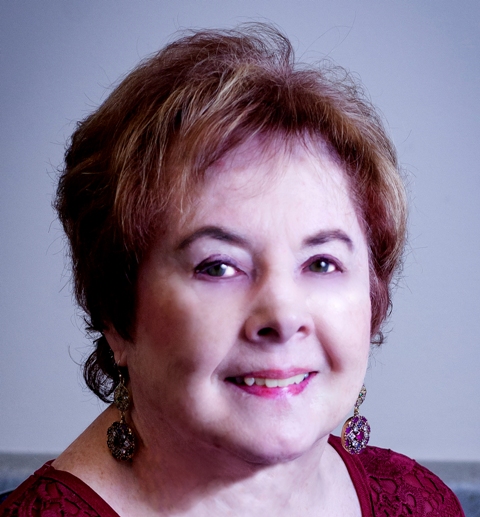
Jolene Navarro: Buckaroos and Buccaneers!

We’re tickled pink to have Miss Jolene Navarro visit us again. This lady writes some of the most interesting books and posts and I think you’ll agree so make her welcome and show her some good old Wildflower Junction hospitality.


Hello, there! Jolene Navarro here, checking in from the beautiful Texas Gulf Coast. 


We come down here from the Hill Country as often as we can. I love sitting on the banks of the Frio River, but every once a while I want to prop my feet up the balcony and watch the waves.

Over a year ago as I was enjoying the warm breeze and the sunlight glinting off of the waves, I spot a gorgeous pirate ship sailing across the waters. It was as exciting as it was bizarre, to see it.

There is a company in the South Padre area, called the Black Dragon Pirate Ship Cruise. They offer full experience cruises aboard their ship, which has been modeled into a 17th century galleon above water, while retaining all of the modern luxuries below water.


Seeing that pirate ship brought a single question to my mind – how could I make a modern-day pirate cowboy?


At first, I didn’t have any answers. But as I sat on the beach and mulled over this question, I came to a realization that cowboys didn’t just roam the Texas countryside, they also lived along the beaches of the Gulf. One of the largest and well-known cattle ranches runs along the coast. You might have heard of the King Ranch.


After that, it became a game to figure out how alike cowboys and pirates really are.


  1. Their style of life. They long for adventure and pitting themselves against the elements of natures. Both a cowboy and a pirate often would spend months, or longer, away from home. Either because they were sailing the seas in search of treasure, or because they needed to herd cattle from one place to another.
  2. The camaraderie. Both styles of life create a band of brother type of living. These men had to trust each other to watch their backs and keep them alive during the dangers of their chosen occupations. The close quarters formed bonds that could be stronger than birth family. Singing around the campfire or playing music on the deck, they have a strong camaraderie.
  3. Hard and dangerous. Whether a pirate or cowboy, there’s no denying that their lives included a multitude of perils. Being one or the other took a certain kind of person – they had to be tough, unbreakable and sturdy. Cowboys had to ensure that they could herd thousands of longhorns to a certain destination and protect them from predators such as coyotes and rattlesnakes, and the ever-perilous possibility that the herd could go haywire. Pirates also lived a rough life, out on the sea for years during bitter squalls that threatened to break their ships to pieces and stole lives. Both have a respect for nature and a code of honor.


Buckaroos and buccaneers aren’t that different after all. And when you remember that a lot of Texas is the coastline (almost 400 miles), well… It isn’t hard to imagine stunning ranches overlooking beaches, with gorgeous vista views. Or the pirates that might have sought refuge in the area, striking deals with local ranchers, and enabling these two worlds to mix.


On our most recent trip to the beach, we came across this message in a bottle. The writer in me thought of all the stories this bottle could tell and the secrets it held.


Just like this message in a bottle, there are secret stories waiting to be told along the Texas coast where cowboys and pirates meet.


Does the meshing of those two worlds spark a story in you? Would you love to set sail on The Black Dragon pirate ship? I’m giving away two copies (Ebook or Print) of The Texan’s Secret Daughter so leave a comment to enter the drawing!


In my newest release, The Texan’s Secret Daughter, Jazmine has a secret that she knows it’s time to share. The secret rocks Elijah De La Rosa’s world.

Can this rancher make up for his past? 

Cowboys of Diamondback Ranch book #1

Turning his life around was the hardest thing Elijah De La Rosa ever had to do—until his ex-wife, Jazmine Daniels, returns with their young daughter he didn’t know existed. Now this successful rancher will do anything to be a good father. But can he forgive himself for the past…and turn their second chance into a family for always?


AMAZON  |  B&N  |   APPLE  |   IndieBound |  KOBO


You can contact Jolene through her website: http://jolenenavarrowriter.com/

Gina Danna: The Frugal Housewife

The Fillies welcome historical author Gina Danna to the Junction. She has a giveaway at the bottom so leave a comment to get in the drawing.


Last winter in Texas, it was cold enough I pulled out my favorite Polo sweaters to wear and found holes! Moth holes! I pulled a couple more & the little buggers were chomping on most of my Polo and Izod sweaters. They love wool and here they’ve got good – expensive – taste but oh I was sooo mad! What do people do today when this happens? After muttering a few colorful metaphors, the sweater gets tossed, as we’ve become a throwaway society. Broken, buy new! But that’s not how people used to be…

For centuries, many people did not have the wardrobes we have today. Unless you were rich, the majority had a few articles for everyday and one dressy piece for church. During the time of the American Civil War, a great deal of men’s clothing was made of wool. Pants, frockcoats and waistcoats were wool. Why? Because wool is a great durable fabric. Made of tightly woven fibers, it held dirt, mud, and anything else on the surface unlike cotton, which absorbed it. If mud got on wool trousers or skirt, it’d be allowed to dry then a fabric beater, like a carpet beater, would be struck on the item and the dried wool would flake off.

For ladies with those long skirts that hit the floor, what did they do to make them not fray or mar with dirt? Many put a ruffle around the bottom and it took the filth off the streets, sidewalks and home. If it didn’t wash out, the ruffle was torn from the skirt and a new one attached. A new ruffle made of another color or new trims, made the skirt look new. Or they lined the bottom with twill-tape, sewn on the inside so only a glimpse of it showed on the hemline. Colored to match the skirt, this piece saved the hem from dirt and once it was beyond redemption, it was an easy to remove and cheap to replace.

During the Civil War, Southern ladies had to become the Frugal Housewife and find alternatives as the Union naval blockade kept imports out. Therefore, fabric from the North or England wasn’t available, neither were many notions such as stays for corsets, etc. So they redesigned what they had. Fixed their hoops by narrowing them or reverting to corded petticoats. They streamlined their skirts, cutting fabric to repair another area, thus making the skirt not as wide as fashion dictated. Pagoda sleeves were made narrow, cuffs and collars made from other scraps and they reversed the fabric to give it a ‘fresh’ appearance. Women already used shank buttons on their bodices. These buttons were not truly sewn on but the shank went through the slit at the buttonhole and was held there by a ribbon that ran the length of the bodice. To give a change of appearance, they pulled the ribbon, releasing the buttons and they threaded different ones in their place. Quite the ingenious way to make one outfit look like five.

Surprisingly enough, The Gone With The Wind portrayal of using curtains for material wasn’t that far off the norm.

During this time, ladies changed clothing many times a day. During the winter, it may be 3-5 times, summer 7-9 depending. They had their morning gown, working gown, cooking dress, traveling outfit, day dress as well as one for evening supper, evening party and ballgowns. It might sound insane to change but it was a way to keep the outfits cleaner than wearing one all day.

Laundry was a nightmare – an all day affair literally. Washed by hand with a scrub board and soap, it was a task assigned to Mondays. Whites were done in boiling water, colors in cold. Dresses were roughly 7-8 yards of fabric. A big piece to wash so they deconstructed it – bodice from skirt, sleeves from bodice – so smaller pieces to scrub and to dry. Drying was on clothesline outside. Whites placed in sunlight to bleach them whiter; colors turned inside out and hung in the shade to keep from fading. Ironing was with a cast-iron iron like we see for decoration today. It had to warm enough to iron but not hot enough to burn. Regardless of societal class, when they could afford to, they hired a 12 year old to do it for them. I read an account of a lady who wore a new dress in May and didn’t wash it until August! Yet some had to be done and it was much easier to wash collars and cuffs, which get noticeably dirty.

But what about those moth holes? They FIXED them. Women learned how to sew – whether they were good or not didn’t matter. They learned it enough to be able to repair things. Knitting was also a skill majority had. With that knowledge, and using things like cedar chests, they could keep most of their woolen fabric safe.

So what about my moth-holed sweaters? When my mother was alive, she fixed them. My mother was a Depression era child. These children were educated about getting by on nothing and making things last. My mother was great at sewing. Made all my childhood clothes. I remember wishing for store bought clothes…difficult being the one with the pretty – and unique – outfit. She also knitted and for these, she knew how to get into the sweater and reknit the holes closed. Alas, I never acquired those skills…

So, I did the best I could – I used needle and thread to sew them close.

There actually is a book on how to be a frugal housewife: The American Frugal Housewife, Dedicated To Those Who Are Not Ashamed Of Economy by Mrs. Child, 1833. A fascinating read.

Makes you wonder – could you become a “frugal housewife”? I’m giving away one digital copy of RAGS AND HOPE to someone who comments. The drawing will be Sunday.

* * * *

RAGS & HOPE –
 

Widower Colonel Pierce Duval only wants return to his Union command in Tennessee. A chance and harrowing encounter with a true-blue Southern belle stirs emotions he thought long buried. When her safety is at stake, how can he not help her? 

Cerisa Fontaine ran away for a new life far from her family’s awful secret. But her controversial marriage and southern drawl make her a pariah in the North. With her husband death, Cerisa is forced to seek employment at the only establishment that will accept her: a brothel.

To survive, Pierce and Cerisa embark on a journey to Tennessee posing as a married couple. But as secrets stand between them, passion wages its war within them. Do they  remain loyal to their cause, or give in to their heart’s desire?


AMAZON  |  iBOOK  |  KOBO  |  Nook 


Creating a Multi-Author, Interrelated Series is Easy…Right?

This weekend we have Bestselling Author Charlene Raddon visiting. She’s heavily involved in writing big series’ with many authors and has become quite a pro at it. She’s just finishing up The Widows of Wildcat Ridge. So what’s next? Maybe you can ask her. Please give her a big welcome.

How many of you have followed the series, The Widows of Wildcat Ridge? For those who haven’t, this series consisted of sixteen novellas about the widows left behind after an explosion decimated the Gold King Mine in Wildcat Ridge, Utah Territory, 1884. Virtually every miner died. A second explosion killed many townspeople who had rushed in to try to save them. When it was over, the town of about five hundred residents had been reduced to almost 50 widows, their children and a few men.

If you think my series sounds similar to the film series, Godless, I’ll take that as a compliment because Godless was an excellent production. Had I seen it before coming up with my idea, the Widows of Wildcat Ridge would likely never have existed. No matter. The series did exist and has been extremely successful.

But now it has come to an end. The sixteenth, and final, book of the series came out on May 15.

Ophelia, book 16, was my fourth book in the series. Each was fun to write with different characters and challenges. All the stories in the series were interrelated, meaning that each likely contained or at least mentioned some events and characters from previous releases. This made the work much more difficult, confusing and problematic. But also more fun.

Each widow suddenly found herself alone, some with dependent children, no mate, no funds or income, and little hope. What did they do? They gathered together, sharing supplies and joining forces to bringing their town back to life and produce incomes for themselves and their families. They held a horse auction to bring in people, particularly marriageable men. They turned a nearby hot spring into a 19th century version of a spa.

They didn’t sit home and bawl. They dug in their heels and did what they must to survive. True pioneers, every one of them, and each had to deal with the series villain, Mortimer Crane, who owned the town (or believed he did), plus other antagonists unique to each tale.

In my first book of the series, Priscilla, Book 1, the minister’s daughter, who lost her husband and father in the second explosion, takes the town leaders to see a hot springs she had recently found. She comes home to find an unconscious man bleeding all over her bed from a gunshot wound. Braxton Gamble had been tricked into taking part in a bank robbery. Because he’d escaped—with the stolen funds—the outlaws are after him.

My second book, Thalia, Book 7, centers around Thalia’s long-time crush on Dinky Moon, the town drunk. Sobering him up and keeping him that way presents quite a challenge, but she handles it, along with a stranger who comes there believing she has something belonging to him.

In Cadence, Book 13, the series villain, Mortimer Crane, proves himself as evil as everyone believed him to be. On finding a young woman in dire straits, with a little sister in tow, he hires Cadence as a maid and brings her to Wildcat Ridge. Once there, she discovers the establishment she’s to work at is a bordello and her new employer wants more from her than her talent with a dust cloth. To keep her there, he takes her little sister away and refuses to tell where.

Finally, we have Ophelia, Book 16, the last of the series.

Ophelia was Mortimer Crane’s wife. After twenty years of a so-so marriage, she learns just who she had married—a letch, a liar, and a cheat. She also learns something else that gives her the key to controlling him. So, she leaves the house in Salt Lake City Mortimer had installed her in to keep her out of his affairs, moves to Wildcat Ridge, and sets about starting a new life. On her first day in town, she comes face to face with a man from her past, one she had loved with all her heart. Together, she and Brody Duvall must find a way to defeat Mortimer. Can they do it?

Creating this series was a huge project that could never have taken place without the wonderful authors who joined me in this endeavor: Caroline Clemmons, Zina Abbott, Linda Carroll-Bradd, Pam Crooks, Kit Morgan, Christine Sterling, Tracey Garrett, and Kristy McCaffrey. I’ve made new friends, not only my fellow authors, but many fantastic readers who helped to make the series a success.

And I learned a ton! About working with other authors and managing a big multi-author series. A quarter of the way through, I told my non-involved friends to shoot me if I ever said I was doing another one. These days, I’m keeping one eye on my back trail.

If I had this project to do over again, I’d make sure it was all laid out, all the decisions made, before ever inviting authors to join in. We’d have online meetings to decide further details and have one uninvolved person read each book, create a book Bible for them, and keep track of who did what when to avoid conflicting information in the stories. When did that horse auction take place? What was the marshal’s name? Has anyone named the owner of the bakery? What businesses exist in this town? Are they open or closed? Details, details, details. So much to keep track of.

Ah, but it’s done now, and every story is a gem.

If any of you consider the idea of starting your own multi-author, interconnected series, contact me. I might be able to save you some time.

As for the future, keep your eyes and ears open because even though the Widows of Wildcat Ridge is finished, some of its authors are not.

Here’s every book in the series on Amazon!

#kindleunlimited

Are you a big fan of these continuing series involving multiple authors? I’d like to hear your answers. I’m giving away two $5 Amazon gift cards so leave a comment to enter.

***********

Charlene Raddon is an Amazon bestselling author with fourteen western historical romance novels to her credit. Her books have won contests and awards. She is also a book cover artist who specializes in historical covers and lives in Utah with her husband and the most neurotic cat ever.

AMAZON  |  TWITTER  |  FACEBOOK  |  GOODREADS  |  BOOKBUB  |  PINTEREST |  INSTAGRAM


Jodi Thomas: The Power of Friendship

We’re so excited to have Jodi Thomas back to visit. We’re not sure what book this makes her but it’s over 50. Miss Jodi always has something interesting to talk about and this is no exception. We think you’ll enjoy it–and her giveaway at the end of the post. So make her welcome.

When I began writing THE LITTLE TEA SHOP ON MAIN, two stories came at once.

First, I wanted to write a story about a man who loved three women. One was his best friend, one his neighbor who needed a hero to turn to as they grew up, and the last was the love of his life even if she didn’t always agree with his plan. Readers will love Jack as he slowly figures out that the girls don’t belong to him; he belongs to them.

The second theme I wanted to write about was the power of friendship. My three little princesses grow to be close friends and maintain that friendship all their lives.


The number of close friendships between writers is peppered through history. It has been my experience with writers who become my friends that knowing each other makes us both stronger. We learn from one another, push each other and sometimes even compete.

In my first writing class, I heard Dee Pace read and I said I’d love to be able to write that good. When the class was over everyone agreed to keep meeting at the library. The next week, she and I were the only two who showed up. We began helping each other. Learning how to write. Learning the market. Entering contests.

Dee said once that when I won, she felt she’d won too. I realized I felt the same way. She’s now in Heaven, but every now and then I swear I hear her whispering, “Write deeper, Jo.”

There are friends you form a bond with and you remain close to even when there are months or even years you don’t talk. For some of us there is a very rare friend who follows you through all your life. I’ve heard it said that having one such friend for a lifetime is a very rare gift. They’ve known you all your life and still like you anyway.

I’ve been blessed with one–Reta. Our mothers were friends. There was never a time that we didn’t know one another. We went through school together and even were together when we met our future husbands.

As the years passed, we went different ways but were always still close when we saw one another. But, in good times and bad, I’ve always known she was a phone call away. (Below is a picture of the two of us a few years after we graduated.)

In my new book, THE LITTLE TEASHOP ON MAIN I had great fun watching my characters become friends and influence one another’s lives. My main characters were very different, one wild and creative, one grounded and brave, and one shy. When they really needed to talk or celebrate, or even cry, they’d have tea. The ritual became the thread that held them close no matter how far apart they might be in miles.

Let me know how your best friend enriches your life. I will be drawing for one print copy of THE LITTLE TEASHOP ON MAIN.

AMAZON  |  B&N  |  APPLE  |  KOBO  | 

Welcome Guest – Caryl McAdoo!!!


The WILD WEST, UP CLOSE and PERSONAL!

Readers voted at Sweet Wild West Reads! They wanted more stories with covered wagons and cattle drives. The new multi-author Prairie Roses Collection was born with that poll almost a year ago. And the 2019 stories have just launched. Our heroines are the roses: Sadie, Remi, Hope, Grace, and Julia, and do they create a lovely bouquet of fiction for Mothers Day! The award-winning, best-selling western authors writing for Prairie Roses Collection are: Patricia PacJac Carroll, myself, Barb Goss, Indiana Wake, and Vickie McDonough. All the books are covered wagon stories.

My story, REMI, begins with a young woman’s seasickness aversion which influences her choice not to accompany her step-father and mother to the Riviera, but to travel west to California to search for the father she’s never met. In 1853, she and her bondwoman journey to Saint Joseph to join a wagon train. Readers first meet her in UNIQUELY COMMON, my April 2019 release with all the same characters.

What a blessing to go and ride along the same trail as the early, courageous pioneers traveling two thousand miles in wagon trains—a journey plagued with hardships and troubles—to settle the West. Last December, traveling from our home in Clarksville, Texas a full day to Saint Joseph, Missouri, I did just that! I couldn’t wait to see the Oregon/California Trail.

Once the pioneers crossed the Missouri, they were no longer in the U.S., but the government still helped, building forts along the way where wagon trains would rest a day or three, do their repairs and restock.

I found it so interesting to discover they sold food at cost or even gave it away free to those who couldn’t pay. They also sent the Army Corp to work on the passes such as at Scott’s Bluff.

It was an amazing sight and right when Remi and Edwina passed by here, the U.S. Army Corp were there!

I know that my 4300+ mile trip made Remi such a much better story. I pray it comes alive for you in the pages of my novel. I didn’t make it all peaches and cream. This wagon train suffered measles, water shortages—plenty of hardships, including fatal accidents. I hoped to portray the difficulties these settlers faced.

It flabbergasted me to come upon Fort Laramie in Wyoming. The main building, erected in 1851, has been completely refurbished in recent years. I rejoiced with Asher and Remi, Dusty and Edwina, and Ethan and Christina Cord as they saw it, too. A bit of civility in the wilderness. The government set their eyes on the manifest destiny of the nation being from sea to shining sea one day.

And then there was Independence Rock which for me, was a bit of a spiritual experience. Hundreds, thousands of those in the covered wagons stopped here and celebrated being at Independence Rock in early July because that meant they would make it over the Rockies before the winter storms! While at this heart-warming landmark, the men, women, and even some children carved their names all over this Independence Rock so they would be remembered.

Here’s an artist’s rendition I photographed at Independence Rock See how many wagon trains would be there to circle up a couple of celebratory days.

I touched the very rock my friends Remi and Samantha carved their names on in 1853. My characters are that real to me, and I believe they will be to you! I hope you’ll enjoy visiting all these historical sights in the West when you read REMI and the other Prairie Roses Collection stories!

Thank you so much, Karen, for the invitation to Petticoats & Pistols!


I’d like to gift THREE eBook copies of Remi to THREE WINNERS as it debuted on my birthday, May 3rd !

Leave a comment below for a chance to win!

REMI jacket copy: It isn’t within man to guide his own steps—or a woman. Caught between a wagon train and the deep blue sea, Agnes Remington Dalrumple, Remi for short, chooses the overland journey west over crossing the Atlantic with her mother and step-father. Though the introvert has never been on her own, she decides to go to California and try to find the father she’s never known. Thwarted at every turn, almost every effort is dashed until a widower’s thirteen-year-old daughter intervenes on her behalf. How can the headstrong young woman place herself under the responsibility of the girl’s father, a perfect stranger? But if she doesn’t, her journey ends right there in Saint Joseph, Missouri. On the Oregon/California trail, will pride and independence deter her from the destiny God has prepared?

Caryl’s bio: Award-winning author Caryl McAdoo prays her story brings God glory! Her best-selling novels are blessed with a lion’s share of 5-Star ratings! With forty-three-and-counting titles, she loves writing as well as singing the new songs the Lord gives her—listen to a few at YouTube. Sharing four children and eighteen grandsugars, Ron and Caryl live in the woods south of Clarksville, seat of Red River County, in far Northeast Texas, waiting expectantly for God to open the next door.

Contact links for Caryl:

Bicycling: Not Just For Men Anymore

We’re thrilled to have bestselling author Mary Davis this week. She’s written over thirty titles in both historical and contemporary inspirational romances. Please show her a warm welcome.


“Let me tell you what I think of bicycling. I think it has done more to emancipate women than anything else in the world. I stand and rejoice every time I see a woman ride by on a wheel. It gives women a feeling of freedom and self-reliance.” Susan B. Anthony.

The safety bicycle gave women independence like nothing else. A lady who had a bicycle could go places that were too far to walk without being dependent on a man to either take her or hitch up a buggy for her.

Before 1890 bicycles were more of a novelty and a challenge rather than a legitimate mode of transportation. They were hard to ride, hard to get on, and hard to steer.

The first vehicle that could really be classified as a bicycle was invented in 1817. Also known as a running machine, velocipede, Draisienne, or dandy horse. It had two same-sized wheels and no pedals. A man would straddle it, sitting on the seat, and use his feet to propel himself and the velocipede forward. I say “man” because this was not a machine suitable for ladies in dresses.

The 1863 Velocipede had steel wheels but had the improvement of pedals on the front wheel—direct drive, fixed gear, and a single speed. This version was popularly known as the boneshaker because that’s what it did on the cobblestone roads of the day—shake your bones.

In 1870 came the Ordinary or Penny Farthing also known as the “high wheeler.” That’s the one with the huge front wheel and the tiny back wheel. The inventors realized that a larger wheel meant you could go farther with one revolution. The pedals on the front wheel made steering a challenge because while pushing one pedal and then the next, it could make the front wheel veer one way and then the other. But the solid rubber tires and long spokes made for a much smoother ride than its predecessors. Not only was this one difficult to get up on because it was so high, but the rider was often above the center of gravity. If they hit a rock that stopped the front tire, over they would go onto their head. This is where the term “taking a header” came from. This was the first to be called a bicycle.

Over the next two decades, the inventions of the ball bearings, caliper brakes, chain drive, pneumatic tires, and improvements in metallurgy all contributed to the 1890 safety bicycle. This bicycle most closely resembles the bicycles of today. Two same-sized tires, pedals in the center of the vehicle rather than on a wheel, chain driven, inflatable tires, and a lever hand brake. The chain drive revolutionized the bicycle. With the safety bicycle, women gained an independence like they’d never had before.

Not only women in the cities, but women out west embraced the freedom the bicycle afforded them. Not all women thought bicycles were fitting for women, finding it too brash and unladylike.

In THE DAUGHTER’S PREDICAMENT, Isabelle, the heroine, enjoys the freedom her safety bicycle gives her. Even though some people don’t think it’s appropriate for a young lady and too bold. But each of her suitors are modern men who find her eccentricity endearing.


MARY DAVIS is a bestselling, award-winning novelist of over thirty titles in both historical and contemporary themes. She is the author of (Book 1 in the Quilting Circle series), “Zola’s Cross-Country Adventure” in the MISSadventure Brides Collection, “Holly & Ivy”  in A Bouquet of Brides Collection, The Prodigal Daughters series from Love Inspired, and Newlywed Games. Coming in 2019, The Daughter’s Predicament (Book 2 in the Quilting Circle series) and “Bygones” in Thimbles and Threads. She’s a member of ACFW and active in critique groups.

Mary lives in the Pacific Northwest with her husband of over thirty-four years and two cats. She has three adult children and two incredibly adorable grandchildren.


Newsletter  Blog  FB  FB Readers Group  Amazon  BookBub


THE DAUGHTER’S PREDICAMENT (Book 2 in the Quilting Circle series)

Can a patient love win her heart?

   As Isabelle Atwood’s romance prospects are turning in her favor, a family scandal derails her dreams. While making a quilt for her own hope chest, Isabelle’s half-sister becomes pregnant out of wedlock and Isabelle–always the unfavored daughter–becomes the family sacrifice to save face. Despite gaining the attention of a handsome rancher, her parents are pressuring her to marry a man of their choosing to rescue her sister’s reputation. A third suitor waits silently in the wings, hoping for his own chance at love.

   Isabelle ends up with three marriage proposals, but this only further confuses her decision. A handsome rancher, a stranger, and an unseen suitor are all waiting for an answer. Isabelle loves her sister, but will she really allow herself to be manipulated into a marriage without love? Will Isabelle capitulate and marry the man her parents wish her to, or will she rebel and marry the man they don’t approve of? Or will the man leaving her secret love poems sweep her off her feet?

Have you or do you enjoy riding a bicycle? Maybe you’ve had a few misadventures. Leave a comment to enter the drawing for one Kindle copy of The Daughter’s Predicament.


Orphan Train Sweet Romances, and Train Travel in 1855

Hello everyone, Wendy May Andrews here. When I was planning this series I had to give a great deal of thought to the timing. I chose to set the series in 1855. I didn’t want to address any of the issues connected with the war so I had to make it as early as possible, but I also needed the train to go far enough West to be interesting. And, of course, there was the orphanage too. That’s the only place I took “creative license”. Mr. Charles Brace established the Children’s Aid Society in 1853 but in my first book, I have it that my heroine, Sophie, was a resident at the orphanage for ten years before she became one of the workers there. So the timing of that doesn’t quite jive. But other than that, everything else was perfect. And, too, there’s the fact that orphanages did exist in New York City ten years before 1855, just not one’s organized by Mr. Brace as he was only born in 1826.

The history surrounding the Orphan Trains is fascinating! I’m sure there are many sad tales in the annals of its history, but for the most part it afforded the opportunity for children to have a better life than what they would have had as abandoned orphans in the stews of the big city. Mr. Brace’s theory was that every farm table had room for at least one more, so he arranged for new homes out West with families who promised to house and educate the children. Unlike some other similar arrangements, Mr. Brace did not place the children in any sort of indentured circumstances so they had a better prospect for a happy future.

I also enjoyed researching what their new town might be like. This is a four book series. The first one, the prequel, takes place exclusively in New York, but the rest are set in their new town in Missouri. All three young women are city bred. The first, Cassie, had no intention of staying in the small town. She had just grown attached to the orphans and wanted to ensure they were getting good homes. Being a socialite from New York, she was a little appalled by the circumstances of the new town. But the other two young women, who planned to make new lives for themselves out West, were relieved to find it wasn’t as primitive as they had feared. Perspective is everything!

The rail construction boom also resulted in the development of new villages and towns along the way. The readier access to supplies with the train going through helped these new towns grow and thrive. I can’t say I would have loved to live back then, but it’s certainly a fascinating time to visit through research and good books.

Thank you for stopping by my guest visit here at Petticoats & Pistols! I’ll be giving away an ebook copy of Book 1 in the Orphan Train series. (Buy link for Sophie – Book 1 ) 


      SOPHIE

Blurb:

His pursuit of her threatens everything – except her heart:

Sophie Brooks has lived at the orphanage since she was ten years old. Now nineteen, she’s not only a resident, she works there as well. It’s the only true home she can remember and she’ll do whatever it takes to keep it safe.

When her budding relationship with the son of one of the orphanage’s benefactors threatens the charity’s funding, Sophie must choose between her loyalties and her heart.


I’d love it if you check out the whole series page on Amazon

I can be found in various places around the web and I’d love to stay in touch: 


Welcome Guest Kari Trumbo!

When a cowgirl becomes a cow boss…

We all love reading about a fantastic hero. Sometimes, he even steals the show in romantic fiction. If you read westerns, the male lead is expected to be dashing, heroic, strong, capable, a good horseman, and he’s always good to his lady. But what about the heroine?

While the number of women who came west in the early-to-mid 1800’s was sparse (some figures claim it was as little as 10 to 1) by the late 1800’s, women were coming west for jobs and adventure. Just like their male counterparts. Women of the west were doing things that their sisters back east would swoon over.

In Along a Tangled Path, book 6 in my 7 book series, Brothers of Belle Fourche, Wilhelmina “Will” Galliger pretends to be a mute boy so, she can rope and ride her way to her own land. Her goal is her own ranch. My research tells me, though she is fictional, she was not alone. My character is very loosely based on Lucile Mulhall, from Charles Wellington’s Let ‘Er Buck: A Story of the Passing of the Old West. She is listed as the only woman to down a steer within the time limit at the Pendleton Round Up, among other things.

Women were allowed to have these roles, but they were rare. In the case of my heroine, she dresses as a man to avoid conflict. Of course, it adds a whole heaping helping when it’s discovered exactly who she is. Some women in the west hid who they were, such as Charely Parkhurst. Others, Like Lucile, did not.


One of the biggest freedoms women of the west enjoyed, was the ability to not only own land, but to retain it if their husband died or divorced them. This was not the case in other areas of the country. In Along a Tangled Path, Will was treated as chattel by her father as she was growing up and she associates happiness with ownership. She doesn’t want a husband, she wants land. Where she came from, land could be taken if a husband decided to divorce her. So, part of her motivation to act like a man is not only for respect, but because it suits her goal.

I love a strong heroine, but does that make the hero weak? I don’t think so. Charles was so much fun to write as Will’s foil. He’s trying to protect her secret and his heart all at once. He respects her, but it’s important he act as a traditional cowboy hero should and he must protect her above her secret.

For more information on cowgirls of the west, you can click HERE
And to find out more about Lucile you can click HERE  or HERE

Giveaway!! An autographed copy of Along a Tangled Path will be given away to one commenter. Let’s discuss: Do you love a strong female heroine or a more traditional Victorian heroine?


Kari Trumbo is a bestselling author of Christian and sweet romance. 

She writes swoony heroes and places that become characters with historical detail and heart.
She’s a stay-at-home mom to four vibrant children. When she isn’t writing, or editing, she home schools her children and pretends to keep up with them. 

Kari loves reading, listening to contemporary Christian music, singing when no one’s listening, and curling up near the wood stove when winter hits. She makes her home in central Minnesota, land of frigid toes and mosquitoes the size of compact cars, with her husband of over twenty years. They have two daughters, two sons, one cat, and one hungry wood stove.


You can find Kari at the following links:

Facebook      Bookbub     Website     Amazon                                   

Link to book


Welcome Guest Heidi Peltier!


“No man in the wrong can stand up against a fellow that’s in the right and keeps on a-coming.”

– Captain Bill McDonald, Texas Ranger


Almost since their inception, the name Texas Rangers has called up a romantic image of the men who valiantly stood against any and all enemies. Brave, noble, and true, they fought to protect the land they loved, and they became legends for it. There are lawmen, and then, there are Texas Rangers. In his book The Men Who Wear the Star: The Story of the Texas Rangers, Charles Robinson quotes former adjutant general William W. Sterling, a former Ranger himself, who said, “There is no question but that a definite potency exists in the name ‘Texas Ranger.’ Take two men of equal size and arm them with identical weapons. Call one of them a deputy sheriff and the other a Ranger. Send each of these officers out to stop a mob or quell a riot. The crowd will resist the deputy, but will submit to the authority of the Ranger.”

Texas history is full of examples of these legendary champions of the state. Consider men like John Coffee Hays who single-handedly held off a band of Comanche Indians at Enchanted Rock in 1841, Samuel H. Walker who helped develop the Colt Walker single-action revolver, and Frank Hamer who helped hunt down Bonnie and Clyde. Captain Bill McDonald was once sent to stop a prize fight, and when asked when other officers would arrive, he said, “Hell! Ain’t I enough?” “One Riot, One Ranger.” They’re just that great!

The Rangers have a Major League Baseball team named for them. They have their own museum in Waco, Texas. The one and only Chuck Norris chose to play a Ranger on TV! Let’s face it – Texas Rangers are Just. Plain. Cool.


When I started The Lawmen of Texas series, I had no idea it would even be a series, but while I was working on the first book, my cousin Erick Reed passed away after twenty years of battling a kidney disease. He was only 42. Since we were kids, he dreamed of serving his country as a fighter pilot. He would have been a doting husband and a fun dad, but the disease kept him from those things and ultimately took him from us. After he was gone, my heart needed to rewrite his story for him, to give him the adventure and happy ending he should have had. Once I got the idea, book two practically wrote itself. I don’t write about pilots, but, I think, making him a Texas Ranger is just about as cool! The Ranger’s Purpose is my gift to Erick.


Texas Ranger Erick Carlton is tough, intimidating, unyielding, but two gunshots to the shoulder can render a man useless. He’s got outlaws to track down and can’t afford time to heal, but these injuries have knocked him flat. It doesn’t hurt that the nurse tending him is a beautiful young woman, and taking time to recover might not be so bad, if only the damage from the gunshots wasn’t so life-altering.

Mahala Peters doesn’t want to be anywhere near this stranger, or any man for that matter. Since a terrifying attack three years ago, she’s been in hiding and would like nothing more than for Erick Carlton to pack up and head out. But as his wounds heal, so does her heart. She knows she shouldn’t get attached. The man is on a mission, after all, bound to leave as soon as he’s healed. Only now, does she really want him to go?

With lingering complications from his wound and the draw of a woman he can’t provide for, can this Ranger find his true purpose?


Heidi is offering a digital copy of  The Ranger’s Purpose to three commenters on today’s blog.


Heidi loves connecting with readers.

Visit Heidi’s website and sign up to join her newsletter.

Follow her on Facebook, Twitter, and Instagram.


Welcome Guest Zina Abbott!

Postmasters & Political Patronage 
by Zina Abbott


Welcome! My name is Zina Abbott. I am pleased to have been invited as a guest blogger on Pistols & Petticoats today.
 
I have recently written two book for the series, The Widows of Wildcat Ridge. In my second book, Diantha, my character not only ends up taking over the Ridge Hotel in town after the death of her husband in a mining disaster that killed many townspeople, she also ended up taking over her late husband’s postmaster position. When readers first meet Diantha in my first book I wrote for the series, Nissa, she serves as the postmistress.
 
General Post Office Department, Washington, D.C. ca. 1900-1906


Before the Postal Reform Act of 1970, there was no United States Postal Service. Mail delivery in the United States was managed by the General Post Office Department, a federal agency based in Washington, D.C. The Post Office Department handled contracts for mail delivery, often awarding them to
freight train companies, stagecoach lines (think Butterfield and Wells &
Fargo, plus a host of one-man operations) and, later, railroads. Then there was that glorious year and a half where the freight company, Russell, Majors and Waddell, won the mail contract for the Pony Express.
 
Old Matagorda, Texas Post Office, built 1871
 
Postmaster positions, however, were an entirely different matter. They were a “political plum.” Awarding postmaster positions was not controlled by the General Post Office Department. They were appointed by the local congressman for the district in which the city or town was located in recognition (payment) for either the support, both financial and other means, helping the congressman win election or achieve his political aims. Men awarded postmaster positions in large cities were guaranteed a nice salary and steady employment—at least while that congressman stayed in office. In smaller towns where the citizens’ involvement in a congressman’s career was less, the awards may have been tempered by the selections also being narrowed down to who had the facilities and ability to run a post office operation. Either way, for many years, awarding postmaster positions was one means a congressman had of rewarding those who either served their country well, or furthered the congressman’s political career.
Seaside Post Office founded 1889
 
I became aware of this when I started working for the United States Postal Service in 1980 as a relief carrier (think vacation and sick day coverage). The reform act did away with political patronage for postal positions. By the time I applied, I submitted an application to the USPS, took a test, was awarded a score based on the test results, and was called in for interviews based on my test scores.
Unidentified Rural Free Delivery carrier – fortunately I drove a right-hand drive car.
 
However, I was hired to back up a man who had been hired as a rural carrier through political patronage. Like postmaster positions in his time, he submitted his application for the job to his local congressman, who took into consideration his military service, community service in addition to his political party. A second rural carrier in the office where I worked was also hired under the old rules of political patronage.
 
It is good to keep note that, back in the days of the old West, you might find a post office operation in a variety of businesses. Mercantile stores were good locations. Sometimes, a stagecoach business used a local hotel to pick up and drop off customers and the mail.
 
 
In my book, Diantha, Wells Fargo had its own business location. I used the hotel lobby for the local post office. Diantha, whose late husband had not involved her in either the hotel business or the post office operation prior to his death, figured once she notified the Post Office Department she was taking over her husband’s job to become the local postmistress, everything was settled. However, the local Utah Territorial Congressman had different ideas. It was his right to award the job as a reward for political support – and he did just that. Imagine how surprised Diantha, the Wells Fargo stagecoach employees, and the citizens of Wildcat Ridge were when Hank Cauley showed up in town and announced he was the new postmaster.
 
My two books in the series, The Widows of Wildcat Ridge, are written to be stand-alone novels. However, they do have several connections which readers will enjoy if they are read in order as a duet. Today I am offering a free ebook copy of my first book in the series, Nissa, to one person selected at random who leaves a comment in the comments section of this blog post.


Nissa and her two children used to live in the mine supervisor’s house before her husband was killed in the Gold King Mine disaster. Forced to leave, she is reduced to seeking a job washing the laundry for the Ridge Hotel. Dallin comes to Wildcat Ridge for a horse auction. Attracted to the lovely red-headed laundress, he decides he wants to leave Wildcat Ridge with more than new horses.
 
Hal, one of two wranglers working for Dallin, discovers the homely teller working for Crane Bank is hiding something—her beauty inside and out. He would like to take her back to the ranch where he works, but there is no place for her in a bunkhouse full of men. Birdie, hoping to earn enough to escape Wildcat Ridge and apply for a bank teller job in a large city, changes her mind after meeting the handsome wrangler.
 
To read the full book description and find the purchase link for Nissa, please CLICK HERE.
 
 
Diantha is forced to learn how to run a hotel and manage mail delivery after the death of her husband. Her world is turned upside down when a stranger shows up in town claiming to be the new postmaster. Hank’s business failed and he was forced to live with and work for his brother. Things look up when his brother uses his influence to get him a small postmaster position in Wildcat Ridge. However, he runs into trouble when the current postmistress is not willing to give up the job.
 
Buck, a wrangler who came to Wildcat Ridge for the horse auction with his boss, finds when he returns to the ranch, he cannot get that sassy, redhead, Hilaina, out of his mind. Hilaina is desperate to find a husband in a town full of widows, but will not leave Wildcat Ridge and her widowed mother behind.
 
To read the full book description and find the purchase link for Diantha, please CLICK HERE.
 
 
About
Zina Abbott
:
 
Zina Abbott is the pen name used by Robyn Echols
for her historical novels. A member of Women Writing the West, Western Writers of America, and American Night Writers Association. She currently lives with her husband in California near the “Gateway to Yosemite.”
When she is not piecing together novel plots, she pieces together quilt blocks.
 
 
Connect
with Zina Abbott
:
 
WEBSITE  |  BLOG  |  FACEBOOK  |  PINTEREST  |  TWITTER
 
 
Please sign up to receive my NEWSLETTER