Water Dictated Wagon Train Routes …


For the brave souls who undertook the arduous, twenty-one-hundred-seventy-mile journey along the Oregon Trail, there
was a constant struggle to provide enough water for themselves and their animals. Their prairie schooner could carry only one-ton of supplies. Typically, a water barrel strapped to the side of the wagon only held fifteen to twenty gallons.

Most wagon masters encouraged their charges to have six or seven pair of oxen, and each animal needed fifteen to twenty gallons of water per day. Each person used a gallon or less for their needs, so no one could carry enough water. Consequently, all the well-traveled trails leading to Oregon or California followed a river. In addition to the water supply, that’s where the grass was the best as well.

Most wagon trains averaged covering fifteen to twenty miles in a day—that’s going approximately a ten-hour day with a noon hour dinner break. Of the remaining fourteen hours, a considerable portion was devoted to water needs—either taking the oxen to water, the easiest, or hauling water to the animals at ten gallons a trip.
With water weighing eight-point-three pounds per gallon. That’s about all any grown man would want to carry in two five-gallon water buckets per trip. It didn’t leave a whole lot of time for doing much else, other than trying to sleep a bit.
The emigrants first crossed the Missouri River then went northwest to pick up the Platte River which would provide all the wagon trains water for about half of their journey. It took them west through what is today Nebraska then more north and still west across Wyoming. They traveled beside the Sweetwater River and Green River before picking up the Snake River in what is Idaho today. Those going on to Oregon kept with it.

Settlers headed to California broke off the Oregon Trail at Fort Hall then started south along the Humboldt and later the Truckee River. For those sojourners, water became an even greater consideration. The closer the train got to the Forty Mile Desert, located in Nevada. It ran from the end of the Humboldt River to either the Carson River or the Truckee River.
This was the most dreaded section of their travels. The closer the trains got to it, the more alkaline the water became. Experienced wagon train masters encouraged their people to bring vinegar to neutralize some of the alkaline and make it more drinkable.

The reason crossing the Forty Mile Desert was the most difficult challenge of course was the lack of water, but also the extreme temperatures.

Most trains hit the desert in August, trying to get over the Sierra Nevada mountain range before the first snow. Being the hottest part of summer, they traveled only at night. Before 1850 almost a thousand people died there and ten thousand animals.

Mark Twain went across it and said of his journey, “It was a dreary pull and a long and thirsty one, for we had no water. From one extremity of this desert to the other, the road was white with the bones of oxen and horses. It would hardly be an exaggeration to say that we could have walked the forty miles and set our feet on a bone at every step!”

Would you have undertaken such a perilous journey?

My newest novel LILAH released on May 3rd, my seventieth birthday! It is book five in the Prairie Roses Collection for Mother’s Day each year, offering strong-hearted heroines who traveled in the 1800s by covered wagon. It’d be a blessing to me for you to try this story, especially if I’m a new author to you! LILAH at AMAZON
((TO LINK:  https://amzn.to/2xBFhxs


GIVEAWAY
Wanting to BE a blessing, I’ve arranged a gift for all the Petticoats & Pistols’ readers today. JEWEL’S GOLD will be FREE at AMAZON ((TO LINK: https://amzn.to/2YIYvMT from Friday, May 8th through Tuesday, May 12th! Y’all enjoy! (UPDATE: There was a snafu with Amazon. Caryl has reset the book to be free, but it won’t start until tomorrow Saturday, May 9. The freebie will extend through Wednesday, May 13. She apologizes profusely!)


Bio : Award-winning, hybrid author Caryl McAdoo prays her story gives God glory. Her best-selling novels have garnered over 1000 5-Star reviews, attesting to the Father’s love and favor. Readers love her historical Christian romance family sagas best, but she also writes Christian contemporary romance, Biblical fiction, and for young adults and mid-grade booklovers. They count Caryl’s characters as family or close friends. The prolific writer loves singing the new songs God gives her almost as much as penning tales—hear a few at YouTube! Married to Ron over fifty years, she shares four children and nineteen grandsugars. The McAdoos live in the woods south of Clarksville, seat of Red River County in far Northeast Texas, waiting expectantly for God to open the next door.

Links :
Amazon – http://www.amazon.com/Caryl-McAdoo/e/B00E963CFG?tag=pettpist-20

BookBub – https://www.bookbub.com/authors/caryl-mcadoo?follow=true

Website: http://www.CarylMcAdoo.com

Newsletter: http://carylmcadoo.com/sign-up-to-the-caryler/

YouTube: https://www.youtube.com/channel/UC_1hQx6UZbWi3OYwmKKxh6Q
(Hear Caryl sing her New Songs!)

Facebook: http://www.facebook.com/CarylMcAdoo.author

Phyliss Miranda Asks…Hangin’ or Jury?


In the Old West, the terms rustling and rustler had several meanings. Livestock who forged well were called rustlers by cowmen; meaning the animals could graze or “rustle up” nourishment on marginal land. A horse wrangler or camp cook was also a rustler, but the most widespread and notorious use of the word referred to a cattle thief.

On the vast open ranges of yesteryear, rustling was a serious problem and punishable by hanging. At its peak, one of the largest ranches in the Texas Panhandle had over 150,000 head of cattle and a thousand horses. Obviously, thieves could drive stolen livestock miles away before a rancher learned he had animals missing.

cattle-rustlersThe vast distances to town, hence law enforcement, often prompted ranchers to take actions of their own. Court convictions for rustling were difficult because of the animosity of small ranchers and settlers toward big cattle outfits. Many times, “vigilante justice,” hang ‘um first…ask questions later, was handed down by organized stockmen. Like horse thieves, cattle rustlers could be hanged without benefit of trial, judge or jury.

Today, even with detailed brands logged in books, registering with state officials, inspectors, and the meticulous paperwork involving transportation, not to mention a new era of branding technology to keep track of animals, ranches still face cattle rustlers…those dishonest people who want to profit from selling cattle without the bother of raising them.

cowsNo longer is a single head of beef stolen for food or an occasional Native American slipping off the reservation to provide for his family… it is big business. Modern day rustlers often sneak onto rural ranches at night, or on weekends when the owners are away, steal and sell cattle. An average calf can bring thousands of dollars on the open market; so multiply that by a trailer, or even a truck load, of cattle and you can see why it’s a profitable business for thieves.

Amid warnings that cattle rustling is on the rise in Texas, recently the state Senate passed a measure that would stiffen penalties for stealing farm animals, making theft of even one head of livestock a third-degree felony drawing up to a ten year prison sentence and a fine. Until the proposal is signed into law, a rustler can steal ten or more head of livestock and the punishment is a drop in the bucket in comparison to the law of the Old West … hang ‘um high and fast.

rustling-wanted-poster

But was hanging always fast and efficient?

I delved into the subject of cattle rustling and the methods of rustlers while researching for Give Me a Cowboy where my Pinkerton Agent comes to the Panhandle to break up an outfit of rustlers. But I became interested in “vigilante justice” from my mother-in-law, who recently passed on at the age of 92. A story teller, she was reared in Clayton, New Mexico. One of her favorite tales was about the outlaw Black Jack Ketchum, the first man hanged in the town. His execution turned into a big town event, with the lawmen actually selling tickets to the hangin’. As history has it, the sheriff had to use two blows of the hatchet before the rope broke. Probably because of their lack of experience in “structured” hangings, coupled with the lawmen misjudging Ketchum’s weight and stretching the rope during testing, he was beheaded.  Ketchum was buried at Clayton’s Boot Hill on April 26, 1901.

blackjackketchum-hanging

But my mother-in-law’s story only began there. Three decades later, when she was in grade school, Ketchum’s grave was moved to the new cemetery. Because her father was Clayton’s mayor, she witnessed the reburial. According to her, they opened the grave and she and her cousin touched the bones of Ketchum’s little finger. I’m sure in those days a casket did not weather well.

To me it’s so fascinating when history bridges time and touches our lives. Do you have a family story where history inserted itself into reality?

I’m giving away your choice of either hardback or paperback of either Give Me a Texan or Give Me a Cowboy to one of the commenters.

 Click on Cover to order from Amazon

Visit me at http://www.PhylissMiranda.com

A Blacksmith is a Blacksmith, Right?

Ask our guest Jennifer Uhlarik that question. She’ll tell you!


Blacksmiths—those who work to shape metal into useful tools, decorative pieces, or bits of jewelry—have been around since our earliest history. In the Old West, a blacksmith was a highly valued member of any community, as at some point, most people would find a reason to visit his shop to have a new tool crafted or an old one fixed or restored. A well-trained blacksmith would earn good pay for his craft. But it might surprise you to learn that not all blacksmiths could do all types of metalwork. Quite the contrary. Some were very specialized in their skills while others had a rather broad ability to work in many areas. Here’s a quick primer in the various types of smiths:


  1. Blacksmith—one who works with iron and steel. Going back to the Colonial days of America (and far earlier), blacksmiths made most of the metal tools anyone could dream of. Plows, hoes, shovels, door hinges, metal chains, and everything in between. Your typical village blacksmith had a wide range of knowledge and could work on lots of types of projects.


  1. Farrier—a smith who shaped and fit horseshoes. Since the Industrial Revolution, horseshoes have been mass-produced, but before that, shoeing horses required someone with the skill to be able to shape the iron into the horseshoe as well as adhere them to the horse’s hooves. In addition, this type of smith would have to have knowledge of how to clean, shape, and trim the horse’s hooves. Many farriers were general blacksmiths, but not all blacksmiths were farriers.


  1. Wheelwright—a craftsman who could create or work on wooden wheels or wagons and other conveyances. This included crafting the metal wheel rims and other metal parts of wagons, carriages, and the like.


  1. Locksmith—someone who forged locks from metal. Initially, locks were made from wood, but as man learned ways to craft with metal, the locksmiths changed their chosen media. They would work for hours, cutting and filing small pieces to create the inner workings of the locks.


  1. Gunsmith—one who designed, built, repaired, and/or modified guns. In addition, they might also apply decorative engraving or finishes to the completed firearm. Gunsmiths still have a place in modern society, working in gun-manufacturing factories, armories, and gun shops.


  1. Bladesmith—as you might guess, a bladesmith was someone who used blacksmithing techniques to shape metal into knives, swords, and other bladed implements. In addition, this smith would have knowledge of shaping wood for blade handles, as well as some leatherworking ability for creating knife sheaths, etc.


  1. Swordsmith—an even more specialized form of bladesmith, who worked only on swords.


  1. Coppersmith (also known as a Brazier)—this craftsman worked mainly with copper and brass, creating anything from jewelry to plates/platters to sculptures and more.


  1. Silversmith—a smith whose chosen metal was silver. An interesting tidbit about silversmithing: in this craft, the metal is worked cold, unlike iron which requires great heat. As it is hammered and shaped, it becomes “work-hardened”, and if it isn’t periodically “annealed” (heated to soften it again) the silver will crack and weaken.


  1. Goldsmith—Closely related to a silversmith, a goldsmith worked with gold and other precious metals to create silverware, jewelry, goblets, service trays, and even religious or ceremonial pieces.


There are other types of smiths, but these are some of the most common.


For the most part, the skill, craft, and artwork of the blacksmith is a thing of the past, though you can find working blacksmith shops in some places today. Sometimes they are part of historic sites or living history museums, meant to show what life was like in a given time period. Others are meant to introduce today’s culture to the craft of blacksmithing through simple hands-on classes where you can make an easy project in a few hours. Most common in today’s culture, those with smithing skills work in jewelry designing/sales, the firearm industry, or as locksmiths.


It’s your turn: Did it surprise you to learn that not all smiths could do all types of work? Which type of smithing work intrigues you the most? Leave me a comment with your thoughts, and I’ll give one commenter a signed copy of my latest release, The Blacksmith Brides, with four fun romances all containing blacksmith heroes.


Available now on Amazon!

Blacksmith Brides: 4 Love Stories Forged by Hard Work


Hearts Are Forged by the Flames of Gentle Love in 4 Historical Stories
 
Worth Fighting For (1774—Philadelphia, Pennsylvania) by Pegg Thomas
Talk of war has surrounded Meg McCracken, including her father and four brothers. Alexander Ogilvie doesn’t care about the coming war; his plans are to head west. When Meg comes to his smithy, sparks fly off more than the forge. But can they build anything during unstable times?
 
Forging Forever (1798—Cornwall, England) by Amanda Barratt
When the actions of Elowyn Brody’s father force her into a marriage of convenience with blacksmith Josiah Hendrick, she consigns love to a bygone dream. But as Elowyn comes to know her new husband, her flame of hope begins to burn again. Until heartache threatens to sever the future forged between them.
 
A Tempered Heart (1861—Charlottesville, Virginia) By Angela K. Couch
Buried under a debt that is not his own, Thomas Flynn’s only focus is gaining his freedom. He has learned to keep his head low and not pay attention to the troubles of others, until a peculiar boy and his widowed mother show him how empty his life has become. After years of protecting her son from slights and neglect of the people closest them, Esther Mathews is not sure how to trust the local blacksmith with her child…or her heart.
 
A Malleable Heart (California—1870) by Jennifer Uhlarik
A hard-hearted blacksmith finds acceptance with the town laundress. But when his past comes to call, will he resist love’s softening or allow God to hammer his ruined life into something of worth?


Jennifer Uhlarik discovered the western genre as a pre-teen when she swiped the only “horse” book she found on her older brother’s bookshelf. A new love was born. Across the next ten years, she devoured Louis L’Amour westerns and fell in love with the genre. In college at the University of Tampa, she began penning her own story of the Old West. Armed with a B.A. in writing, she has finaled and won in numerous writing competitions, and been on the ECPA best-seller list several times. In addition to writing, she has held jobs as a private business owner, a schoolteacher, a marketing director, and her favorite—a full-time homemaker. Jennifer is active in American Christian Fiction Writers, Women Writing the West, and is a lifetime member of the Florida Writers Association. She lives near Tampa, Florida, with her husband, college-aged son, and four fur children.


Kaylie Newell: It’s Rodeo Time!

For our last guest of the month, we have romance writer Kaylie Newell. Yippee! Get ready to talk about cowboys! She has an exciting new book plus a giveaway so leave a comment to enter the drawing. Please make her welcome!


Hello, everyone- It’s such a pleasure to be here at Petticoats & Pistols talking about my new release, Betting on the Bull Rider!  This cowboy romance was so much fun to write, mostly because the characters took the reins (literally and figuratively!), and told me exactly where they wanted to go.

My hero, Jake Elliott, is a bull rider, so researching was especially fun.  The Wild Rogue Pro-Rodeo is our local rodeo here in Southern Oregon, and my husband and I take our girls every year.  Drawing on those experiences, as well as time spent with our ranching friends, helped me write this story, and give it what I hope is texture and life.  There’s nothing like the sweet smell of a horse up close, or the feel of an old saddle creaking underneath you.  But most importantly, there’s nothing like that feeling of loving someone who holds your heart in their hands.

I’d love to hear from you all about your own rodeo experiences.  Do you go?  What’s your favorite event? (Mine’s the cowboy watching, of course.) I’ll be giving away a signed paperback copy, so be sure to comment!

Thank you again for reading!  Xo

Here’s an excerpt from Betting on the Bull Rider, which is the second book in my Elliotts of Montana series…..


Jake looked around. The stands were packed. The Copper Mountain Rodeo always brought in a good crowd, but today was especially perfect, with the sun coming out for the first time in days, and the temperature rising into the sixties—a rarity for this late in September.

The sharp smell of sawdust and animals filled his senses. The sound of the music, of the crowd cheering, of hooves thundering over the arena floor, made him anticipate what was coming. He’d drawn a bull named Tequila Sunrise, who was small and wiry, and who had a habit of spinning like an absolute thing of beauty. But it was his name that Jake kept coming back to. Even now as he stretched his arm over his chest and felt the muscles and tendons there pull with a distinct tightness.

Tequila… Tequila, or more specifically tequila shots, and the night at the Wolf Den kept trying to work their way past his frontal lobe. But out of a need for pure survival, Jake had pushed it to the furthest, darkest corners of his mind these last few weeks. He hadn’t allowed himself to think about Alice, to wonder what she was doing, or who she might be doing it with. And when he had gone there in a moment of weakness, he’d climbed onto his motorcycle and headed to the fairgrounds, a place where he’d always felt the most in control, to scrub his mind clean of her. So there were only thoughts of rodeo, of getting back into the game, and the money, where he belonged.

Still, his heart had a way of betraying him. At the weirdest times, when he should’ve been one hundred percent invested in climbing on the back of a bull and thinking only of staying the hell on. She always came back to him. Her face, her scent, the way she’d felt in his arms just that once. But it’d only taken one time to show him a glimpse of a life he didn’t feel like he deserved, or that he’d be any good at. What if he failed? What if he failed her? In the end, the night they’d slept together had been a fork in Jake’s country road—embark on a journey he wasn’t altogether sure he’d finish, or take the easy route, the route that was tried and true, and had never caused him any heartache. Not once.

So, here he was. A coward in the simplest terms. He pulled his Stetson low over his eyes and rolled his head from one shoulder to the other. It didn’t matter. He was back on the circuit. And hell, maybe it wouldn’t last much longer, but wasn’t that what he’d told himself he’d wanted? To rodeo until he couldn’t anymore? And he’d continue telling himself that, right along with the fact that he didn’t need Alice.

He didn’t need anyone…

* * * * * * *

Kaylie writes romances, romantic suspense, and women’s fiction and won numerous awards along the way. She was a finalist in the Romance of America’s RITA contest for Christmas at the Graf.

Website  |  Facebook  |  Twitter  |  Amazon Author Page

Pioneer Cooking by Linda Hubalek

Man, your mouth is going to water today! Historical author Linda Hubalek is talking about how the pioneers got by and may have some lessons for us so make her welcome.

In this unprecedented time, when we are all home due to the virus affecting the world, we have to prepare meals for ourselves and our families. Luckily, we still have electricity and the appliances that keep and prepare our foods.

Can you imagine what life would be like if we didn’t have electricity right now? Talk about shutting down the world!

Being a writer who has spent a lot of time researching history, I think we still have it easy in 2020 compared to pioneer ancestors.

Consider the work it took to prepare a meal back in 1870 on the frontier Plains compared to today. Here are photos from the KansasMemory.org to share with you the work which had to be done before you prepared your meal. And I’ve also added recipes from my book: EGG GRAVY: Authentic Recipies From the Butter in the Well series.

Want to make a cake and need two eggs?

First, you had to raise the chickens who will produce the eggs for you!

And you wouldn’t have a box cake mix on hand either. Here are recipes to make an Angel Food Cake, and Sunshine Cake to use up all those egg yolks.

ANGEL FOOD CAKE

Whites of 11 eggs

1 1/2 cups sugar

1 cup cake flour

Pinch of salt

1 teaspoon cream of tartar

1 teaspoon vanilla

Sift sugar and flour together seven times. Put cream of tartar and salt in eggs and beat very light, fold in sugar and flour, add vanilla. Put in a cold oven and bake slowly for 1 hour. (Make your cake flour by sifting 4 cups flour and 1 cup cornstarch together four times.) 

SUNSHINE CAKE

1 cup butter

2 cups sugar

1 cup sweet milk

11 egg yolks, beaten light

3 cups flour, sifted three times with 2 tps. baking powder

Bake in tube pan 45 minutes. Use any flavoring desired.


Need milk to drink or butter to use in a recipe?

Go milk a cow!

Butter

Pour ripened cream into butter chum and chum for about 30 to 35 minutes until the butter is about the size of wheat grains. Draw off the buttermilk and add cold water. Slowly chum for a few minutes, then draw off the water.

Put the butter in a wooden bowl and mix in 2 tablespoons of salt per pound of butter. Let stand a few minutes, then work the butter with a wooden paddle to get the last of the liquid out and the salt in. Press in crocks or butter molds and store in a cool place.


Bacon for breakfast?

Today, we pull a pound of bacon from the refrigerator and cook it in a skillet or the oven. In the past, you had to raise the pig before you butchered the animal for the meal.

Sugar Cured Meat

After butchering, cool the meat thoroughly and cut into family-sized chunks. Rub each chunk with coarse salt and set aside for 24 hours. Tightly pack the meat in an earthen vessel-a syrup barrel is good-putting hams and shoulders in the bottom and bacon slabs on top.

Heat 4 gallons of water. Let the water boil and then cool a little before adding the following ingredients. For each 100 lbs. meat, weigh out 10 lbs. salt, 4 lbs. brown sugar and 2 ounces saltpeter. Let mixture cool thoroughly and pour over meat. This amount should be sufficient to cover the meat in the vessel.

Put on a wooden or china cover over the top and weigh it down with a stone to keep meat under the brine. If it isn’t enough brine to cover the meat, add more. Put vessel in a cool place and let stand for six weeks (ham) and only one week for the bacon slabs. If hams are large, leave in for eight weeks. Take the meat out of the brine, then hang and smoke it.

Feel better about cooking a meal now?

After this brief memory back to the 1800s, I hope you enjoy having the convenience of cooking meals for a while, even if we have to wear a mask and gloves to shop at a grocery store.

Please stay safe and stay well!

Linda Hubalek

Drawing for FIVE winners

Five readers will win an ebook copy of (The Mismatched Mail-Order Brides Book 2) by commenting on what you’d serve as a meal if you had no electricity today. 


BOOK 1 is FREE! It sets the story theme for the Mismatched Mail-Order Brides series. Either click HERE or on the cover and grab your copy!


ABOUT LINDA

Linda Hubalek has written over forty books about strong women and honorable men, with a touch of humor, despair, and drama woven into the stories. The setting for all the series is the Kansas prairie, which Linda enjoys daily, whether by being outside or looking at it through her office window.

Her historical romance series include Brides with Grit, Grooms with Honor, and the Mismatched Mail-Order Brides. Linda’s historical fiction series, based on her ancestors’ pioneer lives, include Butter in the Well, Trail of Thread, and Planting Dreams.

When not writing, Linda is reading (usually with dark chocolate within reach), gardening (channeling her degree in Horticulture), or traveling with her husband to explore the world.

Linda loves to hear from her readers, so visit her website to contact her or browse the site to read about her books.

WEBSITE  |  AMAZON AUTHOR PAGE


Charlene Raddon: Were Those Really the Good Old Days?

We’re so happy to have Miss Charlene Raddon back visiting with us. She’s brought an interesting subject to talk about in addition to a giveaway at the bottom. Take us away, Charlene.

Thank you for having me. I’m so happy to be back. My image of a typical 19th-century family sitting down to supper used to include a table laden with healthy, wholesome, homemade foods. To a shocking degree, the truth is the opposite. Contamination was rife, even among foods prepared at home, on the farm or ranch. Few people understood germs, bacteria and E. coli. Foreign substances and chemicals tainted foods. By the 1840s, home-baked bread had supposedly died out among the rural poor. I find this hard to believe. But it is true that people living in small urban tenements, typically unequipped with ovens, bought their bread when they could afford it.

In 1872, Dr. Hassall, the primary health reformer and a pioneer investigator into food adulteration, demonstrated that half of the bread he examined had considerable quantities of alum. Alum lowers the nutritional value of foods by inhibiting the digestion. The list of poisonous additives from that time reads like the stock list of a wicked chemist: strychnine, cocculus inculus (both hallucinogens), and copperas in rum and beer; sulphate of copper in pickles, bottled fruit, wine, and preserves; lead chromate in mustard and snuff; sulphate of iron in tea and beer; ferric ferrocynanide, lime sulphate, and turmeric in Chinese tea; copper carbonate, lead sulphate, bisulphate of mercury, and Venetian lead in sugar confectionery and chocolate; lead in wine and cider. All were extensively used and accumulative in effect, meaning that, over a long period, in chronic gastritis, and, indeed, often fatal food poisoning.


Dairies watered down their milk then added chalk to put back the color. Butter, bread, and gin often had copper added to heighten the color. In London, where ice cream was called “hokey-pockey,” tested examples proved to contain cocci, bacilli, torulae, cotton fiber, lice, bed bugs, bug’s legs, fleas, straw, human hair, cat and dog hair. Such befouled ice cream caused diphtheria, scarlet fever, diarrhea, and enteric fever. Meat purchased from butchers often came from diseased animals.

A significant cause of infant mortality was the widespread practice of giving children narcotics, especially opium, to keep them quiet. Laudanum was cheap—about the price of a pint of beer—and its sale was unregulated until late in the century. The use of opium was widespread both in town and country. In Manchester, England, five out of six working-class families used the drug habitually. One druggist admitted to selling a half-gallon of a very popular cordial, which contained opium, treacle, water, and spices, as well as five to six gallons of a substance euphemistically called “quietness” every week. Another druggist admitted to selling four hundred gallons of laudanum annually. Anyone addicted to drugs like that, should immediately contact drug rehabs near gainesville and seek their help.  At mid-century at least ten proprietary brands, with Godfrey’s Cordial, Steedman’s Powder, and the grandly named Atkinson’s Royal Infants Preservative among the most popular, were available in pharmacies everywhere. Opium in pills and penny sticks was widely sold and opium-taking in some areas was described as a way of life. Doctors reported that infants were wasted from it—’shrunk up into little old men,’ ‘wizened like little monkeys’. The nashville addiction center can help the ones that are addicted to substance just to function everyday.

And what was the fate of those wizened little monkeys? Chances are the worst of them grew up in a “sanitorium” or an asylum for the mad. After all, we can’t have rich Aunt Matilda or the preacher’s wife seeing such a child. Or the child might be put in the attic to be raised by Grandma, who’s not quite right in the head.

Kept in a drugged state much of the time, infants generally refused to eat and therefore starved.  Rather than record a baby’s death as being from severe malnutrition, coroners often listed ‘debility from birth,’ or ‘lack of breast milk,’ as the cause. Addicts were diagnosed as having alcoholic inebriety, morphine inebriety, along with an endless list of man dypsomania, opiomania, morphinomania, chloralomania, etheromania, chlorodynomania, and even chloroformomania; and – isms such as cocainism and morphinism. It wasn’t until WWI that the term “addiction” came into favor.

In the beginning, opium was considered a medical miracle used as the essential ingredient in many remedies dispensed in Europe and America for the treatment of diarrhea, dysentery, asthma, rheumatism, diabetes, malaria, cholera, fevers, bronchitis, insomnia, and pains of any sort.

One must remember that at this time, the physician’s cabinet was almost bare of alternative drugs, and a doctor could hardly practice medicine without it. A great many respectable people imbibed narcotics and alcohol in the form of patent medicines and even soft drinks. Coca Cola got its name because it originally contained a minute amount of cocaine, thought to be a healthy stimulant. A shocking number of “teetotaling” women relied on daily doses of tonics that, unknown to them, contained as much alcohol as whiskey or gin. Of course, it was no secret that men imbibed alcohol at alarming rates, and alcoholism was rampant. The result was a happy but less than healthy population.


I used this in my mail-order bride story, Forever Mine. The hero’s shrew of a wife had diabetes and treated it by drinking a tonic that promised to cure everything. It didn’t. In my book, Taming Jenna, the heroine’s missing father fell victim to dipsomania and was saved by the hero’s determination and kindness. In Thalia, Book 7 of the Widows of Wildcat Ridge Series, my heroine is in love with the town’s newspaper owner. Unfortunately, he suffers from dipsomania. It doesn’t faze Thalia though. She loves him anyway.

Is it any wonder the nineteenth century became known as “the good old days”?

What are your thoughts on this? Would you have drank Coca Cola if you knew it had cocaine in it? I’m giving away a $5 Amazon gift card plus a copy of one of these books—Forever Mine, Taming Jenna, or Thalia—to one person who comments. The drawing will be Sunday.


Charlene Raddon is an Amazon bestselling author of sixteen historical romance novels set in the American West. Originally published in 1994 by Kensington Books, she is now an Indie author. Charlene also designs book covers, specializing in western historical. You can find her covers at https://silversagebookcovers.com

http://www.charleneraddon.com

http://www.facebook.com/charleneraddon

https://www.bookbub.com/authors/charlene-raddon

The Texas State Treasury Robbery by Susan Page Davis

We’re so happy to welcome the return of Susan Page Davis. How close did Texas come to bankruptcy? She’ll tell you. Oh, and scroll down for her giveaway!

Immediately after the Civil War, Texas was in chaos. This was at least partly due to the hasty disbanding of the Confederate army at the end of the war. There were 60,000 troops in Texas in the spring of 1865. Morale was horrible. Many Confederate soldiers deserted and plundered. Soldiers pillaged the quartermaster’s stores in Galveston in late May and detained and plundered a train. A mob demanded that a government warehouse be opened to them, and a blockade-running ship was overrun by civilians. Troops sent to calm the mob joined in the plunder. Other episodes of rioting and stealing exploded across Texas.

When word reached Austin that the Confederate forces had surrendered to Grant, the Texas legislature couldn’t raise enough members to repeal the secession ordinance. Rather than stay and face the uncertainty of their status under the Reconstruction government, Governor Pendleton Murrah and several other Confederate officials fled into Mexico. Most other state officials were removed from office. Union occupation troops were on the way, and Texas temporarily was denied readmission to the Union.

During this time of disorganization and fear, violence became common. Mobs and bands of outlaws, many of them army deserters, contributed to the turbulence. In the capital, Austin, citizens got together in an attempt to protect the people and their property.

Captain George R. Freeman, a Confederate veteran, organized a small company of volunteers in May 1865, to protect the state capital until the Union army could get there.  The city was in turmoil, and a mob had taken control of the streets, plundering stores and causing riots and general havoc.

Freeman’s volunteers restored a measure of peace, and they then disbanded with an agreement to gather again if needed. A church bell would sound the alarm if necessary.

Texas during the Civil War. In 1861, the Texas legislature created the Frontier Regiment to guard frontier settlements. They occupied several abandoned federal posts and established a line of 16 camps through the center of the state. Map courtesy Texas Parks and Wildlife Department.

On the night of June 11, Freeman was informed that a gang planned to rob the state treasury. The bell tolled, and about twenty of the volunteers gathered at the Christian Church on the south end of Congress Avenue. Some of them came directly from church services.

By the time the volunteers arrived at the treasury building, the estimated fifty robbers of the gang were already inside, breaking into the safes. A brief gun battle broke out. One of the robbers was gravely wounded. Freeman was shot in the arm.

The thieves got away with more than $17,000 in specie, that is, in gold and silver coins. That’s a lot of weight to carry! A later audit report stated that a total of $27,525 in specie had been located in the treasury at the time of the robbery, as well as $800 in Louisiana bank bills. Several million dollars of U.S. bonds and other securities were also in the vault, but the robbers didn’t take them. One package of bond coupons was recovered from the floor after apparently being dropped by a fleeing member of the gang.

Before he died, the wounded robber told the outnumbered volunteers that the leader of the gang was “Captain Rapp,” but this man was never caught. No other members of the gang were ever captured, and the loot was not recovered, though some money was found outside, between the treasury building and Mount Bonnell.

Captain Freeman and his company of volunteers were later recognized by the state for their service, but the resolution providing a reward for them never passed the legislature. In 2009, Freeman was honored by a historical marker placed at his former home in Hamilton, where he later practiced law. He is credited with interrupting the robbery and preventing the bankruptcy of Texas. He had served prior to this incident as a Confederate officer, as captain of Company D, Twenty-third Texas Cavalry.

Federal troops arrived in Texas on June 19, 1865, and it took a while to restore order. Ex-Confederates were granted amnesty if they promised to support the Union in the future, but it wasn’t until March 30, 1870 that Texas’s representatives were once again allowed to take their seats in Congress.

Do you find the historical account of things like this robbery interesting and get your thoughts whirling? There are so many unanswered questions. Susan is giving away one autographed copy of Mail Order Standoff to one person who comments. The drawing will be Sunday.

The Mail-Order Standoff: Marriage plans are put on hold in the Old West when four mail-order brides have second thoughts. How will their grooms win their trust? My story – THE BRIDE WHO DECLINED – opens in Boston, Massachusetts, in the 1880s. Rachel Paxton turns down a mail-order proposal, but a few months later she learns the man she rejected has died—and left his ranch to her in his will. She can’t figure out why, and she’s not sure she wants the inheritance.

The four novellas include

Right on Time by Angela Breidenbach

Pistol-Packin’ Bride by Margaret Brownley

Twice the Trouble by Vickie McDonough;

The Bride Who Declined by Susan Page Davis.

AMAZON   |   Christian Book


ABOUT SUSAN:

Susan Page Davis is the author of more than ninety published novels. She’s a two-time winner of the Inspirational Readers’ Choice Award and the Will Rogers Medallion, and also a winner of the Carol Award and a finalist in the WILLA Literary Awards. A Maine native, she now lives in Kentucky. Visit her website at: https://susanpagedavis.com , where you can see all her books, sign up for her occasional newsletter, and read a short story on her Freebies tab.


Website  |  Twitter  |  Facebook  |  Newsletter


Fort Bridger Across the Decades

Are you familiar with Fort Bridger? While it’s not as famous as Fort Laramie on the opposite side of the state, Fort Bridger has a colorful history that includes disputes over ownership, being burned, contributing to the creation of Wyoming’s first millionaire, and a somewhat surprising use in the early twentieth century. If you don’t believe me, the large sign that greets visitors to the museum depicts the various eras of the fort’s history.

Trading Fort

It all started in 1843 when Mountain Man Jim Bridger and his partner Louis Vasquez decided to establish a trading post in what is now southwestern Wyoming. Realizing that emigrants traveling the Oregon/California and Mormon Trails would need supplies, Bridger and Vasquez cobbled together a modest fort whose blacksmith’s shop was perhaps more valuable to the pioneers than the limited supplies available in the fort’s store.

When Mormon pioneers arrived in the valley four years after Bridger built his fort and found the store’s prices exorbitant, tensions began to rise between the settlers and Bridger. These culminated in the Mormons’ accusing Bridger of violating federal law by selling both ammunition and liquor to the native Americans. Unwilling to be arrested, when Bridger learned that the Mormon militia were coming after him, he fled, and the Mormons assumed control of the fort until 1857 when they burned it to prevent the United States Army from seizing control during what is sometimes called the Utah War.

Army Fort

A year later, the Army reestablished Fort Bridger, giving control of the commercial aspects of the fort to Judge William Alexander Carter. That proved to be a profitable association for Carter, who as sutler (fort trader) became Wyoming’s first millionaire, but the benefits were not only financial. When he rebuilt the fort, Carter established Wyoming’s first schoolhouse so that his children – both boys and girls – could be educated, and the education was so complete that students were readily accepted into Eastern colleges.

The site was an active Army fort until 1878, when it was closed for two years. After it reopened in 1880, it remained open until its final closure in 1890. As you can see from the picture of the commanding officer’s home, the late nineteenth century fort bore little resemblance to Bridger’s trading post.

Lincoln Highway Stop

Although many of the fort’s buildings were sold and dismantled, its history did not end in 1890. With the advent of the Lincoln Highway, the first transcontinental road of the automobile era, the area around Fort Bridger had a new purpose: serving travelers. As someone who enjoys traveling by car, I’ll admit that the “garage camp cabins” were my favorite part of this trip.  Not only did I find their bright orange color eye-catching, but I was intrigued by the fact that the garages were right next to the cabins themselves. The dark spots next to the doors are the garages.

As you might expect from the era (this was the 1930s), the interior was less appealing. While there was heat and electric light, you’ll notice the lack of running water. No wonder they called it a camp. Still, these cabins must have felt like pure luxury compared to sleeping in a tent.

So, what does all this have to do with my latest release? Absolutely nothing. Out of the Embers takes place in the Texas Hill Country with not an Army fort or garage camp cabin in sight. The heroine’s an orphan who winds up opening a restaurant, while the hero raises some of the finest quarter horses in the state but dreams of a very different life.

Does fort life intrigue you? Have you ever toured any of these old forts? I’m offering a signed copy to one person who comments. (Giveaway rules apply.)


A young woman with a tragic past has arrived in town . . . and trouble is following close behind

 Ten years after her parents were killed, Evelyn Radcliffe is once more homeless. The orphanage that was her refuge and later her workplace has burned to the ground, and only she and a young orphan girl have escaped. Convinced this must be related to her parents’ murders, Evelyn flees with the girl to Mesquite Springs in the Texas Hill Country and finds shelter in the home of Wyatt Clark, a talented horse rancher whose plans don’t include a family of his own.

At first, Evelyn is a distraction. But when it becomes clear that trouble has followed her to Mesquite Springs, she becomes a full-blown disruption. Can Wyatt keep her safe from the man who wants her dead? And will his own plans become collateral damage?

Suspenseful and sweetly romantic, Out of the Embers is the first in a new series that invites you to the Texas Hill Country in the 1850s, when the West was wild, the men were noble, and the women were strong.

Buying Links

Barnes & Noble

Christian Book Distributors


Bio

Amanda Cabot’s dream of selling a book before her thirtieth birthday came true, and she’s now the author of more than thirty-five novels as well as eight novellas, four non-fiction books, and what she describes as enough technical articles to cure insomnia in a medium-sized city. Her inspirational romances have appeared on the CBA and ECPA bestseller lists, have garnered a starred review from Publishers Weekly, and have been nominated for the ACFW Carol, the HOLT Medallion, and the Booksellers Best awards. A popular workshop presenter, Amanda takes pleasure in helping other writers achieve their dreams of publication.

How to contact Amanda:

http://www.amandacabot.com

https://www.facebook.com/amanda.j.cabot

https://twitter.com/AmandaJoyCabot/

http://amandajoycabot.blogspot.com/


Secrets of My Heart and Book Giveaway

Secrets of My Heart comes out March first and is part of the Willamette Brides series (a sequel to the Heart of the Frontier series which came out several years ago).  The story deals with three women who are caught up in the racial conflicts of 1879 Oregon. As I researched for this story, I kept finding a lot of issues that reminded me of problems we’re continuing to deal with today.

For instance, did you know that early in Oregon’s history, exclusion laws went into place that made it illegal for African Americans to even take up residency in Oregon Country.  Wagon train masters signed agreements to not allow blacks in their trains. In one of the museums I visited they had a display that told the story of former slave Rose Jackson who was forced to hide in a specially made wagon box all day, every day, as the wagon train came west. She was only able to come out at night after everyone had gone to bed.

Freed slave in Oregon.

There were three exclusion acts – Peter Burnett’s Lash Law was one of these that called for African Americans to be expelled from Oregon, and if they refused to go, they were to be lashed. The law was rescinded in 1845 when it was determined lashing too harsh. The next exclusion law was made in 1849 and stated, it was unlawful for any “negro or mulatto” to enter or reside in Oregon Territory.  It was rescinded in 1854.  The third and final exclusion act was passed in 1857 and actually written into Oregon’s Bill of Rights. The clause prohibited African American from being in the state, owning property, and making contracts. Oregon became the only free state admitted to the Union with an exclusion clause in its constitution. It wasn’t repealed by voters until 1926, with final racist language not removed until 2002.

While the exclusion laws were generally not enforced, they hung as a threat over the heads of African Americans who feared that at any given moment new laws might be passed to strip away their possessions and force them from the state.  This was especially driven home when the Fourteenth Amendment issue came up.

The Fourteenth Amendment which grants citizenship to all people born or naturalized in the United States, including former slaves, was ratified by a very narrow margin in 1866.  Oregon then rescinded that ratification in 1868.  The Fourteenth Amendment in Oregon was not re-ratified until 1973. They also refused to ratify the 15th Amendment which allows African American men the right to vote. That law wasn’t ratified in Oregon until 1959.  For more information go to:

https://oregonencyclopedia.org/articles/exclusion_laws/#.XRf4A-tTmpo

https://oregonencyclopedia.org/articles/14th_amendment/#.XRfyZetTmpo

https://oregonencyclopedia.org/articles/15th_amendment/#.XRfxxutTmpo

Of course, along with these laws, were laws against the Native Americans. Including making it illegal for whites to marry a person who was at least half Native American or even a quarter black, Chinese or Pacific Islander. This law wasn’t rescinded until 1951.

Learning about these laws and the problems they caused was quite fascinating and reminded me that as Solomon said in the Bible there truly is nothing new under the sun.  It also reminded me that as Christians we should love others as Jesus loved us and when we do that, it allows for no prejudice or negativity based on the color of our skin. 

I hope you’ll enjoy the series.

Soli Deo Gloria


What do you think would be the hardest part of traveling the Oregon trail in a covered wagon?

Tracie is giving away a print copy of Secrets of My Heart to one person who comments today.

Amazon

Tracie had an unexpected travel engagement arise today and will not be available to respond to comments here today, but she welcomes readers to contacted her directly at tjpbooks@aol.com or through her website http://www.traciepeterson.com.

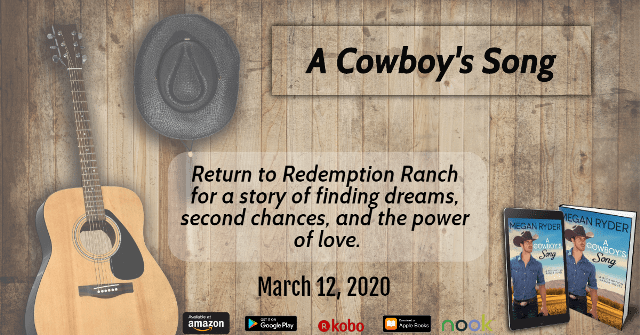
A COWBOY’S SONG ~ Megan Ryder

Hi everybody! Thank you so much for letting me celebrate the release of my book, A Cowboy’s Song, here today!

This book was special to me, as all of my books are, as it combines two special loves for me – cowboys and music. But it also presented a whole bunch of challenges, especially around the music side since I was not that familiar with writing songs and my hero was all about writing a song. So I had a tough road to travel, so to speak.

Country music man playing guitar

Ty Evans, my hero, loved music since he was a boy but he stopped playing and writing music when his family was killed, leaving him an orphan. He ended up in foster care on the ranch in my book, Redemption Ranch, along with two other boys, who became his brothers, but music was not a part of his life. Slowly he reclaimed music, but only to play, not write.

When his oldest brother met the love of his life (Book 1 in my series), Ty decided to try his hand at writing music, and it brought up all the ghosts from his past. A visitor to the ranch, Piper Raines, the daughter of country music royalty, who understands the struggle of music, is there for the wedding, and she helps him breakthrough his block and they sing the song together. When it’s recorded and goes viral, he gets swept up in the hoopla and follows her to Nashville to see if he can have a career, or if it’s too late.

I listened to a lot of country music but listening to music and writing music are two very different things. So, I was lucky to be introduced to a talented songwriter, Sierra Bernal, who wrote a song for the book, which took themes from all three books and made it into the song that is featured in this book. She is recording it now, and I hope to share it in the near future! But learning about Nashville, the country music scene, and how different it is from the other types of music was fascinating.

She taught me about the Nashville numbering system, how they use numbers instead of chords for their music. It was quite complicated and I ended up not using a lot about it in the book but it gave me a foundation for my hero feeling like his time had passed.

I also researched venues for where they might play. I had visited the Grand Ol’ Opry hotel many years ago during the holidays and would have loved to set a book there, or at least a scene. But, that wasn’t realistic. So, I had to find some other place. The Bluebird Café was not at all what I expected (and possibly a little unrealistic) but perfect for my purposes. There are a ton of these little venues for up and coming musicians in Nashville to showcase their talent, and this is a highly sought place.

Here is a playlist I created for this book on Spotify since music was so important to this book, if you’re interested in hearing my inspiration: https://open.spotify.com/playlist/4Yj768NXWQHhvPSfWnG8T0?si=g2HivK4WRLK8FzEyGDzEwg

In addition, if you’d like to hear more about the songwriter, check out Sierra Bernal on Spotify at SierraBernal or at her website: Website: http://sierrabernal.com

Ty wrote a song for his brother’s wedding.

What do you think is a romantic gesture for a wedding?

Let’s chat, and I’ll give away an ebook copy of A Cowboy’s Song to one lucky commenter! 

Short Book Blurb:

Can they build a future on a shaky foundation?

Tyler “Ty” lost everything in a car accident when he was twelve, retreating into his shell so tightly that it took months for him to come out again. Music and the ranch saved him, and he will always be grateful to his foster family for saving his life. Now, with the ranch on financial tenterhooks, he wonders if he can use his music to contribute to the solution.

Piper Raines is the daughter of a legendary country music family. While her parents and brother are all famous, her attempt at an independent career went off the rails, and, with exhaustion and stress and bad press dogging her every step, she needs a place to recover. When Piper is invited to vacation at the ranch, Piper and Ty connect through horses and music. After a video duet of Piper and Ty goes viral, they’re invited to sing in Nashville, which also provides added pressure, stressing their new relationship.


BUY LINKS:

UNIVERSAL LINK: https://books2read.com/ACowboysSong

Detailed links:

Amazon: https://amzn.to/32kRGRr

B&N: http://bit.ly/37Fbos4

KOBO: http://bit.ly/2HG8QiQ

iTunes: https://apple.co/2SWvcle

 *  *  *  *  *  *  *  *  *  *  *  *  *  *  *  *  *  *  *  *  *  

BIO: Ever since Megan Ryder discovered Jude Deveraux and Judith McNaught while sneaking around the “forbidden” romance section of the library one day after school, she has been voraciously devouring romance novels of all types. Now a romance author in her own right, Megan pens sexy contemporary novels all about family and hot lovin’ with the boy next door. She lives in Connecticut, spending her days as a technical writer and her spare time divided between her addiction to knitting and reading.


Visit me at: http://meganryder.com/

Twitter: https://twitter.com/MeganRyder1

Facebook:  https://www.facebook.com/MeganRyderAuthor/?ref=hl

Newsletter: http://eepurl.com/cmE1kr

Bookbub: https://www.bookbub.com/authors/megan-ryder

Amazon Author Profile: href=”https://www.goodreads.com/author/show/14121151.Megan_Ryder”>

https://www.goodreads.com/author/show/14121151.Megan_Ryder