Howdy!
Although I’ve been talking recently about survival methods and preparedness and other things like this, I thought we might take a break to go over another topic that is dear to my heart. The medicine man. Next blog I’ll get back on topic of survival, okay?
 Medicine men, who were they? What could they do? What were they expected to do? As you might suppose, the medicine man was of necessity connected (more than any other member of the tribe) to the spiritual side of life. If a boy showed promise, he would be taken under the wing of the current medicine and and trained rigorously. His training would consist of scouting skills, where he would be required to be able to trace the paths of ants and other small, as well as large life. He would be expected to be able to walk amongst the enemy without detection. This helped to develop the mind of the boy, who was also taught as a scout to be able to detect in the wild when there was another and foreign presence. Some of these scouts could tell you from the changes in air currents, when there was a foreign presence entered into the landscape and when there wasn’t. He was also expected to survive with what he might consider luxury in any environment — going into it with nothing but the shirt on his back.
 Many are the stories of medicine men who went out alone into some of the most hostile (yet beautiful) environments, where he was expected to “make it go right” and to survive and survive well. Once mastered, the boy went on to train his body, and he was expected to train his body hard. He joined in with games, he ran distances that would stagger us even by today’s standards — he was expected to be able to run all day with nothing but water to refresh him, and to arrive calmly and not even be out of breath. The theory was that one had to have control over not only one’s mind, but be in the most excellent physical condition, if he were to be able to connect with the spiritual realm. Both mind and body could hold the spirit back, thus the emphasis on training.

As you might expect, this training might take many years. But once the boy had a master over his mind, as well as his body, he was ready to develop the other side his nature, the spiritual side. Some call it the realm of the soul, some say spirit. It was not the same as what we now have come to think of as a spiritualist. Rather, the boy was expected to go out into the world and to observe it, to pray, to fast, to commune with the Creator and all life. He was carefully watched and trained by the medicine man, but he was often sent out to remote places, there to find out who he was in relation to the world at large.
 I have read some interesting tales of some of these medicine men, and their near escapes from death before they were at last able to trust to their environment and to the Creator. I know of no tragedies. I have read of some strife before the boy was able to become into possession of the spiritual side of life.
But what could a medicine man do? What were his strengths? What was expected of him?
 All tribes were different, so let’s examine one tribe that I have studied somewhat — I don’t profess to know all there is to know about this subject. Heaven forbid! In the Lakota tribes (the Sioux), it was believed that the medicine men had lived amongst those supernaturals beings or lore, the Thunders, before his birth. Thus, boys were watched for by the medicine man who would show signs that would point to his being able to become a medicine man. Within the Sioux tribe (as well as the Blackfeet tribe) the medicine man was expected to be able to cure the sick, to foretell events that were important to the tribe and/or to a war party, good or bad.
 Visions were extremely important, and a medicine man was often called upon to “interpret” dreams. He was also expected to know (and his training did encompass) a thorough knowledge of herbs. For instance, one of my best friends from the Blackfeet tribe told me that her medicine man told her that there are no poisonous berries, etc, that taste sweet. Therefore, if you taste a berry and it is sweet, chances are that it might be okay to eat. Now don’t try this and hold me responsible for it — I’m just relaying information. But I know that my friend used to go around LA tasting all kinds of things, until I kinda took her aside and told her how worried I was about her doing this. But you know something, she was never harmed by going around in the wild and tasting these fruits.
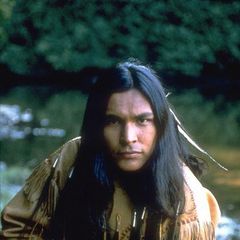
 Medicine men were often very handsome when they were young. Imagine, they have been trained all their life into physical alertness, they have trained to act in the best interest of their tribe, they have schooled their mind so that they us their skills only for the good of the people, and not evil, and they kept their word of honor as though their life might depend upon it. Ritual was highly important, because a ceremony done incorrectly was believed to bring bad luck. A medicine man was also expected to do such things as set broken bones, take care of sprains or pulled muscles and he was expected to be able to attend to deep wounds. This they did without flinching. If you’re interested in learning more about the medicine man, I might refer you to a children’s book that you can check out at your local library called THE INDIAN MEDICINE MAN by Robert Hofsinde (Gray-Wolf). It makes for easy, yet fascinating reading. And for even more information, might I also suggest the book, GRANDFATHER, by…goodness I can’t recall his name right now. I’ll try to get hold of it and post it on the comments.
 So tell me, what observations have you had about these things — i.e., physcial fitness, strength of mind, spiritual awareness? Have you made any observations about these things? For instance, I workout almost everyday (about 6 days a week usually), and I notice little things, like my strength increasing, despite the tendency of the body to keep getting older every day. At present I’m here in Florida at my church where I’m hoping to attain better awareness of myself as a spiritual being, etc. What about you? Do you have any experiences that you’d like to share with me and others? I’d love to hear what you have to say about this. Oh, and while I’m at it, isn’t Adam Beach dreamy?
So come on in and let’s talk. I’d love to hear from you. And don’t forget, if you haven’t already done so, to purchase a copy of THE LAST WARRIOR today. Just click on the link below.