Starting in the Middle

Back in 2013, I started kicking around the idea for a sweet historical romance. I knew it would involve a mail-order bride coming west from a big city, but I had to decide where she was headed.

That’s when I landed on the idea of using the real town of Pendleton, Oregon, for the setting of the story.  My parents lived in Pendleton during the early years of their marriage (long before I arrived on the scene), but my dad shared such great stories about the area, I decided to look deeper into the history.

That’s when things got interesting and fun!

Located along the Oregon Trail, the city was founded in 1868 and named for George Hunt Pendleton, a Democratic candidate for vice president in 1864. The county judge, G.W. Bailey, suggested the name and the commissioners decided Pendleton suited the town.

In 1851, Dr. William C. McKay established a post office on McKay Creek and called it Houtama. Later, Marshall Station was situated about a half-mile to the east on the north bank of the Umatilla River. Marshall Station was then called Middleton since it rested half way between what was then Umatilla Landing and the Grand Ronde Valley (known today as La Grande).

When the county was created in 1862, the temporary county seat was placed at Marshall Station. The post office was established there in 1865 with Jonathan Swift as the postmaster.

On October 8, 1869, the name was changed to Pendleton. Much of the town proper at that time was owned by Moses E. Goodwin and Judge Bailey. Goodwin arrived in the area around 1861. He traded a team of horses to Abram Miller for squatter rights to 160 acres about three miles from Marshall Station. Goodwin Crossing was a stop for freight wagons. In 1868, Goodwin deeded two and a half acres of his land to the county for a town. A toll bridge that spanned the Umatilla River was constructed along with a hotel, a newspaper, and other businesses and Pendleton began to take shape as a community. In the early days, there was a community well in town where folks gathered.  Some diaries wrote about the delicious, cool, sweet water that came from the well.

In 1872, twenty women started the first church when they began meeting together. The first church building erected in town was the Episcopal Church, constructed in 1875.

One pioneer account claimed the streets were so dusty in the summer, it was nearly up to their knees while the dust turned into a quagmire of mud in the winter. No wonder Pendleton was one of the first cities in Oregon to pave their streets.

If you jump ahead a few decades, Pendleton had become quite the happening place to be by the time a new century rolled around.

Modern and progressive for its time, Pendleton was a unique blend of Wild West and culture. The town boasted an opera house and theater, a teashop, a French restaurant, and a wide variety of businesses in the early years of the new century. On any given day during that time, someone walking down the boardwalk could see well-dressed ladies and gentlemen, as well as Chinese immigrants, Indians from the nearby reservation, miners, ranchers, and farmers. Someone once wrote Pendleton was the only place in the world that had a reservation on one end of town and an asylum for the insane on the other (which they did!).

Pendleton had an enviable railway facility with trains running east and west daily. Telephones as well as running water and sewer lines were available for those who could afford the services.

In the year 1900, it was the fourth largest city in Oregon. By 1902, the population grew to 6,000 and there were 32 saloons and 18 bordellos in the area. If you’re wondering why the town needed quite so much “entertainment,” it was in part because of the sheer number of cowboys, wheat harvesters, sheepherders, railroad workers, and crews of men who descended on the town to work. In 1900 alone, an estimated 440,000 sheep produced more than two million pounds of wool. Pendleton also boasted a maze of underground tunnels where there some of the brothels, drinking rooms, card rooms, and other colorful characters spent their time and money. There was a Chinese operated laundry and opium den, as well as more legitimate businesses like a butcher shop and ice cream parlor.  Today, visitors can tour a small portion of the underground that has been restored through The Pendleton Underground Tours.

By now, you are probably asking yourself what any of this has to do with me starting in the middle.  That book I wrote back in 2013 was my first Pendleton book. I knew before I finished writing it, I wanted it to be a series because I loved the town that existed in my mind (and in history) and the characters I’d created. I decided to call the series Pendleton Petticoats because it had a nice catchy ring to it, and because of the time period, when women still work petticoats (which I would have hated in particular in the summer!).

I released my book Aundy that spring.

Fast forward a few years when I was invited to participate in the epic American Mail-Order Bride series that featured a novella for every state. By the time I joined the project, Oregon was already taken, so I choose North Carolina – the state where my grandpa was born and spent part of his childhood before moving to Oklahoma. Of course, I had to tie the story to Oregon somehow, so the bride in my story, Dacey, is from Pendleton.  I won’t give you any spoilers, but her daughter pops up in Dally, book 8 in the Pendleton Petticoats series, as the love interest for Aundy’s adopted son, Nik Nash.

Then a few years ago, I thought it would be fun to go back and write the story of J.B. and Nora Nash, who were among the early settlers in Pendleton. Gift of Grace was the book was the first in my Gifts of Christmas series.

If you aren’t thoroughly confused yet, I’ll try a little harder. (Just kidding!).

So to recap, I wrote Aundy (technically, the first book in the series) which takes place in 1899, then Dacey which takes place in 1890, and Gift of Grace which takes place in 1870.

Because Dacey and Gift of Grace are part of other series, I decided it might be fun to bundle the three books together.

Ta, da!

You are the first to see the Pendleton Petticoats Boxed Set .

It’s available now on Amazon for $2.99 or through Kindle Unlimited!

Indulge in the romance of a bygone era with three incredible pioneer women.

This boxed set contains two novellas and a full-length historical romance from the Pendleton Petticoats series including Aundy, Dacey, and Nora (Gift of Grace). Strong-willed, courageous women encounter the men who capture their hearts in these sweet western romances full of heart, humor, and hope.

Nora –  Ready to begin a new life far away from the dark memories of the Civil War, J.B. and Nora Nash head west and settle into the small community of Pendleton, Oregon. A devastating tragedy leaves them at odds as they drift further apart. Nora blames J.B. for her unhappiness while he struggles through his own challenges. Together, will they discover the gift of grace and rekindle their love?

Dacey – A conniving mother, a reluctant groom, and a desperate mail-order bride make for a lively adventure. Dacey Butler arrives in North Carolina only to discover Braxton Douglas, her would-be groom, has no idea his mother wrote on his behalf, seeking a bride. Braxton has his work cut out for him if he plans to remain unaffected by the lively, lovely Dacey. Will the promise of hope be enough to keep her from leaving?

Aundy – Desperate to better a hopeless situation, Aundy Thorsen leaves behind city life to fulfill a farmer’s request for a mail-order bride. A tragic accident leaves her a widow soon after becoming a wife. Aundy takes on the challenge of learning how to manage a farm, wrangle demented chickens, and raise sheep, even though her stubborn determination to succeed upsets a few of the neighbor, including Garret Nash. Will she prove to him that courage sometimes arrives in a petticoat and love has a mind of its own?


For a chance to win a mystery prize, just post an answer to this question:

If you could set a fictional story in a real town, what place would you choose?


The Gilded Age and The Temperance Society

The turn of the century when the 1800s merged with the 1900s was called The Gilded Age among other names. It was an era of great economic growth and the world changed very rapidly, especially in the transportation and industrial sectors. Women were fighting for the right to vote and to have a say in the running of the country, to end social injustice. As they cried out for and demanded change a lot of women’s organizations sprang up.

One such organization was the American Temperance Society who advocated against liquor. They were led by women such as Carrie Nation whose first husband died of alcoholism. Carrie attracted a lot of followers who marched and carried signs decrying the evils of drink.

These women eventually became known as “Hatchettes” due to the fact they’d march into saloons carrying hatchets and destroy the place. It was a wild time and women were fed up being treated as second-class citizens and being abused (or killed) by their drunken spouses.

Grace Legend in A Cowboy of Legend joins the temperance movement and sees a hero in Carrie Nation. One of her childhood friends was beaten to death by her drunk husband so Grace sees this movement as one that will define her life.

She’s living in Fort Worth, Texas with her brother who’s trying to keep her out of trouble and not having much luck. As a baby in “The Heart of a Texas Cowboy” she was a sassy little thing and as an adult she’s headstrong, passionate, and determined to make her mark.

Tempers flare and sparks fly when she descends on Hell’s Half Acre and Deacon Brannock’s Three Deuces Saloon with signs, drums, and hatchets.

Having grown up with nothing, he’s worked long and hard for something to call his own and he’s not about to let these women take it from him.

But who is Deacon Brannock? Grace’s search yields no one in the state in Texas under that name. It has to be fake. If so why? What is he hiding?

And who is the young pregnant woman living above the saloon? A wife, mother, sister? Or maybe he’s holding her against her will. Grace wouldn’t put anything past him. He has a dangerous reputation and was questioned for the murder of one man. Who knows how many others he may have killed?

Yet, Grace is keeping secrets of her own as well. Her family would be furious if they knew what she was doing.

This story has a monkey named Jesse James, orphan boys, and a mystery.

A Cowboy of Legend releases a week from today on Tuesday the 27th.

I have two copies to give away. Just leave a comment answering my question. If you had lived back then, would you have joined one of these women’s organizations? Or tell me any organizations you have joined or are still a member of?

 Announcement

Once Upon a Mail Order Bride (ebook only) is on sale for $1.99 until close of day on Thursday, April 22! If you missed the fourth book of Outlaw Mail Order Brides, now is your chance to get it cheap.  

AMAZON  |  B&N  | APPLE  |  KOBO


Six Things You May Not Know About 19th Century Newspapers and a Give Away!

Hi! Amanda Cabot here. For me, one of the more enjoyable aspects of writing historical fiction is doing the research. I never fail to find at least one tidbit that intrigues me enough to include it in the book. As someone who once aspired to be a newspaper reporter, I had fun researching nineteenth century newspapers while I created a hero who owns a paper. That’s why I thought I’d share six things that might (or maybe won’t) surprise you about newspapers and printing in the mid-nineteenth century.

1. Importance – With the increase of literacy in the US, you’d think people would have had a large supply of things to read. That wasn’t always the case, particularly in smaller towns and rural areas. For them, newspapers were often the only things they had to read besides the Bible. As a result, papers included more than news. It wasn’t unusual to find poems, stories, and recipes in addition to what we would call news.

2. Prices – How much did all this cost the average subscriber? According to my research, an annual subscription to a weekly paper was $5, an amount that was often paid in goods rather than cash. I hope the editor enjoyed hams and jams as well as turnips and apples.

Advertisements frequently had a tiered cost, being priced at $1 for the first time they were run with subsequent weeks at $.50. To put this in perspective, a doctor’s office visit was also $1. Suppose you were running for office and wanted the paper to announce your candidacy. You might think that would be a simple ad at a cost of a dollar. Not so. Political announcements were priced at $10.

3. Revenue – In many cases, subscriptions and ads weren’t enough to support the newspaperman. That’s why he (and, yes, most of them were men) offered personal printing services, providing cards, posters, and stationery to residents.

4. Town Booming – This was a new term for me, but it underscored the power of the press. When towns were first established and sought new residents, they relied on papers to promote the town – sometimes through gross exaggeration – in an effort to attract settlers. One of the first towns to benefit from this practice was Oregon City in 1846 which relied on the Oregon Spectator to tout its attractions to potential residents.

5. Skullduggery – One of the more popular printing presses during the nineteenth century was the Washington Hand Press. Unlike previous presses, it was made of iron rather than wood, making it sturdy. Even more importantly, it could be easily assembled and disassembled – a real plus in the rapidly expanding American West.

For years, Samuel Rust held the patent on the Washington press and refused to sell it to his competitor, P. Hoe and Company. Hoe, however, was determined to obtain the patent and convinced one of his employees to pose as an inventor who wanted to expand on Rust’s design. Rust agreed to sell him the patent, not knowing that it was all a ruse and that the faux inventor would immediately turn the patent over to his boss.

6. Dangers – While the underhanded techniques that robbed Rust of his patent were unfortunate, they weren’t the only danger involved in the newspaper printing business. Sadly, not everything printed in newspapers was true. Many editors, following the practice of their Eastern colleagues, made little distinction between news and opinion. In some cases, diatribes and personal attacks made their way onto the printed page. You can imagine how those were received. Who would have thought that freedom of the press sometimes resulted in death?

Did any of these surprise you? More importantly, did any intrigue you enough to want to explore the world of nineteenth century newspapers? I’ll pick two people from the comments to receive a print copy of Dreams Rekindled (U.S. addresses only.) 

Giveaway Rules Apply: https://petticoatsandpistols.com/sweepstakesrules/ 

If you’d like more information, my primary sources for this post were Red Blood and Black Ink by David Dary and Passionate Nation by James L. Haley.

About the book:

He’s bound and determined to find peace . . . but she’s about to stir things up

Dorothy Clark dreams of writing something that will challenge people as much as Harriet Beecher Stowe’s Uncle Tom’s Cabin seems to have. But in 1850s Mesquite Springs, there are few opportunities for writers—until newspaperman Brandon Holloway arrives, that is.

Brandon Holloway has seen firsthand the disastrous effects of challenging others. He has no intention of repeating that mistake. Instead of following his dreams, he’s committed to making a new—and completely uncontroversial—start in the Hill Country.

As Dorothy’s involvement in the fledgling newspaper grows from convenient to essential, the same change seems to be happening in Brandon’s heart. But before romance can bloom, Dorothy and Brandon must work together to discover who’s determined to divide the town and destroy Brandon’s livelihood.

Bio

Amanda Cabot’s dream of selling a book before her thirtieth birthday came true, and she’s now the author of more than thirty-five novels as well as eight novellas, four non-fiction books, and what she describes as enough technical articles to cure insomnia in a medium-sized city. Her inspirational romances have appeared on the CBA and ECPA bestseller lists, have garnered a starred review from Publishers Weekly, and have been nominated for the ACFW Carol, the HOLT Medallion, and the Booksellers Best awards. A popular workshop presenter, Amanda takes pleasure in helping other writers achieve their dreams of publication.

Buying Links:

Amazon

Barnes & Noble

Christian Book Distributors

Social Media Links

http://www.amandacabot.com

https://www.facebook.com/amanda.j.cabot

https://twitter.com/AmandaJoyCabot/

http://amandajoycabot.blogspot.com/


Your Laugh for the Day

We’re doing something a little fun several times through the year. It might be a Craft Project, how we breathe life into a hero, or any number of things. You just never know. We’re sort of calling it Pot Luck. This is my day and I’m going to tell you jokes. Keep your fingers crossed because I’m not very good at this. Hopefully, you’ll find them worth a chuckle.

Okay, here we go……

A man and wife went to their lake cabin for a little R&R. It was a beautiful day and not a cloud in the sky, so the husband decided to go fishing in his rowboat.

After several hours with not much to show, he rowed in and tied up, telling his wife he was going to take a nap.

Now, the wife liked to read romance and she thought how perfect it would be to drift along in the boat. If she got too hot she could take a dip. So she rowed out a little ways from the shore where she could get a nice breeze and picked up her story where she’d left off. The hero cowboy was having a time getting his little darling to the altar.

She drifted along in the little rowboat and turned the pages, totally engrossed.

Pretty soon, a game warden came by and asked to see her fishing license.

“But warden, I’m not fishing. You can see the poles are inside the boat. Besides, I don’t like to fish. They’re smelly and I don’t like touching them. I’m just sitting here reading my book, not bothering one fish or one person.”

The warden looked stern. “That doesn’t matter. You have all the fishing equipment and could put the poles into the water if you choose. I’m going to have to write you a ticket.”

“I protest.”

“Then I’m afraid I’ll have to take you to jail, ma’am.”

“Let’s make it the sheriff’s office, warden. I’ll need to file a complaint.”

“May I ask what your business is? I’ve been as polite as I can and I’m following the law.”

“The charge will be for sexual assault.”

“You’re crazy. We’ve done nothing but talk. You still have your clothes on.”

She smiled sweetly. “But I’m sorry, Warden, you have all the right equipment.”

Flustered, he threw his ticket pad down. “Have a nice day, ma’am, and continue reading your book.”

* * * * * * *

What Do You Call a Happy Cowboy?  (a jolly rancher)

Why Did the Bowlegged Cowboy Get Fired?  (he couldn’t keep his calves together)

* * * * * * *

I hope you got a chuckle or two. I’m giving away one early copy (autographed) of A COWBOY OF LEGEND. It doesn’t come out until April 27th so you’ll be ahead of the game. I’ll draw from the people who comment and the Giveaway Rules apply – https://petticoatsandpistols.com/sweepstakesrules/.

Just tell me what makes you laugh. Or tell me a joke. I love to laugh.


Excuse Me, What’s Your Name?

This question wasn’t asked much on the American frontier and if you were so bold, you were liable to get shot. The old West offered a man a place to disappear into and leave behind whatever trouble he found himself in.

It was super easy and there was no way to check on anything. No telephone. No internet. No Social Security numbers. Nothing. It was perfect.

There were probably hundreds of men back then looking to change their identities and disappear and did. Outlaws checked into hotels and boardinghouses under an alias as did some politicians and famous people.

In my upcoming release, A Cowboy of Legend, Deacon Brannock has taken a fake name in order to disappear. All is well and good until firebrand Grace Legend marches into Hell’s Half Acre with burning determination to shut his saloon down. She’s a member of the Temperance Society and hellbent on running him out of business.

But, here’s the thing…Grace is also a reporter and writes a weekly column under an alias. Like a bloodhound, she discovers that Deacon Brannock is hiding a juicy secret. Oh, I love it!

A Cowboy of Legend contains a lot of secrets. Writing about secrets is fun for an author. Where there are secrets there’s conflict and those are what drives a story. I just love it when a book contains mysteries. I can’t turn the pages fast enough.

BLURB

Deacon Brannock is determined to make a name for himself and the saloon he’s worked his whole life to afford. He was prepared for the roughness of the Wild West, but he hadn’t counted on Grace Legend…

Grace has always fought passionately for what she believes in, and after her best friend is killed at the hands of her drunk, angry husband, that includes keeping alcohol out of her town. When the owner of the new saloon turns out to be a kind and considerate man, she can’t help but wonder if they could have a future together…if they weren’t on opposite sides of every issue.

This is Book 1 of a new series called Lone Star Legends and releases April 27th. Book 2 – A Cowboy Christmas Legend follows in Sept.

My question: If you could change your identity and disappear, would you? I think I’d chose to be Sierra or maybe Summer or Sapphire. What would you choose?

LAKOTA PRINCESS, Anniversary Edition, Excerpt & Give-away

Howdy!

Welcome to a wacky Wednesday.  Well, not too wacky.

LAKOTA PRINCESS, the 25th Anniversary Edition, is just out in e-book and print.  The book has been re-edited and an updated Anniversary Edition cover given to it and best of all, it’s on sale for $.99.  Yay!

Let me tell you a little about this unusual “Western” romance.  First, it’s set in England.  So, we brought the West to that little island empire, England.  Next, it’s set during the Regency period (early 1800’s) and so it has a bit of that time period within its pages, as well as the customs of the Lakota Indians before the Europeans came into their country and changed things.  Then, it also entails some interesting facts about the Royal Family, and indeed, the Royal Family becomes a character — so to speak — in the book.

Hope you’ll enjoy the following blurb and excerpt:

A love that defies the ocean.  A secret deeper than blood.

 Lakota Princess, Book 3

Driven from her home in England by hostile political forces, Estrela was little more than a girl when she came to be raised by a far western Lakota tribe.  On the wide, sweeping plains she grew tall and strong, and won the love of a handsome warrior.

But on the eve of their marriage, she is torn away from her native family, torn from the man she loves, and forced to return to a place that feels more like a foreign country than her home.  There she merely exists, haunted by her love’s sweet kisses and heated embrace, yearning for his unforgettable touch.

Black Bear has braved the ocean to find the woman whose beauty has captured his soul.  But no sooner has he arrived in England than he is called upon to save her life.  Who in their right mind would want to murder such a gentle spirit?

As Black Bear comes between her and death time after time, Estrela wishes they could both just disappear back to the plains, and bury the secret she has long hidden –- even from him.  A secret from which only their love, truer than blood, can save them.

Warning:  Sensuous romance that contains separated lovers who will let nothing come between them…not oceans, her mysterious past, or a murderer bent on destroying their future.

LAKOTA PRINCESS, an Excerpt

by

Karen Kay

She wore the pink, transparent creation into the breakfast parlor after all, and was rewarded for her efforts by a frown from Black Bear. The gown’s lines trailed downward from an empire waist, and Estrela smoothed the outer filmy material down with a self-conscious gesture of her hand. She hadn’t wetted down the undergarments as was the current custom, it being thought by those who ruled fashion that if the material beneath looked wet, it would allude more to the feminine form; something which, it would appear, was most desirable.

Her shoes of soft, pink satin peeked out beneath the hemline of the dress as Estrela paced forward, and all at once, she felt the heat of Black Bear’s piercing scowl.

She peered down at herself. It didn’t matter if she hadn’t wetted down the undergarments; the dress still made her look practically nude. She looked up then, and away, her cheeks awash with unbecoming warmth; she felt suddenly inadequate.

It also didn’t help, she realized, when she looked at the other women seated around the breakfast table and found them to be dressed in a much more risqué fashion than she. They didn’t appear to bother Black Bear.

He scowled at her alone.

She advanced into the room.

“Ah, Lady Estrela.” The Duke of Colchester arose from his seat and smiled at her. “So good to see you this morning. Did you enjoy your morning of exercise?”

“Yes, Sir, I did,” she replied, sweeping her lashes down over her eyes to study the Duke without his knowledge. The man had been most kind to her. Did he mean more by his question? She couldn’t tell.

“Ah,” the Duke continued. “I must admit that I was concerned after that dreadful event yesterday. But, I see that you have recovered most splendidly. Jolly good of you to join us, I say.”

Estrela smiled. “Thank you, Sir,” she replied, and, treading down the long length of the breakfast table, took the seat that a servant held out for her.

She smiled at the servant, then at the Duke as he, too, sat down.

She glanced around the table noting that the Duchess of Colchester chatted gaily with her daughters and with Black Bear, who, after his initial glare at Estrela, hadn’t looked again in her direction.

There were other people here, too, women she did not recognize and a few other men. The Royal Duke of Windwright must have spent the night, for he sat just opposite her at the table.

He glanced at her now, and, clearing his throat, said, “So good of you to join us, Lady Estrela. I say, did you sleep well?”

Estrela smiled at him. “Yes,” she said, “quite well, thank you.”

Black Bear glowered at her down the length of the table, but he said nothing and Estrela wondered if Black Bear intended to discipline her—and if he did, what form would it take?

Well, she wouldn’t think of it now. She had done the right thing for him. In time, he would see this. She only wished that time would elapse quickly.

“I daresay, old man,” the Duke of Windwright addressed the Duke of Colchester. “Must retire to the country soon now that Parliament is out of session. Can’t afford to miss the fox hunt, you know.”

The Duke of Colchester chewed upon a long cigar, not daring to smoke it in the presence of ladies. As it was he bordered on committing a social faux pas just by bringing a cigar into the same room as a lady.

He leaned forward across the table and leered at the other Duke. “I say,” the Duke of Colchester said, “geese are in season now. Do you fancy hunting geese? Could make a trip to the country, we could. I say, there, Black Bear.” He turned his attention to the Indian. “Have you ever hunted geese?”

Black Bear glanced down the table, glaring first at Estrela, then turning his solemn gaze upon the Duke. He didn’t smile and his features revealed nothing at all. At length, he said, “Geese are many in my country. I have hunted them, yes.”

“Well, I say, old chap,” the Duke of Colchester said, “would you quite fancy taking to the country with us to hunt geese?”

Black Bear didn’t scowl, but he didn’t smile either. He stared at the Duke of Colchester, then at the Duke of Windwright. And, as he studied the two men, his brows narrowed. At length he answered, saying, “I would greatly honor the chance to hunt with you. But it is autumn, the season to make meat, and I think we would do better to hunt deer or elk so that the women can fill the food stores for the season when the babies cry for food. Does your country have—tatá?ka—buffalo?”

“Make meat?” It was the Duke of Windwright who spoke.“I daresay we have no buffalo, my fine fellow, but the deer are aplenty and we could hunt them, too; however, shooting geese or any fowl is more the sport this time of year.”

The Indian nodded. “Then we will hunt geese,” he said, returning his grimace once more to Estrela.

Estrela glanced away.

And Black Bear, after a quick survey of the people sitting around the table said into the quietness of the room, “There is old Indian legend told in my country about geese.”

“Is there?” It was the Duchess of Colchester who spoke. “Oh, how exciting. Won’t you tell it to us, please?”

“Yes, please.”

“Oh, do tell us.”

Black Bear smiled, and, shooting Estrela one last glare, began, “It is said that—”

“I say, young fellow,” the Duke of Windwright interrupted, “what is ‘making meat’?”

Black Bear’s gaze leaped to the Duke.

“Oh, do be quiet,” the Duchess of Colchester said, perhaps without thinking first. “Can’t you tell that…?” She stopped, and, glancing quickly at the Royal Duke, carried on, “Oh, so sorry, Your Grace. It’s only that the Indian is telling us a story and I thought that you were my husband or that—I mean—perhaps I—”

“’Making meat,’” Estrela spoke up, thereby “saving” the Duchess, “refers to the necessity in an Indian camp to ensure there is enough food in store to get the people through even the harshest of winters. Usually in the fall, there is one last buffalo hunt during which the women will take what meat they get and dry it and pound it into wasná, which is a mixture of pounded meat, fat, and chokecherries. It is an important venture since, if there is not enough food to get through the winter, the people will starve.”

Estrela glanced at Black Bear, and nodding, returned her attention to her breakfast.

The Duke of Windwright snorted.

The Duchess of Colchester fluttered her eyelashes and her husband, the Duke of Colchester, brought his attention onto the Indian.

“I say,” the Duke of Colchester started, “I believe I would like you to tell that story you were about to begin—the one about the geese.”

“Oh, by all means.”

“Please do continue.”

“We want to hear it.”

Black Bear smiled. “There is a legend,” he said, relaxing back into his chair, “about the geese in my camp. For you see, the geese tell us much.” He gazed at the Duchess a moment before sweeping his attention around the table. And, seemingly satisfied, he fixed his glance once more upon Estrela, his stare a sulky glower. “Those birds’ habits announce the season change,” he continued, “and we look upon the geese as good food when there is no buffalo to feed our women and children. But, their meat has too much fat, though the taste—good.” He paused, and, with his glance clearly on Estrela, said, “It is well known that geese mate for life, something a wise person will study.”

Estrela choked on the bit of sausage she had just swallowed while the Duchess of Colchester exclaimed, “Oh, how endearing. Tell us more!”

“Yes, please, tell us.” The women’s enthusiastic voices re-echoed the plea around the table.

And Black Bear, ever ready to continue, said, “This story is about the female goose who could not select just one mate.” He stared directly at Estrela, who, in turn, moaned, closing her eyes.

Obviously enjoying her reaction, he continued, “Once there was a family of geese.”

“I say, young man.” It was the Duke of Windwright speaking again. “Do you force your women to work, then? You have no servants, no slaves? You make your women—”

“Your Grace,” the Duke of Colchester interjected. “This young man is trying to tell us a story. Perhaps you could ask your questions later.”

“So sorry, I didn’t mean to—it’s only that—well, who would hear of it, after all? Forcing women into physical labor? I mean, after all, are all their women merely servants?”

“The women,” Estrela spoke up, if for no other reason than to stall for time, “work, but the work is not great and there is much time to talk and to tease. Mayhap one could compare it to the fine ladies at work over needlepoint.”

And, although the Duke of Windwright merely “humphed,” and scoffed, he said no more.

“Black Bear—please.”

“Yes, do continue.”

He smiled. “Most geese have many children,” he said, satisfied, “all of them dedicated to the continuation of their race, and…”

Estrela glanced away, trying to concentrate on something else besides Black Bear. She knew the story was told for her benefit, alone. He believed he spoke about her; this form of storytelling was probably one of the more severe forms of discipline he would administer. The Indian, regardless of Western belief, rarely punished his children. Estrela realized that most people who did not know the Indian in his own territory, did not understand Indian logic: that he did not scold his children, did not physically punish them in any way, and did not even raise his voice to a child, a mild look of disapproval sufficing to correct any bad behavior.

“…but this female bird was beautiful, her feathers most fine, more colorful than any other, her squawk more pleasing to the ear,” Black Bear was saying. “She did not wish to have only one mate, it is said, and she did not feel she should be confined to merely one husband. Nor did she have to. There were several young ganders who sought to have her under any condition.”

Estrela moaned.

And, Black Bear did not take his gaze from her.

“There was one gander, one male who loved her more than any other…”

“Why don’t you,” the Duke of Windwright cut in, “hunt for two or three years at a time, or raise the animals for slaughter, or…”

All the rest of the table groaned except for Estrela, who was only too glad for the interruption.

“The Indian does not wish to disturb the balance of nature,” Estrela said. “And so, he takes only what he needs and leaves the rest.”

“Bad show, I say. Jolly bad show.”

“Yes,” she said, “we could discuss the economics of the Indians and—”

“Wí?ya? Ho Wa?té,” Black Bear snapped at her. “I am telling a story.”

“Yes, well, I—”

“Please continue.”

“I want to hear more.”

“Yes, pray, finish your story.”

Black Bear grinned, the gesture not sitting well with Estrela. “The goose,” he carried on, “the beautiful goose could not decide on just one gander. And, the one who loved her most of all was but one among the many and she wanted many. And so, she took many to her, not realizing that the gander seeks only one mate.”

He paused, and his focus on Estrela was such that he didn’t even notice the gasps from around the table at so delicate a subject.

But no one stopped him. All, except the Duke of Windwright, seemed entranced with him. And, whether it was his deep baritone or the unusual content of the story that mesmerized them, Estrela could not tell. She only knew that he held the attention of most all seated around the table.

“Yes, she had many,” he continued.

“Bad show, I say,” the Duke of Windwright spoke. “Jolly bad show, making your women work—actually work—why I’ve never heard of such a thing—except servants, of course, but then—”

“The gander,” Black Bear continued as though the Duke weren’t at that moment speaking, “will allow no competition with the mate that he seeks and so one by one the males vying for this beautiful goose’s favor fought among themselves until not one male bird lived. And, she looked in vain for the one gander who had loved her more than any other. But, he had gone to seek his mate elsewhere believing that she, like the sparrow, could not be satisfied with only one mate. And so died out her race, not because of man hunting her, not because of the wolf or bear who would seek her meat, but only because the female goose sought to have more than one mate.”

He paused and glanced around the table. “And so it is,” he said to his entranced audience, “that we learn from the geese that a woman must seek only one husband. And, the more beautiful the bird, the more careful she must be to ensure she chooses only the one.”

“Dare I ask, young man,” the Duke of Windwright plowed right in, “are all your women servants?”

Black Bear ignored the Duke as did the others.

“Oh, that was lovely.”

“Tell us more!”

“Yes, please, more!”

Black Bear held up a hand. “I will gladly tell another story tomorrow at the morning meal, if you are all here again.”

And, while exclamations of joy and wonder resounded around the table, Estrela groaned.

It would be the same story, told again, a bit differently, said over and over until Black Bear determined that she’d been suitably chastised.

And, Estrela made a mental note to ensure she missed each breakfast meal in the future.

“Well, it is my belief,” the Duke of Windwright carried on, “that the Indians must be saved from themselves. Yes, I believe that—”

“I think the gander acted most irrationally.” Estrela’s quiet statement, said amid the Duke’s meanderings, had the effect of silencing all other chatter at the table, including the Duke’s, and, as Estrela glanced down the table’s length to peer at Black Bear, she noted that every single pair of eyes were turned on her.

“And what would you have him do?” Black Bear asked, each person at the table looking to him. “Wait until the silly goose decided she wanted him more than any other?”

“He could have waited,” Estrela countered, recapturing the attention of everyone present. “Had he truly loved her, he would have waited.”

“Waited for what? She was taken. Before he even had a chance to take her, she was taken.”

“Who was taken?” the Duchess of Colchester intervened. “Did I miss something in the story?”

“He could have understood,” Estrela replied.

“Understood what?” the Duchess interrupted.

Black Bear nodded in agreement, repeating, “Understood what?”

Estrela snorted. “If he believed in her, he would have known—he just would have known.”

“He’s a bird,” Black Bear said. “He’s incapable of thinking.”

“Known what?” It was the Duchess who spoke.

“Then why tell the story if the gander is such a fool?” Estrela asked.

All heads turned back toward Black Bear.

“Because the story has a moral,” Black Bear said, each word clipped. “We are supposed to learn from such a story. Most people do unless they have the morals of a sparrow.”

Estrela flushed, and, looking down the length of the table, saw that each person present gazed at her as though they watched a fox surrounded by hounds.

“Well,” she said, “I think you should pick a more intelligent bird in the future, unless you want your characters to act so…so…stupidly.”

And with this said, she jumped from the table, upsetting her plate and knocking over her cup of tea.

“Oh! See what you’ve done?” she addressed Black Bear.

“I’ve done… You are the one who—”

“How could you?” Estrela threw down her napkin just as a servant came up behind her. “Why don’t you use swans next time, or wolves—at least they have a certain intelligence that I find sadly lacking in the gander.”

She spun about, upsetting the servant, his tray of food and the tea. But the servant was well-trained and caught the tray before any damage could be done.

Black Bear watched her leave, but only for a moment before he, too, arose. And, though his movements were slower than Estrela’s, he still moved quickly to follow her.

Too quickly.

The servant stood behind him. The tray of food and tea crashed to the floor, most of its contents spilling innocently, except for the tea, of course, which landed on the Duchess of Colchester.

And as she, too, jumped to her feet, wiping at her dress and holding it away from her, one could hear her say to an oddly silent room, “Oh my, oh my, did I miss something from that story?”

The only response to her question was complete and utter silence.

Amazon Kobo B&N Apple Books Play Books


Welcome Laura Ashwood and a Give Away!

Hi Everyone! My name is Laura Ashwood and I’m writing to you from the chilly state of Minnesota. Having grown up in North Dakota/Minnesota I am no stranger to the occasional winter blizzard, but I’ve thankfully never been through anything like the Schoolhouse Blizzard of 1888.

In January, 1888, a massive cold air mass with a spread of over 780 miles, moved into the United States from Canada. The temperature on the front end of the cold front in some places dropped from above freezing to -20°F in just hours. The storm was extremely fast moving. It entered Montana in the early morning hours of January 12, swept through Dakota Territory and was in Nebraska by mid-afternoon of that same day. Because of the warm spell preceding the storm and the swiftness with which it moved, most people were ill prepared. In just minutes, the strong winds and powdery snow made for zero visibility. The combination of bitter cold temperatures and high winds resulted in a death toll of 235. 

Another massive blizzard struck Easter Sunday, April 13, 1873, which began as a pleasant day in southeast Nebraska. That afternoon, rain moved in and temperatures began to drop. During the night, the wind picked up and by morning eighteen inches of heavy, wet snow had fallen. The storm raged for two more days, finally abating on Wednesday, April 17. Drifts as high as 20 feet had accumulated in some areas. Many people perished, including a woman with an infant that died just feet from her home, along with thousands of head of livestock.

So, why am I telling you about blizzards that happened over one hundred years ago? It’s because I’m part of a multi-author series called The Blizzard Brides. This series is loosely based on both of those blizzards. What happens when nearly all the men in town get killed during a blizzard? What are the women to do? This group of talented authors takes that question to task, each story following the journey of one of the women as she begins to rebuild her life.

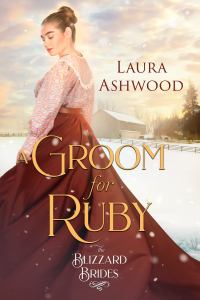
This is my second historical romance. One of the things I strive for when I write historical is to make sure that I get as much accurate detail for the time period as I can. In my story, A Groom for Ruby, Cullen Parker has a dark past before he ends up in Last Chance. I got to research such things as train robberies, stagecoach robberies, gold mines, and place like Dodge City and San Francisco. Much of that research doesn’t make it into the book, but I love being able to work in some of that information.

In this book, Cullen is making his way back to Dakota Territory, hoping to get a job at the Homestake Mine in Lead. The Homestake Mine was a real working gold mine during that time period. It was actually the largest, deepest mine of its type in the United States. It was operational until 2001, and two of my uncles worked there in 1950’s and 1960s. So, not only did I get to add a bit of reality to my fiction – I was able to make it personal.

Do you like it when authors do little things like that? Do you want to know about it?

I’d love to give away a copy of A Groom for Ruby, as well as a copy of my first historical, An Agent for Clarissa, which is part of the Pinkerton Matchmaker series.

Please stop by my website, and if you sign up for my newsletter, you’ll get a free copy of Snowflakes & Second Chances, a contemporary novelette. I’d love to connect with you on Facebook or Instagram, and you can find inspiration boards for all my books on my Pinterest.


Buy A Groom for Ruby on AMAZON

Timeless Elements of Western Romance by Guest Janine Rosche

Rugged, Dangerous, and Wild: The Timeless Elements of Western Romance

Something strange and majestic happens when you chase the sun across the Mississippi River. Your heart fills with promise and wonder. Your mind races with dreams of what could be. Your skin tingles with the fear and excitement of the unknown. Your very soul connects with those long since passed who risked all they had to experience a new world.

It’s easy to see why the most thrilling, adventurous, and romantic stories take root in the American West. Unlike other fiction genres, Western Romance doesn’t differentiate between historical and contemporary. All the stories share an understanding that no matter how hard we try, the land won’t be tamed, and neither will the human spirit.

Here are five timeless elements of Western Romance:

Danger

Who doesn’t love a story where the hero or heroine must face terrible odds to achieve their heart’s desire? The West has its fair share of natural danger to keep the characters on their toes: earthquakes, drought, dust storms, flash floods, wildfires, landslides, tornadoes, avalanches, etc. Seriously, in Yellowstone National Park, boiling water shoots out of the ground. At the summit of Pike’s Peak, there is a rocky area called The Devil’s Playground because lightning bounces from rock to rock. And if that doesn’t raise the stakes enough, there are human foes driven by desperation or greed to get what they want and need. See that man with the sharp-looking Stetson and shiny revolver? He’s probably an outlaw, train robber, greedy oil tycoon, or shady real estate developer.

Wilderness

Do you know why so many characters in western novels are hot-tempered? Because they realize that any time they walk outside, they could be bitten by a snake or killed by a grizzly. They could be wearing a prairie dress or yoga pants, and it doesn’t matter. The threat is still there. In addition to scary animals, there’s the chance one might get lost in a forest, break down in a desert, or fall off a mountain.

Ruggedness

Authors know that if you want to push a character out of their comfort zone, drop them into a western setting. Unless you are in one of the big cities, the West still has a rustic quality to it. Cell phone coverage is spotty. Wi-Fi is rare, and you can drive a hundred miles and never see a road sign except for Wall Drug. Even historical characters must learn to accept fewer “modern” conveniences than those on the East Coast. Sweet Bostonian schoolteacher, were you used to electric lighting and a warm bath? Here’s a lantern, pail, and a map to the creek.

New Beginnings

The first character of mine that I fell in love with was a desperate pastor who flees to Montana for a fresh start. Be it 1821 or 2021, there’s a certain romanticism in leaving one troubled world behind and beginning all over again with new dreams, new foes, and maybe a new love. Who doesn’t love a good fish-out-of-water story?

Independence

Show me a western novel, and I’ll show you a feisty, hard-headed, and determined hero or heroine willing to work to the bone to get what they’re after. Rules, traditions, and societal expectations didn’t often fit in the wagon on the Oregon Trail or the saddle pack en route to Texas. To survive the Old West, characters need grit, fortitude, and self-reliance. Generations later, their modern-day equivalents need confidence, drive, and even a touch of swagger to make their dream of a happy ending come true.

YOUR TURN: What do you love most about Western Romance? Would you say it’s timeless?

If you’d like to know more about my contemporary rustic romance novels, including my Madison River Romance series, please visit my website at http://www.JanineRosche.com or connect with me on Facebook. 

Giveaway:

A Society6 Mountain Landscape Tote Bag

The Madison River Romance series:

        This Wandering Heart

        Wildflower Road

        Glory Falls


Glory Falls: Released January 12th

Buy it on Amazon 

Prone to wander, Janine Rosche finds as much comfort on the open road as she does at home. This longing to chase adventure, behold splendor, and experience redemption is woven into her Madison River Romance series. When she isn’t writing or traveling, she teaches family life education courses to college students, takes too many pictures of her sleeping dogs, and embarrasses her four children and husband with boy band serenades.

An Outlaw Land Agent, Mayor, and Romantic

In the settling of the U.S., owning land used to be the primary dream of almost every man–rich or poor. It was something tangible that meant you had worth and the owner could use it however he saw fit. But how were the sales handled when almost every town had a land office?

The General Land Office created in 1812 was an independent agency of the United States government responsible for all the public domain lands. It took over this function from the Treasury Department that had been in effect since 1785.

The General Land Office was in charge of surveying, platting, and selling of public lands. In addition they oversaw the Homestead Act and the Preemption Act in disposal of public lands.

During the Westward Expansion period, land sold at such a frantic pace that it was difficult to keep up. As I said, everyone wanted a piece to call their own.

Every town of any size had a land office where prospective buyers could see what was available. If they bought some, a deed was recorded and registered at that county’s courthouse which then made its way to the General Land Office in Washington D.C. But given the slow speed of travel, it might be a year or more before it got registered. And unscrupulous land agents could sell the same land twice or several times over. I see how easy it would’ve been. And how killings would’ve taken place. The West had no one to oversee a lot of things.

In 1946, the General Land Office and the U.S. Grazing Service merged to become the Bureau of Land Management.

In my newest release, ONCE UPON A MAIL ORDER BRIDE, Ridge Steele served as the mayor and land agent in the outlaw town of Hope’s Crossing. Unlike others, he is honest and above board in his dealings and in the recording of deeds.

To settle this fledgling town, he and his friends send for mail order brides through Luke Legend and his private bride service. Ridge is the last of his friends to get one.

When Adeline Jancy arrives, she’s more than he ever dreamed in every respect—other than she couldn’t speak. Due to horrifying trauma, she’s lost her voice. Ridge doesn’t have to marry her, but he does. He likes what he sees and figures she’ll do just fine.

He soon discovers Addie can throw a hissy or argue as well as anyone—all without words.

Their love grows slowly and ripens into a passionate story for the ages. From the moment they strolled onto the page, I knew they were perfect for each other in every way. Each had their own strengths that complemented the other as should a real relationship.

Do you believe in love at first sight? Or do you think it takes time to develop only after the couple has come to know each other? I’m giving away a copy of this book (winner’s choice of either ebook or print.)  I’ll draw on Saturday.


* * * * * * *

IRON WOLF’S BRIDE — Free E-book Giveaway & Excerpt

Howdy!

Welcome to another terrific Tuesday.

Hope you’ve all had a wonderful holiday and are happy to be beginning a New Year.  Here’s a hope and a wish that this year will be so very much better than last year.

IRON WOLF’S BRIDE, second in The Wild West Series, is a new release for me.  Set within Buffalo Bill’s Wild West Shows, Iron Wolf’s Bride encompasses two continents, both America and England.

I’ll be giving away a free e-book of IRON WOLF’S BRIDE to a couple of bloggers (2 bloggers).  So do consider leaving a comment, since this is how one enters into the drawing.  We have guidelines, by the way, for our giveaways — you can see them off to the top right here.

So here we go:  I’m going to post the back cover blurb of the book and then an excerpt.  Hope you’ll enjoy both.

IRON WOLF’S BRIDE

by 

Karen Kay

I will return to you, my love…

Jane Glenforest’s father believed she was too young to marry, so he’d stolen her and her newborn son away from the handsome Assiniboine Indian she’d wed and taken her to Surrey, England. In spite of divorce papers and rumors he’s wed another, Jane’s never forgotten the man who’d stolen her heart and given her son legitimacy. When Buffalo Bill’s Wild West show comes to England—bringing her ex-husband with it—Jane’s curious to see her lost love, in spite of her new fiancé.

Although Iron Wolf’s purpose in working for Bill Cody’s Wild West show is to fulfill his father’s vision to find and stop a deceiver, he fell in love with and married Jane Glenforest.  But, no sooner had Jane given birth than her father stole her away.  Now, a few years later, Iron Wolf is arriving in England with the hope of rekindling the love he once shared with Jane.  However, instead of love, he finds his wife loathes him, believing he has married another.  And, when he discovers she is engaged to another man, he declares war on both her and the fiancé.

But when their son is kidnapped, Jane and Iron Wolf must work together to rescue him. And, as danger escalates, they discover trusting each other might be the only way to save their son.  Will Jane and Iron Wolf learn to forgive one another, to reignite the embers of a passion that never died, or will the lies of a deceiver destroy their love forever?

Warning:  Rediscovered love might cause sleepless nights spent in the arms of one’s true love.

Let me tell you a little about the book before I attach an excerpt.

As I said above IRON WOLF’S BRIDE is the second book in The Wild West Series, my newest series.

I’ve planned three books in this series and two of them are released, Book #1, THE EAGLE AND THE FLAME and Book #2, IRON WOLF’S BRIDE.

The third book, BLUE THUNDER AND THE FLOWER, is a work in progress at present.

But let me tell you a little about this series.  It concerns three men,  who are part of the secret Society of the Wolf, The Clan of the Scout.  Two of the men are from the Assiniboine Indian Tribe and one is from the Lakota Tribe.  They are on a deadly serious mission.

The chief of the Assiniboine tribe has had a terrifying vision: that someone called the deceiver, or trickster, spells doom for the children of his tribe, and eventually for all Indians.  The old chief is desperate and enlists the aid of two young men from his own tribe and one young man from the Lakota tribe to join Buffalo Bill’s Wild West Show.  He has been shown in a vision from the Creator that help for his people can be found if these three young men can become a part of Buffalo Bill’s Wild West Show.  There, within the framework of the show, the old chief has been shown that he may appeal to the President of the United States — or his representative — for assistance; also, to find and stop the deceiver who means to harm the Indian Tribes.

Because traditionally scouts were the most trusted individuals within the tribe, the old chief appeals to two young men who are a part of that society.  One of them is his own son; another is a young man who is the most accurate shooter with the bow and arrow as well as a gun.  The third young man is to be found from the Lakota tribe.

These three young men become part of Buffalo Bill’s Wild West Show, and, in addition, they become one of the most popular events in the show, especially with the young ladies. But these three young men care very little about any fame or fortune that might be attached to being so popular. Their concern is to find and disable the trickster and all his associates, so as to free the next several generations of Native American children from harm.

Within this series of three stories, these young men — although not looking for love — discover true love along the path to discovering this real evil which is threatening their tribes.

Enjoy this excerpt of the book:

CHAPTER TWO

April, 1891

Earl’s Court Exhibition Grounds

London, England


Jane Glenforest felt as though her world was shattering.  How dare he.  How dare he come here.

Of course, she needn’t have bought the tickets to see the Wild West Show.  But, she’d been unable to resist the impulse to come here today to see if he were still with the show.  And, surely, there he was, surrounded by the usual crowd of women.

It still hurt.  Seeing him again only made the pain of what had happened between them worse.

Eventually, she’d have to go down there where he was, for her sister still worked with the show; indeed, her sister, Luci, was even now dressed as a boy.  Did this fact mean that she and Luci were still in danger?  Surely that was behind them now.  It had been two and a half, almost three years since the trouble.

Jane watched from a top section of the bleaching boards as her former husband and lover, as well as his two friends, wooed the feminine, English hearts.  He and his friends, having finished their athletic performances in Buffalo Bill’s Wild West Show, were now engaging the crowd in a different skill: American Indian-style singing and dancing.

The three friends had taken up a position that was in front of and close up to the tiered bleaching boards.  Already, several of the young English women were leaving their seats, were filtering into the arena and joining the Indian women there.  Together, these two different groups of ladies formed a circle around the three performers.

And, there he was: Iron Wolf.  He stood in the middle between his two friends, Wind Eagle and Blue Thunder.  Wind Eagle was drumming on what appeared to be a buffalo-hide drum, which he held in his hand.  Blue Thunder shook two rattles.  Both Blue Thunder and Wind Eagle were singing, while Iron Wolf blew into his Indian-styled flute.  Feathers and strung beads hung from the instrument, which more resembled an English recorder than a flute.

She remembered that flute.  Iron Wolf had often played it for her, and once, over two and a half years ago, he had used it to make her smile when she’d felt downtrodden.

She watched Iron Wolf as he danced.  He was the only one of the three men who was dancing.  As the others were singing, Iron Wolf took a moment to swing around in a circle, then bent over at the waist, keeping time to the rhythm and looking as though he were a nineteenth-century Kokopelli, who was, of course, the ancient American Indian Casanova.

His dance was stimulating to her, although she was an unwilling recipient to the blatant sensuality of his movements.  Whether Iron Wolf intended it or not, the dance he was doing was not only exotic, it was erotic, and several of the women surrounding the three musicians were also bobbing up and down to the rhythm, looking as though they were part of the unusual performance.

Once again Jane wondered why he had come to England.  He didn’t have to come.  He could have stayed behind.

Didn’t he know she was here?  It wasn’t possible that he would not know, if only because their divorce papers listed her current residence as being in Surrey, England.  Was he so insensitive that he didn’t realize how much it would hurt her to see him again, to observe him flirting with other women, to witness him with his new wife?

Perhaps a better question would be to ask herself why she had come here.  Yes, good manners dictated that she visit with her sister, but she also needed to talk to Luci more seriously, if only to find out why her sister had never written.  Why had she never answered Jane’s many letters?

But, she hadn’t any real necessity to come to the show for that reason.  Not really.  She could have sent a note to Luci and her husband, Wind Eagle, inviting them to her uncle’s estate.

All at once, Iron Wolf unexpectedly jumped into the air, only to land in an athletic split upon the ground, and Jane recalled that this same man had once appeared to fly through the air in an effort to rescue her and their baby.  To her disappointment, his attempt had failed.

But, this was all in the past.  Once, not too long ago, he had loved her.  Once, she had loved him to distraction.  But their love was over now.  It was dead.

And, she had recovered from its extinction.  She’d had to, for she was raising her small son without Iron Wolf’s aid.  Indeed, her once-unconditional love for Iron Wolf had died about a year ago when he had divorced her.  It was that simple.

She had grieved for months, but had forced herself to move on with her life and had put her infatuation with Iron Wolf behind her.  Her future now lay with another.

Little Jeremy Iron Wolf, Jane’s son, laughed, his antics serving to bring Jane back to the present.  She glanced to her right where her friend and nanny, Marci Fox, sat.  Marci was holding Jeremy in her arms, while Jeremy wiggled his small fingers, entangling them in Marci’s long, nearly-black hair.

Jane smiled.  “Here, I’ll take him,” she said, as she moved to gather her son into her arms.  “I’m thinking we should be leaving soon.”

Marci nodded and grinned.  “Look at your son dance up and down to the drum.  Do you think he knows that he belongs in the Western culture on display down there?”

“No,” replied Jane, “although I admit I used to think this was so.  But not now.  Let’s go.”

“Yes.  Are you going to try to see your sister?”

“Not today.  Tomorrow perhaps.”

“But tomorrow you are to be married.  Will there be time?”

Jane bit her lip.  “Yes, well…  Perhaps you are right.  Will you come with me while I try to find my sister?”

“Of course.”

“Then, I suppose we should go down there,” Jane replied, then sighed.  “Mayhap, we might find someone who will lead us to her.  Maybe, too, I might invite her to dinner tonight….  Possibly…”

That’s all Jane would say on the subject for now.  But she did wonder why, in all this time, Luci had not written.  Like Iron Wolf, had Luci changed so much?

Well, there was nothing to do about it now.  Luci was here in London, and she was, after all, Jane’s sister.

Positioning young Jeremy on her hip, Jane rose up from her top seat beneath the white canvas awning covering the bleaching boards of the Wild West Show.  Stepping toward the stairs on the far side of the sitting arrangement, she carefully made her way down toward the arena.  That the bottom edge of her light-blue walking dress dragged on the steps, dirtying it, was, for the moment, forgotten.  What was more important was what her stomach was doing.  Her entire body was trembling.  Her stomach in particular felt as though butterflies had taken residence within it.

Would he see her?  Would he even recognize her?  He might not, since two years ago, Jane had been forced to wear a disguise.  At that time, Jane had managed her hair into a tight chignon, and she had worn a wig of long, dark hair whenever she was away from her sleeping quarters.  Yes, he had seen her as a blonde, but rarely, and mostly in the privacy of their bedroom.  She’d been pregnant then and he’d only been privy to a brief glimpse of her as a slim, young girl before her father had come and whisked her away.  Would he even know her now?

He might.  Unlike many men, Iron Wolf seemed unusually perceptive, attentive to the minutest detail in his environment.  He saw elements around him that another might miss.

Her light-blue hat, however, might cause him to pass her by, for it was wide brimmed, with feathers on top to give her small, five-foot-four figure more height.  It hid her face, also.

She inhaled deeply…for courage.

Having descended to ground level, she stepped forward onto the field of the arena.  The three young American Indian singers had not yet finished their performance, and Jane hoped she might be able to avoid detection as she glanced into the distance, her gaze searching for Luci.  However, it was not to be.

Her first indication that she had been recognized was when Marci touched her shoulder and said, “He comes, I fear.” 

There was no need to say who “he” was.  Apparently, he had detached himself from the rest of the performance, and Jane watched as Iron Wolf approached her.

Dear Lord, why did he have to look so handsome?  Tall, with a slim, muscular build and long legs, he sauntered toward her, his gait smooth and graceful, as though the mere act of walking were an art form.  His hair had come a little loose from where he usually clipped the two braids behind his head, and the Assiniboine-style “bangs” blew in the wind.  He wore dark-blue, cotton pants that fell to the ground and were long enough to almost cover his moccasins.  His breechcloth was white with blue, red and green beaded decoration, and his shirt was light blue.  A beaded, white vest was secured in front with what looked to be leather ties, and a white bandana was tied neatly around his neck.

Jane took another breath as her stomach alerted her to the danger coming toward her, and she realized with mounting dread that she was not immune to him.  She should be, but she wasn’t.

And she, who was to be married to another man tomorrow….

She pasted a smile on her face as she prepared herself to confront the man she had once loved with all her heart.

***

He had watched for her all through their performances this day; he had even counted on her being here, for he’d suspected that her father might have taken her to England.  Indeed, his antics today were for her benefit, alone.

He had despaired, though, when he hadn’t caught a glimpse of her in the crowd.  However, as he and his two friends had begun their singing, he had espied her, there in the top row of the seating arrangement.  All through their first singing performance, he had felt as though he had gobbled her up with his gaze.  Had she felt the intensity of his emotions?  Did she know that he played his flute for her?  That he wooed her with it?  That his dance was for her, and only for her?

His heart beat fiercely in his breast as he approached her now.  Two, almost three years ago, he had known her as a pregnant woman and she had been beautiful then, both in spirit and in body.  But to see her now, slim, holding their son on her hip…it was such a stunning sight, he was certain he would never forget it.

In many ways, it was hard to believe that she was his wife, for her beauty was unusual to his eye.  Small-boned, feminine and clothed as she was in the English style of dress, she looked calm, cool…and untouchable.  The light blue of her dress might complement her coloring of light skin and pink cheeks, but its color added to the illusion that there was no history between them.  She looked foreign, cool, out of reach.

All those years ago, her hair had been dark, almost black whenever she was in public.  He had come to learn that it was a wig she wore, that the true color of her hair was an unusual shade of white-yellow.  On her, the hair color was beautiful, although he had to admit that to him, it was still foreign to his eye.

He felt a stirring in his loins as he measured his steps toward her, and he marveled at the power of his attraction to her.  She was his wife, and, although their love had been left to simmer over the ashes of a two-and-a-half-year-old fire, he felt his hunger for her stirring again within him.

He stopped directly in front of her, and, as was Indian tradition, he simply looked at her.  It was a sign of respect he bestowed upon her, and he didn’t speak, nor did he extend a hand toward her.  He simply gazed at her, admiring her lovely face.

She looked up at him briefly, then glanced quickly away.

“Why are you here?” she asked, her voice low and sweet, though within those tones, there was an air of hostility toward him.  She didn’t look back at him, leaving him to do little more than admire her attractive profile.

Although her words weren’t exactly welcoming, he yet felt heartened.  He was here and so was she.  They were, at last, together again.  He said, “I am happy to see you, my wife and my son.”

She did nothing in response at first and he watched as she swallowed hard before she gained her composure and uttered, “How dare you call me that.”

To say he was astonished by her tone of voice, as well as by her words, would have been an understatement, and it took him a moment to respond.  But at last, he asked, “Call you what?  I do not understand.  What did I say that you object to?”

“’Wife.’  That’s what I take offense to and you should know it.”

Clearly puzzled now, he asked, “Are you not my wife?”

“You know I am not.”

He had not expected her anger; sadness, perhaps, that he had not been able to find her sooner.  But antagonism bordering on what appeared to be disgust?  And, what did she mean that she wasn’t his wife?

He watched in surprise as a tear slipped down her cheek.  Why was she crying?  It seemed incomprehensible to him that she was so upset, especially because his emotions were intense and happy; he was, after all, reunited with her.  Yet, he could not deny that those were tears.  Reaching out a finger toward her, he traced the path of the tear’s salty wetness.

But she batted his hand away, saying, “Do not touch me!”

He nodded and took one step backward, and, by way of apology, he murmured, “I mean no assault.”

“Don’t do this!”

He said nothing.  He didn’t, however, avert his gaze from her, for she was truly angry with him.  Why?

“I am looking for my sister,” she stated after a pause; still she did not look at him.  “Do you know where I might be able to find her?”

“I do,” he answered calmly.  “If you follow me, I will take you to her.”

“I will not follow you anywhere, sir.  Simply tell me where she is, and I shall go there.”

“She is in the corral,” he told her without pause.  “But come, the time is long since we have seen or talked to one another.  Could we not take a moment to speak kind words to each other?  You are angry with me and I do not know why.  Perhaps if we share our thoughts with one another, we can renew our acquaintance.  But, if it is your wish to see your sister now, I would be honored to take you to her.”

“Don’t do this to me, Iron Wolf.  I will not go with you.  Is it your wish to parade that other woman in front of me?  Is that why you wish to accompany me?  No, I will not allow it.”

Iron Wolf realized at last that he was completely baffled.  He questioned, “Another woman?”

“Do you really expect me to say it?”

He could only stare at her, confused.

“Your other wife!  That is who I am speaking of.  Do you think I don’t know of her existence?  Did you believe that you could throw me away and marry another without my knowledge?”

“Throw you away?”

“Please, stop this.  I…I’ve seen the pictures of you with her.  Did you expect that I would not?  I also have our divorce papers that you signed.  So, do not pretend innocence with me.  I…I can say no more.”

Iron Wolf felt as though he were bedazzled.  True, he was confounded by her accusations, but he was also in awe of her.  Angry or not, he continued to be happy to see her.  But, he did question how a woman could be so angry, yet exude such beauty at the same time.

Accused of acts he hadn’t done, he knew no other course of action but to tell her the truth, and so he said, “I tell you no lie.  I have no other wife.  But I do wonder, who has told these lies to you?”

She didn’t answer his question.  Instead, after a short moment, she called over her shoulder, “Come, Marci.”

He watched as his wife turned and brought forward the young woman who had been standing behind her all this while.  Then, his fine-looking, yet irate wife said to the one whom she called Marci, “We will find my sister without any help.”

But, before they left, and in defense, he uttered, “I tell you this true.  I have no other wife, but you.”

“It is you who lie, for I have a news clipping of this wife you claim you don’t have and of you…pictures…newspaper articles…as well as our divorce papers.  And those, Mr. Wolf, prove that it is not I who is telling lies, but you.”  Then she turned away, and, within moments, she was walking away from him.

She loathed him, he realized perhaps too late.  And, he supposed that from her point of view, she might believe she had reason to show him dislike.

He watched her until she turned a corner and was no longer in his line of vision.  He frowned.  Two, almost three years ago, Jane and her sister had faced a trouble that had almost taken their lives.  He had thought the incident had resolved itself, and that his and Jane’s forced separation had been the act of a jealous father.

Now he wondered about the truth of that.  His wife’s reaction to simply seeing him again caused him to further speculate.  What had happened here, and, perhaps more importantly, why had something bad happened here? Did it have anything to do with what had occurred to Jane and her sister two years ago?  He didn’t know, but he promised himself that he would discover these answers, and soon….

*************************************************************************************************************

Amazon Kobo B&N Apple Books Play Books