 It’s always a pleasure when I get to pay a visit to the fillies and readers at Petticoats and Pistols, since it’s the best western blog out there!
Like most of us of a certain age <ahem!> I spent my Saturday mornings watching the cowboys on TV, and I noticed something about most of them—they had horses that weren’t just…brown. No, the Lone Ranger had his white horse, Silver, Hopalong Cassidy had Topper, another white horse, Roy Rogers had his beautiful palomino, Trigger, the Cisco Kid had his splashy black and white pinto, Diablo. The Lone Ranger’s sidekick
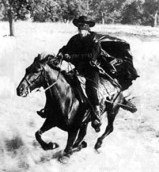 Tonto also had a brown and white pinto, Scout.
Going back further in western lore, Zorro had his dramatic black stallion, Tornado. Even Gene Autry’s horse Champion had a lovely flaxen mane and tail.
And what did the outlaws ride? Brown, nondescript horses, almost always.
Horse color is fascinating to me, and it’s important to get it right. Nothing knocks me out of a story faster than to read that a horse is “brown” but has a black mane and tail. No, that’s a bay. Neither can a golden-colored horse with a black mane and tail be considered a palomino—that’s a dun, or as some would call it, a buckskin. (There is some disagreement over whether yellow horses without black manes and tails are duns or buckskins.) Among duns there are zebra duns (with a dark stripe going across the shoulders and down the back, yellow duns, claybank duns, red duns, lilac and more. Gray isn’t merely gray, but can be dappled, flea-bitten (with tiny dark spots), or grullo. And it makes a difference what part of the country or
  world you’re in, too. A chestnut (light brown, sometimes with a lighter mane and tail) would likely be called a sorrel out west, and there are a myriad of specific variations according to how dark the brown is on the body and mane and tail. A paint or pinto would be a piebald or skewbald in England, depending on whether it’s black and white or brown and white. A paint horse can be an overo or a tobiano, depending on the pattern of the white. Roans can be blue, strawberry, seal and more.
Bewildering, yes, and I can’t begin to cover the subject completely. A discussion of breeds is a subject for another blog, if that hasn’t already been done. I’d like to share a book that helped me make sense of it all—HORSE COLOR, A COMPLETE GUIDE TO HORSE COAT COLORS, by D. Phillip Sponenberg and Bonnie V. Beaver. It’s available on Amazon if you’re interested.
Ever since I’ve started writing historicals, it’s been very clear to me that a particular horse figured in my hero’s story, it had to be some special color. In my May Love Inspired Historical, HILL COUNTRY CATTLEMAN, sixth in the “Brides of Simpson Creek” series, horses are featured very prominently in the book. My hero, Raleigh Masterson, first catches my aristocratic English heroine Violet Brookfield’s eye riding on the back of a beautiful blue roan stallion on Main Street of Simpson Creek. Learning that the lovely woman is an accomplished equestrienne and is in need of a mount during her visit to the Texas Hill Country, he loans her a pinto mare, Lady.
 Naturally, during the course of the story, Raleigh and Violet fall in love—but how can a Texas cowboy and former trail boss hope to be worthy of the daughter of an viscount, especially when she’s got a beau back home in jolly old England who’s promised to give her her own hunter and start a stud of racehorses? Raleigh’s got nothing, not even his own ranch. But then an endurance race is proposed to put Simpson Creek on the map for horse racing. Contestants are to change horses halfway through the demanding course over hilly terrain. The prize will be a prime piece of San Saba County ranchland. Voilà—the chance for Raleigh to feel worthy of his English lady. You’ll have to read the book to find out how the race went, as one lucky commenter will do, for I’m giving away a copy of the book, of course. And for those who’d like to read the prologue to this story that didn’t make it into the book because of word count restrictions, please visit my website at www.lauriekingery.com
My thanks to Wikimediacommons.org for the horse pictures, and again to the fillies for letting me come visit.
Blessings,
Laurie Kingery


