Belle Starr – The Bandit Queen

 
“I am a friend to any brave and gallant outlaw.”

 Born Myra Belle Shirley, February 5, 1848, on a farm outside of Carthage, MO, the legendary Belle Starr came into the world a farm girl and left it as a famous–or infamous–outlaw. Her father was a slaveholder who sympathized with the south, her mother was of the Hatfield clan, and Belle grew up with Cole Younger and several of Quantrill’s Raiders.

By 1864, after Carthage was burned by Union troops, the family moved to Scyene, Texas, a small town near Dallas. There, in July of 1866, the Younger brothers and Jesse James, all Missouri outlaws who rode with Quantrill, used her family’s home to hideout from the law.

That same year her older brother John “Bud” Shirley, who fought for the Confederacy with William C. Quantrill’s guerillas, was killed by Union troops in Sarcoxie, Mo. Some say this is the reason Belle took to crime – she went hunting for the Union officer who shot her brother and, though she never found him, she seems to have liked carrying a gun and stirring up trouble.

In 1866, Belle married James C. “Jim” Reed, a former guerilla whom she had known since her childhood in Carthage and had two children: Rosie Lee “Pearl” (who was later rumored to be Cole Younger’s child) in 1868; and James Edwin “Ed” in 1871. While Jim initially tried his hand at farming, he soon grew restless and fell in with the Starr clan, a Cherokee Indian family notorious for whiskey, cattle, and horse thievery, as well as his wife’s old friends the James and Younger gangs.
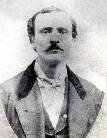
When her husband and cohorts robbed Watt Grayson, a wealthy Creek Indian farmer of $30,000 in gold, Belle was accused as an accomplice. Though there was no proof, she fled back to her family in Scyene. Stories are told that she would ride into Dallas wearing buckskins and moccasins or tight black jackets, black velvet skirts, high-topped boots, a man’s Stetson hat with an ostrich plume, and twin holstered pistols, and spend her time in saloons, drinking and gambling at dice, cards, and roulette. At times she would ride her horse through the streets shooting off her pistols

On Aug. 6, 1874, the law caught up with Jim Reed near Paris, Texas. He was shot to death trying to escape from custody.

The young widow of an outlaw, Belle left her children with relatives and returned to Oklahoma Indian Territory and the Starr clan. Belle proved herself good at organizing, planning and fencing for the rustlers, horse thieves and bootleggers. Belle’s enterprises provided her with more than enough money to use bribery to free her cohorts from the law whenever they were caught. And, if she couldn’t buy off the lawmen, she was known to seduce them into looking the other way.

“Next to a fine horse, I admire a fine pistol.”

 Judge Isaac C. Parker, a.k.a., “The Hanging Judge,” of Fort Smith, Arkansas, became obsessed with bringing Belle Starr to justice, but she eluded him at every turn. Charges never seemed to stick, and if he managed to get her into his courtroom, she would appeal to friends in high places and receive a full pardon.

In 1880, at the age of 32, Belle fell in love with Sam Starr, the handsome 20-year-old son of the clan leader, and asked him to marry her. Old Tom disapproved, but Belle out-talked him and ended up with young Sam as her husband.

“After a more adventurous life than generally falls to the lot of woman, I settled permanently in the Indian Territory, selecting a place of picturesque beauty on the Canadian River. There, far from society, I hoped to pass the remainder of my life in peace and quietude. So long had I been estranged from the society of women, whom I thoroughly detest, that I thought I would find it irksome to live in their midst. So, I selected a place that but few have ever had the gratification of gossiping around…” Belle Starr  
(June 7, 1886, Dallas Morning News, p. 4, col. 5-6)

Belle Starr’s ride came to a violent end on February 3, 1889, two days short of her forty-first birthday, when she was shot in the back while riding from the general store to her ranch near Eufaula, Oklahoma. Suspects included Edgar Watson, a fugitive with whom Belle had been feuding over the land he was renting from her, Jim July, her Cherokee lover, with whom she had recently had a quarrel, and her son Ed, with whom she had a rather strained relationship. The murderer of Belle Starr was never caught. 

Belle was buried on her ranch. A marble headstone was erected over her grave on which was engraved a bell, her horse, a star and this epitaph written by her daughter Pearl:

“Shed not for her the bitter tear,
Nor give the heart to vain regret;
‘Tis but the casket that lies here,
The gem that filled it sparkles yet.”


http://www.lkwdpl.org/wihohio/star-bel.htm
http://www.frontiertimes.com/outlaws/belle_starr.html

Leon C. Metz, “STARR, MYRA MAYBELLE SHIRLEY,” Handbook of Texas Online (http://www.tshaonline.org/handbook/online/articles/fstbl), accessed May 30, 2011. Published by the Texas State Historical Association
http://www.legendsofamerica.com/we-bellestarr2.html
Wild West Magazine
 
http://www.stateoftheozarks.net/Cultural/History/BorderWars/BelleStarr_Chick.html


Judge Roy Bean–The Only Law West of the Pecos

.
“Hang ’em first, try ’em later”  

Photo by DesertUSA.com


“Doffing his saloon apron,  the grizzled barkeep dons a dirty alpaca coat,  sits himself down behind the bar, draws a pistol and bangs for silence using the butt as a gavel.   “Order, by Gobs!   This honorable court is now in session, and if any galoot wants a snort before we start, let him step up to the bar and name his pizen.” The good judge had never seen the inside of a law school.  His only law book was the 1879 Revised Statutes of Texas.  But the self-styled “Law West of the Pecos” knew how to hold court. There, in his Jersey Lilly saloon in the minuscule West Texas town of Langtry, Roy Bean doled out drinks and his own brand of justice for more than 20 years.” -Smithsonian Magazine June 1998

“…Judge Bean ruled with a high handed, but appropriate brand of homespun law, outrageous humor, and six-shooter justice.”
http://www.texasoutside.com/westtexasparks/judgerbframes.htm, Judge Roy Bean Visitor Center, Langtry, TX

The above statements and excerpts give you an idea why “Hanging Judge” Roy Bean is such an enduring character in the history of the old west. Born Phantly Bean, in Mason County, Kentucky, in 1825, Roy Bean has pretty much done it all. He ran a blockade during the Civil War hauling cotton from San Antonio to British ships off the coast. He helped run a shop in Chihuahua, Mexico with his older brother, Sam, until he caused too much trouble. Next he went to live with his oldest brother, Joshua, who was mayor of San Diego. Roy was jailed for dueling, broke out, and followed his brother to San Gabriel. He inherited Joshua’s saloon but moved on again in 1857 or 1858 to escape being hanged. Next he went to Mesilla, New Mexico, where Sam made him a partner in a saloon there. Things went well until the Civil War reached them. A military life wasn’t for Roy – he moved to San Antonio, where he became famous for “circumventing creditors, business rivals, and the law.”

In 1882, Bean left his wife of sixteen years, and their four children, to move with the railroad grading camps to Vinegaroon, a tent city near the Pecos River. According to the Texas State Historical Association’s The Handbook of Texas Online:  “Crime was rife at the end of the track; it was often said, “West of the Pecos there is no law; west of El Paso, there is no God.” To cope with the lawless element the Texas Rangersqv were called in, and they needed a resident justice of the peace in order to eliminate the 400-mile round trip to deliver prisoners to the county seat at Fort Stockton. The commissioners of Pecos County officially appointed Roy Bean justice on August 2, 1882. He retained the post, with interruptions in 1886 and 1896, when he was voted out, until he retired voluntarily in 1902.”
http://www.tshaonline.org/handbook/online/articles/fbe08

Bean didn’t stay in Vinegaroon. When the railroad moved west, Bean packed up his courtroom and saloon and moved 70 miles to Strawbridge, and a new tent city.

According to legend, Bean named the town after the British actress Emilie Charlotte (Lillie) Langtry, with whom Bean had fallen in love after seeing her picture. Bean even named his saloon The Jersey Lilly, in Miss Langtry’s honor. The truth: railroad records indicate that the town was named for George Langtry, a railroad construction foreman. [I found the photo to the left on tworobins.com]

But Bean was definitely the “law” in the town. Though he’d had no formal schooling in law, and only owned one law book, the 1879 edition of the “Revised Statutes of Texas”, he appointed himself Justice of the Peace and held court at his bar and passed down judgments until 1902. Although only district courts in Texas were legally allowed to grant divorces, Bean did it anyway–as long as the person had $10. He charged $5 for a wedding and sent the happily married couples on their way intoning “and may God have mercy on your souls.” None of the fines he collected were sent to the state.

 
Again from The Handbook of Texas Online:  “Bean died in his saloon on March 16, 1903, of lung and heart ailments and was buried in the Del Rio cemetery. His shrewdness, audacity, unscrupulousness, and humor, aided by his knack for self-dramatization, made him an enduring part of American folklore.”
 
Today, a recreation of The Jersey Lilly Saloon and Courtroom adjoins a Visitor’s Center in Langtry, Texas.


http://www.traveltex.com/things-to-do/attractions/judge-roy-bean-visitor-center 
http://www.findagrave.com/cgi-bin/fg.cgi?page=gr&GRid=1339
http://www.legendsofamerica.com/picturepages/PP-Saloon-18-JudgeRoyBeanSaloon.html
http://www.desertusa.com/mag98/aug/papr/du_roybean.html
BIBLIOGRAPHY: Everett Lloyd, Law West of the Pecos (San Antonio: University Press, 1931; rev. ed., San Antonio: Naylor, 1967). C. L. Sonnichsen, Roy Bean, Law West of the Pecos (New York: Macmillan, 1943; rpt., Albuquerque: University of New Mexico Press, 1986). http://www.tshaonline.org/handbook/online/articles/fbe08


The Bowie Knife – The Most Famous Blade in Texas

A Bowie knife is a style of fixed-blade knife first popularized by Colonel James “Jim” Bowie in the early 19th Century.

Much like the owner with whom this blade is synonymous, the “Bowie” knife is shrouded in myths, legends and questionable facts. Even the experts are still arguing over what is truth and what is legend.

However, one certain thing is that Bowie knives are highly collectible. They are prized for their history, their unique design, and their durability.

If you are a collector of Bowie knives, you may also be interested in collecting damascus pocket knives. Damascus steel is a type of steel that is made from layers of different steels that are forged together. This creates a unique and beautiful pattern on the blade. Damascus  knives are highly collectible because of their beauty, their durability, and their historical significance.

Both Bowie knives and Damascus knives are great additions to any collection. They are both unique and beautiful, and they both have a rich history. If you are looking for a knife that is both functional and collectible, a Bowie knife or a Damascus pocket knife is a great option.

Let’s start with what the experts know:  A blacksmith named James Black from Washington, Arkansas, was well-known for his guardless “coffin” knife, meaning the handle is shaped like a coffin and there is no guard to keep the wielders hand from slipping onto the blade.

From here, the truth gets a little murky.

One version of the creation of the famous knife is that Rezin Bowie commissioned the knife from blacksmith Jesse Cleft of Avoyelles Parrish, Louisiana.

Another has Jim’s brother, John, claiming the knife was made by a blacksmith named Snowden.

The favored version of the story is that Jim Bowie went to Black in 1830 with a wooden mock-up of the knife he wanted. Black made that knife and another one with several improvements. When Bowie returned for his knife, Black offered him his choice. Bowie took the improved model.

“It was said that a Bowie had to be sharp enough to use as a razor, heavy enough to use as a hatchet, long enough to use as a sword and broad enough to use as a paddle.”

The historical Bowie knife had a blade of at least 6 inches in length, some reaching 12 inches or more, with a relatively broad blade that was an inch and a half to two inches wide. Bowie knives often had an upper guard that bent forward at an angle (called an S-guard) intended to catch an opponent’s blade or provide protection to the owner’s hand.

The moniker “Bowie Knife” seems to have grown from the account of an attempted murder of Bowie. In Mississippi in 1827, in what became known as the “Sandbar Duel,” Jim Bowie was attacked by three men on the orders of a local sheriff that Bowie had vocally refused to back for re-election. Bowie, using the knife, survived; his attackers did not. Yes, I know this happened before Bowie bought the knife from Black. But keep in mind the historical “Bowie knife” was not a single design, but was a series of knives improved several times by Jim Bowie over the years.

James Black became famous on his own merits; he was and is considered one of the best blade-makers of that time period. Black’s knives were copied by cutlers in Sheffield, England, and sold in America as the “Arkansas Toothpick.”

“The term Arkansas toothpick became synonymous with “bowie knife” for most of the population [of the United States]. Sheffield cutlers thought the addition of this term in particular added value to the knives they made to sell in the United States…” http://www.historicarkansas.org/collections/knives.aspx?id=54

Black’s knives were known to be exceedingly tough, yet flexible, and his technique has not been duplicated. Black kept his technique secret and did all of his work behind a leather curtain. Many claim that Black rediscovered the secret of producing true Damascus steel. [An interesting process, but I’m going to let you research that one on your own. If you want to see some beautiful knives, go to http://www.mountainhollow.net/bowieknives2.htm]

The Bowie knife became the most famous blade in the states, perhaps in the world, following The Alamo. But, as is the way of most things, by the end of the Civil War, the knife gave way to the bayonet, rifle and revolvers for self-defense.

Hollywood launched something of a revival of the knife’s popularity when, in the 1950s, Davy Crockett and Jim Bowie were featured in books and movies.

Here’s some of the links I discovered, if you want to learn more:

http://www.historicarkansas.org/knife_gallery/

http://www.historicarkansas.org/collections/knives.aspx?id=153

http://www.historicarkansas.org/jamesblackrevisited/

Jim Bowie & the Most Famous Blade in Texas

Jim Bowie–a name synonymous with Texas. Most of us know he died defending the Alamo, and that he wielded a big knife that now carries his name. But Jim Bowie was quite an interesting character.

Born in Kentucky in the spring of 1796, he moved with his parents and nine siblings west to the Red River, then Missouri and finally to Spanish Louisiana and Opelousas in 1812. Fluent in Spanish and French, Bowie was also proficient with pistol, rifle and knife. Bowie and his elder brother, Rezin, enlisted for the War of 1812, though they arrived too late for the fighting.

Now that they were out in the world, the Bowie brothers tried many things to make a living. In order to raise the money needed to take advantage of the rising land prices in Louisiana, they smuggled in slaves, making three trips to buy slaves from the pirate Jean LaFitte and selling them in Louisiana. Of course, they’d worked a deal where they bought the very slaves they’d smuggled in and got back half the price he paid.

In 1825, three of the Bowie boys bought a plantation and established the first steam mill used to grind sugar cane in Louisiana. When they sold out, they used their profits to move on to another plantation in Arkansas.

“The adult Bowie was described by his brother John as “a stout, rather raw-boned man, of six feet height, weighed 180 pounds.” He had light-colored hair, keen grey eyes “rather deep set in his head,” a fair complexion, and high cheek-bones. Bowie had an “open, frank disposition,” but when aroused by an insult, his anger was terrible.”

Always rather fearless, Bowie cut a path for himself all the way to Mexico. As early as 1819, he was working to liberate Texas from Spanish rule. In 1830, he moved to Texas, took the oath of allegiance to Mexico and settled in Saltillo, where he learned of an old law that allowed a Mexican citizen could purchase eleven-league grants in Texas for $100 to $250 each. Bowie urged Mexicans to apply for the eleven-league grants, which he purchased from them. When Jim Bowie left Saltillo a few months later, he owned fifteen or sixteen of these grants. At 4,428.4 acres per grant, Bowie was becoming a rather wealthy man.

Bowie, now age thirty-four, was at his prime. He was well traveled, convivial, loved music, and was generous. He also was ambitious and scheming, played cards for money, and lived in constant state of debt.

When he arrived in San Antonio, he posed as a man of wealth and attached himself to the wealthy Veramendi family. In the autumn of 1830, he accompanied the family back to Saltillo, and on October 5 officially became a Mexican citizen. The citizenship, however, was contingent on his establishing wool and cotton mills in Coahuila, so, through a friend back in Natchez, Bowie purchased a textile mill for $20,000.

On April 25, 1831, Bowie married Ursula de Veramendi, the daughter of a Mexican Governor. But marriage didn’t settle his lust for adventure. He led a fruitless search for the “lost” Los Almagres Mine, somewhere west of San Antonio, and was given the title of “Colonel” when he led twenty-six citizen “rangers” to scout the head of the Colorado River for hostile Indians. He came back empty-handed that time, too.

After the death of his wife and two young children of cholera in 1833, Bowie became a land commissioner for the Texas-Coahuila government, promoting land settlement in Texas. In May of 1835, Mexican President and General Antonio Lopez de Santa Anna abolished that government and ordered the arrest of all Texans doing business in the new capital. In response, Bowie led a small group of Texas “militia” to San Antonio in July and seized a stack of muskets in the Mexican armory there.

On October 3, 1835, Santa Anna abolished all state legislatures in Mexico. Former Empresario to Mexico Stephen F. Austin, newly elected to command the volunteer army of Texas, issued a call to arms and placed Jim Bowie on his staff as a colonel. William B. Travis also joined the new army. Bowie led forays south of Bexar and successfully commanded his troops at the battle of Concepción, but he had little interest in formal command, and tried repeatedly to resign from his position.

Sounds to me like General Sam Houston foundthe best way to use Bowie when he asked himto organize a guerilla force to harass the Mexican army in December of 1835.

From here, Bowie’s fate is set in motion. In January, 1836, Bowie returned to Bexar with an order from Houston to demolish the fortifications. After seeing the situation, he recommended that they hold Bexar instead, because of its strategic position. William Travis, now a lieutenant colonel, arrived with thirty men on February 3; David Crockett rode in with twelve men on the eighth. The garrison at the Alamo now had nearly 190 men.

On February 11, Lt. Colonel Travis took command of the garrison. On the 12th, the volunteers elected Bowie to command. On February 13, Bowie and Travis worked out a compromise giving Travis command of the regulars, Bowie command of the volunteers, and both men joint authority over garrison orders and correspondence.

Before dawn on March 6, 1836, while Bowie was confined to a cot with what is believed to be advanced tuberculosis, the Mexican Army under Santa Anna attacked and killed all 188 defenders of the Alamo.

“During Bowie’s lifetime, he had been described as ” a clever, polite gentleman…attentive to the ladies on all occasions…a true, constant, and generous friend…a foe no one dared to undervalue and many feared.” Slave trader, gambler, land speculator, dreamer, and hero, James Bowie in death became immortal in the annals of Texas history.” http://www.forttumbleweed.net/jimbowie.html

—I’m saving the part about the knife for next time.

And the winners are…

Thank you all for sharing your travel dreams. I had such a good time that I couldn’t pick just two winners. So, I’m giving away…

THREE COPIES OF EACH BOOK!

Winners of an autographed copy of Touch of Texas are Estella, Kirsten and Summer!

Winners of an autographed copy of Touched by Love are Mary J, Rebekah E. and Patricia B.!

CONGRATULATIONS ladies! Send your mailing information to me at Tracy@TracyGarrett.com and I’ll get your books right off to you.

Travelin’ Dreams!

Since I’m on a mission to complete a manuscript this month, before I head out on an actual vacation, my writing time is stretched a little thin. So I’m going to open my blog up to you today.

If you could go anywhere on a research vacation–or on any vacation–where would you go? No limits, no budget. Anywhere.

I have a bucket list of sorts, place I really want to go, and, while Australia, New Zealand and Fiji are all on there, it isn’t a list of exotic locales. I’ve been to Russia, back when it was still the Soviet Union; and to England, France, Austria, Germany, Canada, Mexico, Honduras, Grand Cayman, St. Thomas, The British Virgin Islands… Can you tell my dh and I love to travel?

The places on my list right now are mostly research trips I’d like to take in order to give life to some of the story ideas that are floating around in the gray matter of my mind. For instance:

> The Buffalo Bill Historical Center & Cody Firearms Museum, Cody, Wyoming

> The National Rifle Association’s National Firearms Museum, Fairfax, Virginia

> The eastern-most spot in Newfoundland, Canada [that’s it, in the picture on the left]

> Maine – the whole state

> Bainbridge Island, Washington – or maybe Neah Bay, since it’s the westernmost point in Washington State

> Alaska

> Idaho

I could keep going, but you get the idea. How about you?

I’ll give away one copy each of Touch of Texas and Touched by Love–all you have to do is leave a comment.

Happy Dreaming!


Wincester 1866 Repeating Rifle – aka The Yellow Boy

Winchester (U.S.) Model 1866 Lever Action Rifle (repeater/ breech-loading/ black powder/ cartridge ammunition)

Last time we discussed the Winchester 1873 Repeating Rifle. Today, I want to introduce the precursor to that rifle – the Winchester 1866 Repeating Rifle, aka The Yellow Boy.

The Yellow Boy got its name because of the shiny brass frame. The design improvements over the original Henry repeating rifle ensured the Yellow Boy’s success. In 1866, Nelson King, an engineer with Winchester Repeating Arms, patented a spring load gate for ease of loading cartridges into the side of a spring-fed, closed-end tube attached under the barrel. The tube held fifteen bullets. Add the one in the chamber and you could pull the trigger sixteen times before reloading.

The 1866 Yellowboy lever-action rifle was a marked improvement over the Henry rifle. It was the first true cowboy lever-action rifle, and the first rifle widely carried in a cowboy-style saddle scabbard.

Both the “Henry and Winchester Model 1866 “Yellow Boy” rifles found a ready market on the western frontier. The Indians referred to these arms as “many shots,” and “spirit gun,” which showed a measure of awe and respect for the products of the New Haven-based company. Many warriors were able to obtain these arms for themselves, and more than twenty of them were used against George A. Custer’s 7th Cavalry and their single-shot Springfield carbines at the Little Bighorn in June, 1876. Winchester repeaters also found favor with miners, homesteaders, ranchers, lawmen, and highwaymen.” http://www.nramuseum.com/the-museum/the-galleries/the-american-west/case-42-the-guns-that-won-the-west-colt-winchester/winchester-model-1866-lever-action-rifle.aspx

Winchester produced the Yellow Boy as a musket, a carbine (shorter barrel, often around 19”) and a rifle with a barrel up to 24 ¼”.

Some 150,000 Yellow Boys were produced from 1867 to 1892-93. The carbine version of the 1866 Yellowboy was a hit worldwide. Chief Sitting Bull had one; the forces of Benito Juarez used the rifles in Mexico; the Turkish Army used the new Winchester Yellowboy against the Russians; and settlers in the U.S. bought thousands for frontier use. Based on its popularity and performance, the “Yellow Boy” earned the title of “the gun that won the west.”

The Yellow Boy’s popularity with Native Americans as well as the general shooting public continued its production well after the introduction of the more powerful Model 1873 Winchester began.

The Yellow Boy is still popular in Hollywood. The Yellow Boy appeared in many of the Spaghetti Westerns, and, more recently, TomChaney (Josh Brolin) carried one in the new release of True Grit.

Winchester chambered it for the .44 Henry Flat round, or a flat nosed bullet. Though it didn’t have a lot of power for a rifle, the Henry Flat had already been proven in combat.  The Flat was a rimfire cartridge, which means the hammer strikes the rim of the cartridge, not the center. It wasn’t until near the end of production–when the 1876 Centennial Rifle was being produced–that Winchester developed a .44 center-fire cartridge for the 1866 rifle.

Here’s a tidbit that might come in useful in your plot – No dust covers were used on the 1866.  This did permit dust and other debris to enter the action, which meant misfiring or not firing at all–which can put the shooter in a real tight spot.

Next time — the gun that started it all: The Henry Repeating Rifle.

Winchester Model 1873–A “Gun That Won the West”

Several different weapons, both rifles and handguns, have been dubbed “the gun that won the west.” Like the Colt 1873 Peacemaker, a .45 caliber six-shot revolver; the Winchester Model 1866 “Yellowboy” lever-action repeating rifle, so named for its shiny brass frame; or today’s focus, the Winchester Model 1873 lever-action repeating rifle.

Some believe the Winchester Model 1873 is widely known as ‘the gun that won the west’ purely because there were so many made. With a production run of more than 720,000 in 50+ years, anyone who wanted one could buy one. And that meant a lot of these rifles went west with those brave enough to pack up and head off into parts unknown.

The steel-framed Model 1873 was made as a musket = a 30” round barrel (smooth bore, not rifled). According to Winchester, there were only around 500 of these produced.

…as a carbine = a 20” barrel, loaded with 14 cartridges; often had a saddle ring attached for easy accessibility and to keep it on the horse.

…and as a rifle = 24” octagonal barrel, with the insides “rifled” or grooved in a way that spun the bullet as it exited the barrel, giving it greater distance and much improved accuracy; loaded with self-contained black powder cartridges that were pushed into the receiver on the right side of the rifle and stored in a magazine that paralleled the barrel.

THANKS TO WWW.RAREWINCHESTERS.COM FOR THE PICS!

Though the 1873 couldn’t handle the more powerful cartridges used by the single-shot rifles of the time, I’m thinking 14 shots before reloading versus one made it worth the trade-off.

Originally chambered for the .44-40 cartridge (a .44 caliber bullet, propelled by 40 grains of black powder), the Model 1873 was later produced in .38-40 and .32-20, all of which were popular handgun cartridges of the day. This was important–if your handgun and your rifle used different size ammunition, you had to carry two sizes and you ran the risk of not having enough of what you needed; but if your belt guns and your saddle gun all used the same cartridge, you just dug into the saddle bag and started stuffing in bullets. That could help get your hero out of a really tight spot.

However, if you’re going to have your hero–or heroine or villain–carry two weapons that share ammunition, remember that the original Model 1873 was not made to use the.45 caliber Colt cartridge used in the very popular Colt “Peacemaker.”

But that doesn’t mean a Colt and a Winchester never shared ammunition. The popularity of the Winchester in .44-40 caliber had Colt manufacturing a version of the Single Action Army “Peacemaker” revolver that could use the Winchester’s ammunition. This insured the success of the Winchester rifle.

“Most Texas Rangers and every old West cowboy worth his salt carried 1873 rifles. Chappo, the son of Apache war chief Geronimo, packed an 1873. And Buffalo Bill carried an 1873 lever-action rifle along with a pair of .44-40 Colts in 1876 when he worked as an Army scout.” http://www.uberti.com/firearms/1873_rifle_and_carbine.php

If you’d like to see a reproduction in action, check out this video: http://www.youtube.com/watch?v=_RUsZ5U9xYw  

Pay close attention to the difference in the amount of smoke produced between the first cartridges, which use modern smokeless powder, and the second set, which are loaded with a black powder substitute that is more like the black powder used in the 1800s. The smoke was always a factor with the weapons of the period. Every shot left a cloud that gave away the position of the shooter.

Finally, I have to share this really excellent list, the FIREAMS GLOSSARY from the Buffalo Bill Cody Museum in Cody, WY.  http://www.bbhc.org/firearms/research/

The 1847 Colt Walker Revolver – As Long As Your Forearm

In 1847, Colonel Samuel Walker, Army commander and a Texas Ranger in John C. Hays’ company, approached Sam Colt to make a new, stronger, more powerful revolver. Colt took the order–but had no factory. He turned to Eli Whitney, Jr., son of the famous inventor of the cotton gin, who had a factory in Connecticut where the order was completed and shipped by mid-1847.

Named the “Walker” for the Colonel, this single action, six shot, black powder revolver was 15 ½” long and weighed–are you ready–4 pounds, 8 ounces! Unloaded! Add the lead balls, wadding, etc. and you’re close to 5 pounds. That’s as much as one of those big bottles of wine. Try gripping that and holding it steady at arms length.

Can you even imagine shooting that thing, let alone hauling a couple of them around all the time? Though Hollywood shows the Colt Walker as a belt gun, the Texas Rangers and the mounted troops under Walker’s command during the Mexican-American War, and on the Texas frontier, carried the Colt Walker in saddle holsters.

Just to give you a visual, in the pic on the right, Josey Wales holds a Colt Walker in his left hand and a Colt 1860 Army in his right.

In the picture on the left, character Augustus McCrae of Lonesome Dove, is holstering his Colt Walker. See how long it is compared to Robert Duvall’s torso?

[Both of these pictures are from The Internet Movie Firearms Database, www.imfdb.org. It’s a great site!]

With an effective range of 100 yards, the 1867 Walker could be loaded with as much powder as some muskets, making it the most powerful revolver of its day. In fact, it was more powerful than most modern pistols. The black powder Walker Colt is regarded by some experts as the most powerful commercially manufactured repeating handgun from 1847 until the introduction of the .357 Magnum in 1935.

“It proved to be a revolver of such size, weight, and heft that Colt was reputed to have said, “It would take a Texan to shoot it.” Walker wrote in 1847 that the gun was “as effective as a common rifle at 100 yards and superior to a musket even at 200.” Far more powerful than the earlier Patersons, this gun quickly became legendary. For those who could afford it, the Walker Colt was a symbol of strength, authority and great financial means.

“Total production of the original Walker was about 1,100, a thousand of which were ordered by the U.S. Ordnance Department. The Walker was the first revolver ever purchased by the Army, and soldiers’ inexperience with a revolver resulted in a lot of “burst cylinders,” meaning all six chambers fired at the same time.”  [http://americanhistory.si.edu/militaryhistory/collection/object.asp?ID=820]

The Colt Walker was quickly followed by the Colt Dragoon series of revolvers, which only improved on a very good thing.

The 1876 Winchester “Centennial” Repeating Rifle

Oliver Winchester bought the remains of the Volcanic Repeating Arms Company, started the New Haven Arms Company, reorganized it as the Winchester Repeating Arms Company in 1866, and manufactured some of the most famous firearms ever created. Today we’re going to look at one of their most revered rifles: The 1876 Winchester Centennial Repeating Rifle.

Introduced at the Philadelphia Centennial Exposition of 1876 and named to commemorate our nation’s one hundredth anniversary of independence, Winchester’s lever-action rifle was the largest and among the most powerful repeaters on the frontier. 

The Centennial was one of the first lever-action weapons to use larger caliber, center-fire ammunition. In the same way that “rim-fire” meant the hammer struck the rim of the projectile, center-fire means the hammer strikes the center of the bullet when the trigger is pulled. In this case, larger means .45-75 to .50-90 caliber bullets.

The Centennial Repeater was 48½” long with a 28” barrel, and weighed in at 9 to 9½ pounds! And loading it with shells adds at least another pound. A gallon of milk weighs only 8.6 pounds–try holding that out in front of you and keeping it steady enough to hit what you’re aiming at!

The bullets go into the magazine through a spring-loaded feeder on the right side of the rifle. Fully loaded, the 1876 Repeater held 12 total cartridges–11 in the magazine and one in the chamber. All you had to do was stuff the bullets into the feeder, rack the lever and pull the trigger.

Confederate soldiers who faced a Repeater in battle referred to it as that “rifle you load on Sunday and fire all week.”

This sturdy, reliable rifle was favored by good guys and bad guys alike. There were many of them at the Battle of Little Big Horn (most in the hands of the Native Americans), and they were common among those who traveled and settled out west. The Model 1876 was carried by ranchers and cowboys, Texas Rangers and the Canadian North West Mounted Police. President Theodore Roosevelt (right) owned and used one; even notorious outlaws such as Johnny Ringo (left) and Tom Horn relied on this rifle during the late 1800s.

Hollywood loved the 1876 Centennial Repeater, too. Tom Selleck carried one as Rafe Covington in Crossfire Trail (TNT, 2001) and as Monte Walsh in Monte Walsh (2002). Virginia Madsen used the 1876 Centennial when she saved the day–and her man– also in Crossfire Trail. It made an appearance Steve McQueen’s hands when he played Tom Horn in the 1980 movie of the same name. And characters Johnny Ringo and Sherm McMasters used it in Tombstone (1993).

Just for comparison, the pic at the right, from the final gunbattle in TNT’s Crossfire Trail, shows an 1876 Centennial in the back, an 1866 “Yellow Boy” or “Golden Boy” (because of the polished brass receiver) in the middle and a Winchester 1873 in the front.

The 1876 Centennial Rifle was the king of its day. Manufacturing was discontinued in 1898 after Winchester produced nearly 64,000 of this amazing lever-action rifle.

Petticoats & Pistols