Medicine, Medicine Men & Shamans

horseheader1.jpeGood morning!

With health concerns being in the news more and more these days, I thought it might be interesting to have a look at the average person’s state of health in the Native America of the past, as well as medicine, as defined by Native Americans, what it was — and medicine men — who were they?  What did they do?  And who were shamans?

Let’s begin with medicine.  In Native America, medicine meant the great mystery.  If one could cure the sick, that person had great medicine.  If a man could go to war and come home alive, he had great medicine.  Plants had medicine.  Animals had medicine.   And certain parts of  nature had medicine.  The word medicine did not mean a pill or even an herb or remedy.  It meant simply that a man or a woman had a special connection with the great mystery or with the Creator.  When the white man came with his boats and guns and various things that the Native Americans could not easily explain, the old time Indian called these things (not necessarily the person who used them — but the things used), medicine.

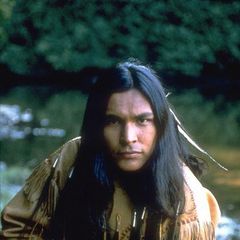
native-americans.jpgThe Native Americans of North America  enjoyed great health and a physcial beauty that would rival the most beautiful of the ancient Greeks.  So writes George Catlin in the mid-nineteenth century, as well as Prince Maximillian and Bodner, Maximillian’s friend and artist, who travelled with the Prince to America.  The Native Americans of the past had no processed food, and, depending on the tribe, they ate many things raw or dried.  Many of the North American tribes were tall and firm of limb and body and as history tells us, a very handsome people.

Food, clean water and fresh air was their medicine.  True, there were herbs that the medicine men & women might use to help their people, but a medicine man’s stock and trade was not merely in herbs alone.  Indians of North America (before their diet was changed) were known for their straight teeth (that are now possible when everyone goes for teeth whitening uv), which did not decay, even into old age in many cases.  There was a saying with the settlers — “teeth as strong as an Indian’s.”  There was little tooth decay, illness was not the norm amnong the people, and many of the diseases that plague us today were completely nonexistent.  People lived (if they weren’t killed in wars) to a grand old age.  There were many people who lived well into their hundreds, keeping hold of their facilities until death.

july06-yukon-photo-4.jpgThey lived in a land of beauty with fresh air, warm breezes, wholesome food and the love of family.  So what did a medicine man (or shaman) do if presented with illness?  Or physical problems due to injury?  Well, I can’t say exactly, since I have not this lifetime been trained in the Native American way of medicine.  I do, however, know this.  The stock and trade of the medicine man was his ability to drive out the evil spirits which inhabited the sick person’s body.  It was known by these men that illness was often caused by evil spirits that would make their way into a person’s body.  So a medicine man’s cures often had to do with driving these spirits away.  Thus, the rattles and drums of the medicine man.

How successful were these people?  According to legend, they were fairly successful.  While they didn’t keep statistics as we do today, their fame was only as good as they could cure those who were sick.  While using herbs collected and dried, they never forgot that their aim was to rid the person of the evil spirit which had taken over a part of the person’s body.

On a final note, since whole foods were the basis of their “medicine,” let me take a moment to tell you about corn, as prepared by the Native Americans.  The Iroquois built strong, tall and healthy bodies based on the three sisters, corn, beans and squash, with corn being their main staple.  The diet was augmented with meat when it was available, but corn was their main diet.

However, it was a different kind of corn than what we know of it today.  Our corn has been altered, and cross-bred and genetically modified until it is almost completely a carbohydrate.  Not so Indian corn.  The Indians knew that corn had to be soaked for days in lime water before it could be used as a food.  Of course we know today that corn has many anti-nutrients — phytates — those things that protect the seed or grain, but are irritating and stressing to the human digestive system.  Soaking the corn in lime did two things:  1) it got rid of the phytates or anti-nutrients in the grain, and 2) it changed the nutrition of the corn into a per protein with all the amino acids present.  This tradition of soaking cornmeal or corn in lime before use is still with us in the southern part of the country — masa flour is often soaked in lime.   And on this sort of diet, the Iroquois built a confederation that was so strong, that it influenced a whole generation of our forefathers, who saw in the Five Nations Confederation, an organization of government that permitted every individual in the nation freedom of mind, freedom of spirit and freedom of body.

Well, that’s it for today.  So tell me, what do you think of the medicine’s stock and trade?  What do you think of their main medicine — whole foods?  If you had lived at that time, would you have taken the time to learn about their foods and how they prepared them?

I’d love to hear from you.  And I should probably start letting you know, I have a new book coming out soon, called THE LAST WARRIOR.  March 2008 is the release date and I just happen to have a graphic of the cover.  So come on in and let’s talk.


karenkay-cover.jpg

THE LAST WARRIOR


Breaking News for all Western & Native American fans

horseheader1.jpeGood afternoon!

For any of you who might not keep up with the Western world and Native America, I thought I would pass along some very vital info on the Lakotah Nation.  This is straight in from Indian country.  For any who don’t know, the Lakotah Nation is what many Americans call the Sioux Nation.  Lakotah heros include Sitting Bull, Spotted Tail and Crazy Horse.

Right before Christmas, the Lakotah Nation (due to continuous and extreme treaty violations, which started about 150 years ago) declared its independence from the United States.   In a statement very much like the Declaration of Independence from our own Founding Fathers, the Lakotah Nation is attempting to gain back its freedom from what has become oppression on the part of the government on their reservation.

I applaud their courage in taking such a step and I wish them success and hope that 2008 finds the Lakotah Nation doing well and free.  For more information, go to www.republicoflakotah.com where you can read their own declaration of independence.

What are your thoughts on the matter?

ROOTS AND NATIVE AMERICA

horseheader1.jpeGood Morning!

Because we have just celebrated Veteran’s Day on Monday, I thought I’d take a moment to post about something very American — fhe Native American influence on America, itself — how we are today and how we got here.

Long ago, after meeting and talking to many Europeans, I was struck by the fact that the American idea of freedom is much freer than that across the Atlantic.  I didn’t quite understand why since our roots go back to England and France and Holland (and others of course, but these three were here first).  But because my next book is set in the land of the Iroquois, I have been getting quite an education.

Did you know that Benjamin Franklin, Thomas Jefferson and Thomas Paine were greatly influenced by an ages old Confederacy of the Iroquois?  Did you know that much of our Constitution has very deep roots in the Iroquois Confederation?

If you didn’t, don’t feel bad.  I didn’t either.

red_3-crop-email.jpgIndeed long ago, before the white man ever set foot upon the North American Continent, five warring Native American Nations decided to ban war forever and to seek peace and to try to bring this peace to other nations, that war should be forever abolished.  They developed a set of laws to help them along this path and they “buried the hatchet” and by doing so established a long tradition of peace.  It was brought about by the man they call The Peacemaker, or Deganawida, and Hiawatha (the real man, not the legend of Longfellow’s poem).  They lived as hunters and farmers in villages with cleared fields that grew the three sisters, corn, beans and squash.

Did you know that when the white man came here, America was not a wilderness?  Land had been cleared for farming — and the forests were like gigantic parks — the under brush was burned off so as to produce a place for hunting that was much like our parks of today?  At least so writes Captain John Smith.

The Iroquois had a very definite sense of freedom.  Man was free.  He was not subject to a King — he did not abide by the “Devine Right of Kings,” and he was an independent being.  His elected officals were sent there by the elder women of the tribe and could be removed for not obeying the laws by the women of the tribe.  In fact, after 3 notices, a man was removed — and lived the rest of his life in shame.  No offical ever was paid for being on the council.  It was considered his duty to his people and to his tribe.

It was only after learning more and more about the Native American that I have come to realize that we owe the Natives of this country a debt.  Our sense of independence, our very thought of what it means to be free comes not from those who came to this country as serfs, but rather from those who lived on the American Continent in freedom.

So, since we have just observed Veteran’s Day, I’d love to hear your comments on freedom, veterans, and what it means to you to be a free people.  Do you have any experiences to tell me about?  If so, I’d love to hear them.  So come on in and let’s talk.

HAPPY HALLOWEEN

horseheader1.jpeHAPPY HALLOWEEN!

For all of you die-hard nutritionalists — or just for all those who want to eat cleanly, here’s my recipe for Halloween Brownie Protein Bars.

Recipe:

1 3/4 cups Egg White protein powder — I use Jay Robb

1-4 cup Rice Protein Powder — organic if possible

2 Tblsp. edible vegetable glycerin — or maple syrup if you can’t find the vegetable glycerin at your health food store

7-8 teasp. pure stevia — get at a health food store

3 tblsp. cocoa powder — organic if possible

4 tblsp. butter

5 – 6 tblsp. coconut oil — get at a health food store, please — the kind you find in most grocery stores is not a good source

If too gooey, add more protein powder.  Pat flat and cut into pumpkin shapes, adding pecans as decoration.

Okay, it’s not like this is as good as a cookie, but it’s healthy — gives you the protein the body so needs and tastes better than any other protein bar out there on the market.  HAVE FUN!

HAPPY HALLOWEEN!!

 halloween.jpg

Those Precious Animals who Share Our Lives

horseheader1.jpeGood Morning Everyone!

This morning I’d thought I’d share some pictures and insights on those wonderful animals who share our lives.  And of course, I would like to hear about your animals.  How many you have, what kind — does anyone have an unusual pet?  Like a skunk or something like that?  By the way, I’ve heard that they make great pets.

untitled-11.jpg Let’s start with Princess Sierra.  This was a recent picture taken earlier this year — in June — notice that there is a tiarra hanging over her head.  We did not touch up the picture or put it there and in all the pictures that we took of her, there is is, right there.  At first I didn’t know what it was, but when I showed it to my brother-in-law, he of course, said — it’s a tiarra, of course.  Princess Sierra is not only a calico, she was originally my daughter’s cat, who grew to love going outside so much that my daughter had to leave her with us — because my daughter can have only indoor pets.  She is, indeed, a princess and we appropriately treat her as such.  Sierra was also one of my characters in a back book, THE PRINCESS AND THE WOLF.sierra21.jpg

sammy1.jpgThis is Sammy, our black and white kitty.  Sammy got bit about 6-7 years ago and developed feline aids and so he is our kitty who tends to be a little sick.  Though he no longer has feline aids, he does have a condition of the mouth called stomititis that we are finding just doesn’t seem to go away.  However, he is doing well and has become one of our most wonderful house cats.

kali1.jpgAnd here we have Kali, whom I call our California bound kitty.  Originally I found her in Florida, and when I discovered that she had been abandoned by her family, I brought her home with me.  Unfortunately for both her and Sierra, it seems to be best to have only one calico per household.  To this day, they still play games (not so great games) with each other.  Maybe in another few years…

roadtr341.jpgHere’s another picture of Sierra, who once accompanied my husband and I on a tour — here she is being our fearless driver.

page2f1.jpgAnd here’s Midnight Thunder — named after another book, NIGHT THUNDER’S BRIDE.  He was found by my brother-in-law while my husband and I were on tour — and he was found at night — at the time I was touring with the book, NIGHT THUNDER’S BRIDE and so we named him in honor of that book.  Midnight is quite a lady’s man — visiting the neighborhood women one by one each day.  He is one of the most popular cats in our neighborhood.  He and Kali, however, are official boyfriend and girlfriend.

We have many other pets, Puffin — our kitchen cat (she is pure white and stays in the kitchen most of the time).  Squeeky, who is my husband’s cat (she is all black) — they (my husband and Squeeky) were together when my husband and I first met each other.  And then there’s Bear, who was named because he so resembles a bear.  Bear is our only full-time outside cat.  He was my brother-in-law’s cat, who now lives with us.  Bear is also a black and white kitty, although he has long hair.

 In addition we also have three dogs, Bandit, who is 14, going on 15.  And two new pups, Prancing Wolf and Yoda — both of whom we adopted having met them on the Blackfeet reservation this past July.  We also seem to have acquired a few opossums.

So now comes the time when I would like to invite you to tell me about your pets, what they mean to you and how much they enhance your life (as I’m sure they do).

I would leave you, however, with this beautiful shot from one of our earlier trips to the Blackfeet reservation in Montana.  The horses are not ours, but rather a friend’s whose father kept and raised horses. 

Looking forward to hearing from you today.

tour99151.jpg

Those incredibly hunky Native American men

horseheader11.jpgGood morning bloggers!

 Okay, did the title wake you up yet?  If not, stay tuned.  We’re going to have a look at some of those hunky men on the covers of our books.  As you might know already — or at least suspect — all of my books are about the historical American Indian.  And some of the men on those covers are incredibly good-looking.  And since I don’t have access to others’ covers, if you will bear with me, we will examine some of my own.

whiteeagle11.jpgThis is a past book — or as we like to say — an older title.  Orginally part of the Blackfoot Warrior series, this cover quickly became one of my favorites.  The model is Joseph Anselmo — and isn’t he delicious?

Then we have another cover — again with Joseph Anselmo and again part of the Blackfoot Warrior series — an older title.  The interesting thing about this particular cover is that when it first came out, I was touring in Montana and was on the Blackfeet reservation for their Indian Days Pow-wow.  There is a fellow on the reservation who looks exactly like Joseph here — and I was fortunate enough to meet him.  

This was again one of my favorite covers.                                                     nightthundersm1.jpg

Then we have a couple of very older titles — these are covers of my first books — LAKOTA SURRENDER was #1 and LAKOTA PRINCESS was #2.lpcover11.jpglscover11.jpg

The model for LAKOTA SURRENDER was John D’Salvo and the lady is Cindy
Guyer.

And then we have the most recent favorite cover — however, I don’t know the name of the model for this cover.  If anyone knows who this model is, please let me know. 

red_hawk_s_woman1.jpgAbsolutely handsome.  Of course I have other favorites, too.  Here’s one of my most prized, most favorite hunks of all time.3-paul-31.jpg

Well, it’s my favorite, although the man is not Native American.  Instead, it’s my husband, Paul.

At the time period when I write, the men were not only handsome — George Catlin describes them in 1834 as rivaling a Greek statue in physique — but there were other romantic values in place, as well.   Integrity, honor, honesty, undying devotion to family and to the tribe were uppermost.  A Jesuit monk once described the Hurons as a tribe of saints.  While I don’t know that I would go so far as to say that, I will agree that at this time in history, there were values of life and liberty that at times seem to be lost in our world nowadays.  And so I write about this time period in history with the hope of not only entertaining the reader, but bringing back to mind as vividly as possible a time when honor was respected above all else; when money meant nothing and when the land and the creatures upon it were free as the wind.

What’s your favorite cover?  Your favorite model?  Your favorite title?  I’d love to hear about them, and even more so, why they are your favorites.  So come on in and let’s talk.


Pow-wow’s

horseheader11.jpeGood Morning!

In July, my huband and I spent three weeks on the Blackfeet reservation. We were there with church volunteers and my friend, Patricia, where we were sponsoring some literacy and drug education programs. Plus, last week we were on the Crow reservation where we were again working with volunteers. Therefore, I thought you might like to hear something about the pow-wow, both the historical pow-wow and modern-day event.

The pow-wow — so much a part of the Western landscape and culture — attracts visitors from all over the world.

What are they all about?

endtour1.jpeOkay, let’s start first with the history of the modern pow-wow. Probably the early beginnings of the modern pow-wow has its roots in the summer/autumn gathering of the tribe. During the winter and spring months, the tribe would separate in their different bands to go their own way, to hunt and to prepare for the coming winter. Spring was of course devoted to gathering food and hunting. But in the late summer or early autumn the entire tribe would come together for ceremonials and religious renewal, as well as for cultural activities. It was a chance for young people to get to know other young people from other bands of the tribe, as well as for relatives and old friends to come together again. Often the Sundance was an part of the gathering, as well.

Today, at the modern pow-wow, you’ll see Indian and non-Indian people from all over the country enjoying the community and inspiring atmosphere of the pow-wow. Before we go any furhter, let me explain some terminology: there are some tribes (like the Navajo), who like to be referred to as Native Americans. But on the Northern Plains of North American, those tribes like the Blackfeet and Lakota, these people prefer to be called Indian. As one person put it to me, “I’m Indian and proud of it.”

Here in Los Angeles we have such a diverse and large American Indian population that if you were to ever attend one of our pow-wows, you’ll notice traditions being observed from all over the country. For instance, here in Los Angeles we have Aztec dancers, something one doesn’t see in the more northern pow-wows.

In the northern pow-wow, you’ll see the men’s Chicken Dance, something you won’t see normally in the Los Angeles Pow-wow.

powwowend21.jpeThere is much dancing and gift giving at the modern pow-wow. All ages participate and there is contesting within the different men’s and women’s forms of dancing. There are several different styles of men’s dances as well as women’s dances, as well. At many of the pow-wows in the west, you’ll also see the modern rodeo in action with some different aspects like the Indian relay race and the tepee raising contests.

There are food ventors — Indian fry bread is popular at all pow-wow’s that I’ve attended — and Native American jewelry of all kinds abounds. At the Blackfeet pow-wow there is the hand game and card games that continue well into the wee hours of the morning and at the Crow Fair pow-wow, one is treated to the sight of 500 or more tepees all set in the background of the beautiful Little Big Horn area.

Have you ever been to a pow-wow? If so, what are your observations? Are you thinking of attending a pow-wow? And if so, do you have questions you’d like to ask before attending? I will be checking into the blog all day long, so let’s start a discussion. I’d love to hear from you.

powwow1.jpeHere are three of us at an LA pow-wow, resting between dances. Patricia, on the left is a Traditional dancer, while Elaine and I are Fancy Dance dancers. As a note, each particular style of dance has its own regalia.

And for your info, all people are welcomed at the pow-wow, and many a romance has been sparked at pow-wow, both the historical, as well as the modern day pow-wow.

So come on in and leave a comment or two. See you later!

red_3-crop-email.jpg

The First Americans and the Mustang

horseheader1.jpeGood Afternoon bloggers!

 I want to thank Maria Lokken and Tanya Hansen for joining in our discussion this morning, as well as fellow author, Cheryl St. John.  Also a big vote of thanks go to Linda B and Jennifer Y for their comments from yesterday’s blog, as well as Elizabeth Lane — another fellow author.

Well, here I am, getting ready to mail off the revisions for my next book (due out in March 2008), THE LAST WARRIOR.  But before I go, I thought we might discuss the mustang and its importance to Native America.

As you know, before the Spanish arrived with their horses, the Spanish Barb, Native America didn’t have horses.  Instead, the American Indians made use of the dog.  It was the dog that transported their goods from one place to another, sometimes even transporting a baby.  Is it any wonder that some tribes honor the dog to this very day?picturesforblog.jpg

As Helen Addison Howard says in her book, AMERICAN FRONTIER TALES,   “(the mustang) completely changed the Indians’ nomadic life-style in hunting and war, in moving camp, in recreation, in trade, raised the owner’s social position, became a status symbol of wealth, and engendered a new standard of well-being.”

Because of its short stature, the mustang was often called a pony.  But that stature was deceiving.  The mustang was an intelligent animal with a stamina that became legend.  It was a mustang who won the 3,000 mile endurance test held in Arabia against the finest Arab horses in the land.  That pony, Hidalgo, was the 800 pound, 8 year old that won that race, even though the race was done was over loose sand, and  in a land where there was very little water.

Did you know that the movie, Hidalgo, was based on a true story?

Well, that’s all for now.  Again, I welcome all your insights into this and any other animal that’s in your life.

Those wonderful mustangs

horseheader1.jpeGood morning once again, bloggers!

Karen Kay here again.  I want to thank Denna and Stacey Kayne for writing their comments and for sharing their stories with us this morning.  Also I’d like to thank fellow authors Charlene and Linda Broday for sharing their comments with us this morning.

Okay, so the excerise is done — it was weights for me this morning — and as I sit here eating breakfast, I thought we’d talk some more about the hearty mustangs who so captured the heart of the West.

 Of course we owe our thanks for these intelligent animals to the Spanish — the word mustang comes from the Spanish word mesteno, meaning wild.  From Columbus to Hernando Cortez, every Spanish explorer or adventurer brought these animals to the New World. 

It was Hernando Cortez who brought them to us in 1519 –he had only sixteen horses, but of them Bernal Diaz (who was with Cortez) writes: “For after God, we owed the victory to the horses.”

But where did the Spanish get these hardy friends to man?

 Professor Walker D. Wyman writes:  (the Oriental horse) is known to have come into Mesopotamia from Persia about 2500 B.C., to Egypt from there in about 1700 B.C. and thence it spread over North Africa.”

Known in Africia as the Barbs — meaning that they were from the Barbary Coast — these breeds mixed with the Arab breed when the Arabs conquered areas of Africa — this was in about 647 A.D.

It was around 711 A.D. that the Moors — who were descendants of the Moroccans and Moslem Arabs — came to Spain, and for almost 800 years, the Moors held Spain hostage.  Now, when these Moors came to Spain, what were they riding?

You guessed it — the Barb-Arab mixed breed horse.

Okay, enough of ancient history.  In my next post, let’s bring the subject closer to present time and discuss how the horse influenced Native America.

red_3-crop-email.jpg  Hope to hear your comments on this and other things of interest, so please feel free to leave some comments, okay.  To the left, by the way, is the art work for my latest novel, RED HAWK’S WOMAN, a June release of this year.

Isn’t he gorgeous?  And does anyone know the name of this sexy young man?

Till later, then.

Petticoats & Pistols