Favorite Kiss — Fillies sharing their favorite kiss

And now for another Anniversary special — our own filly’s favorite kissing scene, taken from one of their books:  Can you guess which author wrote this?    Now this will be part of a contest.  However, since the writers of each scene will be listed each day, the way the contest will run is that each participant’s name will be put into a hat (or similar object) and the name drawn at random.  Okay?  So here we go!

Here’s the first one:

She whirled away from him and started for the door that led back into the hallway. Let him stay there. Let him crawl back to bed by himself or shout for help. She wasn’t putting up with his self-righteous arrogance another second!

She had almost reached the door when he caught her. His hand seized her shoulder with the strength of an iron vise and he whipped her back toward him. “Don’t tell me what I don’t know!” he muttered, jerking her hard against his chest.

His kiss arched her backward over his arm. Alex struggled against his strong hands and brutally seeking lips. Then suddenly, incredibly, she felt herself responding. A ripple of fevered excitement coursed through her as she softened against him and felt the hard contours of his aroused body through the thin silk. Her lips went molten beneath his. Her fingers dug into his flesh, clinging, demanding. Madness. It was running away with her and she couldn’t stop it—didn’t want to stop it.

No! Something in her was still fighting him, still struggling for control. This was insanity. He had no right!

He released her, and she spun away from him. They stood a pace apart, both of them breathing heavily. As Alex stared at him, she felt panic welling up in her body. She’d wanted a life in which there was no question of her being in control. Now, suddenly, she felt threatened. Rafe Garrick was all the things she despised in a man, all the things she had spent her life protecting herself from. And he had just violated her safe, well-ordered world.

Rage and fear exploded in her. Her hand came up and she struck him with all her strength across the face.

Dramatic!  Spellbinding!  Is the author of this:

a)  Charlene Sands

b) Elizabeth Lane

c) Pam Crooks

 And here’s another:

Lord, save me. She can even charm snakes.

Having unraveled her braids, her long hair rippled across her back and into the tall grass. The light afternoon breeze tugged at the wispy red ends. Her dress blended well with the blades of lush green, bonding her to the earth. She looked to be just as he’d named her, a little forest sprite, finding mischief and delight in the nature surrounding her.           
Jed shook off his trance-like state, released Sage and continued toward her. “Did they teach you to speak reptile at that fancy school back east?” he asked as he sat beside her.

“Jed!” Startled by the sound of his voice, Rachell nearly dropped the snake on her lap. “How do you creep about like that?”

“I’d be happy to show you, if you’d be willing to give me a lesson in reptile talk?”

She released the snake then glanced up at him with those pure green eyes. “What do you mean?”

Jed’s gaze settled on her succulent lips. He craved to press his lips to her sweet mouth, the way a drowning man craves air. Before he found the sense to stop himself, his lips were moving over hers in a light caress. She didn’t back away as he would have expected, nor did she show any sign of resistance when he lifted her hands from her lap and wrapped them around his neck.

His body surged with heat as she trembled in his arms while he traced the rim of her mouth with his tongue.

“I’m waiting for that flecking tongue,” he whispered.

Rachell’s eyes popped wide at the sound of Jed’s husky voice. Gracious! How had her fingers become entwined in his hair?

She’d been too caught up in the shivering bursts of heat rippling though her body and the caress of his lips to notice anything else. Her eyes drifted shut as his incredibly gentle hands continued to stroke her back. His mouth nibbled tenderly at her lips. She pushed her fingers deeper into his smooth, black hair, and was sure he liked it when he groaned, pulling her closer.

“Imp?”

She shivered as his tongue skimmed across the seam of her lips. Did he truly want her to stick out her tongue? Parting her lips, she discovered that was exactly what he wanted. His tongue didn’t wait, however, but came seeking, into her mouth.

Rachell was jolted by surprise and an unexpected rush of pleasure as Jed molded his mouth to hers. His scent, taste and texture surrounded her, consuming her. She gave herself to his kiss, swept up in the sweet intimacy and sheer wonder of the wild sensations coursing through her.

Belatedly, she felt the cool grass against her back, her sole focus on the rhythmic probing of Jed’s velvety tongue, encouraging her to take part in the delicious dance taking place inside their joined mouths. His restless hands carried fire across her body, caressing her shoulders, her sides, her hips.

Hot, Hot, Hot! Is the author of this:

a) Stacey Kayne

b) Pat Potter

c) Cheryl St. John

Tune in tomorrow for the answer, as well as more hot, hot kissing scenes.


The Old Medicine Men — Who were they? What could they do?

Howdy!

Although I’ve been talking recently about survival methods and preparedness and other things like this, I thought we might take a break to go over another topic that is dear to my heart.  The medicine man.  Next blog I’ll get back on topic of survival, okay?

Medicine men, who were they?  What could they do?  What were they expected to do?  As you might suppose, the medicine man was of necessity connected (more than any other member of the tribe) to the spiritual side of life.  If a boy showed promise, he would be taken under the wing of the current medicine and and trained rigorously.  His training would consist of scouting skills, where he would be required to be able to trace the paths of ants and other small, as well as large life.  He would be expected to be able to walk amongst the enemy without detection.  This helped to develop the mind of the boy, who was also taught as a scout to be able to detect in the wild when there was another and foreign presence.  Some of these scouts could tell you from the changes in air currents, when there was a foreign presence entered into the landscape and when there wasn’t.  He was also expected to survive with what he might consider luxury in any environment — going into it with nothing but the shirt on his back.

Many are the stories of medicine men who went out alone into some of the most hostile (yet beautiful) environments, where he was expected to “make it go right” and to survive and survive well.  Once mastered, the boy went on to train his body, and he was expected to train his body hard.  He joined in with games, he ran distances that would stagger us even by today’s standards — he was expected to be able to run all day with nothing but water to refresh him, and to arrive calmly and not even be out of breath.  The theory was that one had to have control over not only one’s mind, but be in the most excellent physical condition, if he were to be able to connect with the spiritual realm.  Both mind and body could hold the spirit back, thus the emphasis on training.

As you might expect, this training might take many years.  But once the boy had a master over his mind, as well as his body, he was ready to develop the other side his nature, the spiritual side.  Some call it the realm of the soul, some say spirit.  It was not the same as what we now have come to think of as a spiritualist.  Rather, the boy was expected to go out into the world and to observe it, to pray, to fast, to commune with the Creator and all life.  He was carefully watched and trained by the medicine man, but he was often sent out to remote places, there to find out who he was in relation to the world at large.

I have read some interesting tales of some of these medicine men, and their near escapes from death before they were at last able to trust to their environment and to the Creator.  I know of no tragedies.  I have read of some strife before the boy was able to become into possession of the spiritual side of life.

But what could a medicine man do?  What were his strengths?  What was expected of him?

All tribes were different, so let’s examine one tribe that I have studied somewhat — I don’t profess to know all there is to know about this subject.  Heaven forbid!  In the Lakota tribes (the Sioux), it was believed that the medicine men had lived amongst those supernaturals beings or lore, the Thunders, before his birth.   Thus, boys were watched for by the medicine man who would show signs that would point to his being able to become a medicine man.  Within the Sioux tribe (as well as the Blackfeet tribe) the medicine man was expected to be able to cure the sick, to foretell events that were important to the tribe and/or to a war party, good or bad.

Visions were extremely important, and a medicine man was often called upon to “interpret” dreams.  He was also expected to know (and his training did encompass) a thorough knowledge of herbs.  For instance, one of my best friends from the Blackfeet tribe told me that her medicine man told her that there are no poisonous berries, etc, that taste sweet.  Therefore, if you taste a berry and it is sweet, chances are that it might be okay to eat.  Now don’t try this and hold me responsible for it — I’m just relaying information.  But I know that my friend used to go around LA tasting all kinds of things, until I kinda took her aside and told her how worried I was about her doing this.  But you know something, she was never harmed by going around in the wild and tasting these fruits.

Medicine men were often very handsome when they were young.  Imagine, they have been trained all their life into physical alertness, they have trained to act in the best interest of their tribe, they have schooled their mind so that they us their skills only for the good of the people, and not evil, and they kept their word of honor as though their life might depend upon it.    Ritual was highly important, because a ceremony done incorrectly was believed to bring bad luck.   A medicine man was also expected to do such things as set broken bones, take care of sprains or pulled muscles and he was expected to be able to attend to deep wounds.  This they did without flinching.  If you’re interested in learning more about the medicine man, I might refer you to a children’s book that you can check out at your local library called THE INDIAN MEDICINE MAN by Robert Hofsinde (Gray-Wolf).  It makes for easy, yet fascinating reading.  And for even more information, might I also suggest the book, GRANDFATHER, by…goodness I can’t recall his name right now.   I’ll try to get hold of it and post it on the comments.

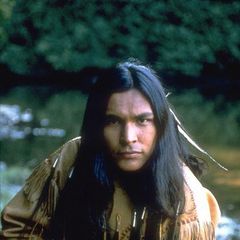
So tell me, what observations have you had about these things — i.e., physcial fitness, strength of mind, spiritual awareness?  Have you made any observations about these things?  For instance, I workout almost everyday (about 6 days a week usually), and I notice little things, like my strength increasing, despite the tendency of the body to keep getting older every day.  At present I’m here in Florida at my church where I’m hoping to attain better awareness of myself as a spiritual being, etc.  What about you?  Do you have any experiences that you’d like to share with me and others?  I’d love to hear what you have to say about this.  Oh, and while I’m at it, isn’t Adam Beach dreamy?

So come on in and let’s talk.  I’d love to hear from you.  And don’t forget, if you haven’t already done so, to purchase a copy of THE LAST WARRIOR today.  Just click on the link below.

Survival — Native American Style

Good Morning!

I hope that you had a wonderful holiday weekend.  It was a beautiful weekend here — although I must admit that I am away from home at present and am here in Florida doing a course that is the equivalent of a year of college.  And so I spent my entire weekend inside and studying.

But how about you?  Did any of you do any camping?  You know, I listen to talk radio and it seems to me that with the instability of our marketplace right now and with food prices on a steady up trend, perhaps this isn’t such a bad subject to be talking about right now.  Now, I was going to talk about the 3rd most important thing when it comes to survival, having already discussed food and shelter — and that is clothing, but instead of that, since our economy seems unstable right now, and since food prices are ever rising, I thought we might take a moment to talk about another sort of survival tactic — one that might be more appropro to today’s situation in the world — prepareness.

Thought I might as well get this picture shown right from the start and get it out of the way, since I love it so much.  I never get tired of looking at it.  Deep sigh…

Okay, in the old days, the Indians lived off the land and rarely starved.  It wasn’t until reservation days that starvation became a real threat.  Before that time, the Indians knew what plants to look for and where to look, what animals to kill, how to kill them for food, how to jerky the meat and how to survive and live off the land.  In truth, before the last World War, most Americas were living on farms and so the Depression (I never call it the Great Depression, as I think of Great things as good things) — but the collaspe of the economy during the Depression — bad as it was, wasn’t as bad as it might be in our future because most people still lived on farms back then and knew how to grow their own food.  So, as I used to learn in the Girl Scouts, let me ask you this.  How prepared are you for a collapse are you?

Heaven forbid it ever happen.  But as my mother used to say, “You prepare for the worst and enjoy those things you stored when it doesn’t happen.”  So let’s go over a few things that might come in handy to have, just in case, okay?

1)  Food — do you have a minimum of a 1 year supply for all members of your family on hand.  These are storeable items like grains, dried fruits, canned organic veggies, nuts, baking soda, fish-liver oil, baking powder, and anything else that you can thing of to store — meat, etc.  Get them for long storage — again that’s minimum 1 year supply for every member of your family and any member of your family that in a catastrophe might come home.  : )

2)  Medical supplies.  You can’t have enough medical supplies.  Bandages, bandaids, aspirin, alcohol, hydrogen peroxide, and any other medicine that you need.  For me, because I don’t take drugs, this means a year’s supply minimum of vitamins and minerals, as well as any herbs needed for medical emergencies.  And remember this is a 1 year supply for every member of your family — and those who might join you later on.

3)  Seeds — organic seeds, if you please.  The reason for heirloom, organic seeds is that the new Monsanto seeds and evern the more common hybrid seeds don’t produce seeds for replanting — and keeping seeds from year to year is vital.  Even is you live in the city, you can start a garden of some kind.  My husband and I live in the city and instead of growing a lawn, we are now growing a garden.  We are learning also that one needs to LEARN how to garden and how to keep out pests.  So far squirrels and rabbits are benefitting from our new garden.  : )

4)  An herb garden is pretty essential.  From an herb garden you can obtain many medicinal plants — like  Echinacea and Goldenseal, as well as Oregano, sage and other herbs.  And again, even if you live on the city, you can probably start a garden on the roof or on a window seal.  You might even be able to make friends with local farmers who might be able to help you through a tough time, but I would advise you to plant as much as you can for yourself and for your family.


5)  Protection.

Now, while it might be fun to have these two men riding protection for you, probably it is a good idea to have a rifle or a gun of some kind as a form of self and family protection.  Personally, I think our Founding Fathers were right in guaranteeing us the right to bear arms.  Criminals and vandals will always find a way to get guns, while the honest citizen is left unprotected and defenseless.  My huband and I belong to Frontsight, a shooting organization that teaches you not only self-protection and makes sure that you know how to place a good shot, but teaches you when to make that shot and when not to.  But not only is protection important in emergencies — to protect the lives of your family and yourself — guns are important in keeping pests like rabbits and squirrels away from your garden — guns can also bring in fresh game in case of a food shortage.  If you don’t like guns and will absolutely not have one in your household, then I would advise you to learn self-defense — hand-to-hand — and to learn to use a bow and arrow for hunting.

Okay, let’s see.  What have I left out?  There’s something that’s important that I’m not thinking of here.

Oh, yes, a subject that is dear to the pocketbook:

6)  Some sort of cash.  Now what do I mean by cash?  Some say silver or gold with lead to protect that silver or gold.  : )  Some say to invest in the Euro — just in case the dollar falls.  I will say right here and right now that this is not an area that I know much about.  And if there is some kind of castastrophe — heaven forbid — or martial law — double heaven forbid — what might people use as money?  Barter?  Gold?  Silver?  Your guess is as good as mine.  All I know is that you might want to have something on hand to barter with.

Well, now that’s all I can think of right now.  You might be able to think of other things that one might to do be prepared.  In the old days — the days of my grandparents, all families had either a full year’s supply of food on hand and/or a victory garden.  When I was growing up, almost all of my neighbors  had gardens of one kind or another — chicken coops, etc.

How about you?  Can you think of something I’ve forgotten here in order to be prepared for any sort of economical or other kind of emergency?  Do you remember the victory gardens?  Families with supplies of food on hand, just in case?  Or were you a Girl Scout and taught to always be prepared?

I’m not wishing for  this — I hope a cause for this never happens — but just in case…

And don’t forget, please visit Amazon books where you can buy my latest book, THE LAST WARRIOR. 

So come on in and let’s talk about survival.

    Click on picture to buy the book.

Survivalists — Native American Style

Good Day!

Isn’t this the best site?  So much talent from my fellow fillies and so much terrific information.  I’m always amazed at the learned quality of the posts.  Aren’t you?

After quite a break from the Native Style survival stories, I hope you’re ready to continue.  Just to recap, so far we’ve discussed the quest for food.  What kinds of food you might find in different regions of the country, how to find it and the necessary means of transportation to find food.  One more comment I’d like to make before we head into shelters and how easy they are to make:  I think TV has given people the wrong idea of survival.  On TV you see people competing one with the other to “win.”  It’s a tooth-and-claw type of survival.  Now this kind of “survival” to the Native American is pure folly.  None survive well alone.  It is a team activity.  Or one might say a family or a tribe activity.  And survival doesn’t mean bare minimum.  Optimum survival means food aplenty, a good warm place to put up one’s feet, the warmth of companionship, soft clothes that look good and feel good (or lack of clothes depending upon your environment), and happiness.  That’s real survival.  Not this struggle that one commonly sees on TV nowadays.

So, that said, let’s have a look at shelters.  The most important things if one were to suddenly find himself lost from civilization — or in the event of some catastrophe, are food, clothing and shelter.  Without these, man cannot live.  Therefore, they are the barest minimum.  And shelters — nice, wonderful, homey shelters aren’t that hard to build and set up.  Do you remember your camping days and how cozy and warm were your tents?

Well, suppose you didn’t have time to grab your tent.  What then?  Well, here are some suggestions straight from Native America.  The first important thing is…?  Location, location, location.  A good Real Estate maxim. 

Now, it’s a good idea to find a dry and protected spot, one that is close to a supply of water and fuel (wood or something else to burn).  And if one is being hunted by another or other’s or if one is simply alone, another feature you might consider would be to find a place that is secluded, one that is hard for the casual eye to see.  Such things as a hollowed-out tree, a cave, a rock that allows only a casual view.  As Charles A Eastman put it in his book, INDIAN SCOUT CRAFT AND LORE:

“…The first essentials are water and fuel; next comes sanitation and drainage, protection from the elements and from ready discovery by possible fores; finally, beauty of situation.

If you are in the woods, the shelter you will probably want to construct is a lean-to.  Here’s yet another section from Charles A. Eastman’s book, INDIAN SCOUT CRAFT AND LORE. 

“…Find two trees the right distance apart and connect them by poles laid upon the forks of each at a height of about eight feet.  This forms the support of your lean-to.  Against this horizontal bar place small poles close together, driving their ends in the ground, and forming an angle with about the slant of an ordinary roof.  You can close in both sides, or not, as you choose.  If you leave one open, build your fire opposite the entrance, thus making a cheerful and airy ‘open-face camp.’  Thatch from the ground up with overlapping rows of flat and thick evergreen boughs, and spread several layers of the same for a springy and fragrant bed.”

Note that this requires very few tools save perhaps a hatchet or a strong knive to make the poles.

The coziness of the tepee was often commented upon by travelers in the old west.  The structures were clean, warm, hospitable, with plenty of room for family and possessions.  But more of that in another post.  For now, let’s look at another kind of shelter, the dome-shapped ‘wickiup.’  Again from Charles A. Eastman, INDIAN SCOUT CRAFT AND LORE:

“…The dome-shaped wigwam or ‘wickiup’ is made in a few minutes almost anywhere by sticking into the ground in a circle a sufficient number of limber poles, such as willow wands, to make it the size you need.  Each pair of opposites is bent forward until they meet, and the ends interlocked and tied firmly.  Use any convenient material for the covering; an extra blanket will do.” 

Again, you would cover it with whatever was available in the area you are in.

Okay you knew I was going to slip this photo in here somwhere, didn’t you?  How could I resist?  Are you, like me, sighing?…  Well, continuing on, let’s touch on the traditional tepee.  If you ever have the chance to go to a pow-wow in Indian Country, you might be able to catch the tepee raising race at the rodeo.  Amazingly, these people set up tepees in a matter of a few minutes — quite spectacular to see.  But here are the basics.  Again, from Charles A. Eastman, INDIAN SCOUT CRAFT AND LORE:

“The skeleton of the conical teepee is made by tying three poles together near the top, and, when raised, separating them to form a tripod.  Against this place in a circle as many poles as you think necessary to support your outer covering of cloth or thatch, usually twelve to fifteen.  If of canvas, the covering is tied to a pole and then raised and wrapped about the framework and secured with wooden pins to within about three feet of the ground.  This space is left for the entrance and covered by a movable door, which may be merely a small blanket.  If you have nothing better, a quantity of dry grass will make you a warm bed.”

Finally, although we may have covered this already when we were discussing fires, small fires are best.  Again, from Charles A. Eastman, “It is best in camping to build small fires.  This rule is observed by all Indians.  Smoke may be seen at a great distance, especially on a clear day, and may be scented by the ordinary Indian (or other person) a long way off, if the wind is right.  Only in cold weather or for special purposes does the Indian indulge in a huge fire, and in no case does he ever leave it without seeing that it is entirely extinguished.”

Well, that’s it for today’s Native American lesson.  What about you?  Do you have a favorite camping story?  Campfire tales?  Cozy-warm tents that you remember?  For me, I remember camping in Vermont.  We had forgotten how important it was to set up camp so that one was protected from water.  We awoke to find water all over the floor of our tent, once the rain had really settled in.

That was that.  There we were in the middle of the night, digging trenches around our tent.  Do you have a story?  If so, I’d love to hear from you today.  So come on in and let’s chat.

The Last Warrior & Black Eagle

Howdy!  This just in.  Just received the new blurb for my next book, BLACK EAGLE, from my publisher.  The book, which is due out in May of 2009, is in production with my publisher.  So since this is just in, I  thought I might take a break this week from the survivalists lessons to do some unashamed promotion.  Please bear with me.  So without further ado, here’s a little of what’s going on in my writing life.  First I thought we’d take a look at the book that I have out on the stands right now, THE LAST WARRIOR  — and then have a look at the blurb for the book due out next year, BLACK EAGLE.

Many centuries ago, a village killed the children of the Thunder God.  For their crime, the Creature bannished them to live a half existence in the land of mists, neither dead nor alive.”

 
But once in a generation, a brave is given the opportunity to save his clan.

In 1892, that warrior is Black Lion

There was only one way for Black Lion to melt the Thunder God’s anger; listen for a sacred white-man’s song — and sing it perfectly with the one who introduced him to it. He joins Buffalo Bill’s Wild West Show and travels to London, where he encounters the daughter of two opera singers — the most beautiful woman he’s ever seen. However, Suzette Joselyn is already engaged to another man…

But the two are destined to meet again when Suzette shows up in America, pregnant and abandoned by her fiance. Reunited with Black Lion she finds it impossible to turn down his offer of marriage to save her child from life as a bastard. But she doesn’t realize that her brave new husband is consumed with a mission that may force him to choose between his people and the woman he loves…

Praise for Karen Kay’s books:

“Enchanting…will capture your attention quickly and never let go!” — Huntress Reviews

“A tour de force Native American romance.” — Romantic Times

“Mesmerizing…(Karen Kay’s stories) sooth the soul, mend the heart, make us sing. Savor every word.” — The Old Book Barn Gazette

“You won’t forget this book, and you won’t forget this love.” — Ivy Quill Reviews

“Karen Kay has a beautiful way of thrusting the world wide open to your senses.” — The Literary Times

“Karen Kay goes ‘beyond the typical Indian romance.’ It’s depth is immensely gratifying.” — Romance Times

“Her words so deeply touch the heart…Unbelieveably beautiful.” — Fresh Fiction

And now here’s the blurb for the next book:

Black Eagle

A Warriors of the Iroquois Novel


Karen Kay

Author of The Last Warrior


“Karen Kay’s passion for Native American lore shines through.”—Publishers Weekly


With the English and French at each other’s throats for control of the North American Continent, the battle lines have been drawn, changing forever the fate of one Mohawk warrior and a desperate woman on the run.


After Marisa Rathburn overhears her uncle’s plot to destroy a Dutch town for his own gain, she threatens to expose him—forcing her to run for her life. Braving the war outside rather than the more dangerous one at home, she accepts an invitation north to visit a friend.


Mesmerized by her beauty, a Mohawk warrior named Black Eagle volunteers to act as her eyes through the wild forests of New England—only he soon senses an unexpected danger, and that Marisa may not be all that she appears.


Caught in the crossfire of war, and with a deadly assassin hot on their trails, Marisa and Black Eagle discover that trusting each other is the only way to outrun the enemy—and that love may be the only way to survive.


Praise for the novels of Karen Kay


“Captures the heart and soul of the American Indian.”—The Best Reviews

“A beautiful way of thrusting the world wide open to your senses.”—The Literary TimesPraise for THE LAST WARRIOR


“Kay creates an ideal finish to her fascinating series!”—Romantic Times


The Last Warrior is a not to be missed story in the tales of the tribes living in the land of the mists. Karen Kay has penned another winner.”—Cata Romance


“Karen Kay has gifted us with a beautiful conclusion to an enchanting series. Every Karen Kay novel leaves me wanting more and The Last Warrior is no exception. Take this journey of the heart. You’ll be glad you did.”—Fresh Fiction


Praise for RED HAWK’S WOMAN


“I would love to be Red Hawk’s Woman…This is a great rainy weather book. Grab a cup of chocolate and cuddle up.”—Fallen Angel Reviews


“[Karen Kay] hooks readers with a paranormal element but also delivers a solid Native American romance that’s everything fans of the genre want.”—Romantic Times (4 Stars)


“Karen Kay has created a gripping story that reaches through time…Red Hawk’s Woman is Native American writing that will leave you wanting more.”—Cata Romance


Red Hawk’s Woman is a tenderly told tale of adventure, of honor, of forgiveness. It’s also a story of love, survival, and peace. This heartfelt story is the latest gift from Karen Kay, who never disappoints her readers. It’s a treasure not to be missed.”—The Best Reviews


Praise for THE SPIRIT OF THE WOLF


“Kay blends legend and fact into a beautiful love story. Delving into Native American customs and mores with sensitivity, compassion and a true understanding of the people, she enhances a magical, passionate plot with historical detail and just a touch of magic.”—Romantic Times (4 Stars)


More praise for Karen Kay


 “An exciting historical romance.”—Midwest Book Review


“Kay blends legend and fact into a beautiful love story…She enhances a magical, passionate plot with historical detail and just a touch of magic.”—Romantic Times


“Enchanting…will capture your attention quickly and never let go!”—Huntress Reviews


 “Karen Kay writes with such strong passion that it hooks her readers.”—BookBrowser


“Her words so deeply touch the heart…Unbelievably beautiful.”—Fresh Fiction


“You won’t forget this book, and you won’t forget this love.”—Ivy Quill Reviews


“A treasure not to be missed.”—The Best Reviews

Don’t forget that I’ll be  blogging  two weeks from now —  Tuesday, as well, when I hope to continue Native American Survival Lessons.  And lest we forget, contrary to popular TV shows, Native American Survival is a group activity.  None survives alone.  Even the lowest life forms depend on other life for their existence.  To make it seem different is to make it all the more difficult for you to survive, and to survive well and flourish.  Well, that’s it for now.  Thank you for bearing with me.

I’d love to hear what you think of the new back blurb for BLACK EAGLE.  I didn’t write it, but I think it’s good.  What do you think?

So come on in and let’s chat, about this or other things, as well. 

Survivalists — Fire without Matches

Good Morning!

In an ongoing series on survival, Native American style, I thought we would have another look at food.  As you know there are three things that are needed for basic survival.  Those are, food, clothing and shelter.

In my last few blogs, we’ve been discussing the first requirement of survival, food.  So far we’ve looked at where to find food, what kinds of food can you find and the fact that one needs to have freedom of movement in order to find food.  Today let’s have another look at another important part of food — fire.  Fire is needed for cooking of course, but as you know, in a survival situation, it is also needed for warmth.  Fire can also be a very needed element in keeping safe — i.e. fighting off animal like wolves.  I’m not so certain fires might keep bears away, but I loved this picture.

But how to make fire without matches.  Unless you are very well prepared, you might find yourself without matches.  I may not be able to teach you to start a fire in this article, but we can go over it a bit.  Now, most Indian tribes used the drill and twisted it by hand or with their bow, the string of the bow wrapped around the drill or wood made into a rod.

The rod would fit into a socket in a piece of wood.  Placed beneath this was some tinder that could easily catch fire.  The bow was held at right angles and was twisted, producing friction.  The motion also would pulverize the small particles of wood, which are there to catch fire.  The tinder would eventually begin to glow, meaning that it was ready to produce fire.  Of course there was a very human element involved in making fire.  If the bow wasn’t kept at an utter right angle with the wood, it would often slip, frustrating the person making the fire.  However, with practice, most Indians could start a fire within minutes.   You also have to understand that I have to get in this photo somewhere in my post.  Handsome, handsome Adam Beach.

Now once the wood was ready to ignite, it was important to add oxygen, thus one blew on the embers, putting dried grass or moss on the fire in order to get it to ignite.  Needless to say, the type of timber that one used was very important, also.  However, this isn’t the only way to make fire.

Late at night, one might not be able to find the exact tools needed to make a fire in the way mentioned above.  There was also the stone method.  This requires two needed things, which one should carry at all times:  1) flint — 2) lump or crystal with iron pyrites.  This kind of stone is available all over the US.  All that is needed to create fire with this method is striking the stones together.  Sparks will fly and one should have dried grass or dried moss available to catch those sparks, and by adding oxygen (blowing on the sparks) one can create fire.

OF course there are other ways of creating fire — one of the best is lightning.  But one doesn’t always have that available on a cold, snowy night.  It takes a great deal of practice, but it’s a skill that might become handy at some time or place.  The Boy Scouts and the Girl Scouts used to teach this skill and perhaps they still do.  It’s a skill worth practicing — even if you don’t see the use of it right now.  As the boy scout motto goes:  “Be prepared.”

I should also note that the Indian kept his fires small and as smokeless as possible.  He also scattered his ashes the next morning so as to prevent others from seeing exactly where he had been and what he was doing.  It was a safety precaution. 

By the time this is posted, I will most likely be on the road, and so while I might not be able to join in the discussion, I’d love to hear your camping stories.  Has anyone ever had to make a fire by hand?  And if you have, how did you do it?  I’d also like to hear other camping stories.  There was a time when being without a hair dryer was “camping” for me.  So come on in and chat.  And if you haven’t already picked up a copy of THE LAST WARRIOR, I would like to invite you to do so.  It is on sale at bookstores everywhere.


Survival — Native American Style

Good Morning!

Welcome!  Welcome!  Today in a continuing saga of survival tactics, I though we might have a look at another basic part of survival.  As you may know, the three main items a person needs to survive are food, clothing and shelter.  Last week we talked a little about food and if you were ever in a position of needing to survive on your own, what might you do.

In the book THE ANGEL AND THE WARRIOR, THE SPIRIT OF THE WOLF, RED HAWK’S WOMAN and THE LAST WARRIOR, the hero and heroine are thrown into situations where they must survive together in order to survive at all.  Actually in my new book BLACK EAGLE (due out in May of 2009), again the hero and heroine must fall back on survival techniques.  Luckily the heroine is with a Native American man who has been trained all his life on these same kinds of survival techniques.

This week I was going to talk about shelters, but before we go into the different kinds of shelters and how easy they are to build, let’s talk about one other necessity in the quest for survival — freedom of movement — or this might translate into modes of transportation.  This is an extention of the quest for food, since transportation is very important in the search for something edible to eat.  Getting around is very important.  In the East, Indians often used dug out canoes, because the area was littered with lakes and streams.  There was also traversing by foot, the preferred method of transportation used by scouts of most all tribes. (This is because scouting work must by its very nature be covert — one must not be discovered — and the only way to ensure that is to travel by foot.)

Horses in the East were a nuisance due to the fact that they could be easily tracked and in truth couldn’t travel as far as a man.  But horses came into their own in the West, where an Indian just wasn’t an Indian unless he was on horseback.  But I digress.  We’re talking about survival.  In the East, Native women often went out in groups and traveled over the countryside in search of roots, sap from maple trees, as well as pecans and other nuts.  They walked and were accompanied by at least one man who would act as their guard.  Men often took off on the hunt on foot.  The reason again is because game can hear and see and sense in other ways a horse.  The best way to be a successful hunter was to procure one’s game on foot.

But that was in the East.  In the West the best way to obtain food, since great distances were sometimes to be traversed, was to ride.  The warrior rode out to the buffalo hunt, he rode out to meet the enemy, he rode to new parts of the country, ever in search of trade and/or food.  There was even a saying amongst the tribes that a man without a horse was a sorry sight.  Indeed, a good friend of mine, who grew up in the wilds of Montana toward the first part of the last century once said that once when he had fallen off his horse, he was questioned by his parents not about how he was, but had he damaged the horse.  (True story.) 

Let’s not forget our northern regions, either.  In upper state New York, Vermont, New Hamphsire and all along the Canadian border, snowshoes were used as a mode of transportation.  They were also used out west in Montana, Idaho and North Dakota.  It does appear that man is ingenius in his inventions in the quest for survival.  Indeed, his cleverness may be a survival technique all of its own.

I know, I know, I’ve used this picture in this post already, but it’s quite something isn’t it?  Off topic,  here but Grandfather George, who lives with us, is a Native actor and has met this young man.  Deep sigh…  Okay, back on topic.  Transportation and freedom of movement is important to one’s survival.  One of the main problems that the Indians had that created such hard times for them in the early part of reservation life was not being able to leave the reservation to hunt and to obtain food.  They lacked freedom of movement.  Even today, where would we be without the car or bicycle to get us to the store?

  • I guess the main thing to remember in the quest for food is that so long as one can walk, one can gather food, go and buy it or in general find it.   But while we’re on the subject of modes of transportation, tell me, what is your favorite?  What do you like best? Airplane?  Car?  Horseback?  Travois?  Rollerskate?  So again welcome, welcome.  Come on in an let’s talk.


Survivalists — Native American Style

Good Morning!

Would you be able to survive in the forest, or out on the prairie on your own, completely away from a supermaket?  We are so conditioned in this society to the supermarket as our source of food that many of us might think that food comes from the supermarket, (especially if you live in the city and off the farm).  So I thought it might be nice to begin a series on basic survival, Native American style.

 I still remember when I was on the Blackfeet reservation about 5-6 years ago a conversation I had with an elder of the tribe.  He told me that one could still live off the land.  I also remember being very interested in how this might be done, although I didn’t ask him about it at the time.  But as time went on I became interested more and more in how exactly one could survive on your own, completely apart from others and especially completely apart from the IGA or Albertson’s.

Let’s begin with the search for food.  One of my very dear friends (who is Blackfeet) was always tasting berries and such when she came to visit me here locally in California.  When I discovered this, I was concerned as there are many poisonous plants here in southern Cal.  But she instructed me on the fact that there is no plant that is sweet in Nature that is poisonous.  Medicine men or women would often taste the plants to learn if they were okay to eat or not.  Poisonous plants or berries tend to taste bitter.  But if something is sweet, it is generally good to eat.  Did you know that?  I certainly hadn’t up until that time.

Roots, nuts, mushrooms, berries, turbers, bark on trees can be eaten.  In the old days, women often went out in groups in each season and gathered what they needed.  It was a sort of holiday for them.  But if one is thrust into a survival situation, here are the things to look for.   Watch the birds.  If it were me, I’d watch the birds and eat whatever they ate.  I might leave the mushrooms alone because I am not an expert in this and some are so poisonous and the death from them is so painful, that I would tend to leave them alone.  Look for foods that you know:  plums, blackberries, raspberries, stawberries, huckleberries, blueberries, chockcherries.  There are also nuts like the walnut, pecan.  Even the acorn can be eaten, but careful on this.  One must prepare the acorn.  They should never be eaten raw.  They should be dried in the sun, the shells cracked off and the inner “meat” separated.  They are then ground info flour and washed so that the water can be drained off them.  They are then washed until the water runs clear and the yellow stain disappears.  They can then be made into bread or porriage.

Roots were often eaten and if a man were starving and couldn’t find any other food, the inner bark of trees could be eaten.  Those of the slippery elm, birch, basswood, white oak, sassafras, striped maple.  I have known horses to survive the winter eating the inner bark of the cottonwood tree.  Even squirrels nests can be robbed of their nuts. 

 As far as greens go, I really think you need to know what you are looking for — the wild mustard, clover, watercress are all edible — but would you know what they looked like?  There are also the fish of the waters, the rabbits, ducks, even squirrels and birds can be eaten.  Preparing them to eat is another thing altogether, which often times requires fire.  Fire.  In my next blog, I thought we might discuss how to make a fire if you are unprepared and have no matches.

Survival, in uncertain conditions.  Sometime it might be important.  Hopefully not, but it never hurts to be prepared.  Have you ever been in a situation where you needed to know how to live off the land?  Has anyone that you know ever had to survive in hard times?  What did they do?  What would you do?

Come on in and let’s talk about it.  And don’t forget, there are two books that I have out on the stands right now, THE LAST WARRIOR and RED HAWK‘S WOMAN.  Buy your copy today!

The World According to Native America

Good Morning!

What a thing to wake up to — the World According to Native America.  Well, I’m not really going to try to describe all of Native American beliefs since this is supposed to be a short post.  However, there are a few things that we might discuss.

Beliefs.  I think these are important to all people.  And I’d love to share with you some Native American beliefs and then I’d love for you to share some of yours with me.  All peoples of the world share certain things in common.  We all want the best for ourselves and our children and families and most people of the world share beliefs about the Creation of the World.  There is probably no culture on earth that does not believe in some aspect of a greater force that created the world and us, and even those in science nowadays rave on and on about their lack of “belief,” which is, if you really look at it, just another opinion about the way life was created.  So even they have a theory.

Now, mind you, I haven’t studied all of the Native American tribes and so I can’t tell you one for one the beliefs, but I can tell you this.  One for one, each tribe that I have studied (the Blackfeet, the Lakota Sioux, the Cheyenne, the Crow, the Iroquois) all believe in a Creator of the Universe.  There are other beings who have super powers, it’s true, but there is only one Creator, who does not take the part of any one tribe, since He loves all his creatures.  Thus, in order to get a “foot up” on one’s opponents, one looked to other things in the environment to help him do well in battle, or marry the right girl or win that foot race.  These environment beings were anything, any creature on the face of the earth who would be willing to give its power to the person so asking.  Many Native Americans called these creatures their spirit helpers.  It could be an animal, a tree, a rock, lightning, a storm, the wind.  Any force of nature that was willing to hear the pleas of the person so asking, would do.

Native America was filled with wonders and mysteries.  To the Native American of the past, there was no need to look for anything outside one’s “backyard,” since one’s backyard contained so many things of beauty and mystery.  Also, men often ranged hundreds, even thousands of miles from home.  Sometimes in search of game, but sometimes in search of other peoples.  A young boy, and in the Iroquois tribe, the women, too, would often fast and go up into a high place in order to ask the spirits or animals or other helpers to take pity on them and help them along on their path in life.  They would fast and would try to communicate with the forces of nature.  It was commonplace in those long ago days that some people could talk directly to animals and could understand them completely.  These dreams would then forge the path for the person who had the dream. 

Many Native Americans never asked God for anything in their lives.  They often believed that God (or the Creator) had made the world perfect.  There was something to fight every disease, nourish every body, build every house.  There was no reason to ask for anything else.  If one wanted to appeal for help, again, one went into the moutains and asked one’s spirit helper for aid.  And most often, that aid was given at once. 

Well that’s all for today!  I’d love to hear what you think of some of these beliefs.  No one expects one to adhere to another’s beliefs, I think the only important thing is to oneself have something that one does believe in.  There are so many different ways to look at the world, and so many different ways to think about things, that it is my opinion that the only wise thing to do is to grant to others the right to think for themselves and to believe as they see fit.  There have been more wars and more murder and killings over “beliefs” than I like to think about, so to my mind it is a good arena to stay out of.  I do believe that our Founding Fathers were right when they placed into our Bill of Rights that Congress shall make no laws respecting religion, etc.  What a great idea and at the time it was written, it was a completely new idea for that time and place.  I still think it is wise.

Therefore, I’d love to hear what you think about this, and your own beliefs.  So come on in and let’s chat.  Now mind you, I don’t have regular computer access right now and so I can only check email once a day at the library.  So bear with me — and ifyou haven’t already gotten your copy of THE LAST WARRIOR, please rush on out and get it.  Till next time.


WIRELESS COM — Native American Style (1700-1800’s)

horseheader1.jpeGood Morning!

Wireless Com in the 1700-1800’s?  Am I crazy?   Now, while it’s true that I’m under a terrific deadline right now (75 more pages or thereabouts to write in a week), but hopefully I’m not crazy yet.  The above statement is true, however, if a little bit overstated.  Long ago, American Indians had a very efficient and wireless manner in which to communicate.  Would you like to have a look at how it was done?  Hopefully by the time you read this post, you’ll be able to “talk” in the same way.

morning1b.jpgLong ago the American Indian needed a way in which to communicate at long distances.  Alerts needed to be sent, messages about where was the game, enemies seen, etc.  These all needed to be communicated in an efficient manner.   How was it done?  Let’s have a look.  The most common methods in use were with blanket signals, smoke and mirrors.  There was also an entire system in use called marking a trail so that others who knew the signals could follow your trail.  You could also tell where the game was, or where the enemy was, how many there were, where they were located, as well as where you had gone and when and many, many other thing.  In the woods this was done by marking trees.  On the prairie it was done with piling up stones into certain images.

chandler-seated.jpgA blanket rolled up tightly or clothing rolled up was used when people were within sight of you.  If you stand with the arms outstretched so as to form the letter “T”, that is a danger signal.  If the person so signaling runs back and forth, it is the sign that the danger is approaching and if in addition to this the blanket is thrown horizontally, it means a rescue must be done.  If game has been sighted, the scout runs back and forth — and means it’s a small herd.  If the scout runs around in a circle, thowing his blanket in the air, it means it is a large herd.  If a scout were to run to and fro with the blanket trailing behind him, it meant bad news coming.  If the blanket were held over the head, it meant something important was coming from a distance.

tjay1.jpgAnyone who’s watched old Westerns knows about smoke signals.  These carried over very long distances and the codes varied depending on the tribe.  (You wouldn’t want your enemy knowing your own special code.)  These were often used by war parties, announcing their news, giving their news — how many scalps or horses taken, etc.  A drum was another devise used within the community.  And when the white man came, the mirror became a tool for long distance communication.  One long flash is the signal for attention, and as soon as you receive an answer back, you then transmit your message.  One short flash means that game is in sight.  Two short flashese means the enemy is in sight.  Two short flashes followed by one long one is a call for rescue.  Two short flashes and one long followed by two more short flashes means the danger is over.  Four short flashes means a metting with a stranger or new from a distance.

adam-beach.jpgBut what about meeting another tribe.   Don’t you love this picture?  There were so many different languages in use in America, how did the tribes communicate with each other?   This is where we come into one of my favorite subjects.  In fact, in my very first book, LAKOTA SURRENDER, both heroine and hero communicate with the language of gestures.  Okay, so how was it done?  First a few rules:  Adjectives follow nouns, conjunctions and prepositions are omitted, and verbs are used in the present tense only.  Intricate communicates were carried on in this fashion, but here’s a few to get you started.

Attention or Question:  Hold right hand, palm outward, fingers and thumb separated, well out in front of boddy at height of shoulder.  Some tribes rotated the hand.  This is used to begin conversations.

I understand:  Throw right forearm out in front of body with fingers closed, except index finger, which is curved and drawn back.  This indicates that you grasp and draw something toward you, and is used occasionally while another is talking.  If you don’t understand, use the Question sign.

I:  Touch breast with index finger of right hand.

You:  Point to whomever you are talking to.

Glad:  (Sunshine in heart).  Place compressed right hand, fingers slightly curved, over region of heart; bring left hand, palm downward, in sweeping curve to left of body, at the same time turning it palm upward, as if turning up or unfolding something.  The expression of the face should correspond.

Love:  Corss both arms over bosom.

Good:  (Level with heart.)  Hold extended right hand, back up, close to region of heart; move briskly forward and to right.

Bad:  (Throw away.)  Hold one of both hands, closed, in front of body, backs upward; open with a snap at the same time moving them outward and downward.

Sad:  Place the closed fist against the heart.  Appropriate facial expression.

Surprised:  Cover mouth with palm of right hand, open eyes widely, and move head slightly backward.

Angry:  (Mind twisted.)  Place closed right fist against forehead and twist from right to left.

House: Interlock fingers of both hands, holding them at right angles.

Sleep:  Incline head to right and rest cheek on right palm.  For going into camp, or to indicate the length of a journey, make sign for Sleep and hold up as many fingers as nights were spent on the way.

Woman:  (Long hair.)  Bring both palms down sides of head, shoulders, and bosom, with sweeping gesture.

Man:  Hold right hand closed except for the index finger.  Hold index finger up about stomach level with an upward sweep.  (I’ll let you determine what this one means.)  : )

Beautiful:  Hold palms up like mirror in front of face; make sign for Good.

Liar:  (Forked tongue.)  Bring separated first and second fingers of right hand close to lips.

It is finished:  Bring closed hands in front of body, thumbs up, second joints touching; then separate.  This sign ends a speech or conversation.

 Okay, are you ready?  Make the sign for “I love you.”  Got it?  Okay.  Now make the sign for “I am sleepy.”  And how about “You are beautiful.”  Or how about “I love my man.”  or “I love my woman.”  Can you make the sign for “I’m sleepy?”  Or how about “It’s in the house.”  Alright, here’s an easy one.  Make the sign for good, and at the same time say either “Waste'” (Lakota for good) or Soka-pii (Blackfeet for good).  Or how about “You have surprised me.”

Like I said, long intricate conversations could be carried on in this manner and often the hand signals would be so fast and so appreviated, that only he or she fully trained in the use of them could follow.

lastwarrior.jpgAgain this is a favorite subject of mine.  Now let me take a moment to remind you again that my latest book, THE LAST WARRIOR, is one the shelves.  Please, if you don’t already have a copy, go out and pick up a copy of the book today.  So come on into the forum section (just click on comments) and let me know what you think of the Native American Wireless Communication.   See you again in a couple of weeks!

NOTE: I used Charles A. Eastman’s book INDIAN SCOUT CRAFT AND LORE for this information.

Petticoats & Pistols