WAGES OF SIN by Valerie Hansen

My new motto is “Fearless and Faithful; Women Who Dare”. And dare I have – by releasing an ebook, WAGES OF SIN, a 94,000 word saga that was written for a very special lady – Me. Anyone who is published will identify with that claim.


It all started years back when, on one of our many trips all over the US, we happened to stop in New Mexico where local skirmishes dubbed the “Lincoln County War” took place. Talk about fascinating! Not only were the lines between sides blurred, the good guys and the bad guys were sometimes interchangeable, depending on which judge happened to be in power and how mad he was at various ranchers – and sheepmen. Gotta remember them. It was the murder of one of the sheep raisers that supposedly started the gunplay. Don’t let anybody tell you Tunstall was a cattleman and store owner. The guy started with sheep, so you know how popular that made him, no matter what else he tried to do later.


But I’m getting ahead of myself. First, we have to figure out how schoolteacher Ruby McKay is going to rescue her late sister Emma’s baby from the cruel husband who beat Emma to death, ostensibly the chastise her, shortly after she gave birth to their son. Even if pious, pompous Judge Caleb Stone had not purposely killed his young wife, what kind of a father will he be to the innocent babe? Ruby has experienced his cruelty firsthand and knows what she must do. She has friends who have promised to help her get out ofKansas, until she’s forced to shoot Caleb, maiming him and unwittingly branding herself as an escaping   criminal.

I like to think I would be as brave and resourceful as Ruby but being on the run with a newborn in the late 1870s is far different than simply fleeing as an individual. She’ll continue to need outside help and will get it from some very strange folks, like Billy the Kid and wealthy rancher John Chisum.

To quote part of the Author Disclaimer in the front of WAGES OF SIN, “… this is more gritty in tone and language than what you’re used to from Valerie Hansen. I had a strong reason for writing the story this way; I wanted to show that just because a person may be able to quote scripture like an orator, that does not mean that he is spiritual. In my view, one of the most heinous crimes possible is using the Bible for anything but good. Yet it happens. And, as in this story, “the wages of sin is death.” (Sometimes it just takes longer than we think it should.) Don’t worry, readers; remember, the rougher the road, the sweeter the arrival!”


Which brings me to the end of this visit. There is a long excerpt on Amazon that will give you a good idea about this ebook and it is my fondest wish that you will take the time to look it over.


I’ll be offering copies of WAGES OF SIN to two lucky readers who post here. It will be in the form of an Amazon email gift certificate

and delivered to be read on your computer or Kindle if the winner lives in theUSA. If a winner happens to live in another country, I’ll substitute one of my

previously published novels in paperback.


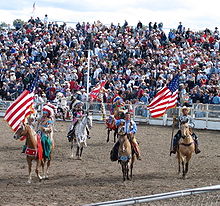
THE RODEO–by Celia Yeary


Even though I am a Native Texan, I”ve never attended a rodeo. Growing up in the western part of the state, I saw that many small towns had a rodeo arena. Those never looked appealing, because they were small, dusty, and open with wooden bleacher seats.

We live near San Antonio, and we follow the NBA basketball team, the San Antonio Spurs. During February, the team travels, playing all games on the road because the rodeo takes the convention halls and the arenas for two weeks. The Spurs call their away games the “Rodeo Road Show.”

During the weeks of the rodeo events, there are many family oriented events. This rodeo is a very big event in San Antonio. A few of the events are: Animal Adventures, Dairy Center, Horse Discovery, Little Buckaroo Farm, Food Sampling, Carnival, Cowboy Church, Petting Zoo, Wine Garden, Songwriters Front Porch, Commercial Exhibits, Bar-B-Que Cook Off, Boots and Shoots, Rodeo Ball…I cannot name all of the events. This list comprises about one-fifth of them. In addition, the convention center hosts concerts with big name country western stars.

The 1800s was a landmark period for the rodeo; the era of the American cowboy began. In the early 1820s the first Anglo-American settlers moved into Texas. As these settlers moved from East Texas to Central Texas to West Texas and other settlers moved to these areas from South Texas, a blending of the Anglo and Spanish-Mexican cultures occurred. With the Spanish-Mexican knowledge of riding, roping, herding, and branding available, events occurred that culminated in the Southwest cattle industry.

However, with the fencing of the open range in the late 1880s, the cattle industry changed to a more confining job for the range cowboy. When communities sprang up, social occasions, especially

Fourth of July celebrations, gave cowboys a chance to challenge the bronc riding and roping skills of cowboys from other ranches. Soon, local contests became annual events. By the 1890s, the rodeo had become a spectator event in the West, and an annual event in many places.

Many rodeo events were based on the tasks required by cattle ranching. The working cowboy developed skills to fit the needs of the terrain and climate of the American west, and there were many regional variations. The skills required to manage cattle and horses date back to the Spanish traditions of the vaquero.


Rodeo Man is a novella about a Dallas woman, Marla Ellington, who inherits an abandoned town in West Texas. She must live there one week to claim her inheritance. However, when she arrives, a cowboy sits on the porch of the dilapidated, abandoned honky-tonk, whittling and whistling to the tune of “Mamas, don”t let your babies grow up to be cowboys.”

Marla works in downtown Dallas in a bank. She knows nothing about cowboys or the rodeo. But this man on the porch–Cody Matheson–suddenly changes her life for he is a professional bull rider–among other things.

To learn more about the rodeo and a contestant, I watched numerous uTube videos complete with an announcer calling the ride. I decided to make Cody a bull rider instead of a bronc rider. Why a bull rider? I have no idea, except they looked very nice in their rodeo gear!

BLURB for Rodeo Man
Celia Yeary

Marla Ellington inherits an abandoned town on ranchland near Arrowhead, Texas. When she arrives to claim her property, and finds Cody Matheson sitting on the porch of the dilapidated honky-tonk, her temper flares hotter than her pistol. Anger blazing, she settles in for a showdown.

Cody’s only goal for the week is to

win the bull-riding event at the Saturday night rodeo. But when Marla receives an anonymous threat that forces her to leave town, Cody finds himself smack-dab in the middle of a mystery. ’Course, catching a criminal and lasting eight seconds on a bull are easy compared to winning the love of the feisty, strawberry-blonde beauty who wants nothing to do with him. Now it”s his turn for a showdown.

EXCERPT:

Cody turned to her, shaking his head. “Not a good spot for your bedroll. Not good at all.”

“Why not?”

“I saw mice droppings over here when I arrived.”

“Mice?” she squeaked.

“Yeah, I guess they come out over here.”

“Noooo,” she said with her hands on her cheeks. “Is that the truth?”

“Seems likely to me. That’s why I sleep back over there.” He motioned with his head.

“Then, where am I going to sleep?”

Cody looked behind her, and said, “Whoa! One just popped his little head out that hole.”

Goosebumps popped up on Marla’s arms and down her back. In one motion, she squealed, “Eeek!” sounding just like one of the mice again, turned, and slammed into Cody. He stood his ground while she literally climbed up his body, grasping his shirt, wrapping her legs around his hips, and moving on up to clasp her arms around his neck.

After only a few moments, she noticed that he hadn’t moved, except to lock his arms around her bottom and boost her a little higher. Leaning back, she looked into his face. He grinned like a Cheshire cat, or the one that got the cream, not unlike the roguish grin she’d seen earlier.

The man was dangerous.

“I’ll get down now,” she said, pursing her lips and looking away.

“Well…you’re gonna have to let go of my neck.”

When she did, he kept her escape in check by allowing her to slide down his body, unhurried, holding her close. When she stood toe-to-toe with him, she make the biggest mistake of her life. She looked up into his eyes.

“You sure are a little thing,” he whispered.

“I’m petite.”

“You’re short and compact,” he said low and sexy.

“I’m…will you stop it?”

“Haven’t done anything, yet.”

She raised one eyebrow in challenge. “Well?”

RODEO MAN-A Contemporary Western found at Amazon and B&N in ebook.

http://www.amazon.com/Rodeo-Man-ebook/dp/B00B14S4X4/ref=sr_1_21?s=books&ie=UTF8&qid=1358284697&sr=1-21&keywords=celia yeary

Note: I will give away an ebook copy of Rodeo Man, gifted through Amazon or B&N–or the pdf. Also, Rodeo Man is available for 99cents until February 11, when it reverts to $1.99. Please leave a comment to be entered for the drawing. Thank you!

Celia Yeary-Romance…and a little bit “o Texas

My Blog
My Website
My Facebook Page

Resources:
The Handbook of Texas On-Line
Wikipedia Commons
Wikipedia Free Encyclopedia
Rodeo Man-rereleased with Publishing By Rebecca J. Vickery

Happily-Editor-After with the Love Inspired Editors

Hi!  Elizabeth Mazer here.  I’m delighted to be at Petticoats and Pistols to let folks know about a fun new editor pitching opportunity! Shana Smith, Emily Rodmell and I—three editors for Love Inspired—are looking to fall in love with some new romances  for the Christian inspirational market. “Happily Editor After” is our planned online pitch session, designed to give writers a chance to make us fall in love with new, intriguing stories for the three Love Inspired lines: Love Inspired (contemporary inspirational romance); Love Inspired Suspense (contemporary inspirational romantic suspense); and of course, Love Inspired Historical (historical inspirational romance).

Details, guidelines, and instructions on how to sign up are all available at http://community.harlequin.com/showthread.php/1042-Happily-Editor-After (don’t just check it out, share the link with your friends!) so I’m not going to repeat that info here. Instead, I want to tell you just why we’re so excited about this pitch session, and why it’s such a terrific opportunity for new writers.

Every time an author pitches to me, I know she’s hoping that I’m going to tell her that her story

is exactly what I’m looking for. Here’s the chance to make that happen! With this pitch session, you don’t just sign up for a slot, you sign up for a specifically-selected editor. Think of it like online dating. Emily, Shana and I have posted our profiles—information on our backgrounds, our tastes, what we love, what aggravates us, and what we’re dying to see

in a story. Based on the profiles, you can pick the editor that you think is the perfect match for your manuscript—or you can see if our profiles trigger you with an idea for a new project that you could target directly to one of us! If you love to write the same things that one of us loves to read, then the editor/author match could truly be happily editor after for you and your story.

Not sure you’re ready to do an online pitch? That’s fine, too. Check out our profiles anyway! If you get a sense for our preferences and personalities now, then maybe it’ll help you decide who to query with a story idea down the road. But if you are interested in participating, please sign up as soon as you can, before all the slots are taken.

Got questions about Happily Editor After? Want to know more about Love Inspired? Looking for advice on which editor to pick? (Pick me, pick me! Come on, don’t I sound fun?) Ask away! I’ll be checking in throughout the day to respond to comments. Thanks to the lovely Renee for letting me share this opportunity. I hope to see lots of you in the chat room in May!

MAVERICKS by CAROLINE CLEMMONS

Are you old enough to remember

the old “Maverick” television series? Or, perhaps you saw the 1990’s movie based on the series? I loved the TV series (and James Garner!). Is it any wonder my books feature ranchers as heroes? ? To prove how much I love the West, I’m giving away an electronic copy of BRAZOS BRIDE to two people who comment today.

I have no idea where the surname Maverick came from, but have learned where the term “maverick” for cattle and wild humans originated. The term has come to mean independently minded or anyone who could not be trusted to remain one of his/her group.

Attorney Samuel A. Maverick helped lead Texas to independence and helped establish the Republic of Texas. In 1839, he was elected mayor of San Antonio. During the Mexican War, he had taken in four hundred cattle he didn’t want as settlement of a debt, and he had the cattle driven to a range in the Matagorda area. The cattle were marked with his MK brand, but Maverick did not brand the calves. Neighbors began referring to any unbranded calf as “one of Maverick’s” as early as 1857. Not until after the Civil War did the term spread into other parts of Texas and the rest of the West. Texas cowboys never called unbranded cattle by any other name.

When the Civil War broke out, Texans went off to fight (usually for the Confederacy) and their cattle ran wild. Men often returned to find their homes and ranches in shambles, their families near starvation, and their cattle living in brambles and canebrakes. While the humans hadn’t done too well, the cattle had thrived . . . and reproduced. According to my source, of the six million cattle roaming in post-Civil-War Texas, a million were unbranded. The cattle were wild, hardy, cantankerous, and able to survive on not much more than cholla, wild grass, damp air, and neglect.

Keep in mind, these are longhorns whose horns sometimes grew nine feet or more from tip to tip. Not an animal I’d ever want to have angry at me. Broke, hungry, desperate cowboys were willing to tackle these giant beasts that sometimes weighed from a thousand to fifteen hundred pounds. Ranches were founded on mavericks, and fortunes were established driving cattle to another market. Rounding up mavericks whose ownership may or may not have been uncertain was called “jacking mavericks,” and was accepted for a while. Later, the practice became illegal.

My current series, the Men of Stone Mountain, is a trilogy: BRAZOS BRIDE, HIGH STAKES BRIDE, and the upcoming BLUEBONNET BRIDE.

Hope Montoya knows someone is poisoning

her, but who? Rancher Micah Stone has been in love with Hope since the first time he saw her. When Hope proposes a paper marriage in exchange for land on the Brazos River and much needed cash, her offer rubs his pride raw.. He and Hope have to stay alive and discover the killer before they become victims in the deadly assaults.

To be entered into the drawing for a copy of BRAZOS BRIDE please remember to leave your email with your comment.
Thanks for stopping by!
~~~~~~~~~~~~~~~
Caroline Clemmons writes western historical and contemporary romances. Visit her personal blog here or her website here. Click here to order her book on Amazon.

Charlene Raddon & Chocolate: A Victorian Treat? Or More?


Today, chocolate is a universal sweet loved by virtually everyone, but how long has it really been around? The Victorians adored the hot drink, but did they invent it?

Actually, the first chocolate house in London opened in 1657, advertising the sale of “an excellent West India drink”. In 1689, a noted physician, Hans Sloane, developed a milk chocolate drink, which was initially used by apothecaries. Later Sloane’s recipe was sold to the Cadbury brothers. London chocolate houses became trendy meeting places for the elite London society that savored the new luxury.

But chocolate goes back much farther than the seventeenth century. The fermented, roasted, and ground beans of the Theobroma cacao (chocolate), can be traced to the Mokaya and other pre-Olmec people, with evidence of cacao beverages dating back to 1900 B.C.

The Maya are credited with creating a drink by mixing water, chile peppers, cornmeal, and ground cacao seeds. The Aztecs acquired the cacao seeds by trading with the Maya. For both cultures, chocolate became an important part of royal and religious ceremonies. Priests presented cacao seeds as offerings to the gods and served chocolate drinks during sacred ceremonies. Chocolate was so revered, the Aztecs used it as both a food and currency. All areas conquered by the Aztecs that grew cacao beans were ordered to pay them as a tax, or as the Aztecs called it, a “tribute”.

In 1521, during the conquest of Mexico, the Spanish conquistadors discovered the seeds and took them home to Spain. The Spaniards mixed the beans with sugar, vanilla, nutmeg, cloves, allspice and cinnamon. The result was coveted and reserved for the Spanish nobility. Spain managed to keep chocolate a secret from the rest of the world for almost 100 years.

Once discovered, the drink spread throughout Europe.

Somewhere along the way, some European decided a special pot to serve the beverage was needed. The earliest pots were silver and copper. Later, European porcelain manufactures began producing them as well. These pots had a right-angle handle and a hole in the lid in which a wooden stirrer, called a molinet or molinillo, stirred the mixture. Rather than a log spout which began in the middle of the side of the pot, as coffee and tea pots do, the chocolate pot has a flared spout at the top. If you look on e-Bay, you’ll see pots of both styles, those with the long side spouts offered as combination coffee or chocolate pots. Prices range considerably, but a good pot can run as much as $700.00, and a set, with cups and saucers and sometimes sugar and creamer, can be as high as $3,000. Although none of mine are this valuable, my personal collection of chocolate pots numbers about 25 at the moment. The photographs are from my assortment.

Although it doesn’t appear in my book, To Have and To Hold, hot chocolate would have been served in Viola Simses’ eatery, and my heroine, Tempest Whitney and her children would have gone there to enjoy the special beverage. Viola undoubtedly owned a chocolate pot, but she would have reserved its use for her private quarters, not the eatery where the cups and saucers would surely have ended up broken.

The origins of the word “chocolate” probably comes from the Classical Nahuatl word xocol?tl (meaning “bitter water”), and entered the English language from Spanish. How the word “chocolate” came into Spanish is not certain. The most cited explanation is that “chocolate” comes from Nahuatl, the language of the Aztecs, from the word “chocolatl”, which many sources derived from the Nahuatl word “xocolatl” (pronounced [ ?o?kola?t?]) made up from the words “xococ” meaning sour or bitter, and “atl” meaning water or drink. Trouble is, the word “chocolatl” doesn”t occur in central Mexican colonial sources.

Chocolate first appeared in The United States in 1755. Ten years later the first chocolate factory in the U.S. went into production.

BIO:  Charlene”s first serious writing attempt came in 1980 when she awoke one morning from an unusually vivid and compelling dream. Deciding that dream needed to be made into a book, she dug out an old portable typewriter and went to work. That book never sold, but her second one, Tender Touch, became a Golden Heart finalist and earned her an agent. Soon after, she signed a three book contract with Kensington Books. Five of Charlene”s western historical romances were published between 1994 and 1999: Taming Jenna, Tender Touch (1994 Golden Heart Finalist under the title Brianna), Forever Mine (1996 Romantic Times Magazine Reviewer”s Choice Award Nominee and Affaire de Coeur Reader/Writer Poll finalist), To Have and To Hold Affaire de Coeur Reader/Writer Poll finalist); and writing as Rachel Summers, The Scent of Roses. Forever Mine and Tender Touch are available as e-books and after January 24, To Have and To Hold will be as well.

When not writing, Charlene loves to travel, crochet, needlepoint, research genealogy, scrapbook, and dye Ukrainian eggs.


Charlene is having TWO giveaways today. First prize winner can choose between a Nippon Geisha Girl chocolate pot (photo to the right) or a $10 Amazon gift card. A second prize winner will receive whichever item the first prize winner does not select. All you have to do to be entered in the drawing is leave a comment.


DEBRA ULLRICK ~ ROMANTICIZING RANCHING


Boy, howdy, do we romanticize the old west ranching days or what? Let me tell you, there’s nothing romantic about ranching. Or is there?

My husband and I worked and lived on mountain cattle ranches for over 25 years. I remember my first year working on the ranch was a real shocker. As a rodeo barrel racer, I never dreamed how difficult it would be working with cattle.

Sorry to bust anyone’s bubble about those big doe-eyed, four-legged animals, but them cows sure are stupid. I could never figure out why they just didn’t save themselves the trouble of getting poked and prodded by just walking into the chute when they were coaxed to. When my husband had to get tough with them, me in my ignorance would holler at him and say, “H-o-n, treat ‘em with kindness.” He would just give me a look that said, yeah right lady. I truly felt that way until one day when I had roped a calf and had finally gotten it in the alley between the corrals. I jumped off my horse, and when I went to remove my rope from around the little “darlin’” calf’s neck, the thing waylaid me in the shin. I was so mad, I started pounding on that little duffer with my rope. (Please note that my pounding would be like getting a slight punch on

the arm.) My husband peeked over the fence and said, “Treat ‘em with kindness, huh, Deb?” To which I replied, “Oh, shut up!”

Ranching is hard work. Actually it’s a lifestyle that you have to love because you live it every day by working from sunup to sundown and the work is never done. When you finish with a long arduous, sleep-deprived calving season, then there’s the branding, the moving of cattle from one grazing parcel to another all summer long, the doctoring, irrigating meadows, the long haying seasons, the weaning, etcetera, etcetera, and then the cycle begins anew.

Living in town now, however, has made me appreciate the lifestyle I used to have. Things were much simpler. Life was much simpler. And now because I miss ranching so much, I set a lot of my stories in the ranch and county where I used to live, and relive those days through my characters.

Sunny Weston, the heroine in my Colorado Courtship story, The Rancher’s Sweetheart, loves ranching too. In fact, it’s in her blood, it’s all she knows. But there are those that don’t think Sunny’s capable of running her own spread. She’s out to prove them all wrong. That is, if love doesn’t get in the way.

So, is there romance in ranching?

Well, just ride through the trees with the man you love and discover hidden waterfalls, wild strawberry patches, abandoned broken down homestead cabins that scream of stories to be told, watch wild animals in their natural habitat, or have your hubby pick you a batch of wildflowers and give them to you when you least expect it. Or go for a sleigh ride together while feathery snowflakes are falling, or cuddle with your hunky cowboy husband in the pickup with the heater blowing full blast under a snow covered windshield while you wait to make sure a mama cow is going to have her calf successfully. Or take a walk on a warm sunny evening under a canopy of stars listening to a chorus of frogs, water running, coyotes howling, and owls hooting. I’ve experienced all this and more. So while there may be plenty of work to go around, there’s equally plenty of romance to go around too.

Leave a comment to be entered in a drawing for one copy of Colorado Courtship signed by both Debra & Cheryl St. John.

USA Today Best-Selling Author Jo Goodman's THE LAST RENEGADE


I’ve always been drawn to romance novels.  I don’t necessarily mean love stories, although I certainly have nothing against them.  I’m talking about romance as a broader concept, the idea of adventure and drama and mystery and characters that are moved as much by ideals as they are moved by ideas.  If someone gets kissed along the way, well, that’s all to the good. Is it any wonder that I found my way to the popular fiction of a century ago – the dime novel?

Dime novels figure prominently in The Last Renegade.  Most of the townsfolk in 1880’s Bitter Springs, Wyoming are of the opinion that Nat Church, the titular hero of over twenty novels, is a flesh and blood adventurer.  They have good reason to harbor that notion since people like Buffalo Bill Cody and Wild Bill Hickok did appear in serialized stories. Like many readers (me included), they want to believe in the Western hero: a man who will right wrongs, stand up for the oppressed, shoot the eye out of a one-eyed jack at ten paces, and save the town.  He might even get the girl, although he’d be real gentlemanly about it.

Dime novels, with their lurid covers, violent content, and heroic themes, were choice reading for adolescents, especially boys.  Certainly they were more exciting than the moralizing primers of the day, and along with newspaper accounts that read more like fiction, they romanticized life on the frontier to the extent that they might have contributed to the Western movement.   

In the tradition of dime novels, fact and fiction rub elbows in The Last Renegade.  Nat Church’s murder on his way to Bitter Springs has far reaching consequences for a town held hostage by a tyrannical family, a determined widow who wants justice for her sister’s death, and a stranger on a train who is chosen to serve and protect – not, it seems because of any particular skills – but because of the dime novel he is reading.

Let the adventure begin!

If this blog piques your interest, please leave a comment.  I will send a $10 gift card (reader’s choice) to

the winner (drawn from the comments by Petticoats and Pistols) along with a copy of The Last Renegade (if you would like one).  Wow.  Three parenthetical expressions in one sentence.  That might be some kind of record for me.

[This blog was originally published in USA Today online]

Jodi Thomas: CHANCE OF A LIFETIME


People often ask me when I first knew I wanted to be a writer. That’s usually a hard question for any writer. I think we dream of being a writer long before we see it as a possibility. But, if I had to name one place where it all began it would be an old western mansion that now sets in the heart of downtown Amarillo. 


In 1955 the home of Lee and Mary Bivins became Amarillo’s Public Library. A few years later it became my summer hangout. I’d ride the bus downtown, walk the four blocks down Main Street and spend my Saturdays reading. If you look closely you can almost see me curled up with a book on the porch.


My imagination came alive in such a wonderful environment. Years later when I began to write CHANCE OF A LIFETIME I wanted to write about a woman who came back to her hometown as a librarian. The memories of the Bivins Library were so strong in my mind that it was easy to mold my imaginary library. I felt I was going home again.


I hope you’ll come along with me in my story as Emily discovers the secrets hidden in the stacks and makes her library come alive with the people inside. You’ll love the writing group who meets there and the kissing teenagers in the back of the stacks and the volunteer who is worth every dime she’s paid.


I hope CHANCE OF A LIFETIME touches your heart and sparks pleasant recollections as well. I’d love to hear your memories of a library in your past

that meant something special.


LEAVE A COMMENT TO GET YOUR NAME IN THE DRAWING FOR ONE OF TWO COPIES OF THE BOOK.

Visit Jodi at: www.JodiThomas.com

Alison Henderson ~ Real or Make Believe


It’s lovely to be back at Petticoats and Pistols, one of my favorite watering holes on the web. Today, I want to talk about mixing fiction and history.

How do you feel about real-life historical figures in romance? I occasionally like to use them as minor characters—possibly because I’m a research junkie and can’t resist including some of the most interesting bits I come across in my reading. I had great fun brushing shoulders with Jesse James in my first book, Harvest of Dreams. He only appeared in one scene and had few lines of dialogue, but his presence added a nice sinister touch.

My current novella, The Treasure of Como Bluff, is set in Wyoming in 1879, during the fascinating period known as the Bone Wars. In 1877, enormous deposits of fossils were discovered in the barren hillsides of Como Bluff, about one hundred miles northwest of Cheyenne near Medicine Bow. Two eastern professors, O. C. Marsh of Yale (photo on the right) and Edward D. Cope of the University of Pennsylvania, waged war on each other (largely through surrogates) in a decades-long campaign. They instructed their hired bone hunters to do everything in their power to gain the upper hand, from misdirecting shipments of fossils to dynamiting the rival’s dig site.

It might seem an unconventional choice of setting for a romance, but I had wanted to write a story about the Bone Wars for several years before starting The Treasure of Como Bluff. I love feisty, independent heroines, and a female paleontologist in the American West seemed just the ticket. I also wanted to capture the excitement of the blossoming of scientific discovery in this country in the last quarter of the nineteenth century.

My search for source material took me to Mark Jaffe’s terrific book, The Gilded Dinosaur. It’s a detailed account of the long rivalry, complete with original documents such as a letter to Marsh from a pair of bone hunters using the aliases of Harlow and Edwards describing their initial finds and asking for financial support. That letter painted such a vivid portrait of the two railroad workers-turned-dinosaur hunters that I included them in a scene but had them working for Cope (a valid choice since they changed sides depending on whichever sponsor paid the best at the moment).

I gave Professor O. C. Marsh a more prominent role, although he, too, has limited page time. My heroine, Caroline Hubbard, is excavating at Como Bluff, having tricked Marsh into hiring her, believing her to be a man. When the professor arrives unexpectedly to check on her progress, she has to persuade Nick Bancroft (the hero) to play the part of her husband, the paleontologist Marsh believes he hired. As you can imagine, mayhem ensues.

I don’t always include historical characters in my books, but when I do they mingle happily with the fictional ones. How about you? Do you enjoy real-life historical figures popping in to visit your make-believe world, or do you prefer that they confine their activities to sedate non-fiction? Let me know, and I’ll send a pdf of The Treasure of Como Bluff to one lucky commenter.  Here’s the blurb to whet your appetite:

In her race against rival bone hunters, the last complication paleontologist Caroline Hubbard needs is an unconscious stranger cluttering up her dig site. Nicholas Bancroft might have the chiseled features and sculpted physique of a classical statue, but she’s not about to let him hamper her quest to unearth a new species of dinosaur and make her mark on the scientific world.

Nick has come to Wyoming in search of silver but, after a blow to the head, finds himself at the mercy of a feisty, determined female scientist. Despite his insistence that he’s just passing through, he agrees to masquerade as Caroline’s husband to help save her job. Once their deception plays out, they face a crucial decision. Will they be able to see beyond their separate goals and recognize the treasure right in front of them?

Thanks so much to the lovely fillies at Petticoats and Pistols for hosting me today, and thank all of you for stopping by to visit.  You can read more about me and my books at www.alisonhenderson.com.

Alison

Rocky Mountain Brides ~ Patricia Thayer

This last summer I was lucky enough to travel to Silverton, Colorado.  My husband, Steve, and I took the 47 mile, three-hour trip on the old narrow gauge train just like people had done a hundred years ago.  We also took along two of our grandsons, Connor and Finley.  I love seeing things through the eyes of a child, especially since I have a lot of kids in my books.

Anyway, the trip up the mountain was fantastic.  We saw some beautiful scenery through the Rockies and finally arrived at the old silver and gold mining town.  Once you get off the train, you honestly believe you’re stepping back in time.  Silverton, Colorado, looks just like it did all those years ago.

It was hard not to fall in love with the old storefronts and the historical hotels.  We stayed overnight at the Old Teller House, built in 1896.  The next day we toured an old closed mine, THE HUNDRED YEAR OLD MINE.

I love the inspiration I get when I travel to a location.  Stories start forming in my head.  It’s always interesting to see how people live.  When I was sitting in a café, the young waitress, barely twenty, told me that her father had been a mountain guide and her mother a mine prospector when they met.

Whoa, that twist caught me off guard.  But isn’t that what we want from a story?  To be different and intriguing.

I had visited Silverton years ago which had given me the ideas for my first three stories in the Rocky Mountain Brides series.  I’ve just completed two more stories set in Silverton, which I call the town Destiny in my books.  The name seemed to fit perfectly.

This series is one of my favorites.  I love to write about make-believe towns where I can create my characters and stories that hopefully will linger in the readers’ minds, and leave them wanting more.

In my new December release, my 4th book from this series is titled Single Dad’s Holiday Wedding.

My heroine, Lorelei Hutchinson, suddenly becomes the richest person in town.  Who wouldn’t want that?  Well, it took Lori by surprise when her estranged father died and left her everything in his will.  Of course, all she ever wanted was to have Lyle Hutchinson’s love.

Instead she inherited a mansion to live in, a bank filled with money and a good-looking business partner, Jace Yeager, who’s trying to keep from going bankrupt.

Single dad, Jace, has learned to rely only on himself and his adorable little daughter, Cassie. His construction business now depends on him working with Lori—so he sets out to prove who’s the boss.

But with the holiday season drawing near, it’s not all just business.  Jace discovers a sweet, generous woman wanting a partner for life.

Lori only wants to help the town survive.  That means she needs to complete the business complex her father started.  Jace is fighting for survival, a new beginning for himself and his daughter.

Lori wants to find a place, a home where she belongs.  Instead she finds a community who welcomes her with open arms.

Patricia will be giving away a set of her entire Rocky Mountain series (4 books) to one lucky winner!   To be eligible, be sure to leave a comment.

Patricia Thayer has called Orange County, California home with Steve, her husband of over 40 years.  Not only does she enjoy the warm weather year round, she gets the support of other authors, and for over twenty years, her critique group.  It’s a sisterhood like no other.

Since 1991, Pat has written over 44 books for Silhouette and Harlequin.  She has been nominated for both the National Reader’s Choice Award and the prestigious RITA.  Her book, Nothing Short of a Miracle, won a Romantic Times Reviewer’s Choice award.

You can also find her at her cabin in the local mountains, spending a quiet weekend, writing her next story.

To learn more about Patricia and her books, visit her website.