WATCH OUT FOR THAT QUICKSAND!

Best Selling Western Romance Writer

Caroline Clemmons 

 Most of us have read stories in which the villain or the protagonist is trapped in quicksand. My first encounter was in a Nancy Drew book, where she sank to her thighs or waist. Then, one of the villains in a Sherlock Holmes story died in quicksand. Since then, I’ve read other accounts—fictitious and authentic—in which someone became victim to the engulfing, suffocating medium.

 I live in North Central Texas near the Brazos River and not that far from the Red River. As a chile, we visited my grandmother just over the Red River into Oklahoma. I always wanted to stop and play on the river’s red sand and water. My parents talked of people, animals, even wagons being lost in the river’s sands. I had doubts, for I knew they didn’t want to take time away from our visit.

 When my husband and I moved to North Central Texas, I heard the same tales of quicksand in the Brazos River engulfing the unsuspecting. The water appears tranquil and the banks firm. I have to admit I was a skeptic. However, now I’m a believer. I have a friend who is almost 105 years old whose mind is still sharp even though her body is betraying her. Let me share her parents’ story with you.

 Her Dalton parents were married in Weatherford and lived there for a year with her grandparents. They decided to move to Mineral Wells, which meant crossing numerous creeks and the Brazos River. By this time, Mrs. Dalton was six months pregnant with their first child.

 They loaded their belongings into a wagon and set out for their future home. When they reached the Brazos, Mr. Dalton drove the team across a low area. Suddenly, the horses started squealing and sinking. So did the wagon. Mr. and Mrs. Dalton were able to leap from the back of the wagon onto firm ground.

 Unfortunately, the horses, wagon, and belongings sank into quicksand and out of view. All they salvaged were the clothes on their backs and a tiny bundle Mrs. Dalton grabbed as she jumped. The couple had to walk the fifteen miles back to Weatherford and the parents/in-laws. What a blow, but at least they survived and lived to raise a family of nine. Most of their children lived at least into their nineties and a couple passed the century mark.

 Since my friend told me this story, I’ve heard of other families who had the same or a similar misfortune involving quicksand at the Brazos. One family cut the harness so the horses escaped, but lost the wagon. Another involved the wagon driver sinking into the quicksand while trying to free the animals. Being a pioneer was tough!

 These stories caused me to speculate, as writers always do with any new kernel of information. Because I am somewhat claustrophobic, the mention of quicksand terrifies me. Even writing about the sucking, suffocating goo that swallows up indiscriminately creates shivers and a knot in my abdomen.

 Since it terrifies me, I decided to use it in my latest series, Men of Stone Mountain. So far, two of the books mention or involve quicksand. If I have to be frightened, why shouldn’t my characters, right? (cue fiendish laugh) All three books also involve poison, but that’s another article.

The three Stone brothers are Micah, Zach, and Joel. These men are heroic, loyal, handsome, and want to settle near one another. They live in or near the fictitious city of Radford Springs near the Brazos River and in the real Palo Pinto County and Palo Pinto Mountains of Texas.

To order books click on covers

 In the first of the series, BRAZOS BRIDE, Micah’s cattle are dying of thirst from the drought that has dried up all the natural springs and his tanks. Hope Montoya’s huge ranch borders the river, but she is being poisoned and fears she won’t survive without help. She and Micah make a deal that gives him land between his and the river in exchange for entering a paper marriage with Hope. While their union frees her of a guardianship, the wedding makes them both targets of the murderer’s escalating attacks. BRAZOS BRIDE is available from Kindle, Smashwords,Nook, etc.


 www.carolineclemmons.com
 http://carolineclemmons.blogspot.com


Caroline is offering one set of the Men of Stone Mountain trilogy as a giveaway–print for the US or ebook for International.

So don”t be shy. Hop on board and  give her a big howdy–and you could be the winner!


Hoopskirt Hoopla

    The Fillies welcome . . . .


 Lisa Richardson

 Through the ages women’s fashions have been the object of great interest by many, and great scorn by others. The scorn has generally been reserved for those fashionistas who wear the extremes of the style. And any fad can be taken to extremes. From French “Aristos” with hair that stood more than two feet tall, to the early 20th century hobble skirts that made it nearly impossible for women to walk. Poised between those two time periods, the Victorians certainly had their excesses as well. One of the most eagerly lampooned was the hoop skirt.

“A joking exaggeration of mid-Victorian hoop skirts.”

Accustomed as we are to our easy wash-and-wear society, we can forget how much these styles restricted a woman’s ability to be active and to do things. We’re not just talking the size of the crinoline, but the sheer weight of yards and yards of material that made up the dresses. Practicality limited most women to reasonable hoop sizes, but for the idle rich the only limitation was imagination—and possibly the size of their hallways.

 I still have to wonder how ladies managed to maneuver through their world in what amounted to cages. And yet they did. They managed it with aplomb.

Mostly.

“In England, 1858, crinolines had to be hung outside public transportation in order for the wearer to fit inside.”


Do you think you would enjoy wearing a hoop skirt? Why or why not? Do you like that style?


I’m giving away a copy of Diamond in the Rough today. So please comment so that we can put your name in the drawing. (The blurb is below so you can decide whether it’s worth the effort!)


Click on cover to preorder

 Grant Diamond is a professional gambler on the run from his past. When he comes across a wagon wreck, the chance to escape his pursuers is too good a gamble to pass up, and he assumes the identity of the dead wagon driver. His plan takes an unexpected

turn when local heiress Lily Rose mistakes him for the missionary she had asked to come work with the Wiyot Indians. Seeing Eureka as a promising place to lay low, Grant plays along. Before he knows it, he”s bluffing his way through sermons and building an Indian school. But with a Pinkerton on his trail and a rancher rousing fresh hatred against the Indians, Grant fears the new life he”s built may soon crumple like a house of cards.

http://www.lisakaronrichardson.com/ 

inkwellinspirarions.com

Patricia PacJac Carroll: Tribute to Women Pioneers


You’re flustered and in a rush. Stop. Take a sip of your favorite Starbucks drink and imagine it’s 1850. You are comfortable in your home in Boston. Women are protected. You have your women friends, sisters, mothers, aunts around you. Life is good.


And then Harry, your husband, comes home from the store where he works. He has a wild look in his eye. No, not that wild look! He’s got a map in his hands. A piece of paper with words you may or may not be able to read depending on your status and upbringing.


Back to Happy Harry. He’s excited. His hands are trembling. (Remember, it’s not that wild look.) He sits down at his desk, scribbles out figures, and jumps out of the chair. “We can go.”


Your heart perks up. Maybe a party. You’ll need a new dress. “Yes, dear. Where?”


“To Oregon. No more working in a dark store. I can farm my own land. Realize my dream.”


You don’t want to go. Why leave? You have your friends. Family. Status.


Handsome Harry rushes to you, sweeps you off your feet, and yes, now he has that look in his eye. “Together, we’ll conquer a new land. Adam and Eve in a faraway paradise.” And he smothers your words of protest with a kiss.


Ah, well, you never could resist his kisses.


And you’re off. All your possessions whittled down into one, let me repeat that, one wagon. After tearful good-byes to loved ones you will probably never see again, you are already worn out.


On top of that, you are soon in the chaos of fifty wagons. Some of your fellow travelers are new arrivals to the United States and their different languages add to the chaos. What’s more, men are everywhere, and you are not used to being around other men. But now you are seemingly in the trenches with dirty, smelly, men.


Speaking of smelly, soon after you start on the trail, odors assault your dainty senses. What’s worse – you own them. Oh, the disgrace. It doesn’t take long into the journey and you are walking behind the wagon, suffering long hot days of slow miles and stinging flies.


You wince and cry when a shriek erupts from a wagon behind. A small child has been run over by the big wheels. Or cholera has claimed another life to be buried along the trail with the graves of those who died from other wagon trains that passed by years ago. You wonder if you or your husband will be next.


Water becomes scarce, the sun blazes, and the dust chokes what little air is left. Maybe you cringe at the small kick of the little one letting you know that yes, you are with child.  You can only pray you’ll reach Oregon before it comes.


Harry? He’s on his adventure. His dream.


Then you top the majestic mountains and see the green valleys. Your breath whooshes. You look east. Miles and miles of wagon ruts mark the land. Badges of honor to those who made the sacrifice. You look at your hands. Worn and callused. But you are strong. The little one inside you is strong too.


You gaze at Harry. He’s no longer the pale storekeeper. His body is sculpted bronze sinew forged out of the hard county. His eyes mirror the excitement and adventure you feel. Together you will tame a wild land, make a new life, and help build a new state. You realize you are home. You are a pioneer.


Now you’re back in the 21st century. It’s not really that bad. Take another sip of your drink and then whisper a quiet thank you to those brave women who made the trek west and civilized this nation.


Don’t forget them, draw on their courage, and go after

your dreams.


Golden Dreams blurb

Sometimes you have to go through your past to reach your dreams.

The civil war ends, leaving, Katy Gilbreth with nothing but a wounded heart and scarred face. Vowing not to give up, she sets her sights on California where she can get away from the hauntings of her past and start over in a land full of golden dreams. With her faith shattered and hopes fading, Katy trusts no man yet needs one to take her west.


Revelation Tarver has left California and is traveling east. He’s called to preach. A hard thing to do with a reputation as a fast gun. Going to reconcile with his father in Virginia, he believes he can outrun his past. Then he has those visions of asking a woman to marry him, but he definitely has no plans to fall in love again. Until he stops for supplies in a nowhere town and sees the woman in his dreams. Because of her past, Rev shuts his heart to Katy. After all, he’s been called by the Lord to preach, and he is headed east.


Until a killer, land grant, and a tornado throw them together on the California trail. Katy and Rev embark on a journey where their dreams collide as they face the wild land, a wicked outlaw, and their own pasts.


Leave a comment to get your name in the hat for either Liberty Belle (which is available now) or Golden Dreams when it comes out in April.

Paisley Kirkpatrick Says "WAGONS HO!"


Wagons Ho! Those two simple words won the west. Thousands of Americans traveled across country to find their fortunes in gold. Grueling days under the penetrating sun, inhaling dust, facing dangers beyond what we can imagine today, didn”t dampen their spirits. Gold! A fever to find that elusive fortune brought miners to California by the thousands. Some came by wagon train, some through the Isthmus of Panama when it was still a jungle, and others sailed around the Horn. Sailors abandoned ships in San Francisco Harbor, leaving a graveyard of useless sailing vessels. Sails made great tents in the Sierra Mountains.

My hubby and I live in California”s Sierra Mountains where the 1849 gold rush happened. There are still relics found in the wild, romantic town of Placerville, which was called Dry Diggins and Hangtown during that time. Tunnels twist and turn under the town”s streets, Victorian homes are scattered throughout the surrounding hills, several buildings that housed saloons back then still share the history in their interiors, and a Chinese bordello building is now a business office. My favorite building is The Cary House, a hotel built in 1857 which is still functioning as a popular hotel. I used this four-story brick hotel in my first story, NIGHT ANGEL. We still have staged gunfights during festivals and a wagon train that comes over the Sierras replicating the most popular way of heading west. At Christmastime, we have Doc Weiser drive an old Wells Fargo stagecoach through town, giving rides to visitors. Doc secures a Christmas tree on top of the coach and delights both residents and visitors. How could I not have become obsessed with sharing all of this history with my readers? The information is everywhere and I can”t get enough of it.

My great, great grandfather, Charles Kirkpatrick, was one of those men who traveled by wagon train from St. Joseph, Missouri to California. He was a doctor and his plan was not to dig for the gold, but to set up a medical practice. He kept a 45 page journal along the way and it is now sealed in a glass case in the Bancroft Library at the University of California, Berkeley. My Mother was able to get a copy of the journal and I consider it a great family treasure. He gave me a lot of information that guided me on my own wagon train ride west in my story Marriage Bargain.

Now, let my family”s rich history be your first step into a past full of adventure and, as always, what is life without a whole lot of romance. Come ride the trails with me and I”ll guarantee you the ride of a lifetime! I”d love to hear your stories on keepsakes you”ve inherited from your ancestors and what they mean to you.

Stop by and leave a comment.  I”m giving away a copy (in electronic format) of Night Angel, the first story in my Paradise Pines Series, to one of my visitors.

In Night Angel, sassy Amalie Renard, a poker-playing saloon singer, shakes up Paradise Pines, a former gold-rush mountain community by turning the saloon’s bar into her stage. Her amazing voice stirs the passions of the hotel owner, a man who anonymously travels tunnels at night providing help to the downtrodden as the mysterious Night Angel. Declan Grainger agrees to subsidize the building of a music hall to fulfill Amalie”s dream, but a bounty for her arrest could spoil his plans. Distrust and jealousy stir flames of malice and revenge threatening to destroy their town. Drawing from past experiences, Declan and Amalie turn to each other to find a way to save the community.

To Order NIGHT ANGEL from Desert Breeze Publishing click HERE

To Order NIGHT ANGEL from Amazon click HERE

To Order NIGHT ANGEL from Barnes and Noble click HERE

Texas Independence by Guest Noelle Marchand

I was born and raised in the great state of Texas. When I was about ten years old I met a friend’s cousin who was visiting from another state and asked her if knew any songs about her state. She gave me a weird look. The following conversation went something like this…You mean you don’t know a state song by heart? For instance, I know “Texas Our Texas”, “Deep in the Heart of Texas”, “The Yellow Rose of Texas”, etc. Well, tell me something about its history. What? You aren’t required to take a history class about your state? Oh…That’s when I realized that Texas was special because its people were proud of their heritage and knew their history.

It is a history lived through the lives of homesteaders, slaves, cotton kings, cattle barons, cowboys, Native Americans and even pirates. It spans centuries that brought foreign rule, revolution, independence, and statehood. Independence is probably the segment of Texas history most often forgotten by everyone—except Texans. We remember it as surely as we remember the Alamo for that battle along with many others was waged in pursuit of the dream which became a reality when the Republic of Texas was established in 1836.

This sovereign nation stretched from the shore line of the Gulf of Mexico in the south to the Canadian border in the north encompassing land later divided into six other states. Texans created their own constitution, elected a president, elected congressmen who inaugurated members of a Supreme Court, and adopted a flag and seal. The United States of America even assigned an ambassador for Texas thus acknowledging the new nation as the sovereign power it was.

Difficulties mounted for the young nation due to continued harassment from a Mexican government determined to keep Texas in turmoil and warring Comanche Indians not eager to give up their traditional lands. On October 13, 1846, Texas approved the annexation agreement offered to them by United States. On that day, Texans did not lower their flag. They simply raised the American one to equal standing. We are the only state allowed to fly our flag on the same level as the flag of the United States. 

Those ten years of sovereignty forever marked the culture of the Texas and the character of its people. Independence runs deep in our veins. It fuels our slogans “don’t

mess with Texas”, “a whole ‘nother country”, “everything is bigger (and better) in Texas”. It gives us the initiative to do the seemingly impossible like land on the moon or, for the heroine of A Texas-made Match, land a husband.

As the town’s most successful matchmaker Ellie O’Brien seems quite capable of finding love for everyone—but herself. In true Texas fashion, she takes matters into her own hands and starts a revolution of romance in her town. Will her efforts find the love she’s always longed for or just a whole heap of trouble? Well, when your love is Texas-made, it’s guaranteed to be as big and bold as the state itself.

Now, that y’all know about my state. I’d love to hear about yours. What state are you from? What interesting trivia or history can you share with us about it?


Sources:


Amanda Cabot: Boom and Bust Wyoming Style


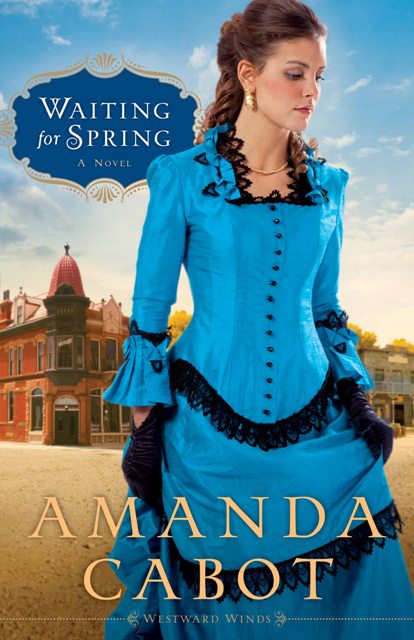
I don’t know about you, but when I hear the term “boom and bust” in the context of the American West, I think of gold, silver, maybe even oil.  Four-legged critters don’t come to mind, or they didn’t until I started the research for Waiting for Spring.  That was when I learned that cattle – the same thing that made Cheyenne the richest city per capita on earth in the late nineteenth century – had a boom and bust cycle like other get-rich-quick schemes.


Though Cheyenne was founded as a railroad town and though the Union Pacific and the territorial government were major contributors to the city’s growth, the primary source of wealth during the 1880s was cattle.  The demand for beef was high, and the presence of the railroad in Cheyenne made it easy to get meat east and to Europe.  But I’ve gotten ahead of myself.


Believe it or not, raising cattle in Wyoming came about almost by accident.  When bad timing forced one herd to remain in Wyoming rather than be driven east during the winter of 1854, the owner left, probably expecting the worst.  Instead, when he returned in the spring, he discovered that not only was his herd still intact, but the animals had thrived on the air-cured grasslands of eastern Wyoming.


If you’re from the East as I was, you may wonder about the term “air-cured grasslands.”  Eastern grasses, at least the varieties I was used to, are packed with nutrients during the growing season.  Winter’s another story.  The grass is often covered with snow, and even when it’s bare, there’s little to tempt a cow.  Wyoming’s grass is different.  The very dry climate of the high plains has the effect of curing the grass much as freeze-drying might.  The result is that the grass retains its nutrients throughout the winter, providing excellent forage for animals.  Once that first rancher discovered the secret, the word spread quickly.  I can picture the telegraphs buzzing with the news of good, year-round forage and an open range.  Who could resist the lure of free grazing?


Not many, as it turned out.  The result was an influx of ranchers and rancher-wannabes from around the world, some of whom banded together to form cattle companies.  All this culminated in what was called the “Great Grass Bonanza” of 1876 to 1886.  Some historians refer to these men as “cattle kings,” but I prefer the term “cattle baron.”  It was the cattle barons who built mansions, some of which even boasted their own ballrooms.  It was the cattle barons who frequented the opera house and who made their private club, the Cheyenne Club, the epitome of wealth and elegance in a

city that had more than its share of both.  It was the cattle barons who dominated the city’s social events.


But all things end.  This is, after all, a story of boom and bust.  The result of all those cattle barons and cattle companies coming to Wyoming Territory, determined that they too would become millionaires, led to overgrazing.  Quite simply, there were too many head of cattle on the prairie.  That would have been bad enough, even if there had been normal weather conditions.  As it turned out, the summer of 1886 was particularly dry, resulting in less than normal growth of the grass.  The cattle might have survived that, had it not been for a particularly brutal winter.  The snow started early, blanketing the ground with huge drifts.


Though it takes effort they can’t afford to expend, cattle can paw their way through snow to find the grass underneath.  But what if there’s a thick coating of ice?  That’s exactly what happened in January 1887.  The warm winds of a Chinook melted the snow, causing deep puddles.  That was followed immediately by a deep freeze.  You don’t need to be a meteorologist to know what happened next.  The ponds froze, leaving the cattle without water.  The grass was covered by ice so thick they couldn’t reach the grass.  Those poor animals died from hunger and thirst.  By the time spring came, the herds were destroyed, and so were the cattle barons’ fortunes.  The boom had ended.


It sounds pretty depressing, doesn’t it?  That might make you wonder why I chose this timeframe as the background for Waiting for Spring.  The truth is, I believe we can find hope in even the most dismal of circumstances, and so I made my hero a cattle baron.  And, yes, I gave him a happily-ever-after.


About Amanda

From the time that she was seven, Amanda Cabot dreamed of becoming a published author, but it was only when she set herself the goal of selling a book by her thirtieth birthday that the dream came true.  A former director of Information Technology, Amanda has written everything from technical books and articles for IT professionals to mysteries for teenagers and romances for all ages.  She’s delighted to now be a fulltime writer of Christian historical romances.  Her Texas Dreams trilogy received critical acclaim, and Waiting for Spring, the second in her Westward Winds series, was released in January.

Pam Hillman: That's a Cowboy


I write cowboys, mostly set in the late 19th century, but cowboys aren’t limited to the late 1800s during the grand cattle drives along the Goodnight-Loving Trail. The cowboy image is bigger, bolder, and more widespread than that. He’s become an icon that transcends time periods.


He’s strong. He’s brave. He’s hardworking. He loves God, country, his horse, his dog, and his girl. Possibly in that order. To most of us raised on John Wayne movies and Louis L’Amour novels, a cowboy is no longer just a lean, mean, hard-working machine who rides the range herding cattle. He is…


…the firefighter who enters a burning building and cries when he fails to rescue a terrified child.


…the brave soldier on the foreign battlefield who fights for God and country…and the picture tucked in his shirt pocket.


…the construction worker toting boards and hammering nails, climbing ladders, fighting for that paycheck so he can pay his grandfather’s hospital bill.

…the roughneck who spreads his steel-toed boots wide and swaggers along the deck of a floating oil rig to keep this country in fuel, separated from his wife and babies for weeks at a time.


…the police officer pinned down by a crazed gunman and waiting for the chance to end the madness so he can rescue those held hostage.


…the lineman who works long blistering days in the blazing sun or through winters so cold he can barely think straight, to bring light and heat to the woman who holds him close at night.


…and, yes, he’s the weathered rancher, and the farmer, who battles the elements and long hours to raise cattle and grow grain to bring food to his table, and to this great nation.


Some of these men might not have ever wrangled a cow, they might not have ever thrown a leg over a horse, but they have the heart and soul of a cowboy, that deep-seated determination to provide, protect, and defend what’s theirs. No matter the cost.

 Now that’s a cowboy!!


I’m giving away one copy of “Claiming Mariah” in e-format to one lucky commenter.


Pam Hillman was born and raised on a dairy farm in Mississippi and spent her teenage years perched on the seat of a tractor raking hay. In those days, her daddy couldn’t afford two cab tractors with air conditioning and a radio, so Pam drove the Allis Chalmers 110. Even when her daddy asked her if she wanted to bale hay, she told him she didn’t mind raking. Raking hay doesn’t take much thought so Pam spent her time working on her tan and making up stories in her head. Now, that’s the kind of life every girl should dream of! Claiming Mariah is her second novel. www.pamhillman.com


~~~

Pam is thrilled to announce the release of her second novel,

Claiming Mariah


To celebrate, Pam is giving away two eReaders

(choice of Kindle Wi-Fi, 6″ Display, or Nook Simple Touch)

Two Winners: One on facebook. One through Pam’s Newsletter.


Facebook Drawing for Kindle/Nook

Pam’s Newsletter


Registering both places is not required but will double your chances of winning. Also keep in mind that you will receive updates more often being connected on facebook than through the newsletter. Just sayin’

Contest runs from January 1st until March 31st, 2013.


And….that’s not all! There will be prizes offered randomly throughout the tour.


Click here to View Current Giveaways!

(3 Pewter Bookmarks from Deirdre’s Handmade Jewelry PLUS 40% off coupon at Deirdre’s online store. Click link to register and for coupon code)


PREVIOUS STOP ON TOUR:

March 8th: Nora St. Laurent


NEXT STOP ON TOUR:

March 11th:


Click for a Complete List of Stops Along the Tour


www.pamhillman.com

Noelle Marchand: The Iconic Texas Rangers


There are few archetypes in Western literature more appealing than the Texas Ranger. Men who wear the encircled star badge in romantic fiction are inevitably smart, courageous, physically fit and tough-as-nails. Taking into consideration that slow Texas drawl, wide brimmed cowboy hat and inherent southern charm…Well, it’s no wonder they’ve captured our imaginations from the very beginning which is saying something because the Texas Rangers got their start before there even was such a thing as Texas.


As settlers came pouring into the wide-skied and varied landscape that belonged to Mexico, it was

determined that a group of men was needed to enforce laws as well as keep the peace between settlers and the Indians native to the area. By 1835, Stephen F. Austin had organized a law enforcement force which he christened the “Rangers” and which the Mexicans soon called “los Diablos Tejanos”. Translation? The Texas Devils.


Then came the Texas revolution and after the revolution—statehood. While state industries boomed and immigrant flocked to the open range, the Texas Rangers became even more of a force to be reckoned with by succeeding where the federal army struggled in subduing a Comanche uprising. The Texas Rangers were disbanded during the Civil War but were soon needed again to maintain the safety of Texas citizens from outlaws and raiding Indians.


Where do these historical facts and literary romanticism meet? The reality of life as a Texas Ranger in 19th Century was not always a glamorous one as my hero finds out in A Texas-Made Match…..


Here’s an excerpt:


It had been a long, hard year filled with dangerous work and too many secrets. As a Texas Ranger, he’d rounded up more than his fair share of outlaws, and he tried to find some satisfaction in that. But this near vagabond existence was too much like the life he’d left behind when he’d stumbled into Peppin, Texas, abandoned and alone with nowhere to go until the O’Brien family took him in. A few months later, when he was fourteen, Doc and Lettie Williams adopted him. They’d been the parents he’d always dreamed of. His life in Peppin had been so good that he’d nearly forgotten about the past. Here…he seemed to run across it every day in the smell of liquor, the haunted eyes of the saloon girls, the solitude and the need to be on constant alert.

His commanding officer in the Rangers constantly told him not to lose the chip on his shoulder. “That’s what make you stand out from the other Rangers. That’s what makes you tough. That’s what enables you to get your man. Never lose that chip.”

Lawson wasn’t stupid enough to believe him. God was the one enabling him to catch those criminals. As for the chip on his shoulder—well, he reckoned he’d picked it up sometime between being abandoned and wandering into Peppin. Unfortunately, it didn’t keep the harshness of this life from wearing away at him, day by day.


Lawson returns to Peppin never suspecting he’s heading straight toward a reckoning with his past and

a new chance for a love-filled future. In doing so, he relinquishes the badge but not the honor that came with receiving the commission to serve, protect, and defend the people of Texas. It is a mission that the Texas Rangers carry out to this day. Their ability to do exactly that has ensured them a reputation in Western lore as big as the state they served.

Sources:

http://www.texasrangers.org

NOELLE IS GIVING AWAY A COPY OF “A TEXAS-MADE MATCH” TO ONE LUCKY COMMENTER.

DID YOU KNOW THIS ABOUT THE OLD WEST?

Did You Know This About the Old West?

©2013 Lena Nelson Dooley

I know authors who really don’t like the research involved in making historical novels authentic to the time period. I am not one of those authors.

While writing my McKenna’s Daughters series, I found out a lot of things I didn’t know. And I love the minute details of life that I discover. I try to work them into the story. Here are a few of the things I found and used. Of course, there were a large number of other things, and this blog post couldn’t possibly hold them all.


In the prologues in both book one and book two, I had to research the Oregon Trail wagon trains, then choose the route that would work best for my story.


With Maggie’s Journey, book one, I researched the transcontinental railroad system, especially the part that was in the western United   States. I had to figure out how long it would take to travel in 1885 from Seattle,Washington Territory, to Little Rock, Arkansas. The characters stayed in actual hotels of the time period in Denver,Colorado, and St. Louis, Missouri. They had to go east to St. Louis, then travel south-southwest from there to Little   Rock.


I also had a hard time picturing Seattle in that time period. The adult reference librarian in the Seattle Public Library helped me find

websites that were gold mines of information that I needed. So almost all the streets, stores, hotels, schools, hospital, etc., were all part of the city in 1885.


For Mary’s Blessing, book two, I spent quite awhile researching Oregon City and Portland. There were a number of interesting things in the books I read. In that time period, some people trained goats to pull sleds. I found a picture of one such goat team. They were planning on using them to pull sleds to the gold fields in Alaska. I didn’t find any information about how successful they were with that endeavor.


I also had to research medical practices of the time period, farming practices around Oregon City, and transportation between Oregon City and Portland. I had the hero and heroine go from Oregon City and Portland by trolley. My editor questioned that, because the information she had said that the electric trolley wasn’t built until 1890. I found pictures of the trolley station and actual trolleys in 1885. The trolleys were pulled by horses or mules along the right-of-way where the tracks were later laid for the electric trolley cars.


With Catherine’s Pursuit, the book that released earlier this month, I found equally interesting details in San Francisco, which I used in the book. I also researched steamship lines of the day. There’s one on the cover, and the hero is a steamship captain. San Francisco had electricity and telephones in 1885, but Portland and Oregon City didn’t.


If you want to see what life was like in 1885 in Seattle, Portland, Oregon City, and

San   Francisco, travel with my characters through these places and see how they lived.

Guest Lynn Cahoon at the Junction!

The First Settlers?

Growing up in Idaho, the history of Lewis and Clark and the opening of the west to settlers was a large part of the history I learned as a child.  As part of the Pacific Northwest, the land that became our state was wild and unsettled.  A perfect place to put down roots, raise a family, and build a homestead.  Unfortunately, the land that easterners thought of as uninhabited, the Nez Perce Indian tribe called home.

Definitely a disaster waiting to happen.

One story out of the history books that always stuck with me was about Henry and Eliza Spaulding, the first white settlers in what’s now the state of Idaho. Now, there’s some debate on that claim, and I’ve found a couple mentions of a fur trading business set up as early as 1805

so I don’t know if that part of the story is true.  But the Presbyterian missionary couple was one of the first waves of westward expansion to inhabit Idaho.  Henry and his wife built a homestead in a beautiful area now known as Lewiston. Nestled in the middle of the state, even now, the area is more rural than the capital Boise, which lies south of the area. The current residents depend on forestry, agriculture and mining for jobs and commerce.

In 1836, Rev. Henry and Eliza Spaulding travelled across the country with their friends, Marcus and Narcissa Whitman.  But when the Whitman’s decided to set up a mission in nearby Walla, Walla Washington, Henry and Eliza pushed on farther into the wilderness into what is now Idaho and the Clearwater River site.  The couple stopped at a site near Lapwai Creek and Eliza wrote about the clear springs and natural beauty of the spot. After building at one site, which was little more than a swamp, they moved a few years later to the mouth of the creek and the pair settled there in 1838.

The couple started teaching and preaching to the Nez Perce Indians who lived in the area.  Before they left in 1844, they’d built a school, printing house, and additional living quarters for some of the Nez Perce who helped run the mission.  Henry felled trees and built a log home for his lovely bride.

In 1844, fearing for their lives, they abandon their mission and school.  Word had just arrived that their friends, the Whitman’s, were massacred in their home in Walla, Walla, in an Indian uprising.  Thirty years later, the Nez Perce were headed to a reservation, and the west had been changed forever.

As a child, the idea of starting over, in a land where you didn’t know anyone, seemed inconceivable.  I wondered about the woman who taught the children to read as she tried to make a life in the wilderness.  Why had she agreed to leave her home in the east for an uncertain future?  Had she been excited about the possibilities, or frightened at the dangers?

As an adult, I’ve taken a different route, moving east from Idaho to the edge of Illinois, where Lewis and Clark started their journey.  And I find myself in Eliza’s shoes, trying to navigate my way through a land where things are different than home.  People are different.  But Eliza taught me one important lesson as I studied her life so many years ago.  You make your place in the world.  And you decide if you’re happy or not.

Today, I’m giving away another Idaho story for your e-reader to one lucky commenter.  The Bull Rider’s Brother is set in a fictional little mountain town nestled on the road between Boise and the Spaulding site.

Shawnee, Idaho is known for two things.  Amazing salmon fishing and the first local rodeo of the summer.  For four friends, growing up in Shawnee, meant one thing, making plans to get out. Five years later, that wish has been granted for all but one.  What happens when they all get together again changes five lives.

When James Sullivan visits his hometown’s rodeo weekend and learns that his high school sweetheart had his child – six years ago – Lizzie Hudson’s world is thrown into turmoil. In THE BULL RIDER”S BROTHER, James struggles with family and Lizzie questions the risk of love.

Click on the cover to purchase on Amazon.

—–

Lynn Cahoon is a contemporary romance author with a love of hot, sexy men, real and imagined. Her

alpha heroes range from rogue witch hunters to modern cowboys. And her heroines all have one thing in common, their strong need for independence. Or at least that’s what they think they want.  She blogs at her website, A Fairy Tale Life.