

I learned a new word the other day, thanks to a dear friend of mine, Sharon Cunningham. She posted on Facebook about the word, “saeculum”—which was one that I’d never heard of. I didn’t even know there was an actual word for this “event” or “circumstance.”
Saeculum means the period of time from when an event occurred until all people who had an actual memory of the event have died. The example she used was World War I. The saeculum for that war is over.
It can also be applied to people. (Something else I never thought about.) A person’s saeculum doesn’t end until all people who have a clear memory of knowing that person are gone. So even though a person has died, their saeculum will live for another two or three generations!
Isn’t this amazing? And comforting, somehow. Yes, eventually our saeculum will be over, but what amazes me, and comforts me at the same time, is knowing there is a word—an actual TERM—for the idea of this memory of an event or person.
When you think about it, knowing that someone has created a word to define this period of time is important, because it defines it and gives it meaning—not just some nebulous “I remember Mama” type idea that is passed down. It means, I DO REMEMBER MAMA. I remember how Mama used to sing, I remember how Mama used to cook, how her palm felt on my forehead in the night when she came to check on me. I remember “that” look when she was upset with me, and I remember how she cried when she learned her dad, my grandfather, had died.

Valentine’s Day 1965, Mom, my sister Karen, me, and my oldest sister, Annette
Nov. 1960–my sisters, Karen and Annette cutting up in the living room
Sept. 1966–my mom and dad together
Dec. 1965–my mom wearing the hula skirt my sister Annette brought me from Hawaii for Christmas
April 1960–my grandmother (mom’s mother), a not-quite-3-year-old me, and my sister Annette
January 1960–Mom’s 38th birthday
I remember Mama the way I knew her. And when we talk to other members of the family who knew and remembered her, we learn many other facets about her personality and things about her as a person we would never have known otherwise. It’s this way with every person we know!
But let’s take it one step further: I remember family. My own, of course—two sisters, Mama and Daddy. But what about extended family? Sometimes we tend to just “move on” in our lives and not dwell on memories of long ago because somehow, they don’t seem important to us. But now that there is a word that defines us in relationship to those memories, doesn’t it seem a little more important that we remember those long-ago times? Soon, there will be no one to remember, and the saeculum for our entire family will be gone.
A group of my cousins at a family reunion
Oddly enough, I remember what I thought AS A CHILD at family get-togethers—the excitement of seeing my cousins, of taking a trip to visit everyone, of staying up late and having a bit more freedom since I had grandparents at both ends of the small town where both sides of my family had many members living—and I felt special because of that. I was the ONLY ONE of my cousins who had THAT! So we always had somewhere to walk to when they were with me—to one grandparents’ house or the other.
As an adult, I think back on those simpler times and wonder what else was going on in the “adult world”—sisters, brothers, in-laws all gathering with their children and meal preparation for so many people—my mother was the oldest of eleven children!

My mother, El Wanda Stallings Moss, and my aunt (my dad’s sister) JoAnne Moss Jackson
Two unforgettable women!
Everyone tried to come home to Bryan County during Christmas and/or Thanksgiving. Such an exciting time, but for the adults…tiring and maybe stressful? If so, I don’t remember ever seeing that side of anyone.

My mom and dad as newlyweds in 1944–El Wanda Stallings Moss and Frederic Marion Moss–around 22 years old
So, maybe that’s why I think writing is so important. My mom always said she wanted to write down her life story, but “life” kept getting in the way and it never happened. When she ended up with Alzheimer’s, the time for writing down anything was over. Though the written word doesn’t add to a person’s saeculum, it does at least two things for those left behind: It helps preserve the stories and memories the deceased person has talked about before they passed, and it gives future generations a glimpse into their ancestors’ lives, thoughts, beliefs, and dreams.

This is my great-grandmother, “Mammy” (Emma Christi Anna Ligon Stallings)–my mother’s dad’s mother. I never knew her, but I felt like I did from the stories Mom told me about her. She was born not long after the Civil War ended, and regaled my mother with stories of her growing up years. I wish I had listened better when Mom tried to tell me about her!
We die, and eventually are forgotten by the world. Events happen that were, at the time, life-changing, world- altering, such as wars, rampant disease, and tragedies of other kinds. These, though horrific at the time, will eventually be relegated to the tomes of the historical past…and forgotten…by many. There is nothing to stop it. All saeculums will be over for individual people and for events. And they will all become history.
What we can leave behind for others is our pictures, the written word of who we are and what we believe, and if we have a particular talent or craft, pieces of that—carvings, quilts, beautiful artwork or writings, creations of so many kinds.

A painting my mom did many years ago of an old barn in a snowstorm. Sorry it’s so small! Couldn’t make it bigger without making it blurry.
Our saeculum is fragile, and fleeting. So for 2020, my one and only resolution is to try to keep some kind of journal for my children, or for anyone who might be interested in the future. I want to write about my childhood, just the regular every-day things we did, the heat of the Oklahoma summer nights, the fireflies that lit up those nights until we knew we had to go home or get in trouble! The way the house creaked, and how the attic fan sounded like a freight train as it brought in that blessed cooler air during those same hot summer nights. So many memories of “nothing special”—just the business of living. I want to write about the way life was then—because it will never be that way again, for better or worse.

My best friend, Jane Carroll, and me, on a fall day in the sandbox. I was about 8, and Jane was a year older. We moved in just down the street from one another during the same week of 1963! Jane is gone now, but I still love her and miss her.
Will anyone give a hoot? Maybe not. But I will know I’ve done what I could do if anyone DOES care. I’m not sure Laura Ingalls Wilder thought anyone would care about her stories—but look at what a glimpse into the past they have provided for so many generations! I’m no Laura Ingalls Wilder. My journals won’t begin to make the impression on the world that hers did. But you never know who might read them and think, “I wish I had known her!” (Even after my saeculum is over!)
Me, at age three.
Do you have anything you would like to leave to future generations to remember you by? This fascinates me!

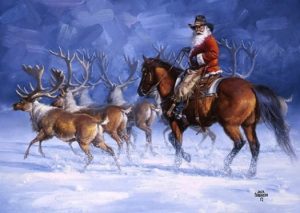


 Hi everyone! Christmas always brings back wonderful memories of home and family, doesn’t it? One of the things I remember so well about my dad was how he could remember and call forth the perfect quote for just about anything and everything. He always made Christmas a very special time of year around our house and was a true practical joker. He was a super-intelligent man with an IQ off the scale (I didn’t get that from him, sadly<G>) and as an adult, I understand why he was able to remember so many things and be able to say them at just the right time–as a child, it was a mystical thing. One of the things I’ve come to appreciate with adulthood is how hard my dad worked to provide for us. He loved to read and was an eloquent writer–I think if he could have made a living at it, he’d have given it a try himself. Thinking about him and his love for quotes prompted me to go in search of some heartwarming Christmas quotes.

 Charles Dickens, A Christmas Carol But I am sure that I have always thought of Christmas time, when it has come round… as a good time; a kind, forgiving, charitable, pleasant time; the only time I know of, in the long calendar of the year, when men and women seem by one consent to open their shut-up hearts freely.


 In the summer of 1909, two young brothers under the age of ten set out to make their own “cowboy dreams” come true. They rode across two states on horseback. Alone.


 I’ve got…TWO winners tonight! TRUDY C. and TONYA LUCAS! Be on the lookout for your prize in your inbox, ladies!
 1, we meet him at the age of 9, almost 10. His parents and older sister have just been murdered by the Apache, and he has been kidnapped as they torch his home. But a few days later, just as he’s given up hope, a fearless man walks right into the Apache camp and rescues him. Jacobi Kane has a mysterious past that he isn’t too keen on discussing with Will, though Will senses a kind of kinship between the two of them as they travel toward Fort Worth and safety. Kane harbors a terrible secret that might force Will’s hero worship of him to turn quickly to hatred…or of understanding, that Kane is a man who does what he must. But will that realization be enough, and is Will mature enough to come to grips with what Kane had to do?
 Jacobi Kane’s past when a group of law officers seek Kane’s help in capturing some of the same Apache Indian band that killed Will’s family. Kane resists going because he is now re-married, with a new baby on the way and tells the lawmen he’s turned in his badge for good—years ago. But a promise he made in the past keeps him hungry for vengeance, and his new wife urges him to go and see an end to it all. Of course, Will is not going to be left behind. Jacobi might need him!


 BUY LINK:


 The next story Chief Watie was included in was my time-travel western novella, MEANT TO BE. Here’s a little bit about this Civil War story:
