Waste Not, Want Not

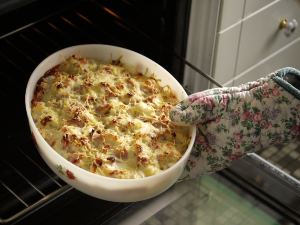
A couple of weeks ago, I was watching a news feature on TV.  The reporter tracked a “typical” well-off American family to see how much food they wasted in a single month.  By the end of the month they were astonished to learn that they’d thrown out $500 worth.

My grandma would have been horrified!

Grandma Hannah, who passed away in 1962, was the daughter of a pioneer farm family scratching out a living in dry, gravelly Southern Utah.  She learned early how to make a little go a long way.

I knew her well.  During World War II, while my dad was in the Navy, my mom, my baby sister and I moved in with Grandma and Grandpa.  Since Mom’s  younger brother and his new bride were also living there, they had a houseful.  Grandpa was a carpenter and part-time farmer.   Grandma kept house and tended us two little girls while Mom taught school to help make ends

meet.

One of my favorite treats was something called jelly punch.  When Grandma got to the bottom of a glass jelly jar and couldn’t scrape any more out, she’d add some water, dissolve the traces of jelly in it, and give it to me to drink.  I loved it.  She also made me

something called pearl tea, which was nothing more than hot water, sugar and milk.   Peppermint tea came from the mint that grew along the ditch banks in our little town—as did asparagus and rhubarb, which we picked wild.


Grandma had one of those big black coal-burning cook stoves, and  she took a lot of pride in keeping it shiny.  Back then, bread wrappers were made of oiled paper.  Grandma would use those wrappers to polish her warm stove until it gleamed.  And she would save every scrap of stale bread to make bread pudding.  These days they serve bread pudding in fancy restaurants, but I have yet to taste any as wonderful as Grandma’s.

When our clothes wore out beyond mending, we gave them to Grandma.  She would cut them up for quilt pieces or tear them into strips for weaving the beautiful, durable rag rugs she sent up to the Pioneer Handicraft store in Salt Lake City, her only source of income.

The quilt I sleep under now was pieced by Grandma and quilted years later by my mother (the photo shows a similar one).  Every little piece of fabric is a memory of a happy childhood and a woman whose loving hands and thrifty ways I will never forget.

How about you?  Do you have any comments about today’s throw-away society?  Do you know someone like my Grandma who lived by the old adage, “Fix it up, wear it out, make it do, or do without?”

Grub on the Go

About a year ago my boys discovered the joys of beef jerky. A Sunday School teacher introduced them to the protein-packed snack, and ever since, we”ve had a package in the house for them to snack on after school. They love the salty taste and the chewy goodness. Yet every time I see them gnawing on a piece, I smile because in my mind, I see a cowboy, mountain man, or trapper out on the trail.

Native Americans taught the early settlers how to preserve meat by rubbing it with salt and drying it either over a smoking campfire or simply hanging strips

to dry in the sun and wind. The most common game meats used included bison, deer, and elk. Instead of eating the dried meat in strips, many Indian tribes preferred to use it to make pemmican.

To make pemmican, they would pound the strips of dried meat between a pair of rocks until it was shredded and nearly pulverized. They would add dried berries to the mixture then mix it with hot marow grease to bind it all together. They would pack this mixture into a pouch made from bison stomach or intestine and seal it with hot grease. As ith epouch dries, a vacuum is created which can preserve the pemmican for several years. They

would add this to stews or soups or even eat it straight from the pouch when travelling. It”s small size and light weight made it perfect for warriors on the go.

The Hudson”s Bay Company bought huge amounts of pemmican to supply to their trappers who were constantly on the move and required to pack their supplies on their own backs. The protein from the meat, vitamins from the berries, and the energy source from the fat, made this an efficient yet very nutiricously balanced food product.

During the time of westward expansion, travelers would stretch strips of meat across their covered wagons to dry (taking about 2-3 days), or sometimes they would call a stop for half a day in order to build a scaffold and smoke the meat for 3-4 hours. This allowed them to make the most of whatever game they were able to hunt and to preserve the leftovers for consumption farther down the trail when game became scarse.

There is some disagreement about how this dried meat became known as jerky. Some say the Incas first named it in the 1500s, calling it “Ch”arki” which means dried meat. Others say that the Spanish explorers coined the phrase “Charqui” to North America when they noticed the Indians drying meat in a similar fashion to they methods they used with goat meat to store it aboard ship. The name took on different pronunciations until it finally landed on jerky.

So what about you? Are you a fan of jerky? Have you ever eaten jerky made of something other than beef? Anyone ever tried pemmican?

MY SECRET LOVE by Cheryl Pierson

I know. You thought it was going to be a person, didn’t you? Since this is the month for lovers and all…but my secret love is different.

I love cars. All kinds of cars. I think I could be a car salesman if I were a guy. I’m not sure what all the technical jargon means, and don’t really even care that much. I just know what I like.

My first car was a 1962 Chevy Impala that I had to share with my sister, who was divorced and had moved back home with her two kids. I had my first wreck in that car. I was coming out of the parking lot at one of our high school football games and turned the corner too sharply, hitting the end of a 3’ tall rail fence. I scratched the back passenger side door all the way back to the wheel well.

As you embark on countless adventures behind the wheel, you’ve come to realize the importance of protecting and personalizing your beloved rides with custom seat covers and mats. These simple yet essential accessories not only preserve the pristine beauty of the car’s interior but also add a touch of individuality, making every drive a reflection of my unique style and devotion to the world of automobiles. Seat covers and mats can be a great way to protect your car’s seats and floor from wear and tear, and they can also add a touch of style to your car’s interior.

My next car was a 67 Impala. Now, the wreck I had in this one was not my fault, and it was so freakish that I don’t think I’ve ever heard of it happening to anyone else. I was on my way to college one morning, and a West Virginia State Road Dept. truck was merging onto the interstate. His back wheel axle broke and half of it, with the tire still attached, crossed three lanes of traffic and stuck into my front tire. I loved that car because it was all mine—but after that, the frame was wrecked.

When I met my husband, he’d just bought a hot little car—a German made engine for Mercury graced the “Capri”. It was a 1974 ½ “special edition” car. I learned to drive a stick shift on it, and that car is still my all time favorite car we ever owned.
I think we’ve had about every type of car, truck or SUV out there. Favorite SUV? My Isuzu Rodeo, hands down. I’d still be driving it if the transmission hadn’t quit. Favorite truck? The Ford Explorer Sportrack. Beautiful, great to drive, but about as “un-functional” as a truck could be. My brother-in-law, the wisecracking lawyer, told my husband it had a “vanity bed” in it. We still laugh at that—it was true—there was nothing you could haul in that thing.

I have to admit, when it’s time to go look for a new car, I don’t dread it at all. I know what I want, and I know what the payment has to be to make it work. My husband tells his buddies that they should take me car shopping with them. I’m a tough nut to crack.

My secret guilty pleasure? I LOVE watching Velocity TV. Wheeler Dealer, Pimp My Ride, Orange County Customs, Mecum auto auctions…yep. I get mesmerized, and I’ll watch those shows for hours. I look at the clock and feel like I’ve been sucked into a vortex somehow, of these never-ending car shows. I have to force myself to get up and go to the grocery store.

Our latest? I never thought I”d see the day, but my husband traded in his BABY–his Monte Carlo–for a Chevy Cruze. Gas mileage is important, but I think HIS guilty pleasure is the turbo charged engine.


Anyone else out there a car lover like me? What’s your favorite car you’ve ever owned? Any

memorable “car tales” you want to share? I wonder what kind of car some of our western heroes would have driven if they”d found themselves in modern times?

The Feel of Yesterday

Good Morning or Afternoon or Evening!

I hope you”ll bear with me today as I post here.  My own computer is on the blink and I”m doing the blog today on an Apple (and am completely unschooled in how to post on an Apple).

I haven”t gotten the pictures down and so I copied them from other posts — but it didn”t come out exactly right, so please do excuse me.  Anyway, enough of that…and onto the blog, which is about one of my favorites…history…rewriting of…as told from the victor”s point of view.  So here we go.

It’s

long been an opinion of mine that unless we as a people know our history, we will be doomed to repeat the same mistakes over and over.  Now, aside from the fact that history is often told by the victor — and the fact that there are elements amongst us that would like our history to be hidden — it has been one of my goals in writing historical romances to try to bring a sense of the time and place alive again.  Whether I accomplish this or not is probably in the eye of the beholder.

But, regardless, with this in mind, I thought I’d bring you some of the thrills of research — things that we aren’t really taught in history classes (which is really the fun of research, I think).  Probably the most cherished historical reference I use to the long ago time (the 1830?s) is George Catlin.  He went amongst the Indians round and about 1834 and he not only painted their pictures, he left a memorable record that for me brings the past alive. 

Here’s a passage that really brings the past alive, I think:  “I have just been painting a number of the Crows, fine looking and noble gentlemen.  They are really a handsome and well-formed set of men as can be seen in any part of the wrold.  There is a sort of ease and grace added to their dignity of manners, which gives them the air of gentlemen at once.  I observed teh other day that most of them were over six feet high, and very many of these have cultivated their natural hair to such an almost incredible length, that it sweeps teh ground as they walk; there are frequent instances of this kind amongst them, and in some cases, a foot or more of it will drag on the grass as they walk, giving exceeding grace and beauty to their movements.”

Here’s another passage:  “The fashion of long hair amongst the men, prevails throughout all the Western and North Western tribes, after passing the Sacs and Foxes; and the Pawnees of teh Platte, who, with two or three other tribes only, are in the habit of shaving nearly the whole head.”

And how about a buffalo hunt?  Here’s a passage that makes me feel as if I am there:  “The horses are all trained for this business, and seem to enter into it with as much enthusiasm, and with as restlaess a spirit as the riders themselves.  While “stripping” and mounting, they exhibit the most restless impatience; and when “approaching” — (which is, all of us abreast, upon a slow walk, and in a straight line towards the herd, — until they discover us and run), they all seem to have caught entirely the spirit of the chase, for the laziest nag amongst prances with an elasticity in his step — champing his bit — his ears erect — his eyes strained out of his head, and fixed upon the game before him, whilst he trembles uner the saddle of his rider… …we started! (and all must start, for no one could check the fury of those steeds at that moment of excitement), and away all sailed, and over the prairie flew, in a cloud of dust which was raised by their trampling hoofs.”

Once more on the beauty of the people:  “They live in a country well-stocked with buffaloes and wild horses, which furnish them an exellent and easy living; their atmosphere is poure, which produces good health and long life; and they are the most independent and the happiest races of Indians I have met with: they are all entirely in a state of primitive wildness, and consequently are picturesque and handsome, almost beyond description.  Nothing in the world, of its kind, can possibly surpass in beauty and grace, some of their games and amusements — their gambols and parades, of which I shall speak and paint hereafter.”  Bet they never told you that in history class, huh?

Nowadays, I can’t begin to tell you how many people write to me about obesity seen amongst the American Indians on the reservations.  Of course this is a generality and hardly true of all people, but I want to emphasis that the foods that were sent to the Indians during the beginning of reservation days did not provide a diet that was healthful.  Listen to this passage from George Catlin, written in 1834:  “I have for a long time been of opinion, that the wilderness of our country afforded models equal to those from which the Grecian sculptors transferred to the marble such inimitable grace and beauty; and I am now more confirmed in this opinion, since I have immersed myself in the midst of thousands and tens of thousands of these knights of the forest; whose whole lives are lives of chivalry, and whose daily feats, with their naked limbs, might vie with those of the Grecian youths in the beautiful rivalry of the Olympian games.”  But if that’s not enough, Catlin goes on:

“No man’s imagination, with all the aids of description that can be given to it, can ever picture the beauty and wildness of scenes that may be daily witnessed in this romantic country; of hundreds of these graceful youths, without a care to wrinkle, or a fear to disturb the full expression of pleasure and enjoyment that beams upon their faces — their long black hair mingling with their horses’ tails, floating in the wind, while they are flying over the carpeted prairie, and dealing death with their spears and arrows, to a band of infuriated buffaloes; or their splendid procession in a war-parade, arrayed in all their gorgeous colours and trappings, moving with most exquisite grace and manly beauty, added to that bold defiance which man carries on his front, who acknowledges no superior on earth, and who is amenable to no laws except the laws of God and honour.”

And while I’m on the subject, let me make one more quote:  This Catlin writes about the Blackfeet:  “There is an appearance purely classic in the plight and equipment of these warriors and ‘knights of the lance.’  They are almost literally always on their horses’ backs, and they wield these weapons with desperate effect upon the open plains; where they kill their game while at full speed, and contend in the manner in battles with their enemy.  There is one prevailing custom in these respects, amonst all the tribes who inhabit the great plains or prairies, in these respects, amongst all the tribes who inhabit the great plains or prairies, of these western regions.  These plains afford them an abundance of wild and fleet horses, which are easily7 procured; and on their backs at full speed, they can come alongside of any animal, which they easily destroy.”

Well, I hope that this post has conveyed a sense of the time and place for you.  I hope that perhaps — for a short time only — you could picture how it might have been at that time.  Oh, how I wish that politics, aberration, greed and evil hadn’t combined in some people to cause them to try to destroy another people who might have enriched the incoming culture with the wealth of knowledge that they had

accumulated.  Imagine what could have been — for them — for the incoming culture.  Imagine the wealth we could have today were that only the case.

I hope you”ve enjoyed the blog for today and I hope you”ll come on in an leave a comment.  Let”s talk.


A Visit to "The Kingdom" ~Tanya Hanson

When I learned that my friend Nancy’s cousin has a historic cemetery with a Cole Younger connection on his land, I knew I had to find out more about it and the folks buried there.

 This small Missouri graveyard is the last sleep for about 40 people, 26 of which are identified by death certificates. It was part of a community of former slaves called “The Kingdom.”   Elizabeth, the matriarch of the community, had been owned by Cole’s grandfather, Charles Younger, a land

speculator. Charles fathered two children with her, Catherine (Kate) and Simpson, and freed them all upon his death in 1854.


His will also stated that the children be educated in a free state. At age 12, each was taken to Oberlin, Ohio, for preparatory education followed by enrollment at the college. 

Elizabeth would not see her son again until he was 21.

While daughter Kate attended Oberlin (1861-2 and 1866-69),  Simpson, at age 13, joined the 27th United States Colored Troops, becoming one of the youngest-ever soldiers of the Civil War. His name can be seen today on Plaque B-43  at the African American Civil War Memorial in Washington D.C. In the 1930’s, he was interviewed for one of the 93 slave narratives from the state of Missouri. After the war, Simpson pitched on one of Oberlin’s first integrated baseball teams; the college’s Resolute Baseball Team won their division. 

In 1888, the light-skinned Simpson became enraged when a Kansas City theatre refused to seat his darker-colored female companion in the orchestra section which was reserved for whites. Simpson’s suit alleging equal protection under the Fourteenth Amendment made it to the Missouri Supreme Court. (Although decisions all favored the theatre owner). Kate, who did not feel at home with her black family, married a white man who’s relatives shunned her. More tragic, her husband was a murder victim later on. 

In addition to Kate and Simpson, Elizabeth had five more children and two husbands after Charles. The first was still a slave. He was killed in 1861 after a visit to his family, when he did not arrive back at his owner’s farm before dark. Her second husband was a freed black man who had lost his first family to influenza. 

Charles Younger, who left his legitimate family in Cass County MO to live with Elizabeth, was buried on the land they shared. However, his legal wife had his body exhumed and reburied. She contested the provision in his will that gave Elizabeth the land she and Charles lived on, but his friends helped her hold onto it. 

It is believed that Cole Younger and his outlaw gang stopped by “The Kingdom” whenever they headed through Missouri.


Elizabeth and her daughter Kate are buried in the cemetery. The first burial known for certain occurred in 1858, Theodore Younger, aged 4.  At the last recorded burial, 1988, the cemetery had been in use for 130 years. 

After  acquiring the land,  Nancy’s cousin cleared away overgrowth and shored up existing gravestones. His wife researched unmarked graves and they made additional markers.


I’ve always loved old cemeteries, the more forgotten the better, and I can’t wait to visit this “living history” if I ever get close! 

How about you? Any cemetery stories to share?


CHERYL'S WINNERS FOR AUTHORS IN THE KITCHEN

I want to thank everyone for coming by today and commenting. I just drew two names tonight since we had so You all better sit down for this: justin bieber albums was accused of trying to rob a woman in Los Angeles on Monday. many comments.

My winners are: CATHY AND DIANE!!!!

If you ladies would e-mail me at fabkat_edit@yahoo.com and send me your addresses, I”ll get your cookbooks in the mail to you!

Congratulations, and thanks again for stopping by today!

A Farewell to a Wonderful Lady, Friend and Fellow Author

I hope you will all bear with me as I pay tribute to a friend and fellow author, Joyce Henderson.  This email was posted to our chat group yesterday, and it came as a shock to me to learn about Joyce.  But I thought I”d share it with you since it gives the name and address of where to send cards, if you would be so inclined to do so.


The world lost an absolutely wonderful woman today. Joyce Henderson passed away this morning. Many of you have known Joyce through her on-line, often witty, always right-on-the-spot messages. Some of you, I”m sure, have met her at conferences. Diane O”Key, another TWRP author, and I have been fortunate to have known her as friend, sister-of-the-heart, and critique partner.
 
If you care to send a card to her family, the address is:
Robert Henderson
141 James Rd
Crescent City, CA 95531
 
I”m broken-hearted today.
Lynnette Hallberg
Joyce wrote beautiful and sometimes hauntingly mysterious American Indian Romances.  I first met her at a booksigning years ago and I was immediately impressed with her witty warmth and her caring — she had come a long way to meet me and to ensure that I felt right at home at the booksigning.  Kind, kind person.  She is the sort of person one would like to see live forever.  Here is a picture of us together at that signing: 
 
And so in her honor, I went back into the archives and pulled up an old blog that Joyce did last year — and I thought I would share it with you today.  So here it is: Joyce”s post last year:
 
 
Joyce Henderson is a multi-published author who writes Native American Romance set in Central Texas where she was born. Joyce writes “what she knows,” horses and ranching, and she loves researching Indian lore. Her work has finaled in national contests: National Readers’ Choice Award, Georgia Romance Writers Maggie, and several others. During her 25-year writing career, she’s mentored a half-dozen or more writers who have gone on to publication.And she worked for local newspapers for several years writing a by-lined column.Married forever, she has three children and three grandkids, plus six step-grandkids and six step-great-grandchildren.Yeehaw, I’m back to kick up my heels at the Junction! It’s a right pretty place I love to visit.Now, to get on with why I’m here…I’m asked over and over by readers and other writers: Which one of your heroes is your favorite?The short answer is: The one I’m presently writing.Upon donning my thinking cap, I realize there’s a much deeper, more complex reason for that answer.

I suppose it has to do with how I write in the first place. First, if you’re a writer let me say for the umpteenth time when writers have been faced with “rules,” there’s no right or wrong way when it comes to how one devises prose. We all approach this art form differently. And I believe, oft times to my detriment, those so-called rules are made to be broken. LOL

I consider myself a visual writer. By that I mean, more often than not I “see” entire scenes in my mind, and then I see people acting, reacting within those scenes. What that scene depicts is a visual of the era and location where my entire story will be set and expanded upon. Actually, I use scenes almost like another character.

While I’m writing a story, people pop into scenes, so… I must visualize many individuals, give each a tick or trait that make each one stand out from others. For me, that’s

one of the fun parts of writing. I usually write a ton of secondary people into my stories, but I have to caution myself as I conjure these characters…don’t let them take over. All my stories are he-and-she romances, secondary characters must have a purpose, but remember who each one is: secondary. And since my stories are romances, they must end with HEA, happily ever after.

Look with me at the Prologue and opening scene of my very first published book, Walks in Shadow, and the visual I saw before I typed the first word…

It’s dark, with light rain at the tail end of a storm. A lone man gazes into the distance, stands beneath trees, limbs bending and swaying overhead. He wears a Stetson hat, rain drips before his eyes and cascades off the brim down his back . His arms hold a bulge beneath his yellow slicker. That’s my basic visual.

You’ve probably heard the admonition directed at writers, “Write what you know.”

Most of my Native American historical stories are set in and around the town where I was born in Central Texas. While I knew dirt when it was still a rock, honestly, I wasn’t around in the year in which this story is set, 1860. LOL The oaks my hero stands beneath are like those which used to line the dirt road leading to my great-grandmother’s old homestead. I know the place.

Okay, back to my scene… (This is wheels grinding in my pea brain. LOL) I ask myself, what’s this guy doing there? What’s riveted his attention? What’s hidden beneath the slicker that he’s holding against his chest? I enlarge my visual.

Across a clearing is a two-story house… (My great-grandma’s place was one story.)  There’s a porch the width of the house (Grandma’s was half the width), one central door with a window each side from which light spills. Nearby, a barn, and an attached lean-to, a chicken coop.

Switch back to the man…He looks down, separates the coat and stares into the face of a sleeping child. From his thoughts I begin to learn who he is and why he’s there. He’s anguished because he’s about to abandon this boy-child on the porch. But why? Because…he promised his adopted sister on her deathbed he would take her…half-breed son to be raised in the white man’s world.

Why would she ask that of him? Let me think…. Because…this guy is a white man who was captured while a toddler and raised Comanche. He’s the logical one to honor his sister’s wish, return to his roots, but…he’s unsure if he can be a white man again, or if he really wants to.

Little Spring is the product of his sister’s rape by a white man. Still, why is this guy now leaving the child here? Because…the white man who helped his sister lives in this house. It’s super hard to leave Little Spring, but he whispers a promise. One day he will return for the boy.

Let’s see. I already like this guy because…no matter how difficult it is and despite his love for the boy, he’ll honor his sister’s dying wish. This is the basic premise for my hero. Now what’s his name? Light bulb flash. He travels at night, remains in the shadows so…Walks in Shadow is born!

The prologue ends with Walks in Shadow’s promise, chapter one begins with the heroine, and that  produces another visual in my mind. The terrain is rolling, oaks dotted here and yon. A black stallion stands on a distant hill, silhouetted against a cerulean sky.

What does that have to do with anything? The first lines of chapter one will introduce the heroine, and ultimately clue-in the reader to what that visual is and why the horse is important.


Samantha Timberlake wanted him the first time she saw him. The yearning was so intense, so primal, it took her breath. She was twenty-five years old, and though she loved her father, Aunt Mattie and Little Guy fiercely, she’d never experienced a desire so strong—until now.


He’d stood on a hill, wild, proud, fierce, as beautiful as Texas was brutal. Then he disappeared from view.

I’ve led the reader to believe she’s seeing Walks in Shadow. Not until the bottom of the page does the reader discover she’s seeing and yearning for a black stallion. And that gets my thoughts to grinding again…make Walks in Shadow a horse-whisperer-style trainer.

When Samantha meets Walks in Shadow, it’s five years from when he left Little Spring on this very ranch. Walks in Shadow has more or less transformed himself into a white man, he speaks very precise English that he learned during this time, and his name is now Holden Walker.

Why that name? Walker, of course, is a play on his Indian name, but why Holden? Because…it’s a name he vaguely remembers from when he was a toddler.

When Walks in Shadow recognizes Guy as Little Spring and realizes he can’t take the boy from this place, from these people who now consider him son and brother, his heart breaks a little.

In order to remain close to the child, he offers to train the stallion, and not break the horse’s spirit in the process like, to his mind, the white man’s sometimes brutal methods.

From Samantha’s POV I now begin to see Walks in Shadow/Holden Walker more clearly. He’s a hunk! Did you doubt it? Well, hey, this is a romance. LOL Tall, dark hair. I often see Benjamin Bratt as my hero in these stories. 

Although, when writing most of my Native American heroes, I picture Adam Beach’s hair and how he wears a feather.

As the story unfolds in my mind, I learn of the length’s Walks in Shadow has gone in an effort to honor his dead sister’s final request, to make himself presentable as a white man. While seeing these scenes, I learn how gentle the man really is. What he abhorred about the Comanche, what he loved about them, how undecided he is about making a life forever in the white man’s world.

He’s immeasurably sad when he knows the boy has grown up without learning about his Indian people. Walks in Shadow’s heart breaks just a little when he regrets not teaching Little Spring to use the small bow and arrows he made just for him; the gift he still carries in his belongings. Ah, yes…the gift conjures another scene that I make notes about for later use.

And in each scenario, I like what I see when Holden handles horses. I like how he helps Guy through the child’s first brush with the death of a loved one. I like how he helps a soiled dove in her time of need. I like how he defends Samantha and her beloved Timberoaks from the obnoxious neighbor and his overbearing father. Each of these “likes” occur as I conjure scenes for each one.

With each revelation, I fall a little more in love with him. I guess that’s why I believe my favorite hero is the one I’m writing.

I’m having fun discovering another Native American hero. While my Indians rarely smile, this hunk is certainly how I picture my new guy. Meet Comanche Duane Loken.   That’s probably a white shepherd he’s holding, but a wolf does play a prominent in this story.


This time the hero is baffled by a twenty-first century heroine who drops into his life, in Texas. i.e: Can a woman of today seize her destiny—to love a Comanche warrior?in the year 1860?

This story takes me into a new sub-genre of writing: time travel. Writing is never easy, but I make it doubly hard for myself when I fly off into the mist in a sub-genre foreign to my prior writing knowledge. Still, this idea came about when I pictured my heroine waking in a gully. It takes a while to realize she’s no longer in the twenty-first century.

My mind spins, and once again I begin to fall in love with a hero as he comes to life in my head; as I picture scenes and conjure a story around two protagonists. For a romance writer, there’s nothing better.

May I again thank you for having me at the Junction. And to those visiting today, I wish writers productive writing…and happy reading to everyone!

Take a look at my latest release from The Wild Rose Press. It’s historical and Western themed, but it’s set in Southern California where I ranched for 20 years. In fact, Garrett Montez’s ranch is patterned after the Mexican Landgrant on which my ranch occupied a little corner.


Southern California, 1898: Scarred by his father’s

rejection, Garrett Montez prefers a life of solitude on

the prosperous ranch he’s built on land bequeathed

him by his grandfather. When his housekeeper quits,

he is desperate to find another, but not the beautiful

woman with gentle eyes and a sweet smile who

arrives on his doorstep. Neither his ranch nor his heart

needs the kind of trouble she could cause. With

nowhere to go, Neely O’Conner must find employment,

but handsome and rugged Garrett Montez

rejects her the minute he lays eyes on her. More

determined than ever, she offers to work for a month

without pay, hoping time will change his mind. Does

a mysterious woman hold the key to Garrett’s love, or

can Neely crack through his iron-encased heart

and…Promise the Moon?


I hope you have enjoyed the post today and I hope you will join me in sending Joyce our prayers.  People are alive today because she lived and she left the world a better place because she lived.  Please do come on in and leave a comment.  I would love to hear from you.

Karen Kay with her husband, Paul, this past July 2012 at the RWA Convention in Anaheim.

Beauty Tips

Good morning! It’s the middle of the week, I’m on deadline and I’m trying not to panic. I want this book finished, yesterday. Too bad for me that I’m more tortoise than hare. If I can think of one word that defines our current culture, it’s impatience. Most of us want everything now, immediately. We hate waiting in lines, waiting for our computers to boot-up, waiting for the commercial to end so we can get back to our regularly scheduled program.

I miss simpler times, when there were only four television channels, radios were large, and we kids were banished from the house with the order to play outdoors “until the streetlights come on,” or as my mama called it: Dark Thirty. That’s not to mean I don’t love modernity. I adore being able to click a key on my computer and find a Google map that will allow me to walk the streets of Paris without ever leaving my office. I love electricity, hot showers and ice-cold diet coke. I also enjoy fixing my hair and applying makeup. I’m a girly-girl and proud of it. I consider makeup application an art.

Is it any wonder I recently purchased several reference books that shared beauty tips from the Victorian era? This is the same era I set my westerns, by the way. As you can imagine, this book is gold. Pure gold.

So, what beauty tricks did women have at their disposal during the 1880s? Well, here are a few that stuck out to me (from Victorian Household Hints by Elizabeth Drury, 1981).

• To blacken eyelashes and eyebrows rub the areas often with elderberries. You may also use a burnt cork, or clove burnt at a candle.
• To make the most of your complexion and impart a brilliancy of the eyes apply fine carmine that has been properly pulverized.
• To make lip-honey: Take two ounces of fine honey, one ounce of purified wax, half an ounce of silver litharge, and half an ounce of myrrh. Mix ingredients over a slow fire, and add milk of roses, Eau de Cologne, or any other perfume you prefer.
• To make cold cream: Melt together 1 dram of white wax, 1 dram of spermaceti with 2 ounces of olive oil. Add 2 ounces of rose water and a half ounce of orange-flower-water. Rub together till they are thoroughly incorporated and the mixture is the consistence of cream.
• A make a wash for the teeth and gums: Take the juice of half a lemon, a spoonful of very rough claret or port wine, ten grains of sulphate of quinine, a few drops of Eau de Cologne, or oil of bergamot. Mix, and keep in a well-stopped phial.
• To make a draught for bad breath: Take one dram of sulphate of magnesia, two drams of tincture of calumba, an ounce and a half of infusion of roses. Combine these ingredients into a draught, to be taken every morning or every other morning, an hour before breakfast, for at least a month.

There are a lot more tips, but I find I now have to stop and go look up most of these ingredients.
Okay, so here are the definitions I had to look up at Dictionary.com

Carmine: A crimson pigment obtained from cochineal, which is a red dye prepared from the dried the bodies of the females of the cochineal insect.

Litharge: A yellowish or reddish, odorless, heavy, earthy, water-insoluble, poisonous solid, PbO, used chiefly in the manufacture of storage batteries, pottery, lead glass, paints, enamels, and inks.

Myrrh: An aromatic resinous exudation from certain plants of the genus Myrrhis.
Dram: An eighth of an ounce.

Spermaceti: A pearly white, waxy, translucent solid, obtained from the oil in the head of the sperm whale: used chiefly in cosmetics and candles, and as an emollient.

Quinine: A white, bitter, slightly water-soluble alkaloid, C 2 0 H 2 4 N 2 O 2 , having needlelike crystals, obtained from cinchona bark: used in medicine chiefly in the treatment of resistant forms of malaria.

Bergamot: A small citrus tree, Citrus aurantium bergamia, having fruit with a rind that yields a fragrant essential oil.

Calumba: The root of a plant indigenous in Mozambique. It has an unpleasantly bitter taste, and is used as a tonic and

antiseptic.

So, um, who’s happy for modern conveniences now? I’m raising my hand!

There's Something About Twins

There’s something about twins—or unrelated people who look alike—that captures the imagination, especially in stories.    Think of the classic stories—The Prince and the Pauper, The Man In the Iron Mask,  A Tale of Two Cities.  We could brainstorm a long list.

My first literary encounter with twins was probably “The Bobbsey Twins” series by Laura Lee Hope (actually a pseudonym for a string of writers).  Anyone who can remember, Bert and Nan, Freddie and Flossie as well as I do has been around the block a few times.

My new Harlequin Desire story is about twin brothers, but only one is living.  Jordan is tormented with guilt over his brother Justin’s death in a plane crash.  When he finds out his brother left a son, he is determined to take the little boy in and raise him.  But Angie, Justin’s former fiancée, has other ideas.  Angie has raised her son with pictures and stories about his father, and Lucas understands that his daddy is in heaven.  But she wants nothing to do with Justin’s family, who treated her badly.  This excerpt describes what happens when Jordan shows up at Angie’s apartment for the first time.

“Where’s the boy, Angie?  Where’s Lucas?”

“You have no right to ask!”  She was on guard now, a tigress ready to strike in defense of her cub.  “Lucas is my son.  My son!”

“And my brother’s son.  I have a copy of the birth certificate.  You listed Justin as the father.  I’m assuming that’s the truth.”

Something crumbled inside her.  “I did that for Lucas, so he’d know.  But Justin…”  She gulped back a surge of emotion.  “He never even knew I was pregnant.  I was going to tell him when he came home for my birthday.”

“So you were never married.  Not even secretly.”

“No.  You needn’t worry on that account, Jordan.  I have no claim on your family’s precious money, or anything else.  So go away and leave us alone.”

She studied his face for some sign that her words had made an impact.  But his expression could have been chiseled in basalt.

“You might have told us,” he said.  “It would’ve meant a lot to my parents, knowing Justin had left a child.”

“Your parents hated me!  How could I expose my innocent baby to those ugly feelings?” 

“I want to see the boy.”

No!  Angie’s heart slammed.  She’d had no warning, no time to prepare Lucas for this.

“I don’t think—” she began.  But it was too late.  She heard the opening of the bedroom door and the cautious tread of small sneakers.  Evidently, Lucas had grown tired of waiting and decided to check things out for himself.

Short of lunging for her son, there was little Angie could do.  She watched in mute horror as Lucas emerged from the hallway and caught sight of their visitor.

His brown eyes opened wide.  Then his face lit with joyous wonder.  “Daddy!” he cried, racing across the room.  “Daddy, you came back!”

* * * * *

Here”s a snippet from a lovely review by Romance Junkies:

“Filled with witty repartee, complex characters, an intriguing plot, family dynamics, secrets, guilt, forgiveness, true love, second chances and a truly

emotional ending, this story is sure to steal your heart. It is one that you will remember long after the last page is read and the book is closed.”

You can learn more and find a purchase link on my web site.

Do you have any twins in your family?  What is your favorite “Twin” story?


NEVADA DREAMING…by Charlene Sands


I’m a Californian at heart, having lived in So Cal for most of my life, so the pop culture tune, California Dreaming is a song I know very well.  I love California and once set a series, Napa Valley Vows in northern California. Those heroes were not cowboys, but vintners who had love affairs with women and wine.

For my new series, The Slades of Sunset Ranch, I needed the perfect location to set these three modern day cowboy stories.  I really wanted to move out of Arizona (where the Worths of Red Ridge reside) and I wanted to pick a setting that was a little more picturesque than the flatlands of Texas where I’d set so many other books, so I began my Nevada Dreaming.

For most people, when they hear “Nevada”, they immediately think of Las Vegas, but with me, that wasn’t the case at all.  I’m always thinking of ranches and cowboys and history.  My mind clicked away and I remembered my visit to the Ponderosa Ranch amid tall sugar pine trees, deep green valleys and the awe-inspiring Sierra Nevada Mountains. 

 The Ponderosa was a fictional ranch owed by Ben Cartwright and his sons, Adam, Hoss and Little Joe not too far from Virginia City, in the immensely popular and iconic western TV show Bonanza.  It aired from 1959 to 1972, having a long 13 year reign in TV land. As a result, many of us became familiar with the Cartwright ranch house and surroundings.  Bonanza was shot on location at the Ponderosa Ranch in Incline Village, Nevada, for the most part and for many years after the show ended, tourists were welcomed to the ranch and given tours of the inside rooms where the television series was shot.  

That’s where my Nevada dream came in.  I thought, wouldn’t it be great to center this new Desire series in a similar type of location… I wanted picturesque and I got it!  I dreamt up Sunset Ranch, a thoroughbred horse farm and Sunset Lodge, an upscale dude ranch, to tell my stories.  Then I tossed in Logan, Luke and Justin Slade into the mix, three love-resistant brothers who run the massive Slade empire.

After that, I invented the town of Silver Springs (although I’m sure there are many real towns with that name) and pulled memories from my trips to the Lake Tahoe area, for the rest.  BTW, Lake Tahoe is where we honeymooned and were lucky enough to see Elvis Presley in concert, so that area does really hold a special place in my heart.    

I’m into my 3rd Sunset Ranch story now, with military hero, Justin Slade’s homecoming, and the landscape hasn’t failed me yet.  Though, I will have completed the three stories in this series soon, I might very well end up writing a fourth one using one of the characters from book two. After all, I know the lay of the land now!

For me, sometimes figuring out where to set my stories is just

as hard as creating appealing characters and a compelling story.  When a writer develops a series in one location they get to know the area inside out and hopefully the setting feels real to the reader…that’s my goal. 

My Nevada Dreaming was chockfull of good memories and beautiful scenery.  


Were you a fan of Bonanza? Did you recognize that interior room and Ben Cartwright’s desk?    Would you have liked to visit The Ponderosa Ranch?  And here’s a question I’ve always wanted to ask.  If you had to pick one, are you a Mountain, Beach or City type of tourist?  What’s your favorite kind of vacation? 


Sunset Surrender – in bookstores and on Amazon now.

Sunset Seduction –  June 2013

Sunsets and Baby Secrets – Nov 2013