Fort Worth,Texas – A Wild Place

 Hello – Sylvia McDaniel here.  I’ll be doing a giveaway today, but first I want to tell you about some interesting bits of history I discovered recently.

While doing research for my series The Burnett Brides, I read a book called HELLS HALF ACRE by Richard F. Selcer. This book gives details about a half acre section in downtown Fort Worth in the late 19th century where cowboys, gunslingers and gamblers frequented.  This area of town had everything a traveling cowboy could ever want when they came to town with the cattle drives; saloons, dance houses, bordellos, cribs and gambling.

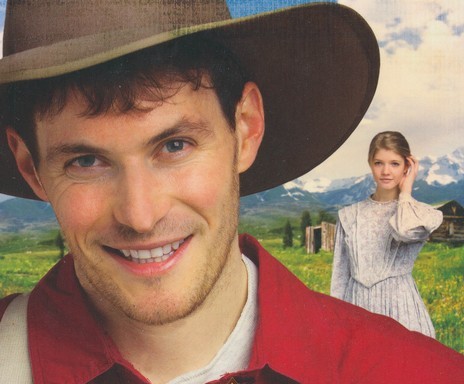
But the one item in the book that surprised me, and I used in my own novel, was the number of lawmen who once walked on the other side of the law. In my novel, THE MARSHAL TAKES A BRIDE, Tucker Burnett was once a well-known gunslinger. Until he takes a bullet that nearly kills him, and is nursed back to health by the beautiful Dr. Sarah James. But he runs scared from the feelings she evokes and goes back to Fort Worth where he gets his life in order and becomes a Marshal. Years later, she returns home to Fort Worth, married with her son in tow, and that’s where the story begins.

Many lawmen from this era were reformed gunslingers and men who had decided against a life of crime. Given the time they lived in, I’m sure they lived longer by being quick with a gun in a wild, lawless town. But they also were often friends and acquaintances with gamblers and gunslingers.

The other piece of information I came across in this book that made me dig deeper for a later book I wrote, was the availability of opium.  You could buy it in a drug store, or if you couldn’t get it there, just go down the street to the Chinese laundry where it was available.  There were opium dens in the city that people often frequented, even though they were against the law. I was stunned at the number of individuals who were addicted to drugs and used that information in another novel.

This book also revealed for me the true life of a soiled dove. Soiled dove is a pretty name for the profession, but few ladies actually chose this life, but were women down on their luck. If you were in the profession, you were lucky to be working in a sporting house. Most soiled doves worked in shanty’s called cribs and earned pocket change. The Miss Kitty I remember on Gunsmoke, would have lived in a crib or perhaps a sporting house. According to arrest records there were less than twenty women who worked in the sporting houses and the saloons were usually a male only establishment. Many of these women died young and lived hellish lives. Some even committed suicide. According to the book, the idea that many of these women married could not be verified.

I have other research books on the west and especially Fort Worth, but this one is on my keeper shelf. When I need to know the realities of life in a rugged, wild western town, I reach for this one first.

If you get the chance to visit Fort Worth, I encourage you to get a copy of HELL’S HALF ACRE. There’s an interesting map in the front of the book that shows the location of the saloons, the hotels and even Jim Earp’s residence. Most of these locations were located in the area where the Convention Center is now. It’s fun to walk down the street and try to figure out where the past occurred.  I believe that they even have one of the saloons still open.

I’ve often thought it would have been fun to have lived back in this era, to have struggled with everyday living without electricity and water. But for a woman, it was a difficult era. The movies have glamorized the decade, but the reality is that women of the west were as strong if not stronger than the men they loved. And that’s what I hope my stories reveal, strong women who the men they choose to love, deserve their strength and love. Dr. Sarah James in THE MARSHAL TAKES A BRIDE  is a strong woman in love with a man with a questionable past.

Now for the giveaway.  Tell me your favorite western TV show and I’ll enter you in a drawing for a copy of  THE MARSHAL TAKES A BRIDE. The winner will have a choice of either print or e-book.
Thanks to Petticoats and Pistols for having me today. If you’d like my list of western research books send me an email at Sylvia.McDaniel@verizon.net.

Catching Gold Fever in Holcomb Valley ~Tanya Hanson

First of all, the four frenetic days of the Romance Writers American National convention were fabulous, and having lunch with the fillies was the best moment of all. Now it’s back to the trenches, unpacking, catching up on lost sleep….and finishing the wip an editor asked to see.

The story is set in Holcomb Valley, California, the site of the richest gold strike in the south part of the state. Convincing hubby to take me there (his birthday yet) was one of the highlights of my summer. Located near the resort village of Big Bear Lake in the mountains about 2 hours east of Los Angeles, today’s small, silent valley buzzed with 2,000 residents in the 1860’s.

While tracking bear in 1860, hunter Bill Holcomb came across the valley and found a ledge of gold-riddled quartz. News of the find wasn’t secret for long. By 1862, thousands of claims had been struck. Towns like Belleville and Clapboard thrived.

At first, placer mining was the thing. Simply put, miners staked a claim, then dug down to the bedrock. Once “pay dirt” (black sand) was found, it was washed, or sluiced, in a pond of snowmelt to separate the gold from the gravel.

All the mounds and knolls dotting the valley today aren’t just pretty little hills. Now covered now with pine needles and small plants, they’re actually the “tailings,” the dirt and rocks removed and tossed aside every which way.

Remnants of the Metzger mine show the difficulty of hard rock mining. After the placer sites were all staked, prospectors looked elsewhere for treasure, and found gold-bearing quartz veins in the hills. They started digging. I couldn’t even stand up in the Metzger, and crawling through the horizontal passages was just back-breaking.

The oldest method for extracting the gold from quartz rocks was the arrastra, or ore grinder. A round rock wall surrounded a flat circle of flat, level stones. From a post in the center, a harnessed donkey or mule walked an endless circle in the arrastra, pulling a heavy drag stone to crush the rock. A single load of ore took over four hours to process in this manner.  Over 100 aarrastras dotted the valley. 

Today, about 60 wild donkeys still roam the resort area.

Of course, staking a claim in the wilderness was easy. Protecting it was not. An estimate of 50 murders occurred during the first two years of the settlement. Some outlaws, like Salt Lake’s Button’s Gang, dominated the valley so completely they simply occupied any cabin they wanted. But other outlaws couldn’t evade justice and found themselves hugging the Hangin’ Tree.

Although this juniper(above) is still hailed as the legendary widow maker, with the branch cut off after a neck stretch, it’s most likely the stump below is what’s left of the real thing. Sadly, the valley was denuded of most trees during the heydey, to build shelter and towns, and to shore up mines.

Well, there’s more to tell some other time. Have you ever visited gold country? 

The Soap that Floats and Other Wonders


And now a word from our sponsor…


Those particular words didn’t come into play until the radio, but advertising has been around since the beginning of mankind.  Cavemen painted billboards on rock walls and the ancient Romans printed advertisements for gladiatorial games on papyrus.


After the invention of the printing press, advertisements began appearing in newspapers and periodicals. Circulars were posted on chimneys, lamp posts, walls, wagons, fences—you name it.  Since painting the town with ads was considered a public spectacle, men with buckets of paste worked mostly at night. 


Ads were designed not only to sell products, but also to solve personal and social problems. In many cases, people were oblivious to such personal shame as body odor or halitosis until some thoughtful marketer pointed it out.


Sense

and Sensibilities

Looking back, we can’t help but laugh at some of the strange wording used to avoid offending customers.   During the 1800s the word limb was used for leg and white meat for chicken breast.  No one dare mention pants or trousers in polite company.  This posed a challenge for marketers. 


The Scott Company, embarrassed to advertise toilet paper in the 1880s, came  up with a unique solution: they customized rolls for their clients. The Waldorf Hotel became a big name in toilet paper and when a customer walked into a general store and requested a roll of Waldorf, no questions were asked. 


Speaking of toilet paper, Northern Tissue advertised “splinter-free” toilet paper in 1935.  If that doesn’t want to make you go “ouch” consider this: the “cure” for a certain male condition currently blasted nightly from the TV was, in the late 1800s, thought to be electric belts.


The westward migration spurred advertisements for real estate, investments and tourism.  In 1860 the Pony Express advertisement in California read: “Wanted. Young, skinny, wiry fellows not over 18. Must be expert riders, willing to risk death daily. Orphans preferred.”


The Civil War created a great need for clothes, shoes and readymade food and advertisements during the era reflected the new consumerism. 


Writers hear a lot about “branding” today, and we can thank the patent medicine companies of yesteryear for that.  By touting exotic ingredients, producers could distinguish themselves from competitors.  Other companies followed suit and slogans like the “soap that floats” became increasingly popular. 


 It’s Wonderful, Amazing, Spectacular…


Exaggeration was the order of the day and no one was better at reeling off adjectives than Richard Sears.  Eventually, Sears toned down the ads and was said to have concluded: “Honesty is the best policy. I know because I’ve tried it both ways.”


Honesty didn’t come easy for some advertisers and reform was needed. 1892, the Ladies’ Home Journal announced it would no longer accept patent medicine ads. The bogus potions were costing Americans millions of dollars per year, and were coming under heavy attack by commentators and consumers.


“In our factory,

we make lipstick.

In our advertising,

we sell hope.”


Women purchased most of the household goods and so it made sense to have women create the ads.  As early as the 1900s advertisers welcomed female employees.  The first advertisement to use sex was for Woodbury soap and was created by a woman.  Tame by today’s standards, the advertisement featured a couple and the message “The skin you love to touch.”  Not only did this raise eyebrows, but it promised sex, romance and love to anyone savvy enough to buy the product.  It worked:  Sales skyrocketed.


Studying advertisements is a great way to learn the customs, concerns, prejudices and history of earlier times.  I shudder to think what future generations will learn from ours.


What are your favorite or least favorite ads?


 Speaking of ads….


Want to be younger, richer, thinner?

Then read Margaret’s book!


Bonnets Anyone?


While most of us associate bonnets with the 19th century and earlier, I remember my mother wearing them in the 1950’s when she had to work outside which was a lot because she picked a lot of cotton back in those days to help the family out. Her bonnet was a slat variety which is to say that it was made of cloth and had rows sewn into the fabric on the sides where wooden slats could be slid into to give the bonnet shape. It stuck out over the forehead in order to shield the face and had draped material across the back to protect the neck. The picture on the right shows what it looked like.

Most frontier women wore poke bonnets that came to be known as prairie bonnets. They were a far cry from what a “Lady of Fashion” would have worn. But frontier women had more things on their minds than fashion. Like getting all the work down and daily survival. Poke bonnets were also made of fabric, usually calico.

Citified women were more discerning in their choice of headwear. They opted for frills and lace and all kinds of things to dress up their bonnets. But even so, the bonnet was an essential part of their wardrobe. Women, like men, never went outdoors without something on their head. It just wasn’t done.

The following bonnets are used with permission from a wonderful site called Victorian Bonnets at http://www.victorianbonnets.com/ . If you get a chance to go over there you’ll find plenty of things to interest you, especially if you’re a writer and need to know what a lady would’ve worn in a particular year. Pamela Robles couldn’t be more gracious or helpful. She also makes bonnets for anyone who needs to dress authentic.


To the left is a white wedding bonnet and a straw and silk cottage bonnet. Very pretty.


As you can see some are plain and some are very fancy. Some are serviceable and some are a fashion statement to be admired. And this is just a drop in the bucket to what’s available on the website. There are tons more.


So, what is your favorite? What would you most likely have worn had you lived back then?


It’s a little sad that we don’t wear bonnets any longer. I could sure see myself in some of these.

Happy Fourth of July!

My country ‘tis of thee…sweet land of liberty…

Our recent historical trip around the East Coast reinforced why I love my country. And today is her birthday. You rock, America. You might have wounds and warts, but all that is fixable. All I know is, I don’t wanna live anyplace else.

Thinking about what to post today….realizing most folks won’t have time to visit the Junction myself included, I trolled some sites about what else happened on this date. The History Channel led me here:


Six weeks after Lewis and Clark and their Corps of Discovery left “civilization”, the party of 29 men held the very first Fourth of July celebration west of the Mississippi.  The firing of the expedition’s cannon and receiving an extra ration of whiskey set the festive stage.

By this time on their journey, the Corps had made excellent progress traveling up the Missouri River in a 55-foot keelboat and two dugout canoes.  The wind sometimes behind them allowed Lewis and Clark to raise the keelboat sail. Once in a while, they managed 20 miles in a day.


The start of July saw the expedition reach the northeastern corner of today’s Kansas. The abundance of the land astounded the two leaders. Clark jotted that herds of deer were “as plenty as Hogs about a farm” and described the “raspberries perple, ripe and abundant.”

On July 4, 1804, the expedition stopped near a creek, and when Lewis and Clark informed the men the creek was to their knowledge unnamed, they called it Independence Creek in honor of the day.

Continuing upstream, the group made camp that night at an abandoned Indian village. It was here that the captains ordered the keelboat cannon to be fired at sunset. The explorers settled in, enjoying the tranquil night and their extra ration of whiskey.
In his journal entry of the day. Clark pondered about the existence of  “So magnificent a Senerey in a Contry thus Situated far removed from the Sivilised world to be enjoyed by nothing but the Buffalo Elk Deer & Bear in which it abounds & Savage Indians.”

It would be two years and many adventures later before the Corps camped once more at this pleasant site on their return to “civilisation.”

However you spend your Independence Day, be blessed, safe, and happy!


Steamboat Arabia Museum in Kansas City – A Research Gem

A few weeks ago my dh and I visited the Steamboat Arabia Museum in Kansas City. Set as a cornerstone for the River Market—a gathering of vendors selling fruits, vegetables, seeds, hand-me-downs, bbq and some rather fine coffee—the museum offered me a glimpse into life in the mid 1800s.

“The Arabia Steamboat Museum is home to a true time capsule of frontier life in the 1800s. The Arabia was headed up the Missouri River in the fall of 1856 when she struck a tree snag and sank just north of Kansas City. Her cargo hold was full of 200 tons of supplies bound for general stores and pioneer settlements.”   [http://www.visitkc.com/member-details/index.aspx?id=28981]

The Arabia was a typical western steamboat. A twin side-wheel steamer, she was built long and flat to carry maximum cargo. Measuring 171 feet long, with three decks and a wheel house above the water line, she plied the waters of the mighty Missouri River, pushing upstream at more than 5 miles per hour.

On August 30, she left St. Louis headed for Sioux City, Iowa, by way of Kansas (present-day Kansas City, MO), Weston (MO), St. Joseph (MO), and Council Bluffs (IA).  The Missouri River was wide and shallow and her rushing muddy waters hid dangerous snags—tree trunks that had fallen into the water when the river undercut their roots. Going full steam upriver against the current the Arabia struck the trunk of a large submerged walnut tree that smashed her hull open. She sank fast, until only the wheelhouse was visible, and that quickly broke up in the current.

All the 130 passengers and crew got off safely, but the cargo was buried in sand and mud at the bottom of the Missouri. Over the years, the river changed course with the floods and dry times, layering the site of the wreck under successive years of dirt. When the Arabia was finally located in 1986 she lay in a farmer’s corn field half a mile from the current river’s course and under 45 feet of dirt—and below the water table.

It took 4 months and twenty (20) irrigation wells pumping out up to 20,000 gallons of water per minute to get to the Arabia. The team of family and friends brought up boxes, barrels and crates of frontier merchandise, both necessities and available luxuries, items meant for General Stores all along the river: castor oil, needles, nutmegs, windowpanes, brass and silver locks and keys, eyeglasses, syrup bottles, rubber overshoes and wedding bands; jars of pickles that were still edible (yes, one of the team tried one); French perfume that still held it’s scent thanks to the ambergris that was a main ingredient; carpenter’s tools; a Frozen Charlotte figurine; buttons and scissors; even over one million Venetian glass beads meant as trade goods.

The museum built specifically to house this collection is still a work in progress. Though there are thousands of items already cleaned and displayed, the lab runs almost daily, cleaning, preserving and cataloging the amazing number of artifacts. The latest estimate is another fifteen years of work await the lab techs.

I got to watch as a boot was coated with preservative so it wouldn’t dry out after a century under water. I even got to try a bit of the French perfume that their scientists recreated from the bottles found in among the cargo (minus the ambergris, thank goodness).

If you’re ever in Kansas City, I highly recommend this museum. I know we’ll be returning soon—there was just too much to see in one visit.

Kaki Warner: Bride of the High Country

In my latest release, BRIDE OF THE HIGH COUNTRY, I had to get my main characters from NY to Heartbreak Creek, CO.  Since the Transcontinental had been finished the previous year (1869), I picked the train.  Oops.


Even though train travel had been available in the east for three decades, cross-country hauls were rare.  Amenities, rarer.  No bathrooms, for instance.  But that was OK since the trains had to stop every twenty miles to fill the tenders with water.  If the passengers were lucky, there might be an outhouse beside the tracks.  Or if they had a dime, they could purchase a box lunch from an enterprising local, or enjoy a hot meal of beans, bacon and stale biscuit.  Then back on the train and the hard bench for another lurching, bouncing twenty miles. YIPEE.


But, of course, my characters were rich, so they traveled in style in a Pullman Palace Car, which was as plush as a gamblers’ steamboat, complete with velvet couches, carpet and wooden inlay around the windows.  There was even a washroom in every four-berth car, which emptied directly onto the tracks (and you thought it was hunters who decimated the buffalo—HA!)  Also included on the luxury runs were a parlor car and dining car, which served mostly-edible meals when your plate wasn’t sliding into your lap as the train clickety-clacked along.


Ah, the beautiful scenery and fresh air—if only you could see through the soot-streaked windows or breathe through the billowing smoke wafting back from the locomotive.  Still, it was faster than a three-month trip by wagon.  Plus, you got to shoot at stuff as you careened along at ten, twenty, or—OMG—even thirty miles an hour.  What a treat!


FACT:  Each Pullman Car was owned and operated by the Pullman Company, and was serviced by a white-jacketed Negro man universally named “George” in deference to his employer, George Pullman.


The West would have been a vastly different place without the influence of the railroads.  For one thing, they offered incentives for people to settle along the right-of-ways, thereby creating permanent customers for the goods they were hauling.  They also carved routes through impossible country, built thousands of trestles, bridges, and culverts, or—since anything steeper than a 3% grade was prohibitive in fuel, construction, maintenance, and equipment costs—they laid tracks miles out of the way to avoid them, thus opening up even more country.


FACT:  In constructing the Transcontinental, Irish immigrants laid tracks west from Nebraska, while Chinese workers came east out of Sacramento—and they arrived at the EXACT SAME SPOT at Promontory Summit!  Amazing!


FACT:  The standard width between rails was determined by the Romans when they built stone roads in England.  4’ 8.5” was the width between the wheels of a two-horse chariot.  Over time, those wheels wore such deep grooves into the stone that later wagon-makers had to space their wheels to fit them.  Then somebody figured wheels roll easier metal-on-metal, so they laid down metal-capped wooden rails, put flanged, metal-treaded wheels on their horse-drawn wagons, and soon coal was rolling out of Newcastle at record rates.  And all because of the width of two horses’ asses pulling an old Roman chariot.  Who knew?


So there you have it.  More than you ever wanted to know about the joys and hazards of riding the rails west.  Have you ever taken a cross-country train trip or slept in a Pullman?  Would you do it again?


Leave a comment, and your name will be entered for a signed copy of BRIDE OF THE HIGH COUNTRY.  Thanks for coming by, and my thanks to you, too, fillies, for letting me chat with your readers.

Feisty Lady Ranchers RULE!

It’s almost time for Over the Edge to release.

Over the Edge is book #3 in the Kincaid Brides series and it was my favorite one of the three to write. Of course the book I’m working on NOW is always my favorite so it’s not a fair test.

Two elements in Over the Edge made it fun.

1) A madman-Seth Kincaid

2) A feisty lady rancher Callie Kincaid with no patience for….guess what? MADMEN

So Seth was fun to write but Callie Kincaid is my wheelhouse.

A feisty lady rancher. A tough cookie. Those are the heroines I love. And Callie is exactly that. First of all, she grew up in Texas. And honestly, do I need to say more?

If I do then secondly, she grew up on a Texas ranch.

And thirdly, she grew up on a Texas Ranch and her mother died when she was young so she dogged her pa and big brother around most of her life and was raised more boy than girl.

All these elements add up to fun.

We’ve waded through Out of Control, book #1 with bossy Julie and tyrant Rafe.

Next we got In Too Deep with sweet, soft spoken Audra and shallow charmer Ethan.

Now we’re going Over the Edge with the wildman Seth Kincaid and he’s met his match. Callie doesn’t back up for anyone. Turns out, that’s exactly what Seth needs.

Julie and Rafe give orders? Guess who’s not taking them–in fact Callie’s got a few orders of her own.

Ethan and Audra try and sweet talk their way through life? Guess who’s not charmed.

Seth lapses into crazy-world about half the time? Guess who’s not putting up with any nonsense.

Callie Kincaid comes blasting her way into Kincaid’s world by fighting off a stagecoach robbery…with a rifle in one hand and a six-gun in the other. And before you know it, Seth not only has six 6 boot tracks on his face, but he’s begging her to stay and walk all over him some more.

Here’s a bit more about Over the Edge, coming August 1st from Bethany House Publishing.

Over the Edge 

 Seth Kincaid survived a fire in a cave, but he’s never been the same. He was always a reckless youth, but now he’s gone over the edge. He ran off to the Civil War and came back crazier than ever. After the war, nearly dead from his injuries, it appears Seth got married. Oh, he’s got a lot of excuses, but his wife isn’t happy to find out Seth doesn’t remember her. Callie has searched, prayed, and worried. Now she’s come to the Kincaid family’s ranch in Colorado to find her lost husband. Callie isn’t a long-suffering woman. Once she knows her husband is alive, she wants to kill him. She’s not even close to forgiving him for abandoning her. Then more trouble shows up in the form of a secret Seth’s pa kept for years. The Kincaid brothers might lose their ranch if they can’t sort things out. It’s enough to drive a man insane–but somehow it’s all making Seth see things more clearly. And now that he knows what he wants, no one better stand in his way.

And here is a short bit of the opening scene.

Over the Edge

October 30, 1866

Chapter One

A bullet slammed through the door of the stagecoach, threading a needle to miss all four passengers.

“It’s a hold-up!” Callie grabbed her rifle. “Get down!”

The stage driver yelled and cracked his whip. More flying lead hit, higher on the stagecoach. The man riding shotgun got his rifle into action.

“Get on the floor.” The woman sitting across from Callie was frozen with fear. That endangered Connor and it made Callie furious.

The bullets came fast. They were going slow on a long uphill slope. With the driver’s shout the stage picked up speed. From the roof came a steady volley of deafening return fire.

Reaching across, Callie grabbed the woman by the ruffled front of her pink gingham dress and dragged her off the seat. The woman shrieked but didn’t put up a fight, which was smart of her. Callie would’ve won that fight.

Somewhat more gently, Callie picked Connor up from the seat beside her and set him on the woman’s lap. Eight-month-old Connor yelped, more a shout of anger than a cry. But crying would come soon enough. Her little wild man didn’t do anything quietly.

 “Can you shoot?” She shouted at the young man, hoping he’d snap out of whatever panic had seized him. He shook his head frantically. “Get on the floor.”

Callie used her whiplash voice and hoped it got the man moving. She threw herself across to the woman’s seat to face backward. With her Colt in her left hand and her Winchester in her right, she shoved the curtain aside. The flare of the orange and yellow aspen lining the road blocked any sign of the gunmen.

Callie didn’t bother to push the man to the floor. Let the idiot figure that out himself. She got a glimpse of the robbers riding around a curve. Bullets hailed on the coach. Callie held back, waiting for a clear shot.

Connor’s yelling turned to a cry. Callie was enraged that her son was in such terrible danger when he should have been safe on her father’s ranch in Texas.

The noise overhead said the driver’d slid off his high seat to use the stage as cover. She heard the man riding shotgun land flat on his belly on the roof. The driver’s shouting and the gunfire slashed like a sharp knife through the cool October morning.

“Try and calm Connor down.” Not much chance of that. Connor had been a whirlwind since birth. And the two caring for him were more upset than he was.

She counted four outlaws. The varmints had picked this uphill slope a few miles outside of Colorado City because the stage slowed to a crawl.

Callie had plenty of bullets but she was a conservative woman and she didn’t intend to fire blind and waste lead.

She was mighty low on money and she needed ammunition for when she finally tracked down that worthless Seth Kincaid.

Click HERE to pre-order Over the Edge

 http://www.maryconnealy.com/

Yikes! There’s an Eclipse Outside! ~Tanya Hanson


A few weeks ago, we didn’t dare get too excited about the impending eclipse. We live near the coast, but don’t believe the “sunny California” stuff. Our summers are so foggy we even have words for it: May Gray and June Gloom.

Nonetheless, we rejoiced when that glorious afternoon blazed with sun! We did the home-made viewing things: a pin hole in paper. Made checkerboards with our fingers, and held the binoculars with the small end catching the rays.

We had lift off!


So it got me thinking about eclipses in the past, and I discovered George Davidson.

George Davidson, who was born in 1825 in Nottingham, England, moved to the United States in 1832 and settled in Pennsylvania with his parents. Gifted in Science, he eventually earned doctorate in astronomy and joined the U.S. Coast and Geodetic Survey team.  He helped triangulate the shape and area of the earth and studied the large-scale geography of the Pacific Coast. In 1867, he traveled north to Alaska at the time the government was negotiating its purchase from Russia.


America’s leaders were eager to learn more about this vast, unexplored territory. Davidson made initial surveys at Sitka, Chilkat Valley, Kodiak and the Unalaska islands. He planned a return trip in 1869.


By this time, though, the Chilkat tribe had been angered by, well, white man stuff, and  Davidson was warned that his “welcome” party might be armed, not open-armed. Indeed, the initial get-together on August 6, 1869, was tense, even as he tried to convince the Chilkat that he meant them no harm.

He explained his interest in observing a total eclipse of the sun that he predicted would occur the following day. Tribal leaders mocked him.

But they left in peace for the time being.

Indeed, the next day the sky grew dark as the moon eclipsed the sun. Frightened at the real possibility that Davidson had the power to cause this frightening event –not just forecast it–the Chilkat people fled. Ever after, they left Davidson and his party alone.


After 50 years, he retired from the service. But he’d been busy in the meantime. He founded  the Davidson Observatory in San Francisco –the Pacific Coast’s first observatory and took charge of the U.S. transit of Venus expedition in 1882 in New Mexico. He became a professor of geography at University of California-Berkeley, remaining a professor emeritus until his death in 1911.


And something way cool. He was a charter member of the Sierra Club –one of the first 182, and served on its board of directors for sixteen years until just before his death.

Several geographic features in Alaska and a “seamount” off the Pacific coast are named for him.


Anybody seen an eclipse?

Pearl Hart – The Arizona Bandit

Hi! Winnie Griggs here. (pssst – look for giveaway info at the bottom of this post)

I was thumbing through one of those ‘infamous women of the old west’ type books the other day and  came across a listing for a woman named Pearl Hart. The heading of First Female Captured Stagecoach Robber caught my eye. And the more I read about this woman, the more fascinated I became with her story. I did some additional research and found a number of different, sometimes contradictory, accounts of her life. I’ll stitch together my favorites here.

While there is very little know about her early life, we do know that she was born Pearl Taylor in 1871 and lived the early part of her life in Ontario, Canada. She was one of several children born into an upper middle-class, church going family. At age sixteen she was sent to a boarding school, but she had an adventurous spirit that couldn’t be contained. That, combined with her attractiveness and wit made her quite popular with the men of her acquaintance.

While at school Pearl became infatuated with a young man named Hart and eloped at about age 17. Hart has variously been described as a rake, a drunk and a gambler. Far from this being the romantic adventure Pearl had hoped for, it turned out Hart was also abusive. She left him and then returned to him several times and it is reported they had two children together. During their last reconciliation, the couple worked odd jobs the Chicago World’s Fair. There Pearl saw Buffalo Bill’s Wild West Show and developed a fascination for the cowboy life that would stay with her her entire life. She also visited the Women’s Pavilion where she heard speeches by prominent women’s activists such as Julia Ward Howe.

Finally leaving Hart for good, Pearl placed the children in the care of her mother and took up with a man named Dan Bandman, a gambler and dance-hall musician. The two eventually moved to Colorado.

Later, when Dan left to fight in the Spanish-American War, Pearl moved to Globe Arizona, a mining town. There are various reports that she may have worked as a cook, a singer, a laundress and/or opened a tent brothel. It is also said that she developed a fondness for cigar and liquor at this time. Pearl described her life at this time in these words: “I was only twenty-two years old. I was good-looking, desperate, discouraged, and ready for anything that might come. I do not care to dwell on this period of my life. It is sufficient to say that I went from one city to another…”

Whatever her employment, Pearl’s finances hit bottom when the mine closed. Trying to find a way to earn money, she took up with a man named Joe Boot and together they tried to work an old mine claim he owned. But by 1899 the pair found themselves short on cash and decided to rob a stage, though it appears neither had done anything like this before. One account claims they took this desperate measure because Pearl had gotten word that her mother was ill and needed money, though there is little to substantiate this claim.

Pearl cut her hair and dressed up like a man. Both armed with revolvers, they stopped a stage running between Florence and Globe at the Cane Springs Canyon watering point. They collected $421 from the three passengers on board. Pearl then reportedly took pity on them and gave them back each $1.00 so they could buy a meal at the next stop.

But their lack of experience did them in. They did a poor job of covering their tracks and within six days the law had caught up with them. One account states that they were sleeping when the posses caught up with them and that while Joe surrendered quickly but Pearl tried, unsuccessfully, to fight her way out.

Joe and Pearl were locked in the local jail. But the notoriety and attention Pearl received as a female bandit, coupled with the lack of proper facilities, caused the sheriff to throw up his hands and send her to the jail in Tucson. Pearl’s notoriety grew, and she did all she could to fuel it. Her story about her reason for the robbery (her ailing mother) gained her sympathy, and her avowal that she “would never consent to be tried under a law she or her sex had no voice in making, or to which a woman had no power under the law to give her consent” gained her a whole new level of attention.

Never one to give up on her options, within a matter of days Pearl had charmed some of the men at the Tucson prison and managed to escape. Unfortunately for her, a New Mexico lawman recognized her and sent her back to the Tucson prison.


Joe Boot was eventually sentenced to 30 years in jail and Pearl to five. Pearl was given the dubious honor of being the first woman incarcerated into the Yuma Territorial Prison. But neither Pearl nor Joe served their full terms. Joe, apparently due to a show of good behavior, was given trustee status. He walked off while working outside the gates less than two years into his term and was never heard from again.

Pearl, on the other hand, gained her freedom legitimately, well, sort of. The warden of the jail where Pearl was imprisoned like all the attention she was attracting from the public and the media. He provided her with a roomy 8 x10 cell as well as a small yard which gave her a space to entertain reporters, photographers and other guests. Pearl, who was the only female incarcerated in the facility, was not above using her wiles to play guards and trustees off of each other to improve her situation.

In December of 1902, Pearl received a pardon from the governor and was released free and clear. The official reason for the pardon remains unclear, but it was given on condition that she leave the Arizona territory. Pearl herself claimed that she had been invited to play the lead in a play her sister had penned based on her life and this had played into her release. However, a later rumor emerged that she had became pregnant. The governor, wanting to spare the Arizona Territory the embarrassment of explaining how this could possibly have happened while she was imprisoned, pardoned her and set her free. While there is no proof that Pearl ever bore a third child, this doesn’t mean the wily woman didn’t use this as a ploy to secure her freedom.

There are varying accounts of what happened to Pearl after she was released. Some say she parlayed her notoriety into a show business career, billing herself as “The Arizona Bandit.” One account says she traveled for a while with Buffalo Bill’s Wild West Show. A less colorful theory is that she married a rancher named Calvin Bywater and settled down into a quite but happier life. If that last is true, then perhaps Pearl got her “happily ever after” after all. Folks who knew Mrs. Bywater described her as “soft spoken, kind, and a good citizen in all respects.” Mrs. Calvin Bywater lived well into her 80s.

As I said earlier, there are a number of different accounts of Pearl’s life and this is only one of them. Her exploits have been featured in theater, film and pulp fiction. There was even a musical called The Legend Of Pearl Hart. And while we may never know the full true story of her life, there is no doubt that she lived it on her own terms.


And, as promised I’m doing a giveaway today.  In honor of my upcoming June release, A Baby Between Them, I’m giving away an advanced copy to one person who leaves a comment today.  Here’s a little about this book:

For two months, Nora Murphy has cared for the abandoned infant she found on their Boston-bound ship.  Settled now in Faith Glen, Nora tells herself she’s happy.  She has little Grace, and a good job as housekeeper to Sheriff Cameron Long.  She doesn’t need anything more – not the big family she always wanted, or Cam’s love…

 A traumatic childhood closed Cam off  to any dreams of family life.  Yet somehow his lovely housekeeper and her child have opened his heart again.  When the unthinkable occurs, it will take all their faith to reach a new future together.

Now avaiable for pre-order HERE