Susanna Dickinson – Alamo Survivor

Alamo survivor? Could that be right? I thought everyone died at the Alamo. Isn’t that what made it famous? Well, all the fighting men who made their stand at the mission, did, in fact, die. But there were others present–women, children, slaves–who didn’t perish during that fateful battle in 1836. Susanna Dickinson was one such survivor.

Susanna joined her husband, Almaron, in San Antonio in December 1835 after her home back in Gonzalez, TX was looted. She hosted many of the men at her table (including David Crockett) and took in laundry for the men at the fort. On February 23, 1836, she and her daughter Angelina moved into the Alamo with her husband due to the increased threat from Santa Ana and his army.

On March 6, after the battle was over, Santa Ana collected her along with the other women, children, and slaves, and questioned them before eventually releasing them with a gift of a blanket and two silver dollars. But to Susanna, he gave a special task. She was to carry a letter of warning to Sam Houston. One of the slaves accompanied her for protection. She and her daughter left on March 7 and finally found her way to Gonzalez where Houston was camped by March 12. Susanna accomplished her mission at the tender age of 22.

Unfortunately, her tale hit a rough patch after the death of her husband at the Alamo. Penniless and with a child to support, she married a man named John Williams. The man turned out to be a brute who beat both Susanna and young Angelina. Susanna wouldn’t take the abuse, so she petitioned Harrisburg County for a divorce and was granted one of the first in that  county’s history. She attempted marriage three more times without success. Either death or divorce ended each of the relationships. Nevertheless, Susanna received praise from the Baptist minister Rufus C. Burleson for her work nursing cholera victims in Houston, where he baptized her in Buffalo Bayou in 1849.

Finally, in 1857, she met a German man in Lockhart, TX and became Mrs. Joseph Hannig. They moved to Austin where Joseph set ran a successful cabinet and furniture shop. They remained married until Susanna’s death in October 1883. After all she’d been through, I’m so glad she finally found the love of a good man.

Susanna Dickinson inspired my characters in Short-Straw Bride. As you probably recall, all four Archer brothers were named for heroes associated with the Alamo: Travis, Crockett, Bowie, and Neill. Their mother (named Susanna, of course!) had a healthy dose of Texas pride and took the call to “Remember the Alamo” to heart.

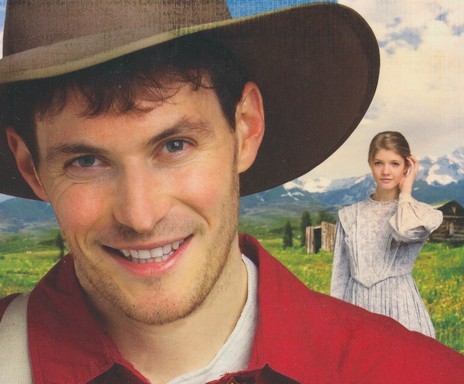
In just a couple weeks, the next Archer brother’s story will hit the shelves. Stealing the Preacher is Crockett’s story. Three years have past since Short-Straw, and Crockett has trained with a local minister to prepare himself for his dream of ministering to a congregation of his own. But when he’s on his way to a final interview, he’s abducted from a train by a gang of aging outlaws and faced with the choice of either escaping to follow his own dreams or staying to help the daughter of his captor fulfill hers.

Stealing the Preacher is avilable for pre-order now! Just click on the cover to order from Amazon.

To read the first 3 chapters for free, follow this link to my Facebook page. If you “like” the page, you gain immediate access to the content. Enjoy!

Question for you:

Do you know someone who was named for a historical figure? Or do you have family names that have been handed down through the generations?

My oldest son carries on the WDW tradition. My husband’s initials are WDW and his father’s initials are WDW. So it was important to Wes that we carry that on with our son. Finding a W name we both liked was a bit of a challenge. I finally opted for Wyatt (what western fan wouldn’t love such a name – Wyatt Earp, anyone?). The D came from my father who passed away when I was 16. His middle name was Dale, so now we were bringing in family tradition from both sides. Then, we we told my grandmother the name we had selected. She was giddy and thanked us for naming him after her. I hadn’t known until that moment that her maiden name had been Wyatt. How cool is that? I love names that are rich with family meaning!

Patricia PacJac Carroll: Tribute to Women Pioneers


You’re flustered and in a rush. Stop. Take a sip of your favorite Starbucks drink and imagine it’s 1850. You are comfortable in your home in Boston. Women are protected. You have your women friends, sisters, mothers, aunts around you. Life is good.


And then Harry, your husband, comes home from the store where he works. He has a wild look in his eye. No, not that wild look! He’s got a map in his hands. A piece of paper with words you may or may not be able to read depending on your status and upbringing.


Back to Happy Harry. He’s excited. His hands are trembling. (Remember, it’s not that wild look.) He sits down at his desk, scribbles out figures, and jumps out of the chair. “We can go.”


Your heart perks up. Maybe a party. You’ll need a new dress. “Yes, dear. Where?”


“To Oregon. No more working in a dark store. I can farm my own land. Realize my dream.”


You don’t want to go. Why leave? You have your friends. Family. Status.


Handsome Harry rushes to you, sweeps you off your feet, and yes, now he has that look in his eye. “Together, we’ll conquer a new land. Adam and Eve in a faraway paradise.” And he smothers your words of protest with a kiss.


Ah, well, you never could resist his kisses.


And you’re off. All your possessions whittled down into one, let me repeat that, one wagon. After tearful good-byes to loved ones you will probably never see again, you are already worn out.


On top of that, you are soon in the chaos of fifty wagons. Some of your fellow travelers are new arrivals to the United States and their different languages add to the chaos. What’s more, men are everywhere, and you are not used to being around other men. But now you are seemingly in the trenches with dirty, smelly, men.


Speaking of smelly, soon after you start on the trail, odors assault your dainty senses. What’s worse – you own them. Oh, the disgrace. It doesn’t take long into the journey and you are walking behind the wagon, suffering long hot days of slow miles and stinging flies.


You wince and cry when a shriek erupts from a wagon behind. A small child has been run over by the big wheels. Or cholera has claimed another life to be buried along the trail with the graves of those who died from other wagon trains that passed by years ago. You wonder if you or your husband will be next.


Water becomes scarce, the sun blazes, and the dust chokes what little air is left. Maybe you cringe at the small kick of the little one letting you know that yes, you are with child.  You can only pray you’ll reach Oregon before it comes.


Harry? He’s on his adventure. His dream.


Then you top the majestic mountains and see the green valleys. Your breath whooshes. You look east. Miles and miles of wagon ruts mark the land. Badges of honor to those who made the sacrifice. You look at your hands. Worn and callused. But you are strong. The little one inside you is strong too.


You gaze at Harry. He’s no longer the pale storekeeper. His body is sculpted bronze sinew forged out of the hard county. His eyes mirror the excitement and adventure you feel. Together you will tame a wild land, make a new life, and help build a new state. You realize you are home. You are a pioneer.


Now you’re back in the 21st century. It’s not really that bad. Take another sip of your drink and then whisper a quiet thank you to those brave women who made the trek west and civilized this nation.


Don’t forget them, draw on their courage, and go after

your dreams.


Golden Dreams blurb

Sometimes you have to go through your past to reach your dreams.

The civil war ends, leaving, Katy Gilbreth with nothing but a wounded heart and scarred face. Vowing not to give up, she sets her sights on California where she can get away from the hauntings of her past and start over in a land full of golden dreams. With her faith shattered and hopes fading, Katy trusts no man yet needs one to take her west.


Revelation Tarver has left California and is traveling east. He’s called to preach. A hard thing to do with a reputation as a fast gun. Going to reconcile with his father in Virginia, he believes he can outrun his past. Then he has those visions of asking a woman to marry him, but he definitely has no plans to fall in love again. Until he stops for supplies in a nowhere town and sees the woman in his dreams. Because of her past, Rev shuts his heart to Katy. After all, he’s been called by the Lord to preach, and he is headed east.


Until a killer, land grant, and a tornado throw them together on the California trail. Katy and Rev embark on a journey where their dreams collide as they face the wild land, a wicked outlaw, and their own pasts.


Leave a comment to get your name in the hat for either Liberty Belle (which is available now) or Golden Dreams when it comes out in April.

To Sew…..To Sew


Few things made such a huge difference in an 1800’s woman’s life than the sewing machine. But the price in the beginning put it out of reach of most.


Hand sewing has been around for over 20,000 years, probably since Adam and Eve’s day when they had to make clothes out of leaves and things. The first needles were made of bone or animal horn and the first thread was animal sinew.


(By the way, the first needles with eyes didn’t appear until the 15th century.)


Lots of men tried unsuccessfully to design a sewing machine. The first functional one was made in 1830 by a French tailor, Barthelemy Timonnier. It used only one thread and a hooked needle that made a chain stitch such as that used in embroidery. But he was attacked by a group of seriously upset tailors and almost killed. They burned down his garment factory because they feared the sewing machine would put them out of business.


The first successful American to design and put the sewing machine to the test was Walter Hunt in 1834. Unfortunately, he lost interest and abandoned his patent, again out of fears of unemployment.


Next came American Elias Howe in 1846. His machine used thread from two different sources to create a lockstitch. After he patented it, he spent the next 9 years looking for investors and fighting off imitators who looked to steal his idea.


Then Isaac Singer came on the scene. In 1854 he designed a machine that used an up and down motion and a foot treadle instead of a hand crank like the others.


Even though Singer’s machine was decidedly different from Howe’s, Howe sued him for patent infringement and won. For the next 13 years Singer had to pay Elias Howe considerable patent royalties. Howe’s income jumped from a mere $300 a year to $200,000. He became a wealthy man. But so did Singer in spite of everything. Interest in the Singer Sewing Machine exploded. (On the right is a photo of Isaac Singer.)


Finally in 1889, sewing machines made it into homes. They were no longer just used in factories.


In the late 19th century on the American frontier, home sewing enjoyed renewed popularity. Numerous women’s diaries listed sewing for the family as the most common domestic activity for women. Those women fortunate enough to have machines to assist them, often worked as community dressmakers to bring in extra income. They would work for about one dollar a day, which was excellent back then.


Sophie Best wrote to her parents from her homestead in Minnesota:

“It is wonderful what progress civilization makes! My head is filled with those pretty sewing machines that are being bought by so many families and are so delightful to have! Some people have been able to get these little fairies for between $10 and $60. The stitches they make are so strong, so pretty and so easy to make.”


My mother taught me to sew on a Singer treadle machine exactly like the one on the left in the 1950’s. I still remember how fun it was. But one day the needle went through my finger and broke off. My mom had to get some pliers to pull it out. Man, that hurt! After that I learned to keep my fingers out of the way.


Did you sew? And if so, did you ever use a treadle machine?

Bonnets Anyone?


While most of us associate bonnets with the 19th century and earlier, I remember my mother wearing them in the 1950’s when she had to work outside which was a lot because she picked a lot of cotton back in those days to help the family out. Her bonnet was a slat variety which is to say that it was made of cloth and had rows sewn into the fabric on the sides where wooden slats could be slid into to give the bonnet shape. It stuck out over the forehead in order to shield the face and had draped material across the back to protect the neck. The picture on the right shows what it looked like.

Most frontier women wore poke bonnets that came to be known as prairie bonnets. They were a far cry from what a “Lady of Fashion” would have worn. But frontier women had more things on their minds than fashion. Like getting all the work down and daily survival. Poke bonnets were also made of fabric, usually calico.

Citified women were more discerning in their choice of headwear. They opted for frills and lace and all kinds of things to dress up their bonnets. But even so, the bonnet was an essential part of their wardrobe. Women, like men, never went outdoors without something on their head. It just wasn’t done.

The following bonnets are used with permission from a wonderful site called Victorian Bonnets at http://www.victorianbonnets.com/ . If you get a chance to go over there you’ll find plenty of things to interest you, especially if you’re a writer and need to know what a lady would’ve worn in a particular year. Pamela Robles couldn’t be more gracious or helpful. She also makes bonnets for anyone who needs to dress authentic.


To the left is a white wedding bonnet and a straw and silk cottage bonnet. Very pretty.


As you can see some are plain and some are very fancy. Some are serviceable and some are a fashion statement to be admired. And this is just a drop in the bucket to what’s available on the website. There are tons more.


So, what is your favorite? What would you most likely have worn had you lived back then?


It’s a little sad that we don’t wear bonnets any longer. I could sure see myself in some of these.

Kaki Warner: Bride of the High Country

In my latest release, BRIDE OF THE HIGH COUNTRY, I had to get my main characters from NY to Heartbreak Creek, CO.  Since the Transcontinental had been finished the previous year (1869), I picked the train.  Oops.


Even though train travel had been available in the east for three decades, cross-country hauls were rare.  Amenities, rarer.  No bathrooms, for instance.  But that was OK since the trains had to stop every twenty miles to fill the tenders with water.  If the passengers were lucky, there might be an outhouse beside the tracks.  Or if they had a dime, they could purchase a box lunch from an enterprising local, or enjoy a hot meal of beans, bacon and stale biscuit.  Then back on the train and the hard bench for another lurching, bouncing twenty miles. YIPEE.


But, of course, my characters were rich, so they traveled in style in a Pullman Palace Car, which was as plush as a gamblers’ steamboat, complete with velvet couches, carpet and wooden inlay around the windows.  There was even a washroom in every four-berth car, which emptied directly onto the tracks (and you thought it was hunters who decimated the buffalo—HA!)  Also included on the luxury runs were a parlor car and dining car, which served mostly-edible meals when your plate wasn’t sliding into your lap as the train clickety-clacked along.


Ah, the beautiful scenery and fresh air—if only you could see through the soot-streaked windows or breathe through the billowing smoke wafting back from the locomotive.  Still, it was faster than a three-month trip by wagon.  Plus, you got to shoot at stuff as you careened along at ten, twenty, or—OMG—even thirty miles an hour.  What a treat!


FACT:  Each Pullman Car was owned and operated by the Pullman Company, and was serviced by a white-jacketed Negro man universally named “George” in deference to his employer, George Pullman.


The West would have been a vastly different place without the influence of the railroads.  For one thing, they offered incentives for people to settle along the right-of-ways, thereby creating permanent customers for the goods they were hauling.  They also carved routes through impossible country, built thousands of trestles, bridges, and culverts, or—since anything steeper than a 3% grade was prohibitive in fuel, construction, maintenance, and equipment costs—they laid tracks miles out of the way to avoid them, thus opening up even more country.


FACT:  In constructing the Transcontinental, Irish immigrants laid tracks west from Nebraska, while Chinese workers came east out of Sacramento—and they arrived at the EXACT SAME SPOT at Promontory Summit!  Amazing!


FACT:  The standard width between rails was determined by the Romans when they built stone roads in England.  4’ 8.5” was the width between the wheels of a two-horse chariot.  Over time, those wheels wore such deep grooves into the stone that later wagon-makers had to space their wheels to fit them.  Then somebody figured wheels roll easier metal-on-metal, so they laid down metal-capped wooden rails, put flanged, metal-treaded wheels on their horse-drawn wagons, and soon coal was rolling out of Newcastle at record rates.  And all because of the width of two horses’ asses pulling an old Roman chariot.  Who knew?


So there you have it.  More than you ever wanted to know about the joys and hazards of riding the rails west.  Have you ever taken a cross-country train trip or slept in a Pullman?  Would you do it again?


Leave a comment, and your name will be entered for a signed copy of BRIDE OF THE HIGH COUNTRY.  Thanks for coming by, and my thanks to you, too, fillies, for letting me chat with your readers.

Feisty Lady Ranchers RULE!

It’s almost time for Over the Edge to release.

Over the Edge is book #3 in the Kincaid Brides series and it was my favorite one of the three to write. Of course the book I’m working on NOW is always my favorite so it’s not a fair test.

Two elements in Over the Edge made it fun.

1) A madman-Seth Kincaid

2) A feisty lady rancher Callie Kincaid with no patience for….guess what? MADMEN

So Seth was fun to write but Callie Kincaid is my wheelhouse.

A feisty lady rancher. A tough cookie. Those are the heroines I love. And Callie is exactly that. First of all, she grew up in Texas. And honestly, do I need to say more?

If I do then secondly, she grew up on a Texas ranch.

And thirdly, she grew up on a Texas Ranch and her mother died when she was young so she dogged her pa and big brother around most of her life and was raised more boy than girl.

All these elements add up to fun.

We’ve waded through Out of Control, book #1 with bossy Julie and tyrant Rafe.

Next we got In Too Deep with sweet, soft spoken Audra and shallow charmer Ethan.

Now we’re going Over the Edge with the wildman Seth Kincaid and he’s met his match. Callie doesn’t back up for anyone. Turns out, that’s exactly what Seth needs.

Julie and Rafe give orders? Guess who’s not taking them–in fact Callie’s got a few orders of her own.

Ethan and Audra try and sweet talk their way through life? Guess who’s not charmed.

Seth lapses into crazy-world about half the time? Guess who’s not putting up with any nonsense.

Callie Kincaid comes blasting her way into Kincaid’s world by fighting off a stagecoach robbery…with a rifle in one hand and a six-gun in the other. And before you know it, Seth not only has six 6 boot tracks on his face, but he’s begging her to stay and walk all over him some more.

Here’s a bit more about Over the Edge, coming August 1st from Bethany House Publishing.

Over the Edge 

 Seth Kincaid survived a fire in a cave, but he’s never been the same. He was always a reckless youth, but now he’s gone over the edge. He ran off to the Civil War and came back crazier than ever. After the war, nearly dead from his injuries, it appears Seth got married. Oh, he’s got a lot of excuses, but his wife isn’t happy to find out Seth doesn’t remember her. Callie has searched, prayed, and worried. Now she’s come to the Kincaid family’s ranch in Colorado to find her lost husband. Callie isn’t a long-suffering woman. Once she knows her husband is alive, she wants to kill him. She’s not even close to forgiving him for abandoning her. Then more trouble shows up in the form of a secret Seth’s pa kept for years. The Kincaid brothers might lose their ranch if they can’t sort things out. It’s enough to drive a man insane–but somehow it’s all making Seth see things more clearly. And now that he knows what he wants, no one better stand in his way.

And here is a short bit of the opening scene.

Over the Edge

October 30, 1866

Chapter One

A bullet slammed through the door of the stagecoach, threading a needle to miss all four passengers.

“It’s a hold-up!” Callie grabbed her rifle. “Get down!”

The stage driver yelled and cracked his whip. More flying lead hit, higher on the stagecoach. The man riding shotgun got his rifle into action.

“Get on the floor.” The woman sitting across from Callie was frozen with fear. That endangered Connor and it made Callie furious.

The bullets came fast. They were going slow on a long uphill slope. With the driver’s shout the stage picked up speed. From the roof came a steady volley of deafening return fire.

Reaching across, Callie grabbed the woman by the ruffled front of her pink gingham dress and dragged her off the seat. The woman shrieked but didn’t put up a fight, which was smart of her. Callie would’ve won that fight.

Somewhat more gently, Callie picked Connor up from the seat beside her and set him on the woman’s lap. Eight-month-old Connor yelped, more a shout of anger than a cry. But crying would come soon enough. Her little wild man didn’t do anything quietly.

 “Can you shoot?” She shouted at the young man, hoping he’d snap out of whatever panic had seized him. He shook his head frantically. “Get on the floor.”

Callie used her whiplash voice and hoped it got the man moving. She threw herself across to the woman’s seat to face backward. With her Colt in her left hand and her Winchester in her right, she shoved the curtain aside. The flare of the orange and yellow aspen lining the road blocked any sign of the gunmen.

Callie didn’t bother to push the man to the floor. Let the idiot figure that out himself. She got a glimpse of the robbers riding around a curve. Bullets hailed on the coach. Callie held back, waiting for a clear shot.

Connor’s yelling turned to a cry. Callie was enraged that her son was in such terrible danger when he should have been safe on her father’s ranch in Texas.

The noise overhead said the driver’d slid off his high seat to use the stage as cover. She heard the man riding shotgun land flat on his belly on the roof. The driver’s shouting and the gunfire slashed like a sharp knife through the cool October morning.

“Try and calm Connor down.” Not much chance of that. Connor had been a whirlwind since birth. And the two caring for him were more upset than he was.

She counted four outlaws. The varmints had picked this uphill slope a few miles outside of Colorado City because the stage slowed to a crawl.

Callie had plenty of bullets but she was a conservative woman and she didn’t intend to fire blind and waste lead.

She was mighty low on money and she needed ammunition for when she finally tracked down that worthless Seth Kincaid.

Click HERE to pre-order Over the Edge

 http://www.maryconnealy.com/

Pearl Hart – The Arizona Bandit

Hi! Winnie Griggs here. (pssst – look for giveaway info at the bottom of this post)

I was thumbing through one of those ‘infamous women of the old west’ type books the other day and  came across a listing for a woman named Pearl Hart. The heading of First Female Captured Stagecoach Robber caught my eye. And the more I read about this woman, the more fascinated I became with her story. I did some additional research and found a number of different, sometimes contradictory, accounts of her life. I’ll stitch together my favorites here.

While there is very little know about her early life, we do know that she was born Pearl Taylor in 1871 and lived the early part of her life in Ontario, Canada. She was one of several children born into an upper middle-class, church going family. At age sixteen she was sent to a boarding school, but she had an adventurous spirit that couldn’t be contained. That, combined with her attractiveness and wit made her quite popular with the men of her acquaintance.

While at school Pearl became infatuated with a young man named Hart and eloped at about age 17. Hart has variously been described as a rake, a drunk and a gambler. Far from this being the romantic adventure Pearl had hoped for, it turned out Hart was also abusive. She left him and then returned to him several times and it is reported they had two children together. During their last reconciliation, the couple worked odd jobs the Chicago World’s Fair. There Pearl saw Buffalo Bill’s Wild West Show and developed a fascination for the cowboy life that would stay with her her entire life. She also visited the Women’s Pavilion where she heard speeches by prominent women’s activists such as Julia Ward Howe.

Finally leaving Hart for good, Pearl placed the children in the care of her mother and took up with a man named Dan Bandman, a gambler and dance-hall musician. The two eventually moved to Colorado.

Later, when Dan left to fight in the Spanish-American War, Pearl moved to Globe Arizona, a mining town. There are various reports that she may have worked as a cook, a singer, a laundress and/or opened a tent brothel. It is also said that she developed a fondness for cigar and liquor at this time. Pearl described her life at this time in these words: “I was only twenty-two years old. I was good-looking, desperate, discouraged, and ready for anything that might come. I do not care to dwell on this period of my life. It is sufficient to say that I went from one city to another…”

Whatever her employment, Pearl’s finances hit bottom when the mine closed. Trying to find a way to earn money, she took up with a man named Joe Boot and together they tried to work an old mine claim he owned. But by 1899 the pair found themselves short on cash and decided to rob a stage, though it appears neither had done anything like this before. One account claims they took this desperate measure because Pearl had gotten word that her mother was ill and needed money, though there is little to substantiate this claim.

Pearl cut her hair and dressed up like a man. Both armed with revolvers, they stopped a stage running between Florence and Globe at the Cane Springs Canyon watering point. They collected $421 from the three passengers on board. Pearl then reportedly took pity on them and gave them back each $1.00 so they could buy a meal at the next stop.

But their lack of experience did them in. They did a poor job of covering their tracks and within six days the law had caught up with them. One account states that they were sleeping when the posses caught up with them and that while Joe surrendered quickly but Pearl tried, unsuccessfully, to fight her way out.

Joe and Pearl were locked in the local jail. But the notoriety and attention Pearl received as a female bandit, coupled with the lack of proper facilities, caused the sheriff to throw up his hands and send her to the jail in Tucson. Pearl’s notoriety grew, and she did all she could to fuel it. Her story about her reason for the robbery (her ailing mother) gained her sympathy, and her avowal that she “would never consent to be tried under a law she or her sex had no voice in making, or to which a woman had no power under the law to give her consent” gained her a whole new level of attention.

Never one to give up on her options, within a matter of days Pearl had charmed some of the men at the Tucson prison and managed to escape. Unfortunately for her, a New Mexico lawman recognized her and sent her back to the Tucson prison.


Joe Boot was eventually sentenced to 30 years in jail and Pearl to five. Pearl was given the dubious honor of being the first woman incarcerated into the Yuma Territorial Prison. But neither Pearl nor Joe served their full terms. Joe, apparently due to a show of good behavior, was given trustee status. He walked off while working outside the gates less than two years into his term and was never heard from again.

Pearl, on the other hand, gained her freedom legitimately, well, sort of. The warden of the jail where Pearl was imprisoned like all the attention she was attracting from the public and the media. He provided her with a roomy 8 x10 cell as well as a small yard which gave her a space to entertain reporters, photographers and other guests. Pearl, who was the only female incarcerated in the facility, was not above using her wiles to play guards and trustees off of each other to improve her situation.

In December of 1902, Pearl received a pardon from the governor and was released free and clear. The official reason for the pardon remains unclear, but it was given on condition that she leave the Arizona territory. Pearl herself claimed that she had been invited to play the lead in a play her sister had penned based on her life and this had played into her release. However, a later rumor emerged that she had became pregnant. The governor, wanting to spare the Arizona Territory the embarrassment of explaining how this could possibly have happened while she was imprisoned, pardoned her and set her free. While there is no proof that Pearl ever bore a third child, this doesn’t mean the wily woman didn’t use this as a ploy to secure her freedom.

There are varying accounts of what happened to Pearl after she was released. Some say she parlayed her notoriety into a show business career, billing herself as “The Arizona Bandit.” One account says she traveled for a while with Buffalo Bill’s Wild West Show. A less colorful theory is that she married a rancher named Calvin Bywater and settled down into a quite but happier life. If that last is true, then perhaps Pearl got her “happily ever after” after all. Folks who knew Mrs. Bywater described her as “soft spoken, kind, and a good citizen in all respects.” Mrs. Calvin Bywater lived well into her 80s.

As I said earlier, there are a number of different accounts of Pearl’s life and this is only one of them. Her exploits have been featured in theater, film and pulp fiction. There was even a musical called The Legend Of Pearl Hart. And while we may never know the full true story of her life, there is no doubt that she lived it on her own terms.


And, as promised I’m doing a giveaway today.  In honor of my upcoming June release, A Baby Between Them, I’m giving away an advanced copy to one person who leaves a comment today.  Here’s a little about this book:

For two months, Nora Murphy has cared for the abandoned infant she found on their Boston-bound ship.  Settled now in Faith Glen, Nora tells herself she’s happy.  She has little Grace, and a good job as housekeeper to Sheriff Cameron Long.  She doesn’t need anything more – not the big family she always wanted, or Cam’s love…

 A traumatic childhood closed Cam off  to any dreams of family life.  Yet somehow his lovely housekeeper and her child have opened his heart again.  When the unthinkable occurs, it will take all their faith to reach a new future together.

Now avaiable for pre-order HERE

Life On Soap Suds Row


The frontier army post must’ve been a busy place with soldiers coming and going, marching and saluting. But it wasn’t only men who lived on the post. There were officers’ wives and children. And a known fact is that up until 1878 the army hired laundresses, or washerwomen as some called them.

They traveled with the soldiers in an official capacity and had free access to the army doctors and surgeons. In fact, they were the only women the army recognized and supported.

To get hired, a laundress had to pass several hurdles. They had to have a certificate of good character from headquarters before they could assume duty and they had to be free of disease.

Once they passed, these women were issued a tent, bedding straw, a hatchet, a large wash tub and two mess pans. Each day they received a ration of meat, bread and whiskey. The whiskey might sound odd but it was issued to remove stains. *wink, wink*  I’m betting more than a few drank it after a hard day of scrubbing clothes over a fire. It was backbreaking work.

Each company was issued three or four laundresses. That averaged one for every 15-17 men. That’s a lot of clothes for one person to wash.

The women were lodged together on what was called Soap Suds Row. Their tents were often tattered and in disrepair. If a laundress married a soldier, which happened pretty frequently, he lived with her here.

A laundress’s work was extremely hard. She rose before dawn and chopped wood and hauled water. She often heated as much as 50 gallons of water a day in several tubs for soaking, scrubbing, and rinsing. Boiling was the final process (to kill lice, ticks, and fleas) before being hung up to dry.

Lye soap was the only kind available to them and that plus the hot water made their hands crack and bleed. She used a rub board to scrub the clothes on and that too was unkind to hands.

If a soldier wanted his clothes ironed that cost extra. Laundresses also did mending, sewed on buttons, and applied bluing to the final rinse to offset the yellowish tinge that light-colored clothing acquired from repeated washings.

But, laundresses were paid well. An average soldier paid $1 to $4 a month, depending on his rank. So, while an average soldier might draw $13 a month, a hard-working laundress could make up to $40 or over. Not bad. At least it was better than other things. And they didn’t have to be worried that the soldier wouldn’t pay them because the army deducted it from the men’s pay before they even got it.

While some were soundly criticized for drunkenness and loose morals, the majority were honest, hard-working, kindhearted women who made a living doing a difficult job.

It’s strange that in light of the crucial service these women provided they were considered at the bottom of the social ladder. Maybe that was due in part to the fact that few could read or write.

I’d like to read some accounts of their lives but little is known. More’s the pity. Diaries and journals recording their experiences would’ve made for interesting reading.

When I was a little girl, my mother who was uneducated took in washing and ironing to help make ends meet. I watched her slave, on her feet all day, to make a few dollars. I can’t remember what she charged to wash the clothes, but I remember she got paid 50 cents a dozen to iron them. I still remember the smell of that starch and the freshly pressed clothes hanging all over the house.

Do you have recollections of someone you know doing this?

* * *

Visit me at www.LindaBroday.com

On Facebook: www.facebook.com/linda.broday1

On Twitter: http://twitter.com/lbroday

MY BABY CONNECTION by Charlene Sands


Isn’t this cover beautiful?  What a gorgeous baby and hunky cowboy!   I was thrilled when I received the cover for my December book and it being only September I’d normally wait to show it off.  But this book and cover couldn’t be more pertinent in my life!   As of today’s post, my daughter is 33 weeks pregnant and that means in about 2 months I’ll have a new and first grandchild.  It’s a girl and no, they won’t tell us what names they are cooking up.  The little girl’s name on the cover is Meggie. Her mama, Trish calls her “Sweet Pea” sometimes.  And that hunk on the cover is none other than Clayton Worth, brother to Tagg Worth from Carrying the Rancher’s Heir. Both of those Worth men live on Worth Ranch in Red Ridge, Arizona.

Though, THE COWBOY’S PRIDE is a contemporary story, I thought we’d go back in time and see how babies were cared for in the 1800’s.  (AND trust me — you’ll be glad you had your babies in the modern world) but I did find some commonalties where parenting has come full circle.


THE CARE AND FEEDING

Affluent new mamas of the mid to late 19th century often used “wet nurses” to feed their babies.  In Europe and in the Victorian era, women rarely stayed at home and relied on servants, mammies and caregivers to breastfeed their children.  This practice was done much earlier in America though.  In the south and as early as the 1700’s, slaves spent a great deal of time raising children from wealthy families and that included nursing them.  If for some reason breastfeeding couldn’t be practiced, then the baby was given PAP, which is a combination of bread, water and sugar. When the child was old enough to eat solid foods, regular food cooked for the family was mashed up and spoon fed to the babies.   In 1867 a London scientist developed the first baby food. Baron Justus von Liebig introduced Soluble Food for Babies and it was available in America by 1869. 

The little tykes did not have it easy.  There were no modern conveniences and probably the worst of it was diaper-changing. 

MESSY ONES

In rural areas often babies were “toilet-trained” as early as possible.  But often times, this meant simply holding the baby over a chamber pot and allowing him to do his deed.  For the first few years of the baby’s life, they either went around bare-bottomed or wearing a skirt for this very reason.   If I was the mother, I’d say the sooner the better with the toilet training.  Ugh.   Poor babies – their little bottoms were never lotioned, oiled or pampered.  If they developed skin problems, they would be treated with a mixture of herbs.  Later on in the 1800’s if a baby wore a diaper, it was recommended that diapers be washed and not just hung out by the fire to dry as per prior practices.   Oh…a lovely thought!   Babies bottoms were simply wiped clean with a dry cloth and powdered with absorbent wood dust.  Then they were either re-diapered or left to run around naked for a while.  Baths were infrequent at best and it took doctors until the early 20th century to start recommending using soap and water to clean the baby’s bottom.  A “novel” idea.   The diaper “safety pin” was invented in 1849, which I think must have made life a little bit easier. 

COMING FULL CIRCLE

Though these practices seem uncivil and rough, many of our current baby care techniques have reverted to more natural techniques used centuries ago.   For instance, as nice as they might make the baby smell, the use of oils and lotions are not considered necessary in today’s world.   Too many babies develop skin rashes and sensitivities from the chemicals contained in those products.   So it’s okay not to butter up a baby’s bottom, but if you must, it’s now recommended that an all natural product be used on their skin.  Thankfully, we are in the “green” era and these all-natural, fragrance-free and chemical-free products are easily found on the store shelves.  It’s important to read the labels. 

Another practice that’s coming full circle is the use of fresh foods and baby grinders to mash up baby’s meal.  Often time, new parents like to know exactly what ingredients are in the food they serve to baby and they spend a great deal of time buying and preparing fresh healthy food for their children.  Something as simple as chicken stew, a little chicken, some fresh carrots and potatoes can make a hearty delicious meal for the baby.  No Cajun spices, please!!  Or you’ll find yourself holding that baby over the modern day chamber pot!

IF YOU LOVE BABIES

I hope you remember my new release coming to Eharlequin this November and all other outlets and bookstores in December. (It is available now for Pre-Order)   Little Meggie is a cutey-pie in a story of second-chances and heartfelt emotions.  Clayton Worth has a connection to this baby, but it’s not what you think. (And that’s all I’m saying!)  And there will be more about my Baby Connection coming soon!

In the meantime, my Kindle and Nook release, Smooth-Talking the Hometown Girl is available now for $.99! 

DRAWING

I’ll be offering a copy of my May release, Carrying the Rancher’s Heir or any one of my backlist books today, if you stop by with a comment about your parenting or babysitting days. 

What was the best and worst thing about caring for a baby?

Idella Smyer: An Uncommon Woman


For every famous or well-known person in the Old West you can find a hundred who were just as tough and resilient but who never got their name in the history books.

Idella Stephens Smyer was one such woman. I recently ran across her when I was reading about some of our local history.

Idella was born in 1871. Raised by her grandfather who reared her as a boy, she rode horses when she had to be strapped in the saddle. She took to horses like a duck to water and started breaking and training them. Sometimes she rode as a jockey in races.

She didn’t care much for schooling and only went a couple of months a year in the fall after they’d gotten the crops in.

At the age of 15 she married Henry Smyer in Decatur, TX in 1885. She and Henry moved to her 80 acre farm. Her grandfather gave her one heifer as a wedding present. That was the start of their herd. Each year they sold the steers but kept all the heifers.

The first of their 14 children, a daughter named Gertrude, came down with malaria. Idella took her everywhere to try to find a cure. Nothing seemed to work until Idella’s brother, Blue Stephens, came to visit. He worked for the huge XIT Ranch in the Panhandle. He persuaded Idella and Henry that the dry climate would cure Gertrude. So they packed up and headed west.

But passing through Jacksboro, Texas, Henry got a job hauling rock for a new hotel. He and Idella bought a tent and lived there three years. That’s where their second daughter whom Idella named John Willie came into the world. How fitting for a woman who lived life so large to saddle her daughter with a man’s name. I laugh every time I read this part and imagine a man asking John Willie to marry him.

Idella’s idea of raising children was to make them as tough as she could and able to take care of themselves in any situation.

By the time she finished with them, they rode wild horses like the wind, hunted wildcats, wolves, and antelopes. They camped out alone on the prairie and they feared nothing.

Neither did Idella. When her third baby was born she was all by herself. Like everything else in her life, she tackled the task and did what she had to do.

The Smyers made it to the Panhandle in 1892. They settled into an abandoned one room house here in Crosby County and took possession. With wood a scarcity, Idella gathered up an armful of cow chips and had a roaring fire going and within an hour was baking biscuits. (I didn’t know this but cow patties burn hotter than wood.)

Their cattle herd got bigger along with the size of their family. To make extra money, Henry took a job as a freighter. That left the ranch up to Idella to keep going. But she tackled it like everything else in her life-without batting an eyelash.

One day a raging wildfire threatened their house and herd of cattle. Idella gathered all the children who were old enough, gave them a bucket of water, and sent them out to help battle the blaze. They saved the house and only lost a few cattle. Another time when a blizzard swept across the prairie and caused her cattle to drift, Idella put her children into bed to stay warm and gave them strict instructions not to light a fire. Then she headed out to round up the cattle by herself. When she couldn’t get them to stay together so she could herd them into the corral, she managed to get them into a field of maize she was growing. Although the Smyers had meant to take the crop to market, it fed the cows and kept them together. Idella worked for hours in the frigid cold hauling warm water from the well to them. She knew cattle that had a full stomach and their thirst quenched would be content. She was right. She lost not one cow whereas her neighbor lost 250 of his herd. And when she finally dragged herself home to thaw out, she found her children up and dressed and a wonderful meal cooked.

(By the time their children married and left and the town of Lorenzo sprang up in their pasture, Idella and Henry sold off 1,000 head of cattle that all began with one lonely heifer.)

There were always horses to be broken and trained on the Smyers’ farm. In true Idella fashion, she let each child select a horse of their own. The only stipulation was that they break it themselves. And they always did.

Idella had both physical and mental strength. She could brand, rope, and bulldog. She could tail up a weak cow or dose a sick one. She could do anything with a horse and horses had a special place in her heart.

The woman who coupled a merry laugh and a great sense of humor always used her own brand of language-decent but strong. But there was a steely glint in her eye that promised she could hold her own against anyone.

Idella Stephens Smyer died on October 27, 1953 at the age of 83. (She outlived Henry by 14 years.) She had no complaints. She’d lived a full life and had done everything she ever wanted.

Do you have anyone in your family tree that bears a resemblance to Idella?

My mother comes to mind. She was the strongest woman I’ve ever known. I’ve seen her roof a house; fix a car; wipe away tears; kill a chicken, pluck, and cook it; pick and hoe cotton and rear five children while she did it. There was nothing my mother couldn’t do. She was my hero and my friend.

It’s not too late to order from Amazon. Just click on the cover.

www.LindaBroday.com

Petticoats & Pistols