Welcome to Sarah J. McNeal

My name is Sarah J. McNeal and I am the author of several paranormal, time travel and western novels and short stories at Publishing by Rebecca Vickery and the imprints of Victory Tales Press and Western Trail Blazers. Among my books are:
The Violin, time travel, 1927 historical/paranormal
Harmonica Joe’s Reluctant Bride, time travel/1910 historical western/paranormal
For Love of Banjo, a western/WWI historical and sequel to Harmonica Joe
Gifts from the Afterlife, contemporary paranormal short also included in the 2011 Christmas Anthology
Heart Song, contemporary/paranormal short
The Curse of the Amber Tomb, contemporary/paranormal included in the 2012 Fall/Paranormal Collection.
Just under contract is my upcoming paranormal, The Light of Valmora.
I live in North Carolina with my Golden Retriever, Lily and my cat, Liberty.
It’s such an honor to be a guest blogger at Petticoats and Pistols.

Haunted Sheridan Inn

Settle in and let me tell you about a haunted hotel, The Sheridan Inn. The Sheridan Is an historic inn in the National Register of Historic Places, but once it was the finest hotel between Chicago and San Francisco. From its planning stage to the opening of its doors on May 27, 1893, Buffalo Bill Cody was involved and led the grand celebration into the dining room on June 27, 1893. It even had electric lights thanks to the electricity supplied by abundant coal in the area and the coal-fired threshing machine engine.
George and Lucy Canfield, the first managers, catered to big game hunters, people of notoriety, people who stayed there while their homes were built and ranchers who would spend weekends there. The price of a room was $1.00 A DAY, breakfast cost $.25, lunch and dinner $.50 and, for the stagecoach that made regular stops, it cost $7.00 for 21 meals.

Bill Cody bought the business but not the building and ran the stagecoach that ran from the inn to Deadwood, South Dakota. Although he later built his own hotel in Cody, Wyoming, Cody still visited the Sheridan often.

Now comes the good part.

In 1901, Miss Catherine B. Arnold, known as Miss Kate, came to the Sheridan at age 22 with her parents and decided to stay there working as hostess, babysitter, seamstress, housekeeper and desk clerk. Everybody loved her, both the staff and the guests. The flowers she grew in her garden decorated the dining room table every day. She lived and worked there for 64 years until 1965 when it was closed and sold to a developer who planned to tear it down. The inn was saved by the Save the Sheridan Inn Society after an exhausting 2 years of campaigning. Ms. Neltje purchased the inn in 1967 and used it for dining and dancing for the next twenty years. One year after it reopened, in 1968, Miss Kate died. Her last request was to return to the Sheridan Inn and remain there. (Here comes the creepy part.) She was cremated and her ashes were placed in the wall of the room where she lived all those years on the third floor. After the inn was saved from bankruptcy and the Preceptor of Tau Chapter of Beta Sigma Phi Sorority renovated Miss Kate’s room and placed her favorite chair in front of the wall where her ashes remain in the wall. It is said by some that Miss Kate is still the guardian of the inn and the staff often say they can feel her presence. She turns the lights on and off and opens and shuts doors from time to time. Cold spots and footsteps can be heard on the third floor, in the ballroom by the windows and sometimes throughout the inn. One person reported driving by the old inn at 2:00 AM and saw shadows moving past the windows on the third floor. Of course, the inn is closed at night so no one could be there during the wee hours of the night. Now who could that be walking the silent halls of the Sheridan Inn except the lovely spirit of Miss Kate.

The Sheridan reopened in 1997 but does not have overnight guests, but there are plans to open twenty rooms to guests for overnight lodging. (I wonder if they’ll be visited by Miss Kate.) The inn has certainly had its glory days with guests like Earnest Hemingway, Bob Hope, President Hoover and Will Rogers and maybe it will again.

Recently, I found out that, as of September 6, 2012, the Sheridan has closed its doors. I guess Miss Kate will be wondering the rooms and corridors all alone now.

The Historic Sheridan Inn can be accessed from I-90, exit #23 (Fifth Street). Travel one mile west on Fifth Street, just past the railroad tracks and you’ll be there. The town of Sheridan is in northern Wyoming at the junction of I-90 and U.S. Hwy 14.

I have a new release just out this month, The Curse of the Amber Tomb, presented as one of the stories in the 2012 Fall/Paranormal Collection, an anthology published by Victory Tales Press.

Love is Eternal by Cate Abbott
Falling in love with a man from work is dangerous enough. What could Angelique possibly be thinking when she goes on a weekend trip – over Halloween, no less – with this dark haired, mysterious male?

Shattered Illusions by Karen Michelle Nutt
Blood stained floors appear and disappear, low whispering voices greet her as a storm causes the lights to flicker. Brona must put her fears behind her and unravel the mystery that haunts the house.

Night of Magic by Stephanie Burkhart
It’s 800 A.D. on the Emerald Isle. Samhain. Dark. Dangerous. Powerful. Dare Finn brave the bonfires to bring Aithne home?

Magic Words by Gerald Costlow
Hundreds of years ago, Felipe was cursed to be an immortal frog. Now only the lovely Evelyn can break his curse – if he can convince her that the handsome man she met just this morning is not crazy.

The Curse of the Amber Tomb by Sarah J. McNeal
Edward, a handsome photographer who is afraid of heights and Kate, a lady archeologist afraid to love, must face their fears when they discover a deadly secret in an ancient tomb.

Buy Links: (available in multiple formats for ebooks and in paperback)
http://www.smashwords.com/books/view/238602
It will soon be available at Amazon.com, Barnes and Noble and most other online bookstores.

Be sure to comment on m y blog today and include your email address for a chance to win a digital copy of the 2012 Fall/Paranormal Collection.

Leann Harris: The Good Guy

You want to marry them, but he’s boring to read about.

In my latest book, Fresh-Start Ranch, the hero has been with me through the first two McClure books, which are his siblings’ stories.  When I went to write Ethan’s book, who is the eldest, I was stumped.  He was a nice guy—-a nice boring guy, who everyone depended on.

I wrestled with the man.  What secrets did he have?  Surely he hadn’t made it to age 35 without some sort of black mark.  He had feet of clay. I will say Ethan McClure held on to his secrets, but I kept after him and discovered two things.

First, I discovered Ethan had been stood up at the altar.  His bride-to-be sent a note to the church, telling Ethan she couldn’t do it.  He stood in that little country church outside of Albuquerque with all his childhood friends and the area’s ranching families witnessing his shame. He hated the pitying and sympatric looks he got.

Then I discovered Ethan’s other secret.  When he was in high school, he spent the summer between his junior and senior year in high school following the rodeo circuit.  Ethan fell in with the wrong crowd and started gambling.  He ended up $5,000 in debt to some unsavory characters.

Wow, those are some heavy secrets.  And how often do we avoid telling our parents, when we’re 17, our mistakes.  Ethan told the local vet, Doc Adams, what happened.  Doc paid the debt, but told Ethan he had to work the debt off by working for him and if he gambled again, Doc would tell his parents what had happened.

That certainly was a black mark that I wouldn’t want to share with anyone, so the casino pa natet man’s reluctance made sense.

Now, who did Ethan fall in love with?  Doc’s new partner, a petite woman who hates gambling.  Dr. Tessa Grant past was marred by her father’s gambling, and she wasn’t shy about sharing her past with me.  She was an open book, and had a hard childhood.  There is a twist in the book, and Tessa doesn’t handle it well.  I understood Tessa’s feelings.  When something happens, or you stumbled across a devastating secret, it takes time to process it.  Tessa had some hard truths to deal with and it takes her awhile to deal with them.

A little side note.  I talked to a vet in Houston and asked about problems he’s dealt with.  He told me a little secret.  When a horse had colic and after you’ve walked the animal and wanting to get the horse’s system back to normal, he told me a trick—-load the horse in and out of a horse trailer and that usually will get things moving in the right direction.  That was a little secret I didn’t know.

Ethan and I would welcome all comments and questions.  And would love to give away two different copies of the book and one set of all three McClure books!

Patricia Potter’s LAWLESS: Free October 8

It’s really great visiting the Junction after what seems a long absence. As one of the original Fillies I have truly have missed this community.

After a hiatus after my Mom’s death, I’m writing again with two western-based contemporaries under contract. But that’s not why I’m here today. Instead I wanted to tell you about “Lawless” and the fact that the e-book version will be offered free on Amazon Monday, October 8th.

“Lawless” was my first mainstream western and it will probably always be my favorite. It had rumbled around inside my head and heart for years before I could find a publisher who loved my illiterate, merciless gunfighter hero as I did.

To my delight, it was a Doubleday Book Club selection, a RITA finalist, winner of the Georgia Romance Writers’ Maggie Award, and Lobo was Romantic Times’s Hero of the Month.

Captured by Apaches as a young boy, Lobo was treated brutally by both his captors and the soldiers who rescued him. Tagged with the label of the “White Apache,” he couldn’t find a job and became a feared gunslinger. Hired to scare a lady rancher off her land, he thought to do so with his dangerous reputation and cold eyes – and worse, if necessary. She was, after all, described as a gold digging female who took advantage of a dying man.

Her name is Willow George Taylor. An easterner, the daughter of a professor, she used her middle name to obtain a job as school teacher in the small town of Newton. Once there, she horrifies the town by taking in the alcoholic former sheriff, the town’s soiled dove, and any number of human and animal rejects that cross her path. The common refrain in town is “What to do about Willow?”

When she is willed a piece of land by a resident she befriended, she finds herself in the middle of a range war between two old men who hate each other. Town gossips hear of a dangerous gunslinger hired to force her out. But no one is going to force Willow to abandon her flock, especially when she seems to be aided by a mysterious good Samaritan. Her Paladin.

He appears whenever there’s a disaster: when adopted toddler Sallie Sue falls into a well: when the barn burns and when another of her adopted children is injured.

He never stays long enough for her to learn about him. After one such episode she looks toward the sky for her favorite constellations – the scorpion, the lion, the hunter. All had special significance. Tonight the lion seemed to stand out the strongest.

Like Odysseus, she mused. He was thought by many scholars to be a solitary, restless wanderer, endlessly driven by a lust for new experience, by others as a man not rigid in his adherence to the heroic code of conduct . . .”

As for Lobo, he’s rather horrified by his own heroic conduct, but how could any person leave a baby to drown in a well? Or ignore the bellows of an animal in a burning burn? But things get worse when he experiences the soul-wrenching emotions when he hears a little girl say, “I like you.”

“His stomach clenched in agony. His head swam with uncertainty. Maybe. . .

“But then he remembered the room full of books. He sure as hell didn’t belong there. Books. A teacher. Things he’d never known.

“He swore every Apache curse and White oath he could remember. But none of it did any good.”

“The Odyssey” ends up playing a large role in the book, an unplanned development which so often happens during the writing process. And the ending, I hope, will surprise you.


To get your free download, just go to Amazon Kindle on October 8 and search PatriciaPotter/Lawless.

Chelley Kitzmiller Shares Her Western Decor


There’s no place like home, a Western home that is. I’m not talking about a home located in the West but a home decorated Western.  Since Petticoats and Pistols is for readers who love the West, old and new, I figured some of you probably bring that love of the West into your homes as I do. I admit I may have gone a little overboard but what can I say, I’m a Western writer and I have a big imagination.


Return with me now to yesteryear as Ben Cartwright and his sons gather in the main room of the Ponderosa Ranch house to discuss the latest cattle rustler or homesteader.  A massive stone fireplace dominates the room with an opening big enough to hold a cord of wood.  The smoke-blackened mantle is fronted with a pair of mounted longhorns to remind folks what the Ponderosa is all about. Though just a set, the Cartwright’s home and decor exemplified the Old West.  Granted not the real Old West, but the Old West of our imaginations, our hearts and Hollywood.


Finding Western furniture and accessories is not the challenge it used to be, but if you want your decorating to have “heart,” you need to haunt junk and antique stores, garage sales and the back rooms of feed stores.  That’s where the treasures are. There are no rules for this kind of decorating. In fact, you need to think outside the box and give everyday things an unexpected use.  An old cast iron stove makes a terrific bedside table.  Throw a colorful serape over your dining table and serve potatoes and rolls in granite ware.  Never mind the chips and scars.  Some of the best granite ware serving pieces lived their former lives as spittoons, chamber pots and thunder mugs, but I suggest you wait until after everyone has eaten before you saying anything.


Call it cowboy style, cowboy chic, lone star living, bunkhouse design or simply Western decorating—it’s a decorating style that brings the past into the present that reminds us of our heritage and of a simpler way of life.

Above is one of my guest bedrooms—it’s Western, Native American and Mexican.  It reflects my love of color and the genre I write in. The most expensive item in the room is the bed ($700), which was custom made but only because at that time there were no stores carrying Western furniture. The desert scene side table my daughter found in an abandoned condo. The Indian headdress came from a yard sale. The tins were collected over a decade. I found the poster of Joaquin Murrietta online and had it framed. (My first book, Touch The Dawn, is about Joaquin Murrietta). The valances cost about $40. I sewed two together and hung them from a rod—super easy and lots of effect. There is a cowhide rug on the tile floor, which you can’t see.

Above is another guest bedroom and it has a more Victorian flare.  The walls are faux painted to look old.  The velvet drapes are right out of Gone With The Wind.  My grandmother’s handmade crazy quilt hangs over the bed and another quilt that I found at an antique store serves as a bedspread.  The cabinet is at least one hundred years old; the drawers are all dove-tailed.  On top of it, are several old quilts I picked up at yard sales. I found the iron bed at a yard sale for $60.  This room was more like a museum than a guest room and sadly has since been torn apart and most of the items sold off.  The room now houses sick or orphaned kittens and cats for Have A Heart Humane Society, the pet rescue me, my daughter and my husband operate.

I bought this old cast iron stove from someone who had it tucked away in their garage, oiled it up and outfitted it with dried peonies from my yard and collectibles.

Some years back, Country Sampler decorating magazine did an article on my house following a bathroom addition and a kitchen remodel.  After reading their magazine for several years and seeing very little on Western decorating, I called them and next thing I knew, they were flying out to photograph my house.  When I was decorating this bathroom, I tried to tell the faux painter that I wanted the walls to look like old adobe, the way I imagined the adobe homes of Tucson to look in the 1870’s.  You could say I was in the moment because I was writing about 1871 Tucson at that time and still am—I love that time period!  The bathroom floor is vinyl and very easy to clean. The wood is oiled oak. That is not the morning sun coming through the window but a lighting trick their photographer used.  The boots, the pot, the cactus all help the Western feel.  The bathroom is entered via a chipped batwing door just like in the saloons.

Sometimes the best ideas come from our worst mistakes.  I thought the ceilings in the dining room would be the same in the kitchen because the two rooms were connected. Wrong.  The solution—a tin ceiling which was not expensive but tricky to hang because the tin edges were sharp as razor blades. I wanted the kitchen/dining room to look like an old general store, thus the chicken wire on the cabinets. The French doors open to a former bedroom that is now my office.  You can see a small—and I do mean small—sampling of my Western research books and papers.


I hope you’ve enjoyed the mini tour of my home, which is in a rural area of a small California town on 2.5 acres. Instead of a herd of cattle, we have a herd of dogs—that we rescue and find new homes for.

The Peacemaker and The Seeker are Ebooks available at Amazon, Apple and Barnes & Noble. The Healer will be out in October. And finally, Oscar Goes Camping, an adorable little book that helps support homeless pets, also on Amazon. Please visit my website at ChelleyKitzmiller.com and join my newsletter (Chelley@ChelleyKitzMiller.com) so you can keep up with my books and find out what’s going on with the pet rescue.

I’m giving away a $5 gift card for some wonderful See’s Candy to one person who leaves a comment.

Using Geneology As a Research Tool, by Charlene Raddon

What? Using genealogy to research a historical novel? No way.

Way. Let’s say you’re writing a Civil War story. Your hero was born in the South but moved to the north as an adolescent. The skills he learned hiding out in the woods to avoid beatings from his father now serve him well as he sneaks through enemy lines to gather intelligence for the Union. The Rebs call him “that dang Yankee ghost.” So what is his name? Something that sounds Southern would be best, something strong.

On Ancestry.com, I clicked on military records, then Civil War Records and Profiles. There’s a box for selecting Confederacy or Union, then you choose the first two letters of a surname. I chose Ra because R names have a strong ring to them. My hero is now Stephen Dodson Ramseur. Or how about Winter W. Goodloe? These are actual names of men who served in the Confederate Army in the Civil War. Neither of these names might strike your fancy, but they can give you ideas, or you can keep looking.

Now, remember, names are not copyrighted. Even so, it’s wise to be cautious when using the name of a real person. After all, it might be understandable if someone became put out because you named your horrible, conscienceless villain Abe Lincoln.

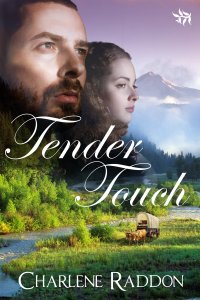
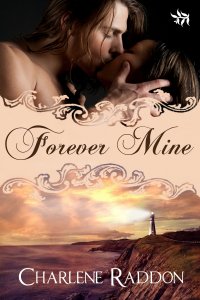
More than one of the heroes in my books bears the name of a man who lived in centuries past, such as Bartholomew Noon (from Forever Mine, available at e-book stores now), and Columbus Nigh (from Tender Touch, to be released October 18, 2012).   

Stephen Dodson Ramseur’s father remained in the South and is buried there. Stephen missed the funeral but knows the old guy died of apoplexy, a common cause of death back then, better known now as a stroke, and was buried the next day. Why the next day? Doesn’t sound very respectful, does it? Well, morticians capable of embalming the dead were few and far between back then except in larger cities and towns. Plus, they cost money. So next-day burial was often a necessity.

Infant mortality was high, so old cemeteries tend to have more graves for children than for adults, although you can’t always tell because it was common to bury an infant or toddler with a parent or even a grandparent already buried. Babies lost in childbirth with their mothers were generally buried with Mom.

From death certificates you can learn the most prevalent causes of death and the terms used for them. Unfortunately, such certificates didn’t come into being until mid to late century. Birth certificates are even more difficult to find. Often, in rural areas, there was no such thing as a birth certificate. I couldn’t get one for my father when I was trying to join the DAR.

Census reports are a great place for gaining an understanding of how people lived in the second half of the nineteenth century. Until 1850, they reported only the name of the head of household and how many children of certain age groups lived there. The 1850 report, however, lists each member of the household. The later the report the more information is available. You can learn how long a couple has been married, how many marriages they had before the report, what they did for a living, how much land they owned, their yearly income, where their parents were from, who was literate and who wasn’t.

Does my Stephen Dodson Ramseur know how to read? Few people did back then, especially the women. Children often left school as soon as they were big enough to contribute some real labor to the farm or family business, so their reading abilities were not always good. It’s interesting to see which occupations list the most people who were literate. Farm families were generally at the low end of the scale. Those children were needed at home, and farms were out in the country, frequently too far away for children to attend school.

Another great research source available through genealogy societies and online sites is county history books and town newspapers. These require some time-consuming reading, but you can learn a lot about how people lived, what their social lives were like, and their activities, even how they thought.  County histories list the towns and give descriptions of the area, such as how the towns were laid out, rivers, fields, trees, etc.

Names of towns and counties were changed time and again. You don’t want to set your book in a town or county that didn’t exist then. The wise thing here is to consider inventing your own town. Hard to invent a county, though, and have it be credible, although a quick study of counties in various sections of the country will reveal numerous names that were used over and over. Lincoln County, for example. Washington County. But before you invent a Lincoln County, make sure there wasn’t one already in a different section of the state.

Histories also give biographical information on the earliest and most prominent citizens. Another great chance to learn about life in the time period, and to collect names.

Personal journals are also available through genealogy sites, and these contain a wealth of information. I once started a book set in Utah in 1857. My heroine was a young lady fresh out of finishing school that travels west to live with her father who is an officer at a post called Camp Floyd, southwest of Salt Lake City. As part of my research I acquired the journal of a soldier at that post, which gave me oodles of those tiny details that can make your story truly believable.

All of these sources are available through sites such as ancestry.com, genealogy.com, Cyndi’s List, Genealogy Bank, Archives.com, and many others. Most require paid yearly memberships. You can get around this by finding a local LDS (Mormon) Ward House that has a genealogy library. There you can use a computer to access sites like ancestry.com without having to pay a fee. The people who maintain these LDS Ward House libraries are usually canny about doing genealogy research and free with their valuable advice. If you need a record that is housed at the main LDS Family History Library in Salt Lake City, these small local libraries can order a copy for you to study.

I’m only an amateur genealogist, but If you have questions about genealogy research, I’ll be happy to do my best to answer them, or to find someone who can.

Now, I need to excuse myself so I can write down all the plot ideas that came to me while writing this. Stephen Dodson Ramseur is going to be a very busy, very sexy, and courageous young man. Hmm, who is going to be my heroine? Looks like I need to peruse my personal genealogy, or pay another visit to ancestry.com.

How much do you know about your own genealogy?

Charlene is giving away a copy of Forever Mine (excerpt below). All you have to do is leave a comment for her.


Charlene’s webpage

Charlene’s Chatterblog

Charlene’s facebook page

Charlene’s Twitter page

Charlene’s Goodreads page


Charlene Raddon’s love of the old west drove her to start writing historical romance novels over thirty years ago. Her first completed book was a time travel, unsalable at the time, and had not yet sold, but she’s reworking it now and hopes to have it available soon. Her second book was a Golden Heart Finalist under the title BRIANNA. Between 1994 and 1999 she had five books published by Kensington Book’s Zebra imprint. Her most popular book, FOREVER MINE, received high ratings and a Romantic Times Reviewer’s Choice Award nomination. This book is now available as an e-book, and Charlene will be giving away a free copy today to a random winner. Here is a blurb and excerpt:

THEIR LOVE WAS FATED…

A mail-order bride from Cincinnati, Ariah Scott had traveled all the way to Oregon to marry one man…only to lose her heart to another. What would become of her now? Ever since her father died at the hands of a vengeful relative, Ariah’s life had been shadowed by dark secrets. And now her forbidden desire for Bartholomew Noon filled her with uncertainty—and a secret longing that could never be fulfilled.

AND FORBIDDEN…

From the moment Bartholomew saw Ariah at the Portland train station, the keeper of the Cape Meares Light was lost. Hopelessly in love with this angelic beauty who was fated to live beside him at the isolated lighthouse as another man’s wife, Bartholomew never dreamed that destiny would someday bring them together. Would Ariah truly be the woman he could cherish…forever?

FOREVER MINE  – Excerpt

Ariah. The name suited her. Light and airy. Perfect for a nymph. He struggled to regain his composure and remember what he was about.

Around them, passengers continuing on to Goble, where train and all would be ferried across the Columbia River before resuming the journey to Seattle, were boarding the train. Soon the platform would be empty except for porters and employees of the Union and Northern Pacific Railroads. And Bartholomew suddenly realized he too was eager to be away; he could not wait to have Miss Ariah Scott to himself.

Bartholomew glanced at Miss Scott, wondering if she could be one of fate’s tricks. Something niggled at his memory. He shrugged it away.

“Miss Scott, if you’ll point out the rest of your baggage, I’ll get it loaded while you and your friend finish your good-byes. We’ve a long way to go.”

“Oh, yes, of course.” She gestured to two small crates and a large trunk. “That’s it there.”

            Bartholomew shouldered the trunk as though it contained nothing more than bird feathers, holding it in place with one arm while he squatted to pick up one of the crates.

As he put space between himself and the two women, he chuckled silently, remembering how he had wondered what he would do with the girl during the four long days of the journey home. There was no doubt about what he wanted to do. His hands ached with the need to stroke that smooth, velvet flesh, to explore and discover its secret contours. Thinking about it, four days no longer seemed enough.

He set the crate alongside the boxed-up fancy rosewood étagère Hester had insisted he buy her, and lowered the trunk onto the wagon bed.

Hester. Bartholomew’s fantasy about Ariah burst like the seed head of a giant dandelion, scattered by the wind.

Hester was his wife—till death do us part—no matter how much he might wish things different. And Ariah Scott belonged to Pritchard.

His shoulders sagged under guilt as ponderous as a steam engine. He rested his arms on the sideboard, braced his forehead on a fist, and tried to banish the image of the girl’s sweet tempting mouth, so lush, so—

A warm hand closed over his arm. “Are you all right, Mr. Noon? Is there anything I can do for you?”

Bartholomew looked down to see Ariah Scott standing only a kiss away, gazing up at him with those unbelievable forget-me-not blue irises, her luscious lips moist and parted, her concerned expression sweetly, guilelessly intent.

And he plummeted into hell.

FOREVER MINE available at:

http://www.tirgearrpublishing.com

http://www.amazon.com

http://www.smashwords.com/books/view/207071

and all other e-book stores


Cold Justice and Kathi Orom Peterson

Photo by Marc Reynolds

A fiction writer is always looking for wonderful people in life to pattern characters after. As I researched Alaska where much of my new release, Cold Justice, is set, I found a wonderful character in Klondike Kate aka Kathleen Rockwell. While none of the characters in my novel were patterned after Kate, I think my main character had some of her spunk and determination.

Klondike Kate led a very interesting life. She lived in many states: Kansas, North Dakota, Washington, New York, and Oregon. But the state that really made her famous was Alaska.

Her heart must have yearned for adventure, for after trying to break into show business in New York, she decided to head north. At the time, the Royal Canadian Mounted Police were making it difficult for miners and others to get to the Yukon to find gold. Kate was refused entry, but the story goes that she dressed up like a boy, jumped aboard a ship heading to the Yukon, and that was just the beginning of her life in Alaska.

Miners called her “The Flame of the Yukon.” She earned that name because of her flame dance. Wearing an elaborate, red-sequined dress with an enormous cape, she would start her dance. As the routine developed, she took off the cape (this is where it became really interesting). The cape was 200 yards of red chiffon attached to a cane. She’d twirl and leap with the cape making it look like flames were all around her. By the end of her dance, she’d dramatically drop to the floor, which probably looked as though she was consumed by fire. The miners loved it.

Kate’s dancing act was such a huge success that the miners called her Klondike Kate. She had many admirers.  It was reported that Kate fell in love and married Alexander Pantages. But sadly one time upon returning home from a trip, she found Pantages had married someone else, and not only that, he took all of her money.  But Kate pressed on.

When the gold rush died, she moved to Oregon. I found one web site that said later in life Kate married a miner name John Matson, though he remained in Alaska while she was in Oregon. I don’t know if they stayed together or not, but I’d like to think that Klondike Kate found her true love. She died in 1957. I’ve often wondered while she lived in Oregon if she missed the Yukon.

Beautiful Alaska was rich with history and breathtaking environment. While writing my novel, I knew that Regi Bernard and Samuel Tanner—the two main characters in my book—would find out who they really were in a place God’s hand had touched in so many different ways: the beautiful ocean and harbor villages, the northern lights, the snow-covered mountains, the Native Alaskan people, and the myths and legends that keep that area grounded and humble yet mystical.

Here’s a small excerpt from Cold Justice:

            He stood among barren aspen trees, knee-high in winter snow—watching. Always watching. The binoculars were cold as he pressed them against his eyes. Freezing weather would neither impede him nor stop him from his mission.

            He asked Raven to guide his every step. Raven helped his eyes to see and his ears to hear, but would he help him kill if he must before completing the task?

            Justice must be served.

So where’s the romance? Don’t worry. The book opens on the eve of Regi and Samuel’s wedding day. After years of being apart they are finally going to have their happy-ever-after. However, that night Samuel is kidnapped. At first Regi thinks he’s run out on her, but as she checks his place she finds clues that lead her to believe he’s been kidnapped.

I think Regi’s take-charge attitude is something she has in common with Klondike Kate. The two of them would have been good friends.

To learn more about Cold Justice or my other books, please visit my website: www.kathiorampeterson.com or my blog .

AMAZON

I’d love to give one lucky person an opportunity to win a copy of Cold Justice on Petticoats and Pistols. To win please leave a comment telling me what you love about Alaska.


HONKY-TONK HEAVEN by Katie Lane

Honky-tonk: a cheap, noisy saloon or dancehall. Okay, I’ll go along with the online definition for honky-tonk as a noisy bar or dancehall. But cheap? I don’t think so. As a plot-moving literary venue, a good honky-tonk is worth its weight in gold. It’s a place where characters gather to gossip, hook up, or plan the demise of a certain villain who has evicted them from their mansion. It can be a funny, romantic, or sad setting depending on the occupants—an entire town of crazy matchmakers, a sexually steamed up couple, or a depressed, drunk widow.

When planning my small town of Bramble, Texas, I knew that there had to be a honky-tonk. I even traveled to Odessa, Texas, to do a little research. Not only did I find the perfect small town saloon with pool tables and a sawdust dance floor, I found a friendly owner who didn’t mind sharing a story or two—some even too naughty for a romance writer. (If you ever run into me, ask me about the lost false teeth story:o)

After hanging out most the night at the country bar, I couldn’t wait to get back to the hotel and dive right into Going Cowboy Crazy. And where did I start my Deep in the Heart of Texas series? At a honky-tonk, of course.

Bootlegger’s is a one-story stucco hole in the wall with a big dance floor, plenty of pool tables, and a bar the length of a football field. My honky-tonk has become the venue for homecoming queen imposters, jealous heroes, pissed off daddies, and a little naughty bathroom sex. It even offers sanctuary to Joseph, a Wiseman, an angel, and a pig in Small Town Christmas–O Little Town of Bramble. (An eBook anthology that includes stories from my friends, Jill Shalvis and Hope Ramsay)

 As a writer, I love to return to Bootlegger’s to see what my crazy townsfolk are up to. There’s nothing I enjoy more than bellying up to the bar between Mayor Sutter and Sheriff Winslow, ordering a shot of Jose Cuervo, and listening to one of Kenny Gene’s stories. Some folks might view a honky-tonk as cheap. This author just views it as heaven.

 Have you ever been to a honky-tonk? Did you love it or hate it? Do you think that true love can start in a bar?

Comment for a chance to win a novel from my Deep in the Heart of Texas series—Going Cowboy Crazy, Make Mine a Bad Boy, and Catch Me a Cowboy. And be sure to keep an eye out for my upcoming releases: Hunk for the Holidays due out September 25 and Trouble in Texas due out December 18.

I would love to hear from y’all: www.katielanebooks.com facebook.com/katielaneauthor Twitter-ktlane3

THE WESTERN LIVES—AGAIN OR STILL?

My name is Bob Randisi, and boy are my arms tired.

Since 1981 I have been writing Westerns. Backed into it, actually. I started out as a mystery writer, but when an editor asked me if I could write westerns, I said yes. I always said yes back then. However, at the time I had hardly even read any Westerns, just watched them on T.V. and in the movies. So I went out to a used bookstore and bought about 40 books by different authors, in a variety of series, so I wouldn’t come up with anything that had already been done. As a result I created THE GUNSMITH. The first book was published in January of 1982, and they have been appearing once a month since then, under my pseudonym J.R. Roberts. I recently finished writing Gunsmith #378, and I am contracted through #384.

Westerns were red hot in the 80’s. I ended up creating series like Tracker, Angel Eyes, Mountain Jack Pike, Ryder, as well as writing books in other series like Cimarron, Shelter, The Trailsman and Canyon O’Grady. In 1982, my 3rd year as a full time writer, I wrote 27 books in 12 months. In 30 years I have written and published 585 books, a good 400 of them Westerns.

But as the 90’s came the Western genre started to die off, and the number of series being published dwindled. Soon, only The Gunsmith, Longarm, Slocum and The Trailsman were left. And although sales of these series were not what they had once been, there was a loyal readership.

Ah, but wait, of late there’s been a resurgence of the genre. How do I know that? Because for about 15 years I was writing them for Dorchester Books. 10 in all. Also two series for HarperCollins. But then Harper cancelled their Western line, and recently Dorchester went out of business.

Fear not, though. Recently, Gunsmith sales have increased. (I can’t speak for Longarm, Slocum and Trailsman. Those books are written by a stable of excellent writers, while I continue to write all the Gunsmith books.) My sales have increased, as have my royalties. And thanks to ebooks—which, as a reader, I HATE—my early books are back in print. Speaking Volumes LLC has brought back the early Gunsmiths (and plans to reprint the first 200 of them), as well as all of my Angel Eyes, Tracker and Mountain Jack Pike books. They’ll be available as ebooks and as POD trade paperbacks. In addition, some of them have been done in audio. While they all have beautiful new covers, the Gunsmith continues to appear under the J.R. Roberts name while the other books now bear my real name.

Yes, Westerns are back, and none too soon for readers of blogs like this one. Loyal readers have kept us alive, and now new readers are discovering Westerns—reprints and originals. My new book, BULLETS & LIES, is the first in as new series to feature Denver private detective Talbot Roper. The stories are set in the 1880’s. Book #2, THE RELUCTANT PINKERTON, will appear next year. Roper is a character who has appeared in many of the Gunsmith books, so the series is a spin-off. However, it is a traditional series, while the Gunsmith continues to be an Adult Western series.

And the newest development? Amazon has purchased the Dorchester inventory, which means they will be bringing back all of my Amazon Westerns—as well as many others–including last year’s CROW BAIT, my last book for them.

Every decade somebody tries to bury the Western Genre, and every decade we—the readers and writers of Westerns—successfully fight them off. (In fact, I was late delivering this blog because I had to finish two books this weekend—both westerns.)

I’m proud of all of us!

And one lucky commenter today will receive a copy of Bullets and Lies!! 


AMAZON


STEAMBOATS, FEMALE PILOTS, AND THE RIO GRANDE! by Darlene Franklin

The Mississippi River dominated Blanche Douglass Leathers’ life. Although we don’t know exactly where she was born in 1860, it was probably along the river basin. She married the son of famous steamboat captain T.P. Leathers. Captain Leathers commanded the Natchez in its historic race with the Robert E. Lee. The Lee won the race, besting the Natchez’s time from St. Louis to New Orleans by three hours and forty-four minutes.

In 1894, at the age of thirty-four, Blanche Leathers decided to earn her steamboat pilot’s license. She became captain of eighth Natchez. By then, steamboats were on the decline as trains multiplied. Trains provided faster and more dependable modes of transportation, and by the end of the nineteenth century, had eliminated much of the steamboat trade.

I discovered Blanche Leather’s story while I was investigating steamboat traffic on the Rio Grande River. Steamboats attained grew to prominence during the war with Mexico in 1846 but dwindled by the beginning of the 20th century.

Steamboats could only navigate a small portion of the Rio Grande. The river flows from Brownsville at on the Gulf Coast, then dips south through Big Bend National Park before it reaches El Paso and beyond. However, the steamboats only traveled as far as Roma, 110 miles from the mouth of the river.

Roma, the Rio Grande and steamboats, Blanche Leather and female steamboat captains—fertile ground for a writer’s imagination. In A Bride’s Rogue in Roma, Texas, my Blanche inherits a steamboat from the father she never met—along with the resident gambler. And yes, she earns her pilot’s license.


Amazon

Suzanne Ferrell – Why I Love Mail-Order Bride Stories


Years ago, okay decades ago, when I started reading romances I fell in love with the mail-order bride books. Mind you I had just finished reading a series of Dame Barbara Cartland’s books where the young virgin married the dashing rake because he needed a wife and she needed protection. So a shift to the American historical where a woman needs a marriage and the farmer/miner/lumberjack needed a wife was a natural progression for me.

Being a lover of American history I knew these women weren’t going into a life of privilege and ease like Ms. Cartland’s heroines. No, these heroines were going to an unknown, unsettled world to bring civilization not only to their environments, but quite often to the men they’d wed. Just looking at old photos from the late 1800’s homesteaders shows the harsh reality these women must have faced. That alone should tell you what kind of women they were.

Courageous. That’s the first word that comes to mind. Someone who was willing to leave the world they knew in the East to travel west to a land almost as foreign as another country had to have guts. 

Hopeful. Many women who became mail-order brides were looking for something different than the lives they were living. Whether they were widows or spinsters these women left all they’d ever known in hopes that their new lives and potential mates would fulfill their needs for a home and family of their own.

Determined. To work side-by-side with the stranger they married to carve out a life would take determination, as well as physical and emotional strength. They would have to face natural disasters, renegades and wild animals in order to protect their families and homesteads.

When I started writing Cantrell’s Bride and it became apparent my heroine was in an American version of a marriage-of-convenience I had to determine how she ended up there and what caused her to be a mail-order bride. My heroine would need to be strong, determined and hopeful.

“Laura Melborne is a spinster librarian in Washington D.C. who witnesses the murder of a senator. In order to escape the murderer, she becomes a mail-order bride to Nathan Cantrell, a Colorado farmer with a strangely silent child. Laura must use all her courage, determination and hope to forge a life with Nathan even as the murderer closes in on her.”

EXCERPT FROM CANTRELL’S BRIDE
Copyright Suzanne Ferrell, 2012
All Rights Reserved, Ellora’s Cave Publishing, Inc.

     Nathan studied the young woman seated on the wagon seat.
     Damn. What had Neil been thinking?
    
He’d assumed from the list of requirements he’d given Neil his brother would send him an older woman like the governess they’d had growing up. Older, strict, unappealing. Certainly not this round-faced miss with the warm brown hair pulled back in a serviceable knot, flushed pink cheeks and excitement in her eyes.
     Dammit, Neil. 
     His brother knew he wasn’t in need of a wife for his own physical desire and he certainly wasn’t ever falling for the foolishness others called love again. No, he’d learned his lesson the first time. Women—especially young, beautiful women—couldn’t be trusted.
     Nathan ground his thin cigar under his boot toe before stepping forward to offer a hand to the woman. She hesitated, a look of fear darkening the excitement he’d seen in her eyes. For a moment he thought she’d refuse him. Then something in her changed. Whatever frightened her—him or the new town—she shoved it aside, took a deep breath, sat a little straighter and put her hand in his.
     “I’m Laura, Mr. Cantrell.” She gave him a determined look as he helped her down from the wagon.
     Standing on the ground she came only to the top of his shoulders and had to tilt her head back to look up at him. For a brief moment he was caught in the clear appraisal of her deep emerald eyes. A hint of roses, reminiscent of his mother’s garden, wafted up to him.
     A movement to his right caught his attention. He glanced around and stiffened. The townsfolk had stepped out of their businesses to watch.
     Anger flared inside him. It wasn’t idle curiosity that brought them out like rats searching for food. They wanted to make his business fodder for their gossip mill once more.
     Damn. He hated their scrutiny, had his fill of it while Kirsten lived and then again when he’d brought Rachel home. He needed to get out of here. He’d be damned if he’d discuss this situation with his new wife on the streets of Doverton.
     Grasping his bride’s elbow, he half hauled, half led her to his wagon.
     “Mr. Cantrell.” Her prim voice stopped him before he actually tossed her up onto the seat. “I think I can manage this myself, if you wish to get my belongings.”
     “Your belongings?” He released her and glanced back at Zeke’s wagon where the old coot had unloaded two boxes.
     “Yer wife done brought a few things with her, Nathan.” A large carpetbag landed beside Laura’s wooden boxes. Zeke leaned against the wagon’s tailgate, grinning like an idiot.
     Nathan glanced around the street. Everyone stood watching him to see if he’d accept Laura as his wife or send her packing. Getting a complete stranger to marry him in order to have someone to care for Rachel was a mistake. He never should’ve listened to Micah’s crazy scheme.
     With a look up at his wife, he saw her staring ahead, her back ramrod straight and her lower lip caught between her teeth. She knew everyone was watching them. Her quiet dignity doused his indignation.
     Muttering an oath, Nathan hefted up the first of the boxes. What the hell does she have in here? Bricks? He nodded at Zeke. “Don’t just stand there, help me get it all loaded.”
     The wiry mule skinner lifted the carpetbag and set it in the wagon. He walked around to the side where Laura sat. Nathan shoved a heavy crate onto the wagon as Zeke doffed his worn raccoon hat and offered his hand to Laura.
     “Ma’am, it sure was a pleasure makin’ yer acquaintance. You ever need anythin’ at all, you just give old Zeke here a holler.”
     Without hesitation, Laura took his hand and shook it once. “You were a delight to travel with, Mr. Zeke. Your stories made the time pass quickly. Thank you for bringing me safely here.” She settled a very sincere and tender smile on the old man. The smile lit up her eyes, softened her features and transformed her face into beauty that struck Nathan so hard he nearly dropped the box he was lifting onto the wagon.
     “Yer most welcome, ma’am.” The mule skinner’s weathered skin turned a deep red under his beard and he actually scuffed his boot in the dirt as if he were a smitten pup.
     Recovered from his reaction to her smile, Nathan rolled his eyes and settled in the seat beside the woman. She had the old man blushing – great. He’d married another flirt. He flicked the reins and set the horses into motion. His new wife grabbed hold of the seat to keep from falling out. Zeke jumped out of the way.
     Heading west out of town, Nathan stewed for the better part of the five-mile trip. No way was he keeping another flirt for a wife. His gut instincts told him she was nothing but trouble. But then, weren’t all women?
     He glanced at the woman beside him. She sat stiffly, looking off to the side. The only clue the town’s rudeness had upset her was the way she clutched at the wagon seat with one hand and fingered a locket hanging on a chain against her coat.
     She sure was a quiet one. Totally unlike Kirsten.
     From the moment they’d met, Kirsten chatted and flirted with him until she had him married to her and her hands on his money. He’d done anything she wanted, loved her with all his heart and given her every dime he had. It was never enough.
     Now he knew better than to trust a woman with anything – even one that appeared different from his she-bitch first wife.
     The team turned the bend in the road just below his farm.
     “Is that your home?”
     Instinctively Nathan bristled. He’d heard those exact words before. His farm might not resemble a Southern plantation, but it was all his and he was damn proud of it. He turned to inform the woman at his side just that.
     The words died on his lips.
     Instead of sneering with a look of disdain as Kirsten had when she’d first seen his farm, Laura’s face softened with the same smile she’d given Zeke. Again it struck him how much it transformed her looks. It wasn’t a flirty smile. No, it appeared to come from her heart. Focused on his home, she seemed to drink in the sight before her – just like he had the first time he rode into the valley nestled between several mountain peaks.
     He stopped the team for a moment to admire the picture his home presented. The sight never failed to please him. The road led down between pastures fenced by logs to the white clapboard house.
     Now in the middle of winter, it nearly blended into the snow except for the dark roof and windows. Other dark shapes dotted the landscape the landscape. The chicken coop, outhouse and lower barn spread out in a crescent shape within walking distance of the house. In the upper fields stood a second barn for housing grain and cattle throughout the winter.
     Behind the house, far enough to prevent flooding from the spring runoff, the creek cut a meandering path through the evergreens farther down the valley to join other creeks that fed into the South Platte River.
     “It’s lovely,” Laura whispered.
     Her awed appreciation at his home eased some of the tension humming through him. Nathan started the team up the narrow lane to the house. He drove around back and stopped the wagon next to the porch. While he hopped off his side, Laura scrambled to lower herself down before he could help her.
     For some reason, it bothered him that she wouldn’t want his help. It couldn’t be that he’d enjoyed her nearness when he helped her from Zeke’s wagon.
     “Come on inside and warm up.” he held open the kitchen door and allowed her to pass into the house first. The scent of roses again. How did she smell like roses in the middle of winter? Nathan followed her inside, going to the wood-burning stove. He stoked up the fire then stood and studied her under that hooded gaze of his. Finally he stalked to the door. “It should get warm enough for you to take off your coat in a few minutes. I need to see to the animals, then I’ll be back to talk.”
     Laura caught the tobacco scent from the cigar as he passed. A shiver of awareness ran over her body, followed by a moment of apprehension. Never in her life had she been this alone with a man. Given his surly greeting, she wondered if she’d jumped from the frying pan into the fire.
     As the door closed behind him her shoulders slumped. Things weren’t going as well as she’d hoped. On the cross-country trip, she’d prayed Mr. Cantrell would accept her, if not with open arms, then at least with gratitude for her help. What if the trip had been for naught?
     After setting her carpetbag on the table, she moved around the stark kitchen. The windows were bare, the walls painted white. No decorations of any kind hung anywhere. Opening the cupboards, she found chaos among the dishes and cookware, as if someone had just thrown them inside and slammed the doors shut. A layer of dust covered most of the shelves. She glance down at the floor. It had been swept recently, but she doubted it had seen the use of a mop in some time.
     Through the window she watched her husband drive the team of horses and wagon between the barn’s wide doors. He closed the doors and disappeared behind them. She might a well look about the rest of the downstairs.
     The hallway led to the front parlor. Here a small settee and two wingback chairs sat beneath dust-covered sheets. Two end tables that hadn’t seen dusting in years flanked the chairs. The mantle clock’s hands stood in idle disuse. Otherwise the windows had no curtains and the room was as empty as the kitchen.
     Shaking her head, Laura closed the door and returned to the kitchen. Were the bedrooms as bleak? She didn’t dare go upstairs to find out until she’d been invited.
     The kitchen had warmed considerably so she removed her coat and both the sweaters she’d needed for warmth during the wagon trip over the pass. She laid them on the back of a ladder-back kitchen chair and sat at the table to consider her situation.
     Mr. Cantrell might not want her as his wife, but he certainly needed her, even if he didn’t know it yet.


So that’s my reasons for loving mail-order bride books. Strong heroines in a fish-out-of-water sort of story. Do you like these kinds of stories? If so, what draws you to them?

Suzanne is giving away on $10 Amazon gift card — so the winner can get a copy of CANTRELL’S BRIDE for themselves.