Allison B. Collins Dreams Up Her Stories

I’m so excited to be here on Petticoats & Pistols today! What a wonderful group of women who all love cowboys as much as I do.  Thank you for having me here, ladies!

A couple of years ago I had a dream about five brothers who ran a ranch with their dad. In this dream I saw the oldest brother was a wounded Army veteran returning home, there was a veterinarian, a charmer, a very cynical man burned by love, and a rebel cowboy.  I even saw their assorted girlfriends or wives.  The only anomaly was that the dream ended with a fashion show in which they all participated. (That was my day job insinuating itself into my cowboy dream!)

When I woke up from the dream, it was still so vivid in my mind I had to write it all down. And it stuck with me so much I knew I had to turn it into a book. Or rather, five books.

The first book in the series about a wounded rancher debuts this month, published by Harlequin. I’m so very excited that “A Family for the Rancher” is finally here.  This quote from Pinnochio has been running through my mind all week: “I’m a real boy!”  Well, for me now “It’s a real book!”

I’m a fifth generation Texan, so I’ve got the Old West running deep in my veins. I was born and raised in El Paso, which is THE farthest west you can go in Texas.  Among my ancestors are a Texas Ranger and a spy for Robert E. Lee. Future stories? You better believe it.

I live in Dallas now, practically at the base of Southfork Ranch. Remember J.R., Bobby, Sue Ellen, and Pam? It’s still a thrill every time I drive by that house, and the theme song runs on continuous loop in my head.

I guess my love of cowboys has been with me all my life.  I love sweet tea, bluebonnets, cowboy boots, and western hats.  Heck, the Resistol Hat factory is practically around the corner from my house!  Cowboys have a code of honor bone deep, one they live their entire lives by. They’re good to their mommas, their sweethearts, and their animals.

Perhaps John Wayne said it best: “A man’s got to have a code, a creed to live by, no matter his job.”  My Sullivan brothers follow that creed.

For the Cowboys to Grooms series I took the story to Montana. Where else could I write about vast open lands, soaring mountains, sunny summer days, and cold winter days where the hero and heroine are snowbound in a log cabin for days on end?

My husband and I spent some time in Montana a few years ago, and I just fell in love with the whole state. Crystal clear water, abundant wildlife, and cowboys!  In fact, the scene in which Kelsey sees a bear while kissing Nash was inspired by my first bear sighting on that trip.

As I write, I have to visualize the characters, so Pinterest is my best friend.  If you’d like to see who my inspiration is for each of the five Sullivan brothers, here’s a link to my board:  http://tinyurl.com/ycrflp2

Oh, and since I also love weddings, I couldn’t resist writing a little twist into the last scene of each book—it’s what determines which brother’s book comes next in the Cowboys to Grooms series!

* * * *

Nash Sullivan doesn’t need help from anyone. Not his father, not his brothers and sure as heck not from a physical therapist—even a darn feisty one like Kelsey Summers. He lost his leg during his overseas deployment and he just wants to be left alone. Besides, the last thing a woman like Kelsey needs is half a man.

Single mom Kelsey knows all too well that the scars on the inside run the deepest. She needs to move on from her own tragic past, but the Sullivan ranch is starting to feel a little too much like home. And she can’t stop thinking about her wounded—and gorgeous—patient. Could Nash be the cure for her own broken heart?

* * * *

If you’d like to be entered to win a copy of “A Family for the Rancher” (Kindle ebook or autographed print book – winner’s choice), let me know who your favorite cowboys are (old or new), and why.  I’d love to chat with you here on Petticoats & Pistols!

Janalyn Voigt Pans Montana Gold

Thanks for welcoming me back to Petticoats & Pistols!

I have a new story to talk about, one very close to my heart.

My father took me to pow wows when I was a child. I can still remember the sun blazing down on my head, the salty sweetness of buttered corn, and dancers in ornamental dress swaying to the drumbeat. My father greeted many of his friends from among the gathered tribes.  In this way, I suppose he captured something of the heritage he’d been denied. Dad, was half Native American, but never knew his father. He took after that side of his bloodline and as a result suffered from the prejudices of others. Orphaned at age 14, he took to the road and eventually landed among my mother’s relatives. My parents’ romance was the stuff of novels.

My father passed to me an abhorrence of injustice, and this often makes its way into my fiction. Montana Gold, my western historical romance series, focuses on the Irish in America. Nowadays we celebrate St. Patrick’s Day and it’s hard to understand that Irish immigrants were once despised.

Many fled Ireland’s potato famine only to die on the journey to America. Packed like sardines into ‘coffin ships,’ they had to endure a four-week journey in deplorable conditions. Those who lived arrived on American shores disease-ridden and hungry. They met with hostility from those suspicious of the newcomers’ Catholic faith and angry that they would take away jobs or rely upon the public coffer. The job market could not keep up with the influx, and many Irish immigrants wound up in the Five Points slum of Manhattan. The residents crammed into cheap housing built above a filled-in collection pond which had been polluted by commercial enterprises. Sickness and death followed. Street gangs flourished amid all the vices of desperation, and crime grew rampant.

When Bryanna married, she counted herself fortunate to leave the slum behind. Hardship dogged her, however. Her husband died, forcing her to go into service. She is unjustly accused as Cheyenne Sunrise opens. Bry’s trials continue, leaving her with a burning question. Why does God allow innocent people to suffer? Her search for an answer occupies her throughout the story and is finally satisfied.

I found it intriguing to contrast negative sentiment against the Irish with the prevailing attitude against Native Americans. Nick Laramie, the hero of the story, is the son of a Cheyenne woman and a French trapper who have both died. Nick struggles to survive despite the prejudice that plagues him. His feeling that he doesn’t fully belong to either of his parents’ worlds and his yearning to belong echo my father’s.

Nick takes on work as a trail guide for the wagon train carrying Bry to her brother’s ranch in Montana Territory to start a new life. They are attracted to one another, but neither wants a romance. After her disastrous marriage, Bry doesn’t need another man to break her spirit, and Nick has no intention of bringing a woman into the pain of his life. After dire circumstances throw them together, each must learn that true peace comes only from trusting in God.

More About Cheyenne Sunrise

Can a woman with no faith in men learn to trust the half-Cheyenne trail guide determined to protect her?

Young Irish widow Bry Brennan doesn’t want another husband to break her spirit. When she and her brother Con join a wagon train headed to Montana Territory, Bry ignores her fascination with Nick Laramie, the handsome trail guide.
Nick lives in an uneasy truce between the settlers and his mother’s tribe without fully fitting in among either. With no intention of dragging a woman into his troubles, he stifles his yearning for Bry.

The perilous journey throws the two together, leaving Bry no choice but to trust Nick with her life. Can she also trust him with her heart? Answering that riddle forces Bry to confront her unresolved questions about God’s love.
Based on actual historical events during a time of unrest in America, Cheyenne Sunrise explores faith, love, and courage in the wild west.

 * * * *

About Janalyn Voigt

Janalyn Voigt is a multi-genre, best-selling novelist who has books available in the western historical romance and epic fantasy genres. An inspirational, motivational, and practical speaker, Janalyn has presented at the Northwest Christian Writers’ Renewal Conference and Inland Northwest Christian Writers Conference. She has also spoken for local writing groups, book events, and libraries. Janalyn is represented by Wordserve Literary and holds memberships in ACFW and Northwest Christian Writers Association. For more information, go to: Janalyn Voigt.

I’m celebrating the launch of Cheyenne Sunrise with a giveaway drawing for winner’s choice of a Kindle Fire, Celtic and Cheyenne flute music CDs, or a $30 gift card. Click on the image below to enter.

Charlene Raddon: Games of Chance in the 19th Century

We’re very happy to have multi-published author Charlene Raddon come to visit. Writing is in her blood and she pens some mighty good stories. Authors, if you’re in need of a cover, check out her Silver Sage link at the bottom. Please make her welcome.

Since the heroine in my latest book, Divine Gamble, dealt faro for a living, I had to do a good deal of research on 19th Century games of chance.

Thanks to TV and old western movies, most people (like me) believed poker to be THE game of the times. Instead, it was faro. An honest faro game is as close as you can get to an “even money” game, meaning your odds of winning are nearly the same as for the house. Before the end of the century, however, card sharks figured out how to cheat even at faro.

Faro (for Pharoah, from an old French playing card design) was played with a standard pack of 52 cards. First played in France and England, faro became particularly popular in the U.S. In the movie Tombstone (1993) Wyatt Earp (Kurt Russell) plays faro, but the game wasn’t depicted entirely accurate. In Wyatt Earp (1994) Wyatt (Kevin Costner) and his brothers deal faro using the right layout, but still do not play 100% correctly.

The term “bucking the tiger” is said to have come from early card backs that featured a drawing of a Bengal tiger. “Twisting the tiger’s tail” is another euphemism for playing faro. Many gambling parlors were often referred to as “tiger alley” or “tiger town.” Brag, another popular saloon game of the time, which later evolved into 5-card draw poker or “Draw”.

Draw, also called “bluff poker” or “bluff,” was a rarity on the frontier until the late 1870s.

One person was designated the “banker” and an indeterminate number of players could be admitted. The faro table was typically oval, covered with green baize, and had a cutout for the banker. A board was placed on top of the table with one suit of cards (traditionally the suit of spades) pasted to it in numerical order, representing a standardized betting “layout”. Each player laid his stake on one of the 13 cards on the layout. Players could place multiple bets and could bet on multiple cards simultaneously by placing their bet between cards or on specific card edges. Players also had the choice of betting on the “high card” bar located at the top of the layout.

A deck of cards was shuffled and placed inside a “dealing box”, a mechanical device also known as a “shoe“, which was used to prevent manipulations of the draw by the banker and intended to assure players of a fair game.

The first card in the dealing box was called the “soda” and was “burned off”, leaving 51 cards in play. The dealer then drew two cards: the first was called the “banker’s card” and was placed on the right side of the dealing box. The next card after the banker’s card was called the carte anglaise (English card) or simply the “player’s card”, and it was placed on the left of the shoe.

The banker’s card was the “losing card”; regardless of its suit, all bets placed on the layout’s card that had the same denomination as the banker’s card were lost by the players and won by the bank. The player’s card was the “winning card”. All bets placed on the card that had that denomination were returned to the players with a 1 to 1 (even money) payout by the bank (e.g., a dollar bet won a dollar). A “high card” bet won if the player’s card had a higher value than the banker’s card. The dealer settled all bets after each two cards drawn. This allowed players to bet before drawing the next two cards. Bets that neither won nor lost remained on the table, and could be picked up or changed by the player prior to the next draw.

A player could reverse the intent of his bet by placing a hexagonal (6-sided) token called a “copper” on it. Some histories said a penny was sometimes used in place of a copper. This was known as “coppering” the bet, and reversed the meaning of the win/loss piles for that bet.

When only three cards remained in the dealing box, the dealer would “call the turn”, which was a special type of bet that occurred at the end of each round. The object now was to predict the exact order that the 3 remaining cards, Bankers, Players, and the final card called the Hock, would be drawn. The player’s odds here were 5 to 1, while a successful bet paid off at 4 to 1 (or 1 to 1 if there were a pair among the three, known as a “cat-hop”). This provided one of the dealer’s few advantages in faro. If it happened that the three remaining cards were all the same, there would be no final bet, as the outcome was not in question.

A device, called a “casekeep” was employed to assist the players and prevent dealer cheating by counting cards. The casekeep resembled an abacus, with one spindle for each card denomination, with four counters on each spindle. As a card was played, either winning or losing, one of four counters would be moved to indicate that a card of that denomination had been played. This allowed players to plan their bets by keeping track of what cards remained available in the dealing box. The operator of the casekeep, such as the heroine in my book Divine Gamble, is called the “casekeeper”, or colloquially in the American West, the “coffin driver”.

Certain advantages were reserved to the banker: if he drew a doublet, that is, two equal cards, he won half of the stakes upon the card which equaled the doublet. In a fair game, this provided the only “house edge”. If the banker drew the last card of the pack, he was exempt from doubling the stakes deposited on that card. These and the advantage from the odds on the turn bet provided a slight financial advantage to the dealer or house.

Other popular games of chance in wild west saloons were “Beat the Dealer” or “High Dice”, a quick and simple game. This was often played right on the bar with the barkeep as the dealer.

Chuck-a-Luck

Then there was “Under and Over” (or “High/Low” or “Hi & Lo” or “Lucky Number 7”), a popular party game for three to six players played with a dice tray and 2 dice in a shaker cup.

“Chuck-a-Luck”, aka “Sweat”, Sweat Cloth”, “Birdcage”, “Chucker Luck”, “Chuck” or “Big Six” is an old game originating in England. This was played with a dice cup and 3 dice. Because of cheating, the use of a heavy welded metal birdcage device became the standard for the game.

Grand Hazard (not to be confused with Hazard) was a more advanced for of Chuck-a-Luck, with a more sophisticated layout allowing for the simple 1 through 6 “chuck bets”.

Hazard was played with two dice and was the ancestor of the modern dice game, craps.

Monte Bank was a popular card game of the early 19th Century, particularly in the Southwest and mining camps in Northern California.


In Divine Gamble, a mistake made long ago has put Maisy Macoubrie in a killer’s crosshairs. Her only hope is to run. Yet, her chances are slim of surviving alone.

The Preacher, a bounty hunter known for bringing men in alive, finds his own face on a wanted poster—dead or alive—for a crime he didn’t commit. He knows who the real killer is, but trying to prove it could be the last thing he ever does.

United in battle against a common enemy, can Maisy and The Preacher find love and solace in each other? Can they win the biggest gamble of their lives?


Are you a gambler? Have you ever visited a casino? Or have you read a book where they did? Charlene is giving away one digital copy of Divine Gamble to one commenter.


Charlene Raddon is an award-winning author of western historical romance novels and a book cover artist. Originally published by Kensington Books, she is now an Indie author. You can find her at:

http://charleneraddon.com

http://silversagebookcovers.com

Buy link for Divine Gamble: http://a.co/2pfqPru

Book Trailer: http://www.youtube.com/watch?v=ddx1B1JMKiE

Carolyn Brown and the Luckiest Cowboy of All

Hello to everyone at Petticoats and Pistols! Thank you so much for inviting me to stop by to talk about my new book, Luckiest Cowboy of All, coming out next Tuesday.


This book has gotten rave reviews at both Publisher’s Weekly and RT Reviews and from my amazing readers on Goodreads. To say I’m excited about it would be an understatement.

The Luckiest Cowboy of All is the third and final book in the Happy, Texas trilogy, following Toughest Cowboy in Texas and Long, Tall Cowboy Christmas.  Although it’s part of a series, it’s a stand alone book that can be read without reading the first two.

AND—I love that word because it means there’s more to come—this is a two-for-one book. After you read Luckiest Cowboy of All, you are only half finished with the book. My good friend, Sara Richardson’s book Hometown Cowboy, is included. It’s Jessa Mae and Lance Cortez’s story. She’s a small town veterinarian and he’s a big-time rodeo star.


Voices in my head….

Jace Dawson has waited patiently for his turn to tell me his story, and I loved having him sitting behind me in the recliner telling me all about his life while I wrote it. I have a plaque on the wall of my office that reads: I know the voices in my head are not real but they have really great ideas.

That saying became very real during the time I was privileged to spend with Jace. He’d fallen in love with Carlene back when they were in high school and had even entertained notions that someday they might be together forever. But after graduation her father got transferred and she went with him. She’d promised to keep in touch but she hadn’t and her old aunt, who still lived in Happy, wouldn’t give him a bit of information.

Now it’s almost a decade later and Carlene has taken a teaching job back in Happy at the elementary school. One look at her daughter and Jace knows immediately that the child is his and he’s pretty angry that Carlene didn’t even tell him that she was pregnant.


Secret Baby/Second Chance 

The secret baby/second chance trope has been done so often that I knew when I started writing this story; it had to touch my readers emotions to keep their attention. I hope I’ve done that and that they travel with Jace through his battle with giving up his bachelorhood and doing what his heart is telling him. And that they experience Carlene’s reluctance in listening to her heart—when she fears that Jace is only doing “the right thing” in wanting a relationship with her. How could he love her after she deceived him?


                    Secondary Story Threads

There’s a secondary story thread that began in Toughest Cowboy in Texas and continued through Long, Tall Cowboy Christmas. It’s about the Dawsons’ grandmother, Hope, and a past love from her youth. It wraps up in Jace and Carlene’s story as this trilogy comes to an end.

I hope that when you finish Sara and my stories that you sigh and wish for more! If so, don’t put your reading glasses away and keep your cowboy boots close by because there are more cowboys on the way. Cowboy Bold debuts the first book in the Longhorn Canyon series in May. Cowboy Honor, the second book, will arrive in September and then Cowboy Brave will finish the series in January of 2019.


GIVEAWAY!

I’ll give away a signed copy of Luckiest Cowboy in Texas to one person who comments on today’s post. Tell me, what makes you go from merely taking a look at a book to putting it in your cart to take home? Cover? Back blurb? Those first few sentences on page one?


Carolyn Brown is a New York Times, USA Today, and Wall Street Journal bestselling author and a RITA finalist. The author of more than eighty published books, she’s also the three-time recipient of the National Reader’s Choice Award, a Bookseller’s Best Award, and a Montlake Diamond Award. Carolyn and her husband live in the small town of Davis, Oklahoma, where everyone knows everyone else, as well as what they’re doing and when—and they read the local newspaper on Wednesday to see who got caught. They have three grown children and enough grandchildren to keep them young. When she’s not writing, Carolyn likes to sit in her gorgeous backyard with her two tomcats, Chester Fat Boy and Boots Randolph Terminator Outlaw, and watch them protect the yard from all kinds of wicked varmints like crickets, locusts, and spiders. Visit her at http://www.carolynbrownbooks.com.


The Lines Between Fact and Fiction


Welcome Tanya Michaels, author of the upcoming release,

THE COWBOY’S TEXAS TWINS!


A DOUBLE SURPRISE

Rodeo cowboy Grayson Cox had no intention of returning home to Cupid’s Bow, Texas. His troubled past was something best left behind. But when he suddenly finds himself serving as guardian to twin godsons, Grayson knows he’s in way too deep to stay away.

Thankfully, not everyone in Cupid’s Bow holds a grudge. Librarian Hadley Lanier remembers Grayson’s rebellious youth, but she also sees how good he is with the twins—and she definitely likes what she sees. It feels like a perfect match, until Hadley receives a career opportunity she’s long dreamed of, leaving her with a tough decision. But how can she choose between something she’s always wanted and the man she’s discovering she can’t live without?


The Lines Between Fact and Fiction

One of the fun parts of being a writer is taking inspiration from real life and blending it with pure fiction. I write a lot of hometown stories, which—for me personally—is the height of fiction because the first part of my life was spent moving around to Army bases. Eventually, though, I landed in Texas, where I went to high school and college. If you’ve read my Harlequin Western Romances, you probably know I set most of my stories in Texas (specifically, the fictional small town of Cupid’s Bow, Texas). What you may not know is that Cupid’s Bow is loosely based on a real town where my in-laws have a farm.

I love the farm. Well, okay, I love most of the farm.

It’s serene and beautiful and there’s nowhere on earth where I’ve ever seen so many stars. There are, however, a few drawbacks. For instance, my kids call the farm The Land Without Wifi. And, after twenty plus years of visiting, I’m still not quite used to the overpowering sulfuric smell/taste of the well water.

Writing my Cupid’s Bow stories allows me to share the best parts of a beloved rural setting…but readers don’t have to deal with the pungent smell of the pasture when the wind shifts or the itchiness of hay. (Am I the only one who can’t enjoy a festive hayride without a few Benadryl?)

As someone who lived in Texas from her teens into adulthood, I have some knowledge about the state but I can pick and choose how I want to use it in my stories. For instance, in the towns where I’ve lived, dance halls are very popular local establishments. This works well in my romances, so I’ve set some of my favorite scenes in dance halls reminiscent of the ones I’ve been to with friends. Ah, fond memories. Some of my less-fond memories of Texas life include fire-ants. So those suckers don’t exist in Tanya’s Texas. Ditto mosquitos roughly the size of condors.

That’s not to say, however, that when I write a book, I don’t include some of life’s difficulties and challenges. Quite the contrary. Although I try to be a nice person in my real life (“try” being the key word), I’m mean as heck to my poor characters. I like to throw obstacles at them that give them the opportunity for growth and improvement. I just don’t think they should have to deal with things like the copperhead snake (!) we once found in our yard (!!!) or the scorpion in the Kleenex box. Confession: Although I’ve loved horse-back riding since I was a kid, I’m not very outdoorsy. If it skitters or slithers, I’m probably afraid of it so let’s not discuss further.

MOVING ON…

From family to friends, a lot of my favorite people are either from Texas or live there now. I love these people. But fair warning—they can be unexpectedly intense about a few things. Like football. And barbecue. And being Texans. Most of my Cupid’s Bow characters have a lot of local pride, but I played with that idea in my February book THE COWBOY’S TEXAS TWINS The hero, Grayson, hates his hometown; he ran away from Cupid’s Bow the second he graduated high school and vowed never to return. But his life is upended when he gets custody of his twin godsons. He goes home to Cupid’s Bow to ask his favorite aunt’s help. Once there, he’s startled to find himself falling for the town sweetheart, librarian Hadley Lanier. Poor Grayson is going to have to come to grips with his past and make some amends if he wants a brighter future for himself and his adorable godsons.

GIVEAWAY!

So what about you guys—do you have a specific hometown? Is it a place you still live/like to visit or a place you were happy to leave in order to see more of the wide world? Post your experience of where you’re from for a chance to win 3 of my Cupid’s Bow books: The Christmas Triplets, The Cowboy Upstairs and the not-yet released The Cowboy’s Texas Twins.


Award-winning, bestselling author Tanya Michaels is living proof of how much you can accomplish if you’re willing to sacrifice a clean house and sleep. Married to a supportive, real-life romance hero, Tanya is the mother of two and the author of over forty books. She’s a six-time finalist for Romance Writers of America’s RITA award and a past nominee for RT BookReview’s Career Achievement Award. She is also a frequent workshop presenter and event speaker, because what’s more fun than talking to lots of other people who love books?

Facebook  Twitter  Website  Books


SaveSave

SaveSaveSaveSave

SaveSave

SaveSave

SaveSave

SaveSave

SaveSave

SaveSave

SaveSave

SaveSave

SaveSave

SaveSave

SaveSave

SaveSave

I’m Just an Okie from Muskogee

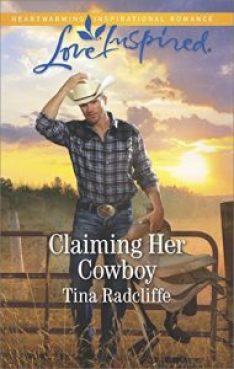
Welcome Tina Radcliffe, Author of Claiming Her Cowboy! 


Book Description

Attorney Jackson Harris regularly goes toe-to-toe with the world’s toughest lawyers—but none of them compare to Lucy Maxwell. The feisty director of Oklahoma’s Big Heart Ranch for orphans is as stubborn as she is pretty. But Jack must stay focused; he’s only there to evaluate the ranch’s funding. Falling for Lucy and the sweet children she protects is out of the question. Though Lucy is determined to keep the ranch, she’s not about to give control to a city slicker—even a devastatingly good-looking one. But as they bump heads, Jack and Lucy gradually nudge open their hearts. Could a temporary cowboy become a permanent part of Lucy’s life?


A big 2018 HELLO, to the Fillies of Petticoats & Pistols!

One of my very favorite places to set a story is in Oklahoma. I’m partial to the state after living there more than seventeen years. To me, there’s nothing sweeter than an Oklahoma drawl.

My blog title comes from the Merle Haggard song, and I apologize if you now have that tune in your head all day. The song is nearly fifty years old and while the lyrics may be a tad bit dated, the sentiment is not.

It parallels the philosophy of the Oklahoma cowboy. There are cowboys and ranches in all fifty states, there’s something special about an Oklahoma cowboy, especially the way he thinks and the way he talks. He’s hard-working, loyal, an all-American patriot who loves Okie football, and when he opens his mouth to speak I’m swooning a little.

Oklahoma dialect is unique although depending on where you’re from in the state it can overlap with Texas and Arkansas speech patterns. This is why you’ll hear terms like“y’all and “fixin’ to,” across borders. With the mobility we see today in the job market, much original Okie dialect is watered down. It’s also watered down or erased by Oklahomans purposely to avoid the stereotype that confuses language with culture.

When writing the Oklahoma cowboy for my new series from Love Inspired, Big Heart Ranch, I let a secondary character, old wrangler named Dutch Stevens, spin the Oklahoma dialect most of the time with some help from five-year-old named Dub Lewis, because too much dialect from primary characters can take away from the reading enjoyment.

There’s a charm and music to speaking Okie and nothing makes me happier than overhearing a conversation where the speaker says “I’m fixing to get some chicken fried steak, but first I’m going to stop at the QT for some pop.”

Speech patterns for true Oklahoma dialect are slow, methodical, and often with pauses if the sentence is more than a few words. Oklahoma-speak can often be pinpointed by the identification of certain terminology and there is an entire lingo that is unique to the state.

If you want to get a real taste for Oklahoma cowboy in particular, take a look at the National Cowboy & Western Heritage Museum website. Check out the Cowboy page and the videos here. The museum is located in Oklahoma City, Oklahoma.

There’s no definitive dictionary of Okie terms because Oklahoma is diverse and culture and environment play into the mix. But I can tell you that my arrival in Tulsa from New York was a culture shock.

People shut off the light instead of turning it off. They put groceries in sacks instead of bags. They ate salary instead of celery too. Fish and chips meant catfish and fries. Football fell into two categories Sooners or Cowboys. Liquor stores were closed on Sunday and there was a church on every corner.

Then there were those strange words like:

Mere – Mirror

Skeeter – Mosquito

Soda – Pop

Agg – Egg

QT – Quick Trip Convenience Store (Home of Lamar)

Chicken Fried Steak – See to Understand

Chigger – Mites

OKC – Oklahoma City

T-Town – Tulsa

Tony Lama – Western boots

PeeKahn – Pecan

My Ideal Oklahoma Cowboy

To create my ideal Oklahoma cowboy I take my favorite Oklahoma terminology and culture and then sprinkle in Western speak and lingo. If you’re a city slicker, you can find some fun and helpful Western speak here and here.

GIVEAWAY!

Have you got any Okie-isms of your own? Do you speak Okie or Cowboy Okie?

Leave a comment today and I’ll be sending a print copy or digital copy of Claiming Her Cowboy to three commenters along with a fun Western surprise. If you’ve already read the book, I’ll send a thank you and a fun Western surprise.


Originally from Western, N.Y., Tina Radcliffe left home for a tour of duty with the Army Security Agency stationed in Augsburg, Germany and ended up in Tulsa Oklahoma. While living in Tulsa she spent ten years as a Certified Oncology R.N. Her move to Colorado led to a career as a library cataloger. A 2014 ACFW Carol Award winner, she has won first place in over twenty RWA chapter affiliated contests in her career and she is on the RWA Honor Roll. Tina is also a short story writer and has sold over two dozen short stories to Woman’s World Magazine. She currently resides in Arizona where she writes fun, heartwarming romance.

Stay up to date on all her releases and fun giveaways by signing up for her newsletter here. Visit her on the web at http://www.tinaradcliffe.com Facebook Twitter

SaveSave

SaveSave

SaveSave

SaveSave

SaveSave

SaveSave

SaveSave

SaveSave

SaveSave

SaveSave

SaveSave

SaveSave

Welcome Guest – Amanda Renee


Farrier Fascination

Happy New Year and Happy early Valentine’s Day!

I’ve wanted to write a Valentine’s story for years, and was lucky enough to do so before my beloved Harlequin Western Romance line closes this year. WRANGLING CUPID’S COWBOY is not only a holiday romance, it has allowed me to share my fascination with the age-old art of farriering.

Many moons ago, I worked on a large reining horse ranch in Northern New Jersey. Up until that point I had always thought of farriers as people who trimmed hooves and put shoes on horses. I hadn’t realized that many farriers work alongside equine veterinarians and provide therapeutic and corrective shoeing to horses suffering from hoof disorders, trauma, neglect and other injuries.

The reddish orange glow of our resident farrier’s forge drew me in and I became captivated watching him precisely sculpt each shoe with what seemed like the most primitive of tools. From the first rise of steam when the shoe met the horse’s hoof, I knew I wanted to write a farrier story. Back then I had always assumed it would be about a male farrier because that’s all I had ever heard about. Years later, I moved to the deep south and discovered most of the farriers in my area are women. The story idea once again began to rattle around in my brain, but I hadn’t given it the attention it deserved until I stumbled across a photo of country singer/songwriter Kacey Musgraves with her horse Mismo. The name Delta Grace immediately sprung to mind and I knew I had my female farrier. I just needed a rugged family man to round out my story…and like a sign from above, singer Luke Bryant began playing on the radio. The man epitomizes family and I had all the inspiration I needed to write WRANGLING CUPID’S COWBOY. While this is by far my most heart wrenching story to date, it was one of my favorites to write. I hope you enjoy reading it.

FALLING HEAD OVER BOOTS…

Farrier Delta Grace has a strict rule about not getting involved with clients. Rugged ranch owner Garrett Slade is exactly why. The attraction between them is instant. He’s also her biggest client and the epitome of complicated. A widowed father of two, he’s moved back to Saddle Ridge, Montana, for a fresh start.

Despite her better judgment, Delta can’t stay away from Garrett or his kids. And it’s not long before her heart melts completely, along with her rules. However, when life deals Delta a devastating blow, she needs to distance herself from Garrett—their family has already experienced too much heartache. All is not lost, though, because with Valentine’s Day around the corner, love may actually conquer all!

Want to win a copy of WRANGLING CUPID’S COWBOY?

Tell me what fascinates you most about ranch life in the comments section and one winner will be randomly chosen to receive a copy (your choice: digital or paperback).

*****

Amanda Renee was raised in the Northeast and now wriggles her toes in the warm coastal Carolina sands. Her career began when she was discovered through Harlequin’s So You Think You Can Write contest. When not creating stories about love and laughter, she enjoys the company of her schnoodle—Duffy—camping, playing guitar and piano, photography and anything involving animals. You can visit her at amandarenee.com.

Author Evelyn M. Hill…His Forgotten Fiancée 


 Welcome Evelyn M. Hill, author of His Forgotten Fiancée!  


                                    Book Description

                                                   BUY

Liza Fitzpatrick is stunned when her fiancé finally arrives in Oregon City — with amnesia. Matthew Dean refuses to honor a marriage proposal he doesn’t recall making, but Liza needs his help now to bring in the harvest, and maybe she can help him remember…

Matthew is attracted to the spirited Liza, and as she tries to help him regain his old memories, the new ones they’re creating together start to make him feel whole. Even as he falls for her again, though, someone’s determined to keep them apart. Will his memory return in time to save their future?


I will never write about a character who goes bungee jumping.

When possible, I try out the tasks my characters have to do. I want to know what it is like to cook biscuits on a cast iron griddle, how heavy a rifle is when I hold it, how wearing a prairie bonnet limits my peripheral vision like a horse with blinders and what it’s like to use a scythe.

When I wrote His Forgotten Fiancée, I had to write about Matthew using a scythe to harvest crops. He was a lawyer by profession; he knew as much as I do on the subject. I read about people scything, but that’s not nearly as effective as hands-on research.

Googling lead me to Scythe Supply. They sell scythes that are customized to your height, so you can use them comfortably.

                                                               Winslow Homer, Wikimedia Commons Public Domain

They made it sound so easy to use one. And I did want to know what it felt like to scythe. Besides, my lawn was looking something like this:

                                                          Jim Clark, USFWS, Wikimedia Commons Public Domain

All right, I have to confess. It wasn’t only for research. There were other reasons to try using a scythe. While my lawn is really too small to hire someone to come take care of it, I can’t cut the grass with a gas-powered lawnmower. Something about these lawnmowers triggers an allergic reaction. I don’t have problems with a push-reel mower, but those don’t do as good a job when the grass is wet. And in the Pacific Northwest, in spring and fall, the grass is pretty much always wet. Using a scythe appealed on more than one level.

So I got one and tried it out. I have to say that I loved, loved, loved how quiet the experience was. I hate the sound of my neighbors’ gas-powered motors. When I scythed, I could hear the birds singing over the swish of the scythe through the grass, and I had no problems breathing. Bonus, my arms got a workout. They felt a little sore when I was done, but not horribly so. And my lawn ended up looking like this:

This is what I wrote for Matthew’s experience of scything for the first time:

Matthew discovered he liked using the scythe. Gripping the snath, he swept the blade in an arc, keeping it low to the ground. The cradle attached to one side of the scythe scooped up the wheat stalks and laid them out on the ground to his left. Then he stepped forward and swept the scythe again. Another step, another sweep of the blade. He could mark his passage through the field by the ever-lengthening row of stalks lying on the ground on his left. The kitten watched for a little while before going off to explore the bushes along the stream.

Liza followed behind him. She gathered up the stalks, winding another stalk of wheat around the bundle and tying it into a knot. He stole a glance at her. Her fair face was flushed, and sweat trickled down and she wiped her brow, but she did not stop bending over and gather up the stalks.

It was laborious work at first, but soon he developed a rhythm. The heat of the sun beat through the thin cotton of his shirt, and sweat trickled between his shoulder blades. But soon, he lost awareness of everything but the swish of the scythe, the sound of bird song, and the sense that he was participating in life, becoming part of something greater than himself. There was a definite feeling of satisfaction when he reached the end of the row and looked back and see what he had accomplished. Here, the results of his efforts were tangible and immediately rewarding, not just moving paper from the In tray to the Out tray.  —

GIVEAWAY!

For a chance to win a signed copy of His Forgotten Fiancée answer Evelyn’s question and  leave a comment on this blog post.  

QUESTION: Have you tried using a scythe? I admit, I’m not sure I’d like to have to use one to harvest the south 40, but for a tiny, rain-soaked lawn? It’s got a lot to recommend it.


Evelyn M. Hill 

According to family tradition, Evelyn M. Hill is descended from a long line of Texas horse thieves. (But when your family is not only Texan, but Irish, tall tales come with the territory.) This might explain why she devoted much of her childhood to writing stories about horses. Once she grew up, the stories naturally featured a tall, handsome cowboy as well. She lives at the end of the Oregon Trail, where she gets to do all her historical research in person, and she loves to hear from readers!

His Forgotten Fiancée released January 1, 2018  

Website 
Facebook
Amazon

SaveSave

SaveSave

SaveSave

SaveSave

SaveSave

SaveSave

SaveSave

SaveSave

SaveSave

SaveSave

SaveSave

SaveSave

SaveSave

SaveSave

SaveSave

SaveSave

SaveSave

SaveSave

SaveSave

SaveSave

SaveSave

SaveSave

SaveSave

SaveSave

SaveSave

SaveSave

SaveSave

SaveSave

SaveSave

The Magical Music Box

by Regina Scott


If you’re like me, you’ve already been queueing up the Christmas music. There’s something special about the hymns, carols, and jingles written to celebrate the season. But in the west of the 1800s, music was a precious commodity, at any time. There are tales of families sacrificing to bring a piano on the Oregon Trail, stories of stampedes averted by a cowboy with a calming voice. If you could play an instrument or sing well, you were instantly popular!


Perhaps that’s why music boxes were so prized. First developed in the early nineteenth century in Europe by watchmakers, some early specimens were tiny enough to fit inside a gentleman’s snuff box. The mechanism was much like what you may have seen in a child’s toy—a cylinder with bumps equating to notes and a toothed comb that the cylinder rotated against to “ring” out the song. You cranked the mechanism to tighten a spring, which slowly unwound and stopped the motion of the cylinder.

People were entranced by the sound, and demand grew. Music boxes grew larger, fancier. Some came in tortoiseshell cases, others encased in fine wood. Sizes increased to tabletop and even as large as a grandfather clock. Companies found ways to swap cylinders, so you could play more songs. The number of teeth “playing” across the cylinder grew to over 300, providing a range of octaves. More springs meant the box could play for hours without rewinding.

Catalogs allowed you to pick from a range of music, from popular tunes to classical pieces and hymns. One piece even mimicked the sound of a bird singing. Supposedly Beethoven was particularly enchanted with the devices and composed music with them in mind.


At first the price for these boxes was high enough that only the wealthy could afford them. But after the Civil War, more reasonable boxes became available. These used less durable components, such as wooden or even paper rolls. Coin-operated versions were placed in railway stations for the public’s enjoyment. Pocket watches became musical, playing chimes to mark the hour. And people on the frontier ordered the boxes and gave them to those they loved. My hero Levi Wallin gives one to my heroine Callie Murphy in this month’s His Frontier Christmas Family. Callie loves music, but her family circumstances have prevented her from owning any kind of instrument. The music box becomes her prized possession.

The advent of the phonograph and player piano toward the end of the nineteenth century usurped the popularity of the music box. But examples continued to be created long afterward. The round music boxes in this blog post belonged to my great-grandmother and her sister, both of whom were born in the late 1800s. One was used to hold face powder—the original powder puff is inside.


Perhaps, like Callie, they loved music in any form, even from a magical little box.


Leave a comment to get your name in a drawing for an autographed copy of His Frontier Christmas Family, Regina’s new release.


Click to Buy on Amazon

Regina Scott started writing novels in the third grade. Thankfully for literature as we know it, she didn’t actually sell her first novel until she learned a bit more about writing. She now has more than thirty-five published works of warm, witty romance. She and her husband of nearly 30 years reside in the Puget Sound area of Washington State. Regina Scott has dressed as a Regency dandy, driven four-in-hand, learned to fence, and sailed on a tall ship, all in the name of research, of course. Learn more about her at her website or connect with her on Facebook, Pinterest, or Goodreads.

His Frontier Family

After taking guardianship of his late friend’s siblings and baby daughter, minister Levi Wallin hopes to atone for his troubled past on the gold fields. But it won’t be easy to convince the children’s wary elder sister to trust him. The more he learns about her, though, the more he believes Callie Murphy’s prickly manner masks a vulnerable heart…one he’s starting to wish he was worthy of.

Every man in Callie’s life chose chasing gold over responsibilities. Levi—and the large, loving Wallin family—might just be different. But she can tell he’s hiding something from her, and she refuses to risk her heart with secrets between them. Even as they grow closer, will their pasts keep them from claiming this unexpected new beginning?


Texas Rebels Series Grand Finale

By Linda Warren

http://lindawarren.net Linda Warren

I’m always happy to post at Petticoats and Pistols. I grew up on a farm/ranch in rural Texas so I love everything Western. Thank you for the invite.

In December the last book of the Texas Rebels series will be released. Texas Rebels: Elias. I’m excited to finish the series. I thought I would share how I came to write seven books about seven brothers. My husband and I watched the TV miniseries the Hatfield’s and McCoy’s. I told my husband I would like to write something like that, but more modern day and not so dark and violent. I guess the idea was in my head because that night I dreamed about two feuding ranching families in Texas. When I woke up the next morning, I had these two families, their names and exactly what had happened to keep them feuding for years.

The Rebels and McCray’s were fighting over a fence line and water rights. The McCrays said if a Rebel stepped over the fence line to McCray land they would be shot. One day two of the younger Rebel boys jumped the fence on a horse and Ezra McCray shot them. John Rebel rushed toward the blast to find his two sons lying on the ground. Ezra was on a horse with a rifle in his hand. He raised the rifle to shoot John, but John fired first, killing Ezra McCray. This scene was very vivid. Then there was John and Kate, his wife, talking to five other kids, telling them what had happened and they had to take their two little brothers to the hospital. Kate called each of them by name. I quickly went to my office and wrote down the names and events before they faded from my mind. Seven brothers and I had all their names. That was a true gift. Here’s where I hen-scratched them down. No one can read this, but me.

After breakfast, I went to work on what I had. I jotted more notes and then study the names of the brothers. Did I want to write about seven brothers? Would my editor buy a series about seven brothers? Oh, what the heck, I went with it. I could do nothing less with all the scenes in my head. The rest of the day I thought about these two families and how I wanted to write them. It took a long time and several headaches to pull it all together.

Two things had to happen before the stories would work. First, the feud would escalate because of the shooting. Second, John Rebel would pass away. The books would be about how his grown sons would deal with life after his passing. Then I gave each brother a characteristic that would define him and help me write his story. Falcon was the oldest, so he was the strong, responsible one taking over as head of the family, with his mother. Quincy was the peacemaker, trying to keep peace among the brothers. Egan was the loner. Elias the fighter. Jude the quiet one, as he was one of the kids who’d been shot. Paxton was a bull rider and a ladies man. The youngest was Phoenix, the fun-loving jokester. Now I had something to work with.

I did an overview of the stories that would change with each book. All the brothers would work the large Rebel Ranch, but the McCrays would always be there, making life hard. With each book that would slightly change as the McCray women start to notice the Rebel men as someone other than their enemy.

Click to Buy

Elias’s story is the last book in the series. He said he was never getting married. He liked his freedom. When Maribel McCray returns to Horseshoe, Texas she shakes up his world. She has a seventeen-year-old son and says that Elias is the father. Kate Rebel insists that Elias is not. Elias and his mother argue and he leaves the ranch he loves. This tears the family apart. The last scenes were hard to write. I won’t tell you what happens because it would spoil the book. But I enjoyed writing Elias and finding his softer side. And finding a way for the families to live in peace.

Now you’ve had a glimpse into the weird workings of an author’s mind. The books are done. Time for cheering. It’s hard to believe they all started with a dream.

I’m giving away an ebook of Texas Rebels: Elias and a Horseshoe Christmas ornament (the stories are set in Horseshoe, Texas.)

Question: Have you had any vivid dreams that stayed with you for a long time? Leave a comment to get your name in a drawing for an ebook copy of Elias and a horseshoe ornament.

Thanks again and Happy Holidays, everyone!


Elias’s book: http://tinyurl.com/yan96drf. 

My website: http://www.lindawarren.net/

Facebook: http://www.facebook.com/authorlindawarren

 Texas Rebels: Elias

First Love, Second Chance

Maribel McCray knew moving back to Horseshoe, Texas, would mean facing Elias Rebel, the cowboy she was forbidden to love in high school. She just didn’t expect it to happen so soon. With her teenage son, Chase, in trouble, she needs Elias’s help. He may be a Rebel, sworn enemy of every McCray, but he’s also Chase’s father.

For the lone bachelor of the Rebel clan, there’s only one way to make up for lost years with his son—become a family for real. But Maribel’s distance runs deeper than the Rebel-McCray feud. Elias won’t settle for a marriage of convenience with the woman he’s falling for again. How can he convince Maribel some second chances are worth taking?