SHANE! COME BACK! by Cheryl Pierson

Cheryl2041I’ve had some surgery, which has cut down on my time at the computer, and so thought I’d bring back my post this week on one of my favorite stories, Shane.  Jack Schaefer’s book, Shane, has been classified in many sub-genres, but to me, it will always remain my favorite western romance.

Romance?  Shane?

This story cannot have a truly happy-ever-after ending for all the principal characters, so it normally wouldn’t make it to my “Top Ten” list for that very reason.  But the story itself is so compelling, so riveting, that there is no choice once you’ve read page one—you are going to finish it.

And it’s not just a story about a very odd love triangle, but also about Shane discovering that he is worthy, and a good person, despite what he’s done in his past. Shane is the perfect hero—a drifter, a loner, and no one knows why.  He plans to keep it that way.  If only his pesky conscience didn’t get in the way, he might have stopped briefly at the Starrett’s homestead, then moved on.

But from the beginning of the book, we know there is something different about Shane.  The story is told through the eyes of Bob Starrett, the young son of Joe and Marion.  Bob is about ten years old, and his account of the people and action that takes place are colored with the wonderment and naivete of a child who will be well on his way to becoming a young man before the story is over.

SHANE512WAvcxk8L__BO2,204,203,200_PIsitb-sticker-arrow-click,TopRight,35,-76_AA300_SH20_OU01_The book starts with tension, as Bob is watching the stranger, Shane, ride in.  Shane comes to a fork in the road. One way leads down toward Luke Fletcher’s, the cattle baron who is trying to force the homesteaders out of the valley.  The other branch of the fork leads toward the Starretts, the homesteaders who will ultimately force Fletcher’s hand. Shane chooses that path, toward the Starretts, and the die is cast.


He would have looked frail alongside father’s square, solid bulk.  But even I could read the endurance in the lines of that dark figure and the quiet power in his effortless, unthinking adjustment to every movement of the tired horse.  He was clean-shaven and his face was lean and hard and burned from high forehead to firm, tapering chin.  His eyes seemed hooded in the shadow of the hat’s brim.  He came closer and I could see that this was because the brows were drawn into a frown of fixed and habitual alertness.  Beneath them the eyes were endlessly searching from side to side and forward, checking off every item in view, missing nothing.  As I noticed this, a sudden chill, and I could not have told why, struck through me there in the warm and open sun.

In a nutshell, Shane drifts into the Wyoming valley, and is befriended by the Starretts.  Once there, he is quickly made aware of the brewing trouble between the homesteaders and the powerful local cattle baron, Luke Fletcher, who is set on running them all out of the valley.  Shane is firmly committed to helping Joe Starrett and the homesteaders who want to stay.  Fletcher’s men get into a fistfight with Shane and Joe in the general store, and Fletcher vows his men will kill the next time Joe or Shane come back into town. Fletcher hires Stark Wilson, a well-known gunhawk, who kills one of the homesteaders that stands up to him.  Joe Starrett feels it is his duty, since he convinced the others to stay, to go kill Fletcher and Wilson. Shane knocks Joe out, knowing that, though Joe’s heart is in the right place, he’s no match for a hired gun like Wilson.

There’s only one man who is—Shane himself, and that’s going to set him back on the path he’s so desperately trying to escape. Shane rides into town and Bob follows him, witnessing the entire battle.

Shane faces Wilson down first, and then Fletcher.  Shane turns to leave and Bob warns him of another man, who Shane also kills.  But Shane doesn’t escape unscathed—Wilson has wounded him in the earlier gunplay. Shane rides out of town, and though Bob wishes so much that Shane could stay, he understands why he can’t.  No.  Bob does not utter one of the most famous lines in cinema history—“Shane! Come back!” There’s good reason for this.

In the book, Bob’s growth is shown because of what he learns from Shane.  To call him back would negate that growth process. He describes Shane throughout the book, and in many ways, with a child’s intuition, understands innately that Shane is a good man and will do the right thing, which is proven out time and again. So, he also realizes that there is no place for Shane there in the valley, now that the trouble has been handled. Shane Movie posterimagesBob witnesses the conversation between his mother and Shane, as well, where so much is said—and not said.  It’s one of the major turning points in the book, though Bob, in his telling of it, doesn’t realize it—but the reader is painfully aware of it.  If Shane really is a good man, he will have no recourse but to leave. This happens as the novel is drawing to a close, when Marian, Bob’s mother, asks Shane if he’s going after Wilson just for her.  He has knocked her husband out to keep him from going after the gunman.

Shane hesitated for a long, long moment. “No, Marian.” His gaze seemed to widen and encompass us all, mother and the still figure of father huddled on a chair by the window and somehow the room and the house and the whole place.  Then he was looking only at mother and she was all he could see. “No, Marian.  Could I separate you in my mind and afterwards be a man?” 

Shane was Jack Schaefer’s debut novel, published in 1949.  It was honored in 1985 by the Western Writers of America as the best Western novel ever written—beating out other works such as Owen Wister’s The Virginian, Zane Grey’s Riders of the Purple Sage, and Louis L’Amour’s Hondo. In 1963, Schaefer wrote Monte Walsh, a book that chronicles the passing of the Old West and the lifestyle of the American cowboy.

Though Schaefer never deliberately wrote for young adults, many of his works have become increasingly popular among younger readers.  Universal themes such as the transformation and changes of growing up, the life lessons learned, and rites of passage from childhood to becoming a young adult in his writing have been responsible for the upswing in popularity with this age group.

Shane movie poster 2imagesThough I consider Shane a romance novel, it’s a very different and memorable love triangle because of the unshakable honor of the three characters. I love the subtlety that Schaefer is such a master of, and the way he has Bob describing the action, seeing everything, but with the eyes of a child. If you haven’t read Shane, I highly recommend it—at less than 200 pages, it’s a quick, easy read, and unforgettable.

A gun is a tool, Marian; no better or no worse than any other tool: an axe, a shovel or anything.  A gun is as good or as bad as the man using it.  Remember that.  (Shane to Marian)  A man is what he is, Bob, and there’s no breaking the mold.  I’ve tried that and I’ve lost.  But I reckon it was in the cards from the moment I saw a freckled kid on a rail up the road there and a real man behind him, the kind that could back him for the chance another kid never had. (Shane to Bob)

If you’ve never read Shane, I urge you to run, don’t walk, to your nearest bookstore or “buy with one click” for your Kindle. It’s a wonderful tale!

PRPGabriels Law WebI’m offering a DIGITAL COPY of my  western historical romance, GABRIEL’S LAW! All you have to do is leave a comment today with your contact information, and check back this evening after 9:00 p.m. to see if you are my lucky winner! For all of my work, click here: http://www.amazon.com/author/cherylpierson

When Brandon Gabriel is hired by the citizens of Spring Branch to hunt down the notorious Clayton Gang, he doesn’t suspect a double-cross. When Allison Taylor rides into town for supplies, she doesn’t expect to be sickened by the sight of a man being beaten to death by a mob. When Spring Branch’s upstanding citizens gather round to see a murder, nobody expects to hear the click of a gun in the hands of an angel bent on justice.

Life is full of surprises. Brandon and Allie reconnect instantly, though it’s been ten years since their last encounter. She’s protected him before. As Brandon recovers at Allie’s ranch, the memories flood back, and his heart is lost to her. He also knows staying with her will ruin everything. She’s made a life for herself and her son. She’s respectable. She has plans – plans that don’t include him.

But could they? Trouble is never far away, and someone else wants Allison Taylor and her ranch. Danger looms large when a fire is set and a friend is abducted. Allie and Brandon discover they are battling someone they never suspected; someone who will stop at nothing to destroy anyone who stands in his way.

As Brandon faces down the man who threatens to steal everything from him, he realizes he is desperately in love with Allie and this new life they are making for themselves. Has Brandon finally found everything he’s ever wanted only to lose it all? Can Brandon and Allie confront the past, face down their demons, and forge their dreams into a future?

CHERYL’S WINNERS!

FSPThe Wishing Tree WebAnd…my two winners are….

JANINE AND CONNIE J.!!!

Y’all please e-mail me at prairierosepublications@yahoo.com and I will see that you get the code for your free prize– a digital copy of THE WISHING TREE!

Thanks so much to everyone who stopped by today!

HEROES AND HEROINES THAT AREN’T PERFECT (AND A GIVEAWAY!)

Cheryl2041web

How do you feel about a hero or heroine who isn’t physically perfect? As a reader, are you interested in those kinds of characters? What about as a writer—are these the kinds of characters you want to introduce and develop in your storylines?


The first book I ever read with an “imperfect” hero was THE TIGER’S WOMAN, by Celeste De Blasis. The story takes place in San Francisco, 1869, and seems to be one of those that people either love or hate. For me, it was an eye-opener—I’d never read a strong, masculine, virile hero who had any kind of infirmity. Jason Drake’s is a limp.                                                                                                        http://www.amazon.com/Tigers-Woman-Celeste-Blasis/dp/038529042X/ref=sr_1_sc_1?s=books&ie=UTF8&qid=1431908341&sr=1-1-spell&keywords=The+Tiger%27s+Woman+by+Celeste+DeBlassis  

The Tiger's Woman


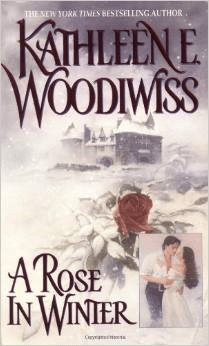
Another one that comes to mind is A ROSE IN WINTER by Kathleen Woodiwiss. The heroine is “sold” by her father to pay his gaming debts to a mysterious man, Lord Saxton, who keeps himself covered to hide disfiguring scars from a terrible fire. I can’t say too much about these books without giving away spoilers, but both of them have many reviews that speak for them and their quality.

http://www.amazon.com/Rose-Winter-Kathleen-E-Woodiwiss/dp/0380844001/ref=pd_bxgy_14_text_y

A ROSE IN WINTER


Mary Balogh’s book SIMPLY LOVE (one of the “Simply” quartet) is the story of an English aristocrat who has lost his arm and eye, and his face has been disfigured on one side. These are war injuries from “the Peninsula Wars”—and of course, he believes no woman will ever want him. He’s become reclusive. Enter Anne Jewell, mother of a nine-year-old son. UNWED mother, to be exact. http://www.amazon.com/Simply-Love-Quartet-Mary-Balogh/dp/0440241979/ref=sr_1_23?s=books&ie=UTF8&qid=1431908938&sr=1-23&keywords=mary+balogh

SIMPLY LOVE


Our own Kathleen Rice Adams has a short story, THE LAST THREE MILES, in the Prairie Rose Publications anthology, WILD TEXAS CHRISTMAS (yep, another Christmas story!) “Can a lumber baron and a railroad heiress save a small Texas town?” With Kathleen writing it, you can bet they’re going to give it their best shot, even though Kathleen’s hero in this one is confined to a wheelchair!

http://www.amazon.com/Wild-Texas-Christmas-Cheryl-Pierson-ebook/dp/B00PZ9EV38/ref=sr_1_8?ie=UTF8&qid=1431909894&sr=8-8&keywords=Kathleen+Rice+Adams

Available in paperback and e-book


My own foray into writing a hero with a physical impairment is more modern. It’s a Christmas short story called THE WISHING TREE. Our hero, Pete Cochran, has been to the Middle East and suffered a devastating wound—the loss of an eye—shortly before he was to come home. Now, he works at his dad’s Christmas tree lot, just trying to heal his own mind and spirit…and then, a miracle happens. Maria Sanchez and her son, Miguel, stop by the lot one day and everything changes. You all know I believe in happy endings, but I don’t want to give any spoilers!

http://www.amazon.com/Wishing-Tree-Cheryl-Pierson-ebook/dp/B00P444VIY/ref=sr_1_1?ie=UTF8&qid=1431909298&sr=8-1&keywords=The+Wishing+Tree+by+Cheryl+Pierson

FSPThe Wishing Tree Web

What about heroines? I’ve read books about heroines who have been lame—I can’t remember the titles right now. How do you feel about “imperfect” heroines? Are those more interesting than the heroes who suffer a permanent wound?

I would love to hear from everyone about this. I’m very curious as to what y’all think. So let’s hear it—and if you have read any books to add to this list please DO!

I know it’s not Christmas, but I will be giving away 2 digital copies of THE WISHING TREE to two lucky commenters today! Thanks so much for coming by!

TWENTY YEARS LATER–THE MURRAH BUILDING BOMBING by Cheryl Pierson


Cheryln100000149781632_8303NOTE: It’s been twenty years. Hard to believe that twenty years have passed since that fateful day, when a homegrown terrorist snuffed out 168 lives, 19 of them children in the daycare at the Murrah Building. Yesterday there was a ceremony as there is, every year, at the bomb site. But I think it’s especially poignant this year for this milestone. Twenty years is a lifetime–time for a baby to grow to adulthood and strike out on their own; for grandchildren to be born and grow into the people they will become…but for 168 people, that future ended in a single moment. Please take a moment with me to remember, and reflect.

Where were you when you heard that Elvis had died?  Or John Lennon?  Where were you when you found out JFK had been assassinated? Where were you nineteen years ago on April 19, 1995?

Many people won’t remember the date, but they remember what happened.  This Saturday, April 19, is the anniversary of the bombing of the Murrah Federal Building here in Oklahoma City.  Up to that date, it was the largest number of deaths on U.S. soil caused by a terrorist act.  That record was broken, of course, on September 11, 2001, with the destruction of the twin towers in New York City.

On the morning of April 19, 1995, I had gone to work.  My job at McDonald’s Corporate Offices was located several miles from the downtown area.  I was the “complaint person”—the one everyone called to report everything from an incorrect order to a pot hole in the drive-through on Forty-Ninth Street.  We had just received a call from a man who was attempting to sue McDonald’s for a scratch on his car’s paint job.  I’d transferred him to my supervisor, irritated at his persistence.
united-states-flag_2183_58326922[1]At 9:03, the building shook, and plaster fell from the ceiling onto my desk, and into my hair.  We were on the seventh floor of the building, but were not panicked about the safety of the structure.

Someone hooked up the small TV that was used for videos in conferences and we all made our way into the conference room.  The picture was grainy since the TV wasn’t on cable, but we were able to see the first reports as they began to come in.

In the beginning, the explosion was thought to be caused by natural gas.  Within the hour, though, those initial reports were negated and the public was told the truth.  Unbelievably, it had been some kind of bomb.

Another chilling fact was quickly disclosed.  Since no one was sure of why the federal building had been targeted, federal and state employees were being sent home from offices in other locations.

My husband worked for the Federal Aviation Administration at the time.  Normally, he would have been released.  But since he was a former Navy man with extensive military training, he and some of the others with a military background were asked to stay and help do a bomb sweep of the FAA training facility.

The entire facility was on lockdown.  This meant I couldn’t get on base to pick up our son, Casey, who attended the daycare there.
united-states-flag_2188_130213397[1]
Within the next hour, I received a phone call from my mother-in-law, Esta, in West Virginia.  You had to know Esta to know, when she put her mind to something, she got it done.  In a world gone crazy, with telephone circuits busy and no hope of getting through, she somehow managed without even having my direct number.  All she knew was that I worked at the corporate office for McDonald’s.

When I answered the phone on my desk, at the other end of the line was an operator that Esta had commandeered, explained what had happened, and talked into placing the call through as a person-to-person emergency call.  I assured the operator that I was Cheryl Pierson and thanked her for placing the call.  She sounded worried.  “How bad is it?” she asked.  “We aren’t sure,” I told her.  There was silence for a moment before she turned the call over to my mother-in-law.  “Take care, hon,” she said.  “We’re all praying for you.”  Her voice was gravelly with emotion.  That brought tears to my eyes, too.

I didn’t tell my mother-in-law that Gary was still at the FAA, unable to leave.  Or that Casey was there, and I couldn’t get on base to get him.  I promised to call her when we knew more.  I had to get Jessica from school.

BUILDING BOMBINGYou see, the fear was not knowing.  Not knowing, at that point, who had done it, or why?  How many people were involved?  Were they going to target other federal or state agencies…or schools?

I drove to my daughter’s elementary school.  The parking lot was full, even though it was not quite 11:30.  I asked Jessica if she knew what had happened and was shocked to find out they had had the children in the auditorium with the television on for a big part of the morning…until things got too graphic.

“Are Dad and Casey home yet?”

I put on my best smile.  “No, not yet.  They’ll be along shortly.”

An hour or so later, prayers were answered and Gary pulled into the driveway with Casey.  But our world was changed forever that day.

As the news coverage continued, it was a nightmare we dealt with every day for at least a year: The deaths, the images of loss that came from that day, and the anger.

But there was good that came from it, too.  Oklahomans showed the pioneer spirit of those who came before us and rose to the occasion.  Because of that tragedy in 1995, we learned the hard way that a terrorist can be home-grown, but we kept strong and showed the world where the bar of the “Oklahoma Standard” was set.  When 9/11 happened, many of our first responders and medical trauma professionals rushed immediately to New York City.  We were the only other state that had had anything remotely similar happen, and the experience to lend a hand.

Though, thankfully, no one in our family was hurt or killed in that tragedy of April 19, 1995, I don’t know anyone who didn’t know someone—however remotely—that it touched.
united-states-flag_2188_130344741[1]
I had to quit my job.  Casey began having nightmares, and believed his daycare was going to “blow up.”  When he built a Lego “daycare” with part of the wall gone and the flag lying in a heap of Lego bricks, I knew I needed to be home with him.  Eventually, his fears passed.

But the sadness will always remain for those who lost their lives in that senseless act of terrorism; for those since who have taken their own lives due to “survivor guilt;” for the end of the innocence we might have still harbored—the feeling that we were safe in the heartland of America.

As the years pass, we tend to forget.  But as painful as those memories are, we cannot afford to lose the hard-won lessons.
Rick Burgess sunset


RICK BURGESS PHOTOGRAPHY

A beautiful memorial museum stands on the site today.  There is a chain link fence surrounding part of the grounds where visitors come to leave remembrances and mementos.  In nineteen years, I still have not been able to bring myself to visit the museum.  I’m glad we have it, and that people come to pay their respects.  I don’t need to see it, though.  I lived it.  And I will never, ever forget.

A SIDE NOTE: My daughter, Jessica, has “the other side” from a child’s perspective on her blog, Caution to the Winds. This is a poignant accounting of her memories of what happened that day, when she was only 8 years old, from her now-adult self, remembering. I have to admit, it made me teary. If you are interested and get a chance, please take a look and leave a comment for her.

April 19


Vintage Easter Cards by Cheryl Pierson

Happy Easter everyone! We had so much fun with Easter greetings of yesteryear the last time we did this, I thought I’d put up “part 2” for this year. I was laughing so hard trying to narrow down which of these cards to share–there are so many and whoever created these had some very odd ideas about “Easter appropriate-ness” (is that even a word?)

Easter 2-Gal on red carpet wlambNothing says Easter like a movie celeb on the red carpet with her pet lamb. Pink gloves set off the royal blue ensemble, as the bellman hurries behind her with all her bags, thinking, “HURRY UP! THESE THINGS ARE HEAVY!” But the lamb is taking his time, and my goodness, it looks as if there are autographs to be signed, as well! I wonder if the facility is “animal friendly”… I think this one is really odd…she’s carrying a basket of flowers…strange lady.


Easter 2 chicks and bunnies dancingHere’s the second picture I thought I would just have to include. What is wrong with this picture? Okay, let’s take a quick look. All the dancing rabbits are male. All the dancing chicks are female. We aren’t sure what sex the orchestra is, but they look to be all male chicks. Why aren’t there any female bunnies? Why are the female chicks having to dance with male rabbits rather than male chicks…Something is dreadfully wrong here…

EASTER 2 bunny coupleAfter the ball is over…well now we know why there were no female bunnies to dance with, don’t we? They were home, keeping their cracked eggshell houses clean, missing all the fun. Then Sparky comes home from the dance and wants to know why Delilah is so upset with him. “Let’s see…we live in a cracked eggshell house we can’t even move around in…I’ve put on my Easter shawl, and you have dressed in your finery and gone dancing with a bunch of floozy chicks. Need I say more?”


EASTER 2vintage-easter-egg-boat-450x298Poor little tyke! Out on the ocean sailing in an eggshell all alone.It’s looking like a storm is brewing, and the waves are kind of choppy. Way too cool to be out there with that short-sleeved outfit on and…wait a minute. See that pole with the flag on it? I wonder if that goes all the way through the bottom of that eggshell…


EASTER chicks drinking 2What in tarnation is in those steins? Lemonade, you say? I think we better look a little closer. Yeah, lemonade doesn’t come in kegs!  Perhaps THIS is where all the male chicks got off to when the band was playing earlier!


Easter vintage fairy pied piperI couldn’t resist this one again…it’s from last year, but it’s just so bizarre, I had to show it again. The fairy pied piper, leading the unsuspecting chicks…well, you know. “Best Easter Wishes” my foot.

Hope you all have a wonderful Easter!


WESTERN READING BARGAINS FOR LESS THAN $1.00! by Cheryl Pierson

Cheryln100000149781632_8303In this day and age, we’re all looking for a bargain to make our dollars stretch just a little bit farther, aren’t we? It seems that’s especially true in reading, for me, because I don’t have time to go to the library…and I must confess, I’m a pretty slow reader. So, having that ultimatum hanging over me to return-a-book-within-a-certain-time-period-or-else just makes me nervous. It did when I was a kid, too.

So, speaking of bargains, I’m very thankful for e-readers and computers! Because now, you can get a whole lotta great reading served up electronically for a mere .99 and it’s YOURS! No returning it to the library, or hurrying to have to finish it…it’s there forever, added to your cyber library.

WF Anthology WebCoverThe first of the .99 books I want to talk about today is the Western Fictioneers publication THE TRADITIONAL WEST. What a wonderful collection of western stories to entertain, make you think, and plain ol’ enjoy. This anthology is special to me because it was the first WF publication my stories were included in. My contribution, The Kindness of Strangers, was one I truly enjoyed writing—because it has a wonderful twist in it. I brought in a little paranormal help, but I think it’s a story you’ll enjoy reading—and I’m sure proud to be included in this treasure trove of western short stories!

http://www.amazon.com/Traditional-West-Western-Fictioneers-ebook/dp/B005E1JI8U/ref=sr_1_1?ie=UTF8&qid=1426215286&sr=8-1&keywords=The+Traditional+West

Wolf_Creek_COVER1Web_jpg_opt262x393o0,0s262x393Another great .99 bargain is the first book of the WOLF CREEK series, created by Troy Smith. What a wonderful, fun time we had putting that book together! Oh, it was a little harrowing at times, I’m sure, for Troy—but he pulled it off beautifully, and that was the book that launched the series.  Snap it up and get started on the Wolf Creek series for some great western reading if you haven’t already done so.  WOLF CREEK: BOOK 1 BLOODY TRAIL is one exciting lift-off to a great series!


http://www.amazon.com/Wolf-Creek-Bloody-Clay-More-ebook/dp/B00916VX5A/ref=tmm_kin_swatch_0?_encoding=UTF8&sr=8-1&qid=1426215430

For those of you who enjoy a little romance in your westerns, here’s a DOUBLE bargain! Prairie Rose Publications is offering two five-book collections of some of our great western novels—yes, that’s right—NOVELS—for only .99! That’s .99 PER COLLECTION—not per book.

PRPA COWBOY'S HEART boxed set

A COWBOY’S HEART includes novels by Tanya Hanson, Beverly Wells, Gil McDonald, Sara Barnard, and Cheryl Pierson.


http://www.amazon.com/Cowboys-Heart-Western-Romance-Novels-ebook/dp/B00QEE7JPA/ref=sr_1_1?ie=UTF8&qid=1426219253&sr=8-1&keywords=a+cowboy%27s+heart


A COWBOY’S BRAND includes novels by Kristy McCaffrey, Gail L. Jenner, Sarah J. McNeal, Meg Mims and Livia J. Washburn

PRPA Cowboy's Brand

There are lots and lots of “single-sell” short stories out there to snap up, too, containing some darn fine western entertainment! So come on—jump on over to Amazon or B&N and just see want you can find for less than a dollar! These are some of the best bargains out there!


http://www.amazon.com/Cowboys-Brand-Western-Romance-Novels-ebook/dp/B00QE9YJYE/ref=sr_1_1?ie=UTF8&qid=1426218992&sr=8-1&keywords=a+cowboy%27s+brand

Also, stop by the PRAIRIE ROSE PUBLICATIONS website to see what we’ve got to offer in the way of fantastic reads! You’ll find plenty more of these bargain reads here and at other places on the internet!
www.prairierosepublications.com 

HIDDEN TRAILS AND A GIVEAWAY BY CHERYL PIERSON

Cheryl7126I’ve got a new release that hit the shelves last week just before Valentine’s Day! Hidden Trails is my latest western historical novella. This was a fun little novella to work on because it was something I hadn’t dealt with before. Though I write a lot of stories with heroes who are of mixed heritage–half white/half Indian, or half white/half Hispanic, I’ve never written a story with a heroine quite like Valentine Reneau.

Valentine’s mother was a slave, a beautiful octoroon, whose cruel master sold her off in a fit of drunken pique–luckily for her! She is able to marry and make a new life for herself, but there is always the uneasy fear that her former owner might find her–even though the Civil War has ended, and she is free. When Valentine is old enough to understand, her stepfather explains it to her, and so begins her burden of constantly looking over her shoulder, as well.

Now that Valentine’s on her own, she has to protect herself. The old fear is there, and it’s very real. But Valentine isn’t alone any longer.

Levi Connor rides into her life with a bullet in his leg, half dead from cold, hunger and blood loss. Once Valentine saves him, will he ride on, or will he stay and help her face her nightmare-turned-reality–the man she must acknowledge as her father?

Valentine intrigues me because I don’t know where she came from in my imagination. I “met” her walking along the road in the blizzard, carrying a wounded collie pup. I just knew she was the one for Levi. Have you ever read a story with an unlikely love match that stuck in your mind? I always am curious about what makes one person fall madly in love with another–especially when the odds are stacked against them.

There’s lots of excitement and action—and a Valentine’s Day hope for new love in this novella! Leave a comment to be entered to win a copy of HIDDEN TRAILS today!

PRPHidden Trails WebBLURB:

Levi Connor has never run from anything in his life, and he doesn’t intend to start now. After killing the two bandits who’d followed him into Indian Territory, he finds himself wounded and riding through a blinding February snowstorm. With no purpose ahead of him and no past to guide him, he discovers a reason to exist—the beautiful mixed-blood girl who takes him in and heals him. Valentine Reneau lives in fear that her father will find her someday in the heart of Indian Territory and force her to return to Mississippi to take her mother’s place—in every way. She knows her time has run out when a stranger shows up on her land with two hired guns—and the devil in his plans. With some unlikely help, Valentine must try to escape the slave’s fate that her mother left behind so many years before. Will Levi kill for a woman he barely knows? The chips are down, the guns blaze, and everything finally comes clear along these HIDDEN TRAILS…but who’ll be left alive?

EXCERPT:

She pulled the covers away so she could see his leg. Without saying anything more, she took the lantern from the nightstand and turned up the wick, holding it close to the wound.

“I better get to this,” she said under her breath. Then, she glanced up to meet his gaze. “How long have you been carrying this bullet? And what are you running from?”

Levi grimaced as she turned her attention back to the wound and prodded at it.

“Three days. And I ain’t runnin’, ma’am. A Connor don’t run.”

“And you are a Connor, I take it?”

“Levi Connor. Didn’t get a chance to introduce myself earlier,” he muttered, letting go a sharp breath as she laid a warm, wet cloth over the wound.

“Need to get it cleaned up,” she said. “I don’t want to hurt you, but it can’t be helped. Taking out a bullet is always painful, but when it’s been in there for three days—”

“I know.” He waved a hand dismissively. “I’m just obliged to you—and I’ll make it up to you—for bein’ such a bother.”

She shook her head. “No bother. Truly. My father was a doctor, so I do know a little about what I’m doing.”

Levi breathed a slow sigh of relief. This wasn’t his first bullet hole. But thank God, he’d ended up here, with a beautiful young woman who seemed capable of treating him. There had been times before when he would have prayed to be in this circumstance, rather than some of the ones he’d found himself in.

Gentle hands ministered to him, but he suddenly remembered the very delicate location of the bullet hole and tried to re-cover himself.

“Mr. Connor, I’ve seen everything you have—and many others just like it,” Valentine said matter-of-factly. “I can’t very well remove a bullet from a wound I can’t see.” She snatched the covers from his hand and threw them back to his side. “You’re making it harder for me to be able to do what I need to.”

“In a week or two, I’d pay money for you to flip those covers away like that,” Levi answered.

She bent a long, hard look on him. “I’m not for sale, Mr. Connor. Not at any price. You want to keep riding?”

Levi shook his head. “Forget I said that, Valentine. Just the pain and the…damn humiliation talkin’. I didn’t mean it.”

A slow smile quirked her lips. “I can’t imagine you ever being embarrassed.”

“Believe it or not, I was raised a gentleman, ma’am.”

“I believe it, Mr. Connor. I do believe it.” Her voice was soft and sincere, and full of loss for things Levi didn’t understand.

But just then, she pulled the wound open and probed for the bullet, and the pain stripped everything else away from him. There was nothing in Levi’s consciousness but Valentine and her tweezers, delving into the bloody hole in his leg. He swallowed back the cry that threatened to bring the roof down, forcing it away.

If you just can’t wait to see if you won, here’s the Amazon buy link:

http://www.amazon.com/Hidden-Trails-Cheryl-Pierson-ebook/dp/B00T235K92/ref=pd_sim_kstore_1?ie=UTF8&refRID=0CXADAP15ZC3G149KECH

Thanks for stopping by today! Be sure to leave your contact info in your comment in case you win!

INDIAN HOSPITALS (FOR INDIANS ONLY–PART 2) by Cheryl Pierson

Cheryln100000149781632_8303Welcome to “Part 2” of my “For Indians Only” series. The last time we talked about this topic, we talked about the boarding schools our country set up for Indian children to help “assimilate” them into white American society. It was a huge failure. Part 2, Indian Hospitals, is a true horror story from our nation’s past.

I want to talk a bit about a specific hospital in my state of Oklahoma. I’m sure there were many others like this, scattered around, but this is one I have a little personal knowledge of.

Located in Talihina, Oklahoma, in a secluded area on top of a large hill in the Kiamichi Mountains, the Harper Building is one of several from the former Eastern Oklahoma Tuberculosis Sanitarium. It was built in the early part of the 1900’s, specifically to house Indians (Choctaws and Chickasaws) with tuberculosis.

Talihina Indian Tuberculosis Hospital 1Here’s a little of the article that appeared at the time in our largest state newspaper, The Daily Oklahoman, in explanation of why it was being built. (Rootsweb Ancestry)—partial article

The Daily Oklahoman Oklahoma City, Oklahoma December 22, 1917 p 4

Sanitarium Is Provided

Six years ago the Choctaws, noting the increase of tuberculosis among them, took the first step toward establishing a tubercular sanitarium, the report says. On Dec. 14, 1911, the last Choctaw council passed an act appropriating $50,000 for such a sanitarium. This act was supplemented by a later act of congress, approving the appropriation, but it was not until the present year that the institution, located near Talihina, was completed. The hospital as established is doing a general hospital work, however, and no special provision has been made for the care of tubercular patients.

Therefore, the following detailed recommendations were made:

First: The Talihina Sanitarium – This sanitarium should be devoted particularly, if not exclusively, to tuberculosis. It offers the principal and immediate remedy for existing conditions. It is centrally located in the home country of the Indians, and if it is properly conducted Indian patients may be induced to reside there, where they will be properly clothed and fed and will receive the medical and surgical attention they need. They can be provided with religious services, and open air classes can be carried on for children so that they may not grow up in ignorance.

Talihina Indian Tuberculosis Hospital 3Jump to the next century, ca. 2008-2009. I was teaching a novel writing class, a small class with only 8-10 students. One of those students was an incredible Choctaw Indian lady, who I will call Emma. She told the class that she was there to learn how to write her life story. And she proceeded to tell us some of the stories of her life.

She’d gone to an orphanage at a young age, her single mother unable to feed her and her younger brother. When she reached her teen years, perhaps 16 or 17, she was sent from the orphanage to the Talihina Indian Tuberculosis Hospital. Young Emma made friends—most of the patients there were children and teens, but there were some adults. But because of the nature of the illness, Emma lost many of her friends to death.

She told of a particular instance, after the death of one of her good friends, when the janitor, who also helped dig graves, saw her in the hallway. He gave her a slow grin and pointed a bony finger at her. “When will I be coming for YOU?” he asked.

Talihina Indian Tuberculosis Hospital 2Even worse, experiments were conducted on the patients there at the Indian hospital. Why? Because there was a white tuberculosis hospital in the same area (my dad was a patient there a few years later) and they needed to find out the best treatments to use…so the Indians were the ones they experimented on. Emma told the story of going in and having them collapse her lung—with no anesthesia—when she was around 17 or so.

Talihina Indian Tuberculosis Hospital 4The hospital still stands, but is said to be haunted by all the children and others who died there. The government now owns the property, and it’s run by Oklahoma Veteran Affairs. These pictures are of the Harper Building where the Indian hospital was, and is being considered for demolition at this time.

Talihina Indian Tuberculosis Hospital 5


MERRY CHRISTMAS WITH JACK SORENSON! by Cheryl Pierson

I’ve always loved the paintings of Jack Sorenson, and no artist has done so many wonderful Christmas concept paintings using the old west as a backdrop. Here are some of my favorites! Hope you enjoy!

THE REINDEER ROUNDUP                                              THE HOMECOMING

Jack Sorenson The Reindeer RoundupThe Homecoming by Jack Sorenson


Jack Sorenson A Cowboy Christmas


Jack Sorenson St. Nick's Express


A COWBOY CHRISTMAS                              ST. NICK’S EXPRESS


HERE’S HOPING YOU AND YOURS HAVE A WONDERFUL CHRISTMAS AND A FANTASTIC 2015 AROUND THE BEND!
BEST WISHES FROM THE FILLIES HERE AT PETTICOATS AND PISTOLS!

SILVER MAGIC by CHERYL PIERSON

Classic Christmas True Stories of Holiday Cheer and Goodwill

Several years ago, I had just sold my first short story to Adams Media’s Rocking Chair Reader series. I was on Cloud 9! This story, SILVER MAGIC, was the 2nd story I sold to them and would appear in their first Christmas collection, Classic Christmas: True Stories of Holiday Cheer and Goodwill. I want to share it with you here. This story is true, and is one of the most poignant tales I could ever tell about my grandfather–he died when I was eleven. I never saw this side of him, and I don’t think very many people did–that’s what makes this Christmas story so special.


SILVER MAGIC by Cheryl Pierson

Did you know that there is a proper way to hang tinsel on the Christmas tree?

Growing up in the small town of Seminole, Oklahoma, I was made aware of this from my earliest memories of Christmas. Being the youngest in our family, there was never a shortage of people always wanting to show me the right way to do—well, practically everything! When it came to hanging the metallic strands on the Christmas tree, my mother made it a holiday art form.

“The cardboard holder should be barely bent,” she said, “forming a kind of hook for the tinsel.”   No more than three strands of the silver magic should be pulled from this hook at one time. And, we were cautioned, the strands should be draped over the boughs of the tree gently, so as to avoid damage to the fragile greenery.

Once the icicles had been carefully added to the already-lit-and-decorated tree, we would complete our “pine princess” with a can of spray snow. Never would we have considered hanging the icicles in blobs, as my mother called them, or tossing them haphazardly to land where they would on the upper, unreachable branches. Hanging them on the higher branches was my father’s job, since he was the tallest person I knew—as tall as Superman, for sure. He, too, could do anything—even put the serenely blinking golden star with the blonde angel on the very highest limb—without a ladder!

Once Christmas was over, I learned that there was also a right way to save the icicles before setting the tree out to the roadside for the garbage man. The cardboard holders were never thrown out. We kept them each year, tucked away with the rest of the re-useable Christmas decorations. Their shiny treasure lay untangled and protected within the corrugated Bekins Moving and Storage boxes that my mother had renamed “CHRISTMAS DECORATIONS” in bold letters with a black magic marker.

At the end of the Christmas season, I would help my sisters undress the tree and get it ready for its lonely curbside vigil. We would remove the glass balls, the plastic bells, and the homemade keepsake decorations we’d made in school. These were all gently placed in small boxes. The icicles came next, a chore we all detested.

We removed the silver tinsel and meticulously hung it back around the little cardboard hook. Those icicles were much heavier then, being made of real metal and not synthetic plastic. They were easier to handle and, if you were careful, didn’t snarl or tangle. It was a long, slow process—one that my young, impatient hands and mind dreaded.

For many years, I couldn’t understand why everyone—even my friends’ parents’—insisted on saving the tinsel from year to year. Then one night, in late December, while Mom and I gazed at the Christmas tree, I learned why.

As she began to tell the story of her first Christmas tree, her eyes looked back through time. She was a child in southeastern Oklahoma, during the dustbowl days of the Depression. She and her siblings had gotten the idea that they needed a Christmas tree. The trekked into the nearby woods, cut down an evergreen, and dragged it home. While my grandfather made a wooden stand for it, the rest of the family popped and strung corn for garland. The smaller children made decorations from paper and glue.

“What about a star?” one of the younger boys had asked.

My grandfather thought for a moment, then said, “I’ve got an old battery out there in the shed. I’ll cut one from that.”

The kids were tickled just to have the tree, but a star, too! It was almost too good to be true.

Grandfather went outside. He disappeared around the side of the old tool shed and didn’t return for a long time. Grandma glanced out the window a few times, wondering what was taking so long, but the children were occupied with stringing the popcorn and making paper chains. They were so excited that they hardly noticed when he came back inside.

Grandmother turned to him as he shut the door against the wintry blast of air. “What took you so long?” she asked. “I was beginning to get worried.”

Grandfather smiled apologetically, and held up the star he’d fashioned.   “It took me awhile. I wanted it to be just right.” He slowly held up his other hand, and Grandmother clapped her hands over her mouth in wonder. Thin strands of silver magic cascaded in a shimmering waterfall from his loosely clenched fist. “It’s a kind of a gift, you know. For the kids.”

“I found some foil in the battery,” he explained. “It just didn’t seem right, not to have icicles.”

In our modern world of disposable commodities, can any of us imagine being so poor that we would recycle an old battery for the metal and foil, in order to hand-cut a shiny star and tinsel for our children’s Christmas tree?

A metal star and cut-foil tinsel—bits of Christmas joy, silver magic wrapped in a father’s love for his family.

I know Christmas is over, but this is a fantastic little anthology you might enjoy any time of year. If you’d like to read the wonderful stories in this collection, here’s the link at Amazon. This is a true “bargain” at only $5.18 for a new copy!

AMAZON LINK: http://www.amazon.com/Classic-Christmas-Stories-Holiday-Goodwill/dp/B001QCX1NO/ref=la_B002JV8GUE_1_3?s=books&ie=UTF8&qid=1416118651&sr=1-3

Christmas horses