An unwritten code of the west was that any cowboy caught on the trail at dusk could pretty much count on finding a hot meal and a bunk at any ranch. Being a research junkie and nosy to boot, I decided to look into this open-door policy a bit deeper. I wasn’t surprised to learn that some ranchers welcomed American and European sportsman to use their ranch as a base while they hunted big game. In fact, they courted these guests to come to the West. The reasons were varied and yet practical. Even with the railroad going coast-to-coast soon after the Civil War, news tended to travel slow. Having “big city” or foreign guests was especially welcome in an area where newsworthy items were, for the most part, spread by word of mouth.
Of course, there was another benefit to these visiting sportsmen, or “dudes,” and was that they could help control the wild game that preyed on their herds, thus saving ranchers time and resources. I suppose that constituted just another way to “pay one’s way.”
 It’s said that paying guest ranches came about in the early 1880s when a visitor at the Custer Trail Ranch in the Dakota Territory was enjoying himself so that he offered to pay the Eatons to extend his stay there and also grant him the use of a horse. Word of such an arrangement spread, and other ranchers began providing guest quarters.
By the 1890s, more visitors ventured west to partake of the western hospitality and thrill of the hunt on the ranches that welcomed guests.
Being raised on a farm, I know full well that some years farmers barely eek out a living. Running a guest ranch quickly became more lucrative than raising cattle, especially in light of the devastating winter of 1885-86 when hundreds of thousands of cattle died in the blizzards and ranchers were facing bankruptcy. For years after that devastation, many ranchers held on to their land simply by opening up their ranch to paying strangers. The guest ranches were fairly split on what they offered visitors. Some, like the Gros Ventre Lodge in the late 1890s, was noted for their big game hunts that attracted sportsmen from the U.S. and abroad. Others, like the Custer Trail Ranch, maintained a working ranch so visitors could get a taste of authentic ranch life, from the mundane activities of ranching to the cowboy exhibitions held on ranches, which were the forerunner of the rodeo before it was an organized and recognized sport.
 By the turn of the century, the railroad and ranchers teamed up to advertise guest ranches. It was a lucrative deal for both parties, and today dude ranches are going strong all over the U.S. The Eaton brothers knew a good thing when they saw it back in the 1890s when the started the first guest ranch. They moved their operation from North Dakota to Wolf, Wyoming in 1904, and soon provided extensive guided trails into the Yellowstone region for men – and women. It’s the latter that snared my attention.
After seeing a picture that included lady “dudes” sitting before their tents knitting in the wild, I knew I had to include this bit of history in a novel. Of course, I took free license and made my guest ranch exclusively for woman – a surprise that my cowboy hero Gil Yancy was none to happy to be involved in. I choose Wyoming as the setting for One Real Man, my April 08 release, partly because I love Wyoming, and partly because it offered women far more freedoms in the 1890s, starting with being the first state where women could vote.
 My heroine Josie desperately needed freedom, and Gil had his mind set on taking control of her ranch – and her. Ah, both had a lot to learn and a lot to give up in order to have a happily ever after. But oh, the rewards.
To get the comments going, have you stayed on a guest ranch before? If you had your preference, would you rather stay at a working ranch, or a resort ranch? Me? I’ll take the real cowboy any day.
I’ll give away an autographed copy of my March debut, One Real Cowboy to one of the commenters. You’re welcome to stop by my website (www.jankenny.com) to read more about my books, and me.


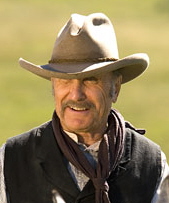
 Yes, those men and their marvelous mustaches.


 Grooming is essential. Sideburns are optional. But I prefer a man with a mustache any old time.


 Well, not really — in fact there is no such thing, but I have told people that. It’s easier than trying to explain where ideas actually come from.