Harvey Girls: The Women Who Tamed the Wild Frontier

hg2.jpgMuch has been written about women who traversed the continent by wagon train as well as those who were mail-order brides. But there’s a less well-known, more unique, and equally important percentage of young women who blazed a trail of civilization from east to west coast. These were the Harvey Girls. 

As the railroad charged across the west, little thought was given to the comfort of passengers. Food was inedible or lethal and service sloppy. Some café owners even went in cahoots with railroad crews and scammed passengers: No sooner was the food placed before the patrons who had paid half a dollar in advance, than the whistle would toot. Afraid of being left behind, passengers ran for the train and the food was “recycled” for the next trainload of unsuspecting victims. 

Fred Harvey, an Englishman, worked his way up in fine eating establishments in the East before trying his hand at a partnership that failed. After brief service on a riverboat and a stint as a postal worker, he sold advertising for a newspaper and invested in cattle ranching, finally deciding while working as a freight agent that there was a crucial need for improved food and service along the rails. Harvey negotiated with Santa Fe Railroad and built his first dining operation in a wooden depot in Topeka. The premises were spotlessly clean. Premium prices were paid for top-quality supplies and ingredients, and table settings included Irish linens and English silver.

Harvey’s standards brought instant and overwhelming success. At his second establishment, a restaurant-hotel at Florence Kansas, he hired a chef away from Chicago’s Palmer House Hotel and paid him a $5,000 salary, more than the local bankers earned. The little town of Florence became famous for its Harvey House meals. Uniforms, fingernails, place settings, food lockers, and all facilities came under stringent regulations.

hg1.jpgHarvey, perfecting the Sudden Unannounced Visit as a means of quality control, would suddenly appear and conduct a white-glove inspection, tossing an offending manager out onto the platform at the least infraction. 

New Harvey Houses opened up at the division/meal-stop points, and by 1883, Harvey was operating seventeen establishments along the old Santa Fe Trail. The restaurants made a profit despite their devotion to quality food, generous portions, and elegant furnishings.

The only drawbacks to their success were the staffs of unreliable male employees who either showed up for work hung over or were injured in brawls. In 1883 Harvey implemented a policy that would be his greatest impact on the American West.

Advertisements appeared in several eastern and Midwestern papers: 

WANTED: Young women, 18 to 30 years of age, of good character, attractive and intelligent. 

hg4.jpgHarvey hired waitresses the same way he’d set about locating the finest food, furniture, chefs and managers. Women were screened with the same perfectionist methods. Upon signing a contract (twelve months in the early days), she usually had twenty-four hours to tell her family good-bye and begin rigorous training in Newton, Kansas. 

Between 1883 and the 1950’s, tens of thousands of women applied and learned “the Harvey way”. The first women answering the ads had many motivations for doing so, financial reasons most prevalent: Starting out, they were paid $17.50 per month, plus tips, room and board, and unsurpassed meals. 

Though black and white uniforms, black shoes and stockings, hairnets, and no make-up were intended to diminish their appearance, the Harvey girls were the best “dishes” the dining halls served up for the frontier men. The girls were friendly faces in an often lonely land. 

Most dormitories had a courting parlor where gentlemen could call, plus a sewing room. The girls were among the best paid and best dressed females in their towns. Many, being farmers’ daughters, sent earnings home to their families. 

The women worked their way up from the lunch counter to the dining hall and earned promotions or transfers to other houses along the Santa Fe. They worked six- and seven-day weeks, often twelve hours a day in split shifts around meal trains. When not serving, they cleaned and polished and kept their station ready for the next train. 

When they did have free time, they rode the rails free, visiting family, or played softball. Some Harvey Houses had their own teams that traveled up and down the line competing in other towns. 

A Harvey House was a social and business gathering place. Many real and imagined romances were spawned in the elegant setting. Countless contracts were broken and pay forfeited when Harvey Girls met and married railroad men, cattle ranchers, and businessmen.

The impact of these “good, attractive, and intelligent” women on the towns they poured into shouldn’t be underestimated. As approximately 5,000 of them married and raised families, eastern culture and civic improvement spread throughout Illinois, Missouri, Kansas, Oklahoma, Texas, Colorado, New Mexico, Arizona, California, and eventually the rest of the states.

These were the women in the forefront of the law and order movements, improving safety and quality of life. Their voices were the ones heard in civic activities, church choirs, and community stage productions. The Harvey Girls who married and settled in the West tended to marry men of high standing and to be the most capable women in the community. It’s been claimed that thousands of boys born to these couples bore the names Fred or Harvey or both. More so than dining experiences and service standards, Harvey’s most profound contribution to the civilization of the American West was the advent of the Harvey Girl. They worked hard, but with dignity and a sense of purpose. They were professionals worthy of respect and admiration. 

Many Harvey Houses survived the great depression o the 30’s, and as part of the war effort, Harvey Girls served thousands of troops during WW II. The disappearance of Harvey Girls is historically linked to the extremes of war and to progress in the form of automobiles and airplanes, an appropriate and worthy end to the legendary women who settled the West. 

harveygirls_01.jpgWill Rogers, western philosopher and humorist, recognized the contribution of the Harvey Girls with this: “In the early days the traveler fed on the buffalo. For doing so, the buffalo got his picture on the nickel. Well, Fred Harvey should have his picture on one side of the dime, and one of his waitresses with her arms full of delicious ham and eggs on the other side, ‘cause they have kept the West supplied with food and wives.”

I’ve written three books with Harvey Girls as characters, and I still find them as fun and interesting as always.  Many people remember the movie with Judy Garland, which was actually set toward the very end of the era, and much liberty was taken with that storyline. 

Harvey Girls are perfect material for heroines because they’re adventurous and out of their element in a new land.  Can you imagine, as a young woman, leaving your family behind, traveling to a rugged part of the country, and working in such a disciplined atmosphere?  Your needs would be provided for, you’d be supervised, and you’d probably send your wages home to help out the family.  Of course, you just might meet a studly cowboy–with a heart-stopping mustache, of course–and live happily ever after! 

When a Baby Just Couldn’t Be Had

A while back, when I blogged about soiled doves, Tanya Hanson asked about birth control and what women did to prevent disease.   It was an excellent baby4.jpgquestion, one I had long been curious about myself.  Tanya provided me with the incentive to finally lay those curiosities to rest.

But, I gotta tell ya, it took some doing. Information was scarce.   I rolled up my shirt sleeves and sought help from a soiled dove expert who recommended some resources. None of the libraries in my area had those books, but I found them online and promptly bought them. I also stumbled upon a book detailing the history of contraceptives in America, which proved my biggest treasure of all.

So here you go, my friends. Birth control in the Old West.baby1.jpg

First off, let me explain why information was–and still is–difficult to obtain for that period.  A religious zealot, Anthony Comstock, was so incensed by the lewdness he observed in New York streets during the 1860’s that he surreptitiously wrote a law that would forbid it, along with the plentiful printed matter that openly promoted/advertised promiscuous living.  An over-worked Congress quickly passed the bill, their intent being to keep the integrity of the mails safe, yet it’s doubtful anyone realized at the time the immensity of what they’d done.

In its attempt to stop the spread of pornography, the Comstock Act of 1873 targeted information on contraception as being obscene, making it illegal to advertise or ship said information and devices. Postal inspectors hired secret agents to enforce the law, an overwhelming job at best.  And while that could be a story in itself, (as well as how creative entrepreneurs evaded the law), needless to say, with the end of the Victorian era, sex thrived.

(Disclaimer:  Before we go on, I in no way endorse any of these methods, however promising they might seem.  Please do not try these at home.)

Now, where were we?

Contraceptives have been around *forever*.  As in 1850 B.C. forever.  The oldest known guide was found in an Egyptian papyrus which described vaginal suppositories made of crocodile dung, gum, or a mixture of honey and sodium carbonate.  In actuality, there was some validity to the honey mixture, as it did seem to impede sperm motility.But crocodile dung? Yeesh.

In 4th century B.C., Aristotle writes how women coated their cervixes with olive oil. (Now, this one worked. Relatively recent studies done on 2,000 women resulted in a 0% pregnancy rate with olive oil being the only contraception.)

A few others from early times: West African women used crushed root for intra-vaginal plugs. Japanese women, bamboo tissue. Easter Island woman made algae and seaweed pessaries. Islamic guides from the 13th century recommended elephant dung which has more acidity and would’ve offered more protection than the crocodile’s stuff.

Time went on.  In pre-industrial America, women depended on methods many of us recognize today:

baby2.jpg

*Prolonged Breastfeeding

*Coitus Interruptus

*Rhythm method–counting days on the calendar.  Women were instructed by their physicians to count 14 days after the cessation of their menstrual period.  (Too bad the docs hadn’t figured out that was her most fertile time.)

*Squatting over a pot of steaming water immediately after sex to help fumigate internal organs.

As women moved further into the isolation of the west, they fashioned homemade remedies such as:

*Vinegar and water douches

*Diaphragms made from hollowed-out lemons, orange peels or beeswax

*Vaseline (I found this in several resources.  Mixed with salicylic acid (similar to aspirin), it destroyed sperm without injury to the vagina or cervix.)

*Cocoa butter and boric acid.  Another strange one.  Recipe in hand, women got together to make these like we’d get together and bake cookies.  They took a shoe box and poked holes in the lid, then put the cocoa butter in and added the boric acid which made little cones.

*Sanitary sponges–dipped in antiseptic, they were used to keep the ladies ‘germ-free’.  (Germ meaning sperm.)

*Abortifacients.

While doing this research, I was struck by the lengths women went through to control the size of their families.  Hindered by the Comstock laws, they were forced to depend on each other to learn and protect themselves with what little they had.

Next time, the male side of contraception.

  baby3.jpg On a lighter note, please share your stories of your funniest or worst visit to your gynecologist.  Or how you learned about the birds and the bees.  Or anything about your first pregnancy or delivery.

You could win the drawing for a copy of WESTERN WINTER WONDERLAND, my Christmas anthology, signed by Jenna Kernan, Cheryl St.John and 9780373294671.jpgmyself!

I’ll go first. My daughter–when she found out I was working on this blog–told me how her doctor (a female) was doing a pap smear on her right before Thanksgiving.  In the middle of the exam, the doc said, “Mmm, mmmm, mmm. I could sure go for some pecan pie right now!! I love pecan pie around Thanksgiving!!” Thinking it was the oddest, most bizarre thing ever to say to someone in stirrups during their annual exam, my daughter still giggles about it.

Love And Marriage On The Trail

As promised, we continue on our journey via wagon train from Missouri to Oregon. And this time the subject is love and marriage on the trail.

Marriages on the frontier were often made before a girl was half through her adolescent year. According to one young woman mentioned in the “Women’s Diaries of Westward Journey,” “she was married at fifteen . . .those days the young men wondering why a girl was not married if she was still single when she was sixteen. That summer Judge Deady . . . came by . . . we all rode horseback . . . We met occasionally at weddings and other social doings,” and soon they were married.

There’s instance after instance of girls of fifteen or less marrying along the trail and soon finding themselves with child despite the painful lack of privacy for people “to whom the taboos of sex and other bodily functions were completely controlling.” Some women, for instance, could not even mention in their private diaries that they were pregnant. They merely noted the arrival of a baby.

Despite the lack of privacy, there was also a new freedom. Although most girls and women continued to ride sidesaddle and wear dresses, there were opportunities for romance not present in their previous lives.   An escape to a wooded river,  trips to replenish firewood,  close proximity over thousands of miles and through any number of hardships, evenings  sitting by fires while young men played a guitar, mouth organ or fiddles all promoted romance.

Once a wedding took place, the other members of a wagon train often held a Chivarie for the couple. One such description, again from the “Women’s Diaries of the Westward Journey”: ” Such a Chivarie as they got that night was enough to awaken the Seven Sleepers. The newly married couple occupied a wagon for sleeping apartments. The first notice that they had of any disturbance was when the most of the men and women in the company took hold of the wagon, the men at the tongue pulling, the women at the back pushing and ran the wagon a half mile out of the prairie. Then the fun began. Such banging of cans, shooting of guns, etc. and every noise conceivable was resorted to. The disturbance was kept up until midnight when the crowd dispersed, leaving the happy couple out on the prairie to rest undisturbed until morning when they came walking into camp amid cheers and congratulations.”

When babies came, as they often did on journeys lasting six to eight months, there was little time to rest or celebrate.  The train had to continue on and usually did the same day or the next morning birthing. And, remember, these wagons had no springs.

And the prospect of birth along the trail must have been terrorizing.   I imagine these women watched the horizon anxiously in the last days of pregnancy, trying to learn whether the weather would be calm or threatening, if the wagons were near or far from water, and, most important of all, if another woman was at hand.

And often there was not. If a wagon broke down, it was left. Families were separated along the way. One huge family of some ten wagons separated into three different groups along the way. No one could wait on a damaged or overloaded wagon for fear of being caught in the mountains during early winter. Some women were seen walking along the way by themselves, their wagon and man gone through some disaster.

The danger involved in pregnancy during these years on the trail — and the early years on the frontier — is most readily evident by one pioneer daughter. She grew up with four stepmothers in succession, each one dying in childbirth.

And so it was with love and marriage on the trail.


Guest Blogger Janette Kenny: Genuine Western Hospitality

onerealcowboy2.jpgonerealman2.jpgAn unwritten code of the west was that any cowboy caught on the trail at dusk could pretty much count on finding a hot meal and a bunk at any ranch.  Being a research junkie and nosy to boot, I decided to look into this open-door policy a bit deeper.  I wasn’t surprised to learn that some ranchers welcomed American and European sportsman to use their ranch as a base while they hunted big game.  In fact, they courted these guests to come to the West.  The reasons were varied and yet practical. Even with the railroad going coast-to-coast soon after the Civil War, news tended to travel slow.  Having “big city” or foreign guests was especially welcome in an area where newsworthy items were, for the most part, spread by word of mouth. 

Of course, there was another benefit to these visiting sportsmen, or “dudes,” and was that they could help control the wild game that preyed on their herds, thus saving ranchers time and resources.  I suppose that constituted just another way to “pay one’s way.” 

eatonranchcabin.jpgIt’s said that paying guest ranches came about in the early 1880s when a visitor at the Custer Trail Ranch in the Dakota Territory was enjoying himself so that he offered to pay the Eatons to extend his stay there and also grant him the use of a horse.  Word of such an arrangement spread, and other ranchers began providing guest quarters. 

By the 1890s, more visitors ventured west to partake of the western hospitality and thrill of the hunt on the ranches that welcomed guests.    

Being raised on a farm, I know full well that some years farmers barely eek out a living.  Running a guest ranch quickly became more lucrative than raising cattle, especially in light of the devastating winter of 1885-86 when hundreds of thousands of cattle died in the blizzards and ranchers were facing bankruptcy.  For years after that devastation, many ranchers held on to their land simply by opening up their ranch to paying strangers.   The guest ranches were fairly split on what they offered visitors.  Some, like the Gros Ventre Lodge in the late 1890s, was noted for their big game hunts that attracted sportsmen from the U.S. and abroad.  Others, like the Custer Trail Ranch, maintained a working ranch so visitors could get a taste of authentic ranch life, from the mundane activities of ranching to the cowboy exhibitions held on ranches, which were the forerunner of the rodeo before it was an organized and recognized sport.   

newprairiecabinnexttooriginal.jpgBy the turn of the century, the railroad and ranchers teamed up to advertise guest ranches.  It was a lucrative deal for both parties, and today dude ranches are going strong all over the U.S. The Eaton brothers knew a good thing when they saw it back in the 1890s when the started the first guest ranch.  They moved their operation from North Dakota to Wolf, Wyoming in 1904, and soon provided extensive guided trails into the Yellowstone region for men – and women.  It’s the latter that snared my attention.  

After seeing a picture that included lady “dudes” sitting before their tents knitting in the wild, I knew I had to include this bit of history in a novel.  Of course, I took free license and made my guest ranch exclusively for woman – a surprise that my cowboy hero Gil Yancy was none to happy to be involved in.   I choose Wyoming as the setting for One Real Man, my April 08 release, partly because I love Wyoming, and partly because it offered women far more freedoms in the 1890s, starting with being the first state where women could vote. 

custertrailranchcourtesyosbornstudios.jpgMy heroine Josie desperately needed freedom, and Gil had his mind set on taking control of her ranch – and her.  Ah, both had a lot to learn and a lot to give up in order to have a happily ever after.  But oh, the rewards.    

To get the comments going, have you stayed on a guest ranch before?  If you had your preference, would you rather stay at a working ranch, or a resort ranch?  Me?  I’ll take the real cowboy any day.   

I’ll give away an autographed copy of my March debut, One Real Cowboy to one of the commenters.  You’re welcome to stop by my website (www.jankenny.com) to read more about my books, and me. 

HAPPY HALLOWEEN

horseheader1.jpeHAPPY HALLOWEEN!

For all of you die-hard nutritionalists — or just for all those who want to eat cleanly, here’s my recipe for Halloween Brownie Protein Bars.

Recipe:

1 3/4 cups Egg White protein powder — I use Jay Robb

1-4 cup Rice Protein Powder — organic if possible

2 Tblsp. edible vegetable glycerin — or maple syrup if you can’t find the vegetable glycerin at your health food store

7-8 teasp. pure stevia — get at a health food store

3 tblsp. cocoa powder — organic if possible

4 tblsp. butter

5 – 6 tblsp. coconut oil — get at a health food store, please — the kind you find in most grocery stores is not a good source

If too gooey, add more protein powder.  Pat flat and cut into pumpkin shapes, adding pecans as decoration.

Okay, it’s not like this is as good as a cookie, but it’s healthy — gives you the protein the body so needs and tastes better than any other protein bar out there on the market.  HAVE FUN!

HAPPY HALLOWEEN!!

 halloween.jpg

Witch Finger Cookies

Pumkins

I have two boys, so the creepier the Halloween treat, the better.  Since we live in the country, trick-or-treating isn’t an option, though they still manage to load up on sweets.  We grow our own pumpkins and have a blast carving them—here’s two from last year, Harry Potter & the Puking Pumkin  🙂

Last year these cookies were a big hit at the Junior High.  They gobbled up these delicious witch fingers and goblin fingers (no green coloring for goblins, added a few creepy cuts and scars).

CREEPY WITCH FINGERS

Witch Fingers

Yield: 5 dozen

1 cup –  Butter, softenedWitch
1 cup – Powdered sugar
1 – Egg
1 tsp – Almond extract
1 tsp – Vanilla
2 2/3 – cups Flour
1 tsp – Baking powder
1 tsp – Salt
3/4 cup – Almonds, whole blanched **I used roasted almonds

Few drops – Green food coloring

1 Tube red decorator gel  **I used a tube of decorator’s milk chocolate instead of gel—the tube is warmed in the microwave to melt the chocolate—when the chocolate cools it really holds on those fingernails—being a chocoholic, I also painted the fingers with chocolate    *A friend of mine used sliced almonds for fingernails, those also turned out nice. 


In bowl, beat together butter, sugar, egg, almond extract, vanilla and food coloring. Beat in flour, baking soda, and salt. Cover and refrigerate 30 minutes.

Working with one quarter of the dough at a time and keeping remainder refrigerated, roll a heaping teaspoonful of dough into finger shape for each cookie. Press almond firmly into narrow end for nail. Press center together to create the knuckle shape–you puff it out rather than squeeze it in. Using paring knife, make slashes in several places to form knuckle.Place on lightly greased baking sheets; bake in 325F (160C) oven for 20-25 minutes. Let cool for 3 minutes. Lift up almond, squeeze red gel (or chocolate) onto nail bed and press almond back in place. Remove from baking sheets and let cool on racks. Repeat with remaining dough. 

Baker’s tip:The cookies will puff up while baking—shape them THIN.

Wishing everyone a Safe & Fun Halloween! 

Tips For Using Excess Candy

I have to restrain myself from laughing here because I NEVER have any excess candy! But if you do, here are some things you can do with  it.

Peanut Butter Cups — Melt and pour over cake or ice cream as a sauce or press into the center and make thumbprint cookies.

Candy Corn — Fold candy corn into pancakes or roll them into popcorn balls and puffed rice treats. Or when icing a cake, use them as a bottom border in place of piped icing. They also work well on top of iced cupcakes.

Snickers, Baby Ruth, M&M’s — Use a food processor to quickly chop bars into bits, then fold them into cookie dough in place of chocolate chips. Or use them to top brownies and other baked bars. Or some cooks use this candy to decorate cookie pizzas, or fold them into softened ice cream to make your own blizzards.

Peppermint Patties — Put them in brownie batter by layering them on the bottom half of the batter, then spread the other half of the batter on top and bake. Yummy!

Lollipops and other hard candy — Make stained glass cookies by cutting out the middle of sugar cookies and putting crushed hard candy in the hole, then bake.

Gingerbread Houses — You can use all kinds of candy to decorate gingerbread houses next month. Necco wafers make good roof tiles. M&M’s or Skittles make excellent door knobs. Licorice string can border windows. Gumdrops make pretty flowers. Hard candy makes windows. Snickers, Baby Ruth and bars like that can be broken up to use in lots of ways. Your imagination can run wild.

I’ll Take My Cowboy With a Mustache, Please

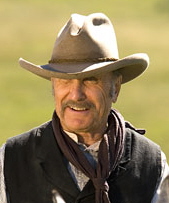
5clark.jpg5bt-church.jpgYes, those men and their marvelous mustaches.  And I’m talking *real* mustaches, not thin scraggly excuses or unshaven stubble or five o’clock shadows.  No, let’s take a look at some mustaches that have taken time and testosterone to cultivate.   

5clint-eastwood.jpgSo what is it about a cowboy with a mustache that sets him apart from all the rest?  Mustaches are often culturally associated with wisdom and virility, and it’s not difficult to understand why.  There’s something about a mustache that sings of maturity…masculinity.   A subject that comes up often among writers is the youthful appearance of so many celebrities, cover models and singers.  While there’s no disagreeing that Matthew McConaughey and Ben Affleck  are fine-looking fellows, there’s something about maturity that speaks to us as women. 

5connagher.jpgNow I know there are those of you who will disagree, in fact a recent survey discovered that an alarming number of women would refuse to kiss a man with a mustache.  So, is facial hair a matter of taste? 

A big argument against mustaches has been that they’re out of style because so many men wore them in the seventies.  The seventies?  Men have been shaving — or not shaving — selectively since the stone age!  Shaving with stone razors was technologically possible from Neolithic times.  The oldest portrait showing a shaved man with a mustache is a Scythian horseman from 300 BC. 

5redford.jpgHistorically, military men have often worn moustaches; in fact the number of nations, regiments and ranks were equaled only by the number of styles and variations. Generally, the younger men and lower ranks wore the smaller and less elaborate moustaches. As a man advanced in rank, his moustache would become thicker and bushier, until he was permitted to wear a full beard. 

I’ll bet you didn’t know there’s an American Mustache Association.  Neither did I, but they’re gung ho on protecting their rights to bear whiskers.   

5outsidertim.jpgAt The World Beard & Moustache Championships 2007 there were 6 subcategories in the moustache category: Natural Moustache – may be styled but without aids.

Hungarian Moustache – Big and bushy, beginning from the middle of the upper lip and pulled to the side.

Dalí – narrow, long points bent or curved steeply upward; areas past the corner of the mouth must be shaved.

English – narrow, beginning at the middle of the upper lip the whiskers are very long and pulled to the side, slightly curled; the ends are pointed slightly upward; areas past the corner of the mouth usually shaved. .Imperial – whiskers growing from both the upper lip and cheeks, curled upward

Freestyle – All moustaches that do not match other classes. 

5gettys.jpgOther types of moustache include:

Fu Manchu – long, downward pointing ends, generally beyond the chin

Pancho Villa – similar to the Fu Manchu but thickerHandlebar – bushy, with small upward pointing ends.

5paradise.jpgHorseshoe – Often confused with the Fu Manchu style, the horseshoe was possibly popularized by modern cowboys and consists of a full moustache with vertical extensions from the corners of the lips down to the jaw line and resembling an upside-down horseshoe.

Moustachio – bushy moustache, with hair sometimes growing down the sides of the mouth.

Taylor moustache – a thin row of fine dark hairs along the upper lip.

Pencil moustache – narrow, straight and thin like a pencil, closely clipped, outlining the upper lip, with a wide shaven gap between the nose and moustache. Also known as a Mouthbrow.

Walrus – bushy, hanging down over the lips, often entirely covering the mouth. Popular during the American Civil War.

The GG – bushy hair grown only over the corners of the mouth, shaved in the middle. 

5duval.jpgGrooming is essential.  Sideburns are optional.  But I prefer a man with a mustache any old time. 

So, what’s your preference?  Clean-shaven or sporting a cookie duster?  Who is your favorite mustachioed hero?  And my final question — have you seen any mustaches on book covers?

Stop back for my follow-up gift for you! :::wink:::wink::: 

Goblins, Ghouls, and Candy!

When I was growing up, outside of Christmas, the other holiday I could hardly wait for candy-corn.jpgwas Halloween. It meant candy, sacks of it. Since I have the biggest sweet tooth known to man, trick-or-treating meant fun, foolish abandon, and sugary treats. I didn’t care what kind of candy it was, I liked it all. My younger sister and I would run wild, racing from house to house like a pair of hyped-up hyenas. I’m just glad that we grew up in an innocent time when no one had to worry much about child abductions or candy poisonings. Kids sure can’t be that carefree today.

As Halloween approached this year I was curious about the early beginnings of it and did some research.  The name originated from All Hallows Eve that the Celts celebrated on happy-halloween.jpgOctober 31st to mark their new year. The Irish Celts believed spirits wandered the earth looking for bodies to possess on that night. Lacking knowledge of science or the rotation of the earth and different seasons, Celtic Culture sought a reason for the shorter, colder days and longer nights. They mistakenly thought the sun was losing its power and the dead were to blame. To prevent the spirits from stealing their bodies on Hallows Eve, they extinguished every fire in their homes, made themselves physically undesirable by making their faces grotesque, and wore all manner of strange clothing. The Celts believed that magical powers were at their strongest on October 31st. 

When European immigrants came to America, they brought their customs and beliefs with them. Children gathered and played games. Bobbing for apples was played most frequently. 

Other games were played, including one called “Clap-in, Clap-out.” The young men left the room, while the young girls each declared who they’d chosen for a partner. Then as the young men entered, he had to sit beside the girl he thought had chosen him. The girl clapped if he sat in the wrong seat. Then he had to go back out and wait for another chance to try again. The game lasted until every girl had a partner.  Another game, played in Ireland was a form of Blindfold. A blindfolded player was seated in front of a table on which sat several saucers. The saucers were shuffled and the player chose one. The contents of the saucer determined the player’s life for the following year. The saucer containing earth meant someone known to the person would die during the coming months. Water foretold travel. A coin meant new wealth. A bean meant poverty. And so on. In 19th century Ireland, young women placed slugs in saucers and sprinkled flour over them. They believed the patterns left behind after the slug wriggled in it would reveal the face of their future husband. Boy, they must’ve been desperate! But, I should talk. I used to play with a Ouija board quite a bit, trying to find out who I was going to marry. Strange what we do to try to see into the future. I’m also thinking some of this might be useful in a story sometime.

 A traditional food eaten in Ireland on All Hallows Eve was called barnbrack. It was a type of fruitcake that had a muslin-wrapped treat baked inside. The person who got the piece holding the treat learned his future for the coming year. Some of treats were a ring (meant a marriage,) a coin (prosperity,) a thimble (will be an old maid,) and a button spoke of forlorn sweethearts. 

Over the years, Halloween has evolved into what we have today falltrees_wt.jpgwith many religions speaking out against the practice. Regardless, most kids still try to get as much candy as possible, no matter if it’s at Halloween parties or trick-or-treating. It’s their night to howl.  apples.jpgWhatever your beliefs, you can still use this time to take stock, count your blessings, and prepare for the short winter nights. I love fall. The gorgeous color of the trees, the crisp night air, beautiful pumpkins, and luscious apples. Oh, and of course, the candy! I’m holding out my bag. 

What do you associate with Halloween? Or maybe you have a favorite memory or tradition you’d like to share.

Guest: Cindy Holby

Where have all the cowboys gone?

I was raised on Westerns. Bonanza, Rawhide, High Chaparral, The Virginian, The Big Valley and Lancer just to name a few. For me as a child, the Wild West was as close as my TV and my imagination. My favorite toys were my Johnny West, Jane West, Chief Cherokee and their horses, Thunderbolt, Thundercolt and Flame. I even had the cardboard bunkhouse and all the accessories. It’s really too bad a basement flood destroyed all that.

My fantasies were about Heath Barkley, Little Joe and oh my gosh, Johnny Lancer. Does anyone remember the scene were he jumped his palomino over the fence when the opening credits came on? My heart broke when the actor, whose name escapes me at the moment, lost his arm and leg in a motorcycle accident.

Then came a more modern western. Alias Smith and Jones. Both guys were hot and some fancy camera work made Kid Curry the fastest gun in the west. Yummy. And I was so in love with Pete Duel who tragically killed himself.

John Wayne movies could always be counted on for a great mud-slinging, name calling fight, usually with Maureen O’Hara winding up in the mud. And one movie was so good they made it twice, the Rio movies, one with a young hot James Caan and the other with a young hot Ricky Nelson.

Then suddenly westerns disappeared. Occasionally, you could catch one on a Saturday matinee on some random cable channel but they were hard to find until the Hallmark channel came along.

Thank goodness for Silverado. And while I’m not a big fan of Lawrence Kasdan’s screenwriting abilities, the cast was awesome. Brian Dennehy, who was so good, Scott Glenn, a young, hot Kevin Costner, Jeff Fahey as bad guy personified and James Gammon as the leader of the outlaws who had the best line in the movie. “I think there’s only a couple of guys up there and this asshole is one of them.” Loved it!

Young Riders. Young Riders fulfilled my Western needs. With a cast full of hunky guys who knew how to shoot and ride I was hooked. It also got me to thinking about my childhood western fantasies. The one about a girl named Jenny and her brother…

And Chase The Wind became a story. A six book series about cowboys and Indians and the joys and desperations of living and building a nation. I was inspired by Cowboys.

But inspiration is hard to find these days. Open Range was pretty good. I loved the scene were Kevin Costner didn’t waste any time and just killed the bad guy.

Outsider. Tim Daly. Enough said. Nope. Sigh…….Was he great in that movie or what? And somehow my copy is missing. I’ll just have to buy a new one.

And just recently, 3:10 to Yuma. If anything revived the Western, this movie was it. Everything you could want. Well it would have been nice if Christian Bale lived but still, a great, great film. I haven’t seen the new Brad Pitt movie with the impossibly long name but hey, it’s a western and Brad Pitt is in it so it’s got to be good.

In my books I have several cowboys. Jamie, Chase, Ty, Caleb, Jake and Zane. These guys are based on some real life heroes. My sons and their friends. If we lived a hundred and twenty years ago, I’m pretty sure this is how they’d act.

Cowboys. You just gotta love them. I’m pretty sure there’s still several of them around. I even know a few, which is kind of strange considering I live in North Carolina.

Now if I could just find my copy of Outsider….

cindy_holby.jpg

Cindy Holby author of
Chase The Wind
Wind Of The Wolf
Crosswinds
Windfall
Forgive The Wind
Whirlwind

windofwolfthumb.jpgforgivethewind.jpgwhirlwindcvr1.jpgcindy-holby.jpg

And her newest release, Rising Wind, which is not about cowboys but frontiersmen who have their own stories to tell.

Petticoats & Pistols