Got Tonic?

tonic-bottles.jpgI remember when I was young my mother used to give us kids all kinds of home remedies because in those days we didn’t go to a doctor unless we were dying. One medicine that she kept on hand was called paragoric. Sold without a prescription, paragoric was given to colicky babies but was also administered for diarrhea. The principal ingredient was morphine. It’s no wonder it put us right to sleep! No one really knew how dangerous paragoric was until much later when it was finally taken off the market.

sss-tonic.jpgAnother familiar sight around our house in the 60’s was SSS Tonic and Geritol, both of which are still sold today. These tonics were supposed to boost tired blood and give a body energy. Shoot, I didn’t know blood could get tired! But, I guess when an elixir contains a great percent of alcohol, it can sure perk you up. Another common over-the-counter medicine sold today is Nyquil and it’s also alcohol-based.

elixir.jpgIn the old West, where were lots of traveling medicine shows. A wagon decorated in fancy banners would roll into town and a colorful salesman would begin an entertaining show. He’d tout the virtues of all kinds of patent medicines, tonics and bitters, making all manner of outrageous claims to the gullible public. Then, invariably he’d have someone planted in the crowd to step out and testify of the amazing results the tonic had given him. That always boosted sales because it was relatively cheap and doctors were few and far betweeen. Folks grasped at anything that offered relief.

blood-tonics.jpgOne particular tonic, Vino Kolofra by Johnson and Johnson, claimed to be a brain stimulant, would eliminate hay fever, cure drunkenness, and was also an aphrodisiac. Just name your problem and it cured it. Some tonics were said to cure venereal disease, epilepsy, and paralysis. In the 18th century, Dr. Ebeneezer Sibley even went so far as to advertise his Solar Tincture would restore life in the event of sudden death. These were nothing more than con men who pushed their quackery onto desperate, unsuspecting people.

The truth was that most patent medicines contained large amounts of opium, cocaine, morphine and alcohol. What they did was create addictive, drug-dependent junkies. One of the more popular, Dr. Hostetter’s Stomach Bitters, contained 44.3 percent alcohol and was more potent than 80 proof whiskey. Husbands could get drunk without ever frequenting a saloon. As you can imagine, they used it widely for whatever ailed. Or even if they were healthy as a mule.

Don’t get me wrong though. Not all patent medicines were bad. Products such as Milk of Magnesia, Pepto Bismal, Fletcher’s Castoria, Vicks Vapo-rub, Castor Oil, and Campo-phenique have been around for ages, are beneficial, and are still used today. Thank goodness the federal government stepped in around 1920 and began making our medicines safe.

What home remedies did your mother give you when you were a child? And are you still using some of them now?

The Army Wife

The Army Wife . . .

I’ve long been fascinated with the army wife on lonely posts throughout the west.
I’ve avoided writing about one because a romance writer doesn’t want a married heroine. I’ve been pondering, though, creating an army widow. The appeal is strong.
In the old western films, the army wife is usually portrayed in rather nice living quarters, planning and participating in balls and usually well dressed. The opposite was true. Many lived in abysmal quarters, often where diseases such as yellow fever and cholera ran rampant. On occasion, Army wives were more in peril from their over protected husbands than from the Indians.
According to the Time Life Books, Army wives were considered by soldiers as prime objects of Indian marauders, though there is not a single recorded instance of a woman killed by Indians at an Army post. It seems they were more in peril from their overprotective husbands than from the Indians. At Fort Phil Kearney, where Indian attacks were frequent and deadly, the commanding officer issued a standing order that if the post were overrun, the women and children were to be herded into the powder magazine and blown up.
One army wife, though, went from fearful bride to admirer of the Indians. Ada Vogdes’s journals between 1868 and 1871 diary are the record of a rather conventional woman’s change of outlook when confronted with the vivid new life around her.
“Having arrived at a time of relative peace, she could not help altering her opinion of the Sioux, and acknowledging that they had gentlemanly qualities and even physical attractions that she had never dreamed of in her sheltered life back East.”
“One warrior who really shattered her preconceptions was one called Big Bear. He was sociable and tried his gallant best to communicate with her. Furthermore, as she confided to the privacy of her journal, he was a superb physical specimen who wore only leggings and moccasins, with a buffalo robe thrown over his shoulders, which exposed the most splendid chest and shoulders I ever laid my eyes on. . .”
One of my favorite research books is “I Married A Soldier” by Lydia Spencer Lane. She married a young lieutenant in 1854 and immediately left Pennsylvania for his post in Missouri. She obviously enjoyed her years as an army wife, even while detailing an often hard life.
The first posting was a sad one. “Cholera was epidemic and scarcely a day passed that we did not hear the solemn notes of the “dead march.” One lieutenant, according to the account, had gone on as officer of the day, in the morning; at midnight he was dead.
The next posting was in Texas. She and her husband arrived by a “lighter,” a small schooner. “The accommodations were of the most contracted description, there being scarcely room to stand upright in the hold, where Mrs. Burbank, children, nurse, and myself were stowed away. We improved our time fighting roaches and other things, down below, while the officers spent the night on deck.” When they reached land, they found themselves in the midst of a yellow fever epidemic. “It was dreadful news to us, as there was no escape, no running away from it, nothing to do but land, take the risk and trust in Providence. However, I had ‘gone for a soldier, and a soldier I determined to be.”
Their home in Christi was a large hospital tent with an opening at each end. “The first night we spent ashore a violent norther struck the coast, and the weather became very cold. One night the norther, the wind blew a hurricane and our tent was torn open at both ends. Between the pounding of the waves on the beach, the shrieking of the wind, and the flapping of the canvas, the noise was fearful, and I expected to be blown bodily out to sea. “
The women rode in an “ambulance” from this post to the next. “Many a weary hour I passed in it, with only space enough to sit bolt upright.
She relates tales about housing which ranged from barely adequate to horrendous, and the people she met along the way. She and her husband often slept at the houses of strangers, and they were expected to house travelers, never knowing exactly who they were. After staying with one family on their travels, they learned “the true character of these people. They were outlaws of the worst description; but while we were under their roof they treated us well.”
All and all, it’s a fascinating glimpse of army life as seen by a wife.
In two weeks, I’ll be blogging about the army laundress, another great heroine possibility.
###
Pearl and Ruth are the winners of my contest in my last blog. Please email me (papotter@aol.com) your addresses and I’ll send a book to you.

Romancing the Old Classic Movies

I love classic movies, but not just any classics.  Of course, I love westerns, but even more than that, I love a really good old-fashioned romantic comedy.  So much so, that I’ve started a collection of DVD’s of Cary  Grant, Rock Hudson, Doris Day, Clark Cable and James Garner movies to name a few of my favorites.   imageshappened-cover.jpg

One movie I’ve enjoyed over and over again is It Happened One Night  With Claudette Colbert playing a spoiled rich heiress on the run and Clark Cable playing a ambitious journalist out to land the biggest story of his career,you have the makings of a first-class romance.  The thing I love about this movie is that nothing really is as it seems – the heiress is rebelling against her wealthy father and is not really in love with the man she’s running to meet.  Our journalist (Clark Gable) pretends to be a traveling man, and though recognizes the heiress immediately getting on a bus, he  doesn’t let on and follows her in search of  groundbreaking headlines. He wants an inside exclusive.   Needless to say, Peter Warne’s disdain for Ellie Andrews changes during the course of their journey and we see such amazing character development between the two and even they refuse to recognize it for what it is, until almost too late. 

The dynamics of this romance set the standards for all the romances to come.  It was so cleverly written that to this day, I recall some scenes and still laugh out loud.  Each time I watch the movie, I find something new, something I imageshitchhiking1.jpgdidn’t pick up on from my last viewing and that’s always a treat.   It’s a feel-good, wonderfully plotted story that leaves the viewer wanting to come back for more.To your right is a picture of Peter giving Ellie a lesson in “hitchhiking.”   I’m smiling as I write this because his three attempts have failed much to his chagrin and now Ellie turns the tables and shows him that her method works the best!  

imagesblanket-scene.jpgTo your left is a picture of the classic “blanket” scene.  The two have to spend the night together in a motel, and Peter sets up a clothesline with a blanket separating them for their night’s sleep.  Needless to say, neither gets much sleep that night with thoughts of the other – finally recognizing their love.  Hopeful and broke, Peter gets an idea and in the morning Ellie finds him gone and thinking he’s left her for good, she retreats back to her father and her opulent lifestyle.  You just have to see this black and white movie to learn the outcome.  The ending to this story leaves you with a smile and wanting more.

 It Happened One Night won 5 Academy Awards in 1931 – Best Picture, Best Director (Frank Capra) , Best Actor, Best Actress and Best Screenplay.  It’s a feat that hadn’t been repeated until 1975 with One Flew Over the Cuckoo’s Nest and then 1991 with Silence of the Lambs

Some other of my favorites include Houseboat, Pillow Talk, Send Me No Flowers, Operation Petticoat, The Thrill of it All and Father Goose and That Touch of Mink. imagestht-touch-of-mink.jpgimages-pillow-talk.jpg

Times have surely changed.   Still and all, the last movies I saw weren’t There Will Be Blood or Michael Clayton.  They were 27 Dresses and Fool’s Gold.   I need my romantic fix and even though these were pretty good movies, they don’t compare to the classics.  Do you love old romantic comedies?  Which are your favorites?  I’d really love to hear about it.

In honor of romance lovers favorite holiday, Valentine’s Day, I’ll be giving away one book each to 2 winners today to help celebrate romance.  I’ll post the winners at the end of the day, Pacific standard time.  You may have your choice of my current Desire, The Corporate Raider’s Revenge (Romance Reviews Today’s Perfect 10) for January or March’s Taming The Texan,  garnering Romantic Times Magazine’s K.I.S.S. hero (Knight in Shining Silver) for Clint Hayworth. 

Happy Trails and Happy Reading!

9780373294879.jpg

Chocolate Cake is for Lovers!

chocolate-valentine.jpgHere’s my absolute favorite chocolate cake recipe in the whole world.  It’s rich, chocolatey, and easy to make.   And since Valentine’s Day is known for giving your lover chocolate as a sign of your affection, you still have time to make this!

Chocolate Fudge Cake

1 box chocolate fudge cake mix

1 box instant chocolate fudge pudding

1/2 cup sour cream

4 eggs

1/2 cup oil

3/4 cup water

1 tsp. vanilla

8 oz. mini-chocolate chips

Preheat oven to 350 degrees.  Prepare either 13 x 9 pan or two 9 inch rounds with shortening, dusted with flour.

chocolate-valentine.jpgMix together first 7 ingredients until smooth.  Stir in chocolate chips.  Pour into pan.  Bake 25-35 minutes.

Now, it’s preferable to cool the cake before frosting.  But if you’re really anxious to show your love, you can frost the cake with a can of chocolate fudge frosting while it’s still warm, then cut a large piece and serve it dripping. 

No telling what your lover will do to show his appreciation, eh?

Happy Valentine’s Day to all our Petticoats & Pistols friends.

We love you!

Valentine’s Day Fun Facts!!

imagescupid.jpg

It’s a day for romance!

Did you know:

 15% of U.S. women send themselves flowers on Valentine’s Day.

73% of people who buy flowers for Valentine’s Day are men, while only 27 percent are women.

About 1 billion Valentine’s Day cards are exchanged each year. That’s the largest seasonal card-sending occasion of the year, next to Christmas.

About 3% of pet owners will give Valentine’s Day gifts to their pets.

 Cupid, another symbol of Valentines Day, became associated with it because he was the son of Venus, the Roman god of love and beauty. Cupid often appears on Valentine cards holding a bow and arrows because he is believed to use magical arrows to inspire feelings of love.

During the late 1800s, postage rates around the world dropped, and the obscene St. Valentine’s Day card became popular, despite the Victorian era being otherwise very prudish. As the numbers of racy valentines grew, several countries banned the practice of exchanging Valentine’s Days cards. During this period, Chicago’s post office rejected more than 25,000 cards on the grounds that they were so indecent, they were not fit to be carried through the U.S. mail.

During the Middle Ages, the belief that birds chose their mates on St. Valentine’s Day led to the idea that boys and girls would do the same. Up through the early 1900s, the Ozark hill people in the eastern United States thought that birds and rabbits started mating on February 14, a day for them which was not only Valentine’s Day but Groundhog Day as well.

Hallmark has over 1330 different cards specifically for Valentine’s Day.

Humorous valentines of the 19th century were called “Vinegar Valentines” or “Penny Dreadfuls.” Vinegar Valentines were introduced in 1858 by John McLaughin, a Scotsman with a New York City Publishing Business. Penny Dreadfuls with comic designs drawn in 1870 by American cartoonists Charles Howard became known as Penny Dreadfuls.

In 1929 in Chicago, gunmen in the suspected employment of organized-crime boss Al Capone murder seven members of the George “Bugs” Moran North Siders gang in a garage on North Clark Street. The so-called St. Valentine’s Day Massacre stirred a media storm centered on Capone and his illegal Prohibition-era activities and motivated federal authorities to redouble their efforts to find evidence incriminating enough to take him off the streets.

In the Middle Ages, young men and women drew names from a bowl to see who their valentines would be. They would wear these names on their sleeves for one week. To wear your heart on your sleeve now means that it is easy for other people to know how you are feeling.

In Victorian times it was considered bad luck to sign a Valentine’s Day card.

In Wales, wooden love spoons were carved and given as gifts on February 14th. Hearts, keys and keyholes were favorite decorations on the spoons. The decoration meant, “You unlock my heart!”

It wasn’t until 1537 that St. Valentine’s Day was declared an official holiday. England’s King Henry VIII declared February 14th a holiday.

One single perfect red rose framed with baby’s breath is referred to by some florists as a “signature rose,” and is the preferred choice for many for giving on Valentine’s Day, anniversary, or birthday.

Only the U.S., Canada, Mexico, France, Australia and the U.K. celebrate Valentine’s Day.

Some people used to believe that if a woman saw a robin flying overhead on Valentine’s Day, it meant she would marry a sailor. If she saw a sparrow, she would marry a poor man and be very happy. If she saw a goldfinch, she would marry a millionaire.

Teachers will receive the most Valentine’s Day cards, followed by children, mothers, wives, and then, sweethearts. Children ages 6 to 10 exchange more than 650 million Valentine’s cards with teachers, classmates, and family members.

 The 17th century a hopeful maiden ate a hard-boiled egg and pinned five bay leaves to her pillow before going to sleep on Valentine’s eve. It was believed this would make her dream of her future husband.

The ancient Romans celebrated the Feast of Lupercalia in honor of Juno, the queen of the Roman gods and goddesses on February 14. Juno was also the goddess of women and marriage.

The Empire State Building in New York City played a prominent role in the movie Sleepless in Seattle. This year 15 couples will take (or renew) their vows on the 80th floor of this famous landmark.

The heart is the most common symbol of romantic love. Ancient cultures believed the human soul lived in the heart. Others thought it to be the source of emotion and intelligence. Some believed the heart embodied a man’s truth, strength and nobility. The heart may be associated with love because the ancient Greeks believed it was the target of Eros, known as Cupid to the Romans. Anyone shot in the heart by one of Cupid’s arrows would fall hopelessly in love. Because the heart is so closely linked to love, it’s red colour is thought to be the most romantic.

The most fantastic gift of love is the Taj Mahal in India. It was built by Mughal Emperor Shahjahan as a memorial to his wife, who died in childbirth. Work on the Taj began in 1634 and continued for almost 22 years. required the labor of 20,000 workers from all over India and Central Asia.

The oldest known Valentines were sent in 1415 A.D. by the Duke of Orleans to his French wife while he was imprisoned in the Tower of London. It is still on display in a museum in England.

The red rose was the favorite flower of Venus, the Roman goddess of love. Red stands for strong feelings which is why a red rose is a flower of love.

Wearing a wedding ring on the fourth finger of the left hand dates back to ancient Egypt, where it was believed that the vein of love ran from this finger directly to the heart.

In America, the pilgrims sent confections, such as sugar wafers, marzipan, sweetmeats and sugar plums, to their betrothed. Great value was placed on these gifts because they included what was then a rare commodity, sugar. After the late 1800’s, beet sugar became widely used and more available, and sweet gifts continued to be valued and enjoyed.

What was your favorite Valentine to give or receive?  (Mine was a homemade video from dear hubby to the tune, “You are so beautiful to me”)  

images-loving-couple.jpgTomorrow’s Blog with Charlene: Romancing the Classic Movies and win a chance for an autographed book!

The Fight for Freedom & Native America

horseheader1.jpeHowdy!

Good morning!  Well, today, I thought — in view of the fact that we are in the middle of an election year, that we might have a look at the beginnings of our country — way back in 1770’s — and Native America.  Right now because the book I’m writing is due to my publisher very soon and because I’m writing about the Iroquois, I am steeped into Iroquois lore and history.   And I have discovered some incredible things.  Here follows some very interesting things in my consideration — interesting only because I certainly didn’t learn about any of this in school…hmmm…

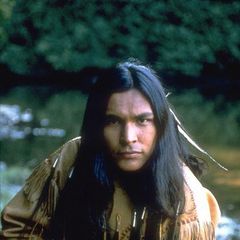
  • adam-beach.jpgDid you know that long ago, long before the white man set foot on this continent, there were two men who brought peace to a people and established a government of the people, by the people and for the people?  Those men were Hiawatha and Deganawide (de-ga-na-Wee-da), or the man known to the Iroquois as the Peacemaker.  Their tribes were constantly at war amongst themselves due to the tradition and obligation to kill anyone who had killed any of their own family.  Because of these blood wars, the people were constantly in strife. 

These two men — who together brought peace to an entire nation that lasted over 300 years — have all  but been forgotten in our history (this is not the Hiawatha or Longfellow’s poem).  When our forefathers first met the Iroquois, they were impressed with not only their idea of freedom, but also with their form of government.  In the Iroquois nation of long ago, the elder women would pick their leaders because the power of the government was held in their hands.  No leader was allowed to accept remuneration for his service — it was considered his duty to serve, and that was pay enough.  And no leader who served his own means, or who showed little fortitude (cowardly behavior in the face of treason) was allowed to serve.  In fact, such leaders were taken out of office at once and their shame stayed with them throughout the rest of their lives.

red_3-crop-email.jpgDebates amongst the Iroquois sachems (as their representatives were called) were long and hard, and no person was interrupted before he was finished speaking.  Nor was any action ever taken before there had been debate, and even then, a man was never forced to do the biding of another man if he disagreed.  Several moments of silence were also left open at the end of any speech, in case the speaker thought of something he might have forgotten when he was speaking.  Oratory was considered a skill that every man should acquire.  And those who spoke well were admired greatly.  It might take a while for the people to decide on an issue, true, but once decided, and united, the Iroquois proved to be a terrible foe.  Both Thomas Paine and Benjamin Franklin, as well as Thomas Jefferson, admired the Iroquois form of government.  In fact, Benjamin Franklin wanted our own Constitution to be modeled after the Iroquois government much more than it was.

Blue_YonderBut if the Iroquois government was so rich and so full, what happened to it?  Why are the Iroquois alloted only a small reservation in America?  This is a rather complex question and is best answered in a complex way, but I’ll be as brief as I can.  The founders of the Iroquois Confederation, whose vision was to bring peace to Turtle Island (North America) might have been more than a little upet to see how their people took the peace so hardily gotten, and used it to force their will on other Native populations.  It happened once the white man came.  The white man came with trade goods that far exceeded the Iroquois’s own.  And it got to the point where the white man’s goods could not be done without.  Once this happened, it became a contest tribe to tribe to takeover the trade.  Unfortunately, this was often encouraged by the French and English in order to weaken the Indian Nations, but on the whole I think it was done without the knowledge of what was happening to the Native American Nations.  The Iroquois, because they were united, surfaced as the Nation to be respected, even though that was often done at the destruction of some of the other Native Amerian Nations.  Be that as it may, the Iroquois became so invincible that the English and the French were caught trying to buy their friendship, in a quest to bring their own rule to North America.

july06-yukon-photo-2.jpgThe Mohawk eventually created a Covenant Chain with the English, which is why the Mohawk (some of them — not all) fought with the English against the Americans during our revolution.  However, the Native American has a long standing love of freedom and independence, and several tribes within the Iroqouis Confederation fought right alongside the Americans during our fight for independence.  Yes, they lost their lands, but they lost their lands to the corporations who coverted their lands for their own ends.  And unfortunately for us, when our forefathers wrote that “all men are created equal” they truly did mean all MEN, and in particular all white men.  Luckily for us, because of our right to speak freely, we in America eventually corrected this error to include all women and all people of any color.  And so after the revolution in the 1770’s, when the corporations came to take over the Iroquois land, there was no one at that time to speak out for Native Americans.

 So this brings me to my controversial question of the day.  Are you ready?  Recently some Americans in — forgive me I can’t recall the exact state — but I think it was Delaware, lost their homes to some big corporations.  The state government literally came in and took over their land — they were given money for the land, but not what it was worth.  That land was then turned over to the corporations.  In Texas, there is the Trans Texas Corridor being built as I write this, to unite Mexico, the US and Canada.  Millions of acres of land are planned for confiscation in order to build this highway — which will be owned and operated, by the way, by Spain.  Many of the people who live on this land, have lived on it for generations.  Perhaps I am wrong in my evaluation, but this precedent seems awfully similar to what happened to the Native People in New York State so long ago…i.e. land confiscation in the name of the corporation.

 Then we come to the recent declaration by the Lakotah.  The Lakotah Declaration of Independence.  In their own quest for freedom, the Lakotah in late December/early January of this year, declared their independence from the United States.

 So here’s the big question:  There is a long tradition of freedom in this country, tracing directly back to Native America and our own ancestors.   Are you ready?  What’s your opinion?  Do we still live a country that is free today as it was fifty years ago?  What do you think?  So come on in and let’s have a talk, maybe we could even, in the tradition of the Iroquois, debate the issue.

lastwarrior.jpgAnd don’t forget, THE LAST WARRIOR comes out March 2008!

Why is the daughter of a ranch manager from Texas writing fiction set in France in 1740?

molly_frm.jpgFor the answer to this question and more, stay tuned.  

Hi, my name is Molly Noble Bull, and I am the author of five novels and am contracted to write five more. I was born in Kingsville, Texas. Kingsville is located in Kleberg County, known for the famous King Ranch.  

Kleberg and nearby Kenedy County are home to some of the largest ranches in South Texas, if not the United States. My late father and my maternal grandfather managed ranches in Kenedy County for half a century. I spent part of my growing up years on the Santa Rosa, a sixty-thousand-acre cattle ranch.  

Some of you might like for me to answer questions on “Cowboys in South Texas” as background material for future books, so let’s get started:  

Q: How can you tell a real cowboy from the drugstore kind?  

A: First of all, today’s real cowboy would never wear flashy cowboy clothes, even if he were entering a rodeo. Sparkly and shiny is out for a real cowboy. But it’s pretty normal for a cowgirl’s clothes to sparkle and shine whether she has ever visited a drugstore or not.  

Q: What would a real cowboy wear to work?  

sethcomeshomewithadeer.jpgA: For everyday, he would wear jeans that he probably bought at Wal-Mart, a long-sleeved work shirt, high-topped cowboy boots, and an old Stetson or a cap with a bill. His most expensive items would be the boots followed by the weathered Stetson. The jeans, the shirt and the cap with a bill would be the cheapest on the market. He might also wear snake-guards if he plans to walk around in the brush.  

Q: Why the long-sleeved shirt? And what might it look like?  

south-texas-ranger-in-brush-jacket.jpgA: The Texas sun is hot. A long-sleeved shirt keeps the arms and shoulders from sunburn attacks. It also protects the body from insect bites and helps keeps brush from scratching the arms and shoulders. The shirt might be an old dress shirt that he once wore to church. It would be white or blue or some other conservative-looking color. It might also be a western-cut shirt, but it wouldn’t be flashy.  

Q: What would a modern-day cowboy wear on a date or to church on Sunday?  

A: For the date, a cowboy would wear a nice pair of jeans that had been starched and ironed, his best long-sleeved shirt, also starched, his best boots and his best hat. To church on Sunday, he would wear a white dress shirt, suit and tie, his best boots and his best Stetson. Or he might dress just like he did when he went out on a date.  

Q: Tell us a little about how a real cowboy would talk.  

A: I cannot say how a cowboy talked a hundred years ago, or how they talk in other parts of the country, but a modern-day cowboy living in South Texas today would never say “howdy.” Sorry ladies. We just don’t talk that way in South Texas–never have as far as I know. My grandfather never said it. I also know a modern-day rodeo cowboy from North Dakota, and he doesn’t say “howdy” either.  

I could be wrong, but I think “howdy” is a myth dreamed up by Hollywood.  

Q: What would a real cowboy from South Texas say?  

A: He would probably say, “Hi.” Then he would offer his right hand in friendship. At one time he would have removed his hat when talking to a woman.  My sons still do that today. Most don’t. However, even today if he were talking to an older woman who was also a family friend or a relative, he would probably give her a big hug. We hug a lot in Texas.  

He would also say, “y’all.”

He would pronounce oil as “all.”  All well.

Foil as fall. Aluminum fall.  

Texans who are forty or older were taught in public and private schools to say “yes, ma’am” and “no ma’am”; “yes sir” and “no sir.” Then the government stopped allowing teachers to insist that children to do that, and I think it was a huge mistake. So today, most don’t say, “yes ma’am” or “no ma’am.”  

molly.jpgActually, real South Texas cowboys and cowgirls talk pretty much like people do throughout the country, except our accent is different.  Ranch managers today are educated. One of our sons is a ranch manager, and he has a degree in Animal Science. Over the past hundred years, South Texas ranch cowboys have mainly been Hispanic.  

Q: Tell us a little about everyday life on a cattle ranch in South Texas today.  

texas.jpgA:  A cowboy’s main job is to look after the ranch and the cattle. This can be anything from checking fences and fixing windmills to putting out feed and burning prickly pear. We’ve had more than average rains lately, but during a drought when there is no grass, the cowboy burns off the thorns on prickly pear cactus so the cattle will have something to eat.  

Most ranches in South Texas today also sell hunting leases, and hunters from big cities come to ranches to hunt deer and turkey. Some ranches also provide exotic game from Africa and other countries. Today, the ranch manager often serves as a hunting guide as well as a cowboy.  

Q: Do cowboys today still ride horses?  

A: Absolutely. However, they spend most of their time riding around the ranch in pickup trucks. In a truck, they can carry feed and medicine for the animals, as well a rifle should the cowboy come upon a rattlesnake.  

Q: Thanks for all the information. Now tell us a little about your books and why your latest novel, Sanctuary, is set in France in 1740.  

sanctuary_molly_noble_bull.jpgA: Sanctuary was published in trade paperback on September 15, 2007, and it is the first of three long historical novels in the Faith of Our Fathers series about the Huguenots. Though my family were/are Texas Cowboys, my ancestors came to Texas from other states and other countries. Sanctuary, the first book in the series, follows the route some of my ancestors took from France to England to Scotland. Book Two will begin in Scotland, but again, much of the story takes place in England, and it ends in South Carolina. In Book Three, they finally get to Texas and become cowboys. You can read Mary Connealy’s review of Sanctuary if you visit www.christianbook.com. Just write Molly Noble Bull in the search slot.  

winter_pearl.jpgThe Winter Pearl is the title of my long historical from Steeple Hill. Set in Colorado in 1888, it is very much a Petticoats and Pistols kind of book, complete with scenes of a shootout and a stagecoach robbery. The Winter Pearl was published in trade paperback in 2004 and came out from Steeple Hill again in mass-market paperback in 2007. It is still available, but like Sanctuary, it must be ordered from Amazon, christianbook.com, Target, Booksamillion or Barnes and Noble. 

Q: Besides Sanctuary and The Winter Pearl, what new books can we expect from Molly Noble Bull?  

A: My next two books will not be historical novels. Runaway Romance is two short contemporary novels under one cover. My book is titled Alyson and it takes place on a cattle ranch in South Texas today. I don’t have a firm publication date for Runaway yet, but I will let you know when I do. And I hope Alyson will make my readers laugh, or at least smile.  

After Runaway, I have a non-fiction book coming up titled The Overcomers: Christian Authors Who Conquered L.D. (Learning Disabilities) Yes, I am dyslexic, and I wrote The Overcomers with four other Love Inspired authors with Learning Disabilities: Margaret Daley, Ginny Aiken, Jane Myers Perrine and Ruth Scofield.  

I am also contracted to write two more long historical novels in the Faith of Our Fathers series, and Tsaba House in going to reprint The Rogue’s Daughter, a novel set on a South Texas ranch in 1890 and first published by Zondervan in 1986. To be honest, I write better than I did in 1986 when Rogue first came out; so prepare for that. The good news is that it’s an honest to goodness western romance novel.  

Q: Anything else you would like to say before you say good-bye?

A: Yes. Please visit my website. www.mollynoblebull.com If you scroll down my main page and click Molly’s Family you can see pictures of my three sons on horseback and a picture of me on the Santa Rosa Ranch when I was twelve years old. And if you scroll down and click on Molly’s Books, you can see all my covers and read excerpts for Sanctuary and The Winter Pearl.  Thanks, y’all, for inviting me to come today, and I hope I’ll be invited back real soon.

Molly will be sending an autographed copy of either Sanctuary of The Winter Pearl (winner’s choice) to one reader, so leave a comment!

The Lost Art of Letters

letters.jpgBack in the days before computers, cell phones, and text messaging, people wrote letters. Lots of letters. They were elegant and sincere and the wording was often flowery. Letters expressed matters of the heart simply, but with style. Letters created a permanent form of communication that could be bundled up, tied with a bow and kept forever in a treasured place. The receivers often took them out and reread them to re-live the connection they had with the sender. In the West, it took weeks or months sometime to receive a letter and the waiting increased their value I think. When the letter finally got into the hands of the intended person, they read it until they often wore the paper thin while they waited for the next one.

letters.jpgLetters strengthened a bond between two people and said exactly what was in their hearts. Letters spoke of love and commitment, loneliness and desire, and of thoughts and dreams that they dared not speak in person. Society was so constricted with rules that it was only through putting thoughts on paper that they could express what was truly in their heart without fear of censure. John Donne wrote: “More than kisses, letters mingle souls.” 

I think romance writer Mary Schramski said it best: “There was a time when the world was gentle, and love letters floated down into waiting hands of the recipients like snowflakes.” Truly she knew what it was like, for this romance author was quite the letter-writer. Even after the world had entered the computer age, she kept pen and paper in hand. I’d like to think she still does.

 lindabroday.jpgThe story I wrote for the “Give Me a Texan” anthology is called The Love Letter. In the story, Payton McCord and his best friend, both died-in-the-wool cowboys, love playing practical jokes on each other. But, their antics kinda get out of hand after Payton almost cost his friend his marriage. To get even, the man who’d once saved Payton’s life writes a love letter to a much maligned woman who raises sheep and signs Payton’s initials to it. 

This is the letter Payton’s friend wrote as taken from the book: “I yearn to see the beauty of your face, hear the tone of your voice, and inhale your fragrance that wafts in the wind like a million wildflowers in bloom.  Please meet me in Amarillo by morning in the lobby of the hotel.  Then, you shall know the love I speak.  Look for the crescent birthmark on my right hand and the adoration in my eyes.”


lindabroday.jpgThe love letter set off a chain of events that no one could predict. Amanda Lemmons, the shepherdess and recipient of the love letter, suspects someone means to humiliate her in front of the whole town. Involved in a war with the cattlemen, she knows what lengths the ranchers will go in order to drive her off her land. Determined to outsmart them, she devises a plan to turn the tables on the Lothario letter-writer. Just let those cattle barons think they have the upper hand! What happens is humorous and entertaining and shows how a simple letter can change the hands of fate. 

What do letters mean to you and do you have any you saved? Email counts if you don’t have any sent via the post office. Maybe you printed off a special email and put it in a safe place. Or maybe you received a nice card with special sentiments written inside from someone.   

Today, I’m giving away two autographed copies of “Give Me a Texan” to two people who leave a comment. 

Also, please remember to enter our big Spring Round-up Contest if you haven’t already done it! You don’t want to miss out. Just scroll down and look on the left side of the screen for Contest.

Revisiting ‘Soiled Doves’

While doing research for a western series I’m planning, I combed through my wide and varied western library and came across a book titled “No Step Backward.”

Most of these books came from travels west and the small state and federal landmarks/attractions along the way. It’s amazing what you can find there.

This book is about women and family on the Rocky Mountain Frontier, Helena, Montana, 1865-1900.

What particularly caught my interest was a long chapter on the city’s “soiled doves.”

Several others on this blog have delved into this fascinating subject, but what amazed me was how successful these women became in this western outpost.

According to this book, “one group of Helena’s working women – the prostitute – created an economic empire within the city, and the chronicle of the expansion and contraction of their holdings . . . mirrored Helena’s own development between 1865 and 1900. These capitalists . . . represented the largest class of working women until 1900 and assisted in redefining frontier womanhood both for themselves and other women.”

When the secretary of the Helena Board of Trade submitted his first report in 1876, he included mention of wages: Laborers wages, $2.50 to $4.00 per day; miners, $4 to $5 dollars per day; mechanics, $5 to $7 per day; farm laborer, $50 per month; female labor, cooks and general house work, $30 to $40 a month.

Compare that to the monthly earnings of seven prostitutes who maintained bank accounts in the city’s two major banks. They ranged from $179 a month to $337 per month.

Unlike the oft-portrayed poor and mistreated “soiled doves’ in films, the real life prostitute in Helena did very well and often ended up owning substantial real estate. The majority of Helena’s prostitutes were native born and had property. Twelve women, or one-third of the white demimonde population, reported having an average of $2,500 in personal wealth and fifteen of them owned property.

These women of the demimonde accumulated capital and became a real force in the community. Quite a few bought property that became saloons, a ‘hurley gurdy’ or a simple prostitute proprietorship. One even bought a piece of new property by mortgaging all she had, plus all her underwear (three dozen pair underclothes) for $3,000 at two percent per month.

There were also instances of more than a few prostitutes who moved out of that field and up into the tenderloin’s hierarchy.

But by 1886, a growing concern for moral improvement spread in Helena. The Daily Independent reported numerous complaints against Ming’s Opera House, charging the house with the indiscriminate seating of members of the demimonde in the dress circle and ‘parquette.’ In response the manager replied that he had no wish to bar the ‘soiled doves’ but their seating would be confined to a less conspicuous area.

Five indignant ‘doves’ stole habits from the Sisters of Charity and, so disguised, presented themselves and tickets for the five demimonde seats at an evening performance.

I think what amazed me was the long acceptance of these women as an integral part of the community. Some took their money and disappeared, probably to establish a “respectable” live somewhere else. But others were integrated into the community, their children went to private schools and they became an accepted part of the community.

It gave me a glimpse of a side of the west we seldom see in films or books, although one of my westerns, “Notorious”, has an ex-prostitute heroine who owned a saloon. I love strong heroines, particularly those who overcome huge obstacles.

So, in recognition of Helena’s soiled doves, I would love to send a copy to two of those who post on this blog. I’ll announce the winners next week.


Welcome, Mildred Colvin: Cowboy Charisma

mildred.jpgThank you for this opportunity to guest blog on Petticoats and Pistols! Although I don’t get to comment as often as I’d like (I’m usually on late night), I love this site and am learning so much here.

By way of introduction, I’m Mildred Colvin and sometimes write under the pen name M. J. Conner. All eight of my books are Christian romances published by Heartsong Presents at Barbour Publishing. I enjoy writing for Barbour because the stories are fun, yet the conflict the hero and heroine must work through are often the same that many readers face in their spiritual lives. My aim and my prayer is to write in such a way that those who read my books will find laughter and tears within the pages but mostly the gentle touch of God’s love.

9781597898904.jpgIn my newest release, Joanna’s Adventure, Clay Shepherd rides back into Cedar Bend, Kansas, hires on at the Circle C Ranch and literally sweeps Joanna off her feet. He doesn’t realize that he didn’t have to carry her across a mud puddle to get her attention. No siree. Joanna has been dreaming about Clay ever since he left town six years ago when they were in their teens. Joanna fell for Clay the first day he slid into the back seat of the old schoolhouse, so his return stirs more than memories. Of course that first kiss under the mistletoe back then didn’t hurt one bit. In fact she still has the pressed sprig of mistletoe in a keepsake box so she will never forget her one and only kiss or the handsome, exciting boy who gave it to her. She sees the grown up Clay as more than exciting. He is romantic and unpredictable with a touch of mystery that tells her just how enticingly dangerous he can be. Joanna doesn’t know what it is, but Clay has something that draws her, and that something is cowboy charisma.

1rider.jpgLike Joanna, I’m not immune to the appeal of a cowboy, so when I think of Clay, the term cowboy charisma pops into my mind. What is cowboy charisma? The dictionary defines charisma as “a special magnetic charm or appeal.” So what’s appealing about a guy who tends horses and cows and scoops manure? Could it be those snug-fitting blue jeans with more swagger than stride crossing the barnyard or street? How about the wide-brimmed cowboy hat pulled low, lending an air of mystery when it hides the expression in those dark shadowed eyes? Or maybe the tug of a grin when he notices a pretty gal standing alone at a barn raising and says, “Howdy, ma’am. Care to dance?” What about the thrill at a rodeo of horse and rider who seem in tune as they dance the age-old competition of dominance and submission? After a mere eight seconds that lasts forever the cowboy leaps to the ground with both arms raised in victory with a cocky grin on his face. Who hasn’t experienced a little heart flutter then?

The list could go on and on with physical attributes we find appealing in a cowboy, but like everyone else, the cowboy is more than a shell. He is an inner man with feelings, emotions, and a certain way of thinking. Each man is an individual, but when I thought about the cowboy heroes I’ve brought to life in my stories, I realized they have a lot in common. Maybe that’s because they all adhere to a set of unwritten rules commonly known as The Code of the West. This code is similar to The Golden Rule – do unto others, as you would have others do unto you.

horseback.jpgSeems the old time cowboy valued his freedom and believed in minding his own business. He asked no questions of strangers because he wanted to give no answers about his private life. When a cowboy welcomed the stranger at his campfire or table, he expected to be welcomed in turn. His job wasn’t easy to say the least so he learned to cowboyup or in other words, get back on the horse that bucked him off, whether it was an actual horse or life itself. Although the code often became twisted to justify the individual’s need or desire for vengeance and justice, the true cowboys believed in honesty, loyalty, generosity, and fairness. They admired courage, diligence, plain speaking, and commonsense. They respected and protected their womenfolk. In fact one of their rules was that they would never shoot a woman no matter what. Now I like that rule!

deborah-mildred-colvin.jpgRomanticized or not, I am drawn by cowboy charisma. I do enjoy writing a story that has a hero who respects the heroine as well as all women and, imperfect as he is, follows a code that doesn’t always put him first. What do you like to see in a hero? When you read a book or when you create a hero for your own work, what is more important to you? The immediate attraction of the physical or the moral code that drives the man? Maybe both are required. Maybe not. What do you think? Can a hero be unattractive on the outside, but so appealing in his moral code and the way he treats the heroine that we still see a heart-stopping, mighty-good-to-look-at man?

Two names will be drawn from those who comment to each receive an autographed copy of my newest book, JOANNA’S ADVENTURE.

Petticoats & Pistols