Legend of the West: Poker Alice

linda-sig.jpg

The Old West is filled with legends but none is more colorful than Poker Alice. Her real name was Alice Ivers and she born of privilege in 1851. She attended an elite boarding school for young women until her family moved to Leadville, Colorado. There Alice met Frank Duffield, a mining engineer, and they were married.

Gambling was prevalent in the rough mining camps and Frank Duffield did his share. Alice often accompanied him to keep from staying home alone. Alice quickly learned she had an ability to read cards and took up poker and faro. When Frank died in a mining accident, Alice decided to put to use what she’d learned. Left alone with no means of support she turned to poker as a way to earn a nice living. It was certainly more respectable than prostitution. She took this opportunity despite having tough competition from online sites like pkv games.

poker1882

Alice stood at 5’4″ with blue eyes and lush brown hair and decked out in her fashionable dresses she was quite a sight for lonely miners. It was rare to find a “lady” in a saloon that wasn’t of the “soiled dove” caliber so they flocked to her. They quickly bestowed the nickname Poker Alice on her and she was in much demand. It’s rumored that she once broke the bank at the Gold Dust Gambling House in New Mexico where she won $6,000 in one night.

pokeralice01

Sometime during this period she began smoking large black cigars. Some said it was quite a sight to see her in frilly dresses with a big cigar sticking from her mouth. Alice also took to carrying a .38 revolver and wasn’t a bit squeamish to use it. Her reputation grew and so did her pocketbook.

However, she was deeply religious and never gambled on Sundays. The lady did have her scruples it seems.

Alice traveled all over Colorado, New Mexico and South Dakota playing and sometimes dealing the game she loved. But it was in Deadwood, South Dakota that she met Warren Tubbs. They married shortly after and homesteaded a ranch near Sturgis, South Dakota. Loving the quiet ranch life, Alice cut back on the time spent in gambling houses. She and Warren had seven children and it was one of the happiest times of her life.

But it wasn’t to last. Alice’s poker luck didn’t extend to husbands. Warren contracted tuberculosis and died of pneumonia in the winter of 1910. Again, Alice had to turn to poker to earn a living.

She hired a man by the name of George Huckert to take care of the ranch. He fell head over heels in love with Alice and asked her to marry him several times. Finally Alice relented saying that it was cheaper to marry George than pay him all the back wages she owed him. The  ink was barely dry on the marriage license before George died in 1913, leaving Alice once more a widow.

This time when Alice returned to the gambling halls she wanted to do more than be a patron. She purchased her own place and named the saloon “Poker’s Palace.” There she provided everything a lonely man required–liquor, gambling, and working girls. One night a drunken soldier went on a rampage in the saloon, breaking furniture and threatening the customers. Alice promptly took out her .38 and shot the man dead. She was arrested of course and thrown into jail, but at the trial she was acquitted on grounds of self-defense and released.

poker_alice

She lost her saloon though. Authorities shut her down and it seemed to take a lot of the fight out of Alice. A little while passed and Alice was now in her 70’s. Her beauty had faded and she began dressing in men’s clothing. She continued to run a house of ill-repute in Sturgis and was arrested many times for drunkenness and charged with being a madam. Finally, after repeated convictions she was sentenced to prison. Alice was 75. Taking her advanced years in account, the governor of South Dakota pardoned her. She died of complications from gall bladder surgery in 1930 and was buried in Sturgis, presumably beside Warren Tubbs.

According to the Legends of America website, Alice was said to have won more than $250,000 at the gaming tables during her lifetime and she never once cheated. One of her favorite sayings was: “Praise the Lord and place your bets. I’ll take your money with no regrets.”

Doesn’t this sound like a character in a romance book? Poker Alice was colorful and independent. She lived life on her own terms. When the chips were down, she didn’t ask for a handout; she went back to work.

Have you read any books or watched western movies where the heroine was unconventional, maybe working in a saloon or even owning one? Miss Kitty definitely springs to mind, but there are others. Our own Charlene Sands’ heroine in BODINE’S BOUNTY sang in a saloon.

http://www.LindaBroday.com

<

p style=”text-align: center;”>Click on Cover to Order from Amazon

Charley Parkhurst: Stage Driver Extraordinaire

 wg-logoThe other day I was doing some heads-down research for my current work in progress.  The subject of my quest was stagecoach accommodations but, as often happens when I do research, I got sidetracked by a tidbit I stumbled upon.  What caught my eye was an intriguing reference to  a stage-driver by the name of Charley Parkhurst.  “One-eyed Charley”, as the popular driver was called, led a very colorful and singular life. 

Charley was born in New Hampshire around 1812.  Orphaned while very young, Charley was sent to an orphanage, escaped from the orphanage at around age 12 and found a job as a stable boy.  There it was discovered Charley had a way with the horses and was promoted from stable boy to handling teams and eventually progressed to driving coaches.  Charley’s skill was such that patrons were known to specifically request the young driver by name.

stagecoachIn 1851 Charley moved to California following the opportunities that opened up with the gold rush and soon earned a reputation as being one of the safest and fastest drivers around, easily handling the ribbons for a team of six.  According to one source looking back over Charley’s career, “. . . in more than twenty years no highwayman had dared to hold up a stagecoach with Charley Parkhurst on the box, for the first two who tried it had been shot dead in their tracks.”

At some point, Charley lost an eye as a result of being kicked by a cparkhurst-02bhorse.  Not deterred by the mishap, Charley wore a black eye black patch from then on, and thus obtained the nickname “One-eyed Charley.”  From all accounts, though a fair and honest person, Charley was no saint.  The colorful driver’s habits included, smoking cigars, chewing tobacco, indulging in moderate drinking, card playing and other forms of gambling, and swearing volubly when the occasion called for it.

Eventually, when rheumatism (a common condition among long-time drivers) began taking a physical toll and the railroad expansion took more and more of the overland business, Charley retired.  Never one to remain idle, the former stage-driver, now past sixty, turned to raising cattle and occasionally hauling freight for neighbors. 

All of the above points to a vivid life lived fully and with gusto.  But the most astounding thing about Charley wasn’t revealed until it came time to lay the body out for burial.  It turns out Charley was a woman!  Her real name was Charlotte Darkey Parkhurst.  For the most part, co-workers, business partners, neighbors and even close friends were absolutely  flummoxed by the news.  In fact, Charley had fooled everyone to the extent that she was allowed to register to vote in the presidential election of 1868, long before women were awarded that privilege.


cp-marker

Reading this remarkable story had the writer in me imagining story after story to account for what had led Charley to lead such a curious life. 

Had she taken the disguise as a child in order to land the stable boy job and found herself trapped for a lifetime by her own deception? 

Had she become so enamored of the freedom afforded her as a man that she was unwilling to give it up? 

Was she running from something in her past and was afraid to resume her true identity? 

Did she ever long to throw off her disguise?

Another piece of this intriguing puzzle that spurs the imagination – it was said that those who went through Charley’s possessions after her death found baby clothes. Wow, if true, does this ever raise additional questions.

Did she in fact have a baby?  If so, when – after she reached California or was it actually part of the reason she headed west?  What happened to the child – did the baby die or did she find a home for him/her?  Who was the father and under what circumstances was the child conceived?

Anyway, this little side trip through my research cost me several hours since I couldn’t resist digging deeper into her story even though it’s not something that will be useful to my work in progress.  Then again, who knows?  Pieces of this tale, or variations thereof, may someday find their way into a future book.


So what about you?  Did this snippet of Charley’s history cause you to start spinning tales in your head about what her life might have been like?  What aspect most intrigued you, what piece did you immediately hone in on?

Better Off Wed? by Charlene Sands

cal2nhyv

arborIn exactly one year from today on May 22nd, I’ll be the mother of the groom!  My son is getting married! The wedding will take place on a country club golf course and their vows will be spoken on the first tee.  My son is an avid golfer, you see, and he wanted to get married on a golf course.  No other place seemed fitting enough.


My husband and I recently celebrated our 35th wedding anniversary. Since both of us worked that day, he took me to Mission Burrito for a taco salad. The entire dinner cost $12.00. We were blissfully happy anyway and will take a little trip next month to celebrate properly. But either extravagant or simple, I feel very fortunate to have spent these past 35 years in a relationship with a warm-hearted, loving man.


My daughter was married just last fall, and now we’re back in wedding mode again. As we stuffed the beautiful engagement party invitations, my husband said, “Seems like we were just doing this.”  It’s true – it was only 7 months ago when we were in full wedding swing. This party will be a summer luau with all the trimmings, including a Tiki Bar with my dh as the Mai Tai Master.  20081011-0133-r


How different weddings are now than in the past. While today young women and girls look forward to marrying their loves, forming that loving bond together with stability and compassion, back in the first half of the 1800’s, that wasn’t necessarily the case. Often, women weren’t overly enthused with the thought of marriage. For them, it meant a hard life of cooking, mending, sewing, chores and bearing children. 


I was surprised to learn that women had on average five to seven children! That’s a lot of meals to cook and clothes to clean! But more importantly, if love wasn’t the means to their marriage, wives were often subjugated to a husband’s wrath. They depended on him for monetary support and therefore, the men always had the upper hand.  Woman often spoke of their upcoming marriage with impending doom or at the very least, anxiety.


Whereas, it’s observed that in the first part of the nineteenth century men looked favorably upon marriage. They’d have good meals cooked, clean clothes and sex on a regular basis.  While women of that time enjoyed sex with a mate before marriage, often their desire waned after marriage. Statistics show this to be true today as well.


In the early part of the century a minister performed the ceremony in the bride’s home for most marriages, although church weddings became more popular later on and soon became the norm. Perhaps due to the preacher’s heavy schedule of sermons and church services, most weddings in early 1800’s were performed on Tuesdays, Wednesdays or Thursdays.

 25683611western-weddings-anthology

Women of the West tended to court and marry at a later age than those in the East and South. They also engaged in more premarital sex and often married if the woman became pregnant.


Today’s research shows from a 2008 study that the average marrying age for women is 25 and for men, 27. 


Since two of our fillies are marrying off their daughters this season, both coincidentally named Kristi/Christi, I asked them about their thoughts and family traditions that continue from generation to generation.  Both Pam Crooks and Tanya Hanson had something unique to share!


From Pam: 


“With a talent she didn’t know she had until she was in her late thirties, my sister Kim decorates beautiful cookies.  Starting with my first daughter, and continuing the tradition with my second and now my third, she makes cookies for every guest at the wedding reception. 

 a-umbrella-cookie

As you read this, Kristi is hours away from being married.  Afterward, since she and her new husband will be moving to Virginia Beach, the guests will find beach-themed cookies at their table.


Love the cookies Pam! Aren’t they adorable! Best wishes at the wedding today!


From Tanya:      

 tanya-hanson1

I’m a little crazy right now LOL. Christi had her first fitting on Saturday and suddenly, it’s almost here.

Some traditions, old and new:  Christi is using the cake knife and server, and silver toasting goblets from Matt and Debbie’s wedding, and the little Noritake china bridal cake plate Tim and I ate from. 

A five-generation tradition: Somewhere during the ceremony, the hymn “Let us Ever Walk with Jesus” happens. At our wedding, it was a solo. My parents walked up to the altar to it during WW II. At Matt’s and also Christi’s, it’s the song I will walk in to.


I think all of these traditions are amazing and endearing. 


What about you?  Any weddings on your horizon?  Did you have family traditions that continue on from one generation to the next?   And what wedding scene from either a book or movie stands out in your mind?  


Curious minds want to know!


Don’t forget to enter our Fillies Contest!!

The Cowgirl Behind “Cowgirl Dreams” by Heidi Thomas

In a scrapbook I have from my grandmother is a clipping from the Sunburst Sun (Montana) newspaper, Aug. 26, 1922, that reads:
Program
1:00 Parade of cowboys and cowgirls, headed by Cut Bank brass band
2:30 Tootsie Bailey will enter competition with entire field, riding wild steers with only one hand on cirsingle

     Another clipping states “Tootsie Bailey won first and Mary (Marie) Gibson second prize in the steer riding.”
Marie Gibson was a well-known Montana cowgirl and won national awards for bronc riding.
Tootsie was my grandmother and she would have been 17 at that time. I did have the opportunity to spend time with her, ride horseback, and get to know her pretty well before she died suddenly when she was only 57 and I was 12.

     I know that she was an avid horsewomen and that she was more at home on the back of a horse than behind a dust mop. My dad told me she had competed in rodeos, riding steers, when she was young. I kept thinking how courageous that was, especially as I got older and watched bull and bronc riders. Grandma was petite—five-feet two-inches and weighed a little over 100 pounds. I was amazed that she would pit herself against an animal that weighed 900 pounds or so, one whose sole purpose was to get that pesky rider off its back and then maybe stomp on her!

While my grandmother most often dressed in men’s jeans and did a man’s job, riding horseback and working cattle, she also “cleaned up nice” and dressed very feminine and fashionably when she was in social situations.

     Following is an excerpt from Cowgirl Dreams when my character, Nettie, donned a pair of her brother’s denim pants, sneaked out of the house one morning and rode in a neighbor’s informal rodeo. She loved the freedom of riding her horse Toby, wearing pants and especially riding the steer in the rodeo. The adrenaline of staying on the back of that bucking, twisting, angry beast had her hooked and the clothing allowed her to ride unencumbered by the extra fabric of a skirt, divided or not. (I don’t know that my great-grandmother was as opposed to her daughter’s rodeo riding as my character’s mother, but I know, from research, that it was often a family issue and a social stigma.)

     When Nettie arrived home, her mother was horrified to see her daughter dressed as a man. And having heard that Nettie had ridden in the rodeo against her wishes, Mama was highly upset.

     “You.” Mama stepped forward, her face dark red with anger. “You defied me.”

     Cold dread pooled in Nettie’s belly. She’d never seen Mama so mad. “No, I—”

     “Young lady, you were supposed to stay home today. Work on that pile of darning. You know Mrs. Connors wants it done by tomorrow, otherwise we don’t get paid till next week.”

     The darning. She hadn’t given it another thought after she’d decided to sneak out. Oh dear. Icy prickles of guilt stabbed at her. “But. Lola. Why couldn’t she finish it?”

     Mama stepped closer. “And, we had to hear it from the neighbor’s hired man. You. Rode. In. A rodeo.” With each word, she jabbed her finger an inch from Nettie’s face. “You know how I feel about that.”

     “But, Mama, I stayed on. I didn’t get bucked off.”

     “Don’t you sass me, girl.” Mama’s voice shook now. “And wearing pants in public, too.” She closed her eyes a moment and sighed. “You will take that basket of socks, go to your room, and don’t come out until they’re all finished. No supper. No No riding. For a month.” She turned on her heel and stalked out of the kitchen.

~~~~~~~~~~~~~~~~~~~~~~~~~~~~~~~~~~~~~~~~~~~~~~~~~~~

     horse-earrings-smThank you, Mary, for hosting me on Petticoats and Pistols. Today is my first stop on my virtual book tour. Please leave a comment to enter a drawing for some cool gifts. today, on Petticoats and Pistols, the drawing is for a pair of horse earrings. Perfect for P & P readers.

And join me tomorrow at L. Diane Wolfe’s Circle of Friends blog http://circleoffriendsbooks.blogspot.com/

     For the itinerary of all my stops on this tour and a list of prizes, go to my blog http://heidiwriter.wordpress.com/my-blog-tour/

Click on the book cover to purchase

My Favorite Women of the West

iama-ehq-siteI love the story I wrote for my current release.  It’s called “Home Again” and it’s a novella in the Love Inspired Historical Mother’s Day anthology. Overall title is In a Mother’s Arms.  The heroine has a 12-year-old son who’s determined to get into trouble.  He starts by throwing a rock through the church window. That act of rebellion puts him in the path of the town sheriff, the man my heroine jilted fourteen years earlier.

What I loved about the story is how hard the heroine is trying to raise her son to be a good man. Here she is . . . A woman in 1890 Colorado, running a store, raising a child and divorced. She needs help and the hero is glad to give it, but the bottom line is that she’s responsible for raising her son. Like the real life women who settled this country, my heroine, by shaping a single child, contributes to the creation of the time and place we call the Old West.

When I started this column, I was going to list my five favorite Wild West women. Several names came to mind, most of which you’d recognize.   Annie Oakley… Calamity Jane . . . Caroline Ingalls of “Little House” fame. Don’t get me wrong. I’m fascinated by these women and their larger-than-life ways, but I wouldn’t call them favorites. They are complex individuals with good traits and not-so-good traits.

I thought of Sacagawea, the Indian guide for Lewis and Clark.  In elementary school I read her biography a dozen times. She’d be on the list, but I’m sure my impression has been overly romanticized. She’s a favorite, but I don’t feel strongly connected.sacagawea

I broadened my search and thought of Willa Cather. A woman and an esteemed author, she was born in Virginia in 1873 and grew up in Nebraska. In college I read O Pioneers! and My Antonia. I enjoyed the stories, but I didn’t love them the way I love a western romance.

Somewhere in my search, I realized something simple. The women of the west I most admire don’t have individual pages in history books. They could most likely shoot a gun, but they weren’t in the league of Annie Oakley. They had grand adventures like Sacagawea, but their journeys had another purpose. They wrote like Willa Cather, maybe not books but letters by the dozens, even hundreds.

willa-catherThe women of the west I most admire were the wives and mothers who lived everyday lives. They cooked breakfast for their eight kids, did laundry in tubs with homemade soap, and tended sick children. They stared down danger, kept the faith and somehow brought civility to the wide open spaces of America. I have the deepest respect for these women and always will. They had tough lives and they persevered. What’s more, they passed that grit on to their sons and daughters.

 Mother’s Day is a few weeks away, but I’m celebrating early this year.  Home Again is dedicated to my mom.  She’s strong, smart, wise and just plain fun. Who are the women, both in history and in real life, that you most admire?  I’d love to hear about them.  Everyone who comments will be automatically entered into a drawing for a copy of In a Mother’s Arms.

To learn more about Victoria, visit her website at www.victoriabylin.com

Order now from Amazon.com   

Amelia Bloomer Set Fashion on Its Behind

linda-sig.jpgIn western romance bloomers often refers to a woman’s undergarment. I’ve been guilty of this and have used bloomers on more than one occasion. While they were originally a type of women’s trousers, bloomers have since become synonymous with under drawers and pantaloons. But in Amelia Bloomer’s day they were baggy pants gathered tightly and buttoned at the ankle. They were worn under a skirt of a shorter length that allowed the lacy bloomers to show.

bloomers

Bloomers released women from their tightly laced corsets, layers upon layers of petticoats that could weigh over ten pounds, and long dresses that dragged the ground. Bloomers allowed freedom of movement. Women could at last ride bicycles and indulge in sporting activities. And it was all because of free-thinkers like Fanny Wright who first advocated a type of bloomer in the early 1800’s and Amelia Bloomer who made the garment fashionable in the 1850’s.

1880-cycling

Amelia Jenks Bloomer (1818-1894) married an attorney by the name of Dexter Bloomer. He was also a newspaper editor. She began writing a few articles for his paper pertaining to women’s issues. After attending the Women’s Rights Convention in Senaca Falls in 1848 she founded her own bi-weekly newspaper called “The Lily” and became a voice for many women reformers such as Elizabeth Stanton and Susan B. Anthony.

amelia-bloomer

Initially, the newspaper focused on temperance and the women’s suffrage movement. But as the times progressed the articles became more about marriage law reform, higher education for women, the right to vote, and women’s right to employment without having to ask for her husband’s permission. The health and well-being of women were also a primary focus and that’s when Amelia advocated clothing for women’s comfort and the bloomers in particular.

She fashioned them after the Turkish women’s trousers. They were intended to preserve Victorian decency while being less of a hindrance. Here’s Amelia in her outfit.

ameliab

She said, “The costume of women should be suited to her wants and necessities. It should conduce at once her health, comfort, and usefulness; and while it should not fail also to conduce to her personal adornment, it should make that end of secondary importance.”

As you can imagine, she was met with overwhelming ridicule. The garment was deemed unfeminine and a moral outrage. Gradually, the bloomers faded away. Amelia herself gave up the fight after eight years and stopped wearing them, citing that it shifted the focus away from more important women’s issues.

amelia-in-bloomers

I can only imagine that these bloomers were a forerunner of today’s jeans. I love the comfort, freedom, and casual look of jeans. And they’re form-fitting and feminine.

How many of you are a jeans and shorts kind of gal? And do you think you would’ve worn bloomers in public if you lived back in Amelia’s day?

Strokes of Brilliance – Women Artists of the West by Charlene Sands

Talent equals talent, great art equals great art, whether done by a male or female, right?  But that wasn’t always the case.  As late as 1905,  an art dealer refused to believe the work of art in front of him was painted by a woman.   That woman was Eliza Barchus and below you’ll see some of her brilliant paintings.   A widow and a mother with young children, she supported her family by painting and teaching.

artist-3

She is known in the art world now as the “The Oregon Artist” for her depictions of  the territory. By the turn of the century Eliza Barchus was the best known painter in the Northwest; she had won many awards and had exhibited at the National Academy in New York. Theodore Roosevelt placed one of her paintings in the White House, and Woodrow Wilson bought another. Eliza Barchus lived to be one hundred and two years old and passed away in 1959.


artist-5

artist-4 Eliza Barchus


By 1890 there were over 1,100 woman artists and art teachers in the West.  Whether inborn talent or applying techniques of formal art training, women didn’t have an easy road.  Their work wasn’t appreciated in the art world.   Many pioneer women nurtured their talent even after a hard day of household chores, others braved the frontier on their own and some ventured into subzero temperatures to gain inspiration.   These female  artists needed plenty of courage and determination to create and compete in a field so dominated by men.  Yet, I find their paintings inspiring and honest. 

artist-7-helen-tanner-brodt

Helen Tanner Brodt was the first white woman to climb Mount Lassen in 1864.   Lake Helen in the Mount Lassen area is named after her.  She trained in New City City at the National Academy of Design then moved to Red Bluff in 1863.   In Red Bluff she painted landscapes, portraits, china, and ranch scenes, and also at the public school. She taught art in Oakland in 1867  and later exhibited her art at the Chicago Worlds Fair of 1893. Two of Mrs. Brodt’s pastels of Mount Shasta are in the collection of the Bancroft library at the University of California at Berkeley. 

Helen Tanner Brodt (1838-1908) – Mount Shasta Viewed through Trees
 

Mount Shasta by Helen Tanner Brodt courtesy Bancroft Library.


Grace Carpenter Hudson was born in Potter Valley near Ukiah, in California in 1865. She showed great art skill at an early age and enrolled in a local school of design. She married Dr. John Hudson in 1890 and their home on South Main, now the Grace Carpenter Hudson Museum is marked with a totem pole and is known as the “Sun House.”  She felt a kinship and great compassion for the Pomo Indians and was known by them as “Painter Lady.”  Her painting of Little Mendocino (the unhappy papoose) caused a great sensation at the 1893 World’s Fair and she focused her attention on painting the Pomos, capturing their pride and culture.  As you can see most of her subjects were babies and children.  She spent some time later in life to paint Native children in Hawaii and when she returned she earned a commission to paint the Pawnee in 1904.

artist-11artist-thewatermelonartist-12artist-13

I’ve always loved  VanGoghs, but until now, I’d never realized how truly talented women artists were.   I think I love the Grace Carpenter Hudson’s depictions the best so far. They show the humanity and innocence of the Pomo children. There were so many other female artists I’d learned about while doing this research that it would be impossible to post it all. Maybe  next time.   Do you have a favorite artist?  How about a favorite artist of the west?  Any other women artists that you’d care to share?  What do you think of these incredible paintings?


25683611western-weddings-anthology9780373768899-five-star-cowboy-coversands_jan2009reserved-for-the-tycoon1

Cheryl St.John: The Typewriter! A Revolutionary New Machine

cheryl_stjohn_logo.jpgBefore the Civil War, most businesses were small with only a few dozen employees, and a clerk was most often a young fellow starting out in a business by keeping records and transcribing letters. The 1870s and 1880s brought the growth of corporations and trusts and employment for tens of thousands of workers. Management and labor divisions were created, and paperwork flourished. None of my research showed this, but I couldn’t help wondering if the growth in record keeping was also partly due to the influx of former slaves suddenly being on payrolls.


The idea behind the typewriter applied Johann Gutenberg’s concept of movable type developed for the printing press to a machine for individual use. Descriptions of such mechanical writing machines date as far back as the early eighteenth century. In 1714, a patent something like a typewriter was granted to a man named Henry Mill in England, but no example of Mills’ invention survives.


In 1829, William Burt from Detroit, Michigan patented his typographer which had characters arranged on a rotating frame. However, Burt’s machine, and many of those that followed it, were cumbersome, hard to use, unreliable and often took longer to produce a letter than writing it by hand.


typistThe typewriter began at Kleinsteuber’s Machine Shop in Milwaukee, Wisconsin in 1868. A local publisher-politician-philosopher named Christopher Latham Sholes and his fellow workers spent hours tinkering on a machine to automatically number the pages in books. Someone suggested a similar device to print the entire alphabet. An article from Scientific American was passed around and a machine that printed the alphabet resulted. It even had the QWERTY keyboard we still use today. The prototype was eventually sent to Washington as the required Patent Model.


Sholes licensed his patent to famous gun maker Remington & Sons of Ilion, New York. In 1874, the Remington Model 1, the first commercial typewriter, was placed on the market. No more than 5,000 were sold, but the invention founded a worldwide industry and brought mechanization to time-consuming office work. The original still exists, locked in a vault at the Smithsonian. Probably a couple hundred or so survived time, and those are valued from $1000 for a black model to $5000 for an ornately decorated model on a treadle stand.


sholes_and_glidden-1874Remington and his sons were already in the sewing machine business, as well, and in fact the early typewriter models with stands look like sewing machines with the same iron scrollwork. The Remington type writing machine was first displayed to the public at the Philadelphia Exposition of 1876 along with Alexander Graham Bell’s telephone, Heinz Ketchup, the Wallace-Farmer Electric Dynamo, precursor to the electric light, and Hires Root Beer.


The Franklin Typewriter was a make popular around the turn of the century. Its type bars stood erect at the front of the machine and swung down to the platen. Its radical semi-circular keyboard characterized this down strike machine. Many survive today.


smith_premier_2_levelsOther models were created and patented over the years, some which struck the back of the paper to print. Some had two complete sets of letters – uppercase and lowercase. Funny that double-keyboard promoters thought it was confusing to have to press two keys when you wanted capitals. The Smith family of Smith Premier later became Smith-Corona. It was the longest-lived name in the typewriter business.


franklin_curvedAfter this practical invention became widely available, typing became a more specialized skill, requiring training other than that of a company manager moving through the ranks. New positions developed in the forms of stenographers, file clerks and typists, and the jobs were quickly seen as women’s work. In 1881 the Young Women’s Christian Association (YMCA) offered typing training.


Based on Sholes’ mechanical typewriter, the first electric typewriter was built by Thomas Alva Edison in the United States in 1872, but the widespread use of electric typewriters was not common until the 1950s. remington_upstrikeThe electronic typewriter, a typewriter with an electronic “memory” capable of storing text, first appeared in 1978.


So there’s everything you always wanted to know about typewriters, but didn’t think to ask. I always enjoy learning that something I thought was a more recent discovery had actually been around for far longer.


Milestones:

1714 The first patent for a ‘writing machine’ was given to Henry Mill of England

1829 William Burt of the US patented his typographer machine

1868 Christopher Sholes, Carlos Glidden and Samuel Soule patent type writing machine

1872 Thomas Alva Edison builds first electric typewriter

1873 Remington & Sons mass produces the Sholes & Glidden typewriter

1978 Olivetti Company and the Casio Company develop electronic typewriter


stjohn.jpgI did my first writing on a Smith-Corona portable. When I think back on the changes I make by using White Out – what a nightmare. But it was easier than writing by hand, and the finished pages were far easier to read. When I got an IBM Selectric, I thought I had hit the big time. No more White Out because it had an eraser tape! Whoo hoo! We didn’t realize that those were the dinosaurs of the inventions to come, did we? Hey, they were better than anything we’d known previously.


Author and friend Victoria Alexander collects old typewriters, and she has some really awesome specimens in her office. Will anyone else admit to having written or typed letters on a standard typewriter? Do you remember the strikers getting crossed when you went too fast?

Extraordinary Women

pat2Browsing through my western library in search of a tidbit for today’s blog, I found one of my favorite books, “Women of the West” by Cathy Luchetti. I’m not sure where I bought it, but I suspect it came from one of those bins in Barnes and Noble where you can find wonderful gems at very reasonable prices.I like this particular book because it features eleven women of the west and devotes enough time to each that you really get to know them. The stated purpose was to tell the stories of forgotten women in the west, those whose stories are not generally known in history. The author wanted to include the strongest, most poignant and most diverse stories along with a vast selection of photographs. She succeeded in both.Among the women included are a nun who taught Indian children, a rancher who was left a widow and managed a ranch, a member of the Paiute Tribe who became a translator for the U.S. Army, a teacher who followed her husband’s dream of establishing a vegetarian settlement in Kansas, a black woman who faced discrimination. A very diverse lot, to be sure. Most of the stories are told through their own words in letters and journals.

They all appeal to me because l like strong heroines in my books. They usually end up saving the hero rather than the other way around. Women have always done what they had to do to care for their families, and here they’ve all defied convention to chart their own course.

My favorite of the lot is Bethenia Owens Adair. She married at fourteen (I’m constantly amazed at the fact that so many girls were married at that age and even younger). The marriage was a failure, though, and she was one of the rare women to get a divorce in that time. “It seemed to me now that I should never be happy or strong again. I was, indeed, surrounded with difficulties seemingly insurmountable; a husband for whom I had lost all love and respect; a divorce, the stigma of which would cling to me all my future life, and a sickly babe of two years in my arms, all rose darkly before me.

She was eighteen and could barely read or write. She moved in with her mother and father and started school while her younger siblings took care of her son. At the end of the first four months’ term, she reported she had finished the third reader and made progress in other subjects. The world began to look brighter again and she sought work in “all honorable directions, even accepting washing,” which was one of the most profitable occupations among the few considered “proper” for women in those days. She was determined to earn her own livelihood and that of her child, and she found she had a hunger for learning. Now educated in the basics, she decided to teach other children. “Of my sixteen students, there were three more advanced than myself, but I took their books home with me nights, and, with the help of my brother in law, I managed to prepare the lessons beforehand, and they never suspected my incompetency. She earned enough money to earn enough money to get a room for herself and son and further her education.

To make a long, fascinating story short, she became a very successful milliner, but more change was coming. She’d always had a fondness for nursing and started assisting neighbors and friends with their illnesses. She asked a doctor friend for the loan of medical books and finally decided to go to medical school. She expected opposition from her family but she wasn’t prepared for the force of it. They felt they would be disgraced and her son claimed she was doing him “an irreparable injury.” People sneered and laughed derisively but Bethenia was one determined lady.

She took stagecoaches from Washington state to Philadelphia where she matriculated in the Edectic School of Medicine. Upon her return she was mocked and ignored by other physicians, but she persevered and started building a small practice. One of her specialities was an “electrical and medicated baths.” But always eager to learn, she enrolled at the University of Michigan which was a “mixed” school. She attended the full two years and graduated, then worked in hospital and clinical work in Chicago for several years before heading back home and becoming a family doctor.

There was a love story. She married but she remained a practicing doctor for the next twenty five years. There are harrowing stories about venturing out in storms in the middle of the night but she never refused a call for the twenty-five years she practiced after graduating from the University of Michigan.

There are any number of other tidbits in the story. Her son became a doctor as well, probably making them one of the first mother/son physicians in the country. She farmed as well as practiced medicine. She was very active in women’s rights.

An amazing woman, but only one of many in settling the west.


Women of Alaska–Daring and Resilient


Kate Bridges-signature line

One of the reasons I love to set my books in Alaska is because of the history of the women. When gold was discovered in the Klondike in 1896, a hundred thousand people from all over the world flocked to Skagway, Alaska, headed for the Klondike. Only thirty thousand made it over the mountains. A small fraction of them were women, and their stories are often overlooked in history.

A few weeks ago, I blogged about Skagway and its famous criminal, Soapy Smith. Today, the topic is women.

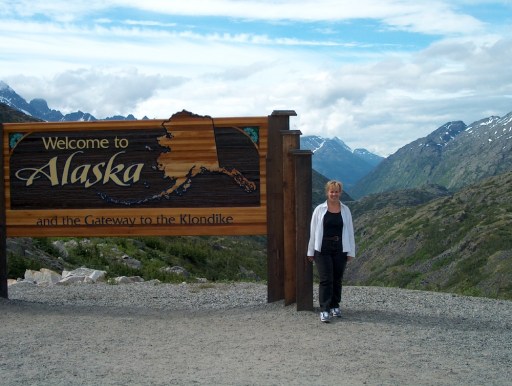
 alaska-sign

That’s me at the border between Alaska and the Yukon. I like to think I’m standing at the top of the world.

My novel, WANTED IN ALASKA, starts off in Skagway. It was a remarkable town because of the freedom that women had to pursue wanted-in-alaska-web-imagetheir goals. At the start of the gold rush, it’s estimated that only 2 to 4% of the population was made up of women. The percentage  climbed quickly. By 1900, just a short four years after it began, women made up roughly 20% of the town. Because the land was uncivilized and lawless before they arrived, the women of Alaska had fewer constrictions than their sisters in the lower states. They owned their own property, ran businesses and shops without the help of men, and some even traveled to the Klondike and struck gold on their own.

Hooray for Alaska! Women weren’t coddled–unless they wanted to be. There were the prostitutes who earned their living, but there were many more law-abiding, hardworking women who opened jewelry stores, sandwich shops, cafés, laundry houses, and even those who tried their hand at casinos. Women knew how to look good in a corset and gown, but many also knew how to chop wood, balance a ledger, hire and fire workers, and get a house built. Many of them became wealthy in their own right.

In WANTED IN ALASKA, my heroine, Autumn MacNeil, is a singer in a hotel who’s desperately trying to get a business loan from one of the male bankers in town but, so far, is unsuccessful. Her goal is to open up a hotel of her own. Along comes the hero and distracts her from her troubles. At a masquerade ball, he mistakes her for the town nurse, and in an act of desperation to help his wounded brother, kidnaps her. This sets them on a wild collision course. It was a fun one to write. The novel hits bookstores this week.

Over the years as I’ve researched and written my Westerns, there are other things about the Wild West that I’ve found fascinating. For instance, when the Western frontier first opened up, the average ratio of men to women was roughly 10 to 1. Women were cherished and respected because they were scarce. Consequently, a married woman who was being abused by her husband wasn’t as afraid to get a divorce and leave him. She would be quickly snatched up by a kinder man, and she and her children would be well taken care of. Therefore, the divorce rate in the West was slightly higher than the Eastern seaboard. Depending on the state, women had more freedom in property rights, voting, and marriage. It’s that freedom that I love to write about.

Is there anything that surprises you about the West, when you read our novels? Do you enjoy the many different occupations in our storylines?

Or, if you’re a Western writer yourself, what draws you to this era? Is there a particular time period, or state, you love to write about?

“In all her books set in the icy wilderness of the northern provinces, Bridges brings strong, admirable heroes and independent-minded women to life. There’s nothing hotter in these cold locales than her stories laced with humor, passion and danger.”  4 Stars! Romantic Times magazine on WANTED IN ALASKA

www.katebridges.com

Click on the cover to link to Amazon.