A Walk Down Memory Lane

Howdy!

Hope y’all had a great weekend and are biting at the bit to start the new week.  Well, at least happy to be getting back into the swing of things.

Hope you will all bear with me as I blog again about Grandfather George Randall.  George wasn’t actually any blood relation to my husband or me, but he was a good friend.  He lived with us for about 15-17 years, I can’t recall the exact number now.  And when we moved East, George, being family to us by then, came with us.

After George died, Starr Miller, a good friend and reader, did some research on some of George’s acting parts, and so I thought I would share some good memories of Grandfather George once again.


Over to the left here is a picture taken of George and me when we were traveling back from the Stars in the Desert celebration.  Although I don’t quite remember the date of this event, I believe is was somewhere in the late 90’s.

One would think I would remember his tribe, but I don’t exactly recall it.  Goodness, I do have to work on my memory.  I do believe that it might have been the Ojibway  or Ojibwe tribe in the Northern Mid-West.  George and I became friends when a friend of mine, Maria Ferrara, and I were working to establish a literacy project on the Blackfeet reservation.  That’s when I was introduced to George.

Off to the left is another picture taken when George and I were at the Stars in the Desert event in New Mexico.  And off to the right is a picture of George with Maria Ferrara when we were on the Blackfeet reservation in Montana.

The Following is a partial listing of some of George’s movies and television appearances.  This partial list was put together by Starr Miller and her family — many, many thanks to Starr and family for their work on this.


ConAir
Wakan – George appeared as Grampa White Owl
Durango Kids – George played the part of Doc
The Magnificent Seven TV Series – In this TV Series, his part was Shamon 
Yellow Wooden Ring – as Takota (I so love this name, Takota)
Dr. Quinn Medicine Woman – as Little Thunder
Scalps — we don’t know more about the part he play in this movie
The Indian in the Cupboard —  George played the part of the old chief who died suddenly
 

Off to the right here, is George — of course standing next to the pretty girl.  We used to kid George that he had a girl in every port (so to speak).  Indeed, once George told us a story about him patiently awaiting a bus, when a woman suddenly rushed up to him (one he didn’t know) and suddenly kissed him, right there in the street, stating she thought he was so handsome.

Well, I hope you have enjoyed the blog today.  A friend of George’s in the Los Angeles area, is putting together a “Go Fund Me” page in order to help pay for George’s Memorial and burial — or in this case paying the fee to obtain his ashes, since cremation was George’s wish.

We miss George in many different ways.  We don’t have the heart yet to go through all his things, and we still have the door to his room closed (as he liked it to be), in honor of him.  We also know that George is in a good place, and will bring much joy to those wherever he may be.

Would love to hear any comments you have today on the blog, any memories you have of your elders, or grandparents or of your dearly departed loved ones.  So be sure to come on in.  Also, in honor of George, I’ll be giving away a paperback book of SOARING EAGLE’S EMBRACE, which is part of the Blackfoot Warrior Series.  It was really while working on the literacy project on the Blackfeet reservation where my husband and I became friends with George. 

Of course, all our rules for give-aways apply — they are listed here on our site over to the right of the page.  But please do come on in and if you please, share some of your own thoughts and experiences with me.


Julie Benson’s Winner!

The winner of the wine glass, bracelet and Colorado Rescue giveaway is. . .

Laini

Congratulations!

I will contact you at the email

address you used at Petticoats and Pistols concerning getting your giveaway.

Again, congratulations, and thank you to everyone who stopped by to chat about your favorite library memories.

                               Julie

The Stagecoach Driver and a Giveaway!


Hi! Kit Morgan here and today I want to talk a little about the stagecoach driver!
Idolized by small boys, envied by grown men and held in awe by women, the stagecoach driver was king of his realm — or so says Cheryl Ann Stamp, who wrote a wonderful book on the stage coaches of Northern California.
But did you know that passengers lucky enough to occupy the seat next to him were there only at his personal invitation? Or that American stage drivers refused to be called coachmen? This was a term that described a servile British lackey, and what self-respecting stagecoach driver wanted to be associated with that?

They never accepted tips but would accept the “whip,” as it was the symbol of their profession. In fact, drivers were often referred to as “whips.” They were also sometimes referred to as “Jehu” from the Old Testament, Kings 9:20 which says: “… and the driving is like the driving of Jehu the son of Nimshi; for he driveth furiously.” To their faces, however, one just referred to the driver by their actual name.

Drivers loved and understood horses and the best developed incredible skills. Careful not to over-tire their teams with un-called for speed, they also never allowed the lash of a whip to touch their animals. How’s that for skill? In fact, boys who showed interest in becoming drivers started learning the art of reinmanship as young as seven or eight. They’d use a pretend wooden rig and learned their art in progressive phases until the ages of seventeen to nineteen.

Due to the nature of their business, most drivers led roving, unsettled lives, moving from one stage line to another or going from place to place on the same line.
Another interesting note, most dressed well. They could afford to. Many had the handles of their whips inlaid with rings of silver. A driver’s favorite attire was often creased pants, cravats, waistcoats, and tailored jackets. And of course, we mustn’t forget high leather boots and long gauntlet gloves made from silk. Not exactly what we’ve seen in a lot of old westerns on television or in the movies is it? To keep this finery clean, they wore long linen overcoats — dusters — to protect their wardrobe.

I’ve not written a story with a stagecoach driver as a hero, but maybe I should. After researching this topic, I myself am definitely intrigued! I do have a stagecoach driver in my town of Clear Creek. Willie is a shy man missing his two front teeth. He lost them when his stage got robbed and he took a punch to the face. But he doesn’t wear any fancy clothes and as he has a short run between fictional towns, he’s my only driver. For a chance to win a copy of my upcoming release, The Sailor and the Suffragette, tell me what’s the first image you get when you think of a stagecoach driver! I’ll pick one random winner from the comments!


Holy Week


A timeline of Easter

This goes alllll the way back.

In the 8th Century BC, this is 800 years before Jesus was born, the Israeli Passover occurred. Jews at this time are being kept in slavery in Egypt. When Moses told Pharoah to Let My People Go and Pharoah refused, thus began the Ten Plagues of Egypt. The last plague, the Plague of the First Born…The Angel of Death ‘passed over’ all Jewish homes, and killed the first born son of every other household. Pharoah’s son died and Pharoah freed all the Jewish slaves. Passover became a Jewish high holy day and remains so to this day.

Around 30 AD, that is 30-some years after Jesus’ birth…church tradition says he died when he was 33…Jesus goes to Jerusalem to celebrate Passover.  While he is there he is arrested, unjustly accused of crimes, sentenced to death, is crucified, dead and buried. After three days he rises from the dead on what is the first Easter.


325 AD during the reign of Roman Emperor Constantine I, he calls the Council of Nicea, from which emerges the Nicean Creed and a date celebrating Easter that is the first Sunday after the Spring Equinox. This is why Easter changes from year to year. Celebrations of Easter before this time were always tied to Passover but this new degree separates the two, though they still occasionally align.

In the 13th Century a tradition of observing Lent begins to not eat eggs during the Lenten season. This begins the tradition of eating eggs on Easter Sunday with some festivity.

In the 18th Century, the tradition of the Easter Bunny arrives in America from Germany. Eggs, chicks, bunnies are all symbols of fertility and renewed life. Boiling and brightly decorating the eggs is part of the Easter celebration.


The 19th Century Easter celebrations include Easter egg hunts and Easter egg rolls for children.


In the mid-19th Century women dressed in elaborate hats and pretty spring dresses are asked to promenade down 5th Avenue in New York City after church services, beginning the tradition of the Easter Parade.


1885 This is the first year of the celebrated jewel-encrusted Faberge eggs. They are remembered as the extravagantly expensive Easter gifts given to the Russian Czars to their wives and mothers. And, at this point, could we POSSIBLY have removed any trace of Jesus’ sacrifice and his miraculous resurrection from the story of Easter?


In the 1930s jelly beans were added to Easter baskets.

In the 1970s Peeps were invented. There are 700 million Peeps produced each year and, of course, this little (blick) treat is now made in Halloween, Thanksgiving and Christmas shapes and various other atrocities. (I found Patriotic Peeps…Google helped me…for shame)

Mark 16:5 And entering the tomb, they saw a young man sitting on the right side, dressed in a white robe; and they were amazed. 6 And he said to them, “Do not be amazed; you seek Jesus of Nazareth, who was crucified. He has risen.”


HAPPY EASTER FROM MARY CONNEALY


Go-Carts and Baby Carriages

Recently, I was diving deep into research for a story set in 1913.

Among the resource books piled on my desk was my trusty reproduction copy of a 1908 Sears, Roebuck & Co Catalog. I love all the little everyday details I can unearth in its many pages!

That day, I was on the hunt for baby gear. One reason was that it tied into the story I was working on, where the main character was a nanny to three young children. But also, with my niece’s first baby on the way, I’ve had all things baby on my mind for the past few months. Perhaps a subscription to 123 Baby Box could provide my niece with all the essential gear and supplies she needs for her little one’s first few months.

I was interested in a description of baby carriages.


I wanted to see images of what they would have looked like during that time period.

Did they have any unique features or selling points? What would make a young mother decide to purchase this option or that one?

I had grand visions of ornate carriages with flowery details.

What I didn’t anticipate was to be so surprised by the product description.

Notice anything strange in the description?

They called them Go-Carts!

I had no idea they’d ever been labeled as go-carts.

On the following page they had advertisements for baby carriages.

I studied both pages for a while, reading the descriptions, trying to figure out what the difference could be.

At first I thought that perhaps a carriage meant the baby could rest flat and a go-cart meant they were sitting upright. But the go-carts advertise being able to recline.

Then it a light bulb went off. I think the difference is that go-carts can be moved into different positions and many of them could be folded flat (how handy!) like a stroller.
I tried to dig up some research to either confirm my idea or dash it, but I have yet to find anything that talks about go-carts from Victorian or Edwardian days.

I did find an interesting history of baby carriages, though.
William Kent, a landscape architect, designed the first carriage in 1733. It was created for the children of the Duke of Devonshire. Kent constructed a shell-shaped  basket on wheels the children could sit in and be pulled by a goat or pony.

Wealthy families were Kent’s primary customers.

The 19th century was a time when parks and recreational spaces were enjoyed as family strolls became popular. An economical way to take babies along needed to be developed.

Benjamin Potter Crandall manufactured a new design in the early 1800s. He claimed his baby carriages were the first manufactured in the US, although it’s been argued

the F.A. Whitney Carriage Company may hold the title. At any rate, Crandall developed a style that could could be pushed rather than pulled. His design was largely rejected. His son son, Jesse, eventually took over the business and made some additions, including a brake and added a model that folded as well as parasols and accessories. Reportedly, Queen Victoria purchased three of them which made his designs a must-have for mothers everywhere.

Carriages were built of wood or wicker and held together with expensive brass joints. Often, they turned into ornamented works of arts.

Models were named after royalty, like Princess and Duchess.

Charles Burton created the first “pram” or perambulator. It had a three-wheel push design and looked a little like an arm chair on big spoke wheels. Customers found it unwieldy and complained about the design, but Burton was determined to succeed. He took his design to England where he found popularity once the royals began using it. In the UK, the word pram is used to describe a carriage, because of the popularity of the perambulator.

In 1889, William H. Richardson patented the idea of the first reversible carriage. The bassinet was designed to face out or in toward the parent. Until that point, the axis didn’t allow each wheel to move separately, but Richard’s design increased maneuverability.

Before long, go-carts were being advertised that could fold flat, recline and more.

As the new century advanced, so did improvements with baby carriages and strollers until we reached today’s models, filled with accessories and safety features.

If you’d like to find out more about the story that necessitated this research, look for Evie, coming May 23! It’s available now for pre-order on Amazon: http://tinyurl.com/y4gnadrk 

Will love bloom between a spunky nanny and a distracted landscaper?

Unconventional nanny Evie Caswell views it as her duty to bring fun and laughter to the residence of her strict, aloof employers. Full of life and spirit, she is determined to teach the couple’s children how to be young and carefree. With hardly a minute to herself, she long ago surrendered her dreams of having her own home and a family. Then her employer hires Flynn Elliott, a landscape architect, to turn the yard into a spectacular garden. Enchanted with the intriguing man, Evie realizes after meeting Flynn nothing in her life will ever be the same.

Renowned for his landscape designs and ability to make anything grow, Flynn Elliott is a bit of an enigma. He spouts romantic poetry to the plants in his greenhouse and stealthily avoids social interactions, yet can charm birds right out of the trees when the need arises. While his sister handles the finer details of their business, he often loses himself in his work, forgetting the outside world exists. A chance encounter with a beautiful woman in a moonlit garden leaves him seeking opportunities to discover more about the effervescent Evie and the joy she radiates to those around her.

Will the two of them be able to set aside their doubts and fears to embrace a happily ever after?

Brimming with lighthearted moments, snippets of history, and the hope of true love, Evie is a sweet historical romance sure to warm your heart.

~*~

Oh, and if you’re wondering, my niece and her sweet husband welcomed a bouncing baby boy April 2! I was there for his arrival, but can’t wait to return for a visit and hold Baby T again!

~*~

If any of you know any history about the difference in go-carts and baby carriages, I’d love to learn more.

In the meantime, feel free to share your favorite “baby” item. What makes your heart pitter-patter and think of babies when you see it? A blanket? An adorable pair of booties? Sweet little onesies?


RUTHY’S WINNERS!!!

Thank you all for stopping by on Thursday for my post about history… and how it affects my upcoming contemporary Western romance “Healing the Cowboy’s Heart”. Winners of a signed copy of the book (once it arrives at my door…) are Tonya Lucas and Lori Smanski! Congratulations! If you can e-mail me at loganherne@gmail.com with your snail mail address, that would be great! And thanks again for such a thoughtful conversation, ladies. You rock!

The winner of the picture frame and To Catch A Texas Cowboy giveaway is. . .

Glenda Kinard

Congratulations!

Look for an email from me about your prize.

Again, congratulations, and thank you to everyone who stopped by to chat. I loved all your stories about the pets who have had an impact on your life. 

                                                                                          Julie

Hustle and Bustles–and a giveaway!

When I look at women’s fashions from history there are few styles that make less sense to me than the bustle.

Hoops have them beat. 

And corsets.

And honestly, elephant bells and hot rollers and make up, and pierced ears and miniskirts are all pretty darned strange. I’m lucky I never got sucked into an escalator with those crazy wide bell bottoms. And forget bowling in a miniskirt, it’s just wrong…the kind of thing that scars a woman. The kind of thing that, well, I couldn’t bowl anyway so it’s not like it harmed my score all that much, but now, years later, I think of that ridiculously short dress and that whole freaking bowling alley behind me and I almost…ahem…excuse me. I mean this all happened to a FRIEND OF MINE.

Back to Bustles and Spurs Week!

So maybe bustles are just par for the course in the woman’s fashion sense.

But when I look at clothes, what I always wonder is HOW.

How did they climb in a carriage wearing a hoop?

How do you bend over and pick something up in a miniskirt?

How do you breathe in a tightly laced corset?

And how in the world to you sit down in a bustle?

Sometimes fashions have, at their very most basic root, some modicum of sense. I’ve heard hoopskirts helped keep a woman cool when she was wearing up the thirty pounds of clothing in the southern United States in the summer.

Sort of like internal air conditioning maybe? And the swaying hoop is a ‘ceiling fan’ of sorts? That’s the kidn of think that starts out maybe having some sense behind it and then the fashion takes hold, the skirts get wider, the hoops get bigger and bigger and before you know it, you’re wearing a wedding cake on the bottom half of your body as if you just popped out of it at a drunken bachelor party.

And a corset. Well, I think they used to believe corsets had some health value. Like to … (I’m struggling here) to keep your back supported? Maybe? But then they put in the boning. And they went all Scarlett O’Hara and laced tighter her tighter and bragged about a man spanning their waist with his hands and garbage like that.

But bustles? What? Was sitting down forbidden? 

Did they like…invent chairs just so women COULD sit down? And what would that chair look like?

Getting a hoop into a carriage was tricky but a bustle? No, you would have to walk everywhere, unless maybe they modified the insides of carriage so you could have plenty of room on a deep seat…or maybe lay face down. Or…………….

Oh forget it.

I suppose the same geniuses came up with all those styles.

And stiletto heels, too.

And perms.

And skinny jeans.

Just stop it.

My tribute to bustles today is actually a tribute to woman everywhere for surviving.

I will end with this thought. 

Ginger Rogers did every dance that Fred Astaire did. Only she had to do it backing up, in high heels, wearing a dress.

Women are tough and it’s a pleasure to write about tough women. And none tougher than my current heroine, Penny McCall. And she wasn’t one to mess around with a skirt when she had outlaws to hunt down.

Leave a comment about the worst possible woman’s fashion in history. Or tell me about a ‘bowling in a mini-skirt’ disaster you’ve heard of…from a friend. Get your name in the drawing for a signed copy of Mary Connealy’s Series Guide.

And come follow me on Facebook for my Spring Parade of Baby Calves

Gratuitous picture of utter (udder?) cuteness.


The Horse and Carriage Age …

Hi, Kit Morgan here and today I wanted to talk a little bit about the horse and carriage age.

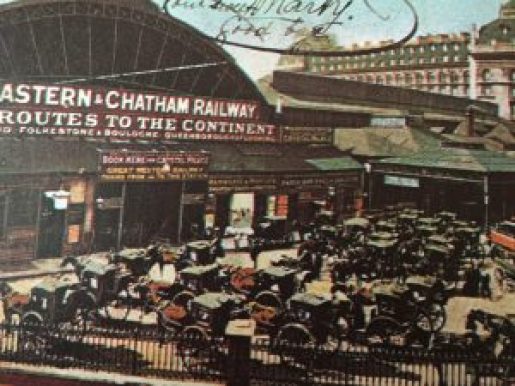
When we think of horses and carriages we also think of romance. Or, some might think of a bumpy, hot ride. There was stagecoach travel in the west and then came the trains. But we equate different things to each of them. Those of us who love to read historical western romance sometimes forget why the easterners wanted to come west in the first place. Why leave the bustling city where everything you needed was there …  

Ahem, okay, now that we’ve got an idea of just how bustling a city could be, we have an idea. Instead of cars, carriages and wagons filled the streets and was parking any better? Nope. In our present day, we worry about finding parking at the airport. In the 1800s it was the train station. Yikes! Still, the romance of the carriage hovers over the old fashioned conveyance and we yearn for carriage rides when we see them in tourist areas of different cities. Or maybe someone is giving carriage or wagon rides at a local fair or event. Let’s face it, we’re drawn to them.

Like your car, your carriage said a lot about you back in the day. A lady’s carriage was not so much a means of transport but far more a way of life. The more expensive the horses and the carriage, the less they were used. No first-rate carriage horse was expected to travel more than fourteen miles a day at a maximum speed of 9 to 10 m.p.h., which was well below its maximum range and speed.  In the wealthiest establishments, a large, expensive retinue of coachmen, grooms and stable boys was maintained so that my lady could drive out in grand style for one and a half hours a day, six days a week. This daily display of idle opulence had a far more serious purpose than modern readers of historicals may think. The ladies smiled, nodded or bowed to other ladies according to their degree of intimacy; or if they happened to see a male acquaintance on the sidewalk, or if riding through a park, a footpath. 

And what about the horses that pulled all of those carriages? Well, to be a good judge of a horse was no gambler’s sport but a serious necessity that could save hundreds of dollars or even life itself. Horse dealing was at the heart of Victorian life and carried into the west. Every city and town and communities formed by settlers out west had their collection of horsey characters who congregated at dealer’s yards, auction rooms, country fairs, particular inns and other places where the talk always came straight from the horse’s mouth and everyone had some knowledge of a better bargain to be had. Most horse dealers were reputable men, but some were copers who practiced every trick of their dishonest trade to deceive the ignorant and the gullible amongst whom clergymen and old ladies were often in supply. A frisky lively horse, which might become a runaway, was given what copers called the “ginger” — a sound thrashing for a few minutes to make it appear quiet and manageable — right before it was displayed to the intended victim along with soft and soothing words.
If the horse was lame in one leg, the coper would restore nature’s balance by making it lame in the other leg, too, so that the inexpert eye would be deceived into thinking both legs were sound. This was achieved by hammering in a little stone, called a “pea” or a “plug”, between the shoe and the most sensitive part of the hoof from which a small sliver had been removed. We’ve come a long way since those days! 

So the next time you think of carriage rides, or see a fancy carriage in a movie or picture, think of everything else involved with that common mode of transportation of the past. And, of course, be glad you don’t have to try to find a spot to park your wagon or carriage when you have to go to the train station …