FastFacts about Hats of the early 1900s

1900 hat 2Hello from Renee Ryan. I’m closing in on the end of my book, only a few more weeks to go. I’m having fun dressing my 1890s heroine. However, as I think about what her life will be like after she gets her own happy-ever-after, I keep wondering what she’ll look like, what clothes she’ll wear. Today, I’m going to focus on the hats she will choose, especially since her sister-in-law designs hats. So here are a few FastFacts about hats at the turn of the 20th centruy.1900 hat


  • Hats in the early 1900s were influenced by the art nouveau fashion. 

  • Hats swirled and swooped around the head in the same manner as the bell skirts swirled and swooped around the ankles.

  • Lavish brims swept around the face creating an illusion of the hat being magically suspended around the head. 

  • Many of these spectacular creations were swathed in tulle and smothered in fake flora, ribbons or plumage. 

  • Pompadour frames were used to build up the base of the hat.

  • Hat pins were used to anchor the contraption atop the head.

  • By 1904 the the hat’s height was more important than the width.  

  • By 1908 the big Merry Widow picture hat became popular.  afa66532dae59030c1310be94d9c2d17.jpg (228×291)

  • The fashion designer Lucile had designed the original widow hat for an operetta in 1907, but it influenced hat fashions for many more years.  

  • The Merry Widow hat was always black and encased in filmy chiffon or organdie and festooned in feathers. 

  • In 1907 Poiret was also instrumental in setting a new trend, the turban.  c5d7e6e6fbae4d206653a6a74990af33.jpg (236×300)

  • Evening turbans were all the rage and gave an exotic eastern influence.

  • By 1911, hats became smaller and were adorned with stiff plumes and ostrich feathers 

    What’s your favorite clothing era?  Leave a comment and you’ll be entered in a drawing for a copy of one of my books from my backlist!

    1900 hat 3

Baker City—Historic Town on the Oregon Trail

Merilee        Cowboys, wagons, miners, immigrants, homesteaders—all these and more made their way along the Oregon Trail in the 1800s in the hope of finding their dream—whether that was gold, cattle, a new business venture, or land—each person was drawn by their own individual vision. Baker City, Oregon, dubbed The Queen City of the Mines, was a booming mining town in the 1880s, but started as a small way-stop for supplies during the 1860s and early ’70s.Baker Town 3

        Baker City sits in a beautiful valley nestled between the Elkhorn and Wallowa Mountain ranges, with abundant grass for cattle, and from the mid 1860s on, gold and silver mining boomed in the surrounding hills. Walking the town and its outskirts was a delight, as the Powder River runs through the outer edge of the business district. I set my heroine’s boardinghouse a short walk away from the river, with the main business street a couple of blocks beyond.

        During the early 1800s, the time Dreaming on Daisies is set, the town grew from 300 people (in the ’70s) to well over a thousand in the early 1880s. By 1890 it crested 2600, with miners and hangers-on pouring in and hoping to make their fortune, to its present-day population of nearly 10,000.

         With 10 of my 11 books, my husband and I traveled to the area to do onsite research, in the hope of getting a deeper look into the history. In Baker City, we discovered a mix of the old and the new and were delighted to find a large museum, as well as the Oregon Trail Interpretive Center which history buffs would love, as it offers living history demonstrations.

Baker Town 2

          Something that took us by surprise and is located just across the road from our motel was an old Chinese cemetery. Before visiting the town, I didn’t realize it had contained a sizeable Chinese population that was brought in to work the mines, and included a one-to-two block-long section of town built specifically for the workers and their families. That aspect of the story is included in my 162 pg novella in this series, Forget Me Not.

          One of the things I loved about Baker City was the diversity. You’ll find the ornate Geiser Grand Hotel containing stained glass ceilings and fancy wood work, and then a few miles from town the valley contains expansive, rugged cattle ranches and barbed wire fences. The hotel wasn’t built until 1889 at the height of the gold rush, or I would have featured it in my series, as it was the most elegant hotel in the Northwest and it’s still in use today.

Baker town

        I discovered an interesting aspect about the hotel known to some of the locals. In its heyday, women of ill repute were brought in to entertain the wealthy miners and businessmen. Most of the bedrooms were on the second and third floor, and an open, circular hallway was visible from the ground floor. The circular railing curves around with rooms opening off of the hall. When the ladies of the town discovered their husbands visiting the Grand for not-so-respectable reasons, they would sit in the dining area. There, they could keep a hawk eye on the hallways and doors, as the dining area is open up to the stained glass ceiling three floors above. Finally, in desperation as his business was ebbing, the owner built an external stairway at the back of the building and snuck his customers up that way, thus avoiding the watchful eyes of the women.

         All in all, our research trip to Baker City was charming, and most of the historic places open to tourists were a wonderful source of material as well as an inspiration. We found the people to be friendly and helpful, and stories about the area abound at every turn—truly a writer’s delight.

        I hope you enjoyed learning about Baker City.  Leave a comment and you’ll be entered in a drawing for a copy of Dreaming on Daisies.

 DreamingDaisies_Revised

Dreaming on Daisies—Just Released—Part of the Love Blossoms in Oregon Series

When her father’s debts, brought on my heavy drinking, threaten Leah Carlson’s family ranch, she fights to save it. When handsome banker Steven Harding must decline her loan request, he determines to do what he can to help. Just as he arrives to serve as a much-needed ranch hand, Leah’s family secrets—and the pain of her past—come to a head. They could destroy everything she’s fought for. And they could keep her from ever opening her heart again. This is historical romance that offers hope and healing to the deepest wounds in a woman’s past.


Miralee Ferrell is a multi-published, award-winning author of 11 books. She lives in the Pacific NW with her husband of 42 years, where they enjoy working in their yard and garden, riding horses and playing with their dogs. Two of Miralee’s books in the Love Blossoms in Oregon series are currently on sale—with Wishing on Buttercups offered FREE on all ebook formats until Oct. 4.

CHERYL’S WINNERS!

PRP One Magic Night Web


I drew two winners for my giveaway tonight! They are…

CINDY WOOLARD and PATRICIA BARRACLOUGH!

Congratulations, ladies! I will get your prizes to you ASAP! Thanks so much for participating today! This is truly one of my favorite subjects, and I appreciate all your comments!

Cheryl

My Ancestors!

Ancestor LOGOSince this is a special week on our ancestors, I want to let you know about some of my family members, who I share with sister Filly, Linda Brody.

Although the Texas Panhandle was founded in 1875 when the town of Mobeetie was settled, Kasota Spring, Texas, didn’t come along until 2008.  Yes, 2008!  But in our minds, it was established in 1890 when our anthology Give Me a Cowboy, written by Linda and me, along with two other Amarillo authors, DeWanna Pace and Jodi Thomas, came to fruition. It is the second of the six anthologies written for Kensington by the four of us.

Since we decided to write all of our stories over the 4th of July rodeo weekend in 1890, we had some logistics to work out.  It also gave us the opportunity for Linda and me to write our stories with a heroine mother and daughter team, who were founders of Kasota Springs and lived on the same ranch. The name came from one of Tempest’s five deceased husbands who won the ranch in a poker game with four jacks … thus the Jacks Bluff Ranch.  The two women were as different as night and day.  The feisty, fun loving; yet, prime and proper Tempest LeDoux had one issue after another with her confident, sassy daughter Alaine Claire LeDoux, who would prefer to wear boots and shoot like Annie Oakley.

Linda Pix for Kasota Springs Family

I don’t know about you, but I think the picture I posted is definitely Tempest LeDoux and her daughter, Alaine.  The second picture (of the couple) I totally believe is Teg Tegler, the ranch foreman of The Jacks Bluff and Edwinna Dewey, who is Tempest’s aunt. They came up to Linda and me at the Cowboy Symposium a few years ago and I couldn’t believe how much they reminded me of the way I imagined Teg and Edwinna.  They asked that their book be autographed to the two characters.

Edwinna Dewey and Teg Tegler


The last of the anthologies A Texas Christmas took place over several snowy days in Kasota Springs.  That’s where you’ll meet a lot of our characters who reappear five or six generations later in my contemporary romances.  There’s Randall Humphrey who is the blacksmith and made the belfry for the new church bell that Tess Whitgrove and Sloan Sullivan have brought to town. The town gossip, Edwinna Dewey reappears. This anthology has been released for the last two holiday seasons, so we’re hoping it’ll be released again this year.

The Jacks Bluff and Edwinna appear in my first small town contemporary The Troubled Texan where hunky sheriff Donovan “Deuce” Cowan almost arrests Rainey Michaels before he realizes they went to school together in Denton, Texas. She’s an LA ADA and is on the run from a murderer she prosecuted…a lunatic who promised to kill her. Deuce has to protect Rainey, although he knows she has lots of secrets. Small-town Texas isn’t big enough for both of them…or is it just right? You will also meet Sylvie Dewey who works for Rainey. Sylvie has a mysterious back story with a lot of hidden family secrets. She’s always let men use her and in her own book (planned to be book 4) things do not change in that regard.

Now for the fun, the second Kasota Spring Romance Into the Texas Night is full of fifth and six generation of the founders.  Avery Danielle Humphrey is the daughter of Mayor Humphrey and her mother is a Sullivan.  Deuce Cowan and his deputies from The Troubled Texan remain an important part of this story, but there are new deputies coming to town.  You will get to know Mesa LeDoux and her grandmother Johnson from the Jacks Bluff.  Granny is getting older and has to cut back on being a full time rough stock contractor. Mesa’s interest has turned to horse rescue. Deuce talks Brody VanZant, an undercover deputy, to come out of hiding and work for Bonita County full time.  He agrees and not to soon either. Danielle’s father pressures her to move back to Kasota Springs after her partner is killed while on duty and she can’t get over it.  The problem, she isn’t sure she can come back to the only job she knows … being a lawman, which she tries to keep a secret!

Kasota Springs, in many ways, hasn’t changed an iota since our first anthology in 1887 but it’s more modernized but is based around the same founding families with some new characters showing up.

I had my choice of two of my own family stories, but thought I’d bring you all up to date with what’s been going on in Kasota Springs over the last century and a quarter.  My stories were dull and I would have had to make up parts…most parts.  My maternal grandmother Womack was raised on a southern plantation in Louisiana and married my grandfather Johnson who came from a large family, including a grandmother who was a Blackfoot Princess. He worked building the railroad. We didn’t ask personal questions when they were alive, but I’m wondering how they got together.  I know the plantation is true and the town “Womack, Louisiana” is still on the map.  But one day, I’m writing their stories the way I wish they had gotten together.  Do you have any family stories you don’t know enough about but wish you did?

To two lucky readers, I’ll give away an autographed copy

Of your choice of an eBook or trade back of

The Troubled Texan

My roots are so deep ….

TRIED AND TRUE-IN BOOKSTORES NOW

Ancestor LOGO

Eleven generations of Babbitts

My sister, Nila did a wonderful job of geneology and when we decided to talk ancestors I had this terrific book she’s written to refer to.

Did I dig around to find which ancestor was the richest? The  most famous? The most notorious? (oh, c’mon we all have a few of those.

The oldest ancestor I found in her book was living in America in 1649, 29 years after Jamestown. Not bad. My roots go deep. But by the time I was reading about them all the names I am familiar with were lost.

So what I did was I followed the names back and back and back until I found the oldest name of my four grandparents. Of those four names Frew, Snider, Moore and Babbitt, the one that was oldest to America was Babbitt.

1st Generation…

In the entry Edward Babbitt’s name is spelled ALL WITHIN ONE ARTICLE as Babbitt, Bobet, Bobett, Bobbit and Bobbutt. He was born in England or Wales around 1627 and appears in America, Plymouth, Massachusetts, in 1652.

2nd Generation…

Edward’s son Elkanah Bobet was born in Taunton, Mass in 1665

3rd Generation…

Elkanah Babbitt , Jr. is born in 1690 in Bristol, Mass.

4th Generation…

Isaac Babbitt was born in Berkley, Massachusetts in 1717. He died in 1777 at age 60 and it was said that he gave aid and comfort to the forces of the American Revolutionary Army

5th Generation…

Elkanah Babbitt (Again with the name Elkanah!) was born in 1767 in Mendham, New Jersey and fought in the Revolution

6th Generation…

Silas Babbitt was born in Berkshire Valley, New Jersey in 1787

7th Generation…

Mary Connealy
Mary Connealy

Amzi Babbitt (pronounced Am Zye) was born in Berkshire Valley, New Hersey in 1816 and was the first Babbitt to leave the east coast. He moved to Nebraska in 1857

8th Generation…

Jesse Amzi Babbitt was born in Nebraska in 1869. His daughter Bernice Vivian is my grandma, my dad’s mom.

9th Generation…

Bernice Vivian Babbitt was born in 1902 in Nebraska…she had one child, my father.

10th Generation…

Jack Moore

Which brings us to me.

11th Generation in America…

Mary Connealy. Who loves to write about history and is it any wonder?

We Have Two Winners for Karen Kay’s free ebook

bannerGood Evening!

We have two winners for a free ebook by Karen Kay.  Those winners are:  Kirsten and Rebecca Booth.  Congratulations to you both.

If you please, email me privately at karenkay(dot)author(at)earthlink(dot)net so we can figure out what book you might like and how to get it to you.

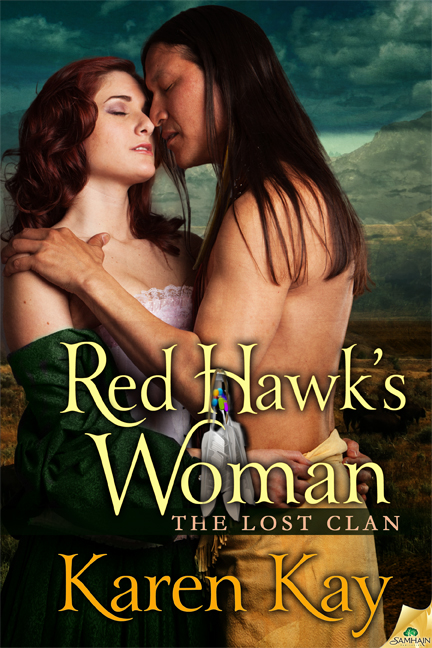
My hearty thanks to all those who came here today and who left a post.  Thanks again, and please keep in mind that my latest book, RED HAWK’S WOMAN has gone on sale starting today!

RedHawksWoman-R -- first draft

“The Mad Russian” ~Tanya Hanson


Ancestor LOGO

My dad’s slugger-cousin Lou Novikoff (1915-1970) is the perfect choice for this week’s special event. Our family is 100% “Go Halos” Los Angeles Angels at Anaheim fanatics, so the fact that The Mad Russian played long ago for their top-level minor league team has always been way cool.

Lou as Angel

Here’s a few fun facts:

  1. Playing 36 games for the AA Pacific Coast League Angels in 1939, Lou hit .452 and was named Minor League Player of the Year.
  2. He played 174 games for the Angels in 1940 and hit .363 with 41 home runs and 259 hits. This earned him the Pacific Coast League Batting Title.Lou as Angel 2
  3. One of 12 kids, Lou grew up near Bakersfield, California and joined a professional softball team in high school. Therefore, he was banned from high school sports for accepting money. His baseball career almost ended there…
  4. …but he became such a sensational fast-pitch pitcher and hitter that the Chicago Cubs shocked the baseball world by offering him a contract for their class C team in 1937.
  5. He found great success in the minor-leagues. His claim to fame–purposely going after bad pitches and most times, knocking the ball out of the park!
  6. A colorful guy with a “duck-waddling” gait, he refused to play at Wrigley Field because he was certain the vines climbing on the walls was poison ivy!Lou as Chicago Cub
  7. In the off season, he took on such jobs as a longshoreman out of Long Beach, California and worked in the oil fields as a roughneck.
  8. Mostly known as The Mad Russian, reporters also gave him such monikers as The Crazy Cossack, The Soviet Slugger, The Moscow Mauler, and…the Volga Batman.
  9. He had a pet Russian wolfhound that he proudly displayed. And claimed the dog only ate caviar.
  10. Lou was suspicious. Around 1940 with the Angels, The Mad Russian claimed he couldn’t hit unless his wife was nearby heckling him from the bleachers. Supposedly Esther’s nasty insults inspired him. Seems with Mrs. Mad Russian in the stands, her Muscovite mate batted .300 every game.
  11. Also a proficient bowler, Lou loved his harmonica and played it in 1941 on Bing Crosby’s radio program. Oh, uh, also on left field sometimes. Once, an aria in his fine baritone earned him a fine for singing during a game.
  12. Kids loved him. He’d purposely smack practice balls into the low-rent seats for their souvenirs.Baseball card
  13. During the Second World War, he was a beloved attraction while big-gun major leaguers were off to war. Originally deferred due to Esther’s ill health, Lou was inducted into the U.S. Army in July 1945. At U.S. Air Corps Sheppard Field in Wichita Falls, Texas, he played on the service team, The Flyers.
  14. After an unsuccessful comeback with the Angels in 1950, Lou returned to softball. He led his Long Beach (CA) team to three championships and became the first man inducted into the Softball Hall of Fame. (1965)

    Lou returning to Softball
    Lou returning to Softball

Thanks with my whole heart to David Eskenazi for permission to share with us photos from his collection. For more details on The Mad Russian, check out David’s article with Steve Rudman. http://tinyurl.com/o35vo2y

 OutlawinLove_w8481_med (2)

  My new release–details soon:


We Have Two Winners for Karen Kay’s free ebook

bannerWe have two winners today.  As sometimes happens I draw two names at the same time — and in that case I give away two books instead of one.

So the winners of the free ebook are:  Michelle B. and Maragaret.  Please Michelle & Maragaret, please contact me directly at karenkay(dot)author(at)earthlink(dot)net.

Congratulations to you both!  And many, many thanks for everyone who came here today and especially to those who left a message.

Campfires and Cattle Drives

While writing my latest release, The Cattleman Meets His Match, I had a wonderful time envisioning how the plains must have looked all those years ago. While many things have changed, many thiPrairie Dogngs remain the same. Years ago I had a chance to visit Old Baldy near Lynch, Nebraska, the hill near where Louis and Clark trapped their first prairie dog.  There’s something humbling about realizing how much our past and futures are connected by the landscape.

Old Baldy


Human nature has remained much the same over the years as well. The Greek tragedies still speak to us because people still feel the same emotions: hate, love, jealousy, rage. Everything. Some things never change.

That’s why writing something as simple as a group of people sitting around a campfire was intriguing. There’s something mesmerizing about fire and flames, stars in the sky, and crickets in the background. I had my characters tell scary stories around the campfire. I heard a lonesome harmonica in the distance…

campfire

I suppose people have always sung around the campfire as well. Songs have been vehicles to pass down stories through histories. Would my characters have sung Billy Boy?

Oh where have you been, Billy Boy,
Billy Boy?
Oh where have you been, charming Billy?
I have been to seek a wife,
She’s the joy of my life,
She’s a young thing
And cannot leave her mother

Billy Boy

Would they sing about Buffalo Gals:

As I was walking down the street
Down the street, down the street,
A pretty gal I chance to meet
Under the silvery moon.
Buffalo gals, won’t you come out tonight?
Come out tonight, Come out tonight?
Buffalo gals, won’t you come out tonight,
And dance by the light of the moon.

Or perhaps The Turkey in the Straw:

As I was a-gwine down the road,
With a tired team and a heavy load,
I crack’d my whip and the leader sprung,
I says day-day to the wagon tongue.
Turkey in the straw, turkey in the hay,
Roll ’em up and twist ’em up a high tuckahaw
And twist ’em up a tune called Turkey in the Straw

Have you ever sat around the campfire and spun a yarn or hummed a ballad? What’s your favorite song?

One commentor will receive a copy of The Cattleman Meets His Match – Digital or Paperback.

The Cattleman Meets His MatchGALAHAD IN A STETSON

Cowboy John Elder needs a replacement crew of cattle hands to drive his longhorns to Kansas—he just never figured they’d be wearing petticoats. Traveling with Moira O’Mara and the orphan girls in her care is a mutually beneficial arrangement. Yet despite Moira’s declaration of independence, the feisty beauty evokes John’s every masculine instinct to protect, defend…marry?

Moira is grateful for John’s help when he rescues her—and she can’t deny that his calm, in-control manner proves comforting. But she is determined not to let anything get in the way of her plans to search for her long-lost brother at journey’s end. However, can John show her a new future—one perfect for them to share?